Chaetodon ulietensis
Spot Pacific Doublesaddle Butterflyfish across the Maldives and French Polynesia. Learn its two dark saddle marks, best seasons, and top reef sites.
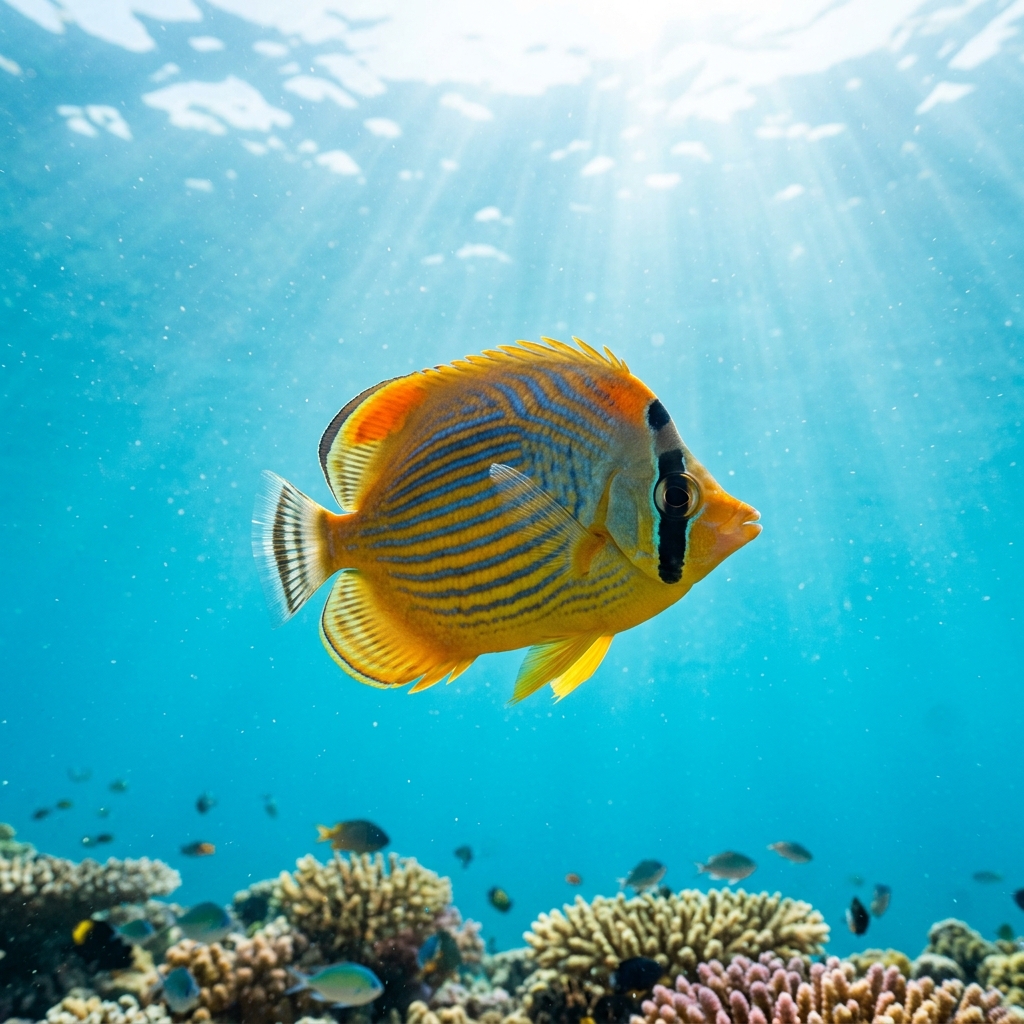
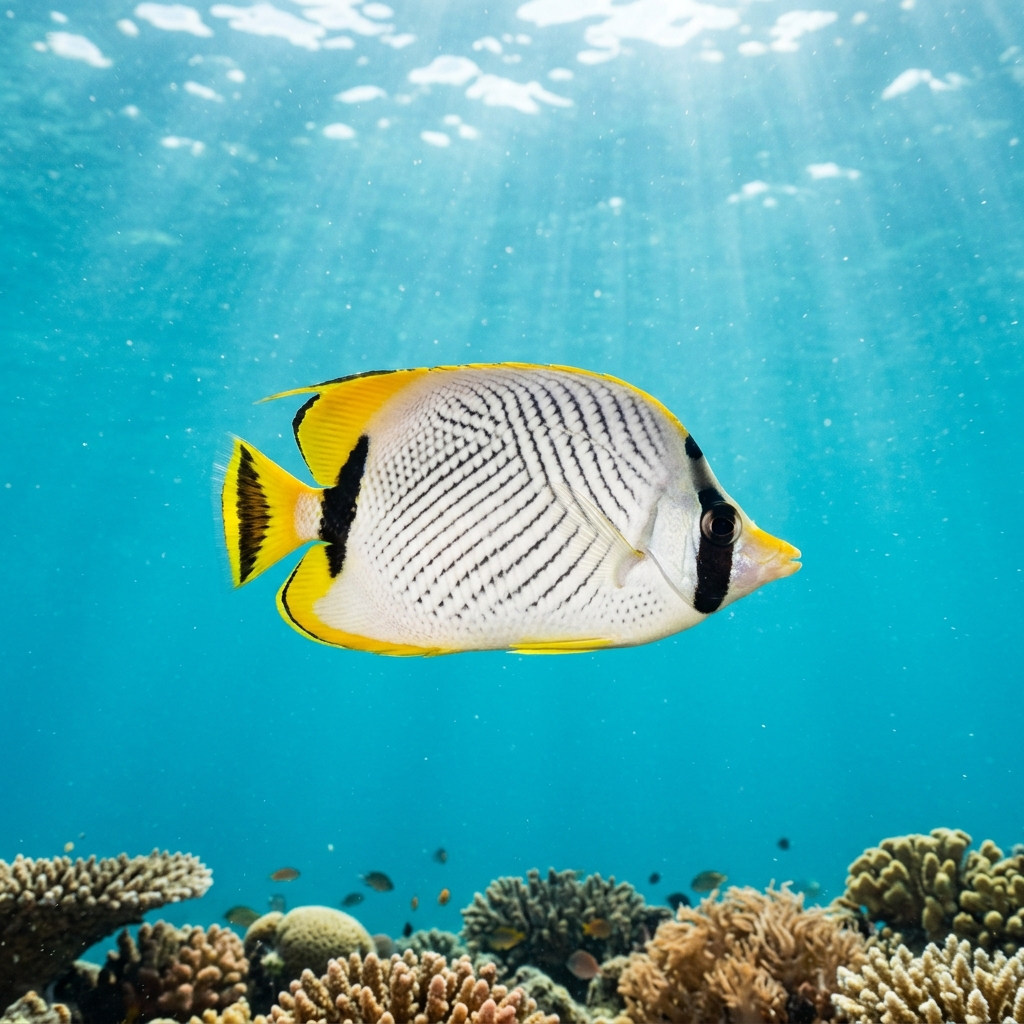
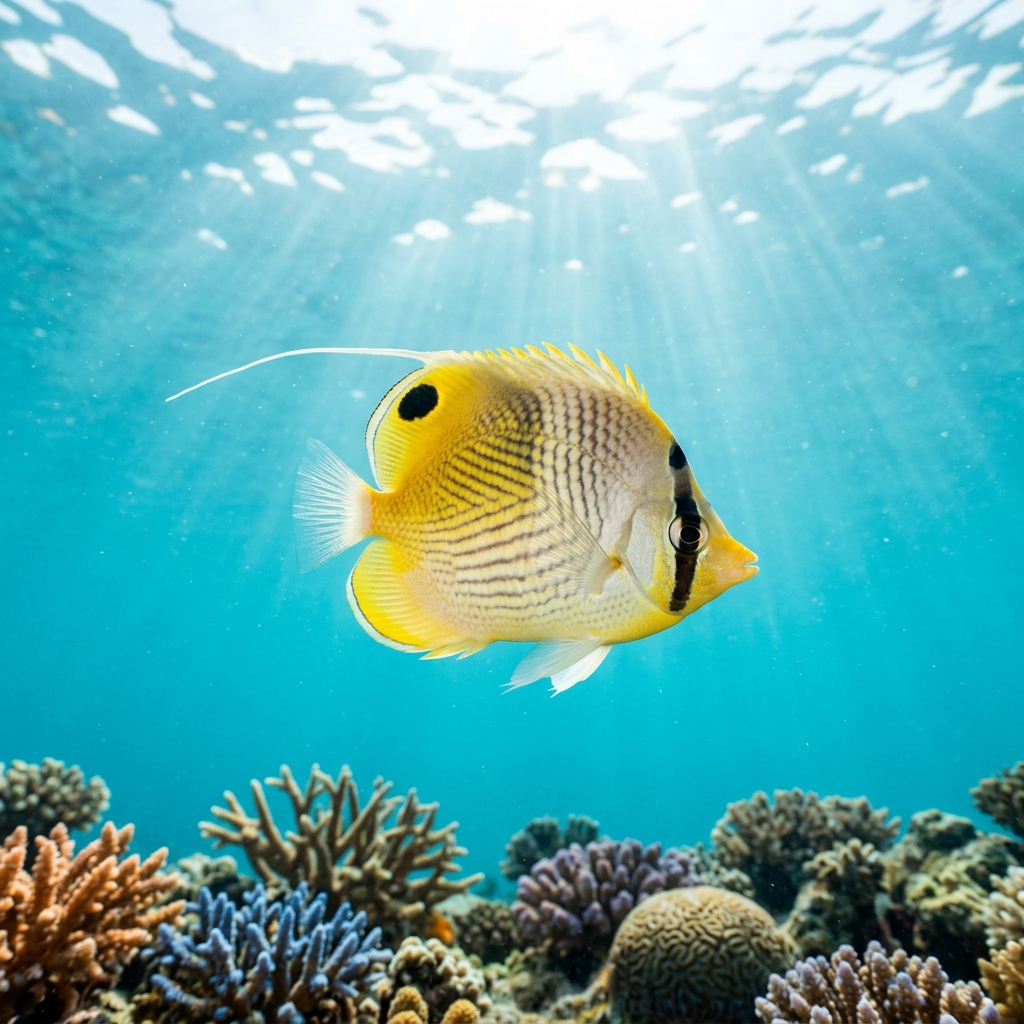
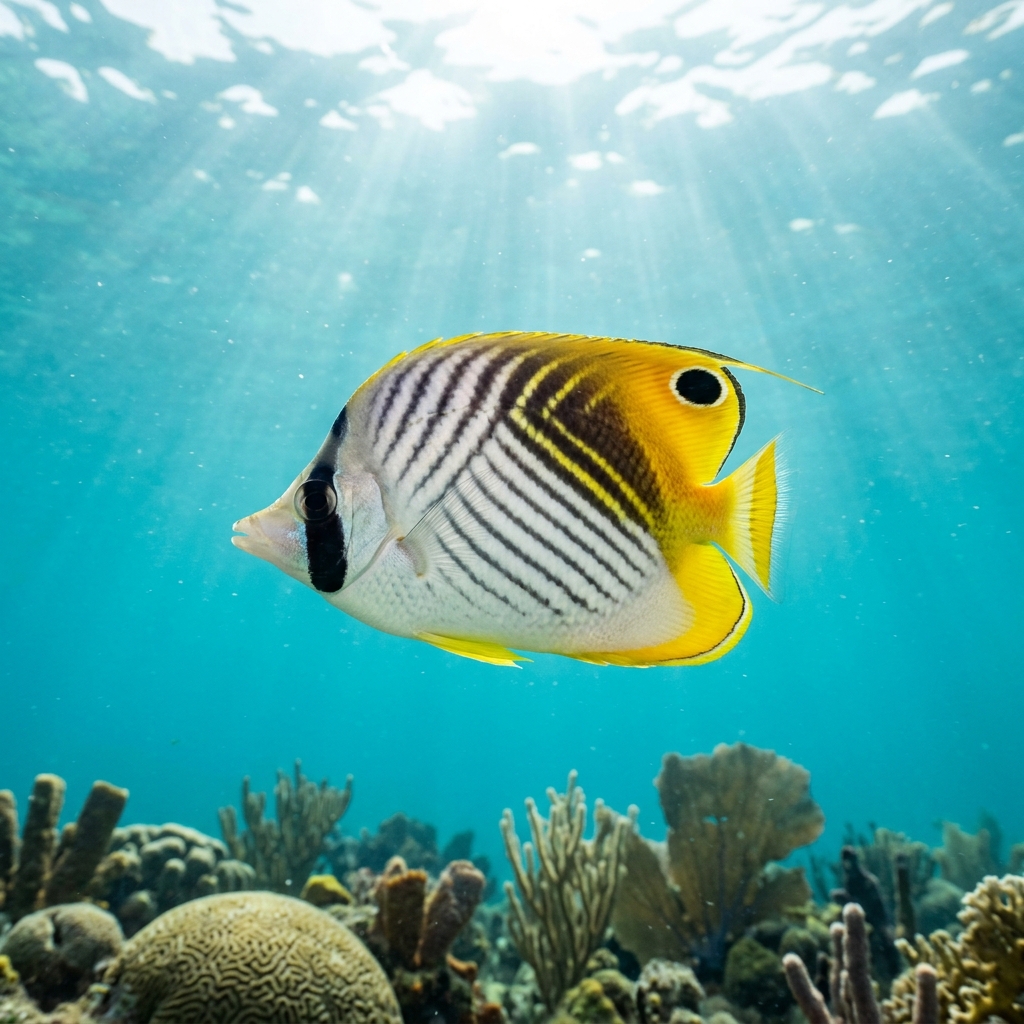
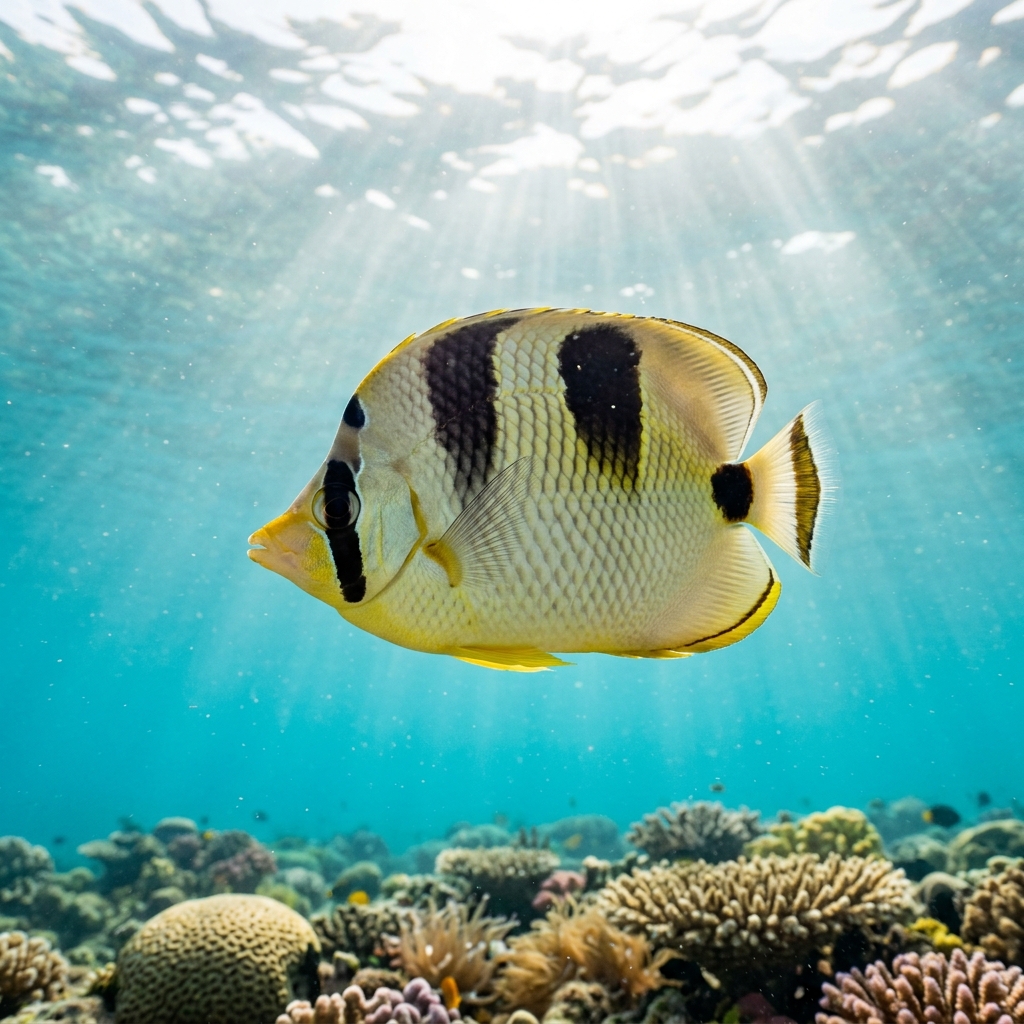
Two bold dark-brown saddle patches draped over the back are the clinching mark, one behind the head and one near the tail base, with a white body in between and a bright yellow tail. Underwater it reads as a compact, disc-shaped fish roughly palm-sized, swimming unhurriedly in pairs along the reef. A vertical black bar runs through the eye, common to many butterflyfish, but those double saddles set it apart from almost every close relative.
Typically encountered moving steadily over coral-rich areas in pairs, pecking at coral polyps and small invertebrates with its pointed snout. It is not particularly shy and will often continue feeding within a few metres of a slow, calm diver rather than bolting. Look for it on shallow reef slopes and lagoon bommies (isolated coral heads) during daylight dives.
Like many butterflyfish, pairs appear to be long-term monogamous, and you will almost always see two individuals staying close together rather than lone fish or schooling groups, if you find one, scan nearby and you will usually find its partner.
In Northern Hemisphere destinations like the Maldives and Guam, sightings concentrate from November through March. In Southern Hemisphere locations such as French Polynesia and Queensland, the best window runs August to November.
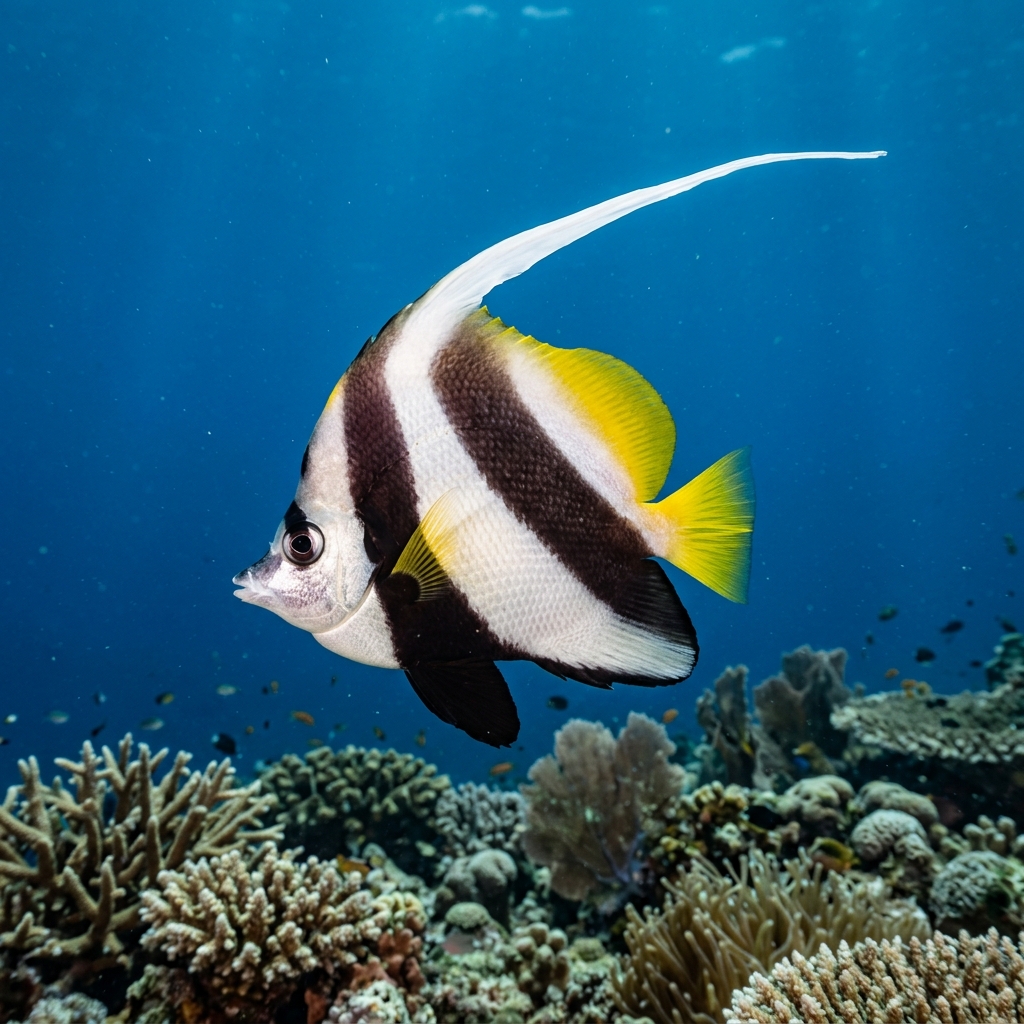
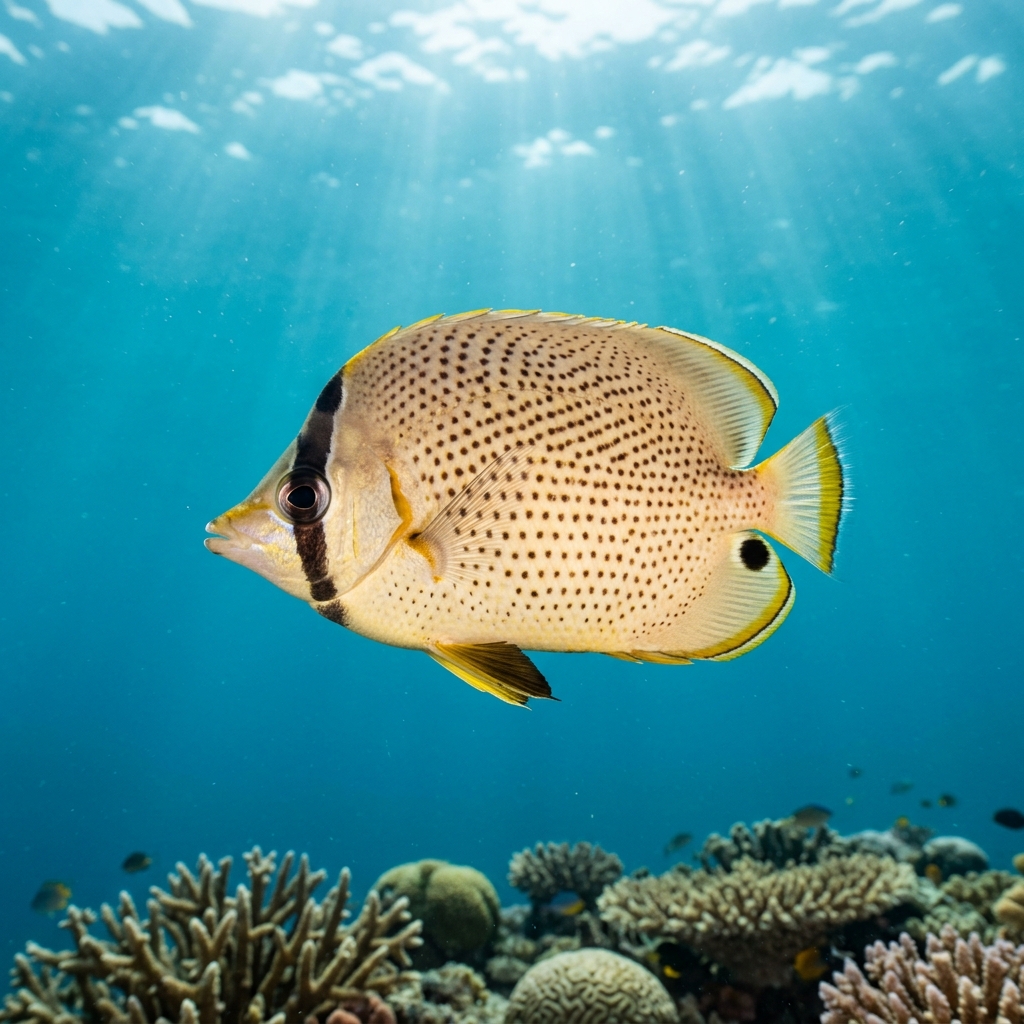
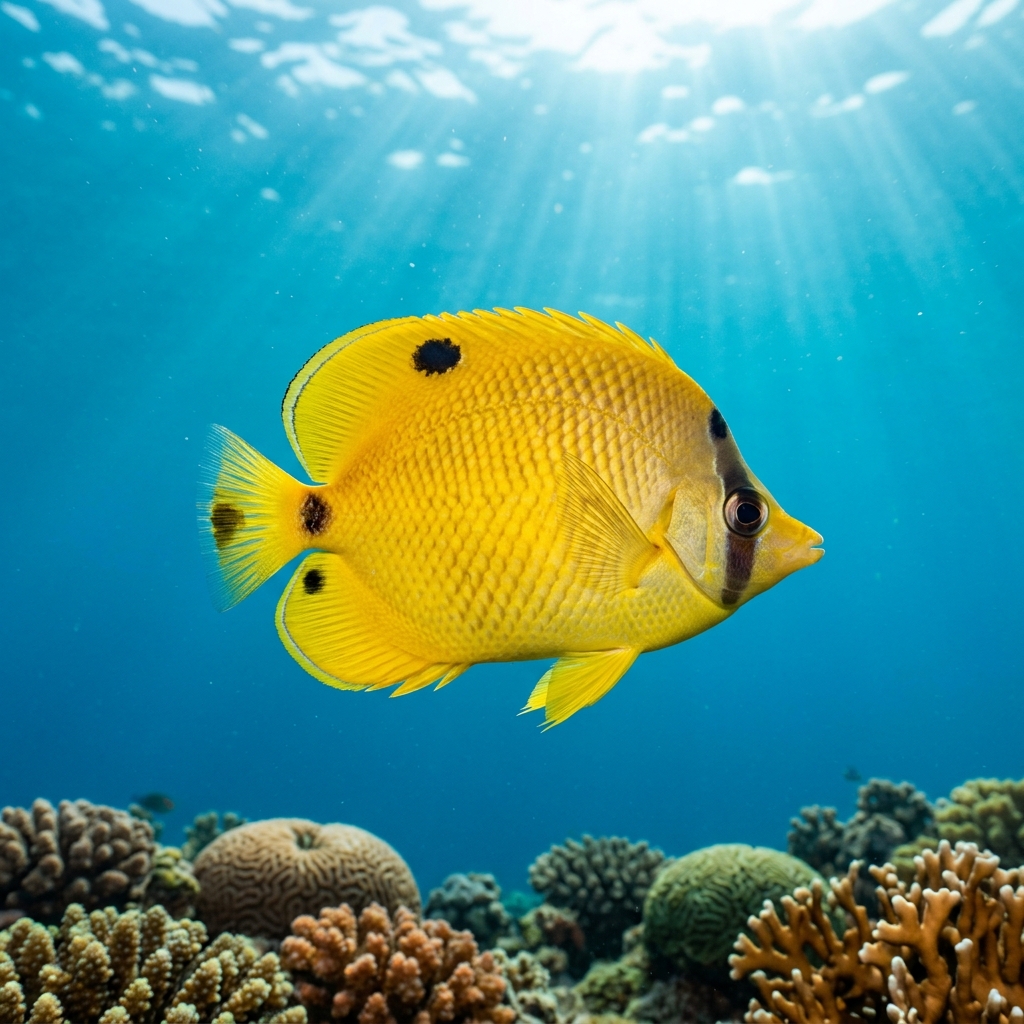
Reef neighbours a diver could mistake it for. Use the identification notes above to tell them apart.
Most commonly logged in the Maldives, particularly around the Male and Ari Atolls, and in French Polynesia around Tahiti and the Society Islands. Strong populations also appear across Indonesian waters including Nusa Tenggara and Sulawesi, with reliable sightings in Fiji, Palau's Rock Islands, and along the Queensland coast of Australia.
Mapping where Pacific Doublesaddle Butterflyfish is logged…
The Maldives is the single strongest destination, especially the Male and Ari Atolls. French Polynesia, particularly Tahiti and the Society Islands, is another hotspot. Indonesia, Fiji, Palau, Guam, and the Queensland coast of Australia also produce regular sightings.
It depends on which hemisphere you are diving. In Maldives and Guam, November to March sees the most sightings. For French Polynesia and Queensland, aim for August through November. The species tolerates water temperatures between about 24 and 29 °C, so tropical reefs host it across multiple seasons.
Look for the two dark-brown saddle patches draped over a white body, one just behind the head and one near the tail base, plus a vivid yellow tail. No other common butterflyfish in its range combines both saddles with that yellow tail. Seeing the pair together is also a strong clue, as they nearly always travel in bonded couples.
In the water it reads as a palm-sized, disc-shaped fish. The species typically reaches around 15 cm in length at adulthood, which is fairly average for the butterflyfish family.
No. The species is listed as Least Concern on the IUCN Red List, meaning populations are currently stable across its range. It is found across a wide sweep of the Indo-Pacific and is not considered under pressure.
Site and sighting data is aggregated from diver logs, iNaturalist and GBIF. For taxonomy and conservation status: