Canthigaster solandri
Tiny reef puffer common across French Polynesia's Society Islands, spotted year-round in warm 26-29C water. Here's how to ID it.
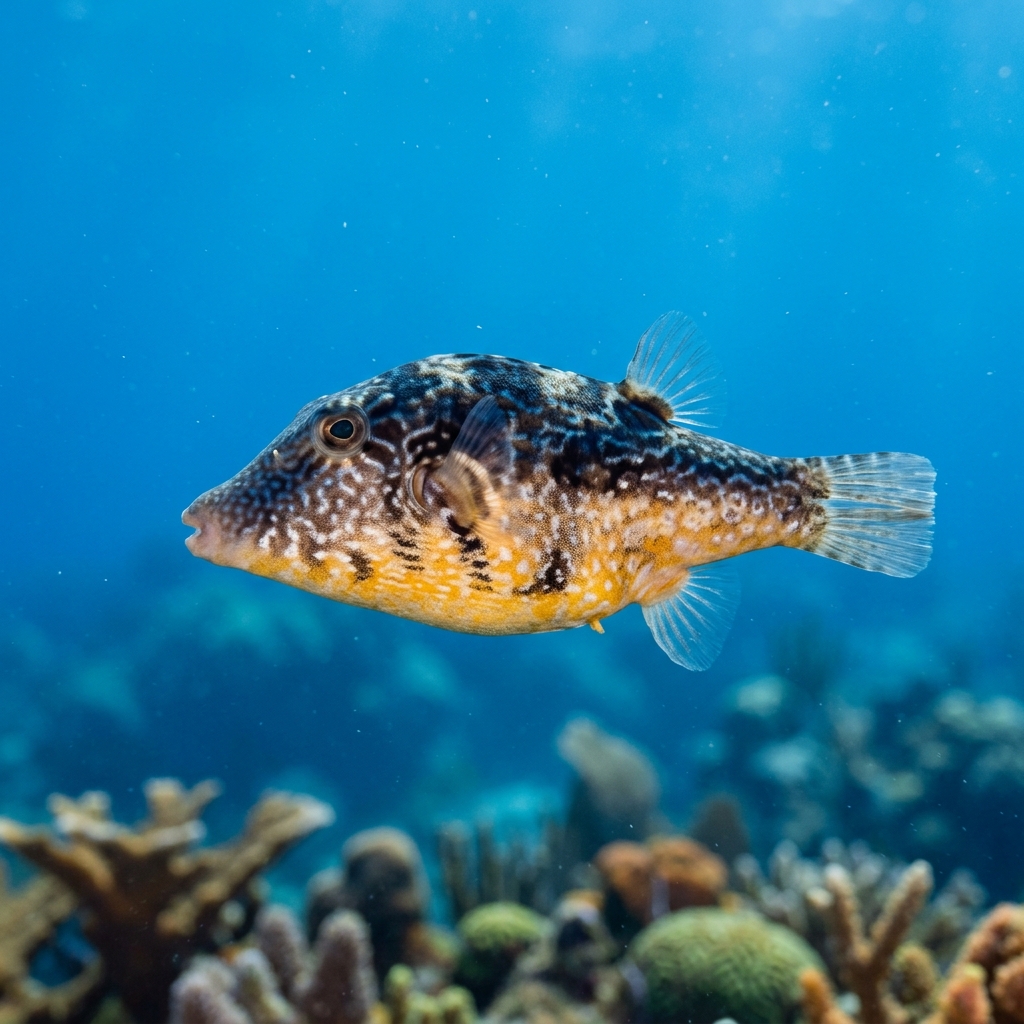
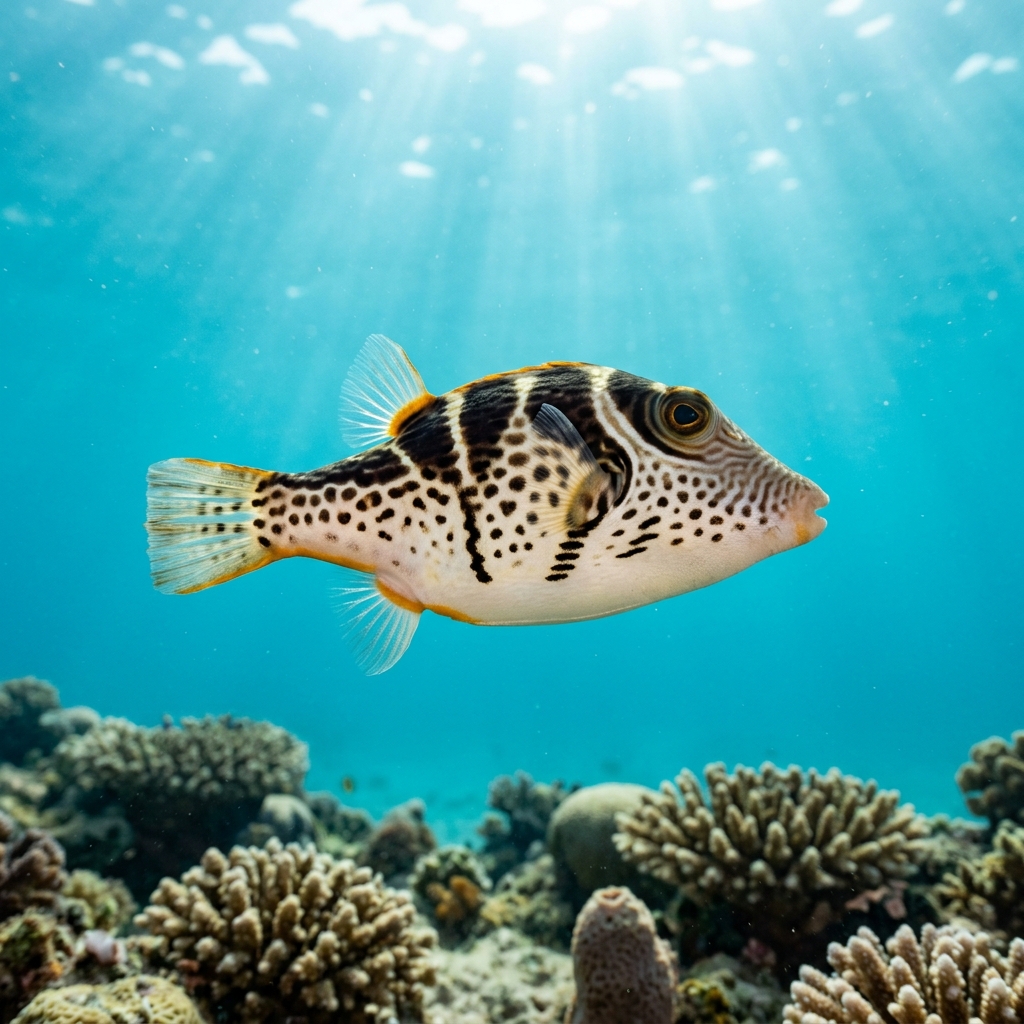
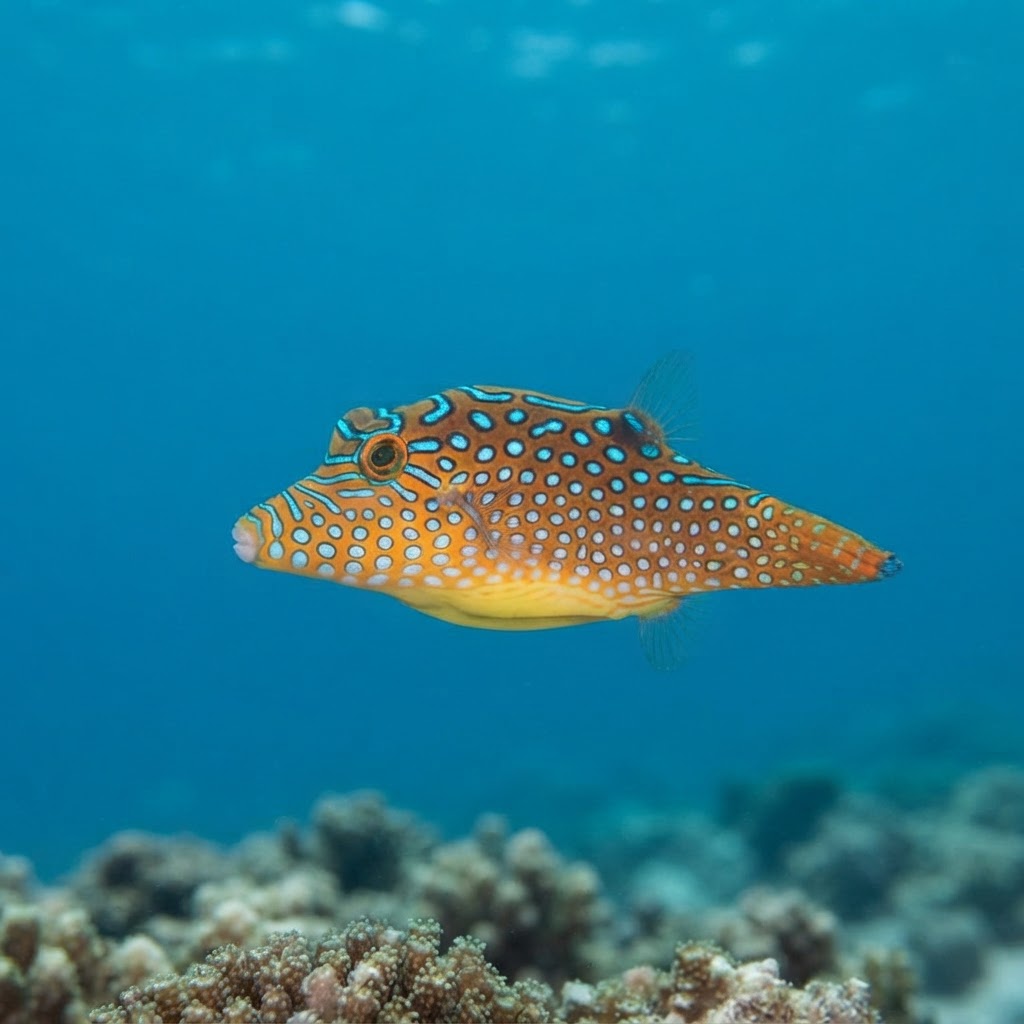
Barely bigger than a finger at around 8 cm, this puffer has a tapered, sharp-nosed profile that separates it from rounder puffer species. The body is patterned with fine blue or pale spots over a greenish-brown to tan background, densest across the back and fading lower on the flanks. Look for the small, high-set eyes and the way it hovers with quick fin flicks rather than swimming in a straight line.
Divers most often find it hovering alone just off the reef structure, picking at algae and small invertebrates on the substrate rather than schooling or patrolling open water. It is unhurried around divers, usually holding station or drifting off at its own pace instead of bolting, and logged as uncommon at most sites, so a sighting is a nice small find rather than a given.
Like other sharpnose puffers it carries tetrodotoxin in its skin and organs as a defence, which is why almost nothing on the reef bothers it despite its small size and slow, unbothered swimming style.
No clear seasonal pattern shows up in the data, and with a comfortable range of 26.1 to 29.0C this is a year-round sighting on tropical Pacific reefs.
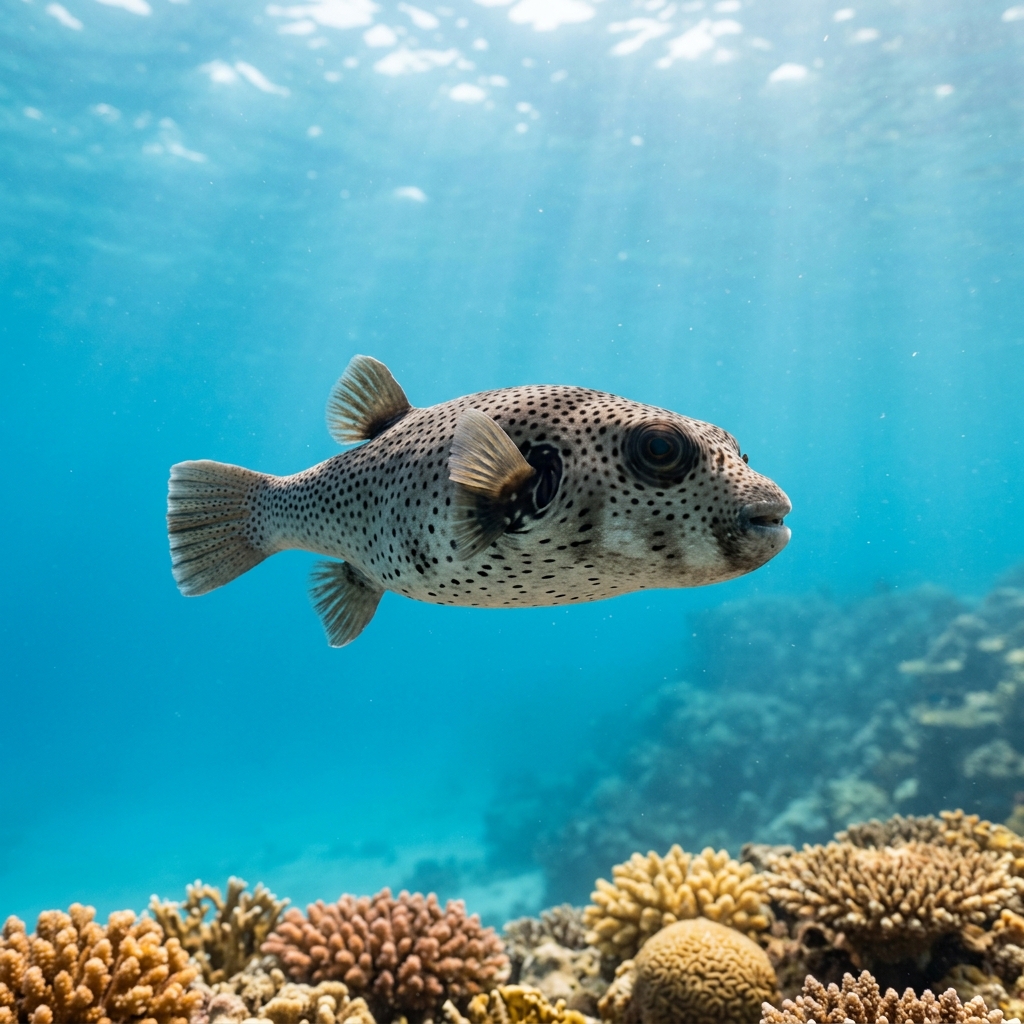
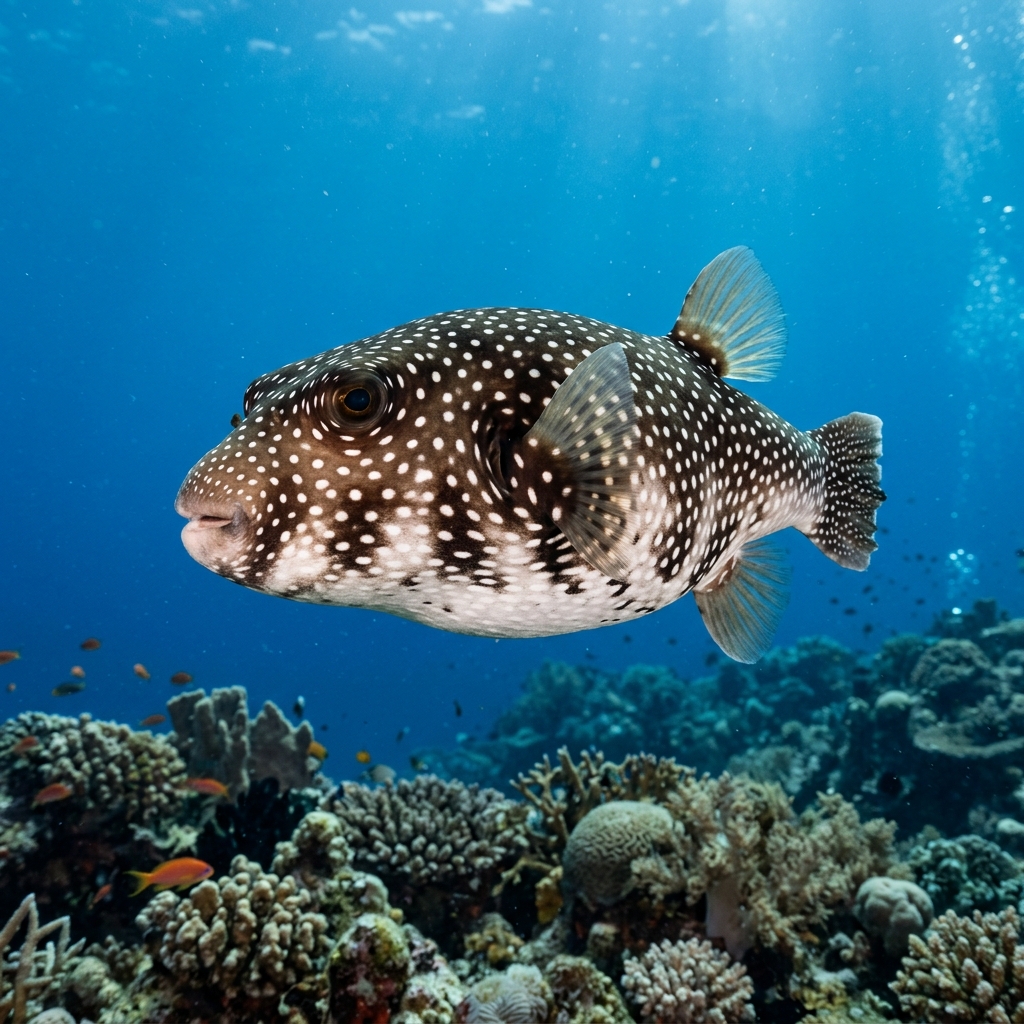
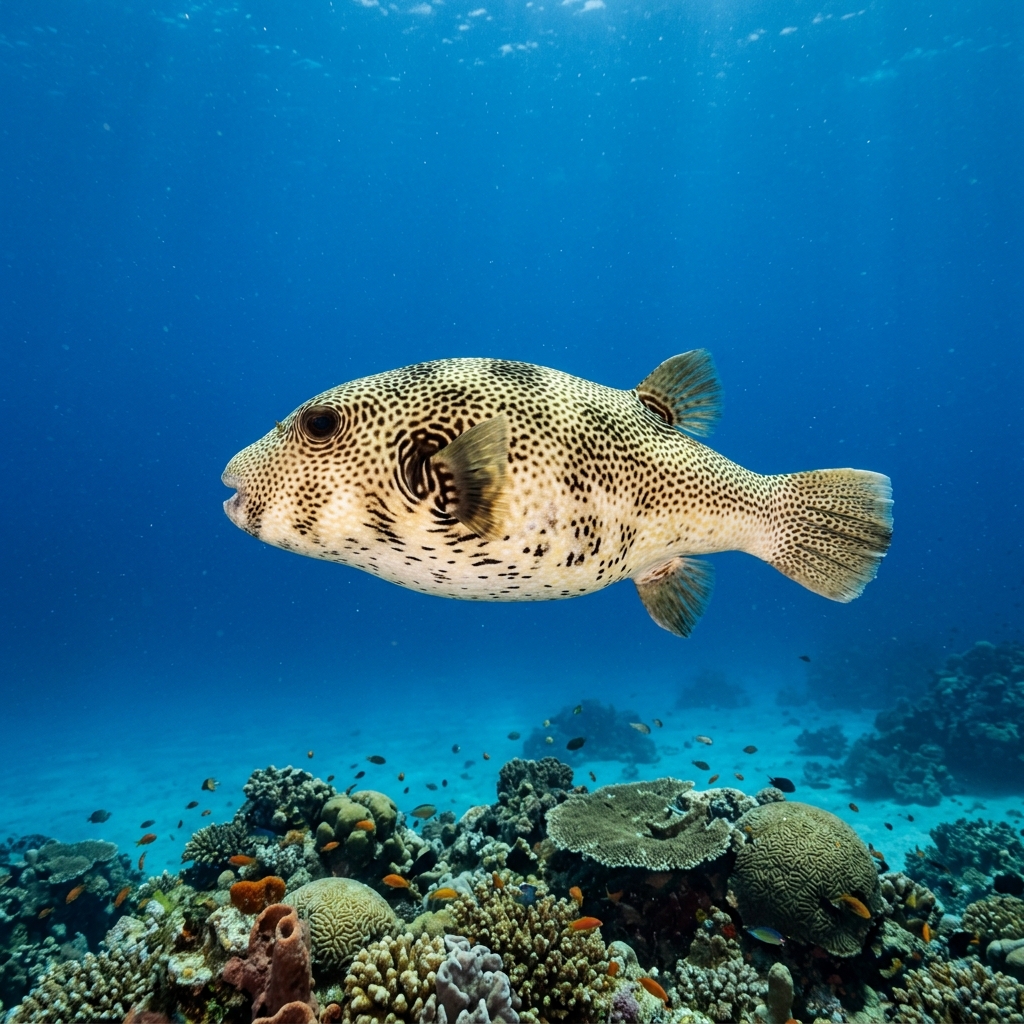
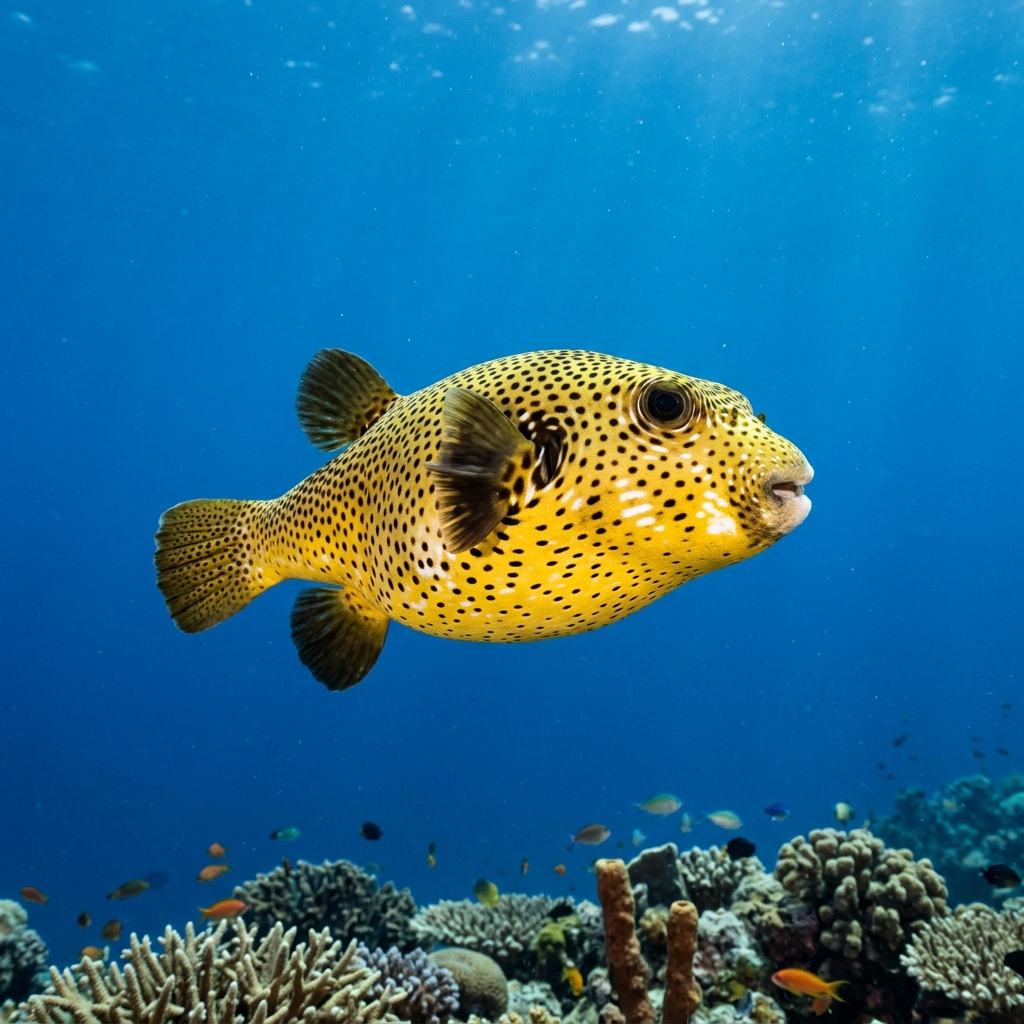
Reef neighbours a diver could mistake it for. Use the identification notes above to tell them apart.
This is a Pacific reef regular, most consistently logged across the Society Islands in French Polynesia, which accounts for the bulk of sightings. It also turns up reliably around Apra Harbor in Guam, Rarotonga in the Cook Islands, and Saipan in the Northern Mariana Islands, with smaller numbers reported from Fiji's Yasawa Islands and Pohnpei in Micronesia.
Mapping where Spotted Toby is logged…
It is most reliably seen across French Polynesia's Society Islands, and also shows up around Apra Harbor in Guam, Rarotonga in the Cook Islands, and Saipan in the Northern Mariana Islands.
There is no strong seasonal pattern in sighting data, and warm water in the 26 to 29C range holds year-round across its Pacific range, so it can turn up on any dive.
Look for a small, tapered puffer around 8 cm long with a pointed snout and fine blue or pale spots over a tan to greenish body. It hovers near the reef with quick, twitchy fin movements rather than swimming steadily.
They stay small, typically around 8 cm long, making them one of the more overlooked reef fish until you know to look closely at rubble and coral edges.
No, they pose no threat to divers and will simply hover or move off if approached. Like other puffers they carry tetrodotoxin internally, but this is only relevant if handled or ingested, not from normal diving contact.
Site and sighting data is aggregated from diver logs, iNaturalist and GBIF. For taxonomy and conservation status:
Valentini Pufferfish
2,830 sites