Arothron nigropunctatus
Spot the blackspotted pufferfish across the Philippines, Maldives and Bali in warm 24-29°C water. Tips on ID, behaviour and best dive sites.
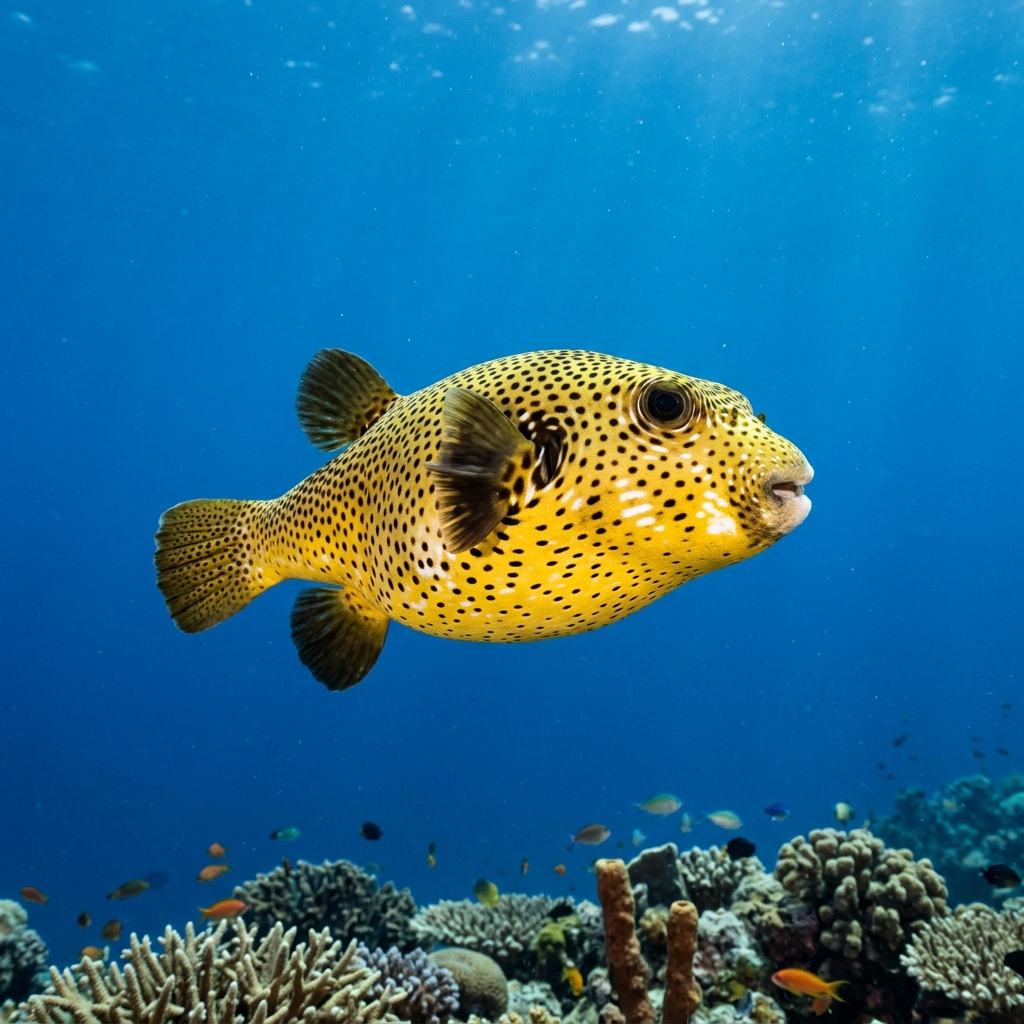
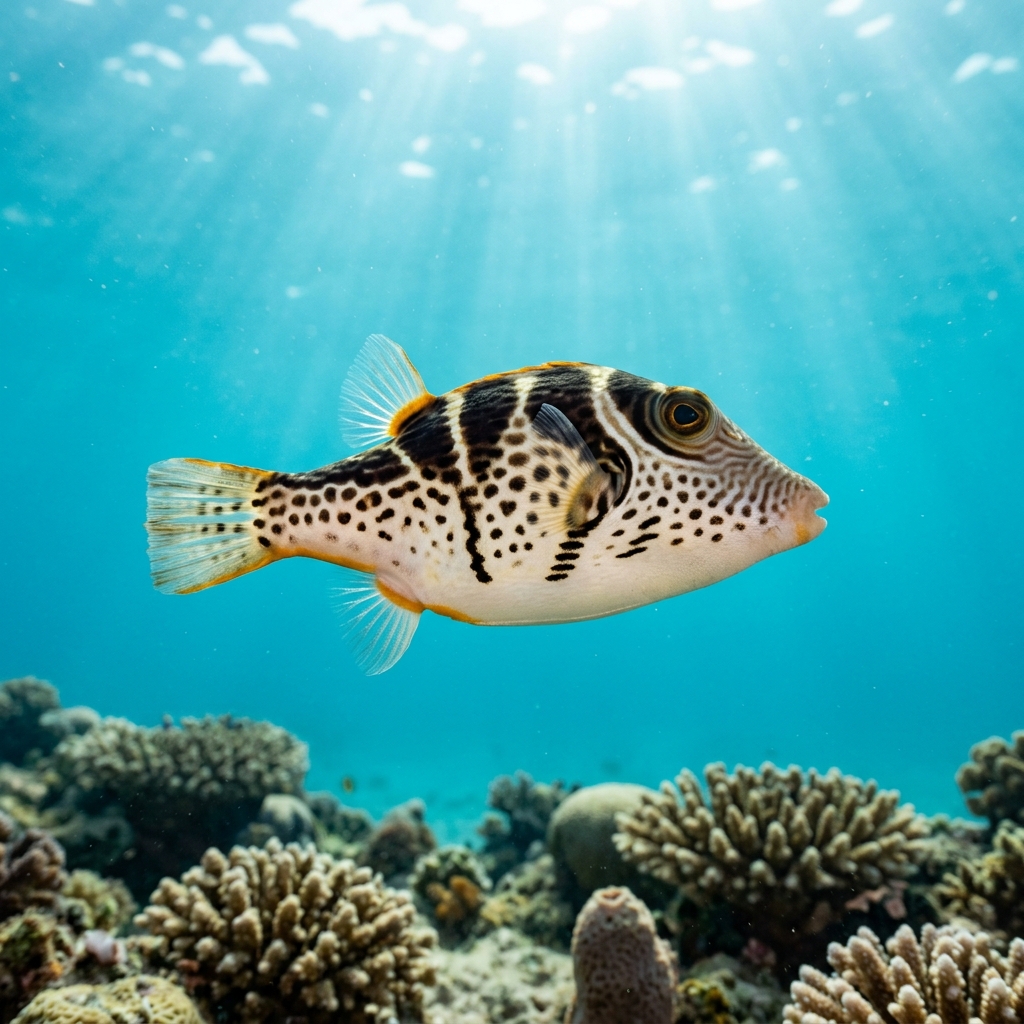
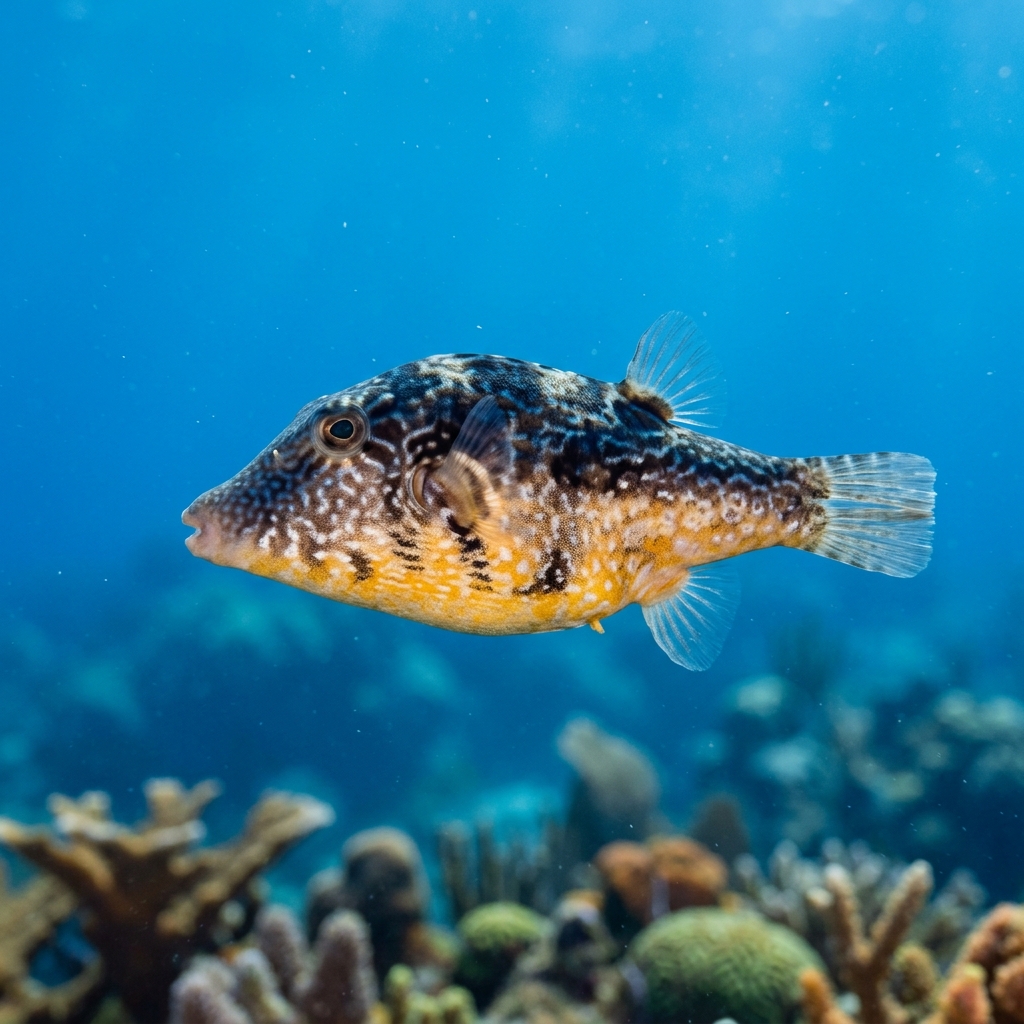
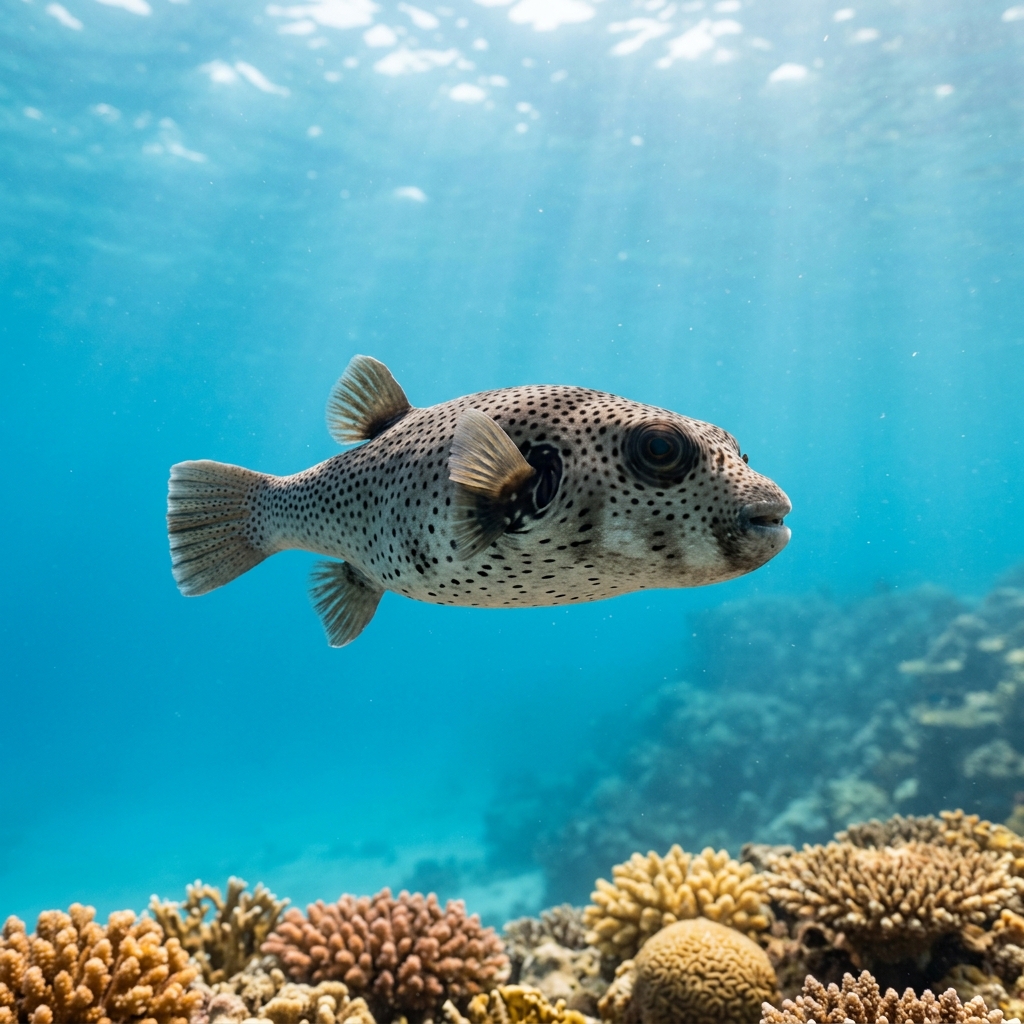
A rounded, almost ball-shaped body gives this puffer away before you even check the markings. The base colour ranges from pale grey to blue-grey or yellowish, scattered all over with distinct black spots of fairly uniform size, including on the fins. Look for the bright yellow or orange skin around the mouth and eyes, which is a reliable field marker that separates it from most lookalikes at a glance. Adults are medium-sized, typically appearing roughly the length of a hand-span underwater.
Most encounters involve a solitary individual cruising slowly just above the reef or sand, often inspecting coral heads and rubble for invertebrates to crunch with its fused beak-like teeth. It tends to be tolerant of divers at a respectful distance but will turn away and move off if approached too closely, so hovering calmly a metre or two back usually gives the longest view. It is most active during the day and is typically found in shallow to mid-depth reef zones.
Like all pufferfish, it carries tetrodotoxin, a potent toxin concentrated in the skin and organs. This is purely a handling concern, not a diver hazard, but it is what makes puffers so relaxed around predators and, by extension, around curious divers.
In the Northern Hemisphere, sightings are spread across all months with no concentrated peak, so any time suits a trip to the Philippines, Maldives, or Indonesia. In the Southern Hemisphere, sightings concentrate between June and March, making that the preferred window for destinations such as Queensland, Australia.
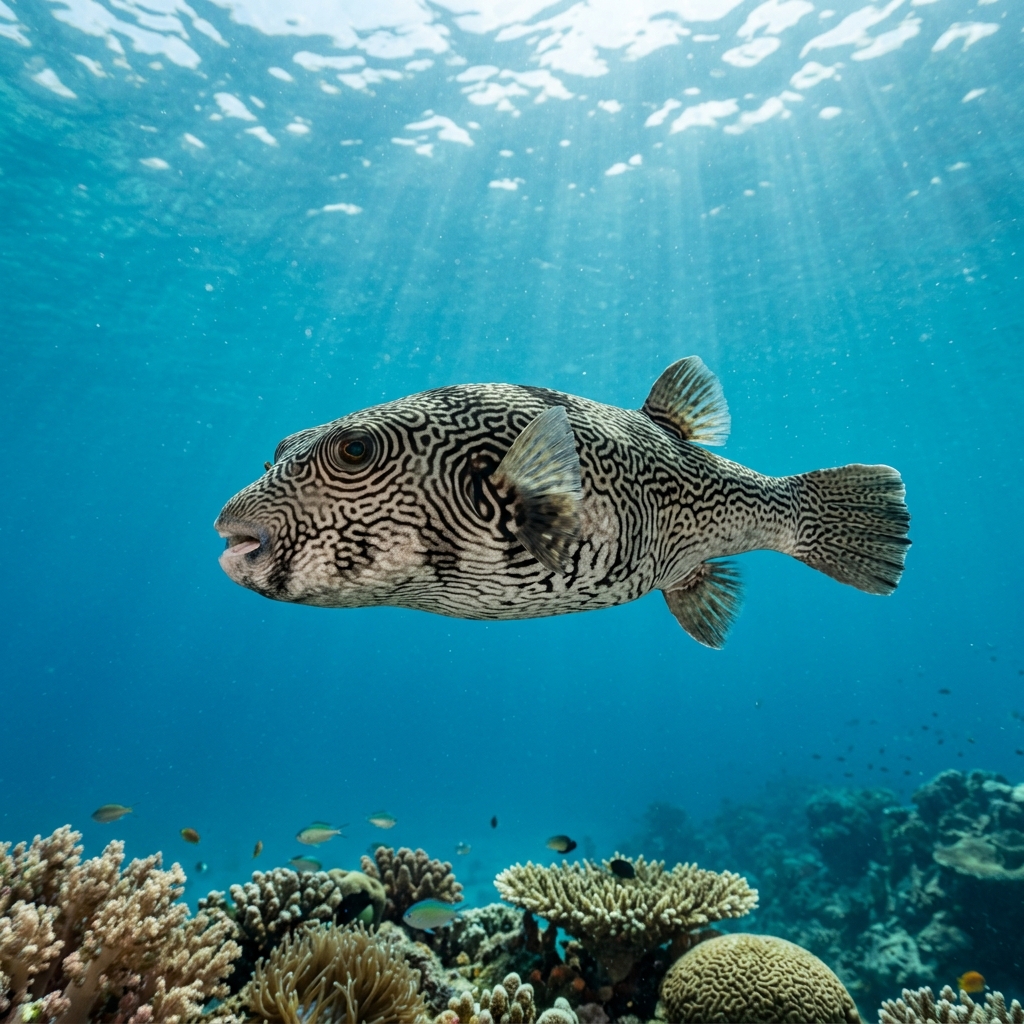
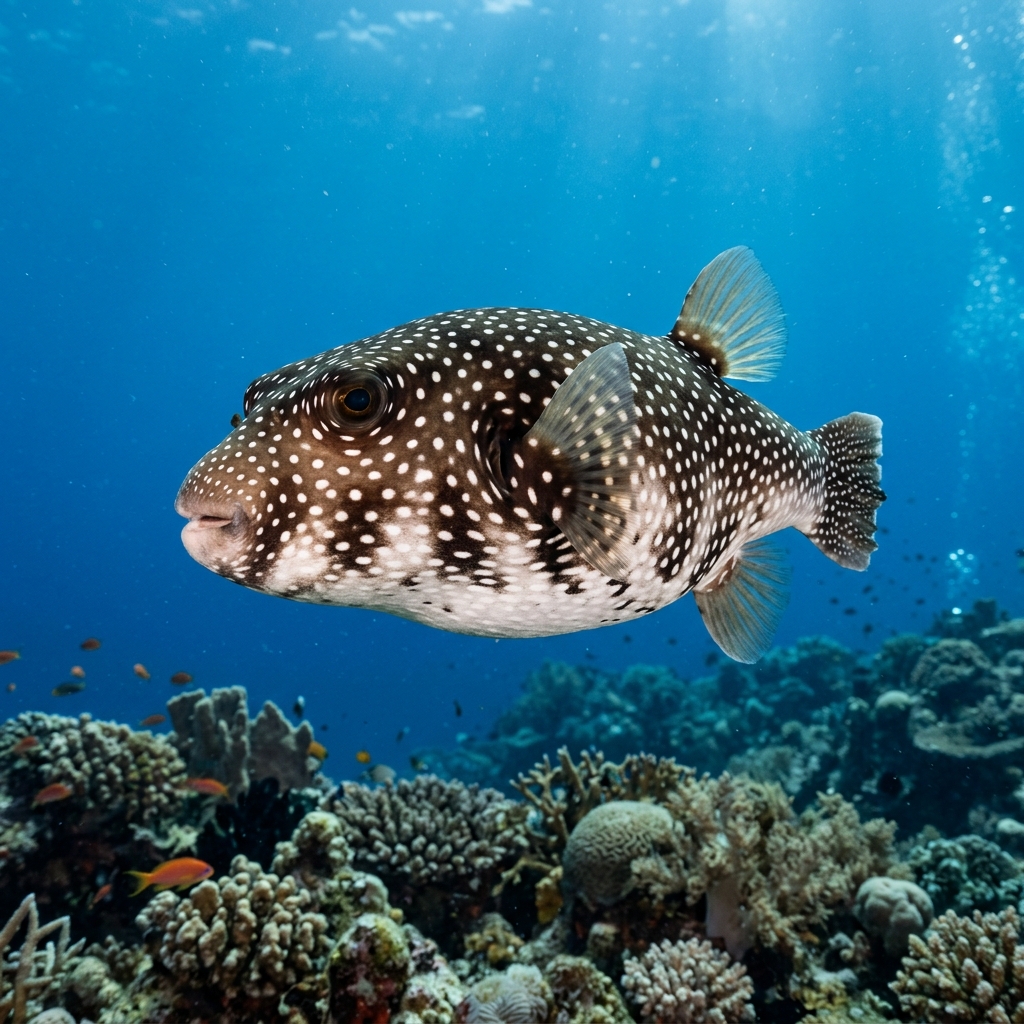
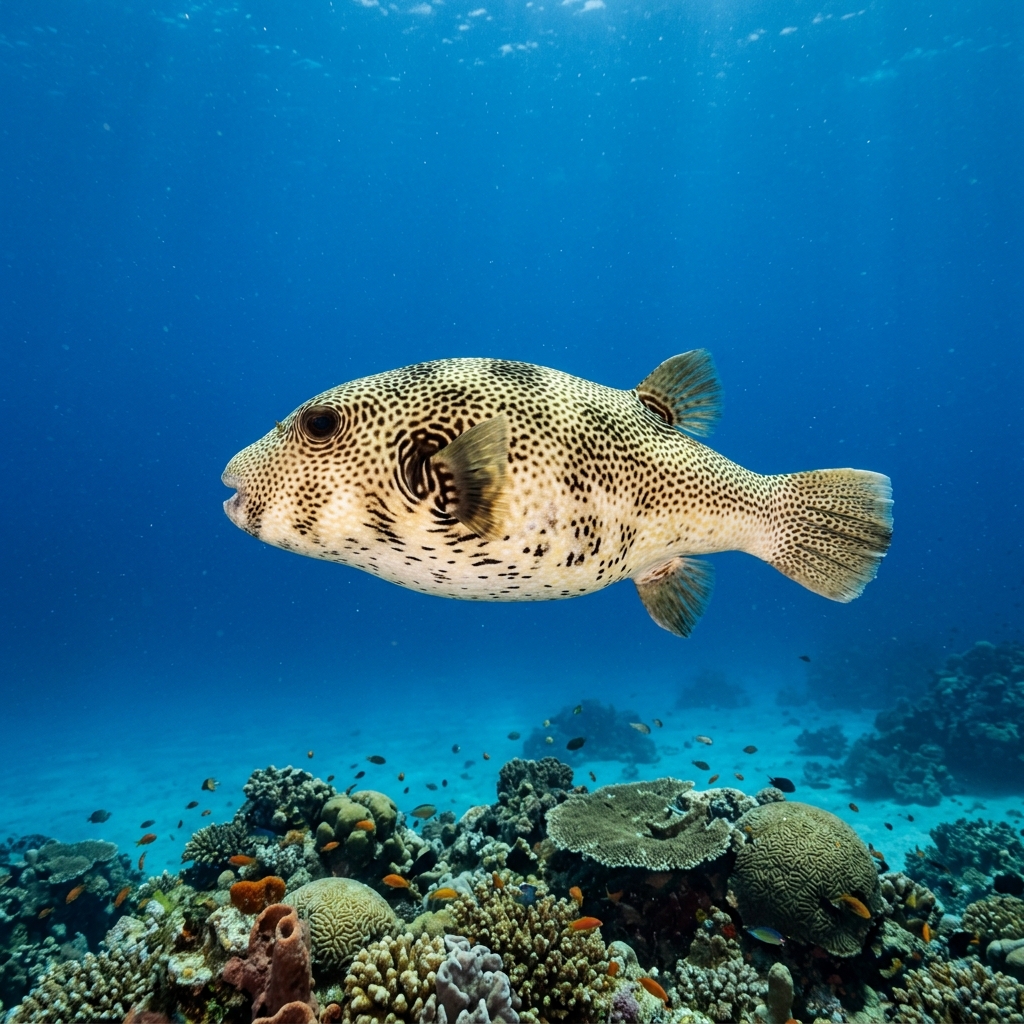
Reef neighbours a diver could mistake it for. Use the identification notes above to tell them apart.
Most reliably encountered across the Philippines and Indonesia, with the Visayas, Bali, and Sulawesi producing the strongest concentrations of logged sightings. The Maldives, particularly the Male and Ari Atolls, is another consistent performer, and Malaysia, Thailand, and Queensland, Australia round out the best destinations. Japan and Mauritius also have documented populations worth considering on a broader Indo-Pacific itinerary.
Mapping where Blackspotted Pufferfish is logged…
The Philippines and Indonesia are the top destinations, with the Visayas, Palawan, Bali, and Sulawesi all producing frequent sightings. The Maldives, Malaysia, Thailand, and Queensland, Australia are also strong options. It is a widespread Indo-Pacific species found across warm tropical reef systems.
In Northern Hemisphere locations like the Philippines, Maldives, and Indonesia, they are present year-round with no single peak season. For Southern Hemisphere sites such as Queensland, Australia, sightings concentrate from June through March, so that window gives the best odds.
Look for the rounded, inflatable body shape covered in evenly scattered black spots on a pale grey, blue-grey, or yellowish base. The clearest field mark is the vivid yellow-orange colouring around the mouth and eyes, which is not shared by most similar species. The spots also appear on the fins, helping rule out the map pufferfish.
They typically reach around 30 to 33 cm in length as adults, though underwater most encounters feel closer to hand-span sized. They are a medium-sized puffer, noticeably smaller than the giant puffer but larger than the valentini pufferfish.
No. They are not aggressive and pose no threat to divers during normal encounters. Like all pufferfish, their skin and organs contain tetrodotoxin, but this is only a risk if handled or consumed. Simply enjoy watching from a short distance and they will often carry on going about their business.
Site and sighting data is aggregated from diver logs, iNaturalist and GBIF. For taxonomy and conservation status:
Caribbean Sharpnose Puffer
2,190 sites