Cheilinus fasciatus
Chunky reef wrasse with a barred flank, logged from Malaysia's east coast to Raja Ampat and Koh Tao in warm 25-29C water year-round.
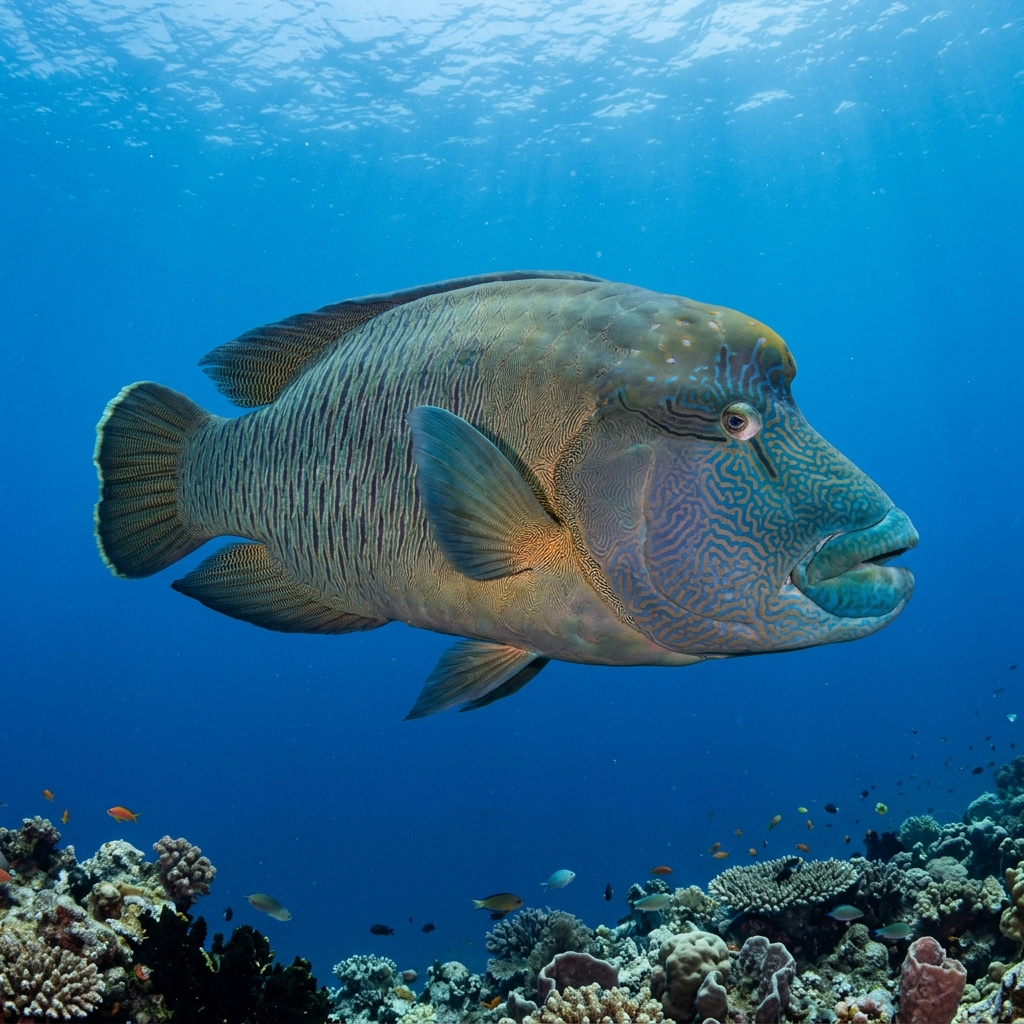
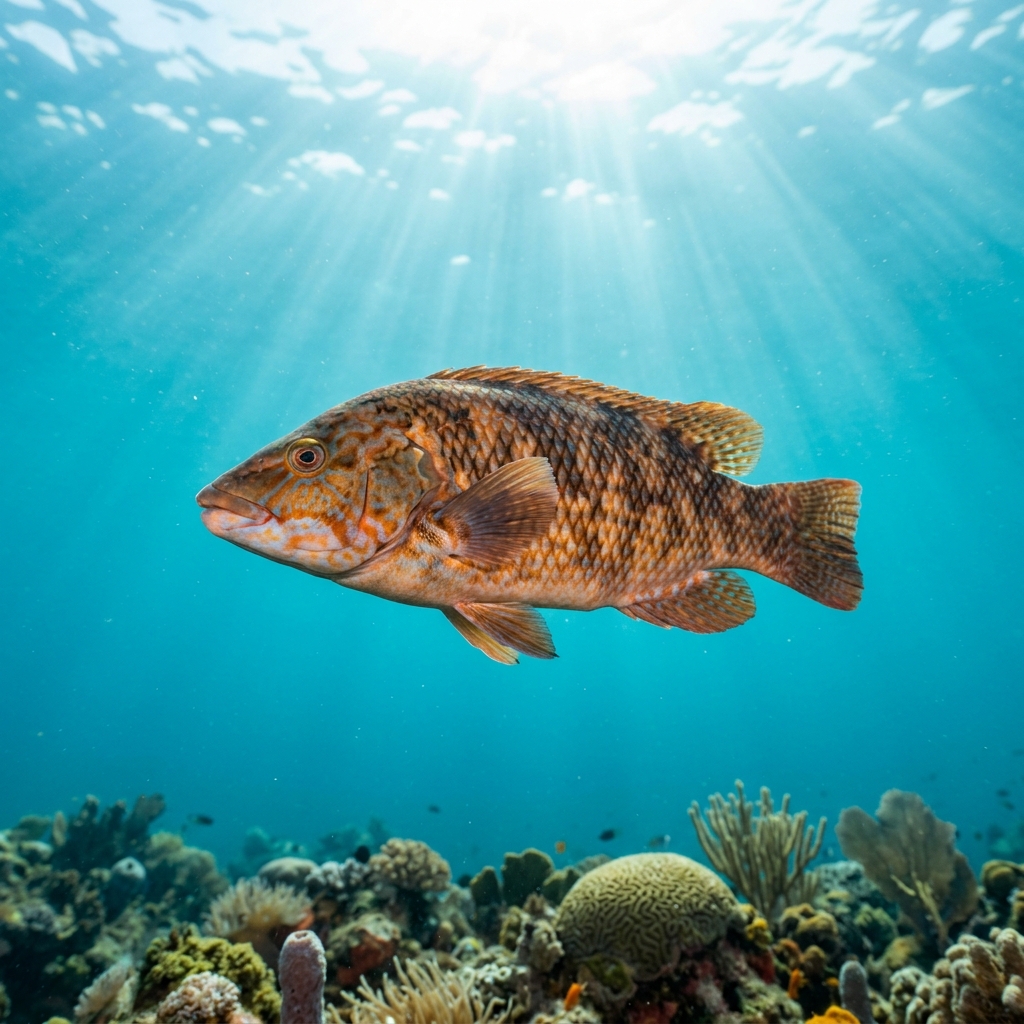
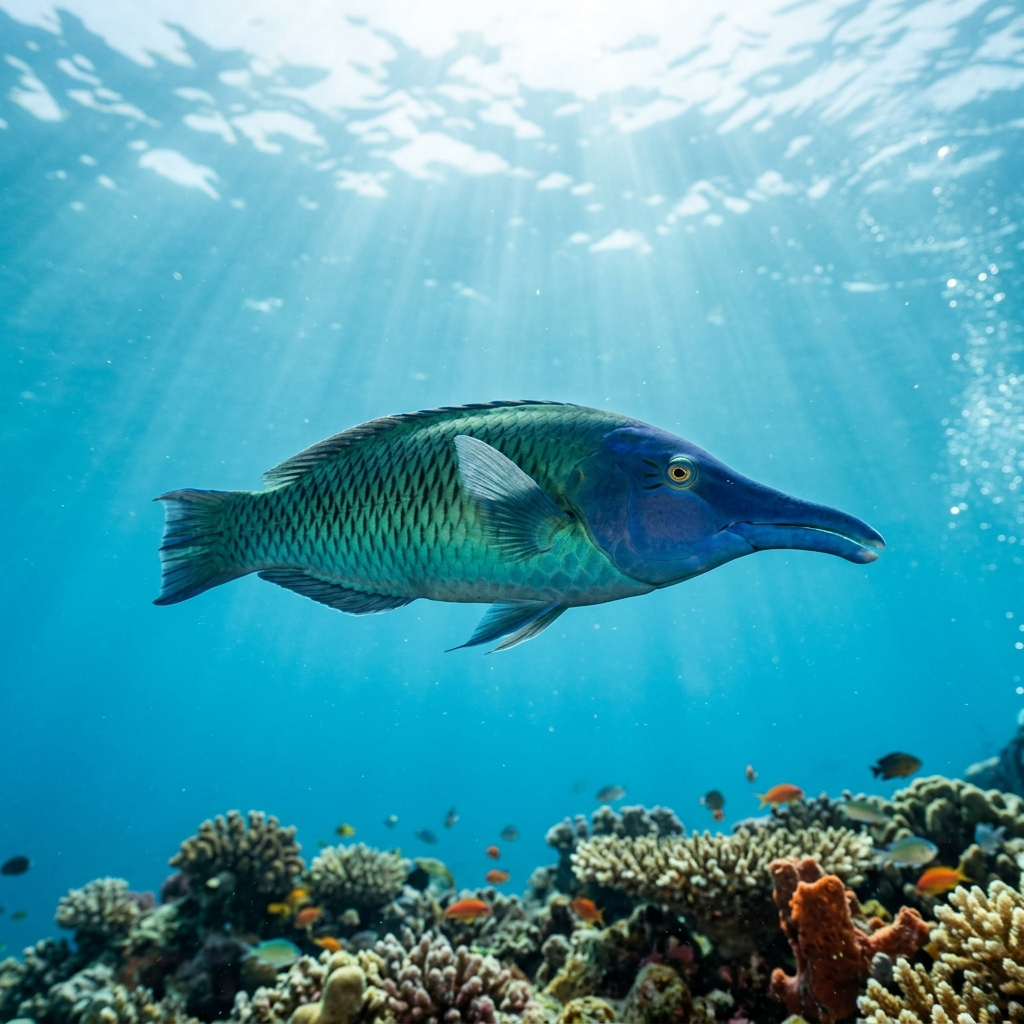
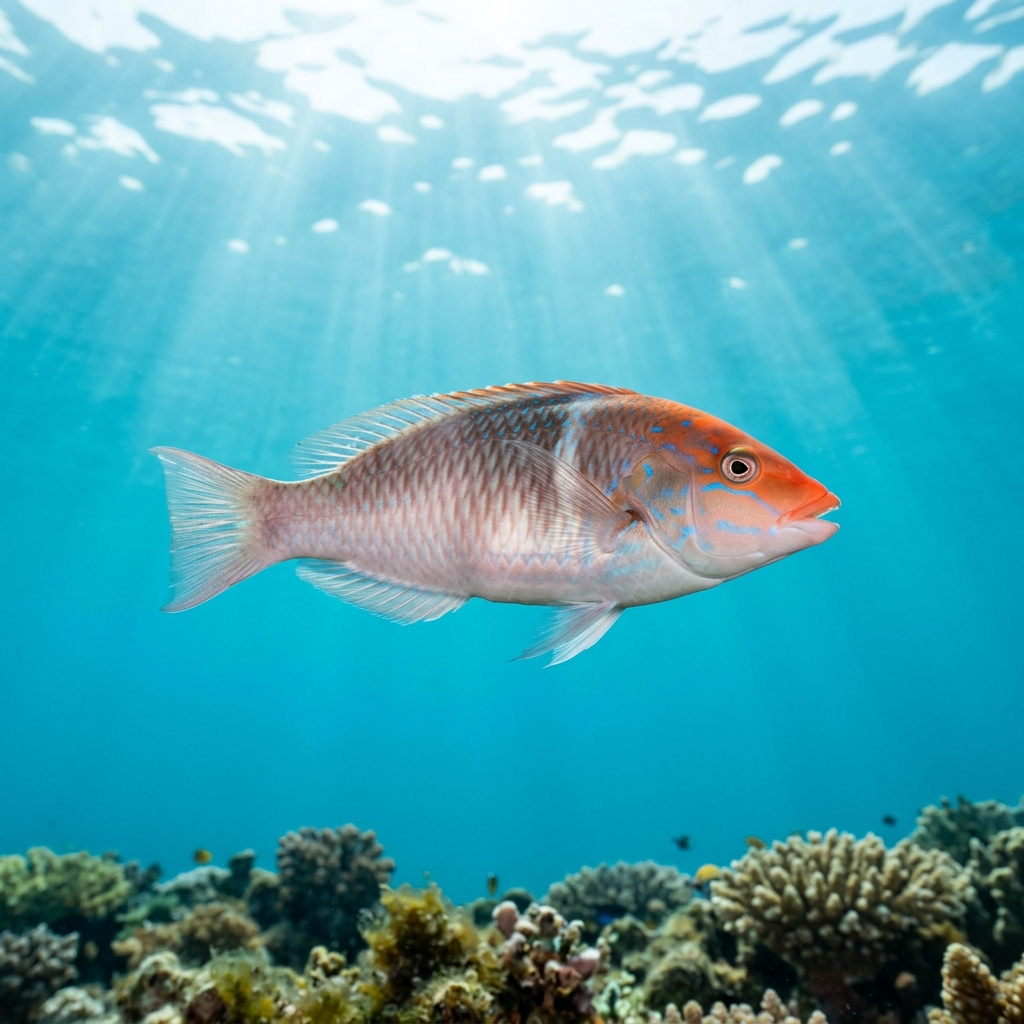
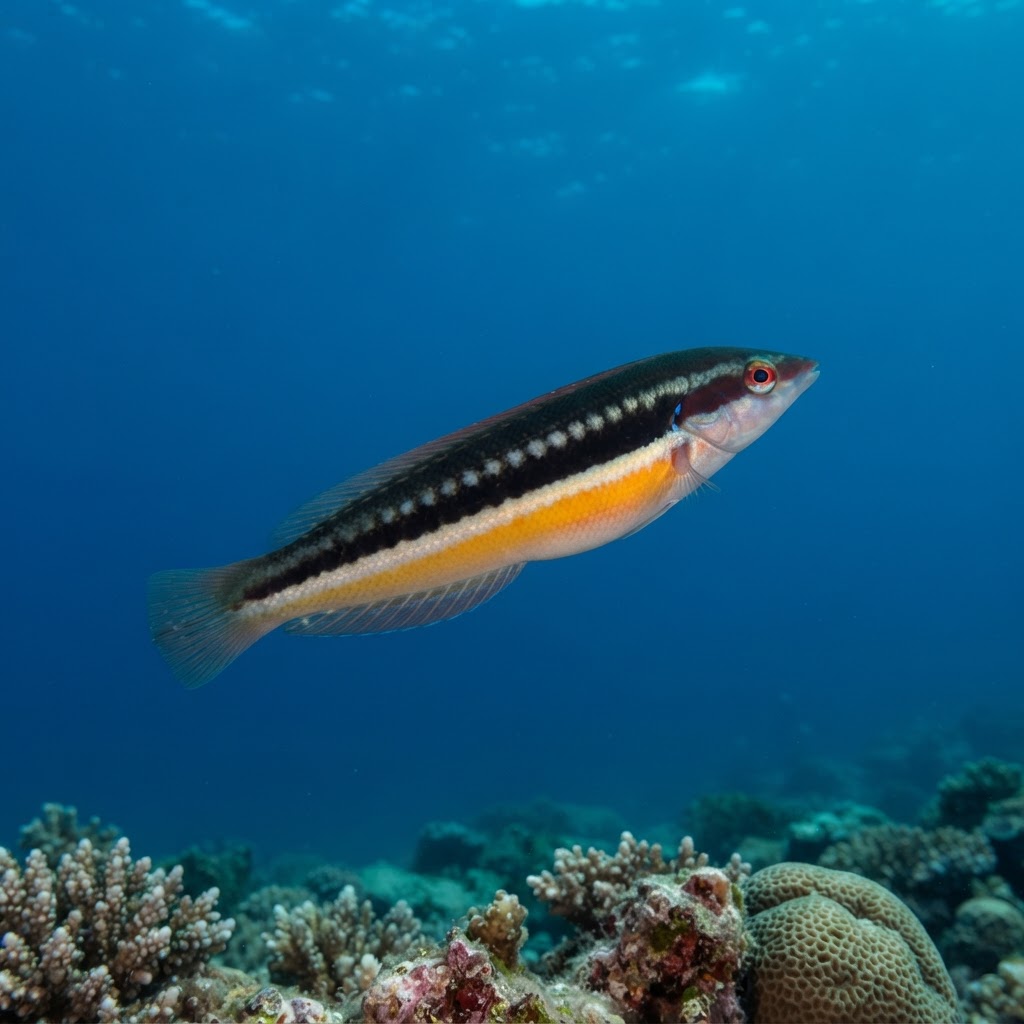
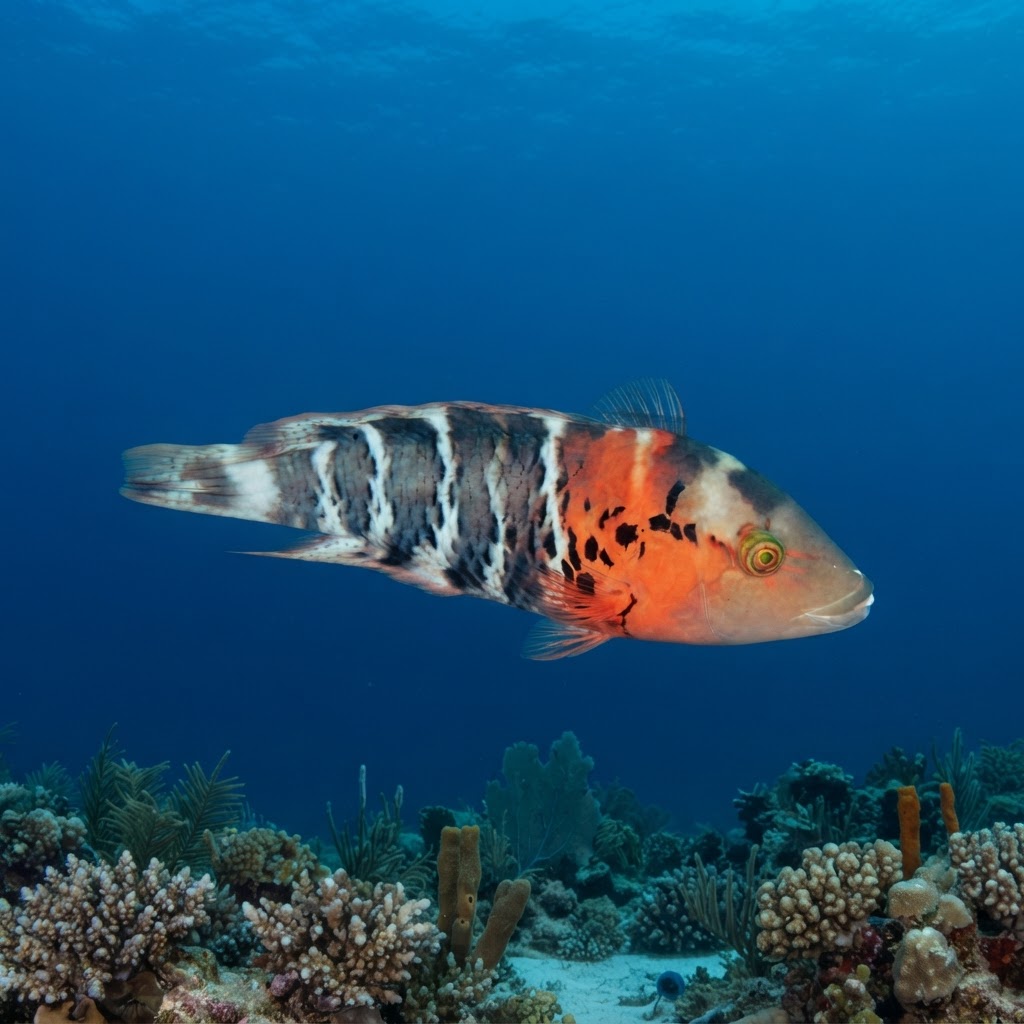
Grows to around 28 cm, with a thick-set, slightly humpbacked body typical of the genus and a blunt head. Look for pale vertical bars across a greenish-grey flank and a pinkish or orange wash across the face and gill area, which is what gives it the common name. It swims with slow, deliberate strokes low over the reef rather than darting like smaller wrasses.
Usually seen cruising alone low over the reef or poking around rubble and coral heads hunting small invertebrates, moving at an unhurried pace that makes it easy to approach for photos. It tends to hold its ground rather than bolt when divers close in, though it will drift off into a crevice if pressed. Most sightings come during normal daytime reef dives rather than night dives.
Like other Cheilinus wrasses it hunts by picking small crustaceans and molluscs off the reef and rubble, using strong jaws to crush shells that would defeat a smaller fish.
No clear seasonal pattern shows up in the sightings, and with a comfortable range of roughly 24.7 to 29C it sits happily on tropical reefs all year, so any month you dive these regions is fair game.
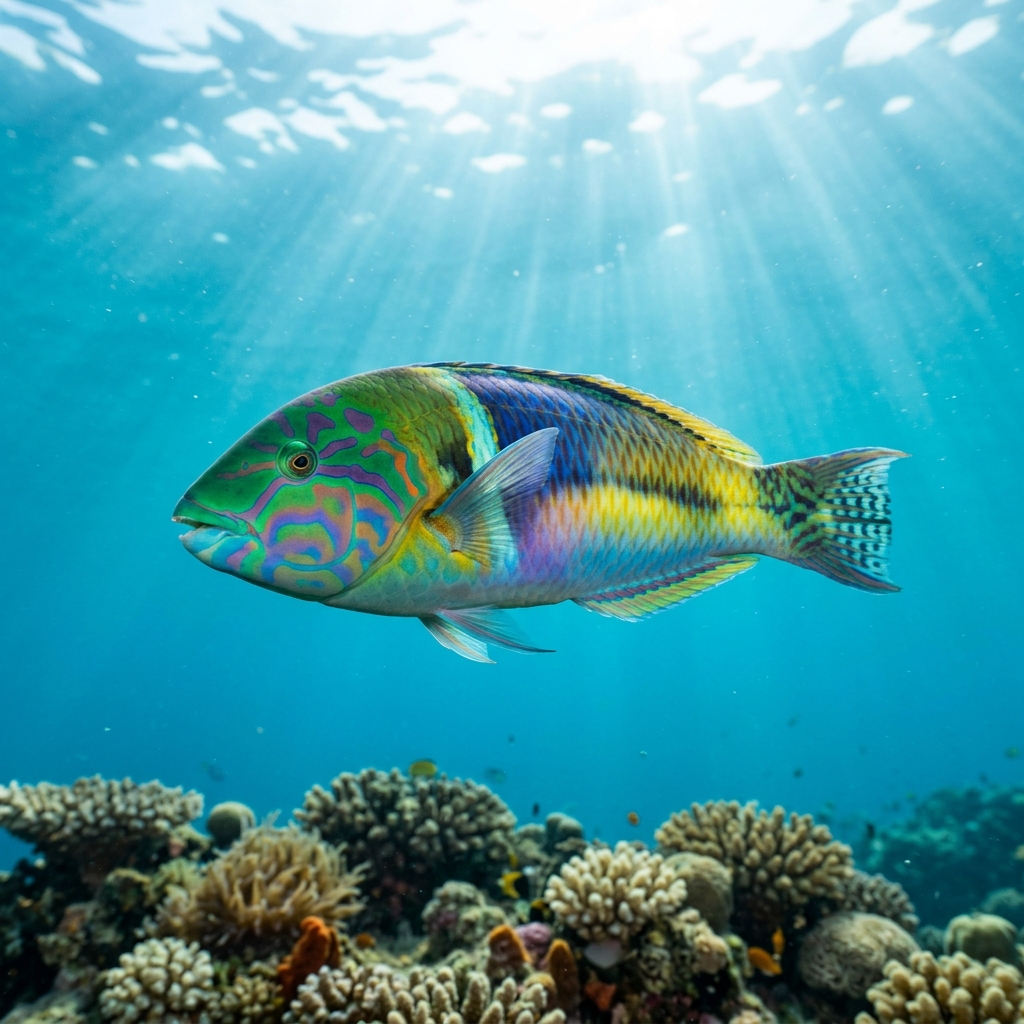
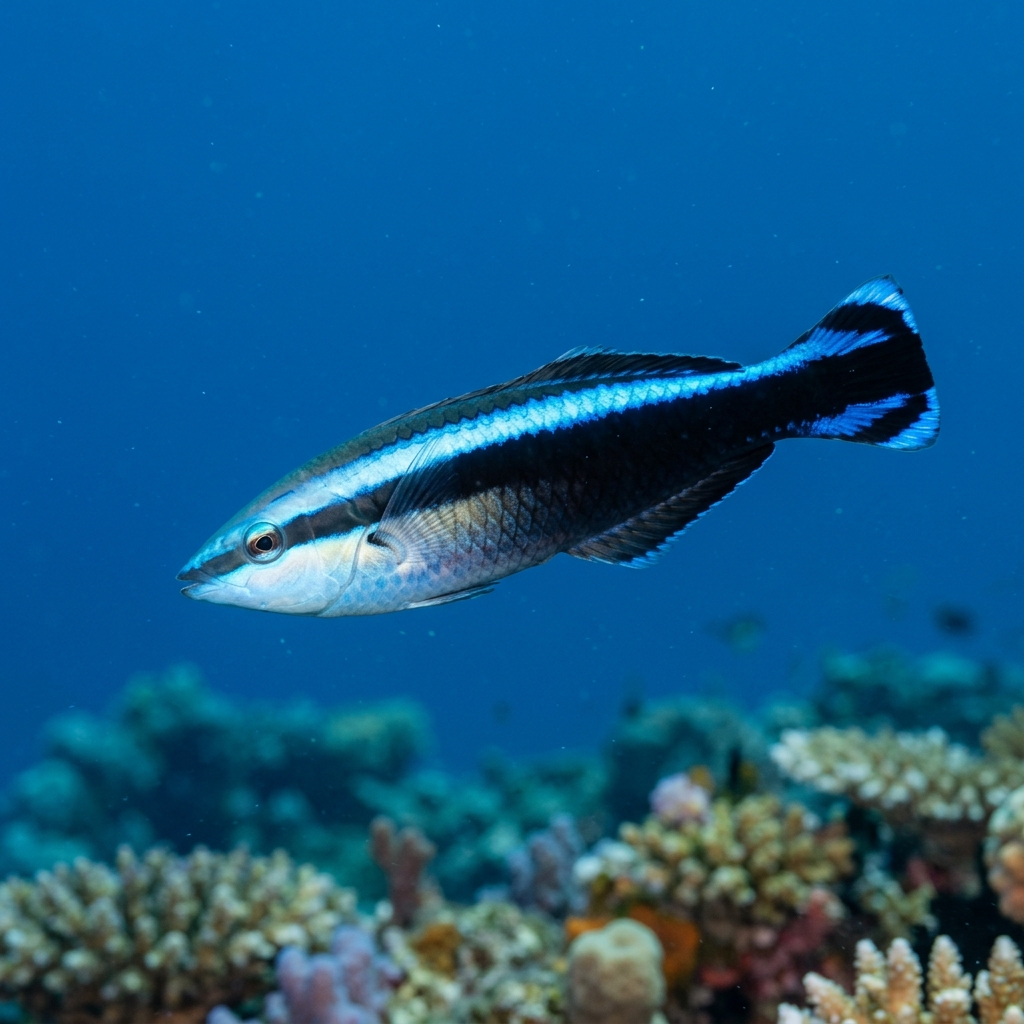
Reef neighbours a diver could mistake it for. Use the identification notes above to tell them apart.
Most reliably logged along Peninsular Malaysia's east coast and across Sabah, with strong numbers also in Thailand around Koh Tao and Koh Lipe. Indonesia's Raja Ampat and Sulawesi, the Philippines' Visayas, Queensland in Australia, Palau, the Maldives and Seychelles all produce regular sightings too, usually as an uncommon-to-common find rather than a guaranteed one.
Mapping where Redbreasted Wrasse is logged…
Best chances are along Malaysia's Peninsular east coast and Sabah, Thailand's Koh Tao and Koh Lipe, Indonesia's Raja Ampat and Sulawesi, and reefs in the Philippines' Visayas, Queensland, Palau, the Maldives and Seychelles.
There is no strong season in the sightings data, and its comfortable temperature range of about 25 to 29C means it is present on tropical reefs throughout the year.
Look for a stocky, slow-moving wrasse around 28 cm with pale vertical bars on a greenish body and a pink or orange flush across the face and gills. It cruises low over the reef rather than schooling or darting.
They typically reach around 28 cm in length, making them a mid-sized reef wrasse, noticeably chunkier than the small cleaner or fairy wrasses divers often see nearby.
No, they pose no threat to divers and are generally approachable, often holding their position on the reef rather than fleeing.
Site and sighting data is aggregated from diver logs, iNaturalist and GBIF. For taxonomy and conservation status:
Bird Wrasses
3,632 sites