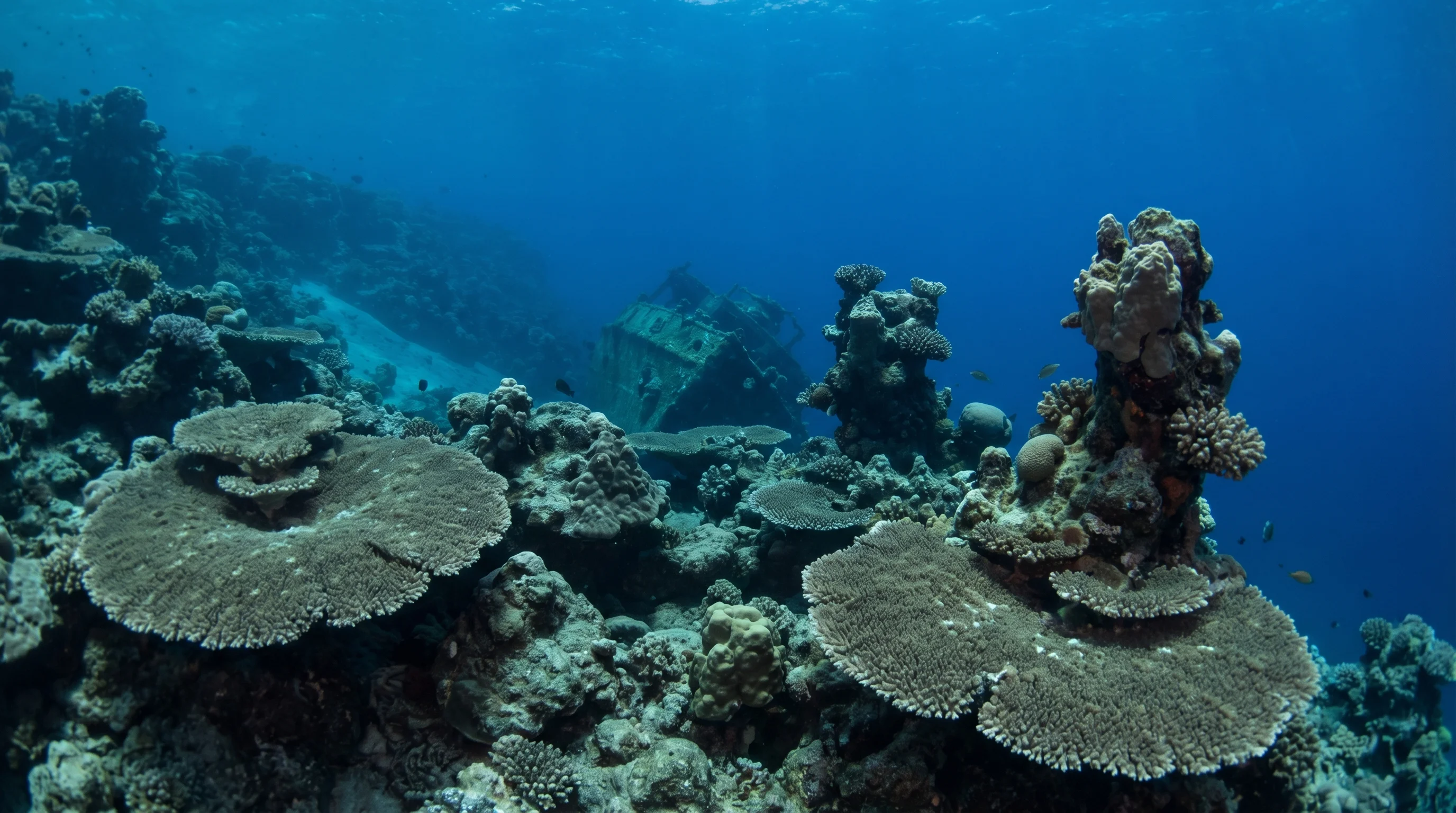
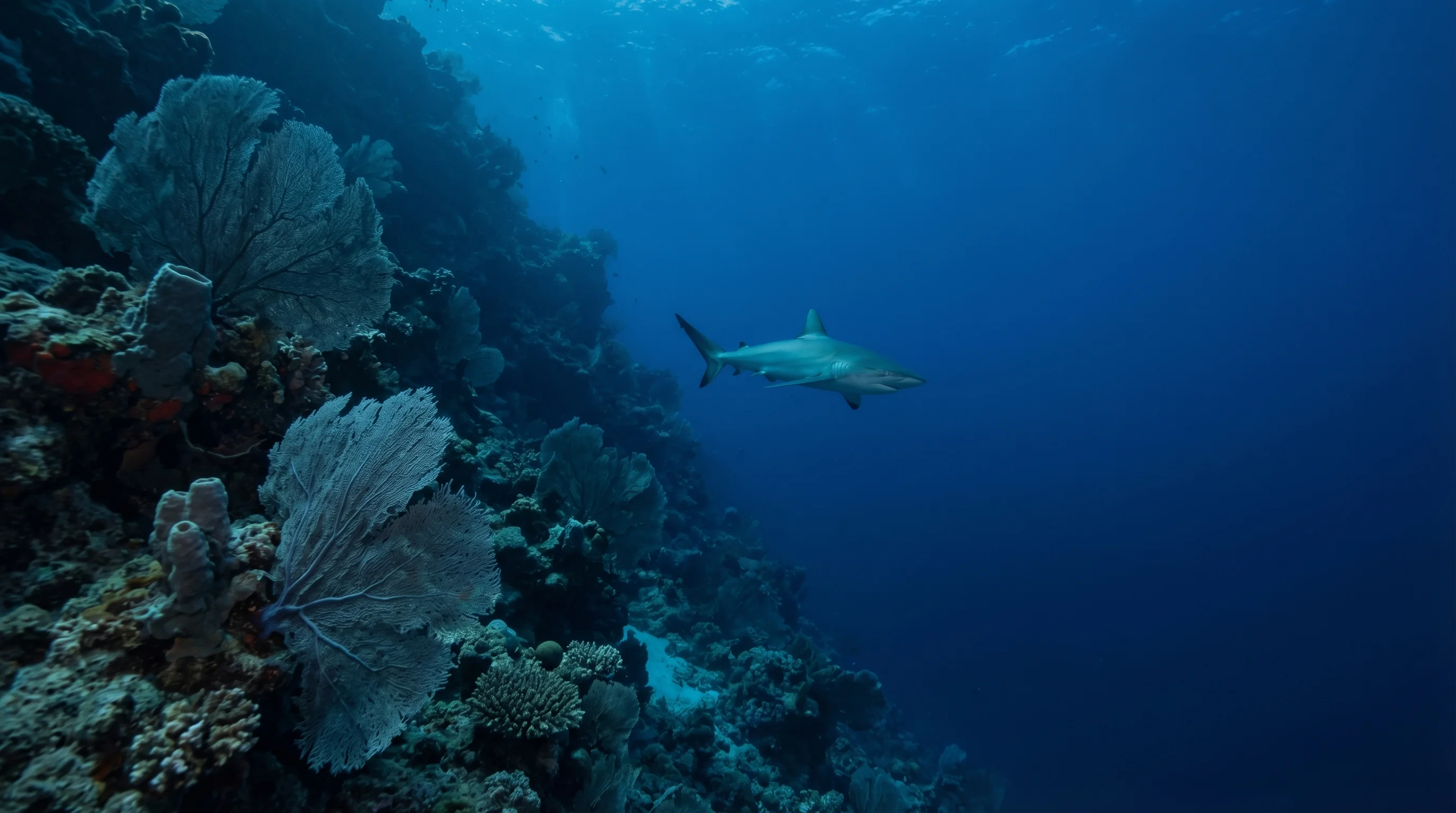
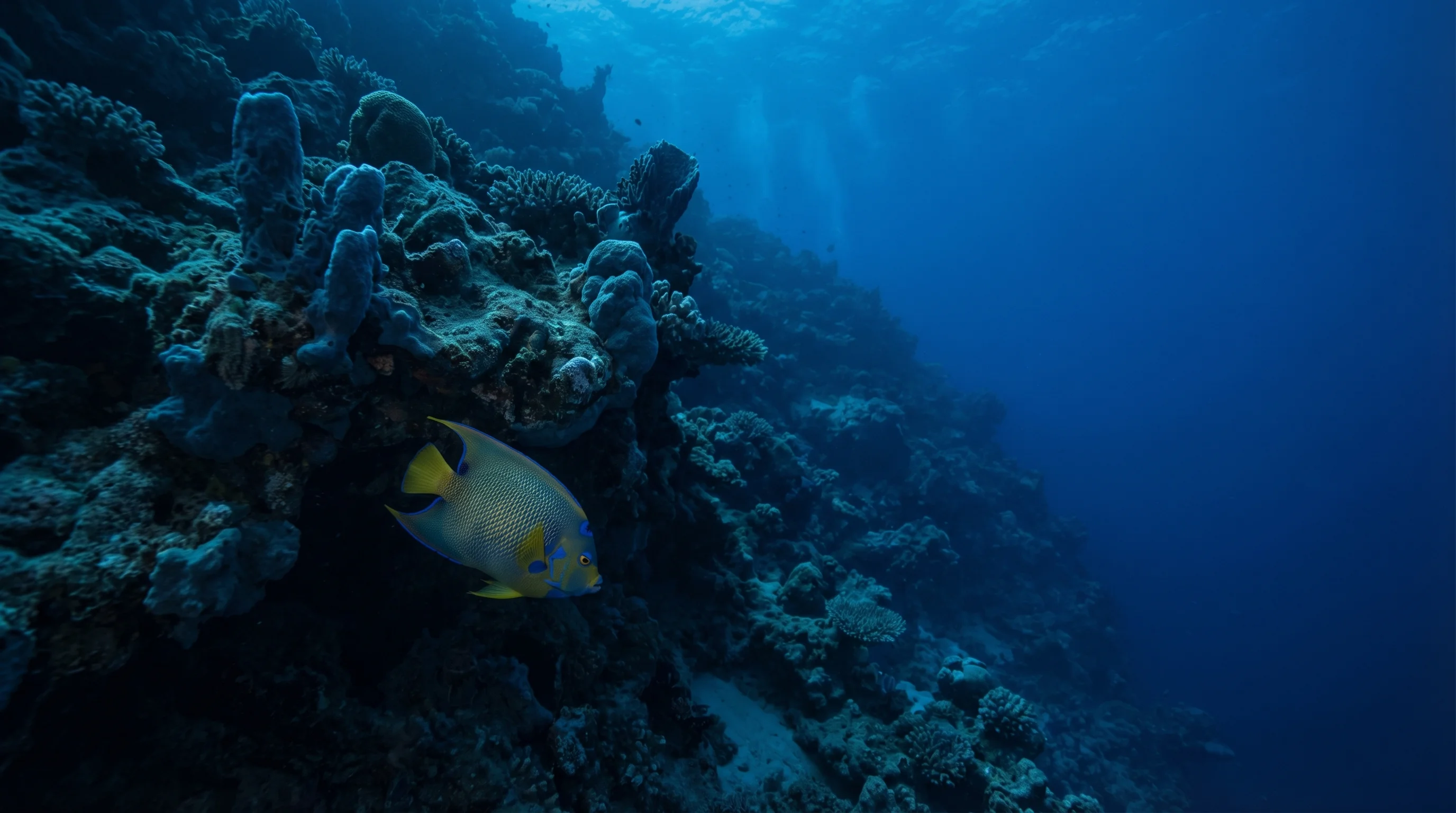
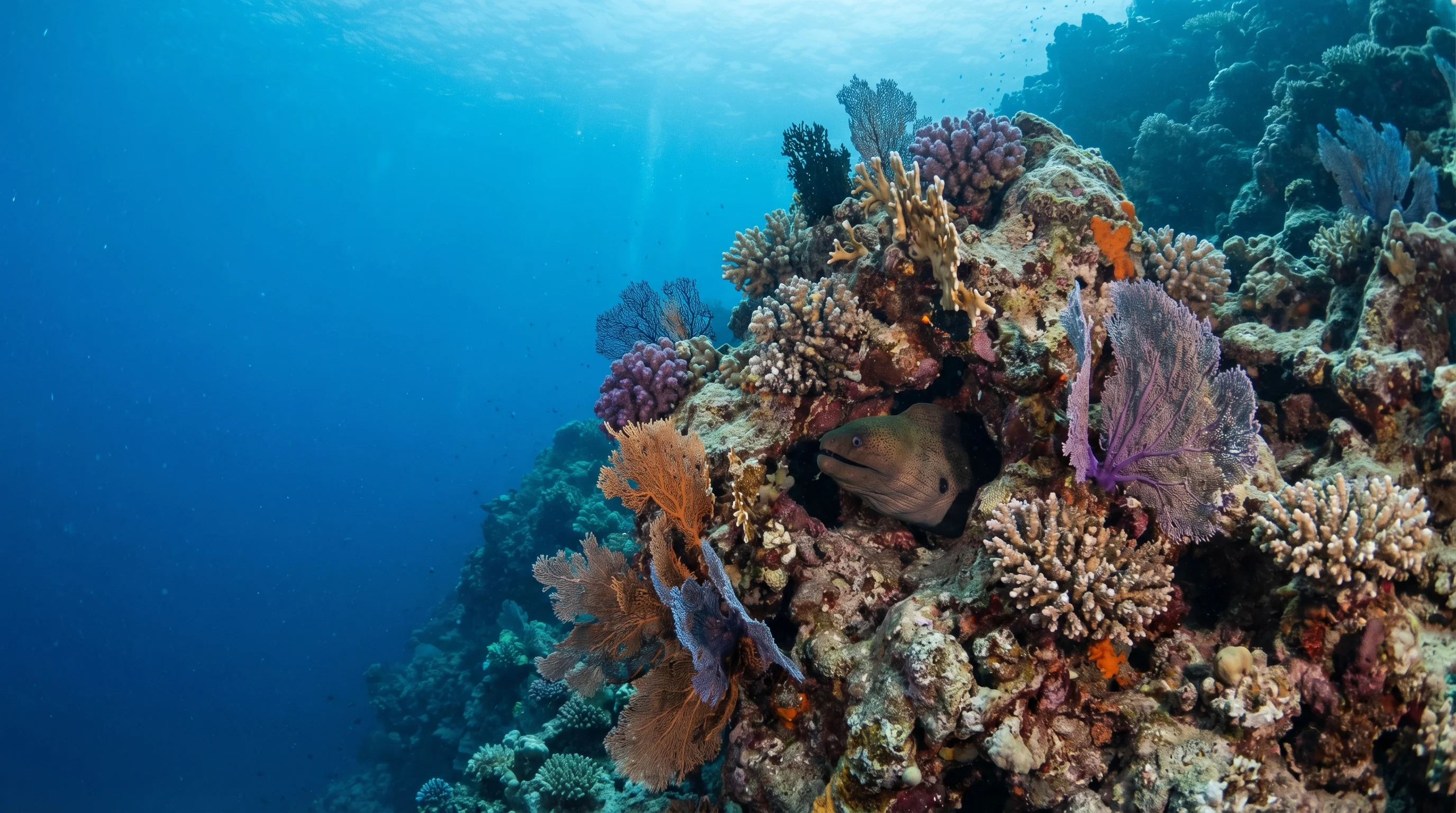
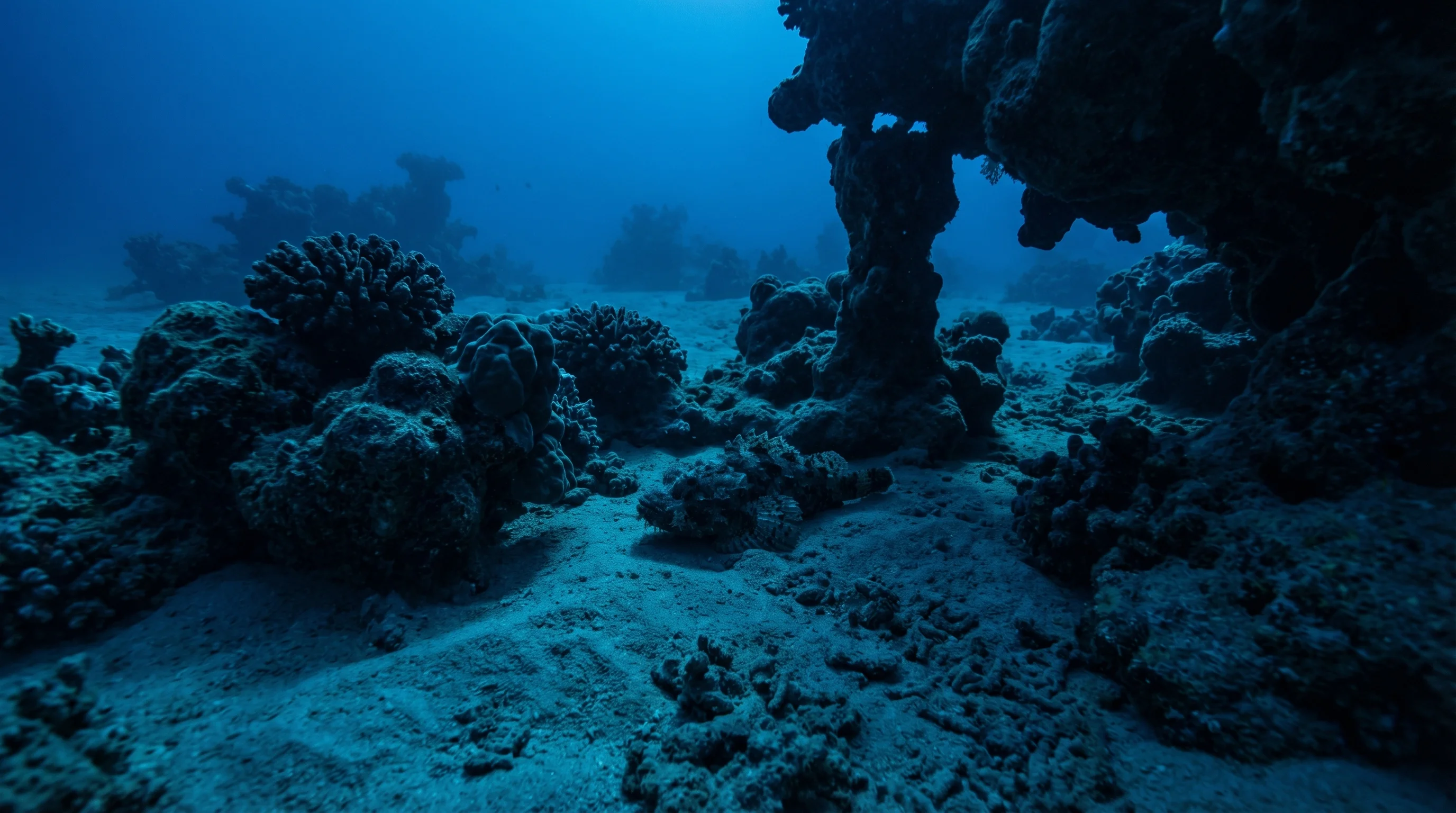
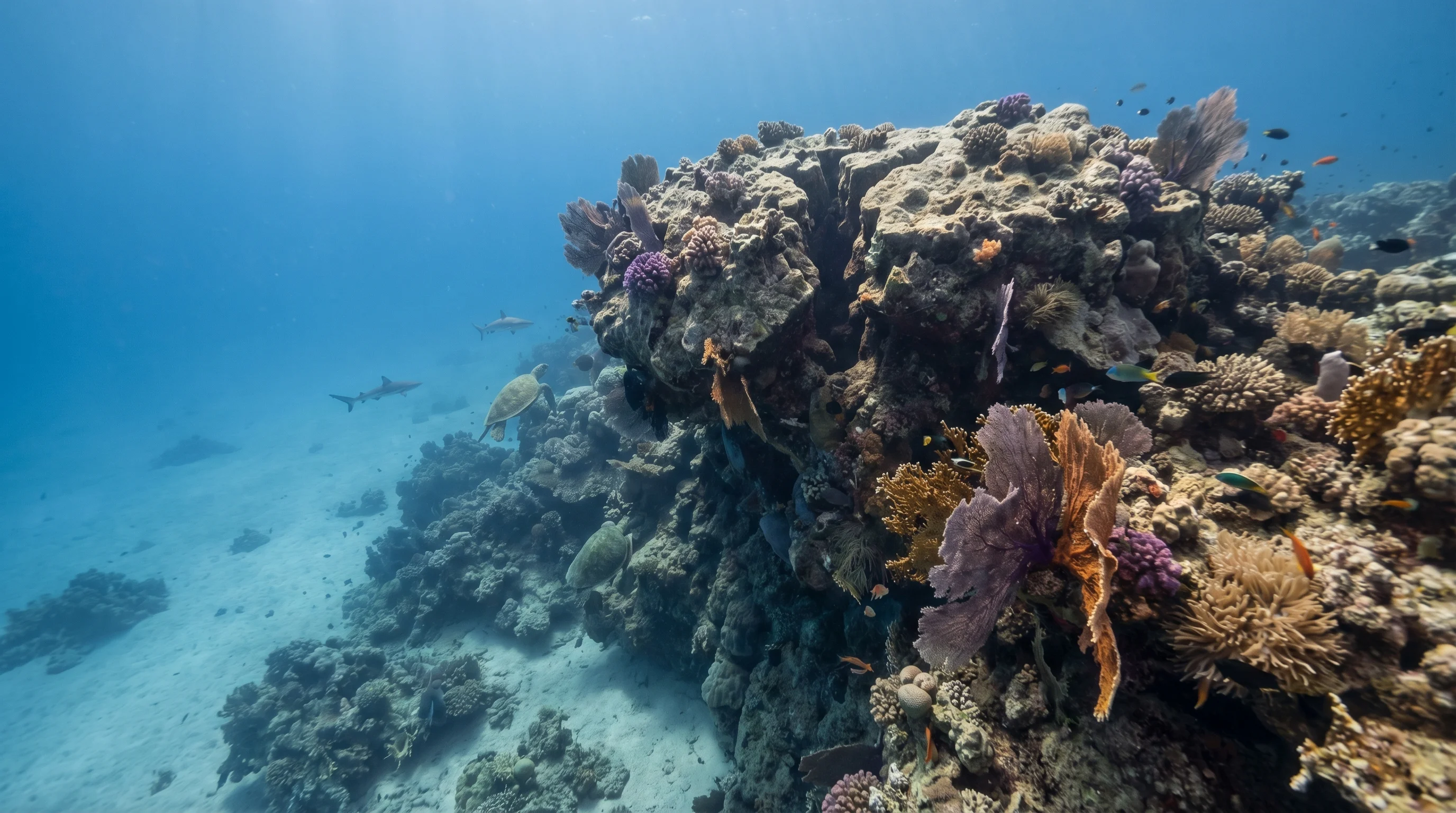
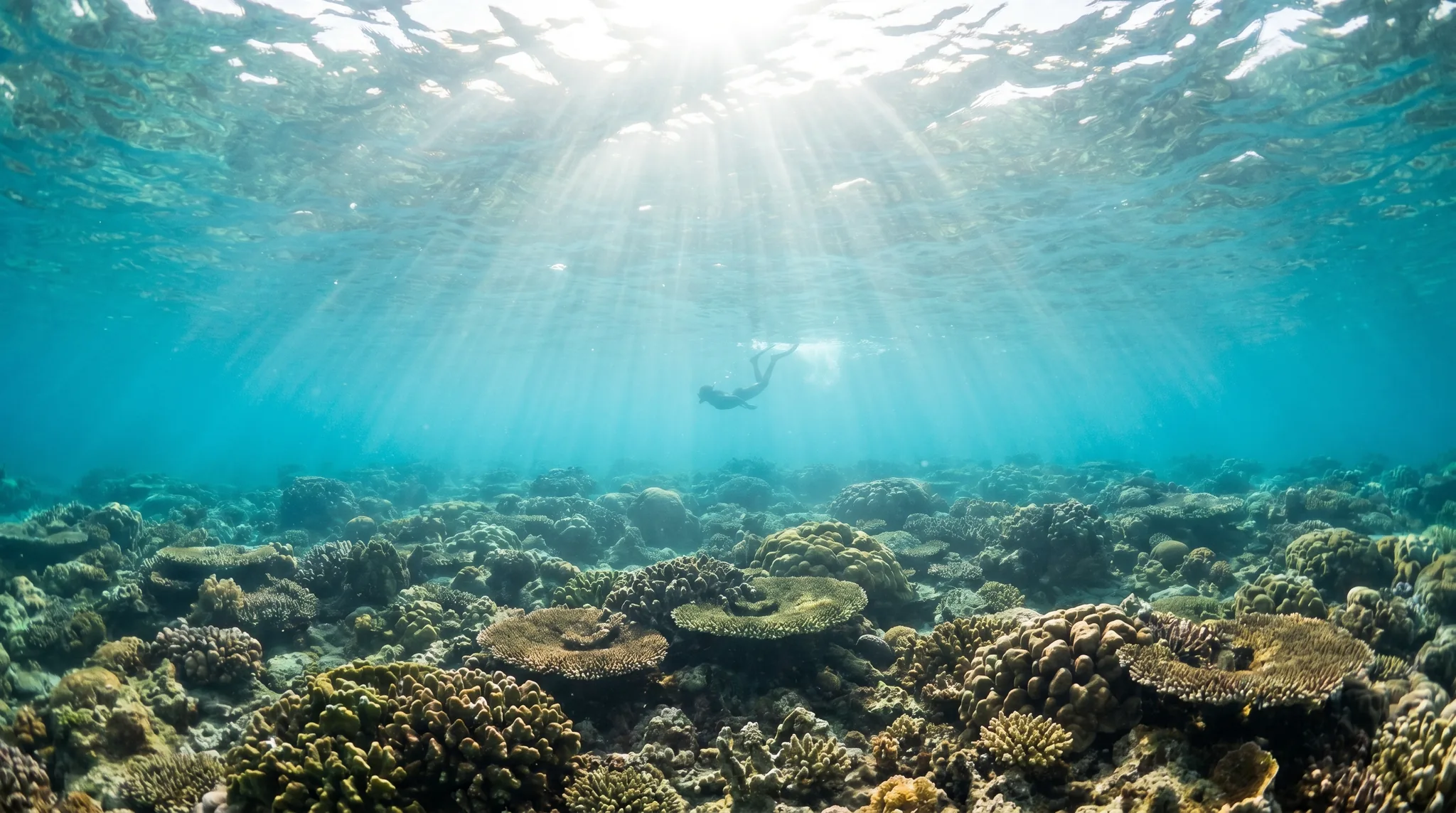
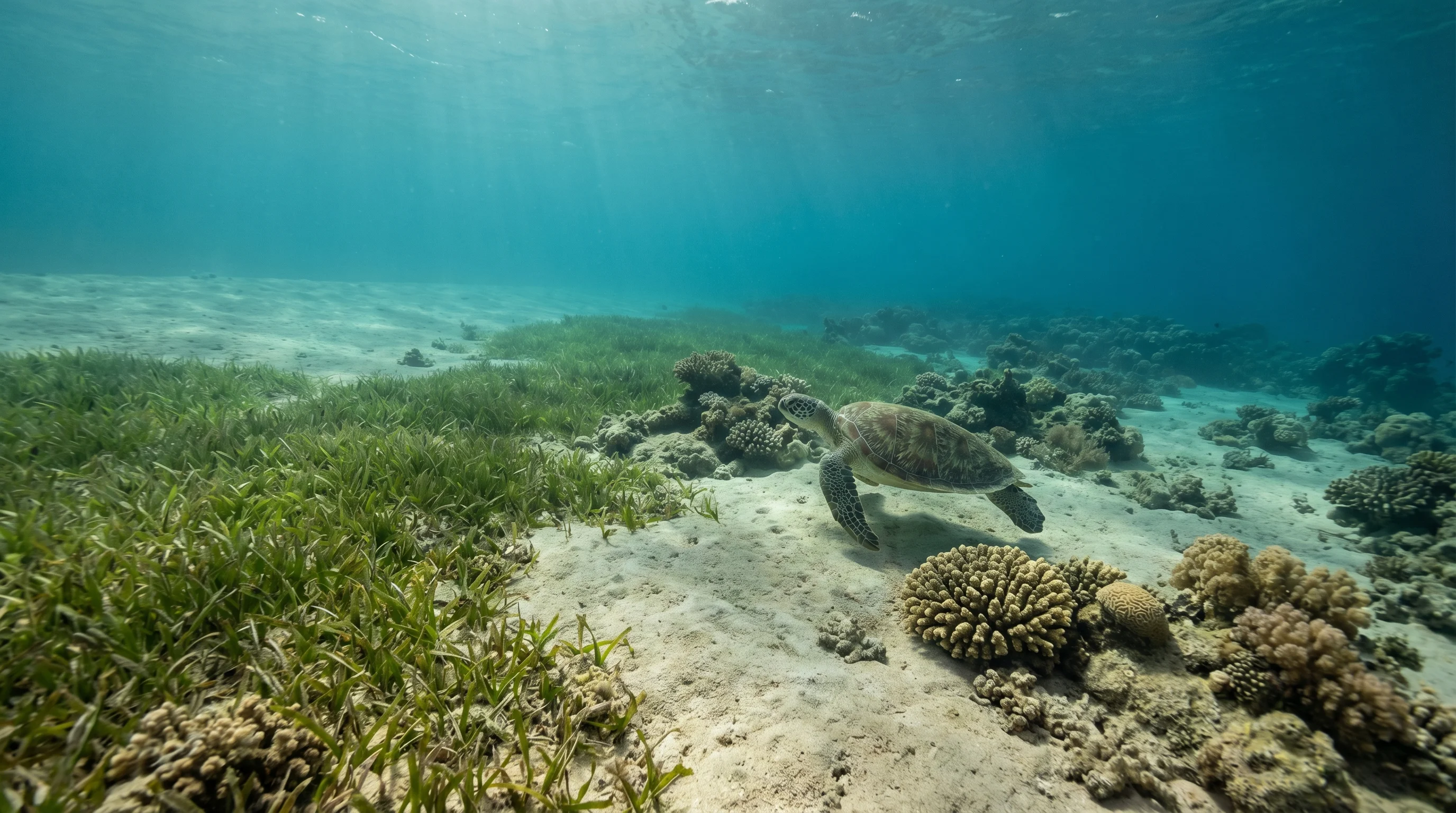
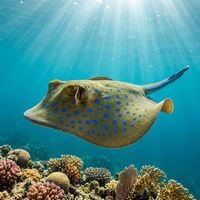
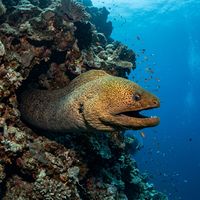
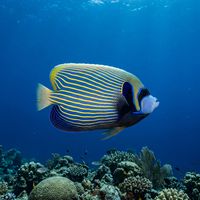
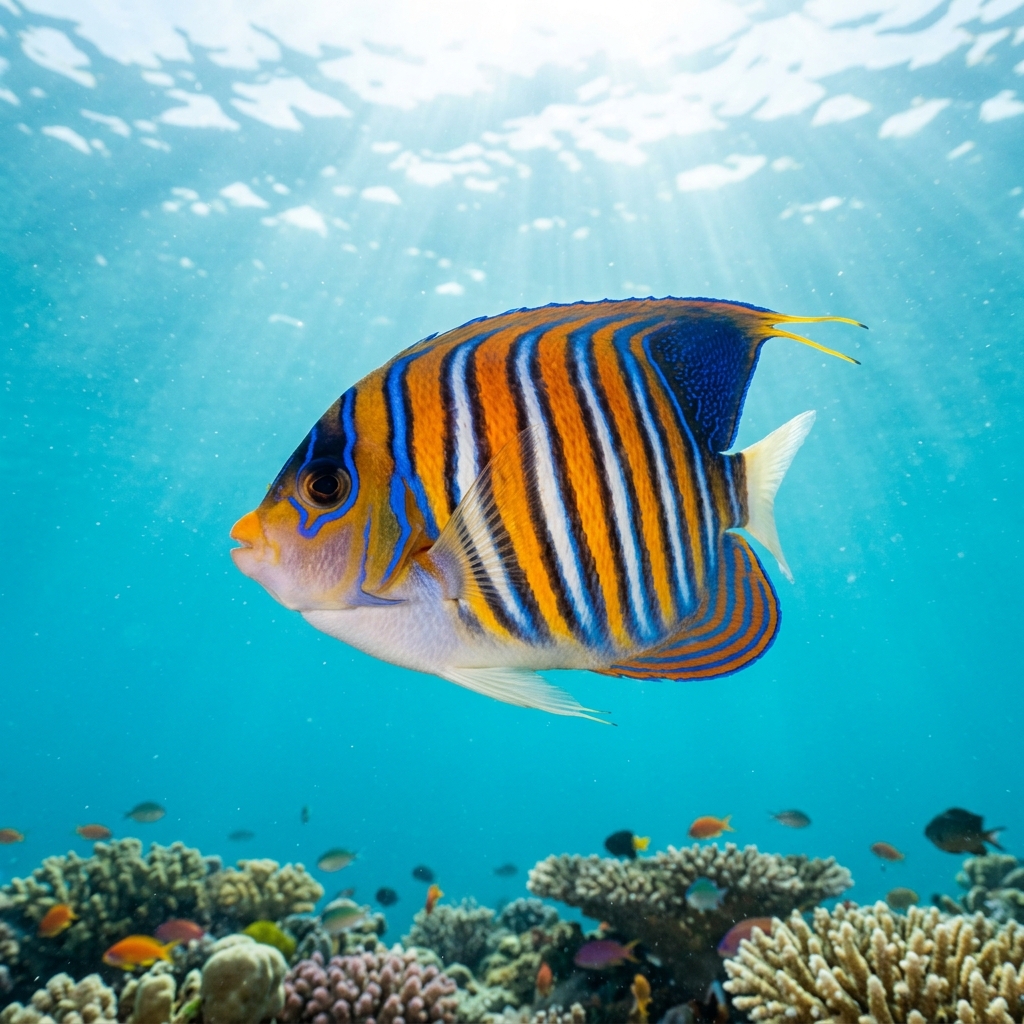
Elphinstone is defined by offshore reef structures where shallow reef tops give way abruptly to walls and drop-offs. Almost all diving is boat-access, with a strong mix of beginner and intermediate sites spread across reefs, pinnacles, caves and seagrass bays. The Whitetip Reef Shark is regularly observed, alongside the Bluespotted Fantail Ray, Giant Moray and Emperor Angelfish. Sites like Habili Ghadir and Shaab Samaka add pinnacle and cave topography, while sheltered bays such as Marsa Samadai and Marsa Tondoba offer calmer alternatives.
Monthly water temperature across Elphinstone's sites, from satellite sea-surface data corrected for depth. The band shows the site-to-site spread.
Water temperature stays warm throughout the year, dipping slightly in the cooler months of February and March before climbing to its peak in August and September. The histogram of preferred dive months points strongly to April and October as the favoured windows, when conditions balance comfortable water with good visibility. Summer months remain warm but can bring stronger surface conditions on exposed offshore reefs.
17 operators
Marsa Alam, Egypt
14 more sites to explore
Water temperature around Elphinstone ranges from about 23°C in February to 30°C in August, based on satellite sea-temperature data for its dive sites.
In the warm season (about 30°C) a rash guard or 3mm shorty is comfortable in Elphinstone; in the coldest months (about 23°C) step up to a 3mm full suit.
Fin maps 26 sites in Elphinstone (26 scuba diving sites and 3 snorkelling spots, with some suited to both).
Across Elphinstone's dive sites, April, May, October and November are most often reported as the best months to visit.
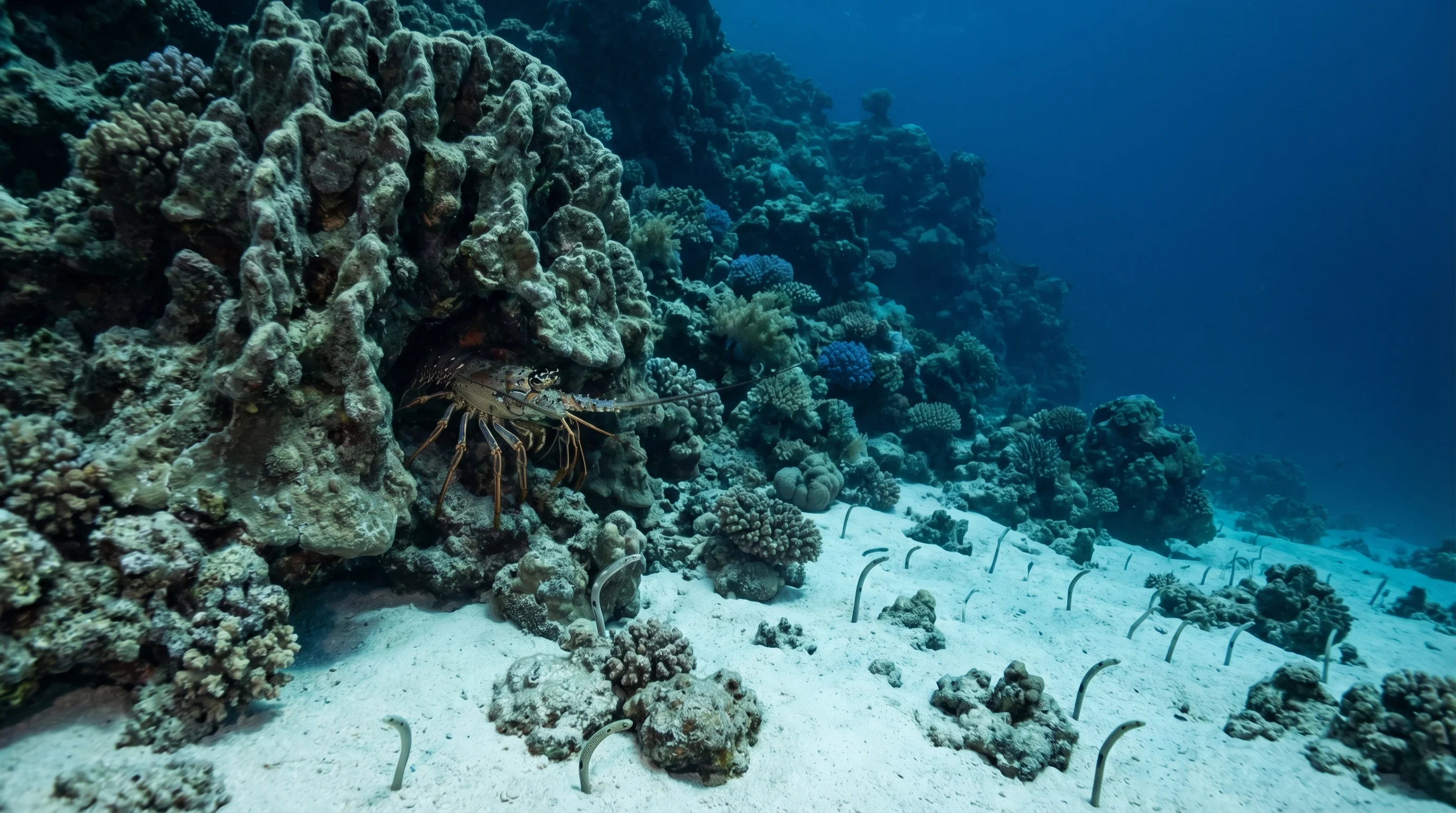
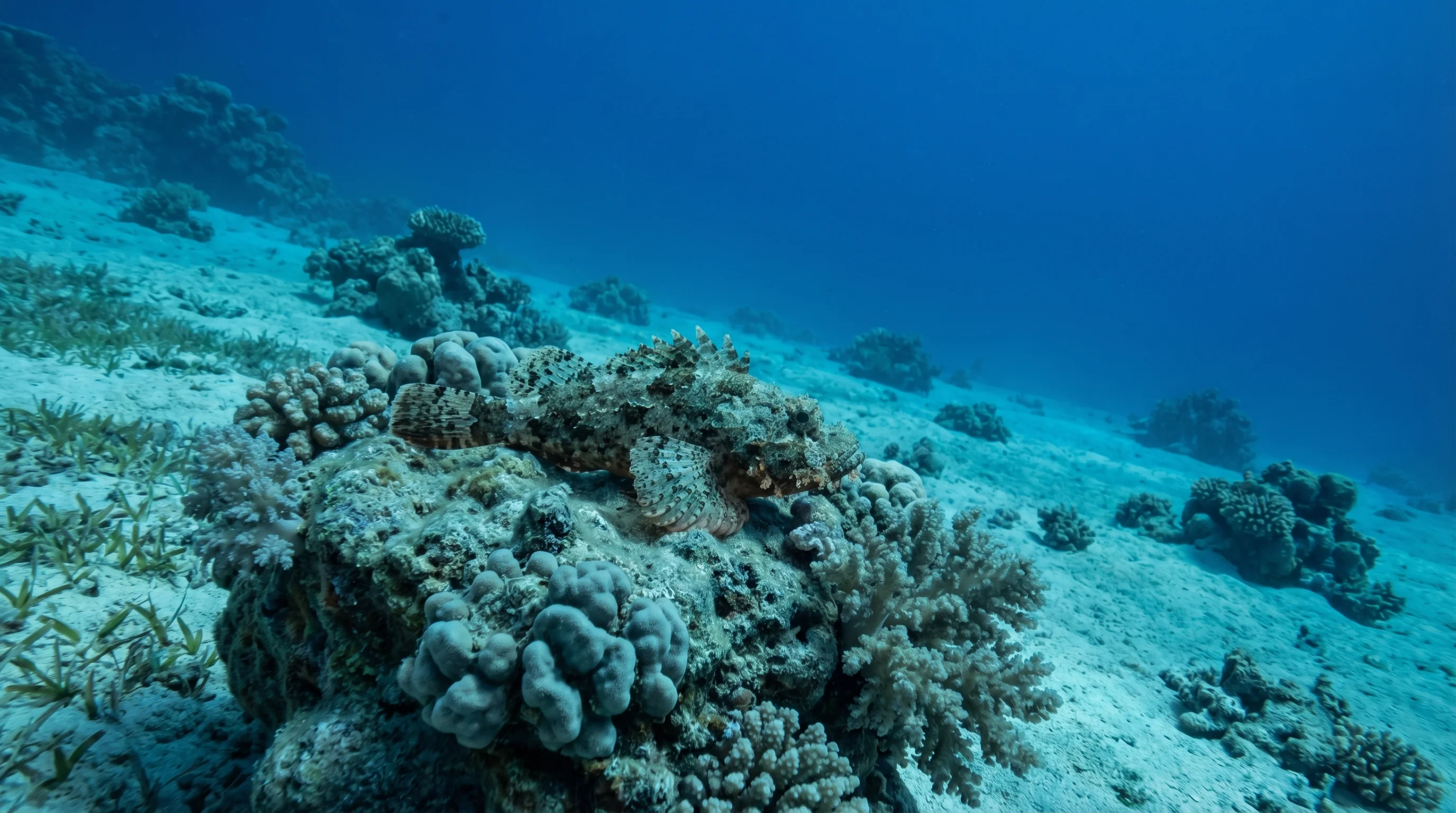
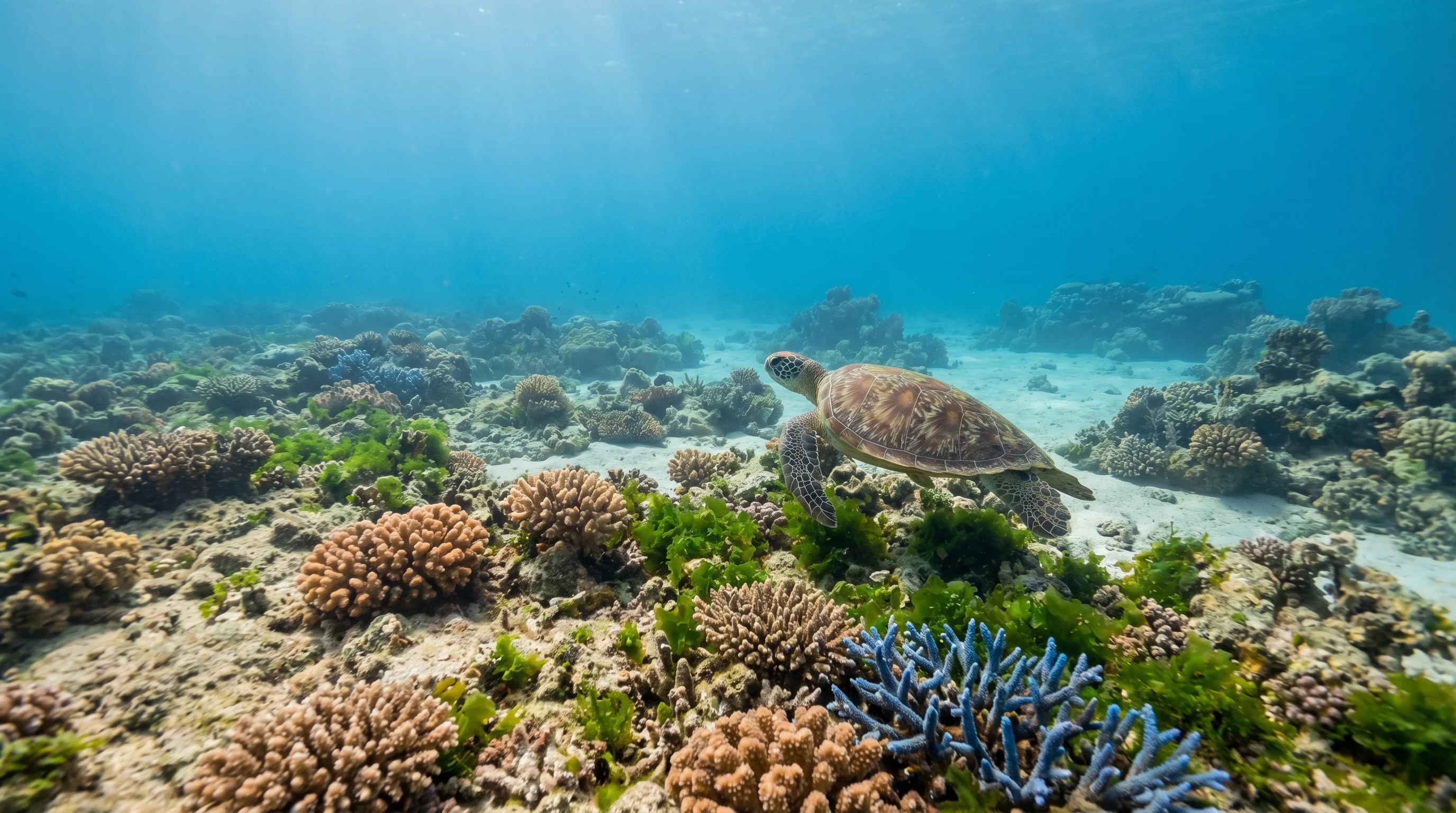
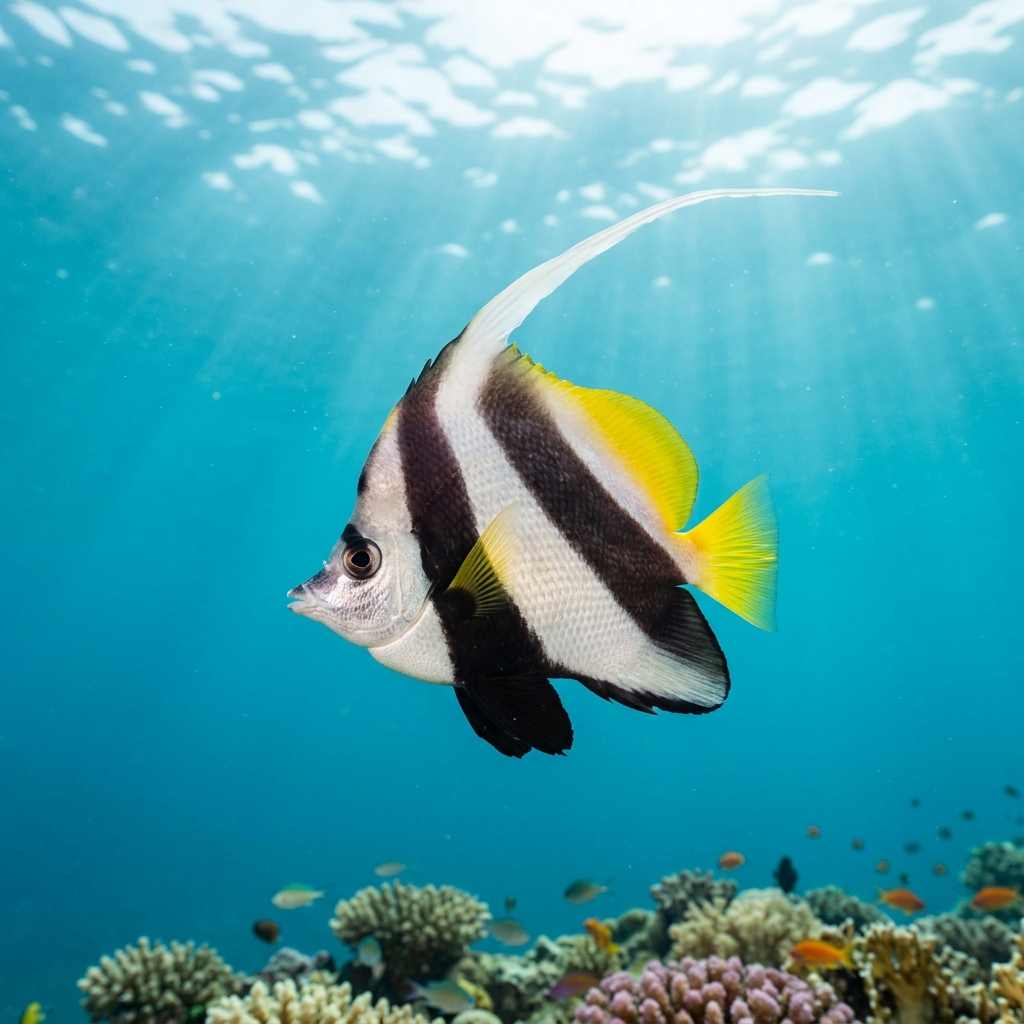
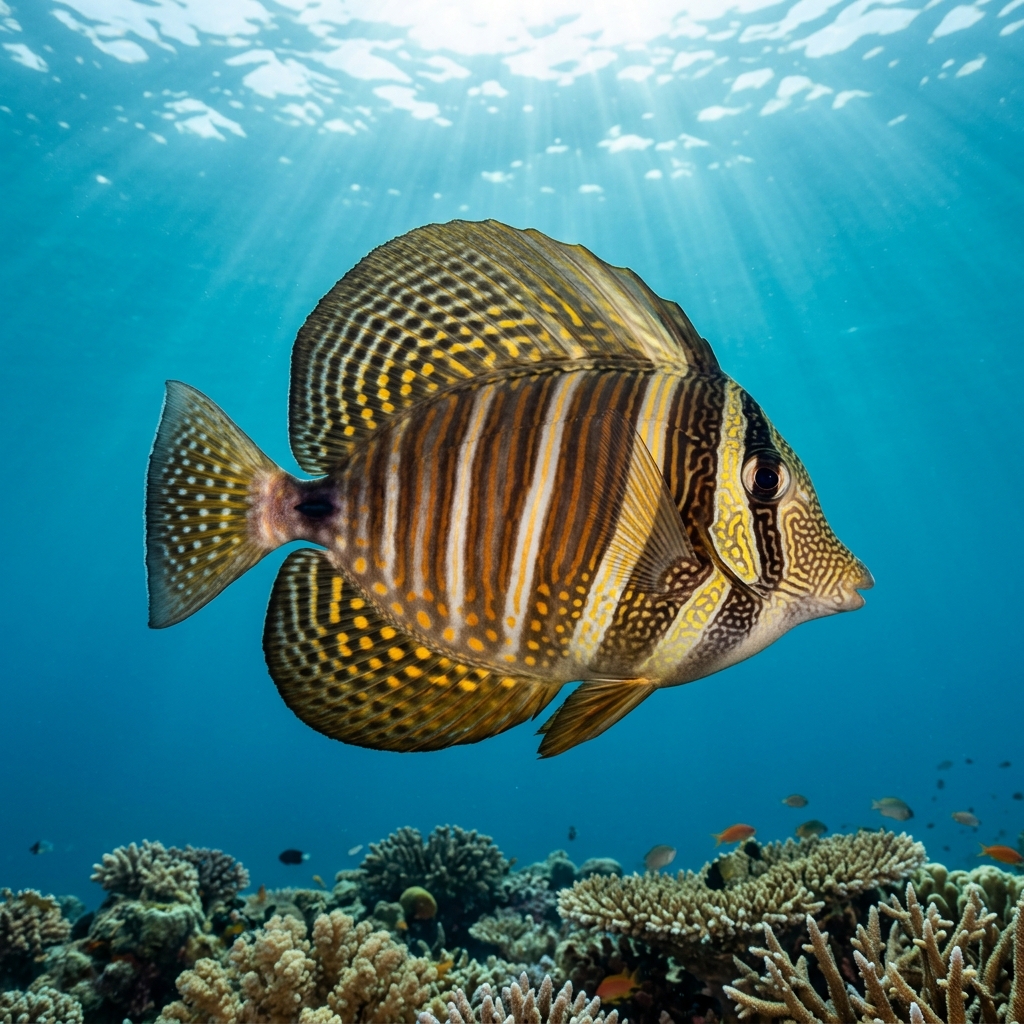
The Whitetip Reef Shark is a common observation across a wide range of sites. The Bluespotted Fantail Ray, Giant Moray and Napoleon Wrasse are also regularly recorded. Signature species for the region include the Spinner Dolphin and Dugong, alongside the striking Emperor Angelfish and Indian Lionfish.
A good number of sites are rated for beginners, including Sharks Point, House Reef South, Marsa Samadai and Shaab Nakari. Shore-entry options at Marsa Tondoba and Halg Dawoud offer accessible conditions without the need for a boat. Intermediate divers will find more challenge at the walls and pinnacles of sites such as Habili Ghadir and Eden Reef.
The majority of sites require boat access, reflecting the offshore nature of the main reef structures. A smaller number of sites, including Marsa Tondoba and Halg Dawoud, can be reached from shore. Several sites offer both options, giving flexibility depending on your base and operator.
Several dive centres and liveaboard operators serve the region, including Marsa Shagra, Marsa Adventure Divers, Marsa Nakari, Wadi Gimal Diving Center and Blue Sea Diving Center, among others. The presence of multiple operators means both day-trip and safari-style itineraries are available for exploring Elphinstone's sites.