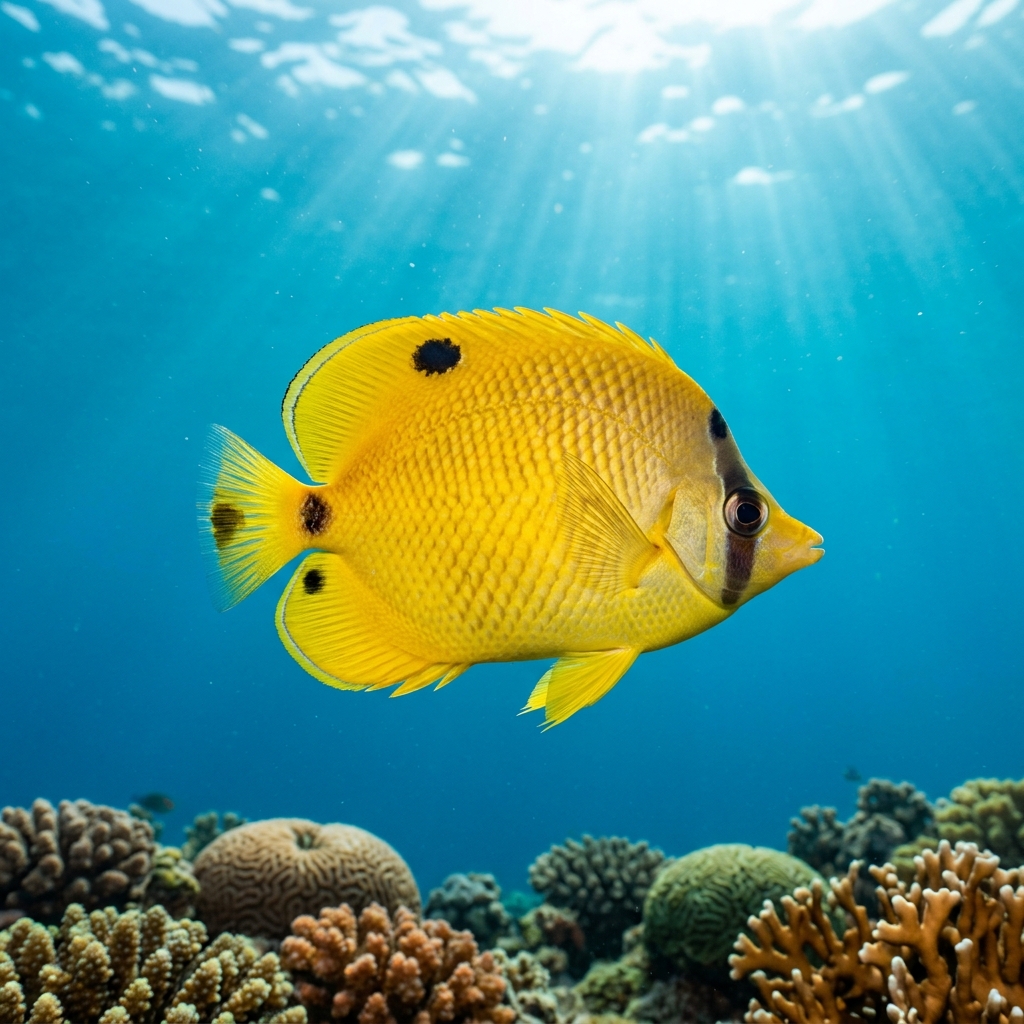
Chaetodon austriacus
Common year-round on Red Sea reefs, this butterflyfish shows up on almost every dive in South Sinai and Marsa Alam in 22-29C water.
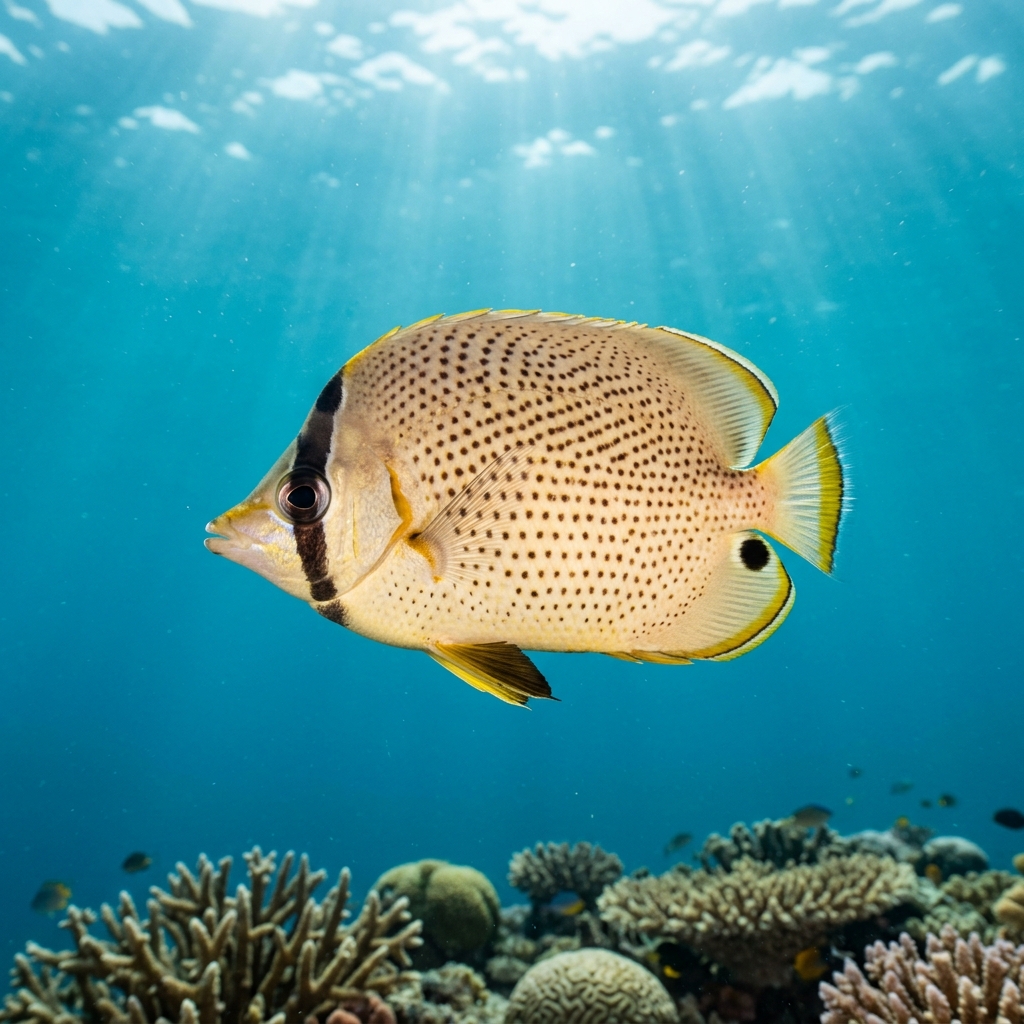
A compact, disc-shaped butterflyfish around 9 cm, pale white to silvery body crossed by fine dark diagonal lines. The giveaway is the black band across the eye and the solid black patch at the base of the tail, which is where the common name comes from. Fins are edged in black, giving it a cleaner, less busy look than several similar reef butterflyfish.
Look for it picking around coral heads and reef crevices in shallow water, usually alone or in a loose pair rather than in schools. It stays close to the reef structure, feeding on coral polyps and other small invertebrates, and generally goes about its business without paying divers much attention.
Like most Chaetodon butterflyfish, pairs are thought to be monogamous and often hold the same patch of reef for extended periods, so spotting one on a repeat dive at the same site is common.
No clear seasonal pattern shows up in the data, and it sits comfortably in water from 22.4 to 28.7C, so it's a year-round fixture on Red Sea reefs rather than a seasonal target.
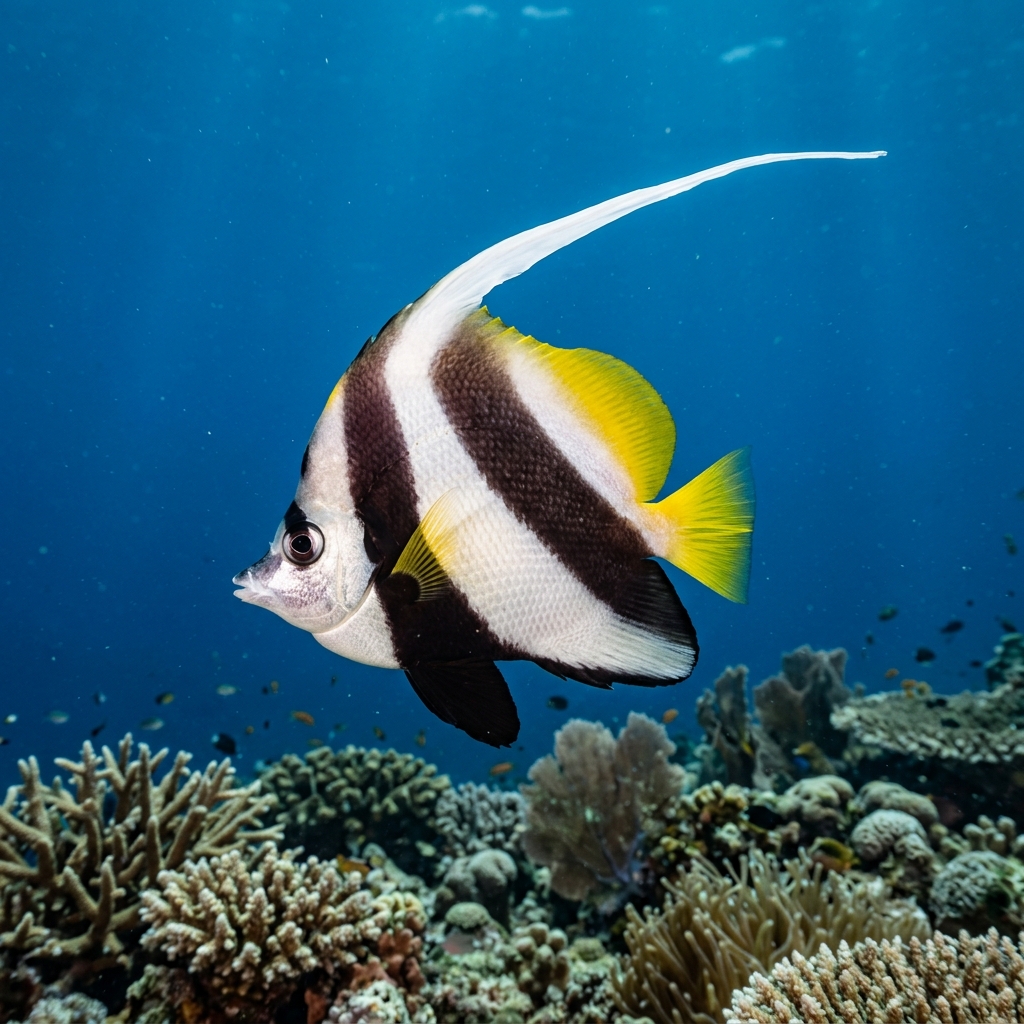
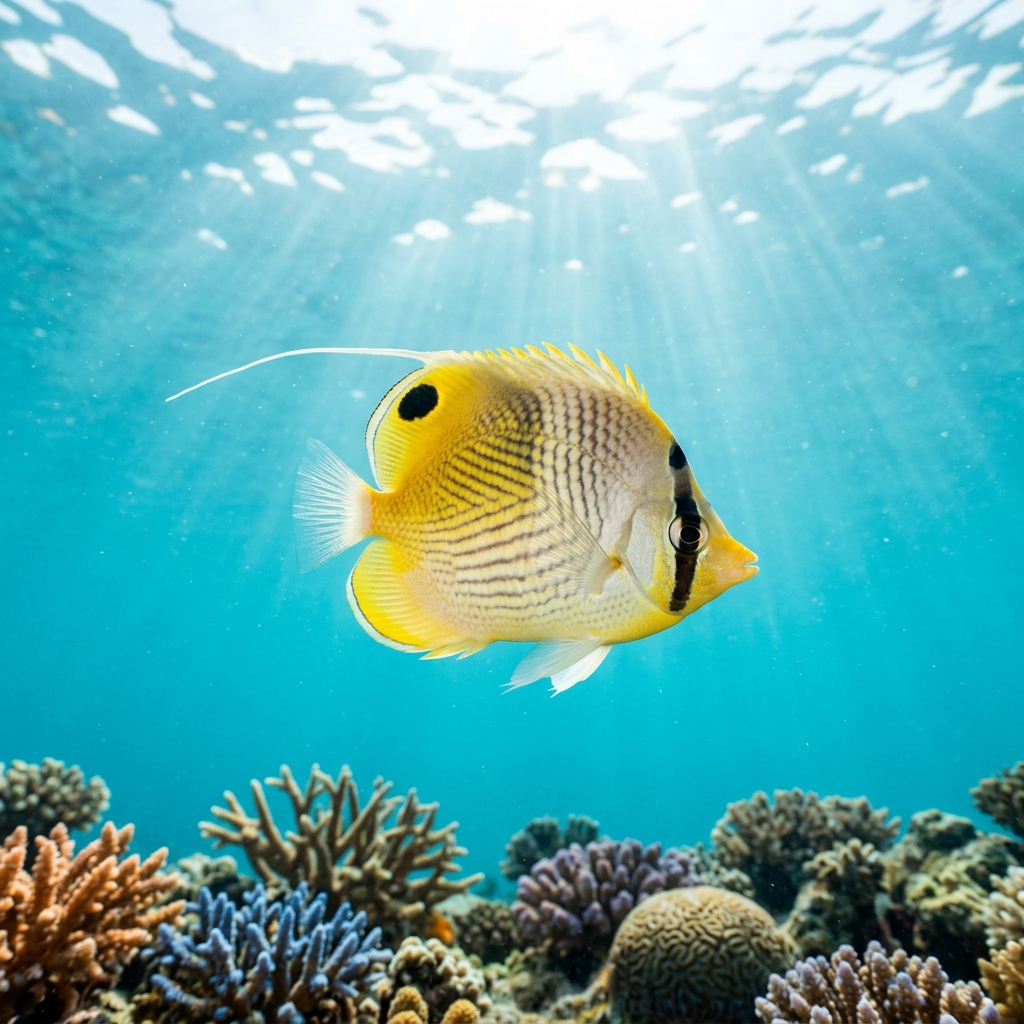
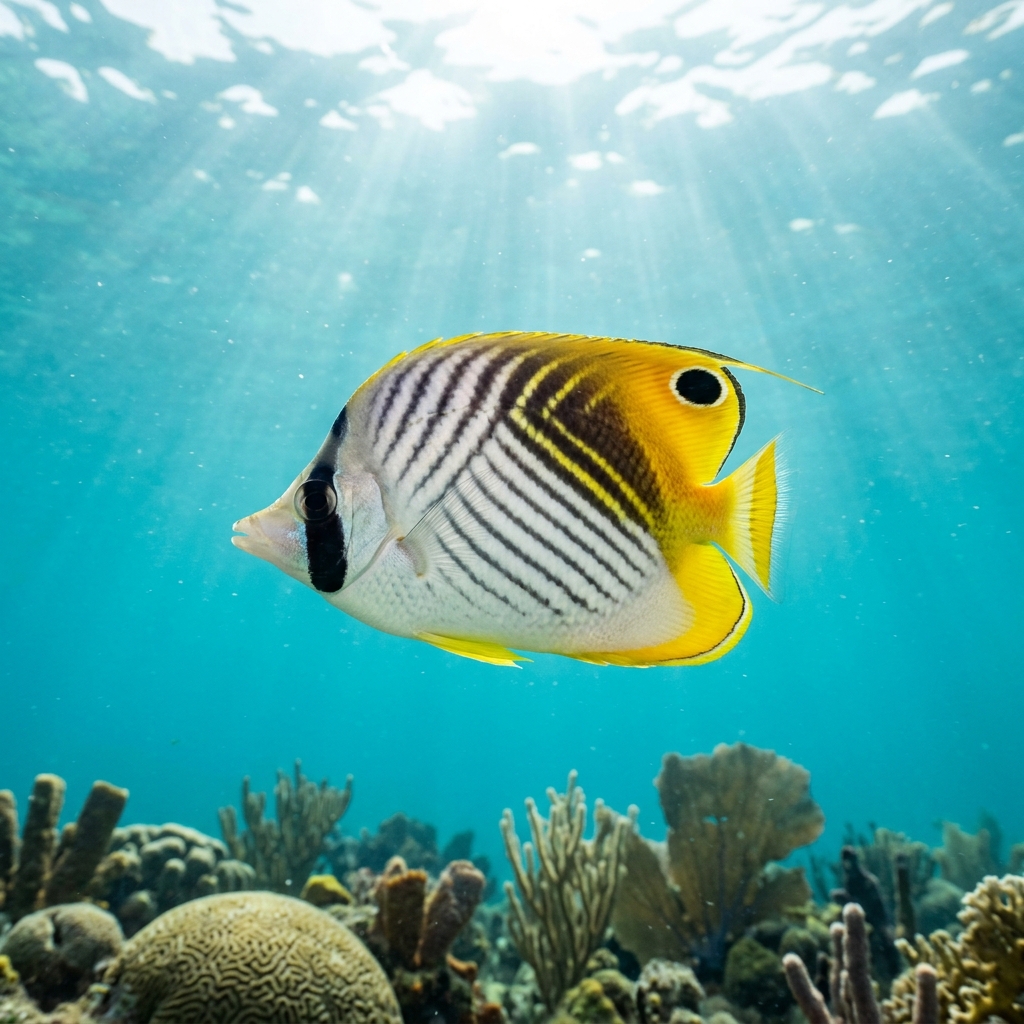
Reef neighbours a diver could mistake it for. Use the identification notes above to tell them apart.
This is a Red Sea speciality, most reliably logged in Egypt across South Sinai, Marsa Alam and the Deep South, and the Red Sea Riviera. It also turns up along the Saudi Red Sea coast, in Sudan's Deep South and Suakin, around Aqaba in Jordan, Eilat in Israel and Djibouti's Gulf of Tadjoura.
Mapping where Blacktail Butterflyfish is logged…
It's a Red Sea species, most commonly seen in Egypt's South Sinai, Marsa Alam and the Deep South, and the Red Sea Riviera. Divers also log it along the Saudi coast, in Sudan, Jordan's Aqaba, Eilat in Israel and Djibouti.
There's no strong seasonal pattern in the sightings data, and it tolerates a wide temperature range from 22.4 to 28.7C, so it's present on Red Sea reefs throughout the year.
Look for a small white, disc-shaped fish with fine dark diagonal lines, a black band through the eye and a solid black patch at the base of the tail. Black-edged fins give it a clean, sharp-edged look compared to similar species.
They're a small reef fish, typically reaching around 9 cm, so they're easy to overlook against busier reef backgrounds despite their contrasting markings.
No, they pose no danger to divers. They're a harmless, reef-associated species that mostly ignores passing divers while feeding around coral.
Site and sighting data is aggregated from diver logs, iNaturalist and GBIF. For taxonomy and conservation status: