Paracirrhites forsteri
Spot the freckled hawkfish perched on coral in the Maldives or Egyptian Red Sea. Present year-round in 24-29 °C waters. Tips on ID and best sites.
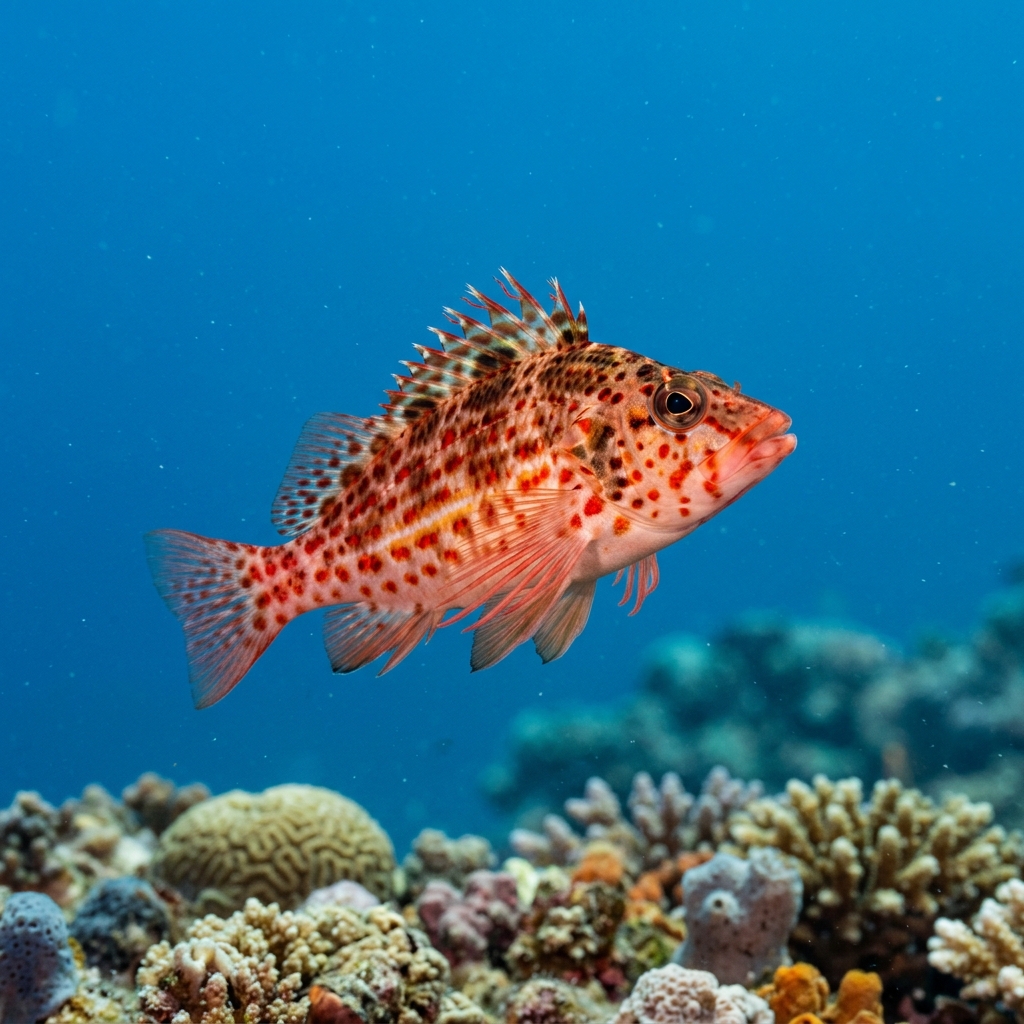
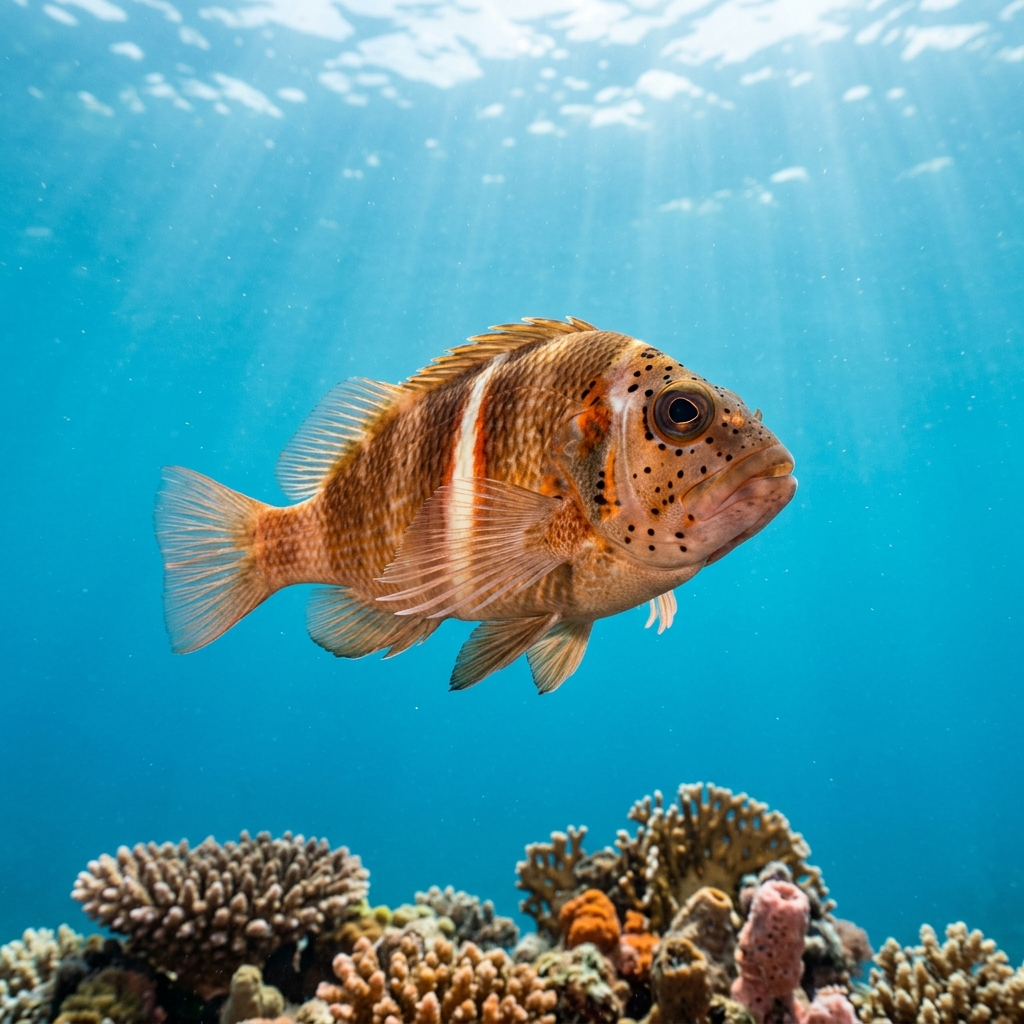
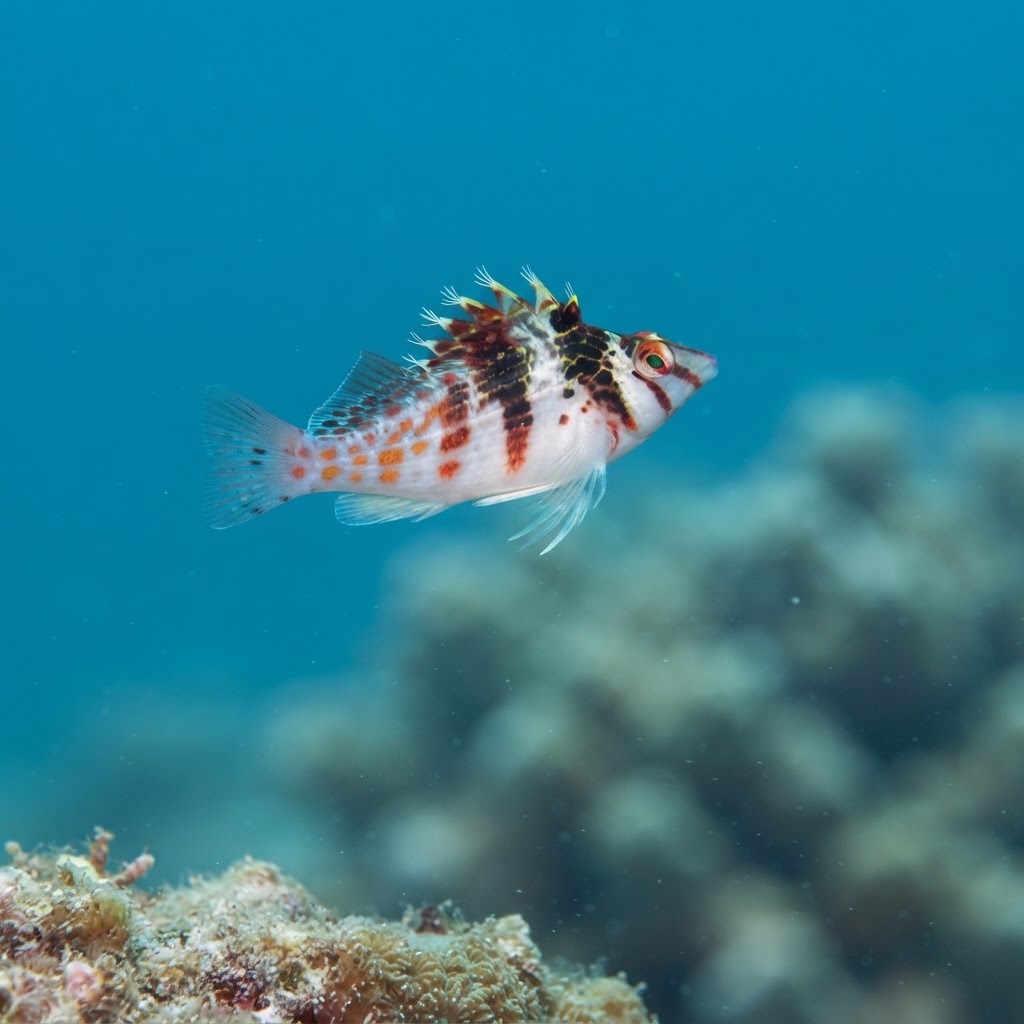
A stocky, 15 cm fish that sits completely still on coral heads, which is usually your first clue it's a hawkfish. The body is pale cream to whitish with a distinct cluster of dark brown or black freckle-like spots concentrated on the head and rear body, and a series of reddish-brown vertical bars along the flanks. In the water it looks noticeably chunkier than most reef fish of its size, and that motionless, perched posture on hard coral or gorgonians (branching sea fans) is the easiest field mark of all.
You will almost always find one perched motionless on a coral head, propped up on its pectoral fins (the thickened lower rays that act like legs), scanning the water column for small fish and crustaceans. It tolerates close diver approach well and will often sit tight while you frame a shot, though it will dart a short distance if you push too near. Watch long enough and you may catch the moment it launches off its perch to intercept a passing fish, returning almost immediately to the same spot.
Freckled hawkfish are protogynous hermaphrodites, meaning individuals can change sex from female to male. In social groups, the dominant individual becomes male, so what looks like a solitary fish on its perch may well be the male holding a small territory over several females.
In Northern Hemisphere sites the freckled hawkfish is present year-round with no concentrated season, which makes sense given its preference for warm tropical water between 24 and 29 °C. Southern Hemisphere sightings concentrate from April through to February, with a quieter period around March.
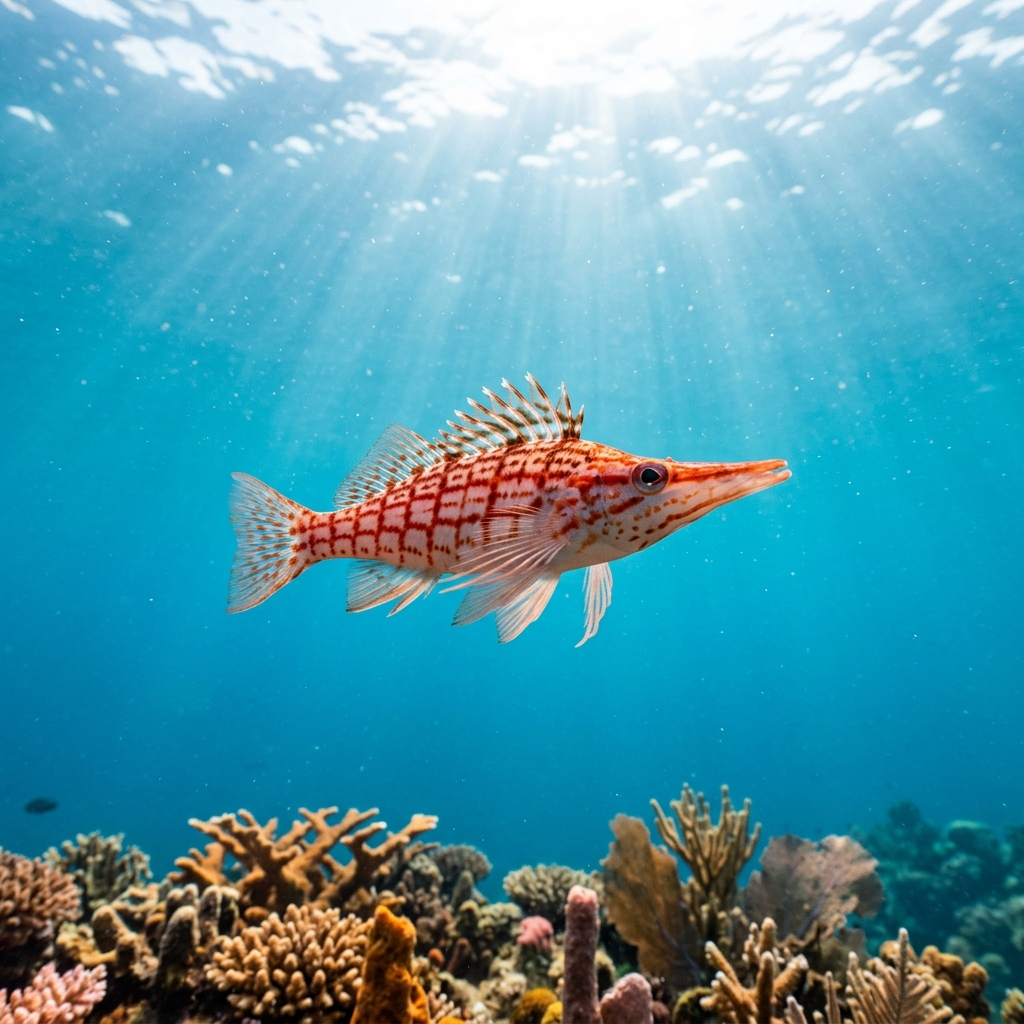
Reef neighbours a diver could mistake it for. Use the identification notes above to tell them apart.
Most commonly logged across the Indo-Pacific, with the strongest sighting records in the Maldives (particularly the Male and Ari Atolls and the North and Central Atolls) and the Egyptian Red Sea around Sharm el Sheikh and Marsa Alam. Strong populations are also well documented in Indonesia (Bali, Lombok and Java), the Philippines (Visayas Central), Queensland in Australia, and throughout Hawaii.
Mapping where Freckled Hawkfish is logged…
The freckled hawkfish is logged across a wide spread of Indo-Pacific destinations. Top spots include the Maldives atolls, the Egyptian Red Sea around Sharm el Sheikh and Marsa Alam, Bali and the wider Indonesian archipelago, the Visayas in the Philippines, Queensland, and Hawaii.
At Northern Hemisphere sites such as the Maldives, Red Sea, and Hawaii, they are present year-round with no peak season. Southern Hemisphere divers in Queensland and similar locations see the best sighting rates from April through to February.
Look for a compact, pale-bodied fish sitting completely still on a coral head. The key marks are dark brown or black speckles concentrated on the head and rear flanks, plus reddish-brown vertical bars. That motionless, perched posture on hard coral is usually the giveaway before you even check the markings.
They typically reach around 15 cm, making them a medium-sized hawkfish. Their chunky, compact build makes them look slightly bigger on the reef than that length suggests.
Yes. They are protogynous hermaphrodites, starting life as females and able to transition to male when social circumstances allow. The dominant individual in a local group becomes male and holds a territory over several females, so a lone fish on a coral head is quite possibly the local male.
Site and sighting data is aggregated from diver logs, iNaturalist and GBIF. For taxonomy and conservation status:
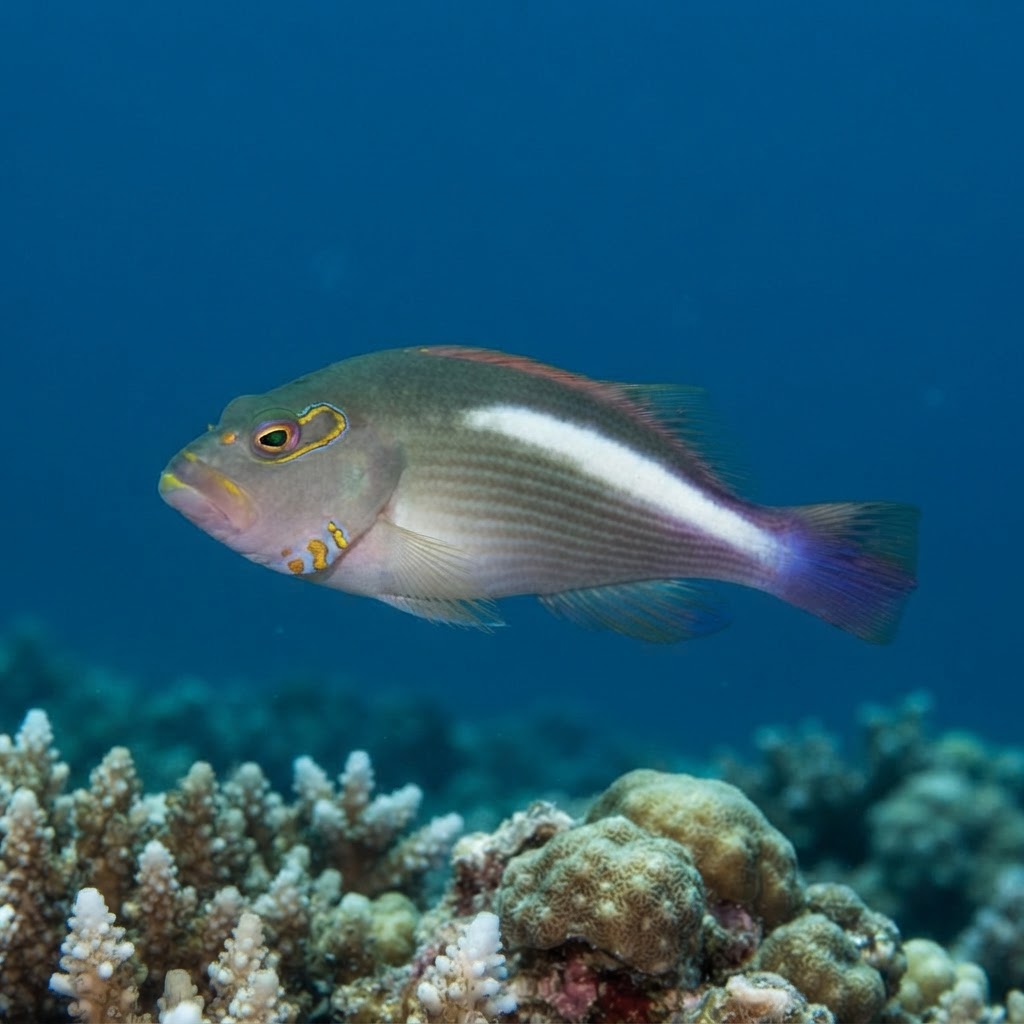
Arc-eye Hawkfish
651 sites