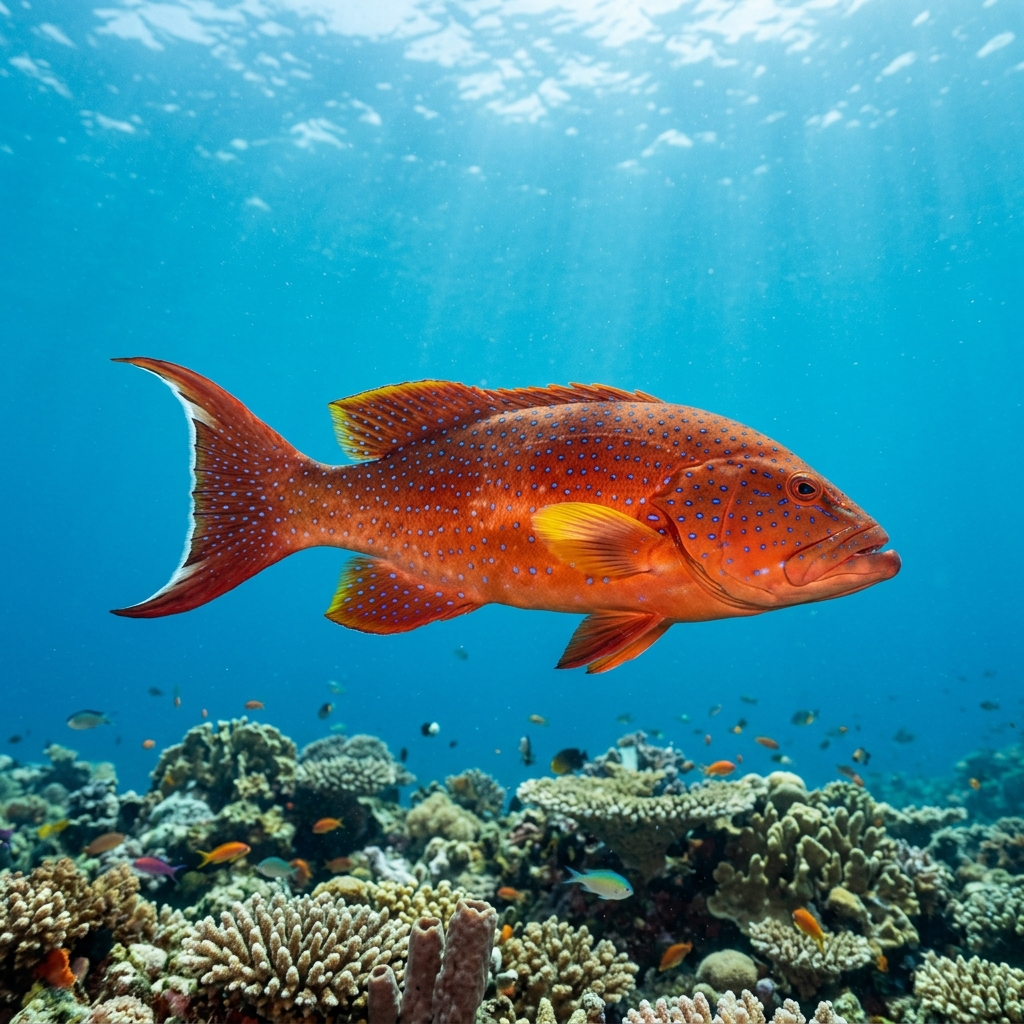
Variola louti
Spot lunartail grouper in the Maldives and Egyptian Red Sea. Warm-water reefs, 22-29 °C. ID tips, best seasons, and top dive regions inside.
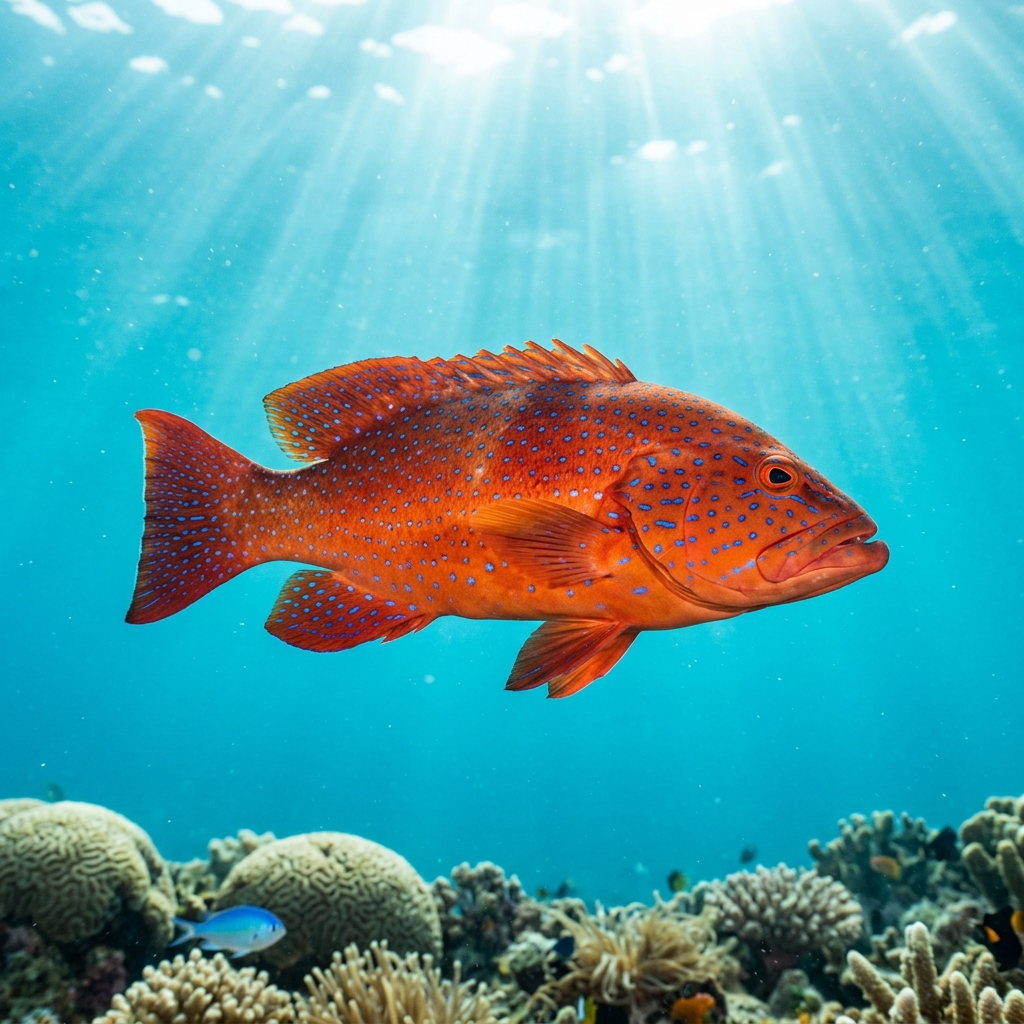
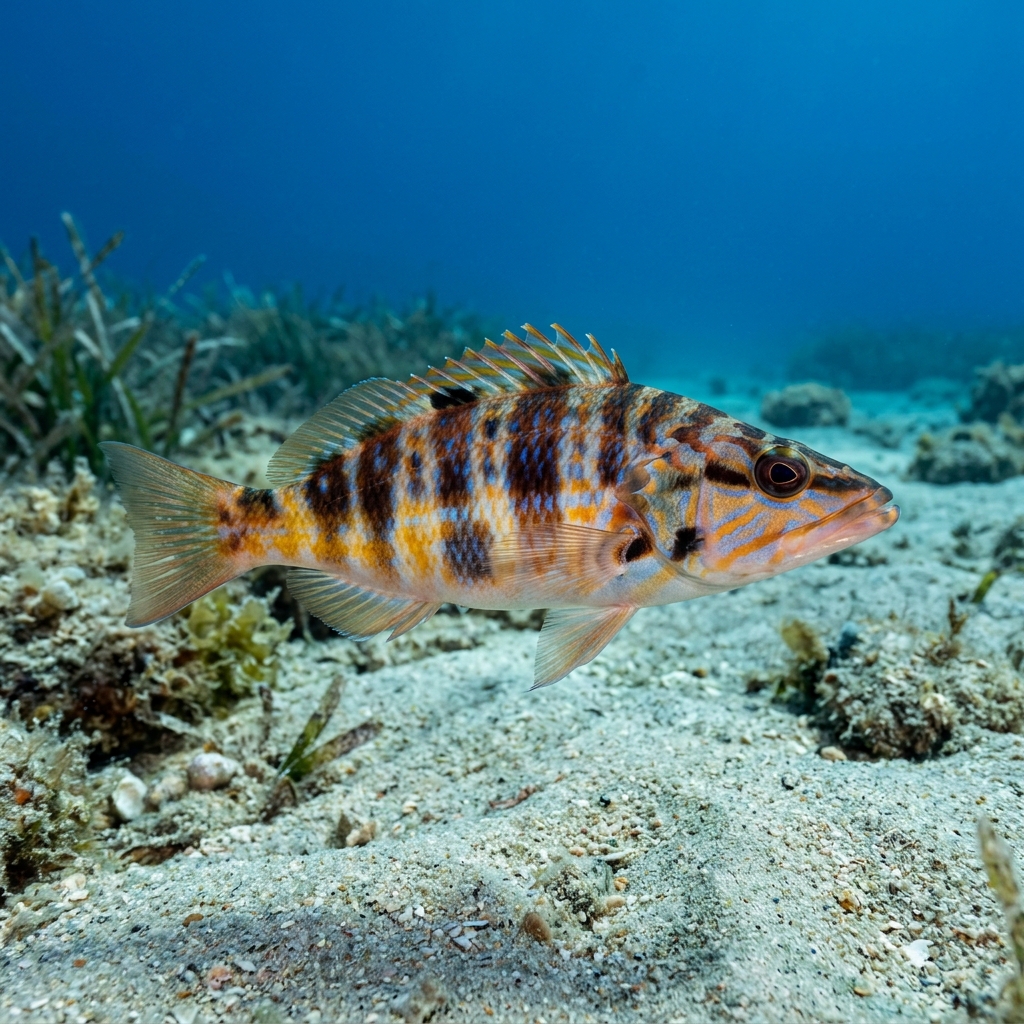
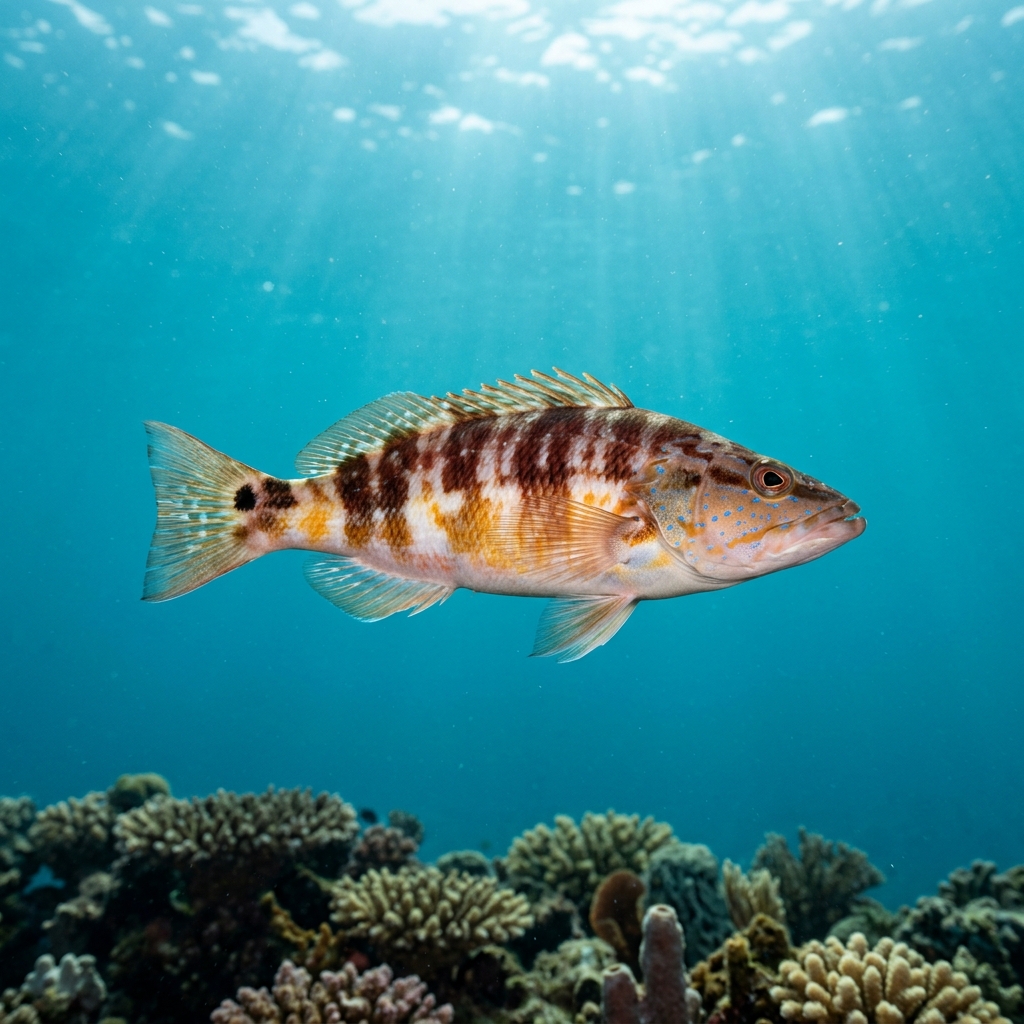
That crescent-shaped (lunate) tail is the single best field mark, no other common Indo-Pacific grouper has such a pronounced forked, sickle-edged caudal fin with bright yellow trailing edges. The body is reddish to orange-brown and covered densely in small blue or white spots, giving it a freckled appearance at close range. Adults are medium-large groupers, typically stocky and deep-chested, and tend to hold position in mid-water or just above the reef rather than sitting flat on the bottom like many relatives.
Lunartail groupers are typically encountered alone, hovering just above coral heads or patrolling reef edges at mid-depth. They are not particularly skittish and will often hold their position long enough for a relaxed look, though they tend to move away slowly if approached directly. Like most groupers they are ambush predators, so look for them hovering near overhangs, coral bommies, or steep drop-offs where prey fish congregate.
Lunartail groupers, like almost all groupers, are protogynous hermaphrodites, they begin life as females and the largest, most dominant individuals transition to male. This means the big animals you see on the reef are almost certainly males.
In Northern Hemisphere destinations such as Egypt and the Maldives, sightings concentrate from July through March. In Southern Hemisphere locations like South Africa and Réunion, the peak runs from June to October.
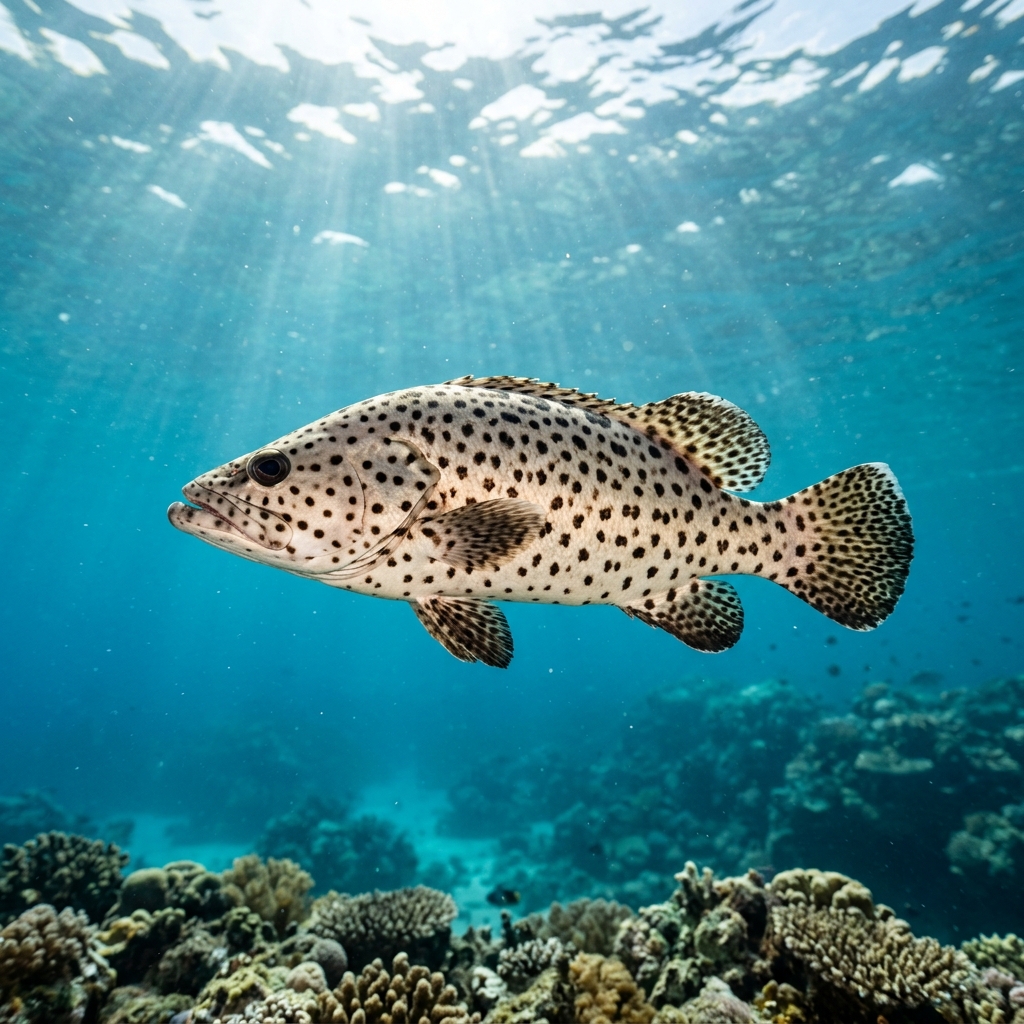
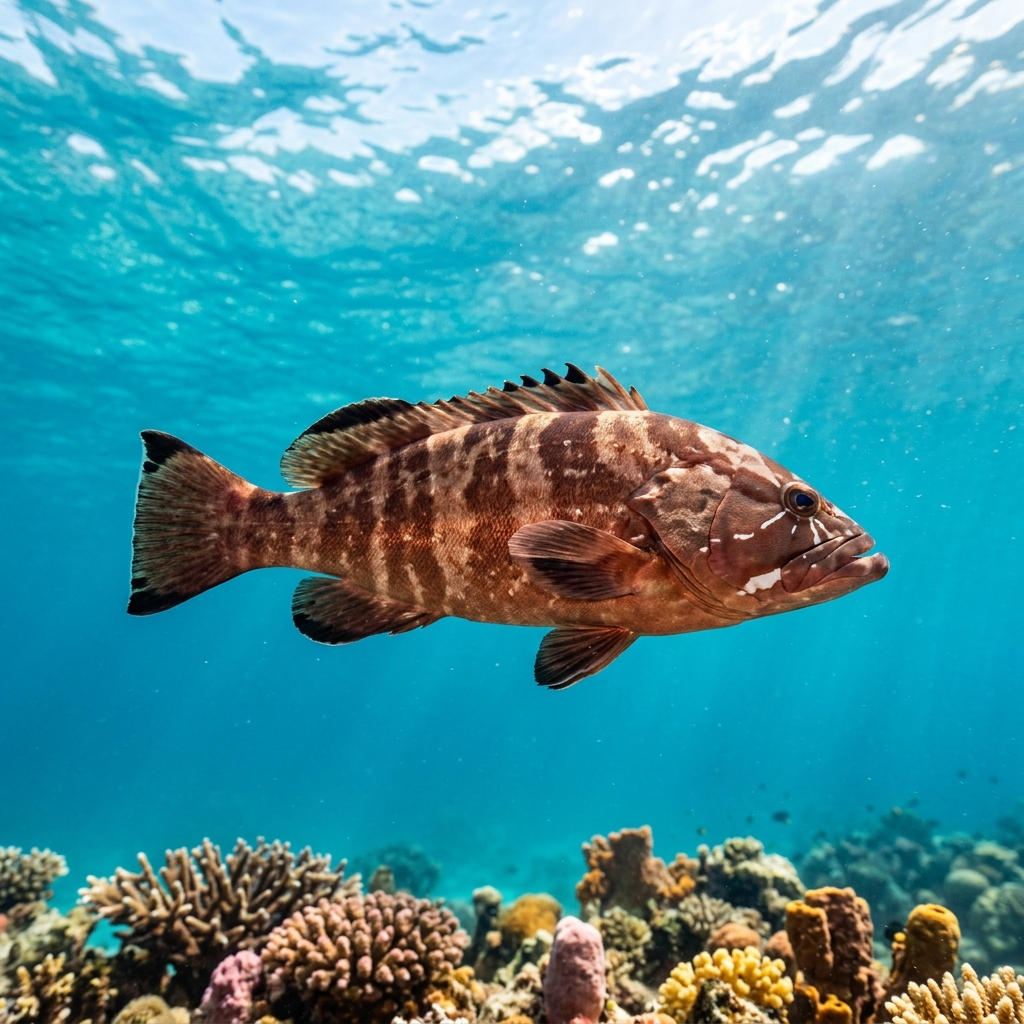
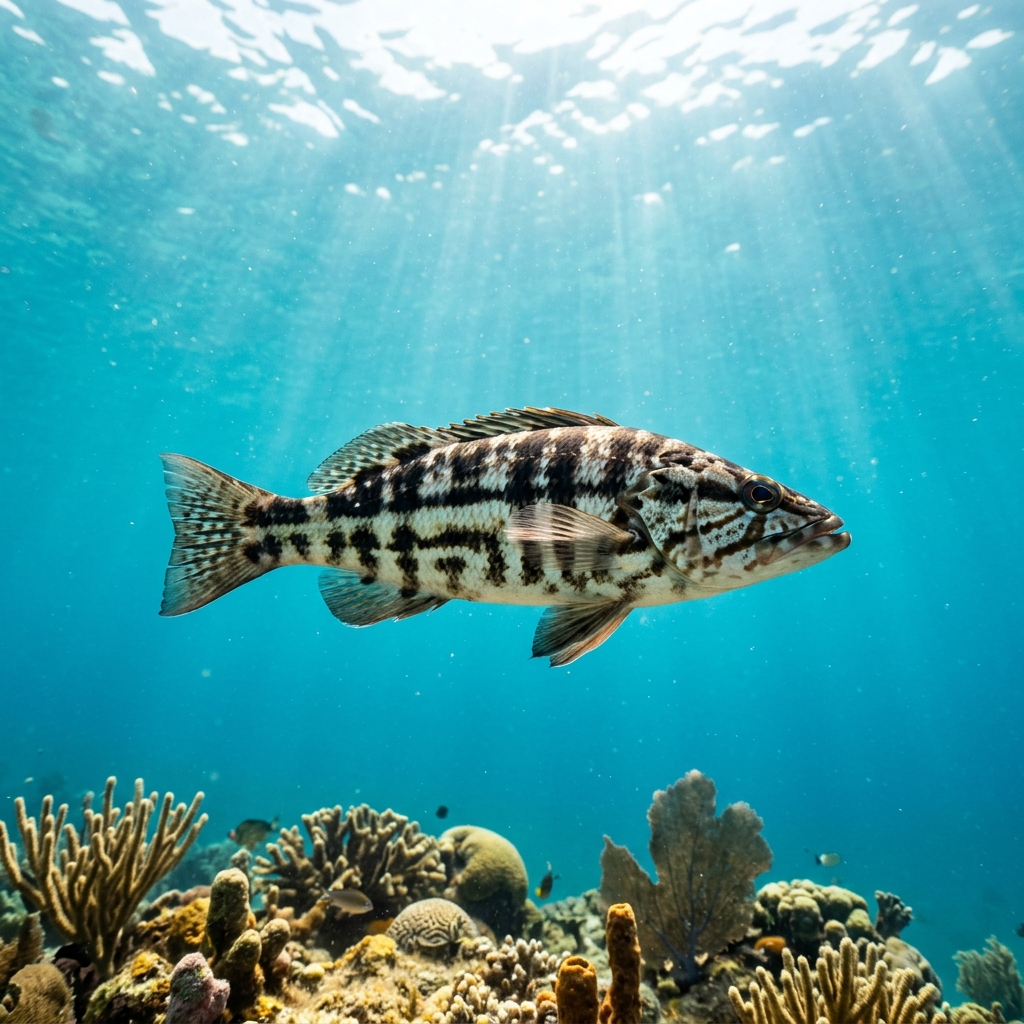
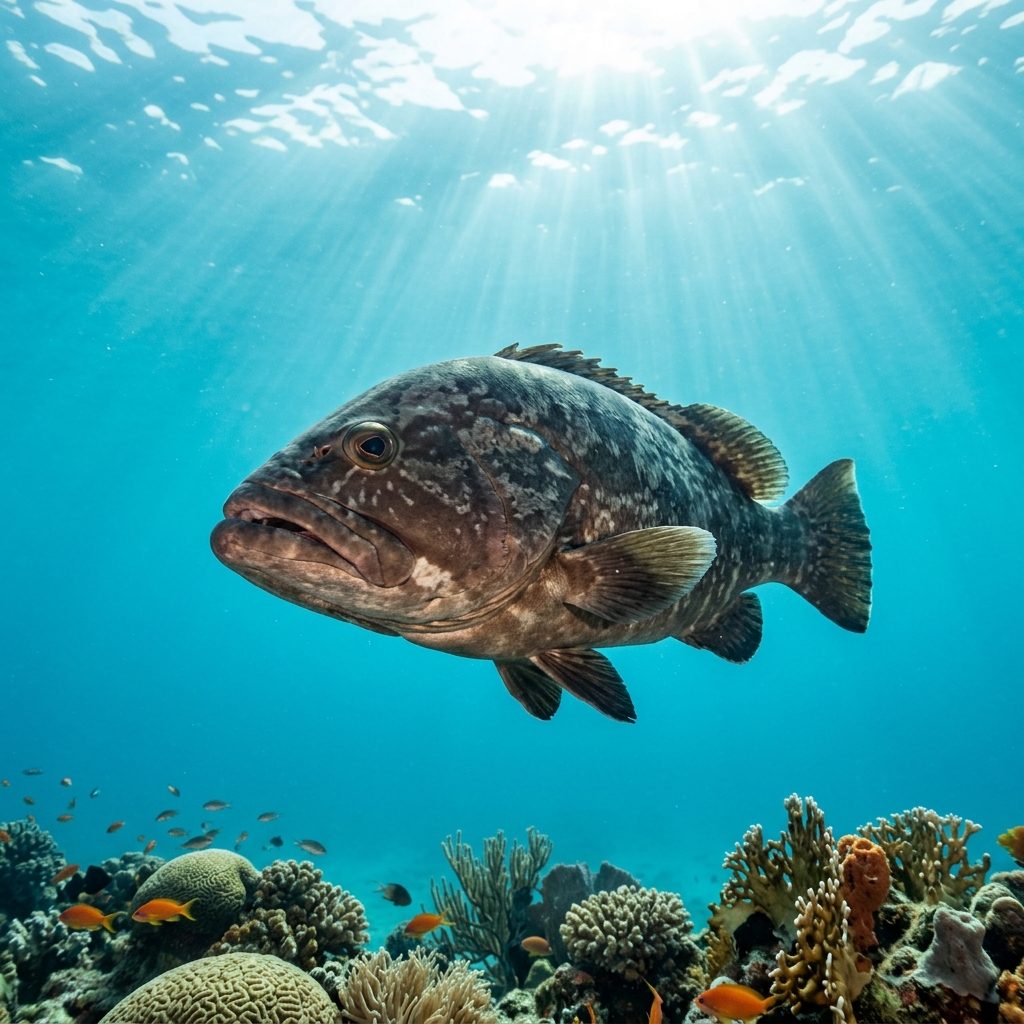
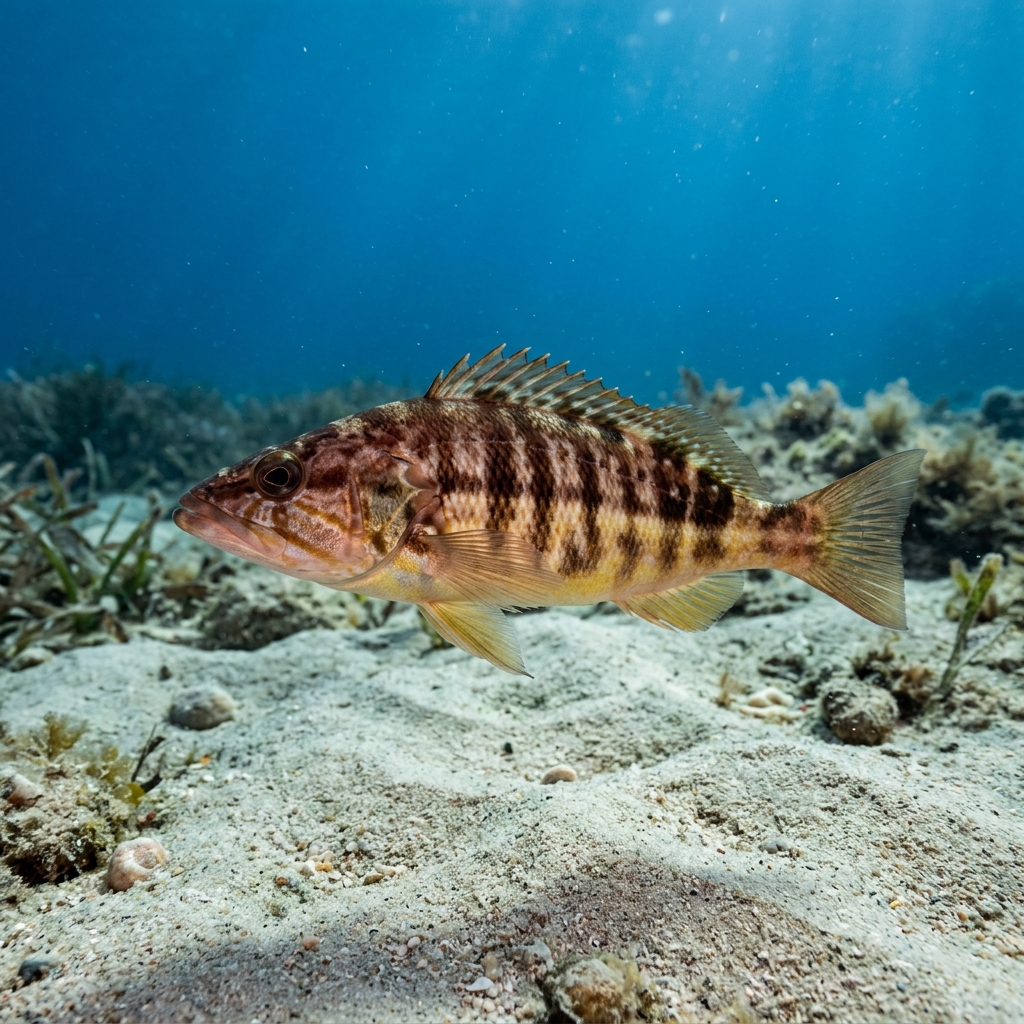
Reef neighbours a diver could mistake it for. Use the identification notes above to tell them apart.
Most consistently logged in the Maldives and the Egyptian Red Sea, with Male and Ari Atolls and the Sharm el Sheikh and Marsa Alam coastlines together accounting for the large majority of records. Beyond those strongholds, Okinawa in Japan, Mauritius, Réunion, South Africa's Durban coast, and the Cook Islands all have a meaningful spread of sightings worth chasing.
Mapping where Lunartail Grouper is logged…
The Maldives and the Egyptian Red Sea are the most reliable places, with Male and Ari Atolls and the Sharm el Sheikh and Marsa Alam regions leading the records. Okinawa, Mauritius, Réunion, South Africa's Durban coast, and the Cook Islands are also solid options across the Indo-Pacific.
In Northern Hemisphere destinations like Egypt and the Maldives, sightings peak from July through March. For Southern Hemisphere spots such as South Africa and Réunion, June to October is the most productive window.
Look for the crescent-shaped tail with yellow trailing edges, that forked, sickle-edged caudal fin is unique among common Indo-Pacific groupers. Combined with a reddish-orange body densely covered in small blue-white spots, it's usually a quick ID once you know what to look for.
Lunartail groupers typically reach around 80 cm in length, though large individuals can exceed that. On the reef they read as a substantial fish, noticeably bigger than a coral grouper but not in the same league as the giant potato bass or Queensland grouper.
They are present across a wide range of dive sites in the Indo-Pacific but are most often logged as uncommon rather than common. You may go several dives without seeing one even at sites where they are known to occur, so a sighting is always worth noting.
Site and sighting data is aggregated from diver logs, iNaturalist and GBIF. For taxonomy and conservation status:
Blacktip Grouper
2,726 sites