Heniochus intermedius
Spot Red Sea Bannerfish in Sharm el Sheikh and Marsa Alam year-round. Tips on ID, season, and telling it apart from the Pennant Bannerfish.
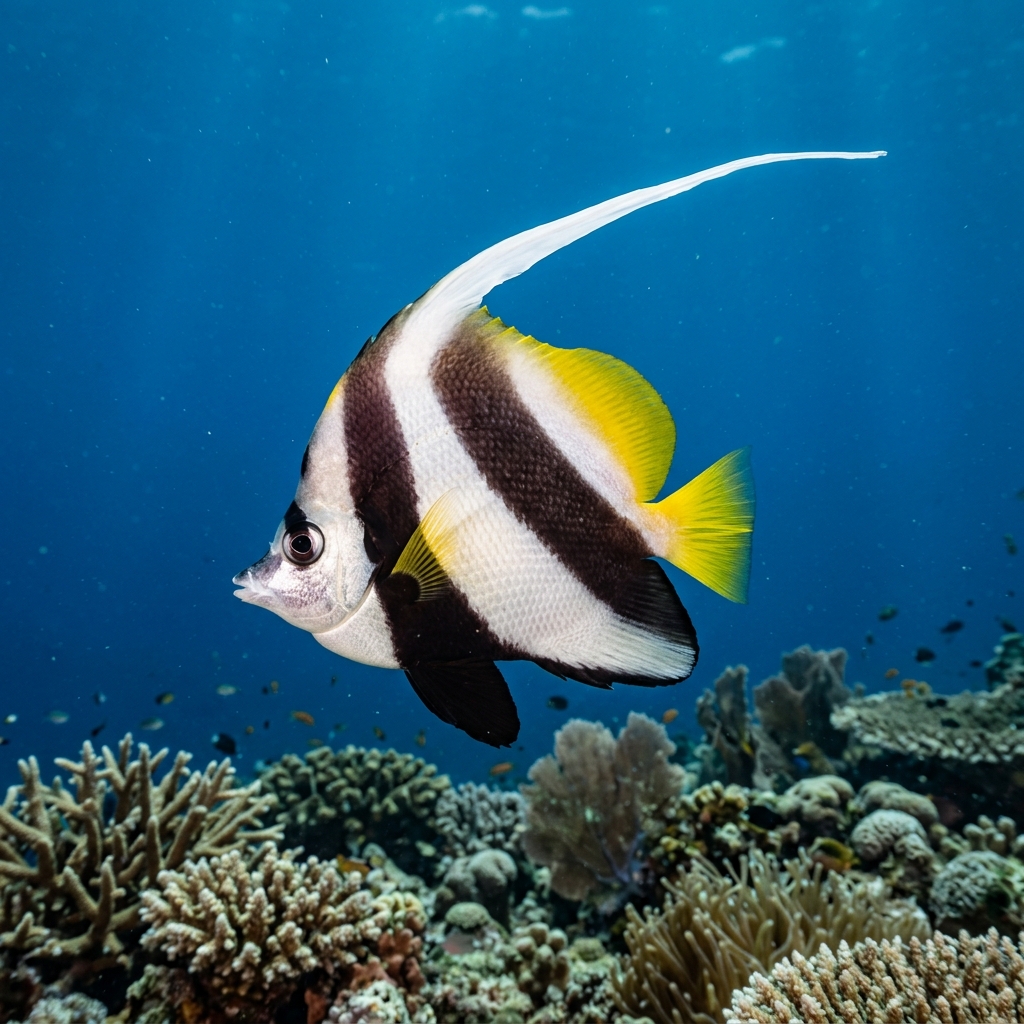
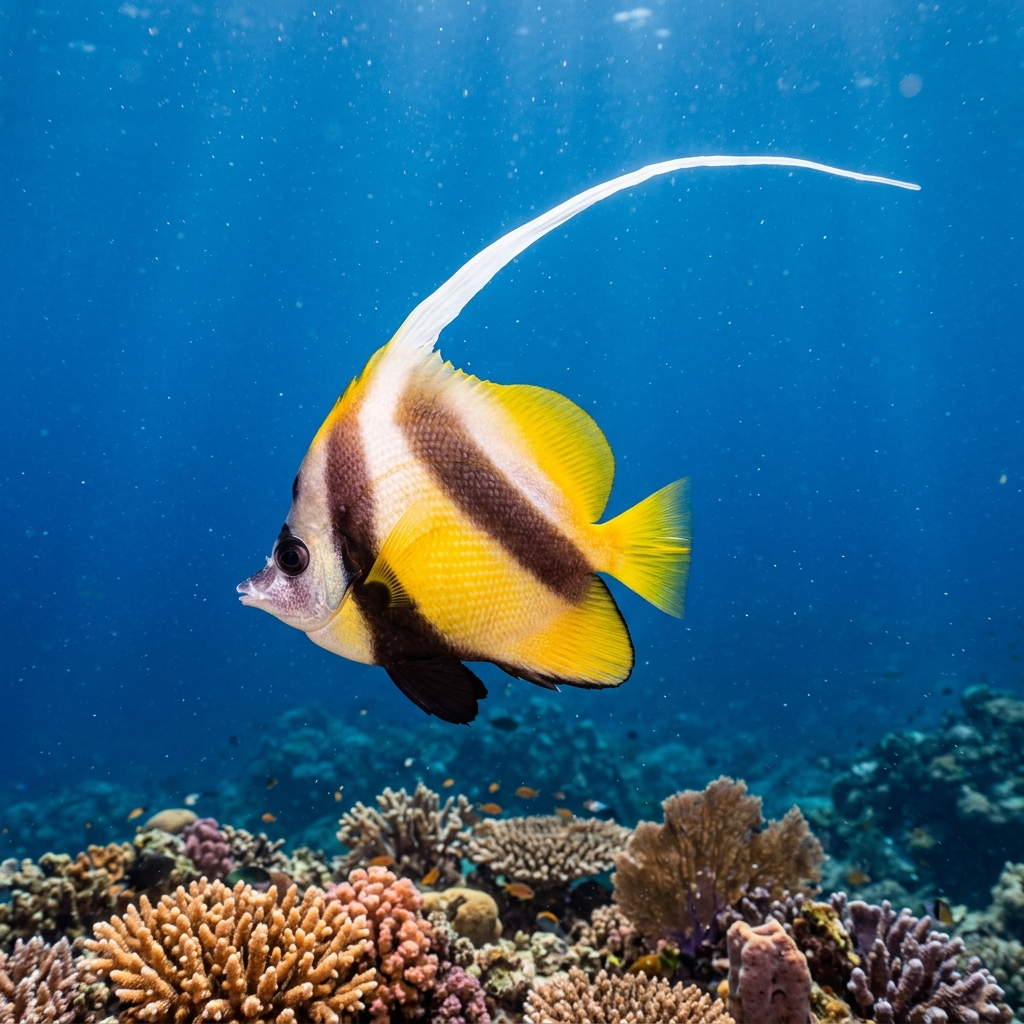
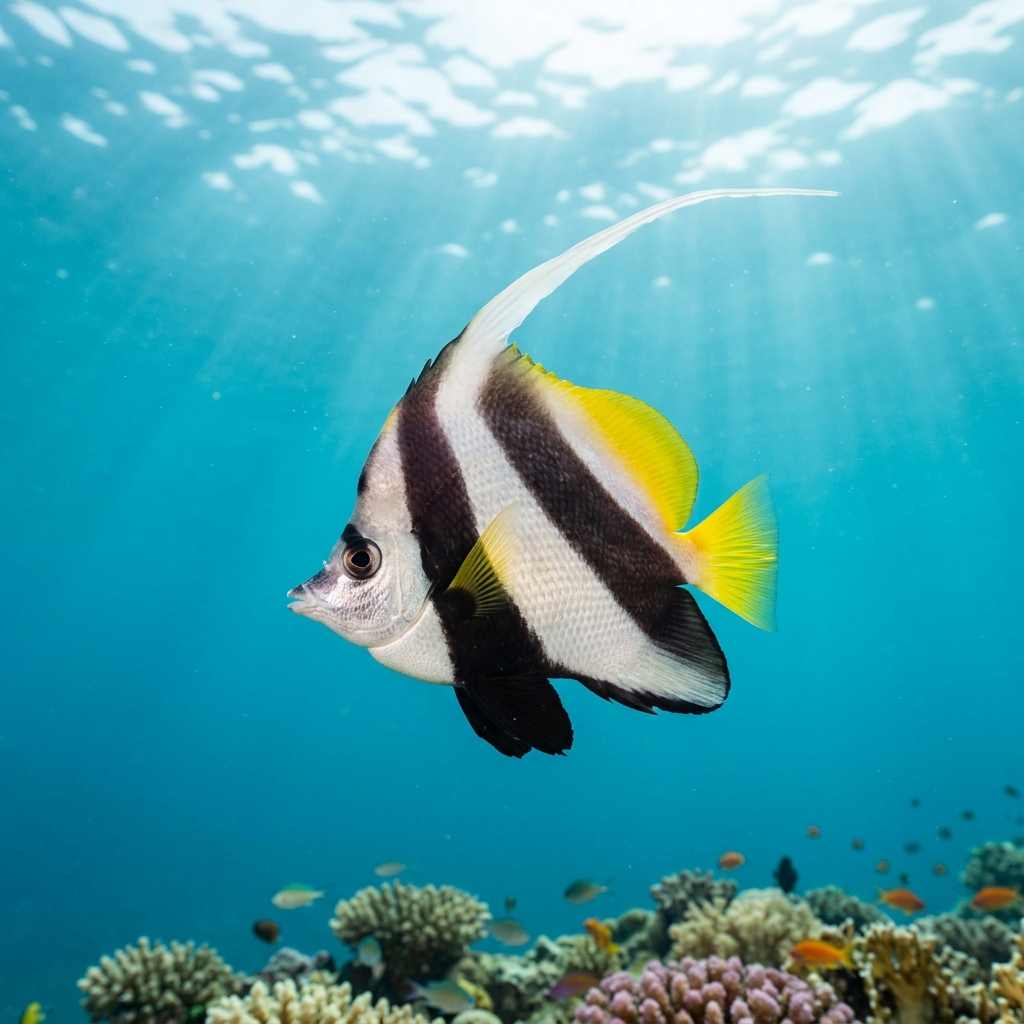
Two broad, sharply contrasting black-and-white vertical bands dominate the body, one across the face through the eye, the other covering the rear of the body and dorsal fin. The most eye-catching feature is the elongated white filament streaming from the tall dorsal fin, which gives the fish its banner name. The snout is relatively short compared to close relatives, and the rear portions of the dorsal and anal fins carry a bright yellow wash. Body shape is disc-like and laterally compressed, as expected for a butterflyfish.
Red Sea Bannerfish are typically seen patrolling mid-water just above coral structures, often in pairs or small loose groups. They are not especially shy and will hold their position as a diver approaches slowly, making observation easy. Like most butterflyfishes, they feed on coral polyps and small benthic invertebrates, so you will usually find them working steadily along the reef face rather than out in open water.
The species is effectively endemic to the Red Sea and Gulf of Aden, which is why the sighting data clusters so tightly around Egyptian and Arabian coastal reefs rather than spreading across the broader Indo-Pacific like its close relatives.
Sightings are recorded across a long season running from May through February, covering most of the year. The observed water temperature range of 22 to 28 °C fits the Red Sea's seasonal fluctuation well, so there is no single peak month, divers visiting Sharm el Sheikh or Marsa Alam across that window have a reasonable chance of an encounter.
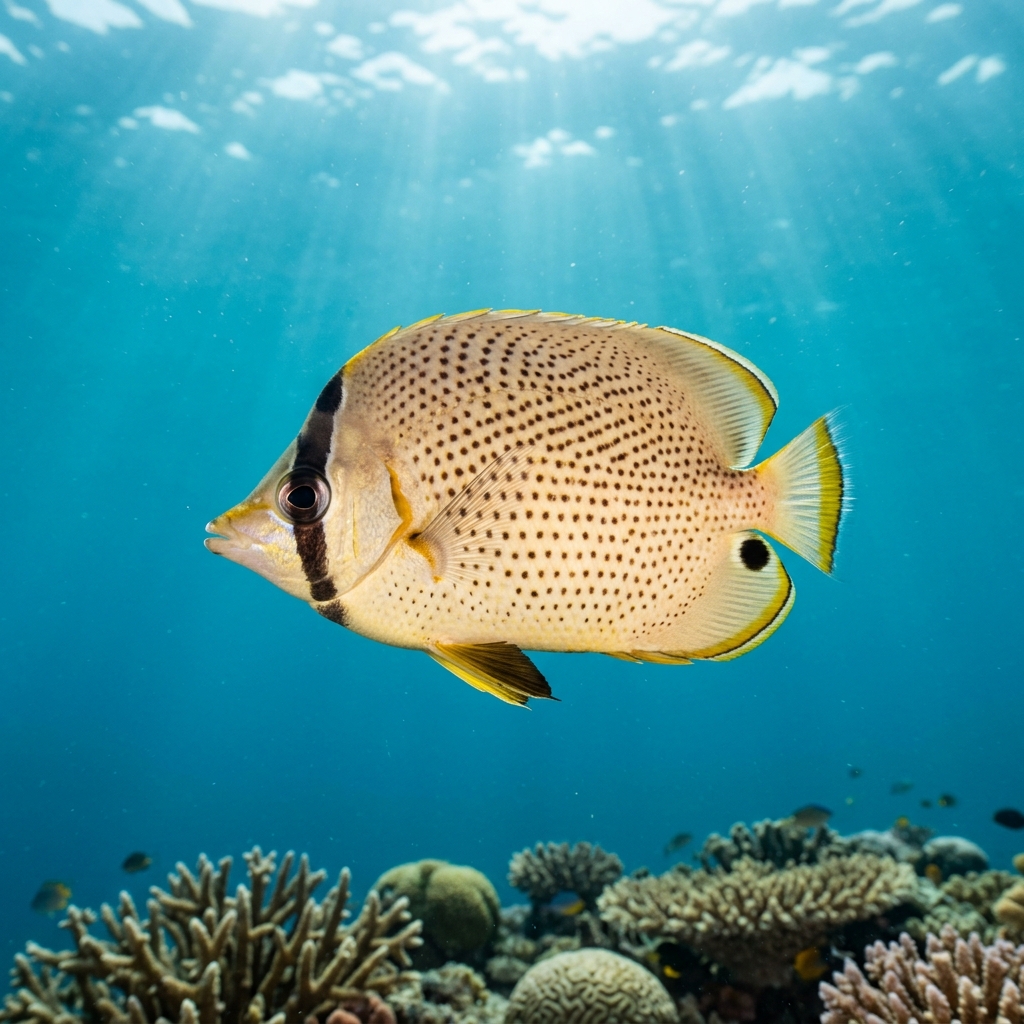
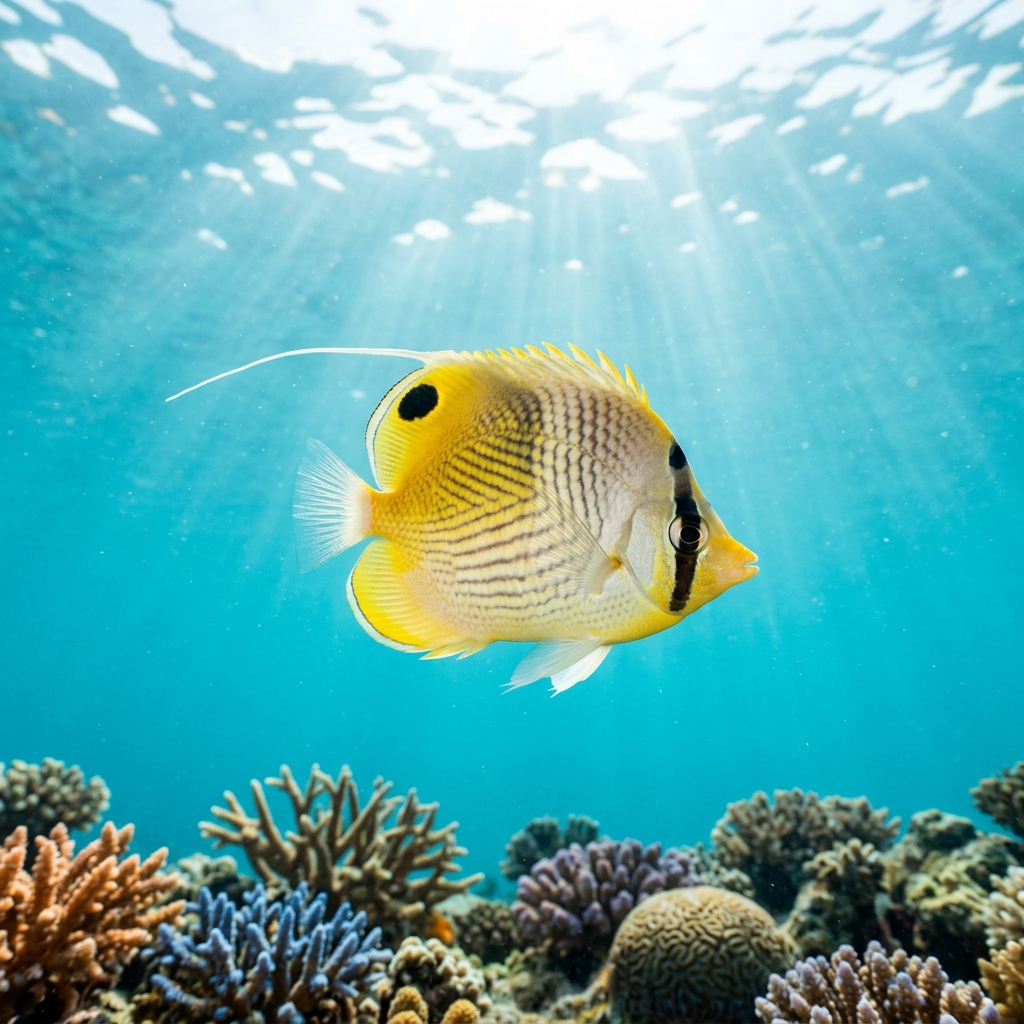
Reef neighbours a diver could mistake it for. Use the identification notes above to tell them apart.
This is overwhelmingly a Red Sea species: Egypt accounts for the vast majority of logged sightings, with Sharm el Sheikh and Marsa Alam standing out as the most productive areas, followed by Safaga and Hurghada. Outside Egypt, divers also encounter it regularly in Eilat (Israel), Aqaba (Jordan), and Jeddah (Saudi Arabia), confirming its tight association with the Red Sea basin.
Mapping where Red Sea Bannerfish is logged…
They are almost exclusively a Red Sea species. The strongest sightings come from Egyptian dive regions, Sharm el Sheikh, Marsa Alam, Safaga, and Hurghada, with additional records from Eilat in Israel, Aqaba in Jordan, and Jeddah in Saudi Arabia.
Sightings concentrate between May and February, which covers the bulk of the diving year in the Red Sea. There is no narrow peak, so most trips to Sharm el Sheikh or Marsa Alam during that window give a realistic chance of seeing one.
Look for two bold black-and-white vertical bands on a disc-shaped body, a tall dorsal fin with a long trailing white filament, and yellow colouring on the rear fins. The short snout and the yellow rear fins together distinguish it from the very similar Pennant Bannerfish.
No. They pose no threat to divers whatsoever. They are calm, approachable fish that typically hold their position on the reef as a diver moves slowly closer.
No. The species is assessed as Least Concern on the IUCN Red List, reflecting a stable population within its Red Sea range.
Site and sighting data is aggregated from diver logs, iNaturalist and GBIF. For taxonomy and conservation status: