Zebrasoma desjardinii
Spot Desjardin's Sailfin Tang in the Red Sea and Maldives year-round. Learn how to ID its tall sail-like dorsal fin and distinguish it from the Pacific Sailfin Tang.
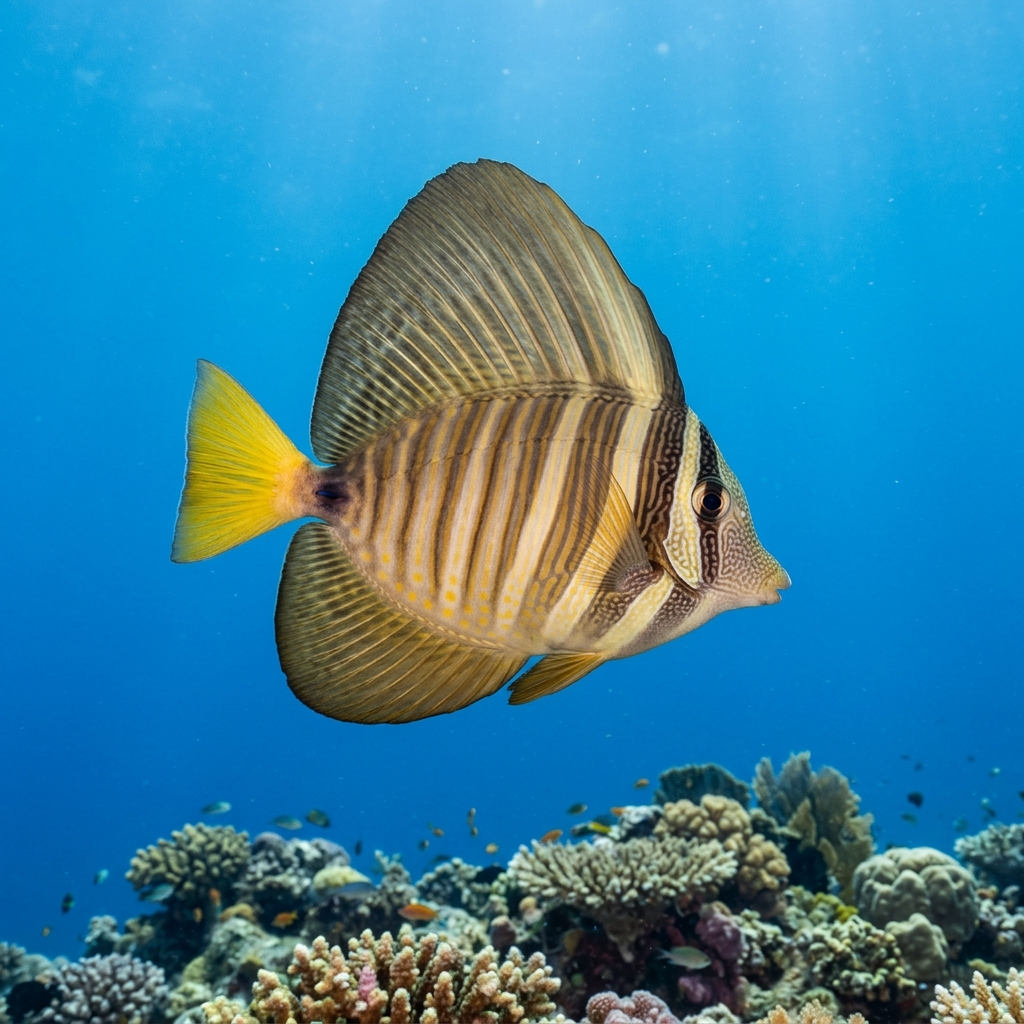
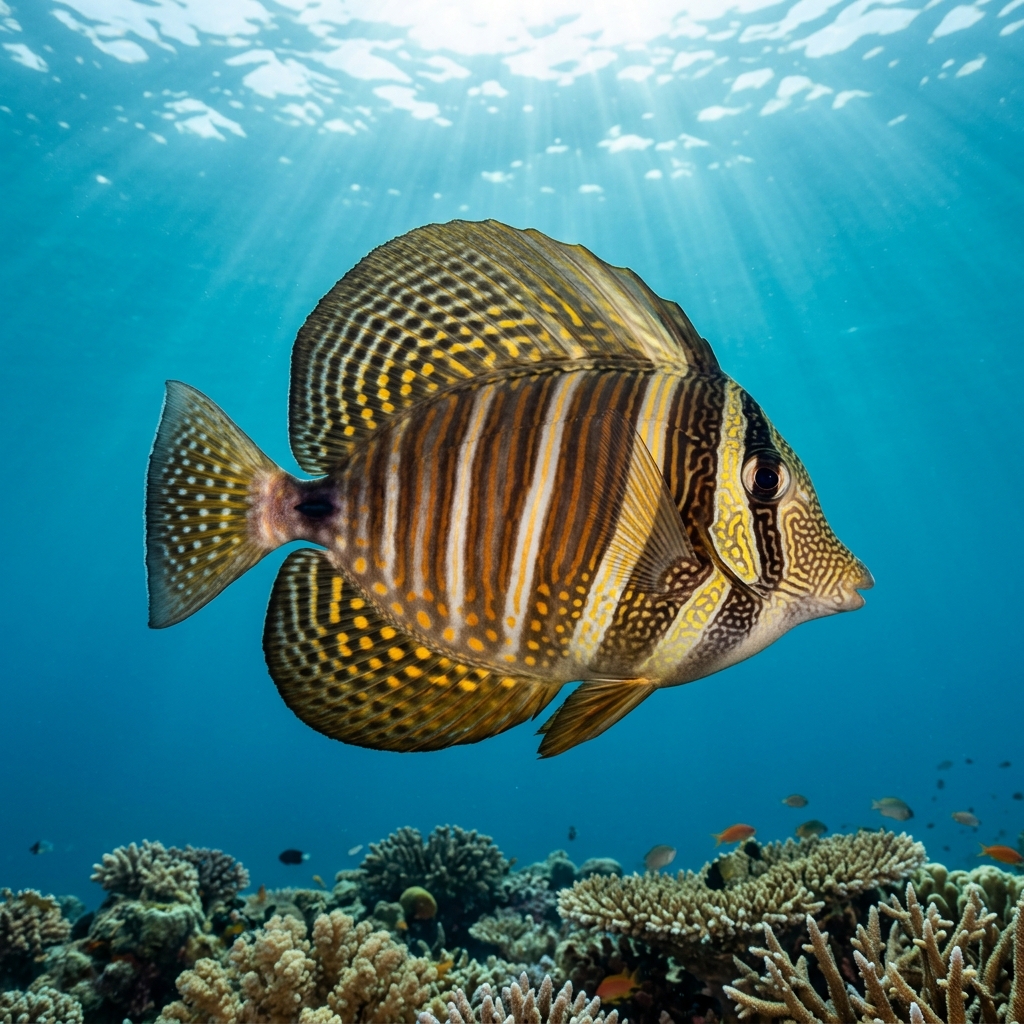
A large, disc-shaped surgeonfish with a dramatically tall dorsal fin (and matching tall anal fin) that gives it an almost circular outline in the water. The body is warm brown with bold vertical yellow-orange bars on the front half, transitioning to dense white spotting toward the tail. A vivid yellow streak runs along the face from eye to mouth, and the tail is marked with spots and streaks. Adults are among the most visually striking surgeonfish on Indo-Pacific reefs, making identification fairly straightforward once you know what to look for.
Typically seen browsing algae on hard coral and rocky reef structures, often in small loose groups or as a solitary individual moving steadily across the reef. It tends to be moderately wary of divers, approaching slowly and staying low usually keeps it in view, but sudden movements send it into the reef. Sightings are most reliable on shallower reef flats and slopes where algae growth is abundant.
Like all surgeonfish, it carries a razor-sharp scalpel-like spine (the caudal spine, or 'scalpel') on each side of the tail base, used in territorial disputes with other fish. It poses no real threat to divers, but handling the fish, which you should never do anyway, would be a quick way to find out it's there.
Present year-round with no concentrated season, the data show sightings every month across northern hemisphere sites. It sits comfortably in water between about 23 and 29 °C, which describes tropical Indian Ocean and Red Sea reefs throughout the year.
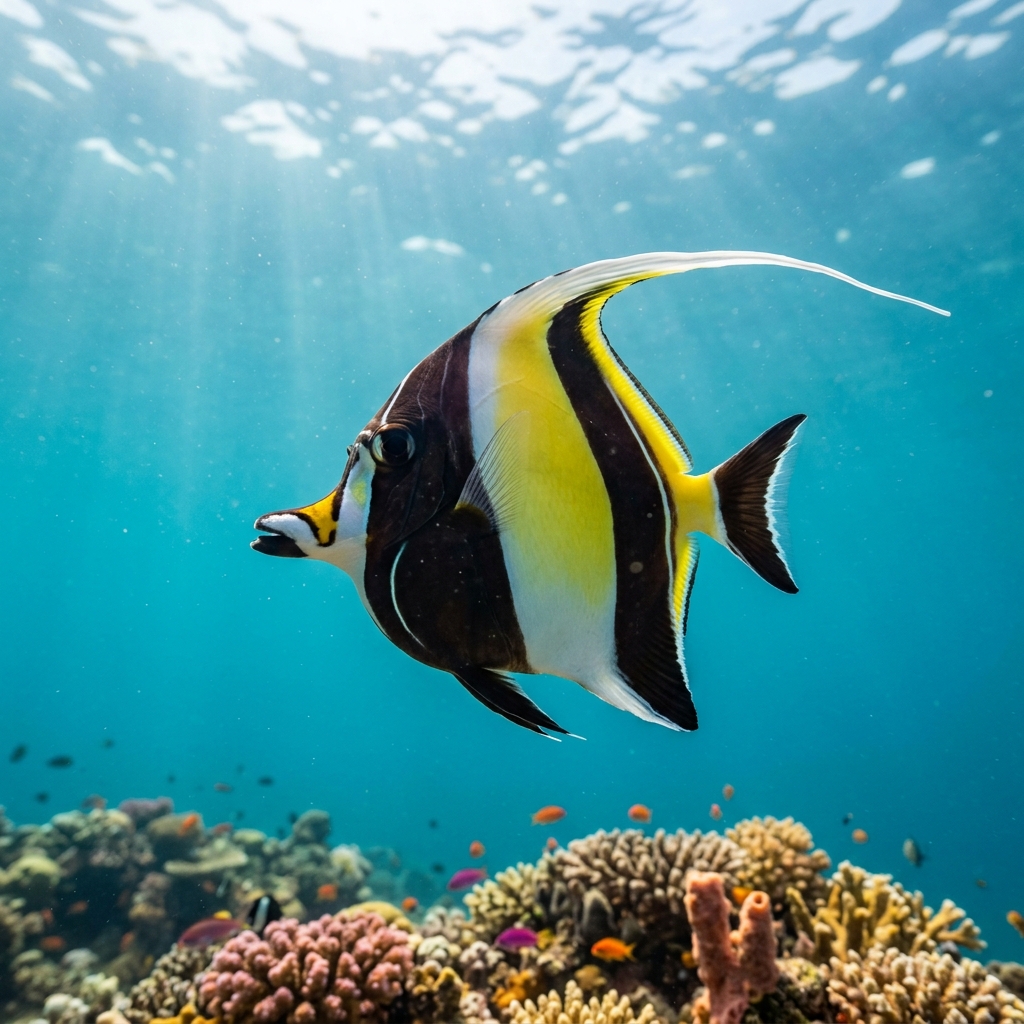
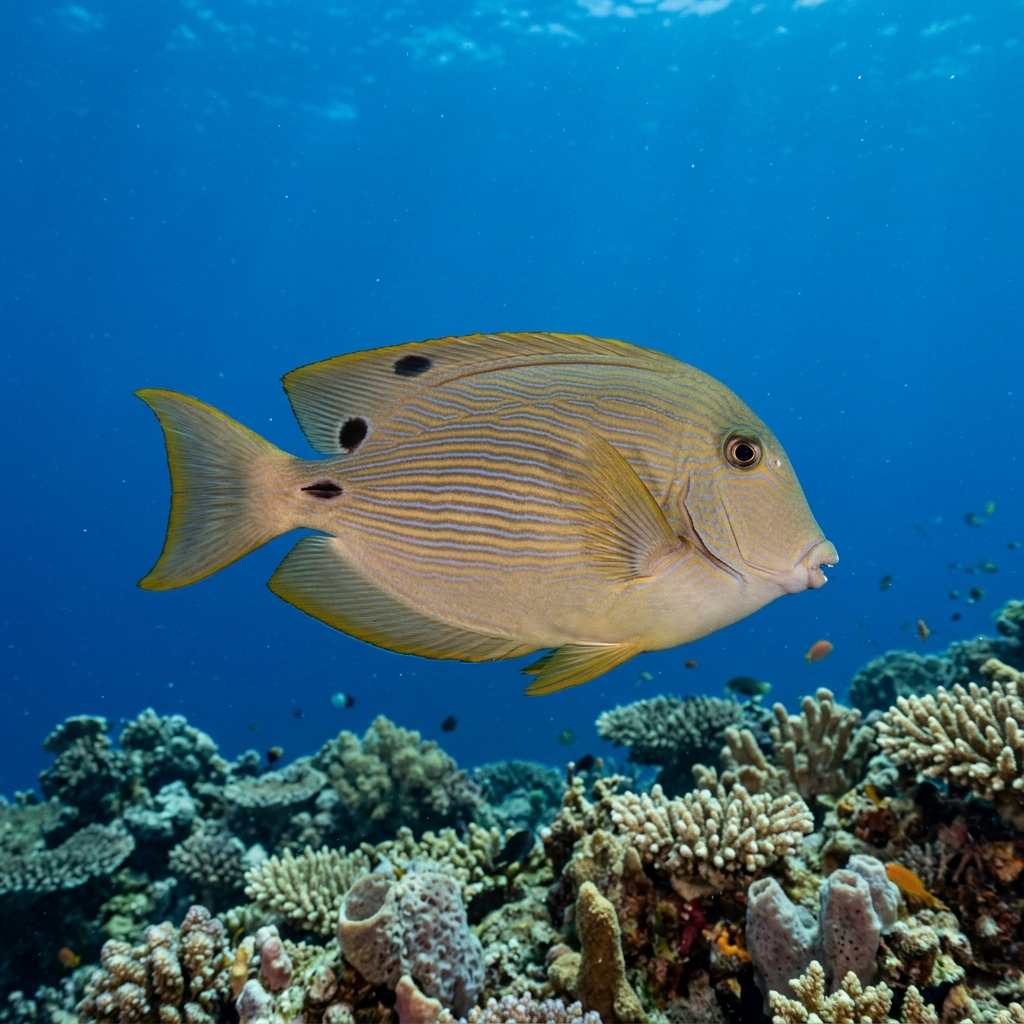
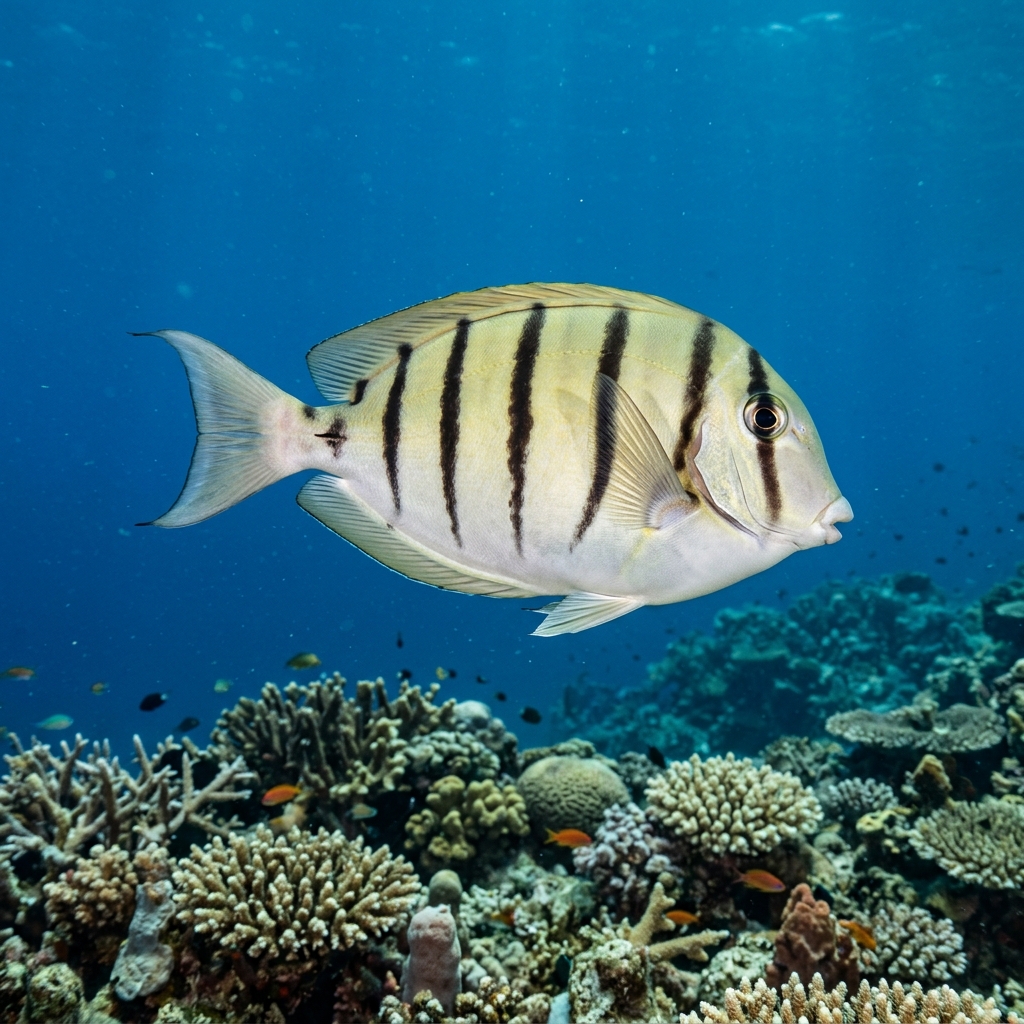
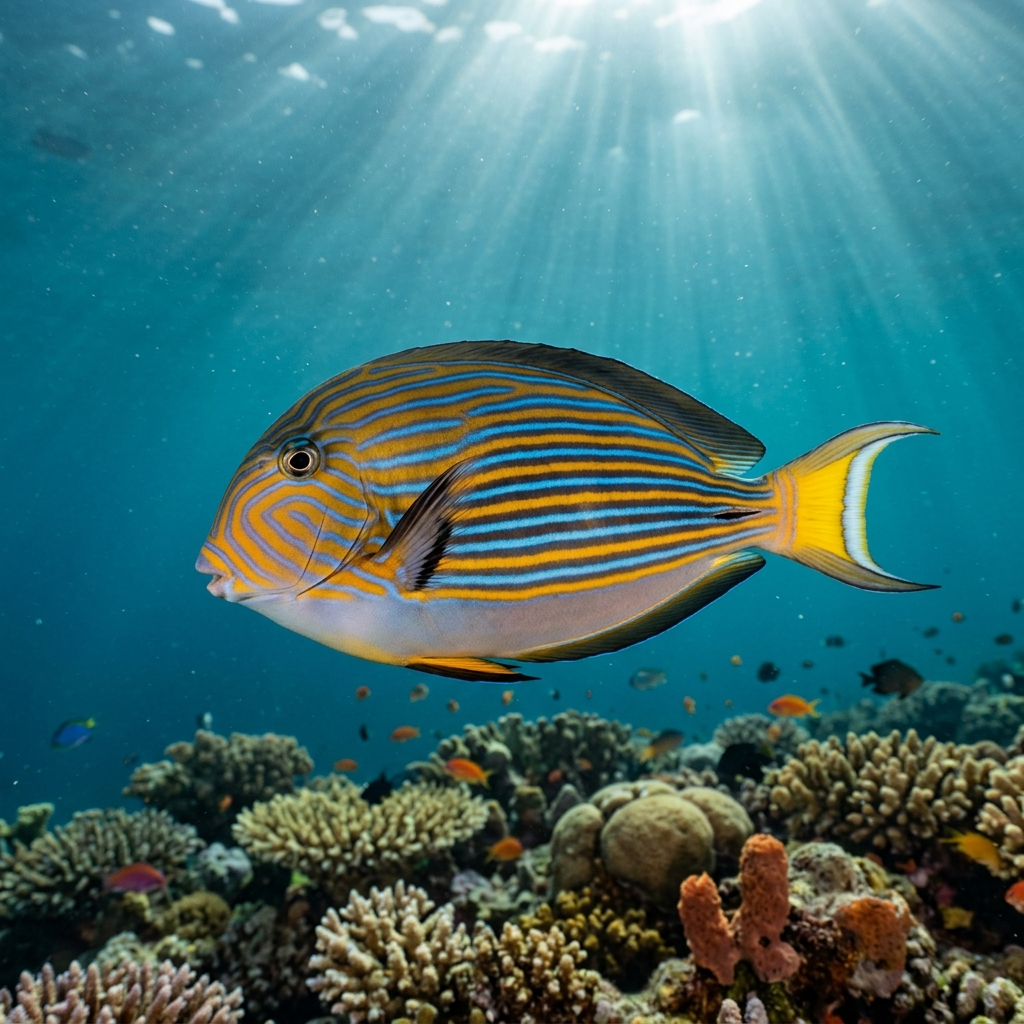
Reef neighbours a diver could mistake it for. Use the identification notes above to tell them apart.
Most commonly logged in Egypt, particularly around Sharm el Sheikh and Marsa Alam, which together account for the largest share of sightings. The Maldives, especially the Male and Ari Atolls, are a strong second, followed by the Seychelles, Mauritius, and Réunion. Saudi Arabia and Israel in the Red Sea also have solid records, making the Indian Ocean and Red Sea the clear home range for this species.
Mapping where Desjardin's Sailfin Tang is logged…
The Red Sea is the top destination, with strong records around Sharm el Sheikh, Marsa Alam, and Safaga in Egypt, plus sites in Saudi Arabia and Israel. The Maldives (Male and Ari Atolls) run a close second, and the Seychelles, Mauritius, and Réunion round out the main hotspots.
Any time of year. Sighting data show no seasonal peak, this species is resident year-round on the tropical reefs of the Indian Ocean and Red Sea. Water temperatures across its range stay within its comfort zone throughout the year, so there is no better or worse month to plan a trip.
Look for a large, nearly circular surgeonfish with a very tall dorsal fin. The front half of the body has bold brown and yellow-orange vertical bars; the rear half shifts to dense white spotting. A yellow streak runs across the face. That combination of sail fins, barred front, and spotted rear is distinctive in the Indian Ocean.
Adults typically reach around 30 to 40 cm in total length, though the tall dorsal and anal fins make them appear considerably larger in the water. Their almost circular body profile means they look bulkier than a similarly-sized elongated fish.
No. They are not aggressive toward divers and will generally move away if approached too closely. Like all surgeonfish they carry a sharp spine near the tail, but this is a defence used against other fish, not something you'd encounter unless you tried to handle one, which you should avoid.
Site and sighting data is aggregated from diver logs, iNaturalist and GBIF. For taxonomy and conservation status:
Striped Surgeonfish
3,289 sites