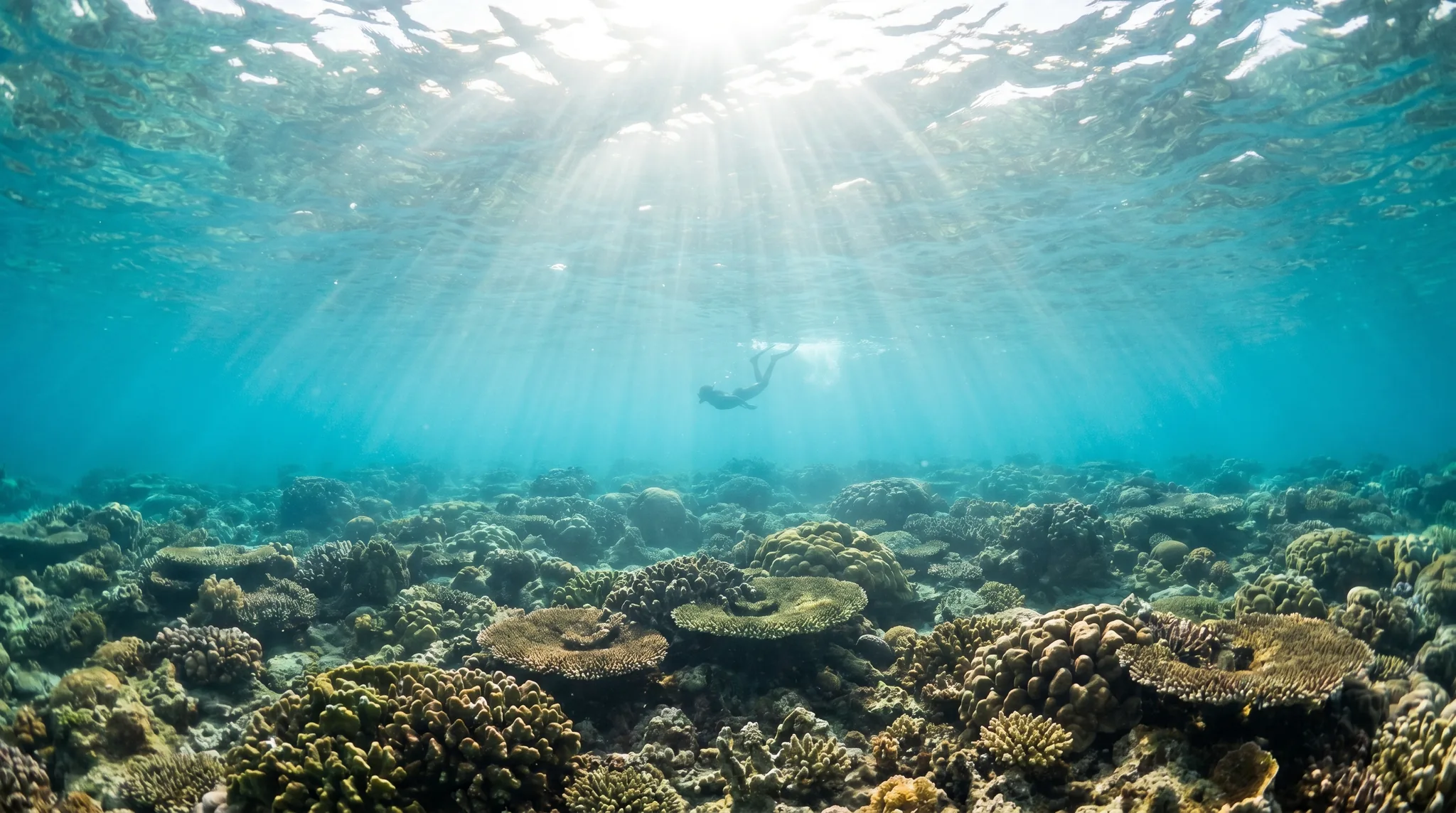
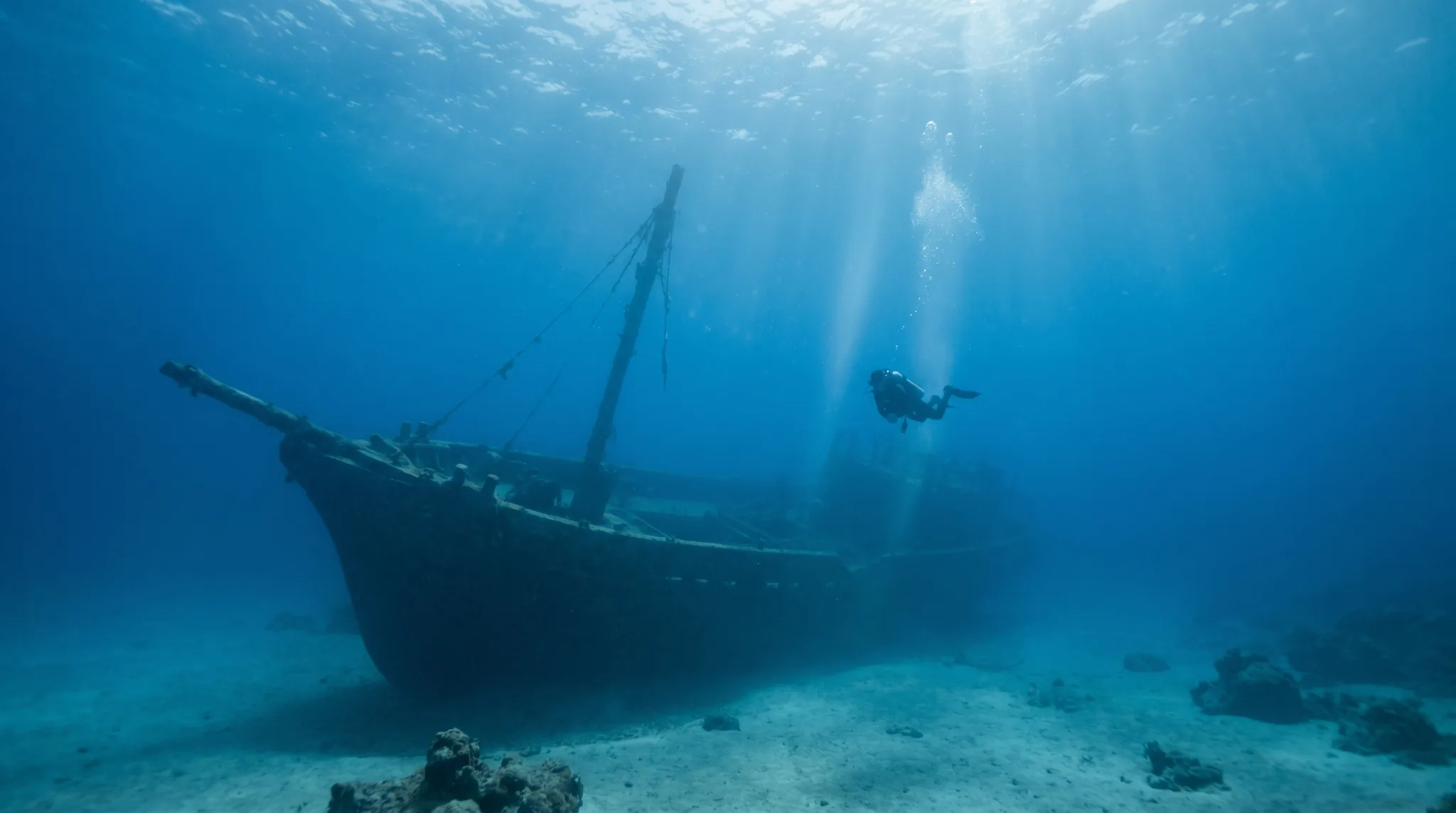
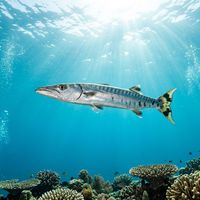
The Seven Brothers Islands sit in the Bab el-Mandeb Strait, where the Red Sea meets the Gulf of Aden, and strong, constant currents define almost every dive here. The four sites in our database range from a shallow sheltered reef to a deep wall pushing beyond sixty metres, so the area caters to beginners at Le Jardin Japonais and advanced divers at La Marche and the wreck at La Dame Blanche. Visibility varies considerably by site, from as low as five metres on the wreck and reef dives to a reliable thirty metres on the deeper wall. Liveaboard is the practical access route, with the nearest town being Khôr Angar. Grey reef sharks, silvertip sharks, whale sharks, mobula rays, and barracuda are among the pelagic species recorded here.
Monthly water temperature across Seven Brothers Islands's sites, from satellite sea-surface data corrected for depth. The band shows the site-to-site spread.
Water temperatures hold between the mid- and upper-twenties from January through March, rising toward thirty degrees between April and June and again in October. The cooler months from February to May are widely cited as the best period for liveaboard visits, though operators run trips from January through October.
Water temperature around Seven Brothers Islands ranges from about 26°C in January to 29°C in November, based on satellite sea-temperature data for its dive sites.
In the warm season (about 29°C) a rash guard or 3mm shorty is comfortable in Seven Brothers Islands; in the coldest months (about 26°C) step up to a 3mm full suit.
Fin maps 4 sites in Seven Brothers Islands (4 scuba diving sites).
Across Seven Brothers Islands's dive sites, January, February, March, April and December are most often reported as the best months to visit.
1 more site to explore