Holacanthus bermudensis
Spot the blue angelfish across Florida, the Yucatán Peninsula, and Bermuda in warm 24-29 °C reef waters. ID tips and top dive sites inside.
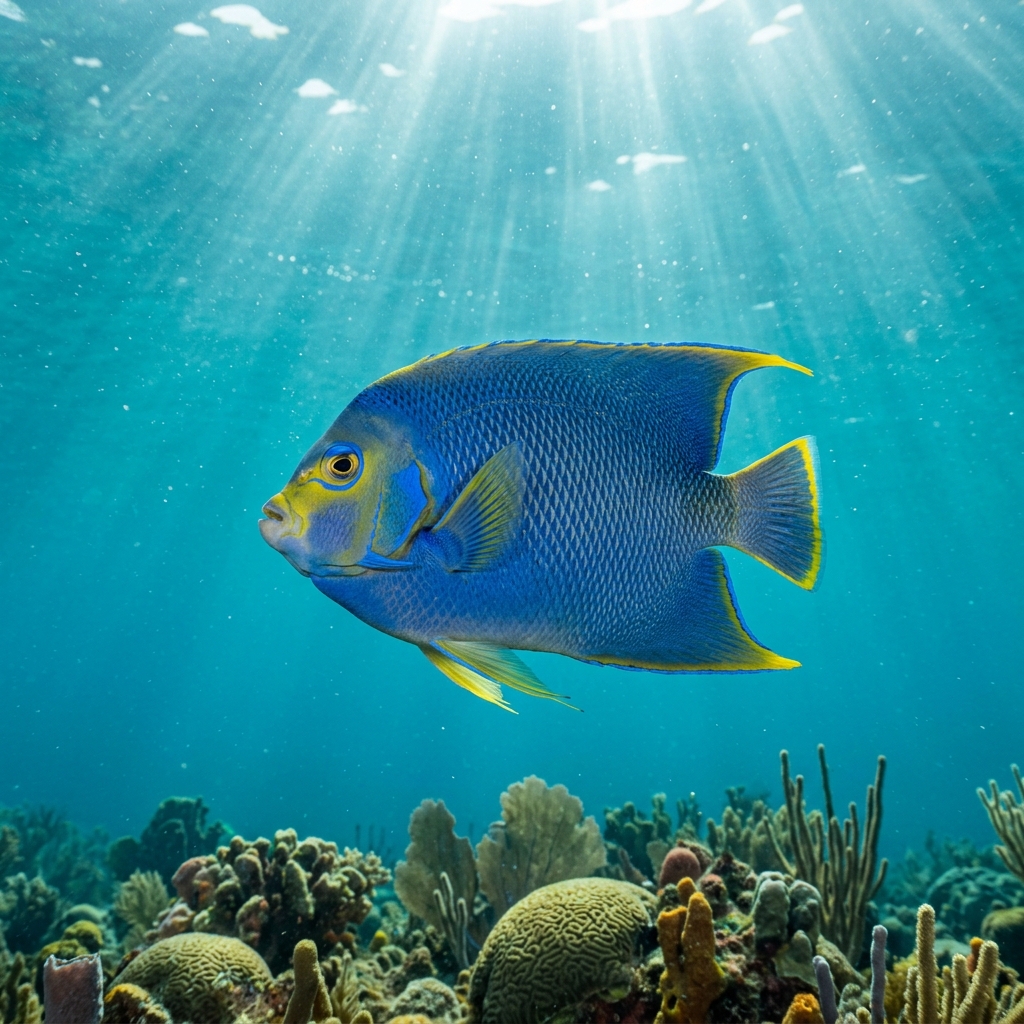
A large, disc-shaped reef fish wearing pale blue-grey scales each edged in yellow, giving the body a net-like shimmer underwater. The dorsal and anal fins trail into long, flowing yellow-tipped filaments, and the tail is broadly rounded with a yellow margin. Look for the clean, unmarked yellow face to separate it from its close relative the queen angelfish, which sports a distinctive blue-ringed 'crown' spot on its forehead. Juveniles show vivid blue and yellow vertical stripes on a dark body, making them look entirely different from the adults.
Usually encountered alone or in a loose pair, moving deliberately over coral reef and rocky rubble as it picks at sponges and algae. It tends to keep its distance from divers but rarely bolts; approach slowly and it will often carry on feeding within easy viewing range. Most sightings are in the mid-reef zone, and the fish is active during daylight hours.
Sponges make up the bulk of its diet, a food source most reef fish ignore because of toxic compounds; a specialised gut lets it process them safely and gives it an important role in keeping sponge growth in check on Atlantic reefs.
No strong seasonal peak has been detected, so treat it as a year-round resident. It fits comfortably in the 24 to 29 °C water temperatures typical of Florida, Bermuda, and the Yucatán throughout the year.
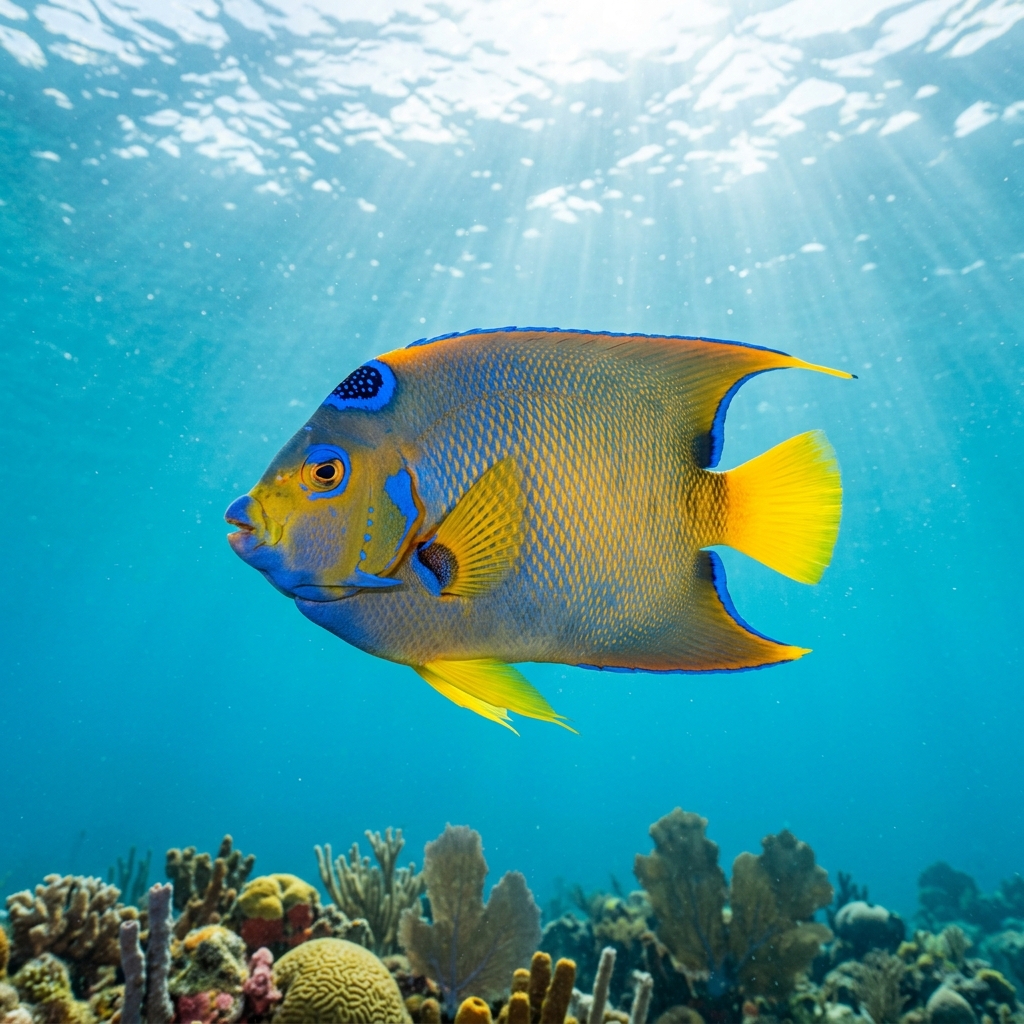
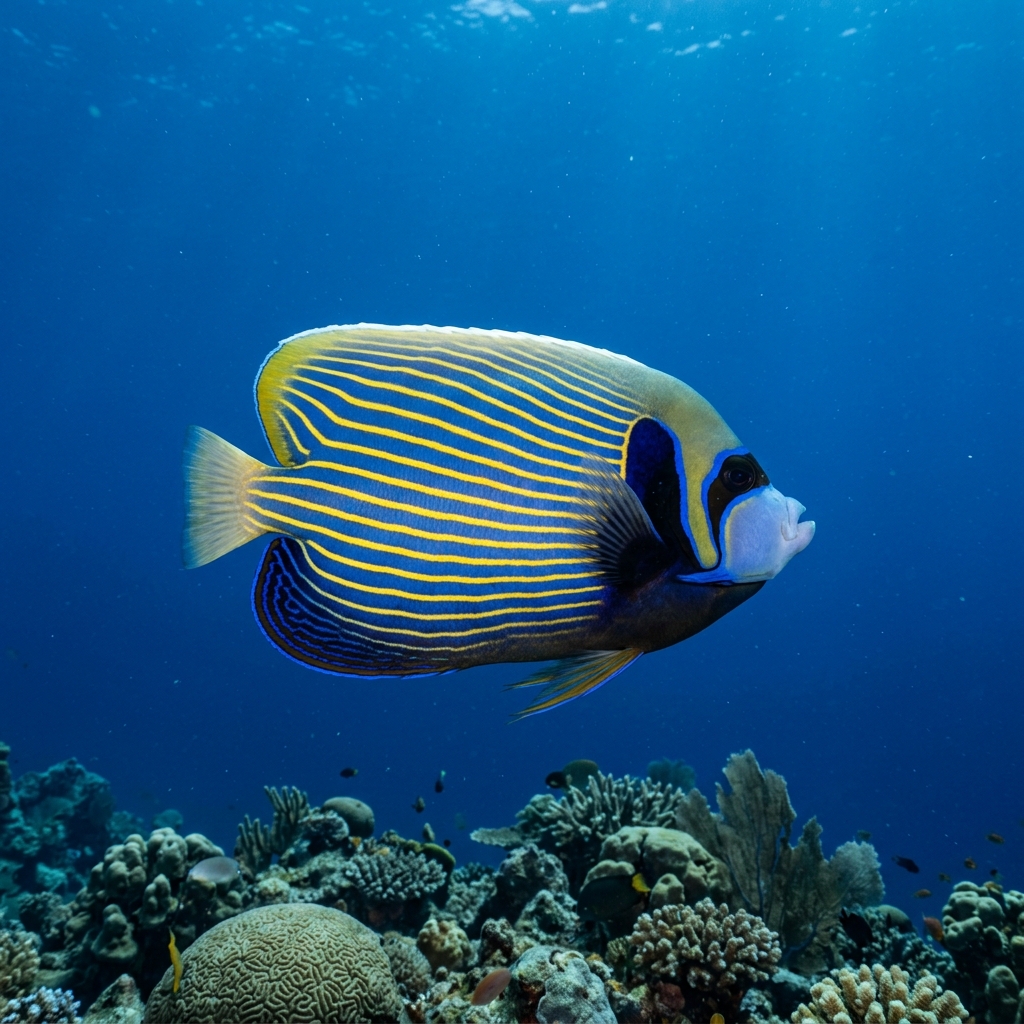
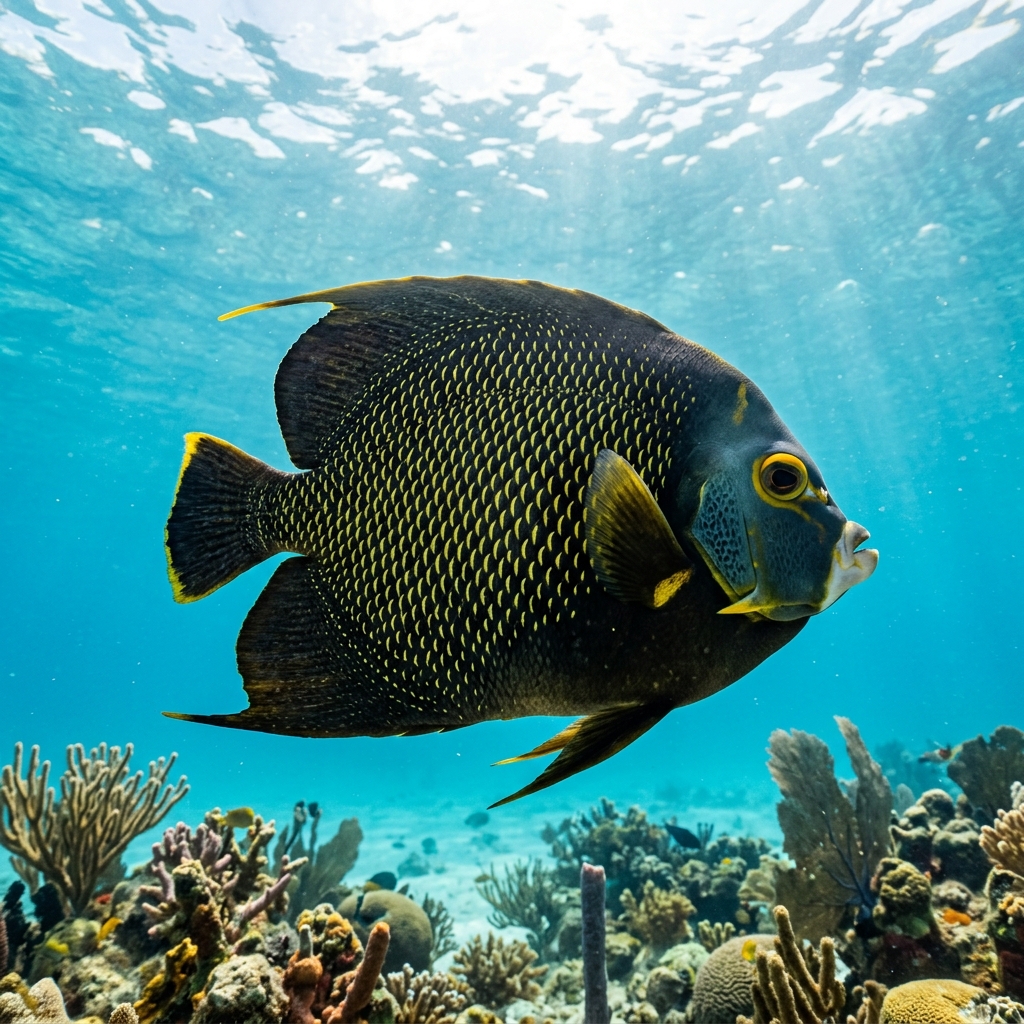
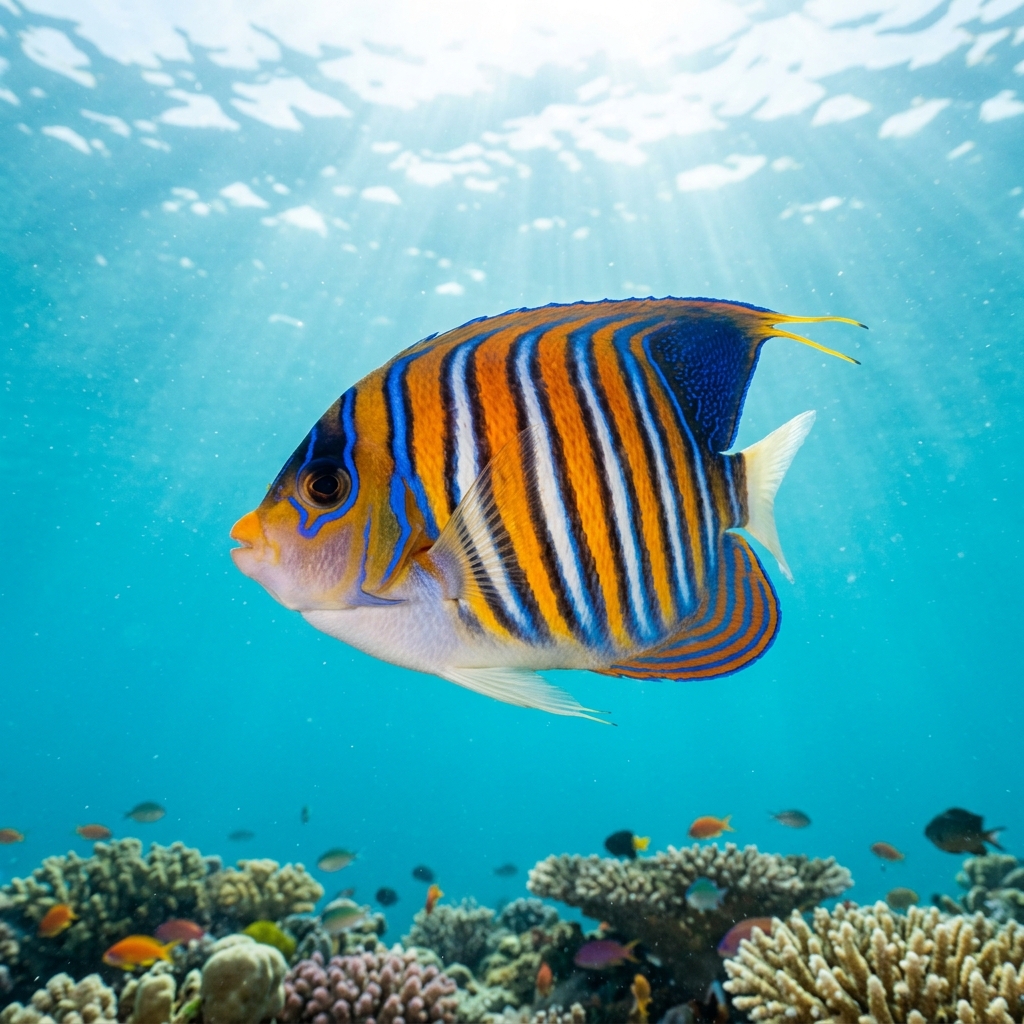
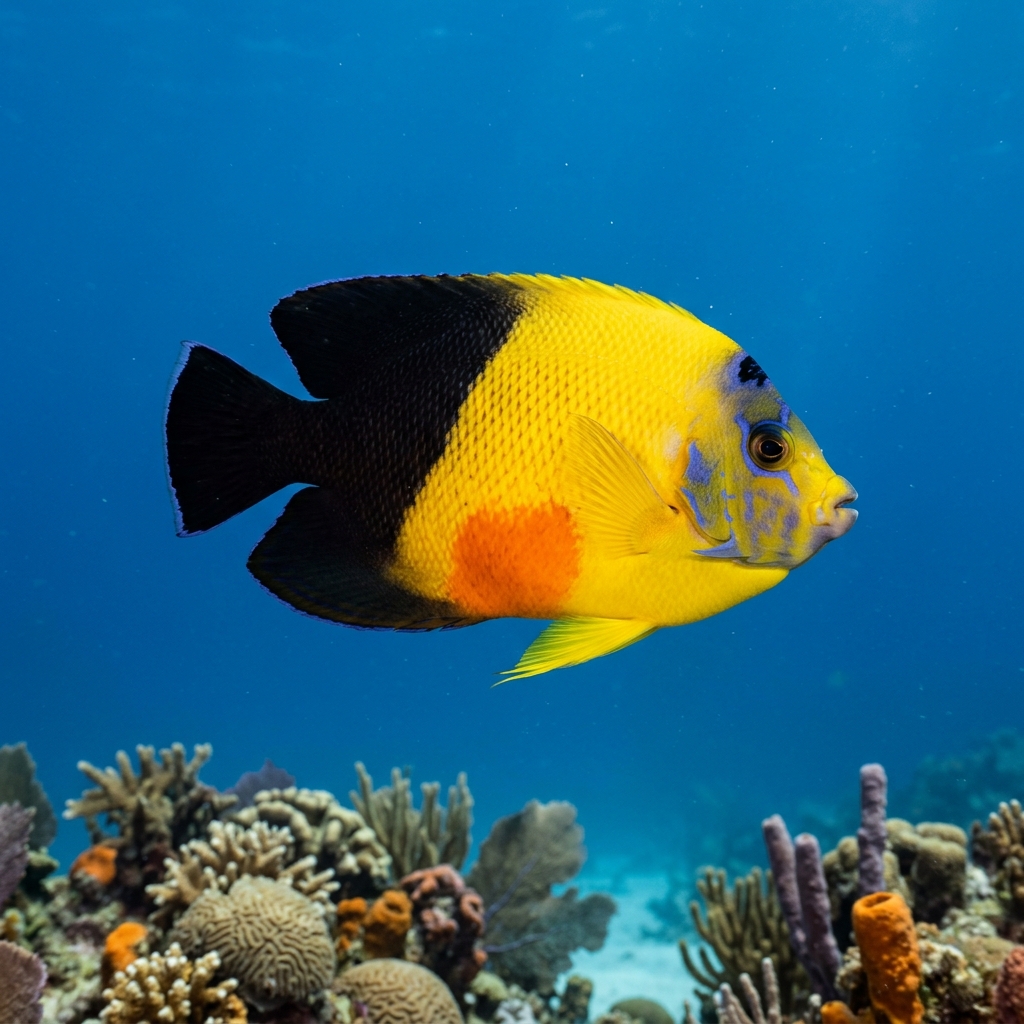
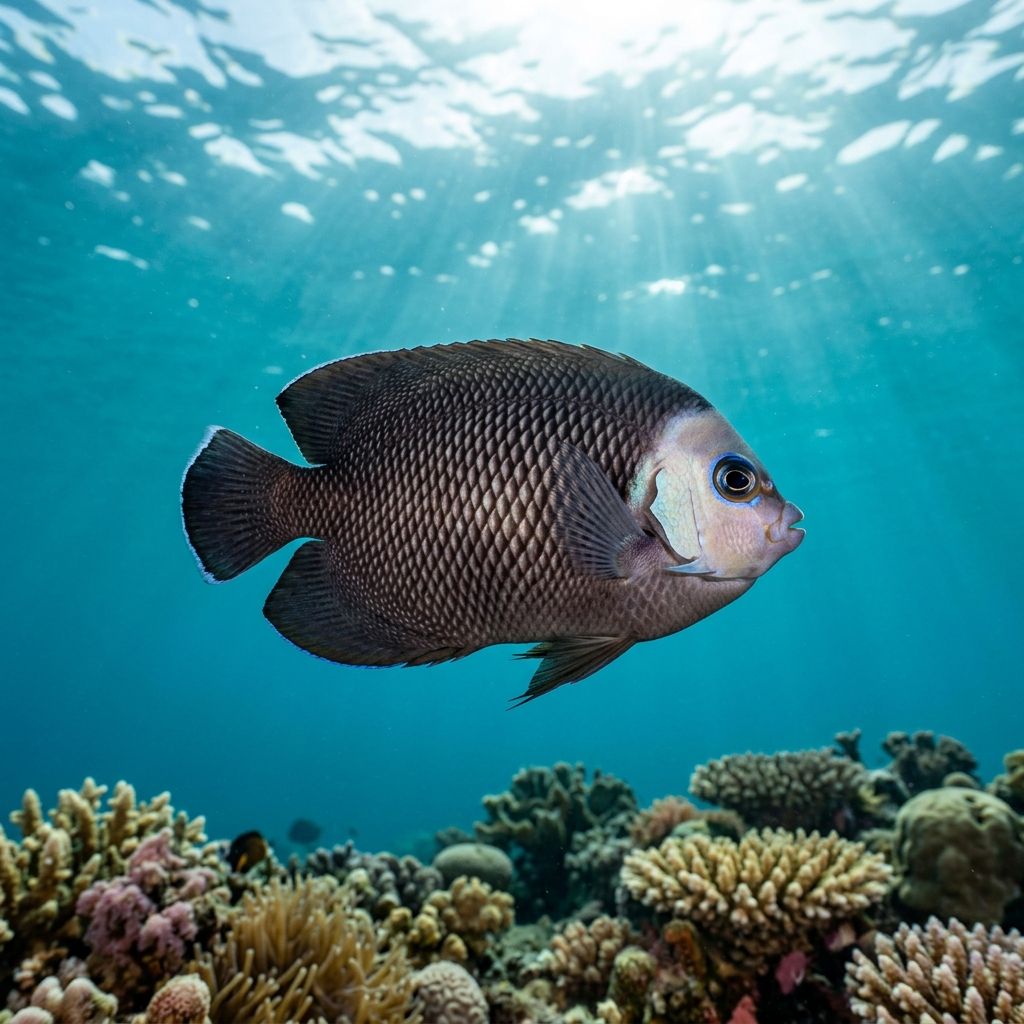
Reef neighbours a diver could mistake it for. Use the identification notes above to tell them apart.
Most sightings come from Florida and the US Southeast, which accounts for the vast majority of logged sites, making it the strongest bet for an encounter. The Yucatán Peninsula and Bermuda both host solid populations and together cover a wide spread of Caribbean and Atlantic reef habitat. Mexico's Gulf of Mexico coast adds further opportunities, though sightings there are logged less frequently.
Mapping where Blue Angelfish is logged…
Florida and the US Southeast are by far the most reliable places, with a large spread of logged sites along the Atlantic coast and Florida Keys reefs. The Yucatán Peninsula in Mexico and Bermuda are the next best options, both offering consistent reef encounters across Caribbean and mid-Atlantic waters.
Available sighting data does not point to a particular season, so they can be encountered year-round. Water temperatures across their range sit between 24 and 29 °C for much of the year, keeping them active on the reef in all seasons.
The queen angelfish has a vivid blue-ringed dark spot (called a 'crown') on its forehead; the blue angelfish has a plain yellow face with no such marking. Both species share yellow-edged scales and flowing fin tips, so the forehead is the quickest field check. Hybrids between the two do occur, which can make borderline individuals tricky to call.
Adults typically reach around 35 to 45 cm in length, making them one of the larger angelfish species on Atlantic reefs. In the water they appear broad and disc-shaped, which makes them look even bigger than their length suggests.
They feed mainly on sponges, which most reef fish avoid because of toxic chemicals. A specialised digestive system lets them break down those compounds, and this makes them one of the few species actively controlling sponge growth on Caribbean and Atlantic reefs.
Site and sighting data is aggregated from diver logs, iNaturalist and GBIF. For taxonomy and conservation status:
Rock Beauty
1,573 sites