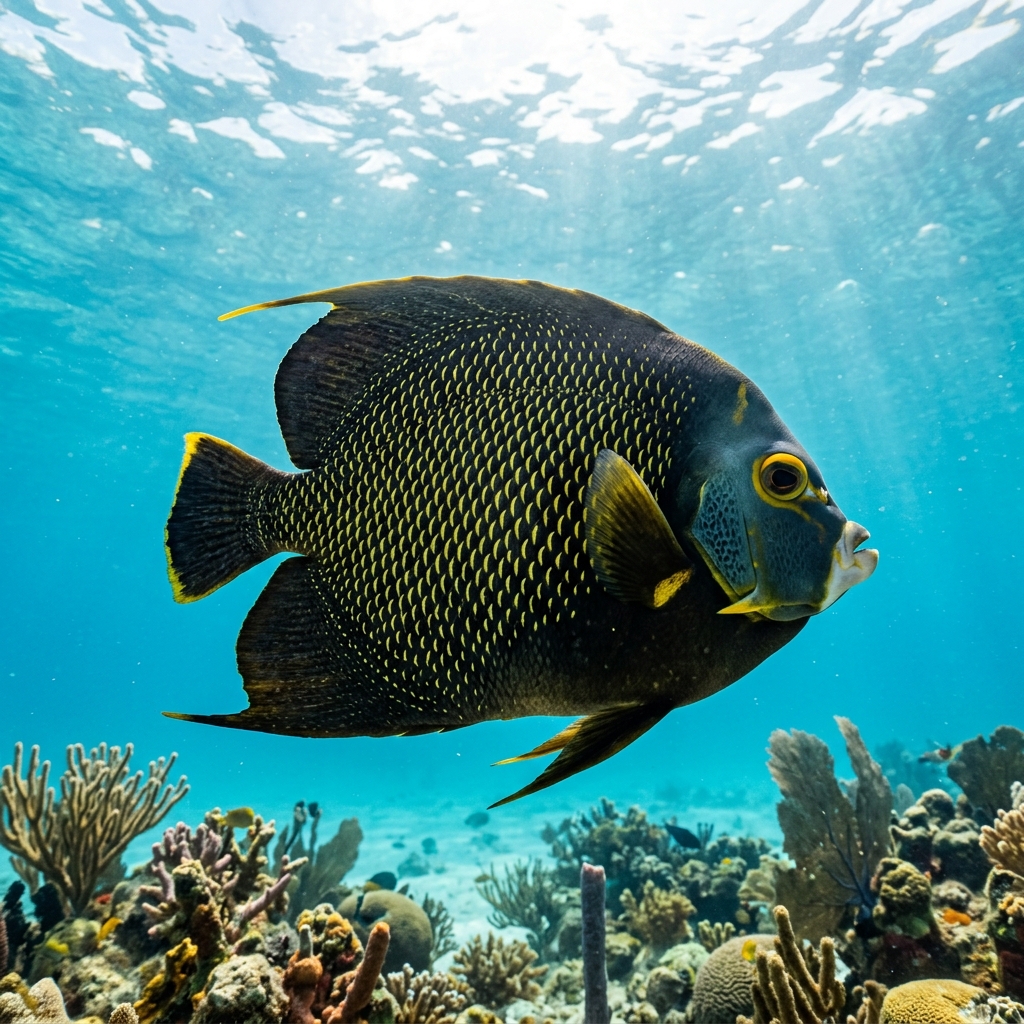
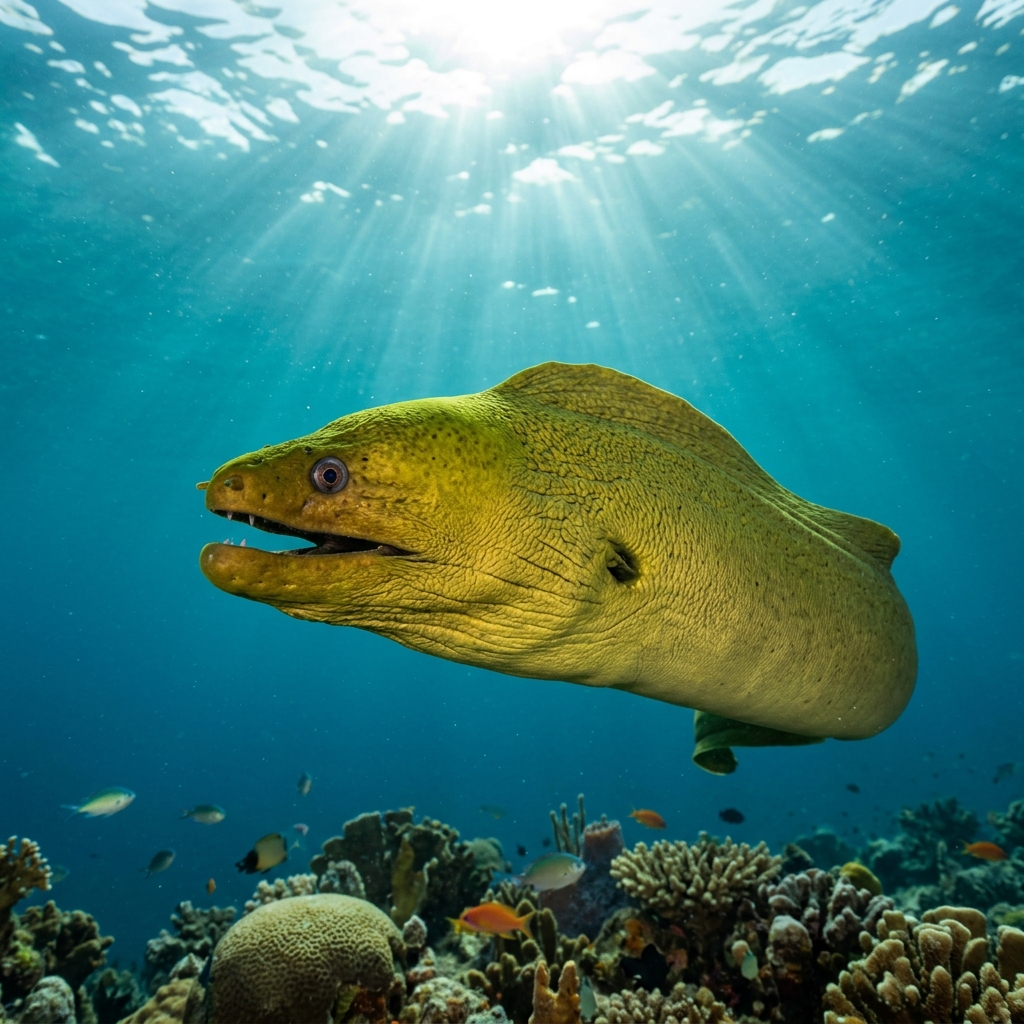
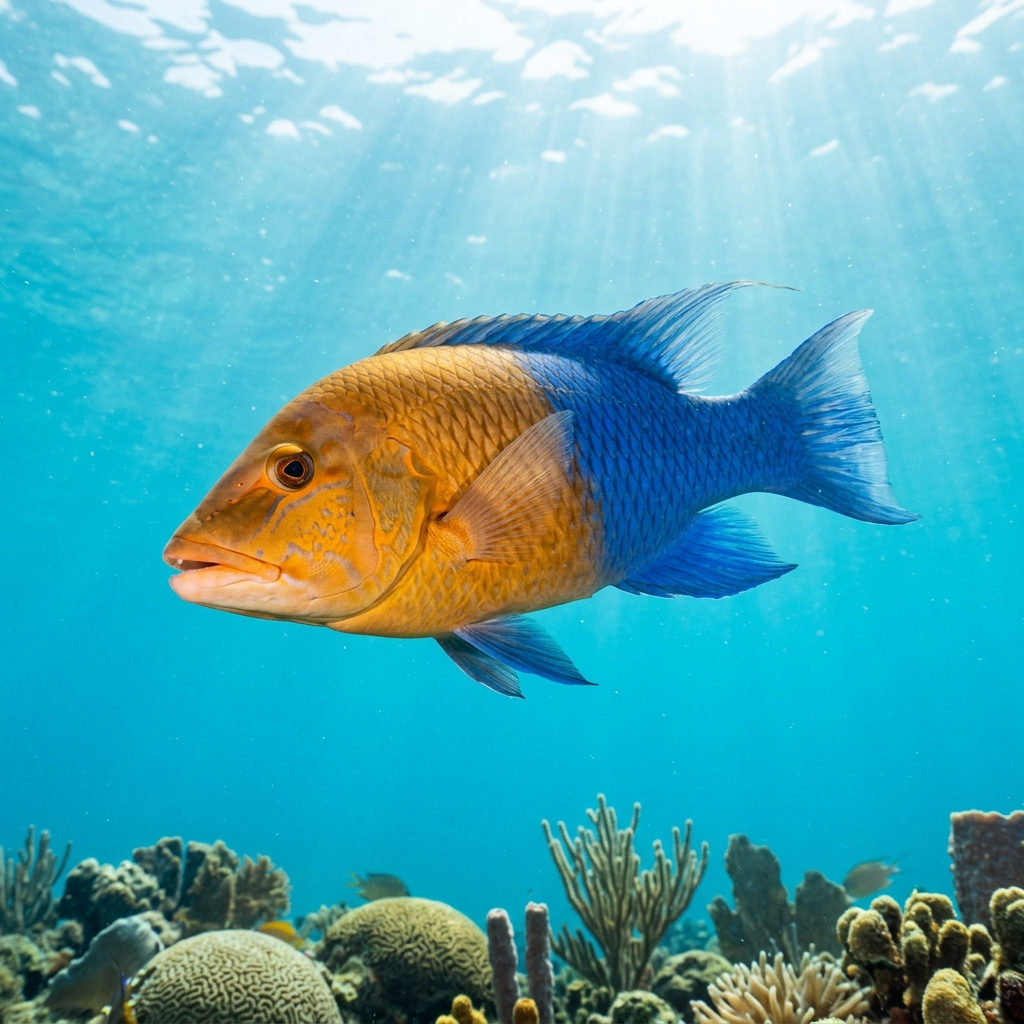
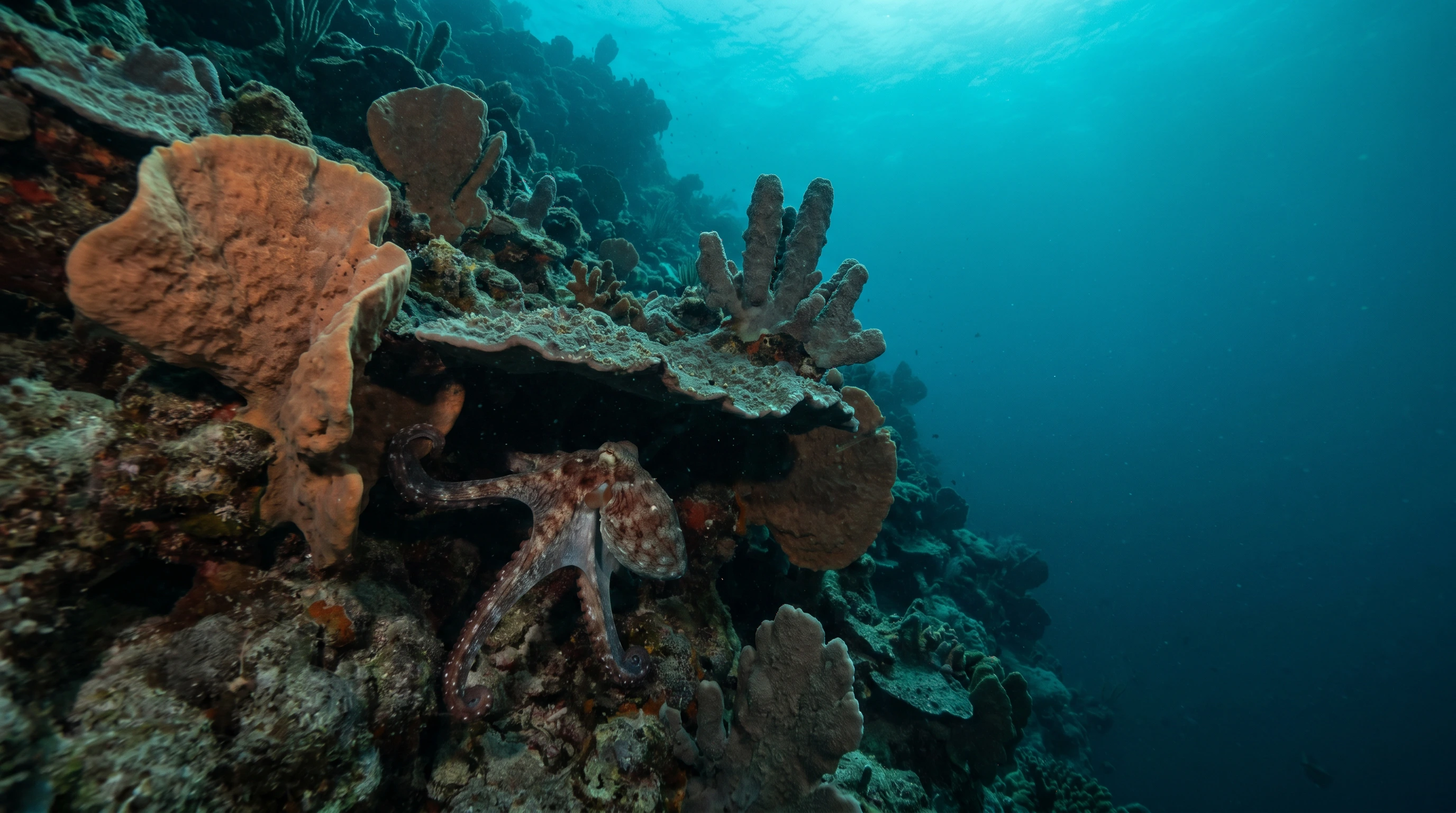
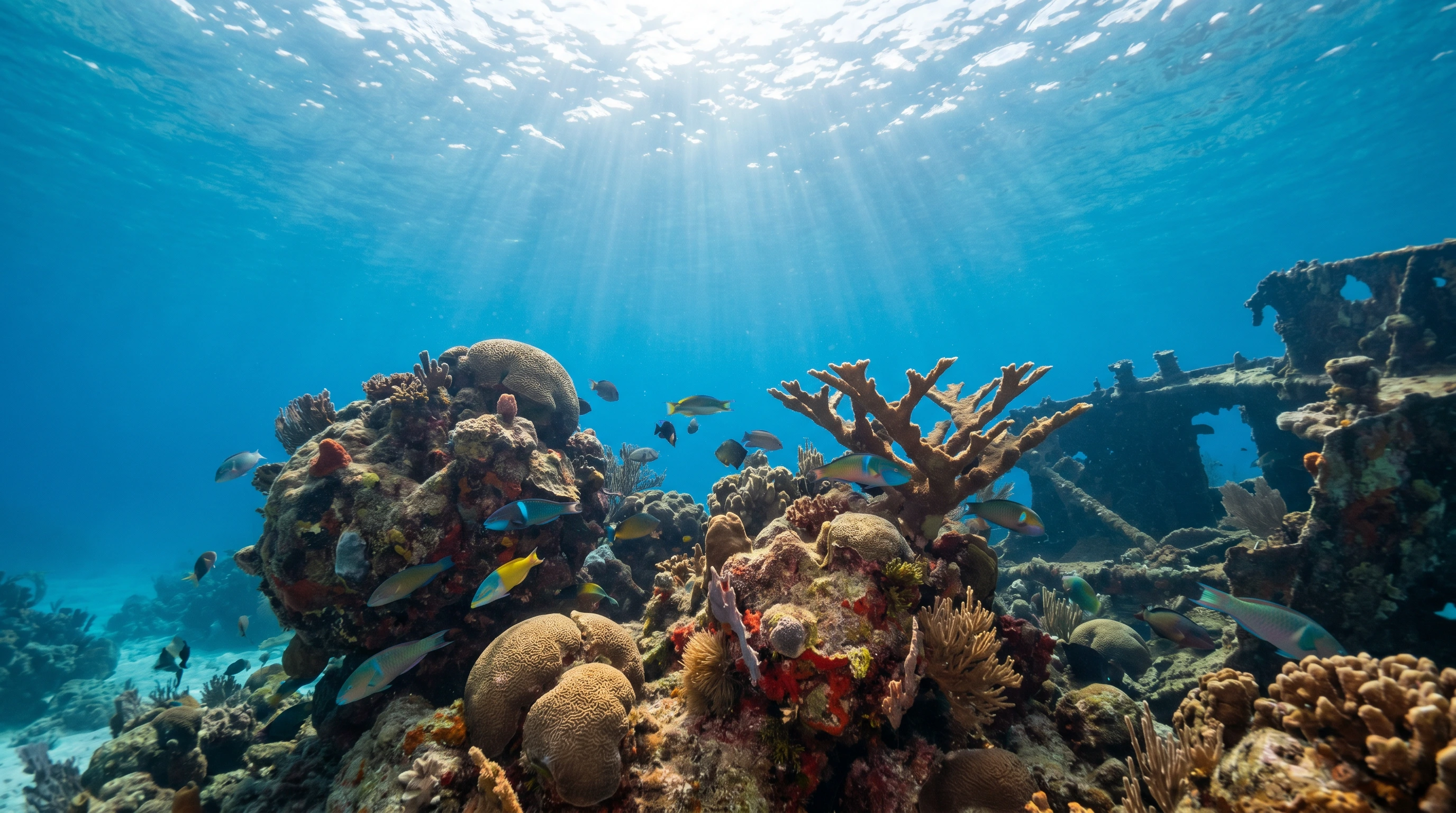
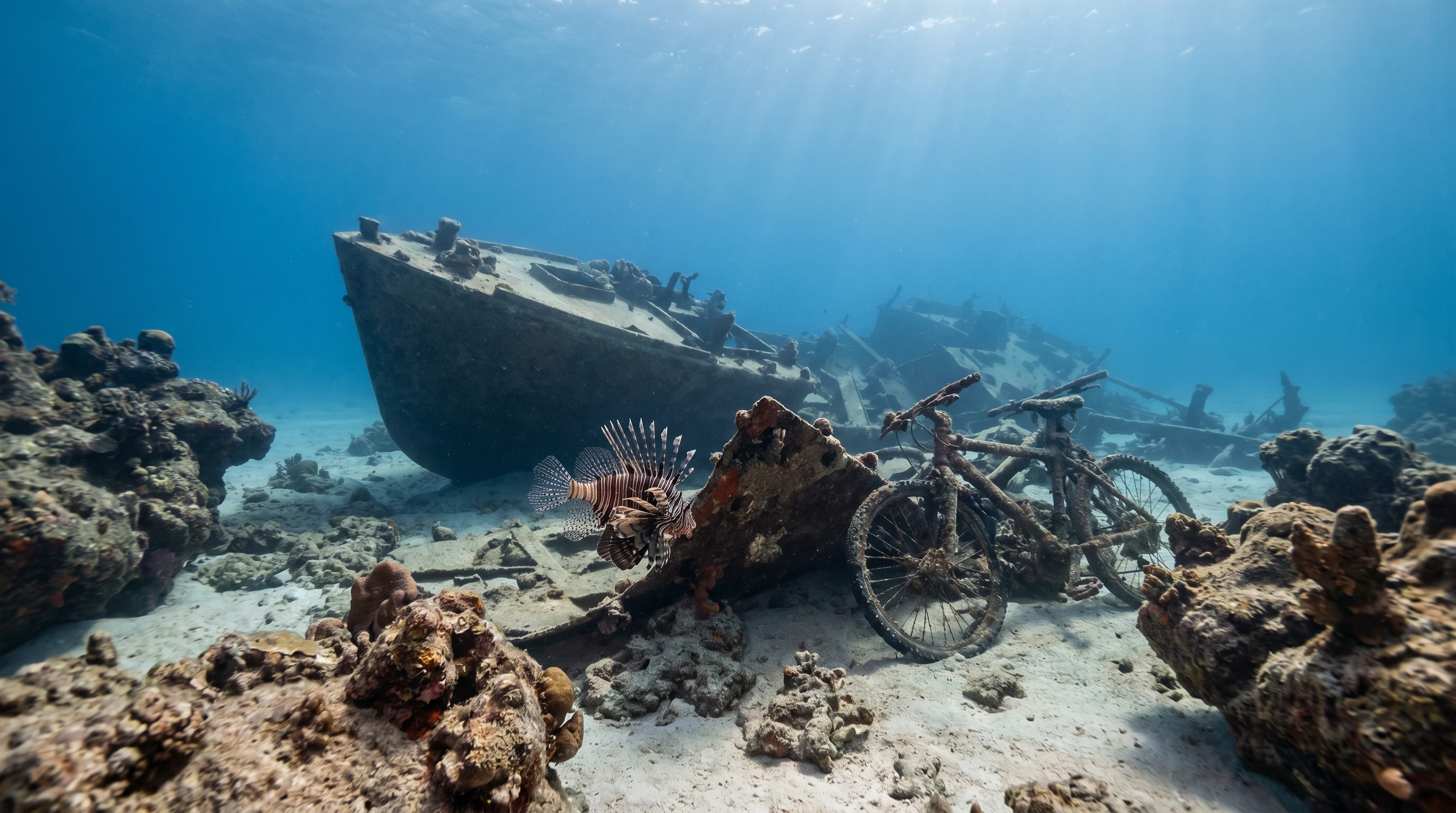
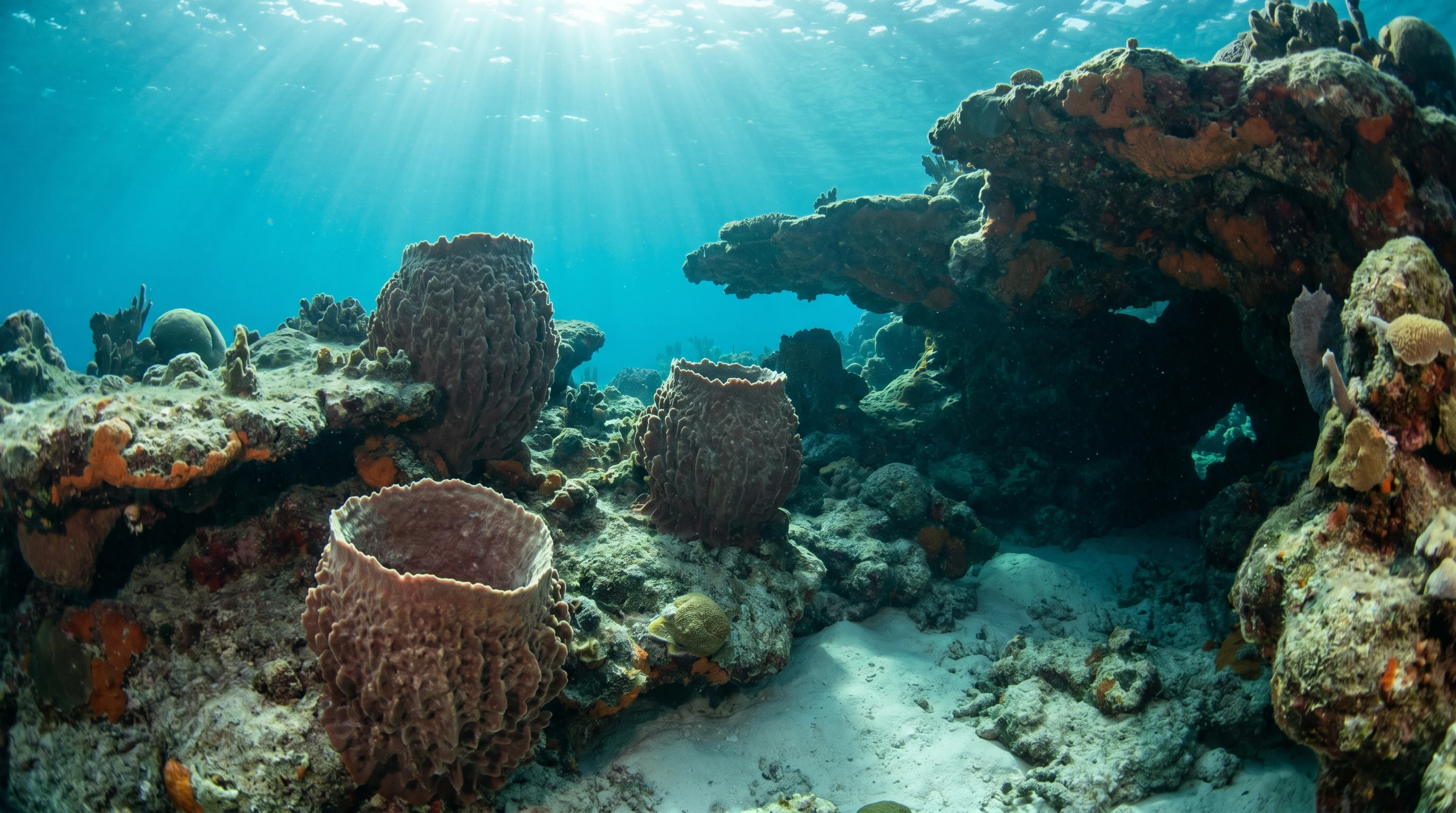
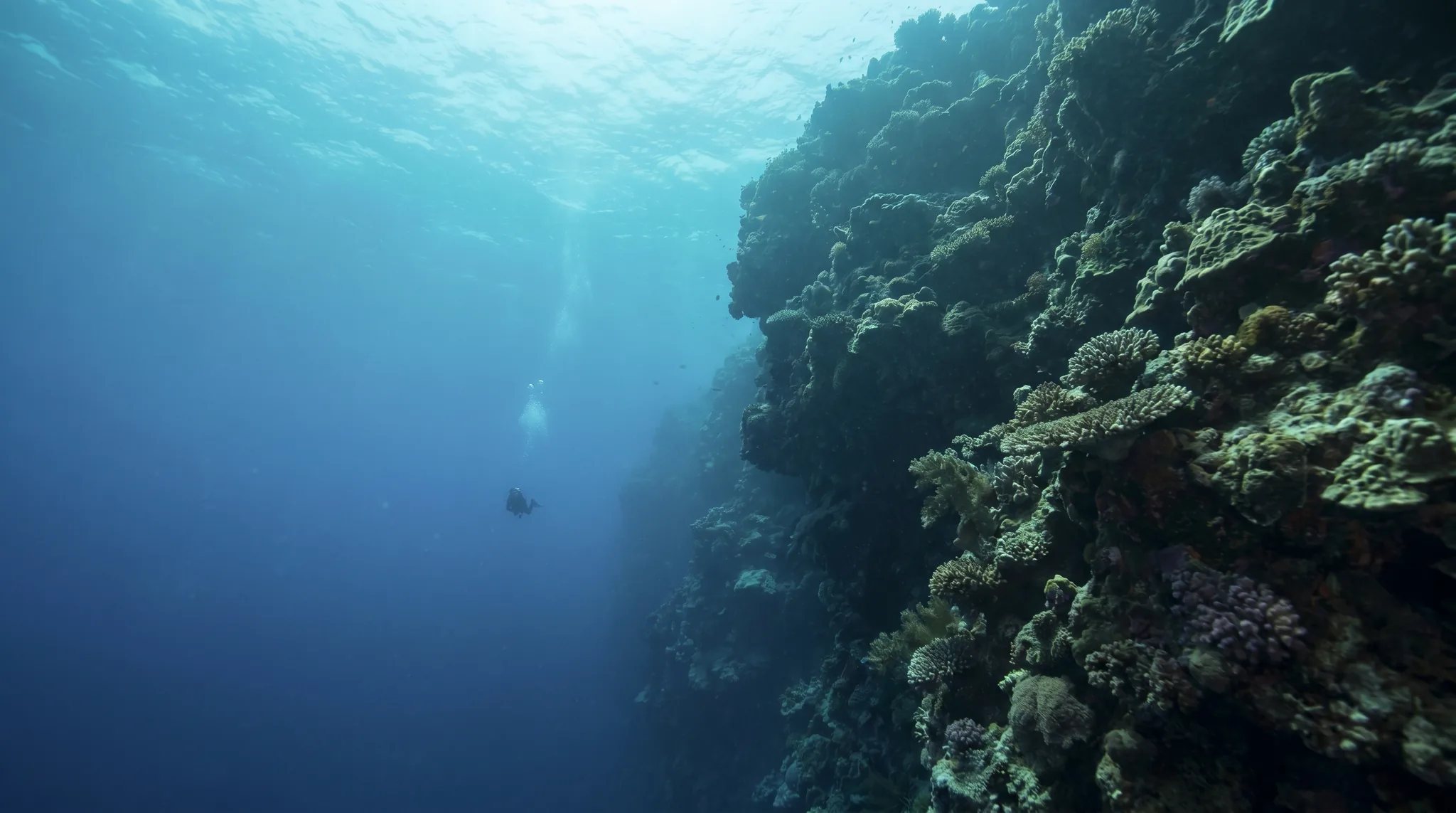
Seven Mile Beach offers a dive scene built almost entirely on beginner-friendly reef sites, with walls, a freshwater cave at Lone Star Reef, and the wreck of the Oro Verde adding variety. Most sites are boat-accessed, though Paradise Reef and Sand Chute offer shore entry. The water stays warm year-round, and a rich fish community, anchored by French Angelfish, Mutton Snapper, and Nurse Shark, is consistently observed across sites. Hammerhead Hole provides a deeper, more dramatic option for intermediate divers seeking a drop-off and pinnacle topography.

Monthly water temperature across Seven Mile Beach's sites, from satellite sea-surface data corrected for depth. The band shows the site-to-site spread.
Water temperature remains warm throughout the year, rising to its peak from mid-summer through autumn and easing only slightly in the cooler months. The best-months data points to late winter through spring as the favoured window, when conditions are settled and the reef is at its most rewarding. The range of sheltered, shallow reefs means diving is accessible to most levels regardless of season.
28 operators

George Town, Cayman Islands
Water temperature around Seven Mile Beach ranges from about 27°C in January to 30°C in July, based on satellite sea-temperature data for its dive sites.
3 more sites to explore
With water around 27–30°C, a rash guard or 3mm shorty works in Seven Mile Beach year-round.
Fin maps 15 sites in Seven Mile Beach (15 scuba diving sites and 3 snorkelling spots, with some suited to both).
Across Seven Mile Beach's dive sites, March, April and May are most often reported as the best months to visit.
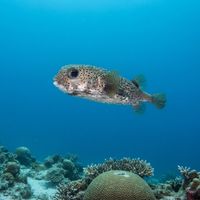
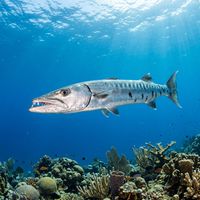
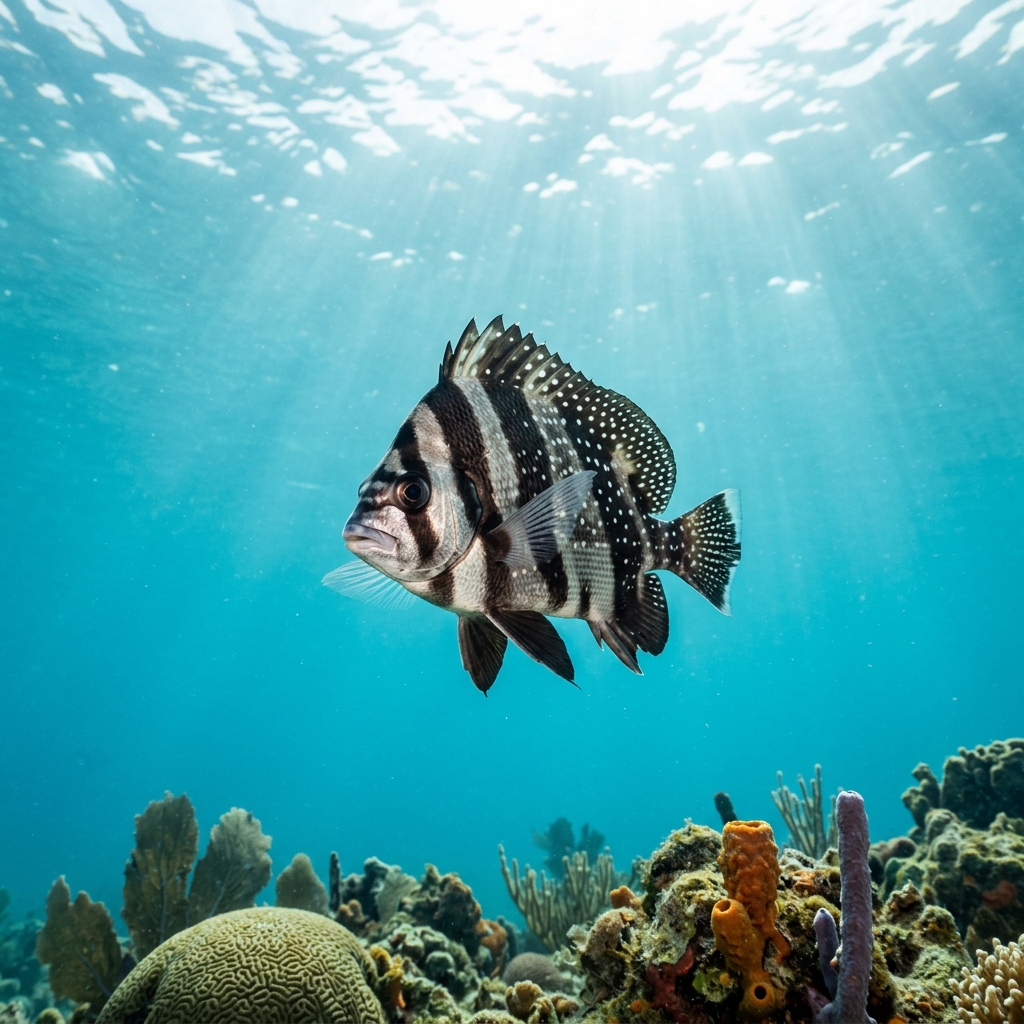
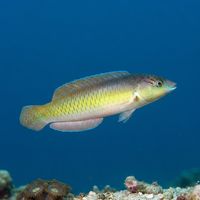
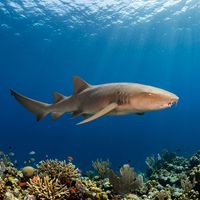
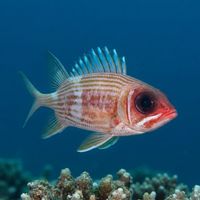
The reef community here is diverse and well-observed. French Angelfish, Mutton Snapper, and Porcupinefish are among the most frequently seen species. Signature encounters include Green Moray, Great Barracuda, Spotted Drum, Indian Lionfish, and Nurse Shark, all of which have been recorded across multiple sites in this area.
Most sites require a boat, and there are many operators serving the area. However, Paradise Reef and Sand Chute both offer shore entry, making them practical options for divers who prefer to enter directly from the coast without arranging a boat trip.
The Oro Verde is an artificial reef and wreck sitting at a manageable depth, rated suitable for beginners. It lies close to the coast and can also be reached from Paradise Reef on a shore dive. The wreck provides hard structure that supports reef growth, and it sits alongside natural coral in the surrounding area.