Holocentrus rufus
Big red eyes and a spiny reputation: find longspine squirrelfish tucked into reef crevices from the Bay Islands to Grand Cayman, year-round.
Safety warning
The spine at the base of the gill cover can deliver a painful puncture wound if the fish is handled or grabbed, and some divers report a stinging sensation from contact. Give it space in its crevice and there is no real risk; the danger only comes from touching or cornering it.
If you're stung
Venomous cheek spineGeneral first-aid guidance, not a substitute for professional medical care. In an emergency, call your local emergency number.
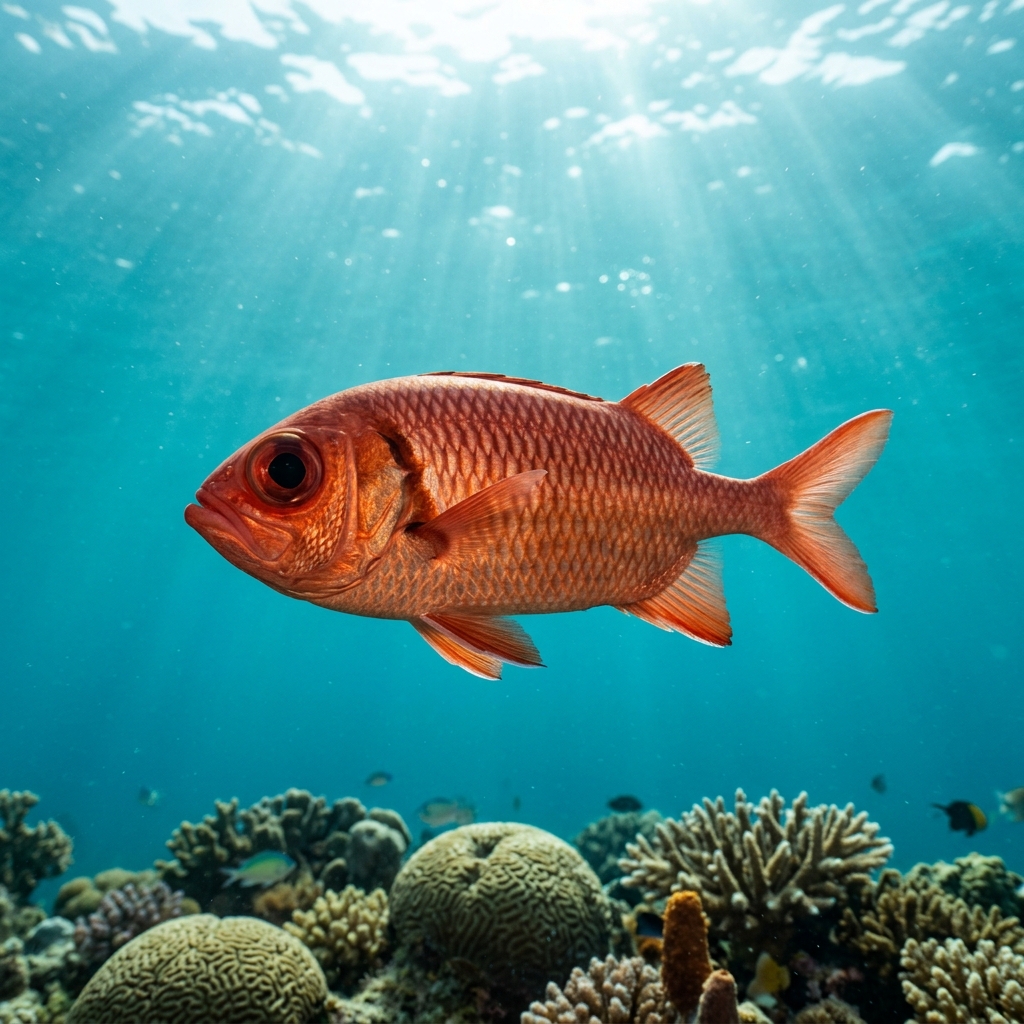
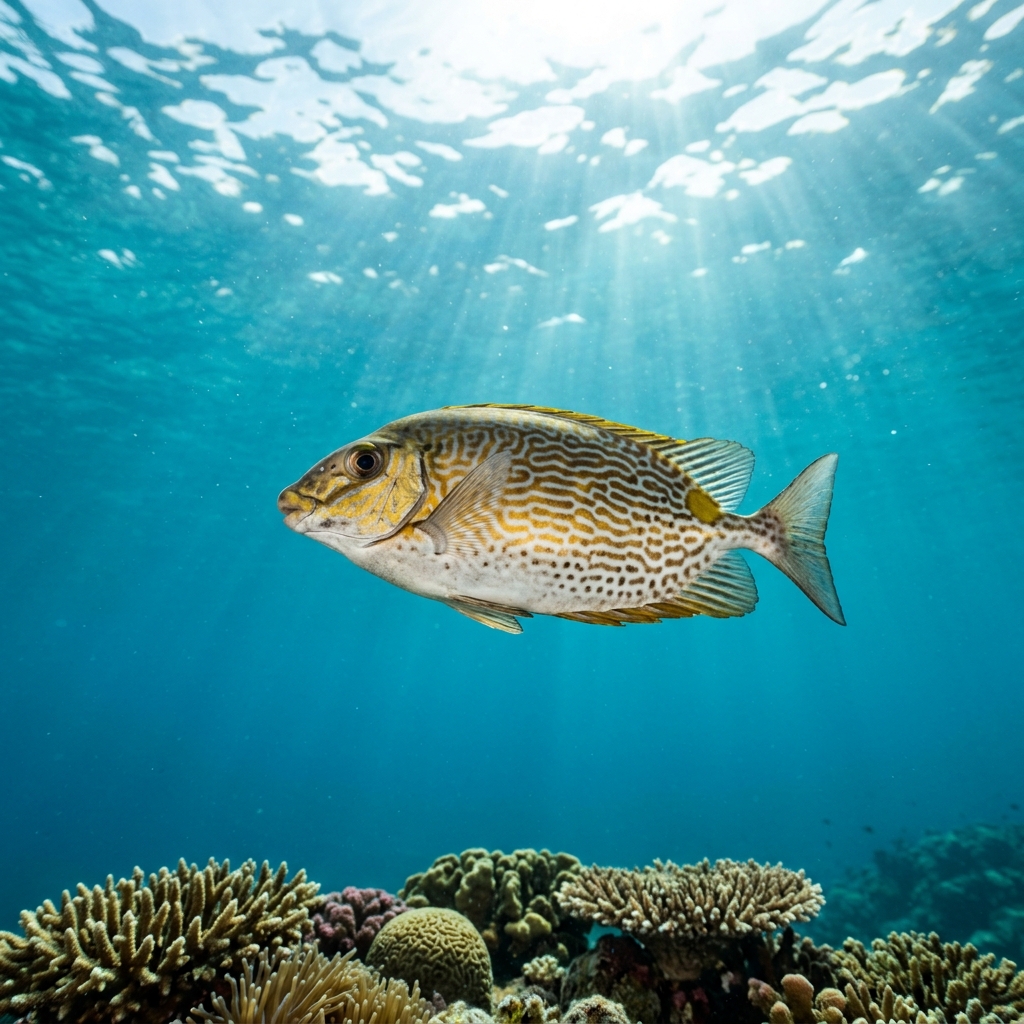
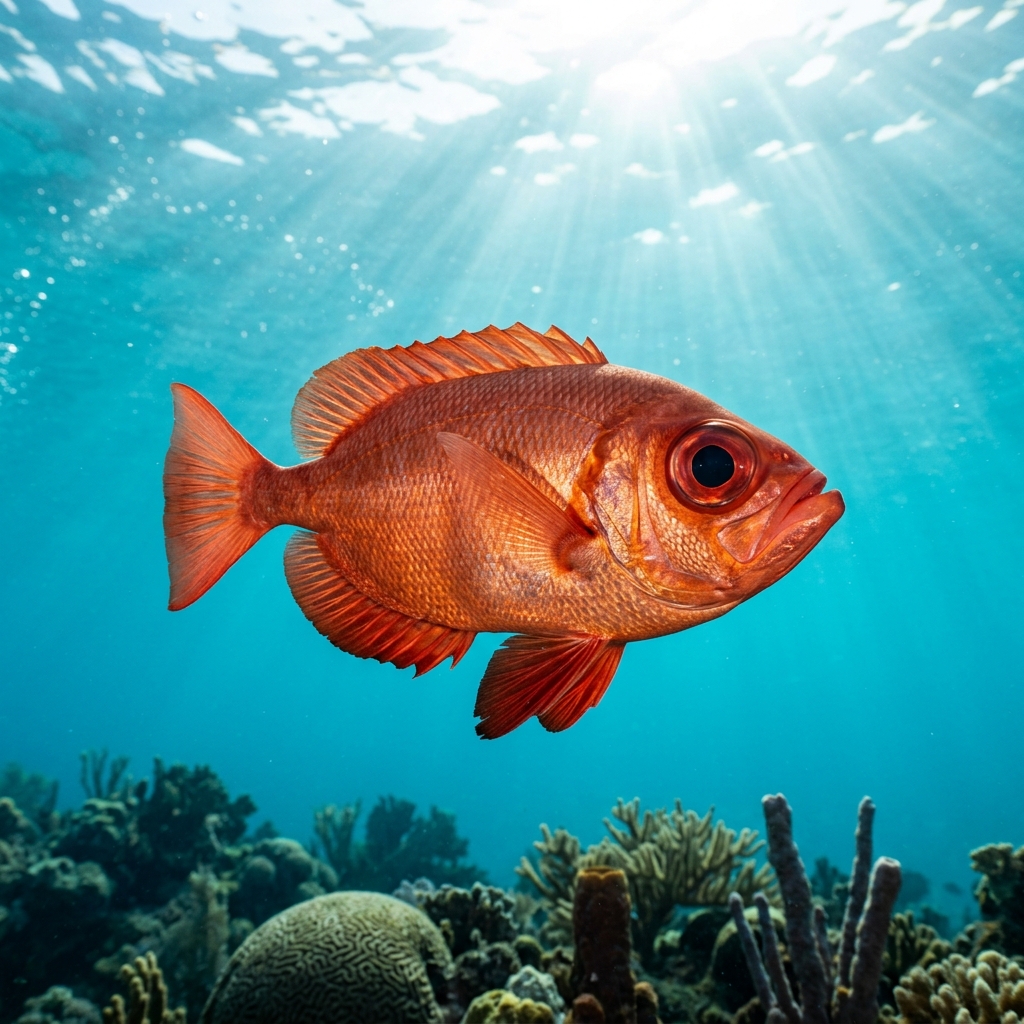
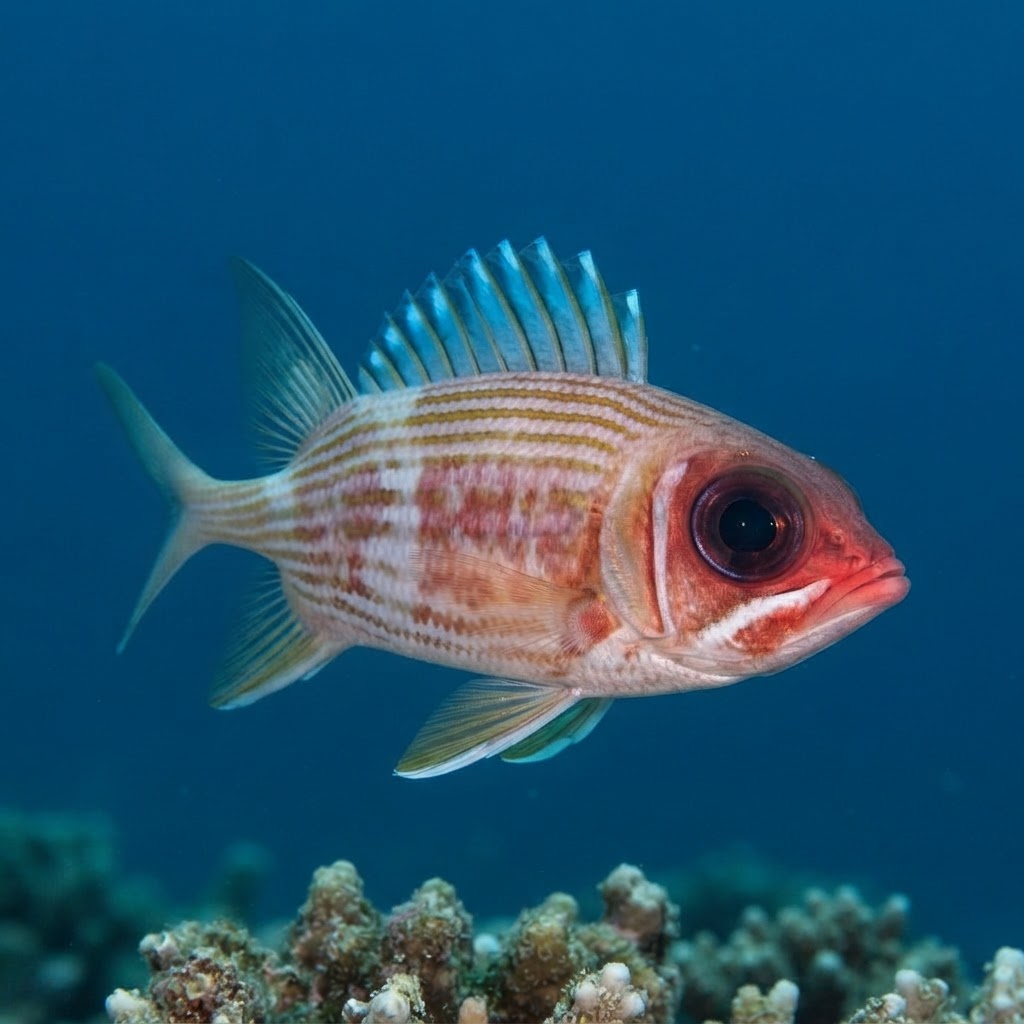
Look for a stocky, reddish fish about 24 cm long with alternating red and white horizontal stripes running the length of the body. The eyes are oversized and dark, an adaptation for the low light where it hides, and the tail and fins often carry a yellowish tinge. A sharp spine sits at the corner of the gill cover, which is the detail that separates squirrelfish from most other reef fish sheltering in the same crevices.
Spend the day wedged into reef crevices, under ledges, or beneath coral heads with just the head and those big eyes showing, then come out at dusk to hunt small crustaceans and fish over open sand and reef edges. During daylight dives they hold still and let divers approach fairly close before backing deeper into cover rather than bolting. Night dives are the better bet for watching them actively feeding out in the open.
Those oversized eyes are built for night vision, and the species produces audible grunts and clicks using its swim bladder, a trick used in territorial disputes and possibly to keep track of neighbours in the dark.
No strong seasonal pattern shows up in the sighting data, and with a comfortable range of about 24 to 28 C, reefs across its range stay within that band all year. Expect it on any dive, day or night, rather than during a particular month.
This is a reliable sighting across Caribbean reefs, most commonly logged in the Cayman Islands and the Bay Islands of Honduras, with strong numbers too in the US Virgin Islands, Grenada, and San Andrés & Providencia in Colombia. British Virgin Islands sites around Tortola and the Southern Islands, along with Belize and the Yucatán Peninsula in Mexico, also turn up frequent sightings.
Mapping where Longspine Squirrelfish is logged…
They turn up widely across the Caribbean, with the strongest sightings in the Cayman Islands, the Bay Islands of Honduras, the US Virgin Islands, and Grenada. Tortola in the British Virgin Islands and San Andrés & Providencia in Colombia are also dependable spots.
There is no clear seasonal pattern in sighting data, and warm reef temperatures year-round mean they are present on Caribbean dives in any month. Night dives generally give better views of active behaviour than daytime dives.
They are not aggressive, but the sharp spine near the gill cover can cause a painful puncture if the fish is touched or handled. Simply observing from a short distance carries no risk.
Look for a reddish, striped body around 24 cm long, tucked head-out in a reef crevice with unusually large dark eyes. The spine at the edge of the gill cover and the red-and-white banding are the key clues.
They typically grow to around 24 cm, making them a medium-sized reef fish easily spotted peeking out of crevices and ledges.
Their oversized eyes are adapted for night hunting, and they can produce audible grunting and clicking sounds using their swim bladder, likely used for communication in low light.
Site and sighting data is aggregated from diver logs, iNaturalist and GBIF. For taxonomy and conservation status:
Soldierfish
3,612 sites