Bodianus parrae
Purple-blue schooling wrasse common in Bonaire and the Bay Islands, drifting mid-water at 24-28C year-round.
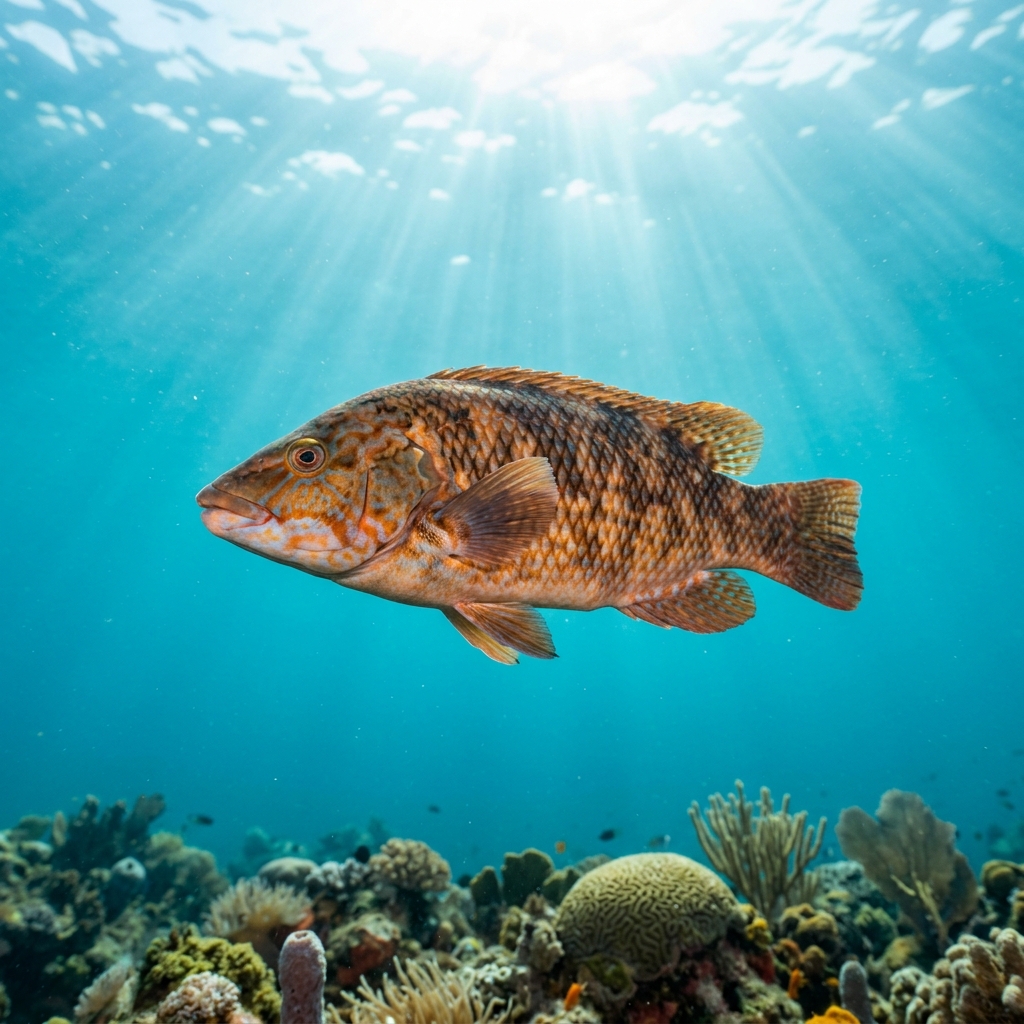
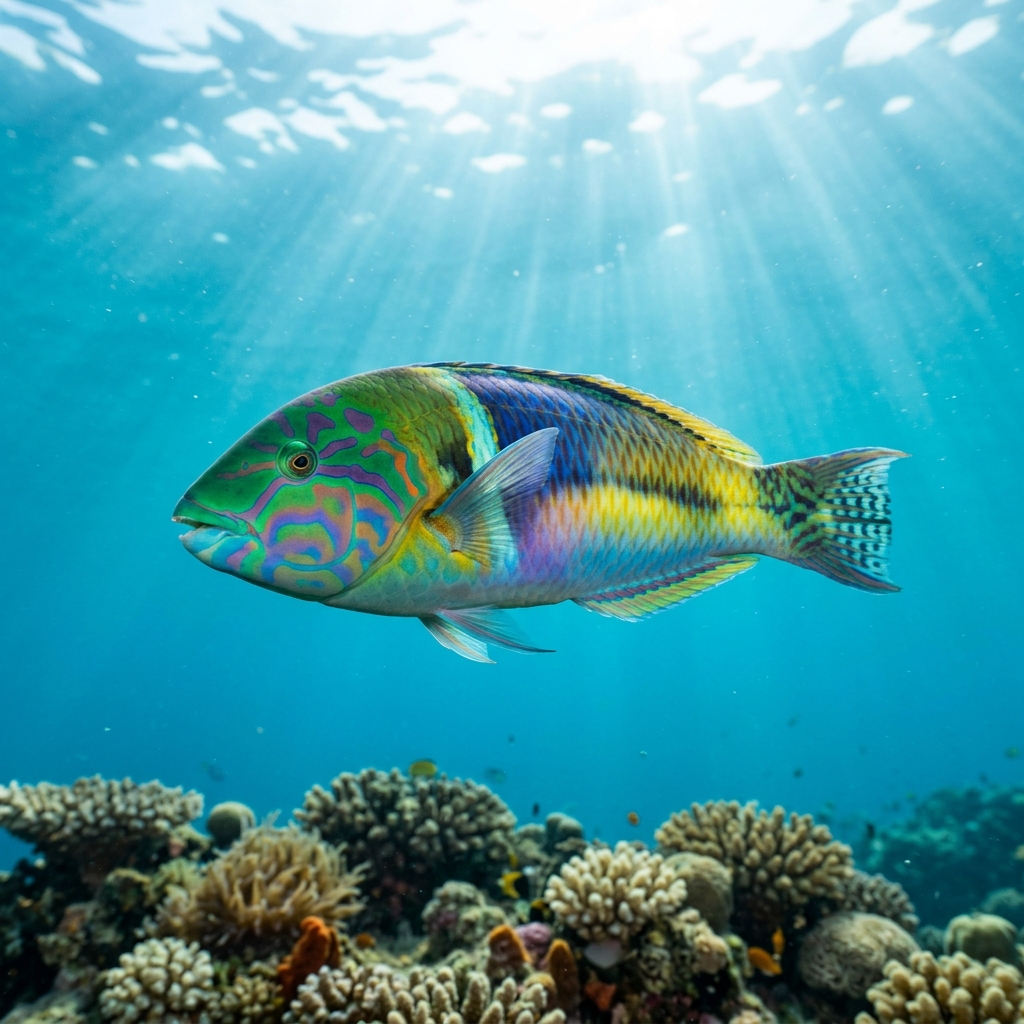
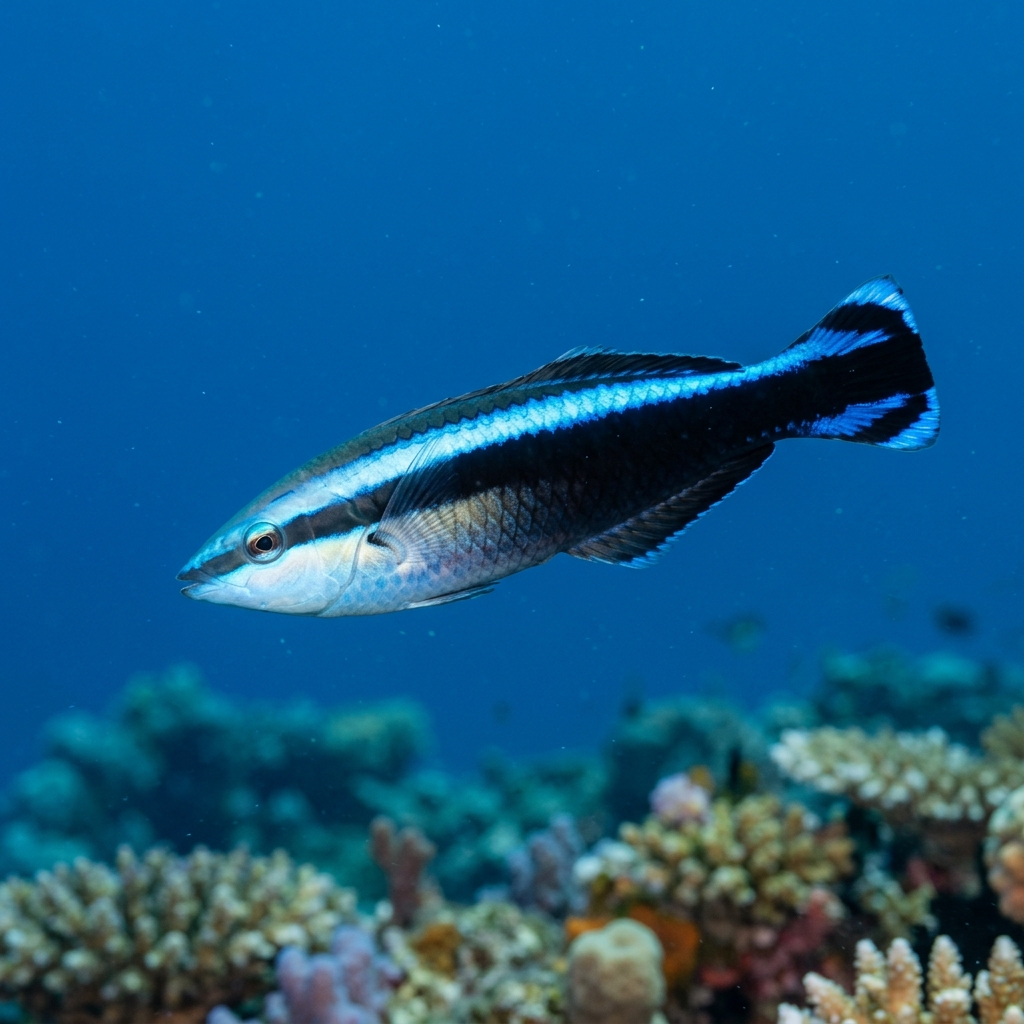
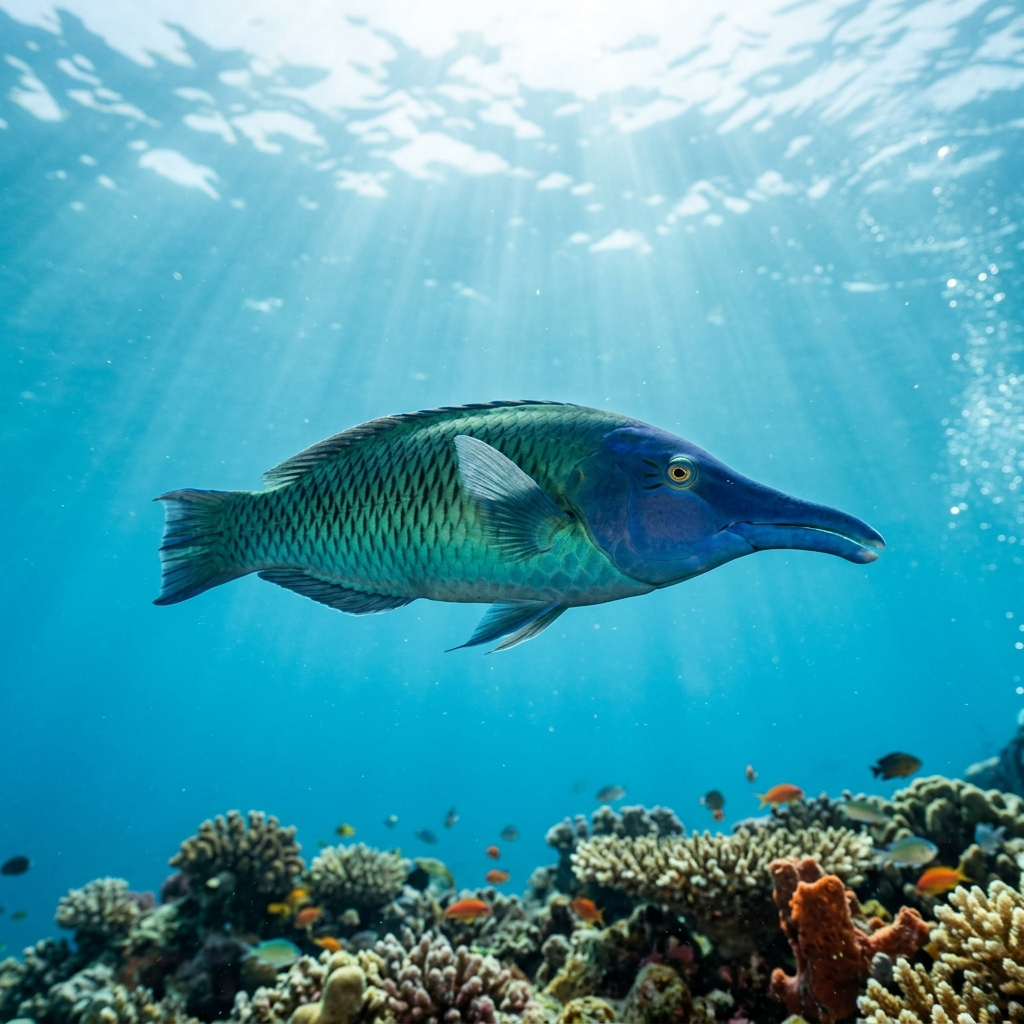
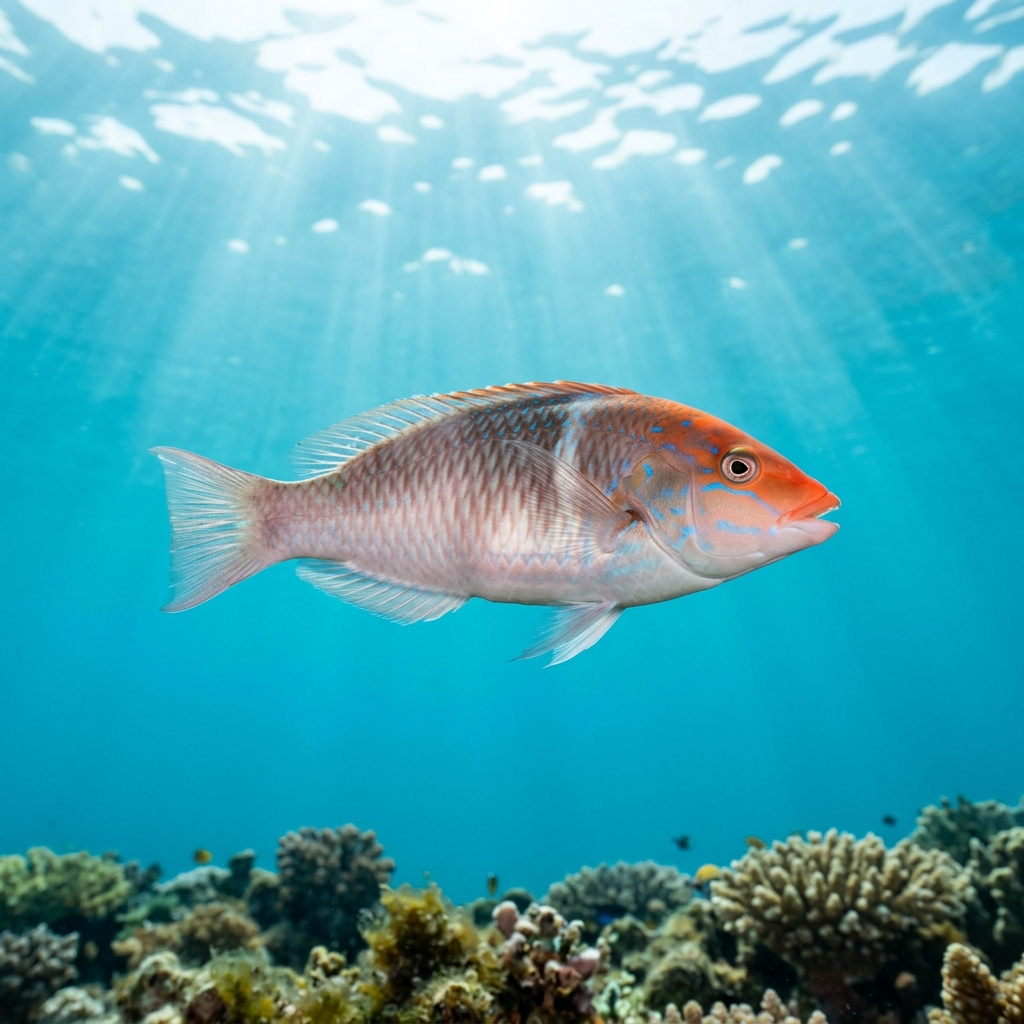
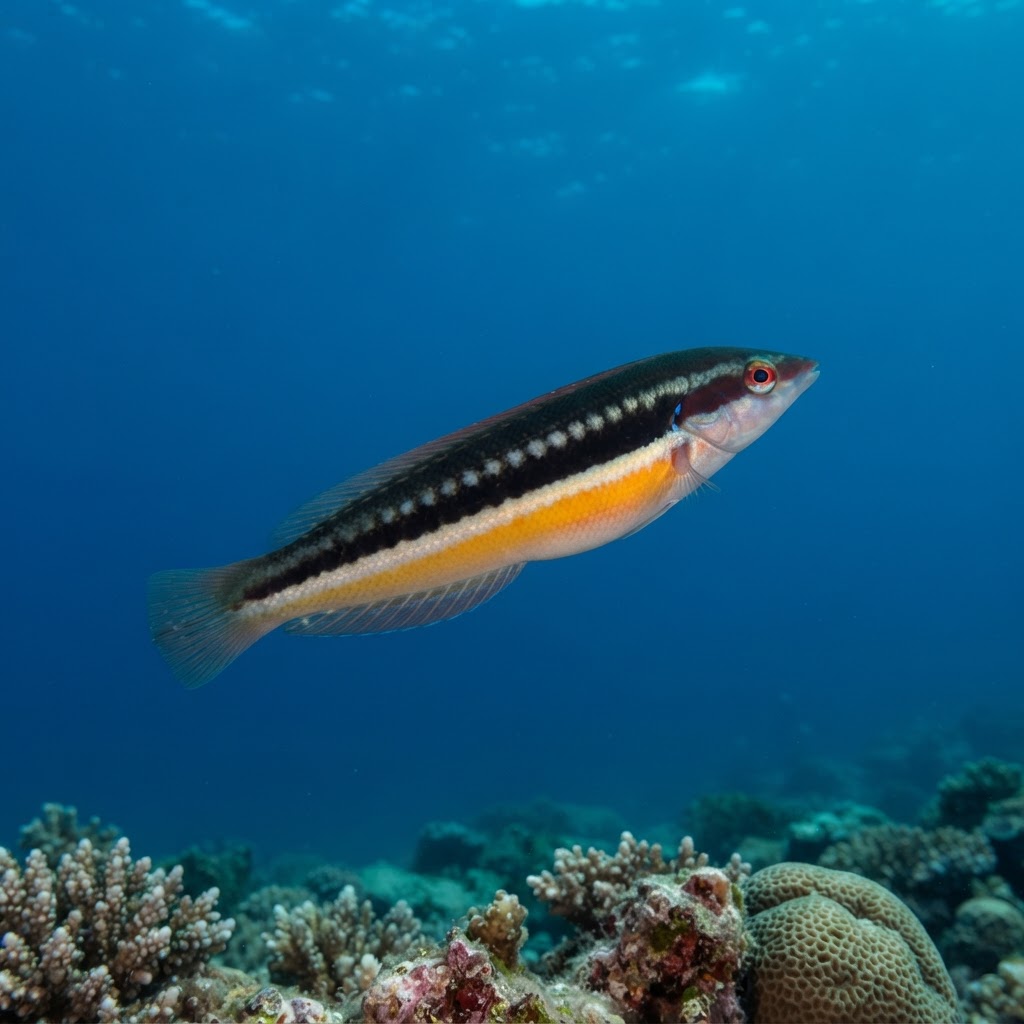
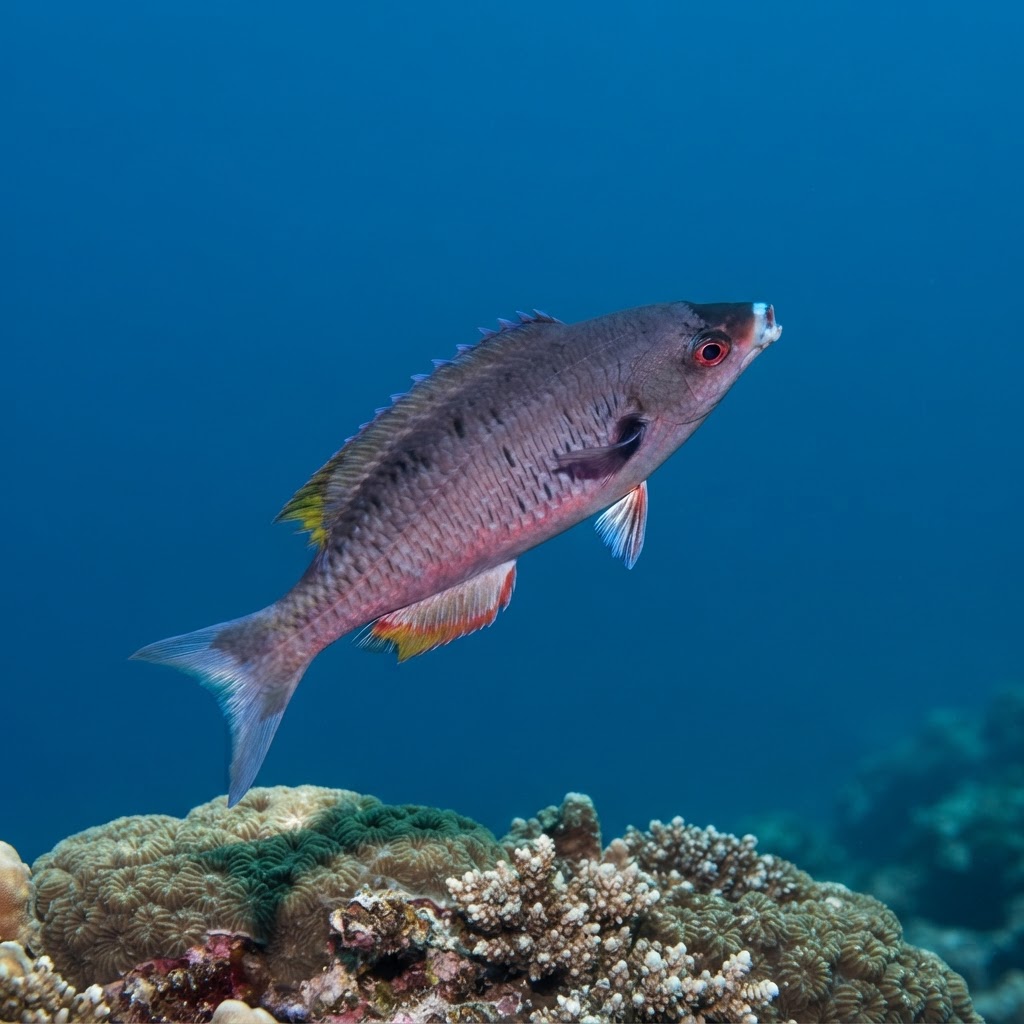
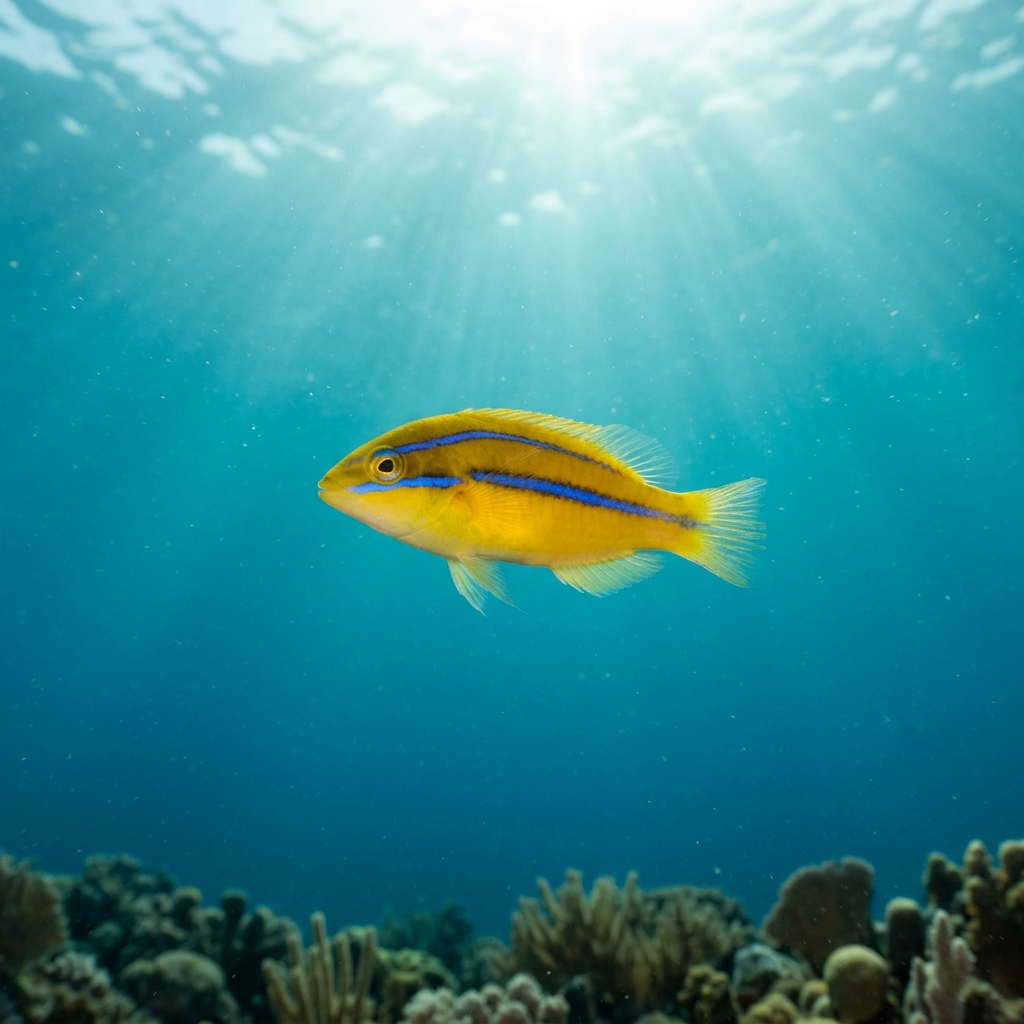
Look for a slim, torpedo-shaped fish about 21 cm long, coloured deep violet-blue on the back fading to a lighter blue-grey belly. It usually appears in loose to dense schools hanging in mid-water off the reef face rather than hugging the bottom like most wrasses. There's no bold pattern to key on, it's the uniform purple-blue wash and the schooling habit itself that gives it away.
Divers usually find these schooling in open water just off the reef edge, sometimes in loose groups of a few dozen, sometimes in denser clouds that drift along the drop-off feeding on plankton. They pay little attention to divers and will often let you swim right through the school without scattering far. Most sightings come from mid-depth reef walls rather than shallow flats, and the fish tend to stay active through the day rather than settling at any particular hour.
Unlike most wrasses that pick invertebrates off the reef, Creole wrasse feed mainly on plankton in open water, which is why you'll spot them hanging off the wall in schools instead of foraging over the substrate.
No clear seasonal pattern shows up in the sightings, and with a comfortable range of 24.3 to 28C it stays on Caribbean reefs year-round, so any month works.
Most reliably logged in the Bay Islands of Honduras and along Bonaire's Leeward Coast, with strong numbers also around Grand Cayman, Mexico's Yucatán Peninsula, and Grenada. It also turns up consistently in the US Virgin Islands, Florida, and Curacao, making it one of the more dependable schooling fish across the wider Caribbean.
Mapping where Creole Wrasse is logged…
They're a reliable sighting in Honduras's Bay Islands and along Bonaire's Leeward Coast, and also show up well around Grand Cayman, Mexico's Yucatán Peninsula, and Grenada. Most Caribbean reef walls with some current hold at least a small school.
There's no strong season in the sightings data. They tolerate water from about 24 to 28C, which covers Caribbean reefs all year, so you can expect them on any dive trip regardless of month.
Look for a slender, deep purple-blue fish around 21 cm swimming in a loose school in open water off the reef, rather than a single fish poking around the bottom. The uniform blue-violet colour with no strong stripes or spots, combined with the schooling habit, is the giveaway.
They typically reach around 21 cm in length, making them a mid-sized reef wrasse, noticeably smaller than groupers or Napoleon-type wrasses but easy to pick out thanks to their schooling numbers.
No. They're harmless plankton feeders that ignore divers and pose no threat, making them a relaxed fish to swim alongside on a reef wall.
Most wrasses forage solo over the reef bottom, but Creole wrasse break the mould by schooling in open water and feeding on plankton drifting off the wall, more like a damselfish or chromis than a typical wrasse.
Site and sighting data is aggregated from diver logs, iNaturalist and GBIF. For taxonomy and conservation status:
Bird Wrasses
3,632 sites