Thuridilla picta
A 1cm sea slug with electric-blue racing stripes, most reliably logged around Grand Cayman's reef walls in warm 25-31C water.
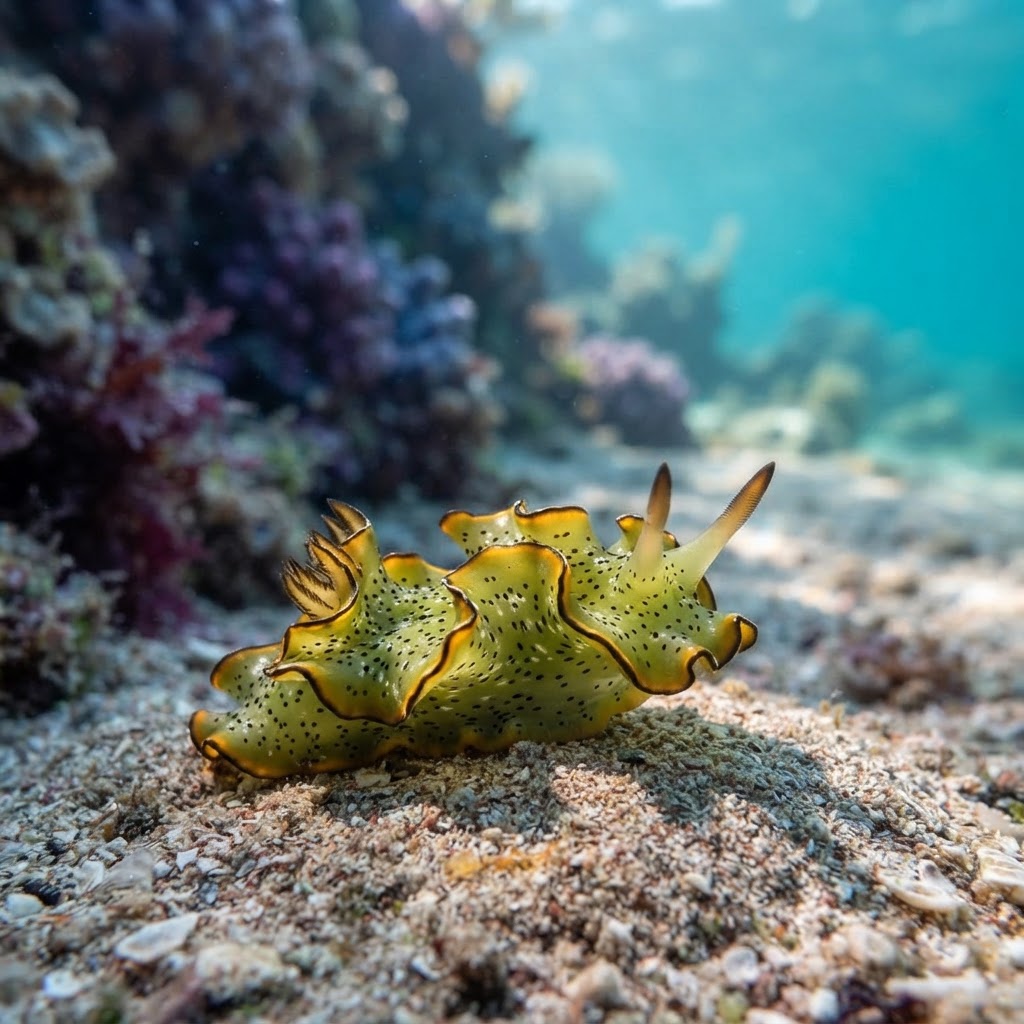
Look for a slender, leaf-shaped body barely a centimetre long, coloured olive to green with bright blue and orange longitudinal stripes running down its back and the pair of wing-like flaps (parapodia) along its sides. The tips of its head tentacles (rhinophores) are usually tipped orange, which is a quick giveaway against the similarly striped species it shares reef rubble with. Because it is so small, most divers find it by scanning algae-covered rock and rubble slowly rather than spotting it in open water.
Divers usually find this slug grazing slowly over algae-covered rubble or rock, using its tiny size to stay tucked into crevices and turf algae rather than out in the open. It shows no real reaction to divers beyond continuing to creep along at its own pace, since it has no eyes capable of spotting a diver and no real predators pressing it to flee. Most sightings happen during the day on shallow reef flats and rubble zones where light-loving algae grow thickest.
Like other sacoglossan slugs, it feeds on algae and can retain the algae's chloroplasts in its own tissue, giving it a limited ability to photosynthesise for a while after a meal, a trick sometimes called kleptoplasty.
Sightings are spread across the year with no clear seasonal spike, which fits its preference for warm water in the 25 to 31C range typical of Caribbean and Yucatán reefs year-round. Any month works; the limiting factor is patience and eyesight, not season.
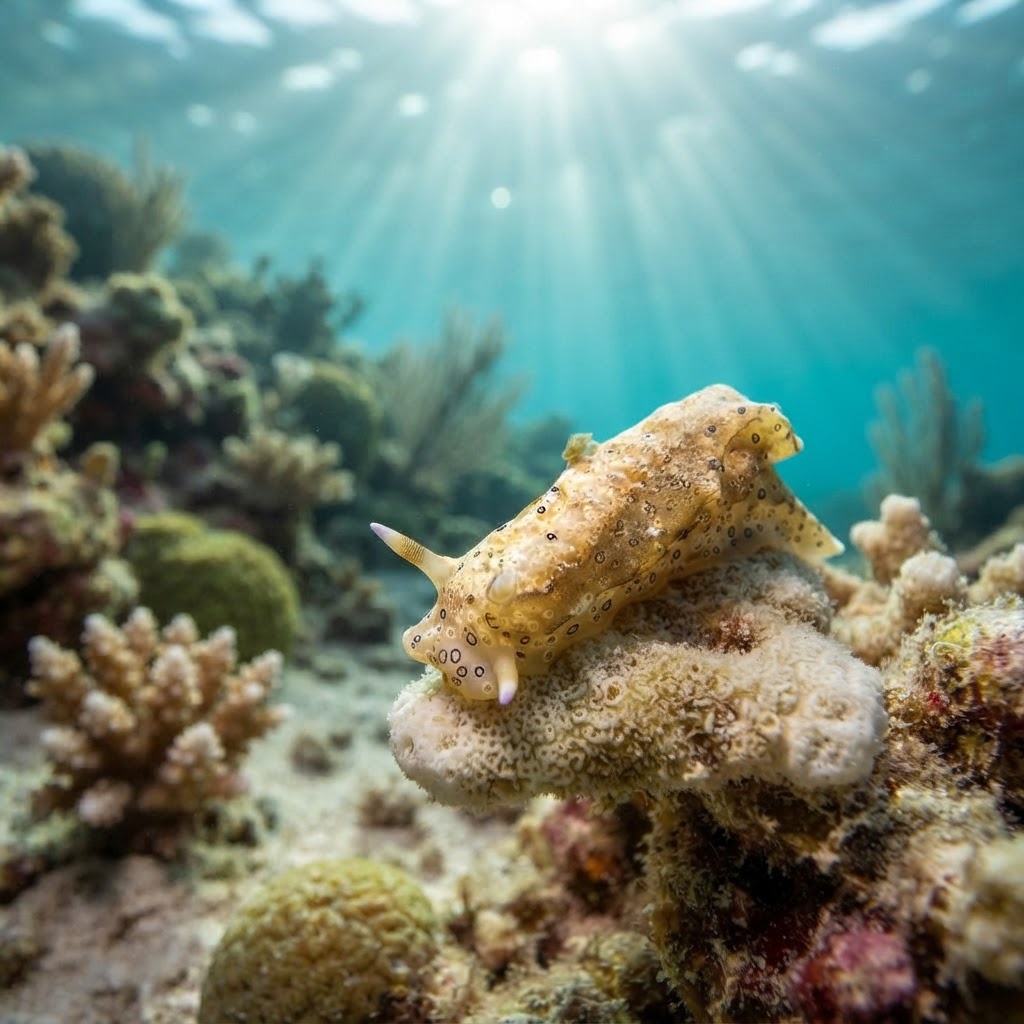
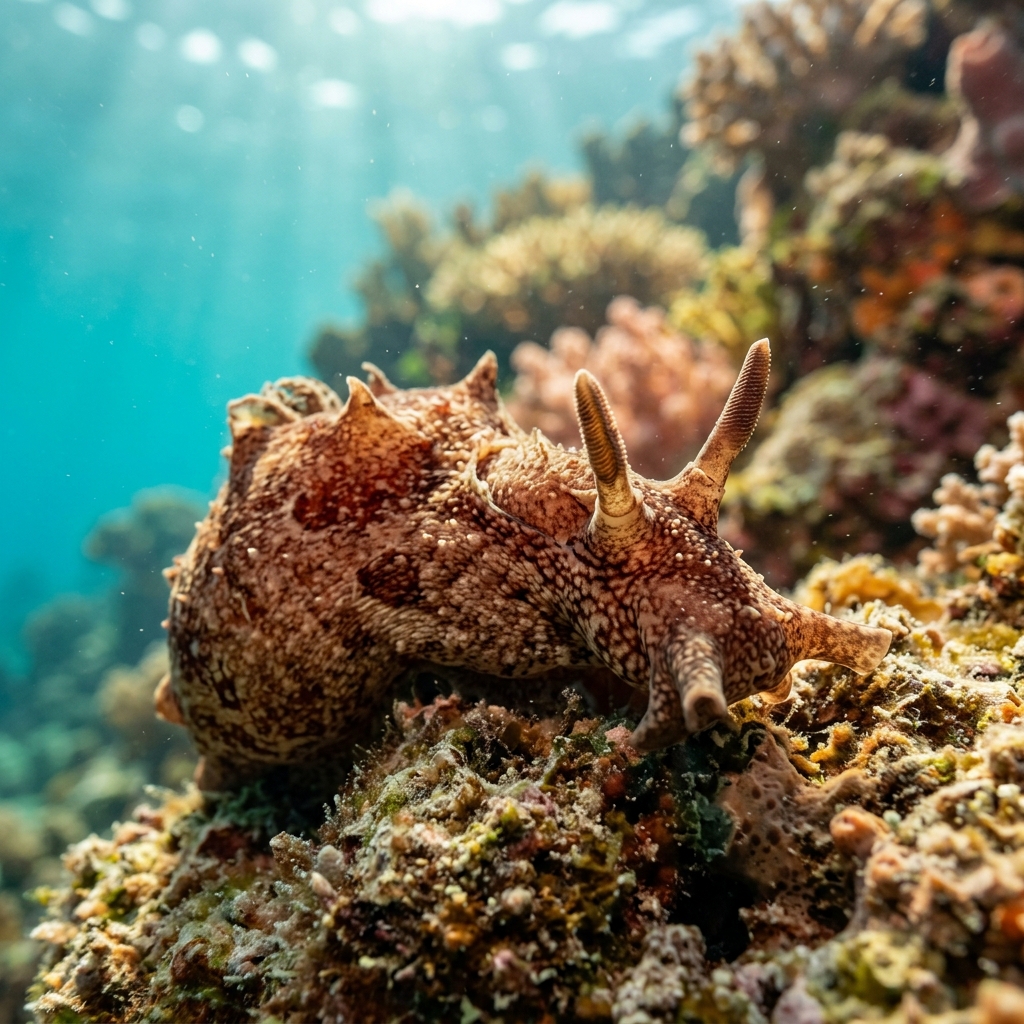
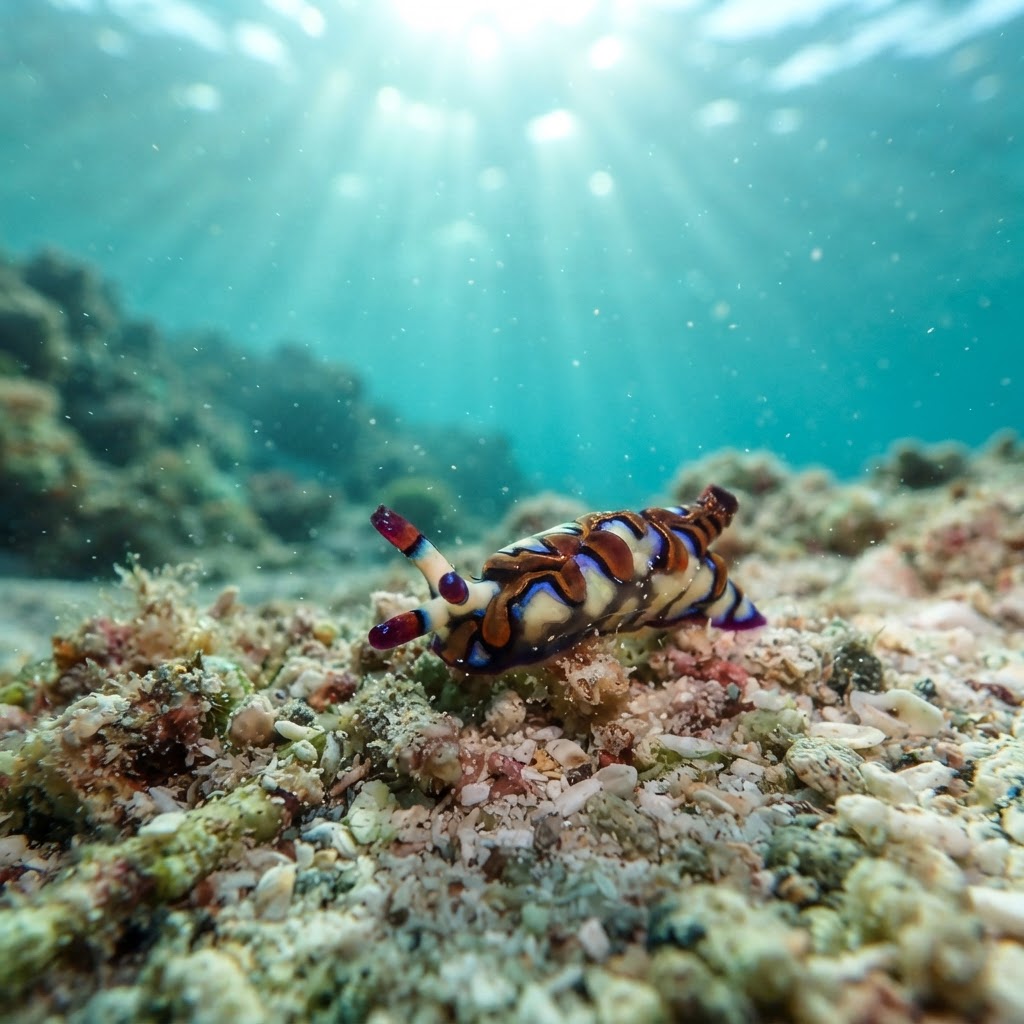
Reef neighbours a diver could mistake it for. Use the identification notes above to tell them apart.
This one is most reliably found around Grand Cayman in the Cayman Islands, where the bulk of logged sightings come from, with smaller but steady numbers reported in the Bay Islands of Honduras and along Mexico's Yucatán Peninsula. Even at its best sites it stays a rare to uncommon find, so it rewards divers who take time to check rubble patches and algae mats rather than swim past them.
Mapping where Painted Elysia is logged…
Grand Cayman in the Cayman Islands has the strongest run of sightings, with smaller but reliable numbers from the Bay Islands of Honduras and Mexico's Yucatán Peninsula.
There is no distinct season for this species; it turns up year-round on warm Caribbean reefs sitting between 25 and 31C.
Check for a 1cm slug with blue and orange stripes running along an olive-green body and orange-tipped head tentacles. It moves slowly over algae-covered rubble rather than swimming in open water.
It stays tiny, typically around 1cm long as an adult, so a slow, close look at rubble and algae patches is needed to find one.
It can absorb chloroplasts from the algae it eats and keep them functioning in its own tissue for a time, effectively running on a bit of borrowed photosynthesis.
Site and sighting data is aggregated from diver logs, iNaturalist and GBIF. For taxonomy and conservation status:
Light-spotted Aegires
3,168 sites