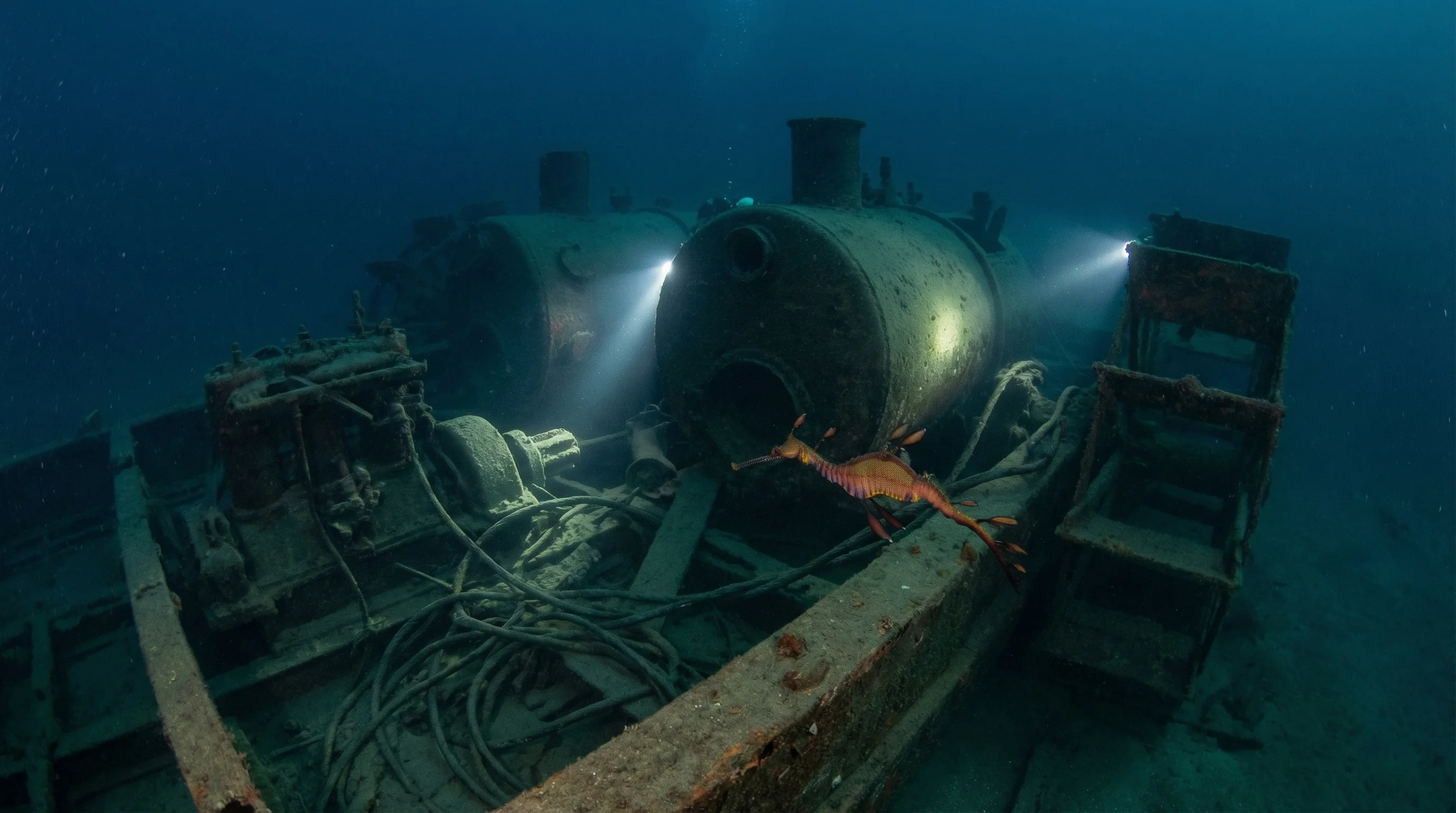
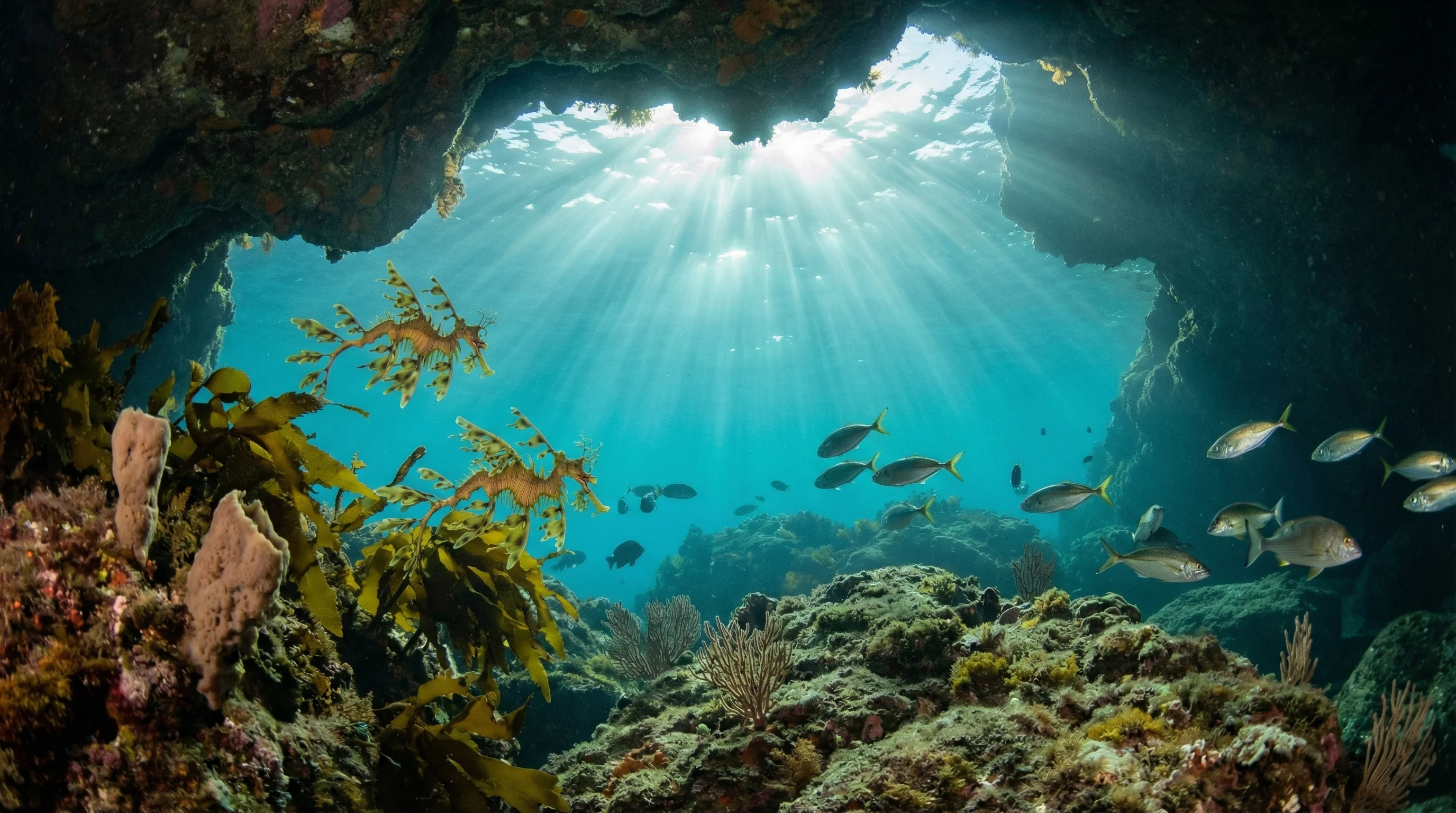
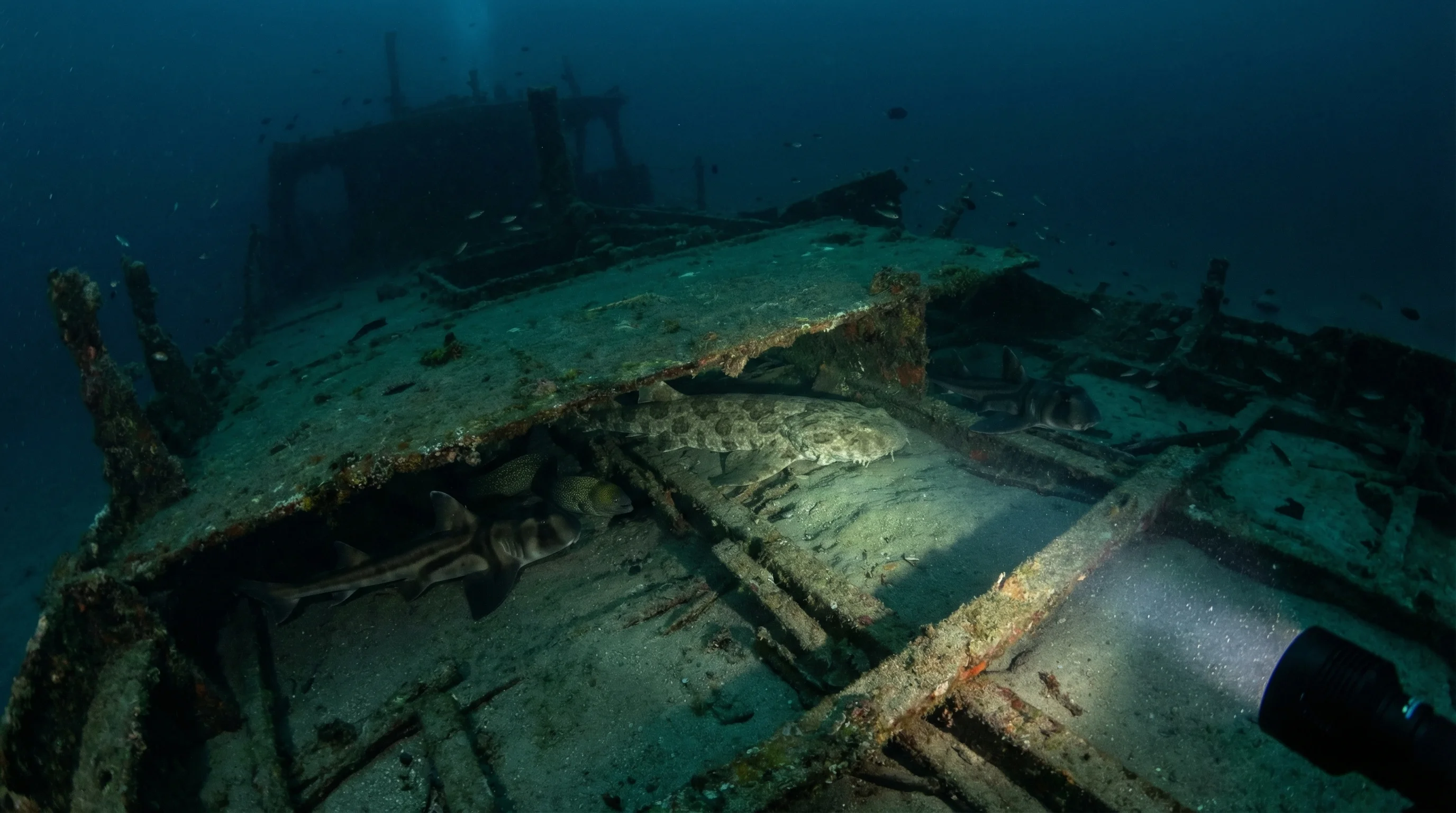
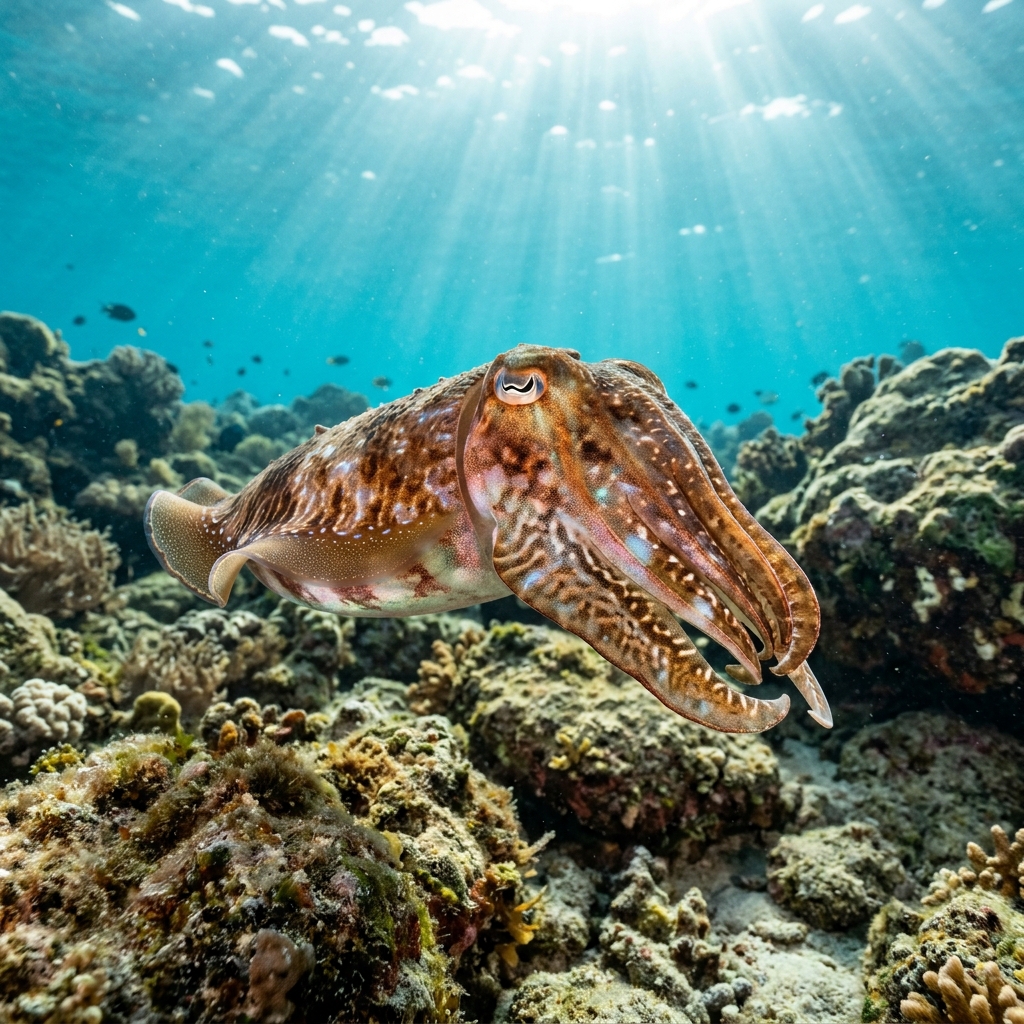
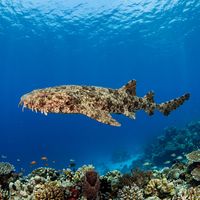
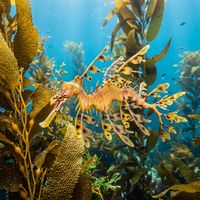
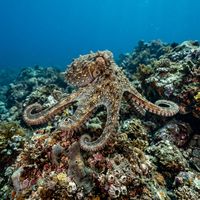
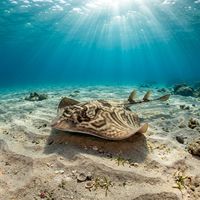
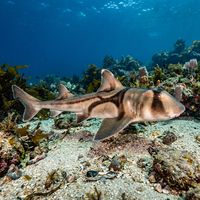
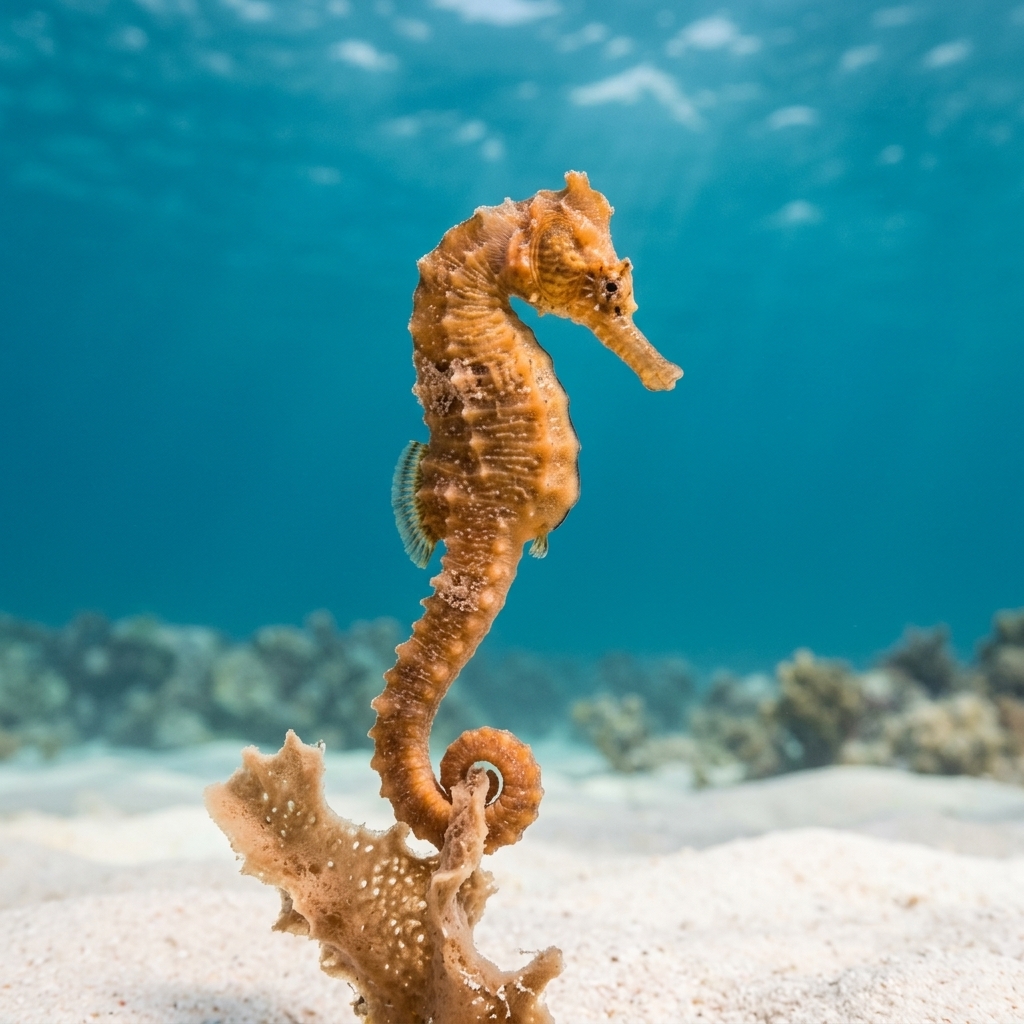
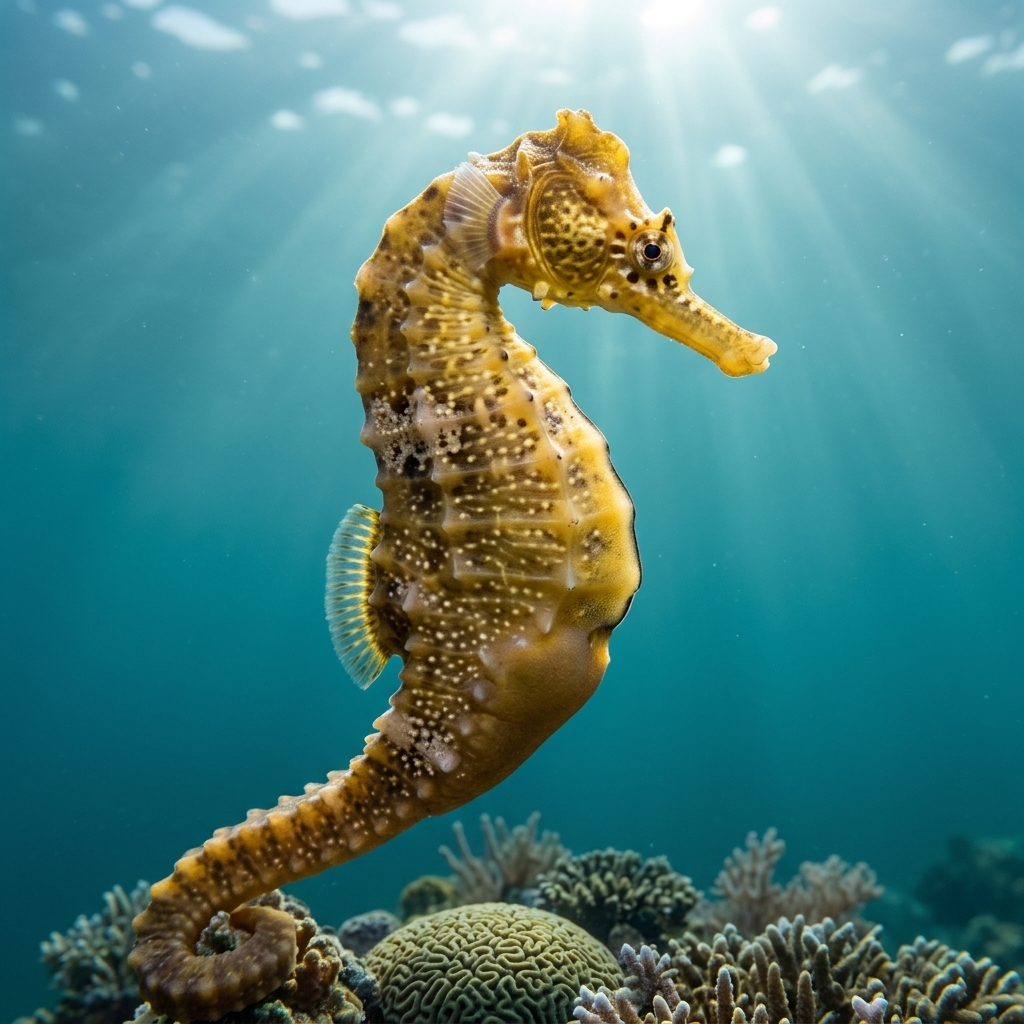
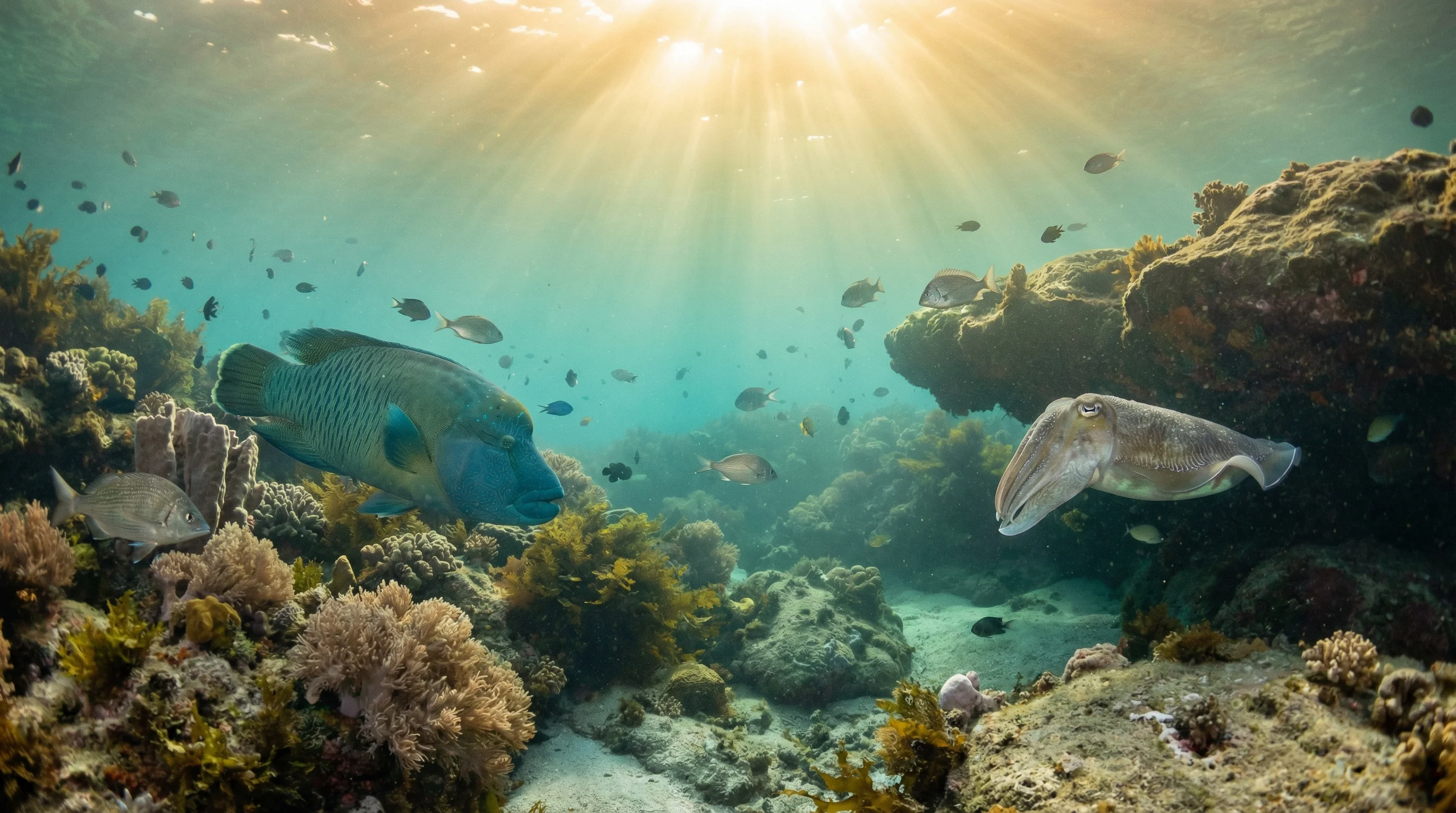
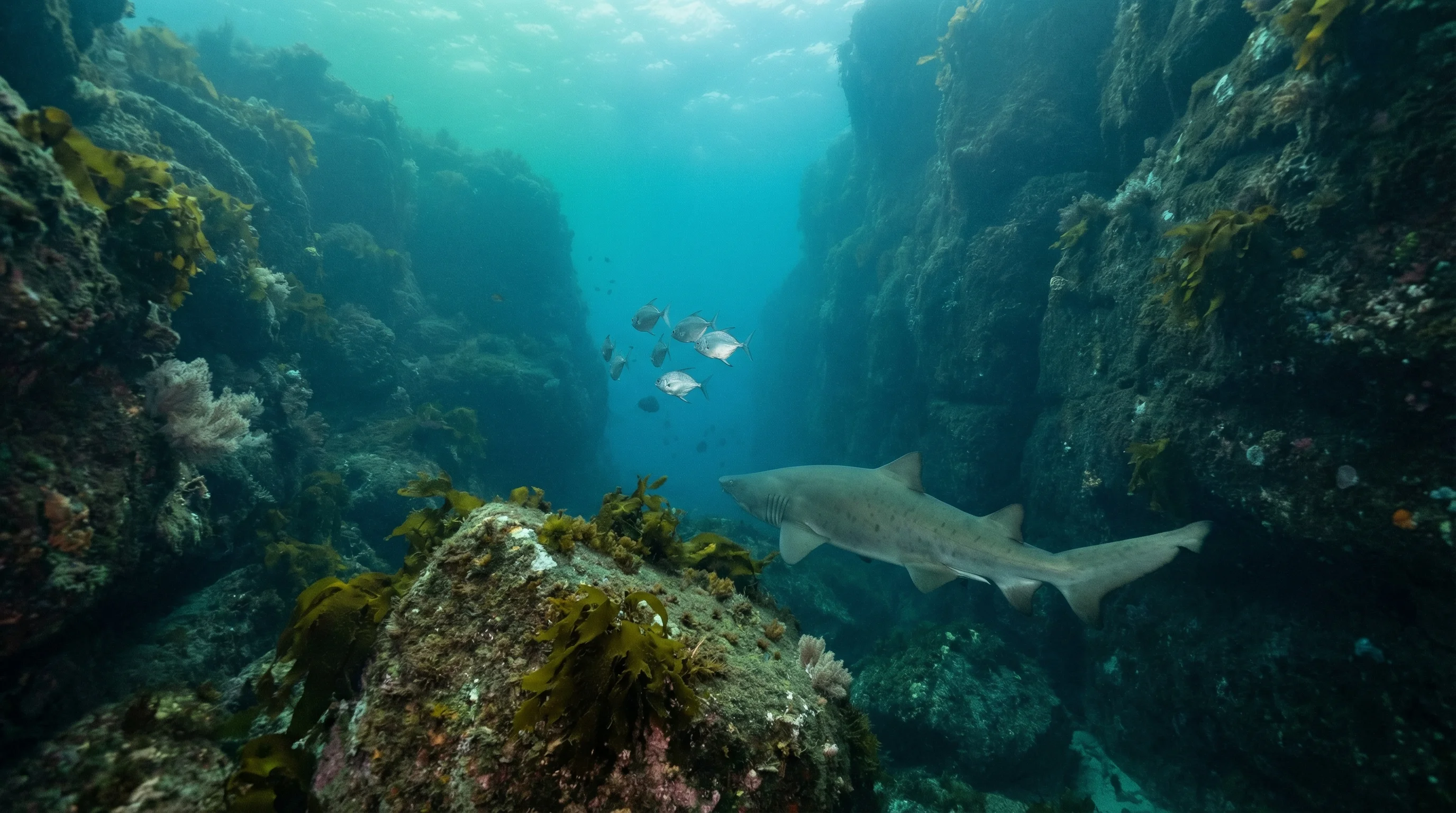
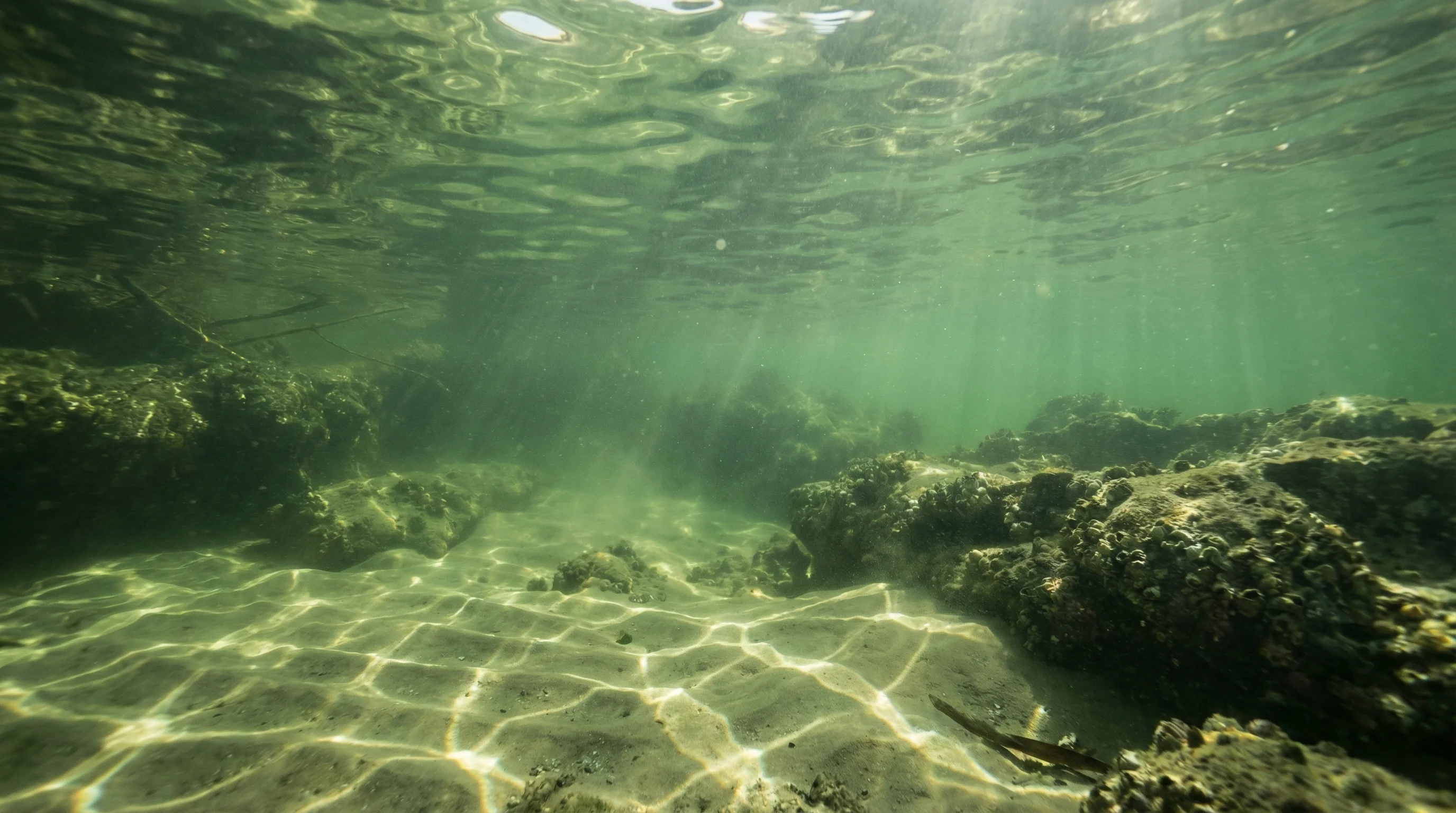
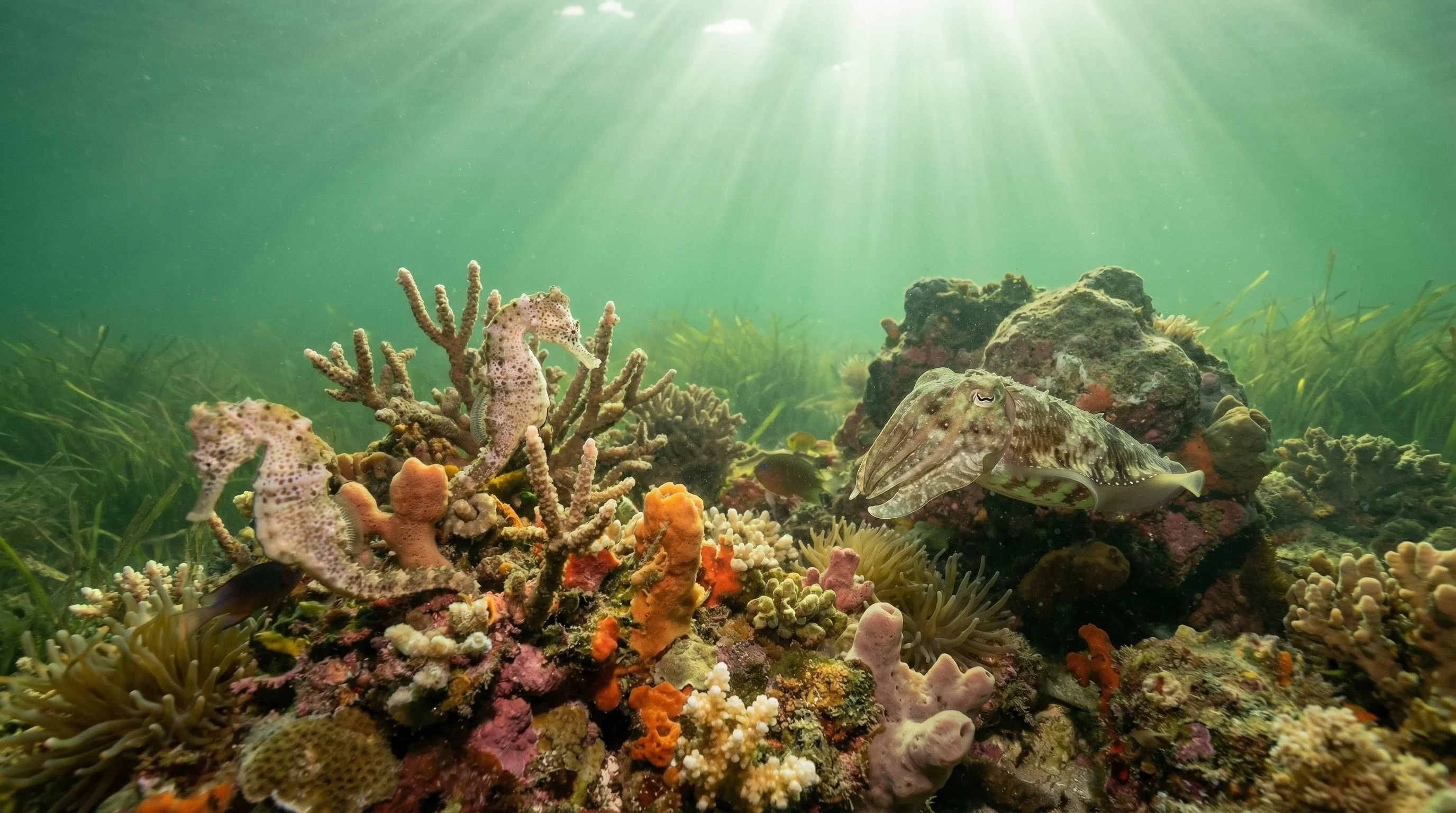
Bondi sits on the Pacific Ocean in Sydney and its three sites span an unusually wide range of difficulty, from the intermediate reef and cave system at North Bondi through to two technical wreck dives requiring decompression planning. The SS Annie M Miller rests at moderate depth offshore, while the Koputai lies deep enough to require trimix or advanced nitrox. Water temperatures vary noticeably through the year, warmest in late summer and coolest in late winter, and visibility at North Bondi can reach thirty metres. Species recorded include grey nurse sharks, spotted wobbegong, giant cuttlefish, pot-bellied seahorses, and blind sharks.
Monthly water temperature across Bondi's sites, from satellite sea-surface data corrected for depth. The band shows the site-to-site spread.
Temperatures are at their lowest in late winter and peak in late summer, with a noticeable spread between warm and cold months. Winter often brings improved visibility at shallower sites. The deep wrecks are accessible year-round by boat but require full technical planning regardless of season.
Water temperature around Bondi ranges from about 17°C in September to 22°C in April, based on satellite sea-temperature data for its dive sites.
In the warm season (about 22°C) a 3mm full suit is comfortable in Bondi; in the coldest months (about 17°C) step up to a 7mm or semi-dry suit.
Fin maps 3 sites in Bondi (3 scuba diving sites).
Across Bondi's dive sites, May, June, July, August, September and October are most often reported as the best months to visit.
1 more site to explore