Hippocampus whitei
Spot New Holland Seahorse in New South Wales waters at 18-23 °C. A reliable sighting across Sydney's dive sites, here's when and how to find one.
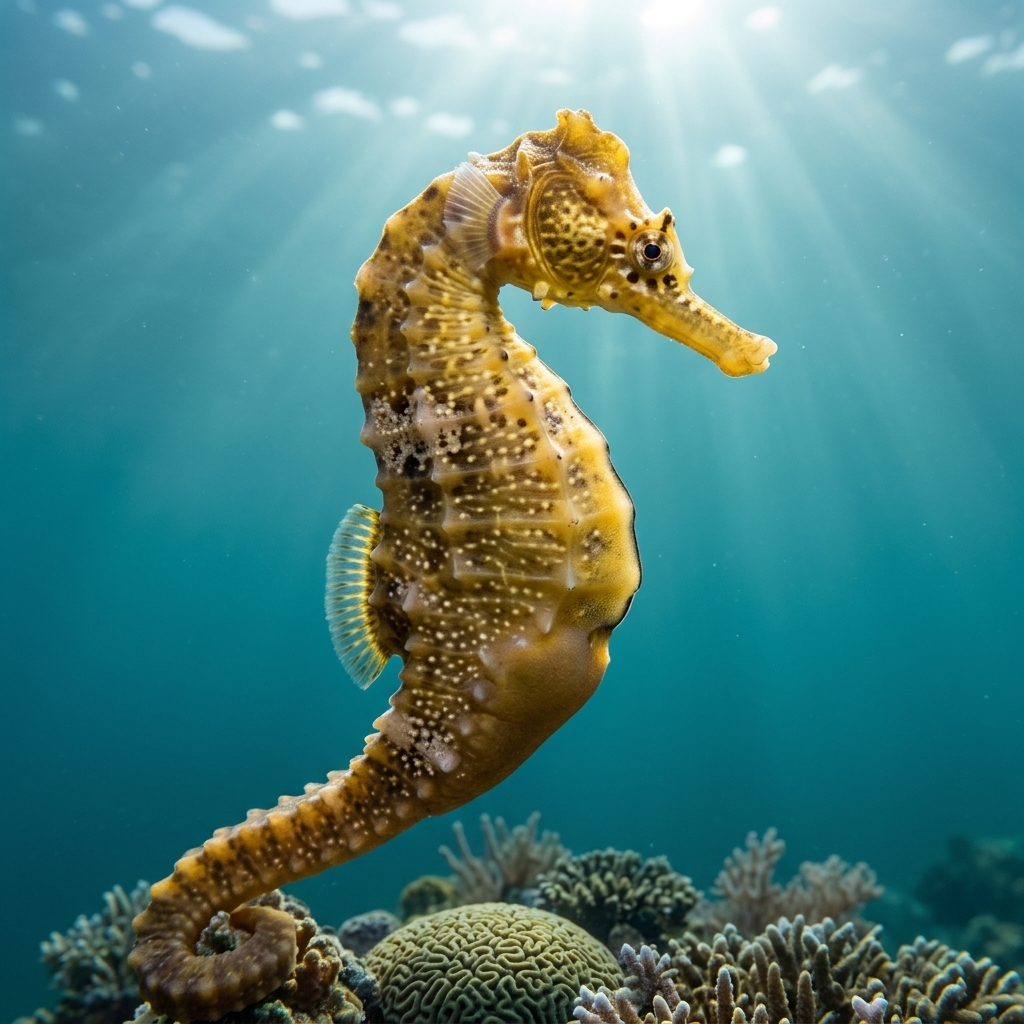
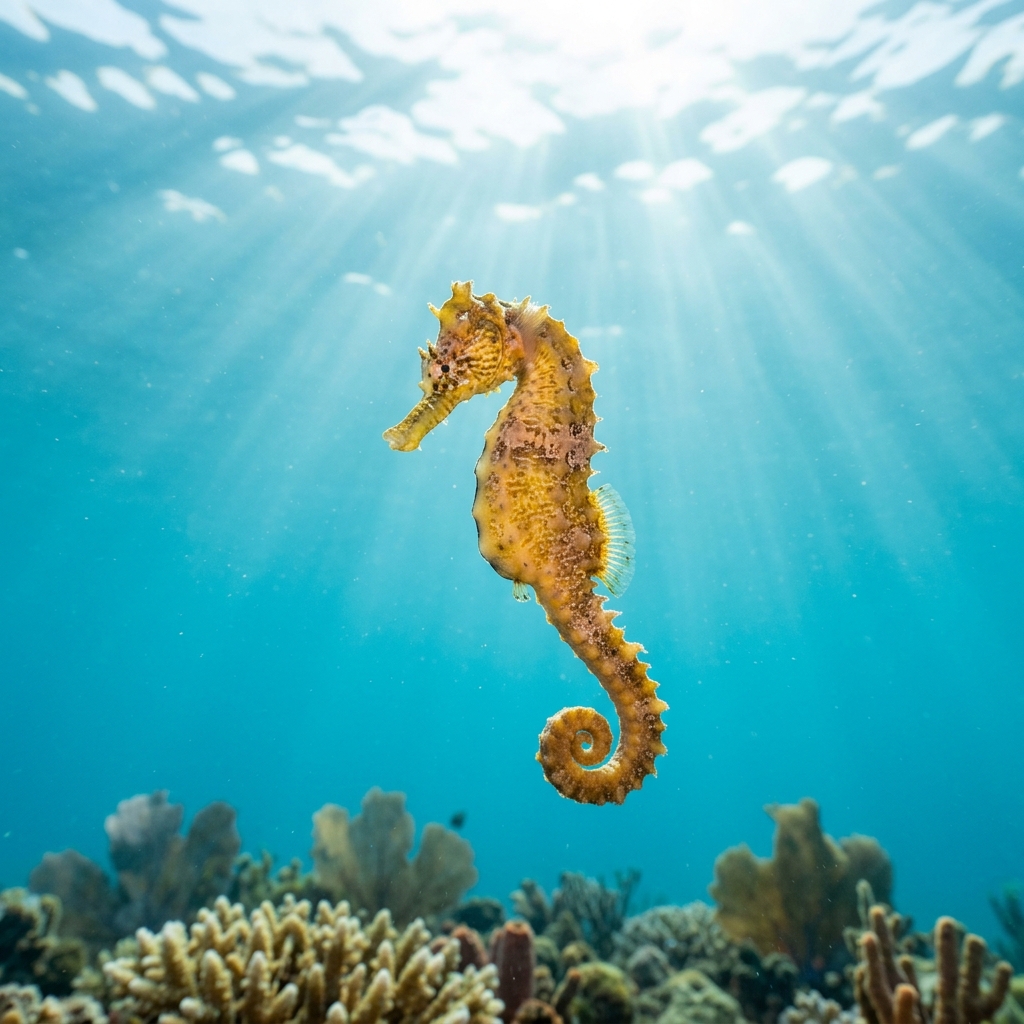
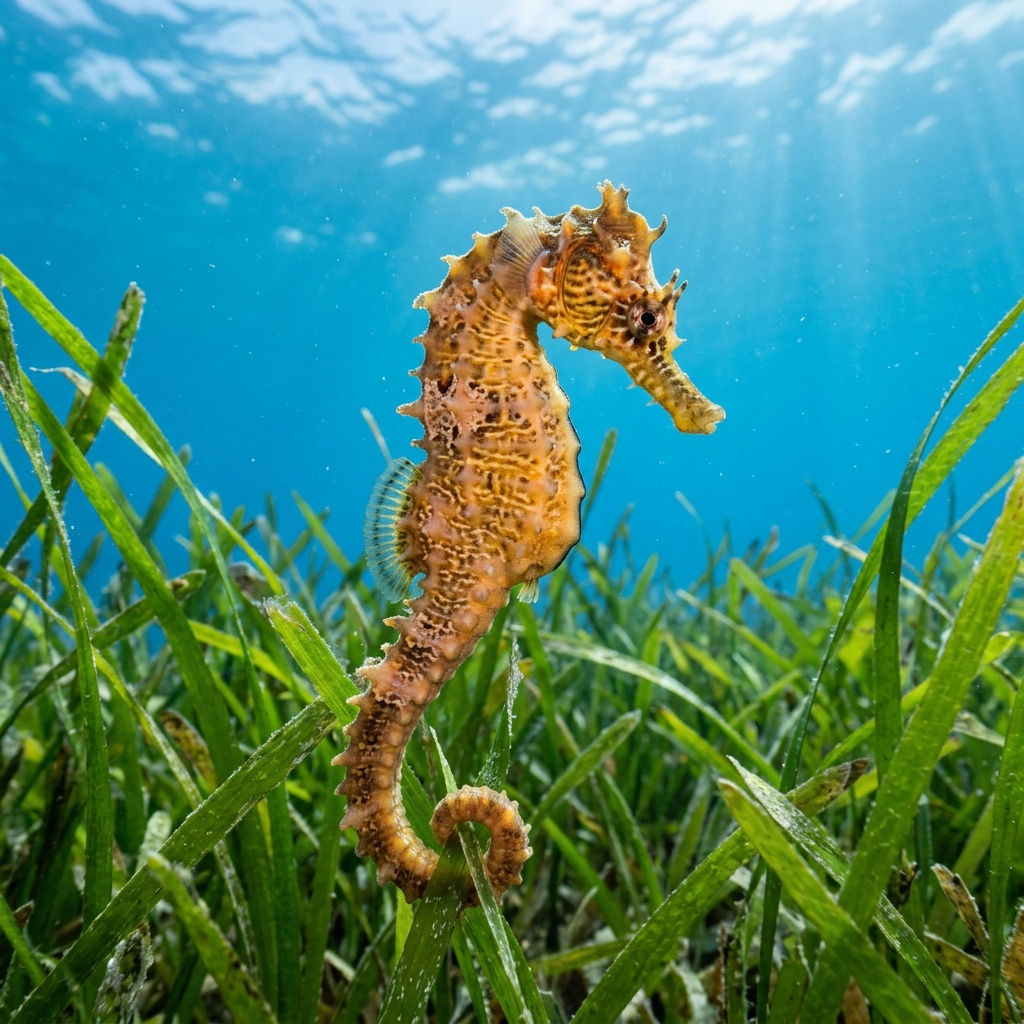
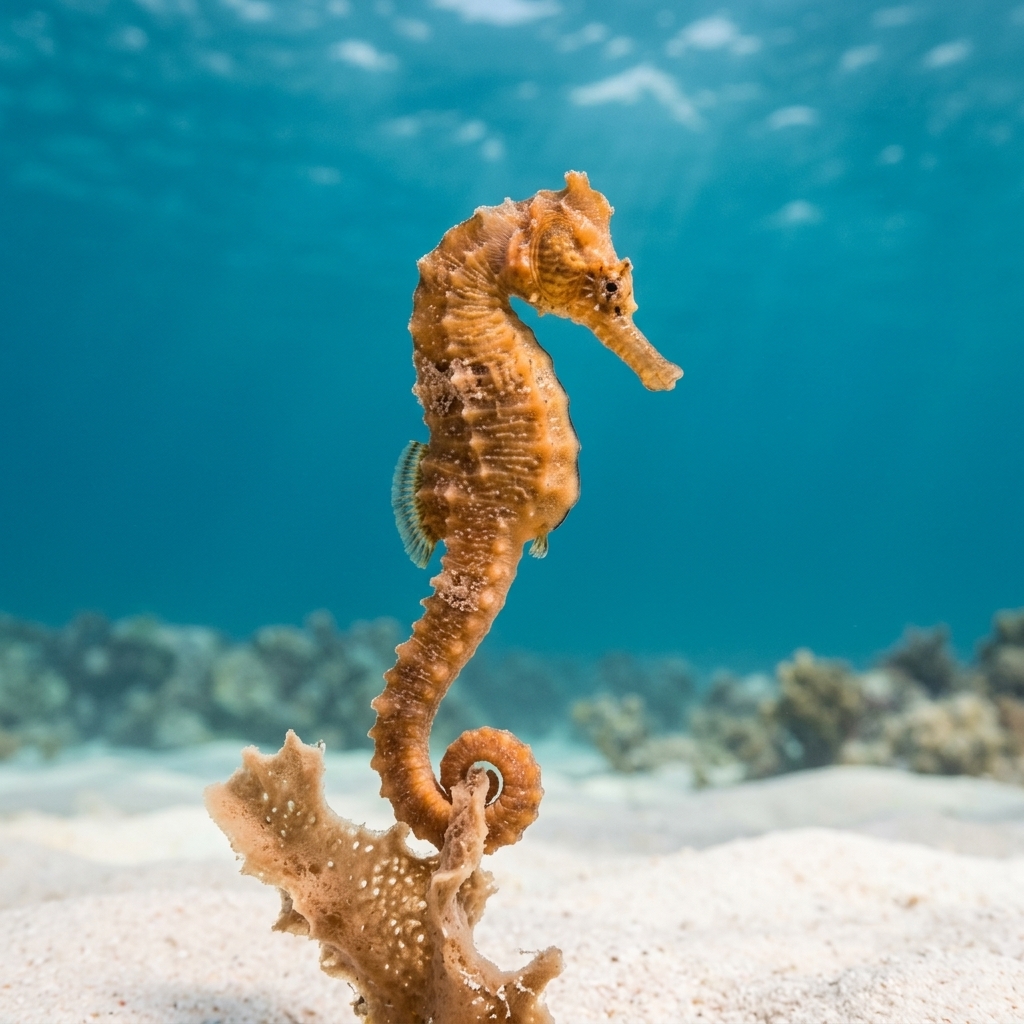
A small to medium seahorse with a robust, ridged body and a coronet (the bony crown on top of the head) that tends to be prominent and irregular. Colouration ranges from pale cream and yellow through to orange-brown and darker mottled tones, often matching the seagrass or sponge it is anchored to. Look for the relatively large snout and well-defined body rings, which give it a slightly chunkier profile compared with other Australian seahorses. Males carry a smooth brood pouch on the lower abdomen, which is the most reliable way to tell the sexes apart underwater.
You will almost always find one anchored by its prehensile tail to seagrass, sponge, or algae in sheltered bays and harbours, often sitting perfectly still and relying on camouflage rather than fleeing. It tends to hold position when approached slowly, making it rewarding for patient observers. Most encounters happen in relatively shallow water within easy snorkelling or diving depth.
Like all seahorses, it is the male that becomes pregnant: the female deposits eggs into his brood pouch, and he gestates and gives birth to fully formed juveniles. A round-bellied male is a reliable sign that a breeding population is present at that site.
Sightings are recorded across much of the year, concentrating in the warmer summer-to-autumn window of December through April and again during the cooler months of June through October, suggesting this species is present for a large portion of the year at accessible sites.
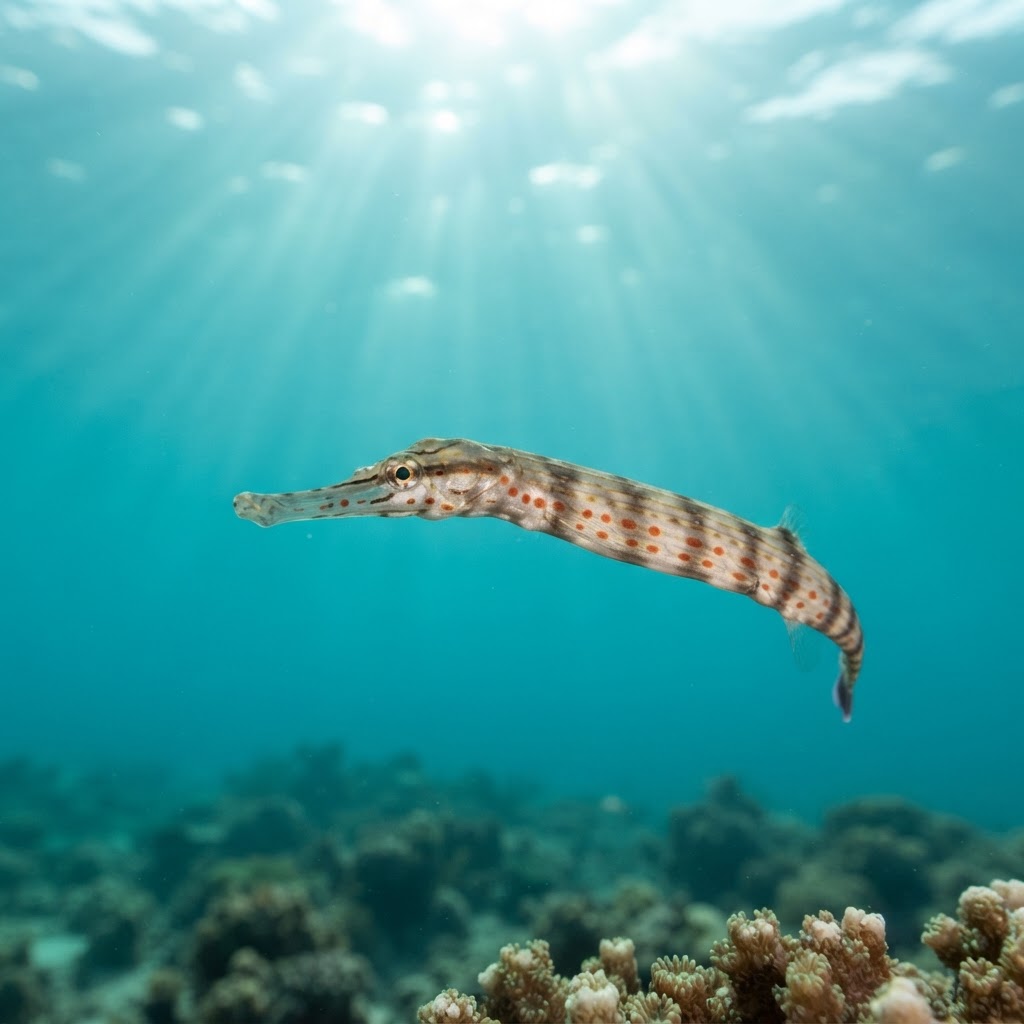
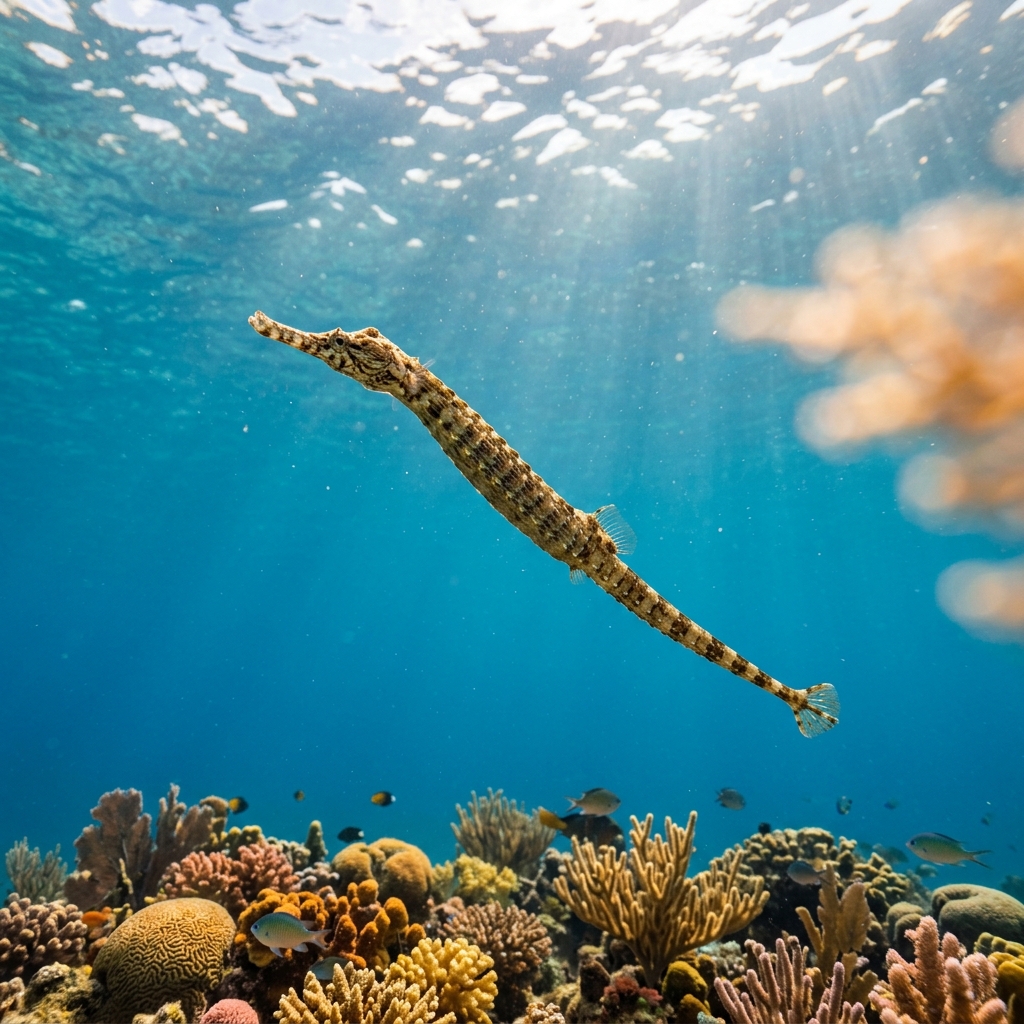
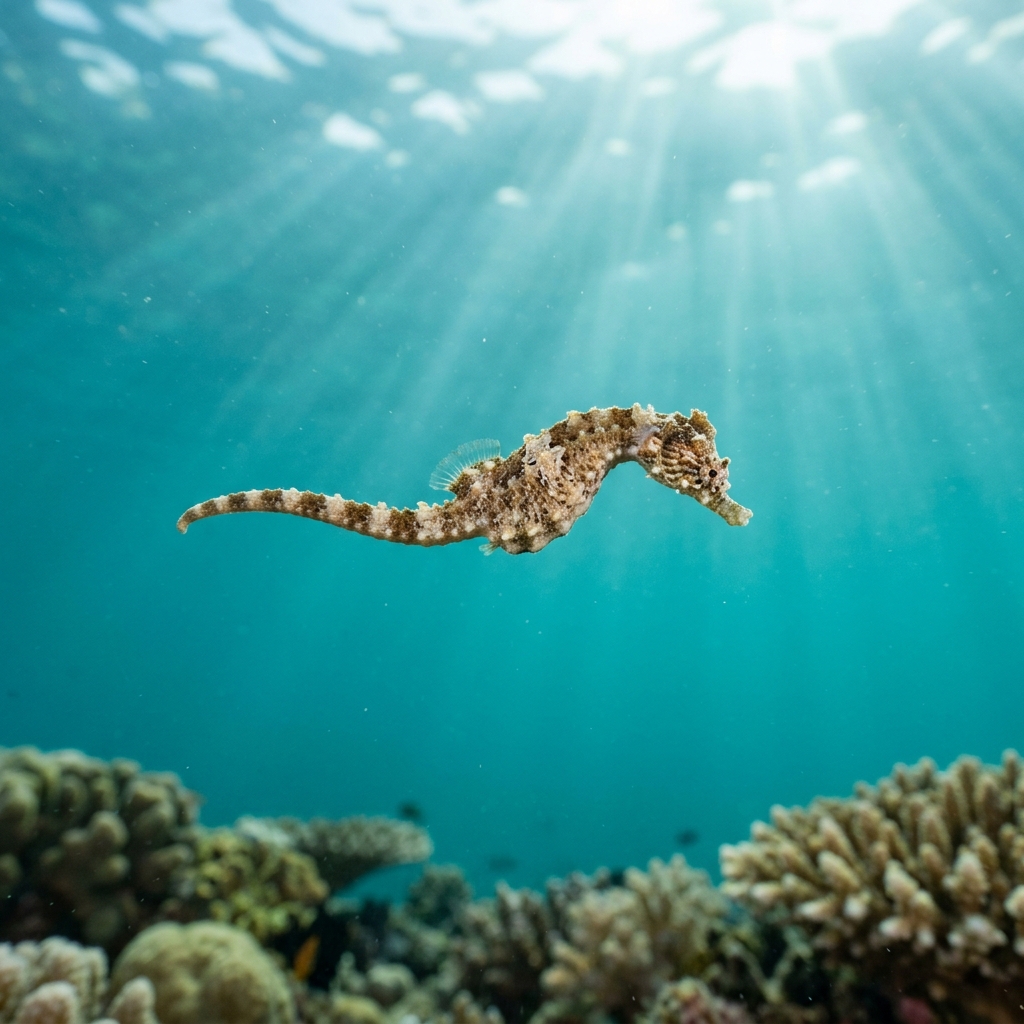
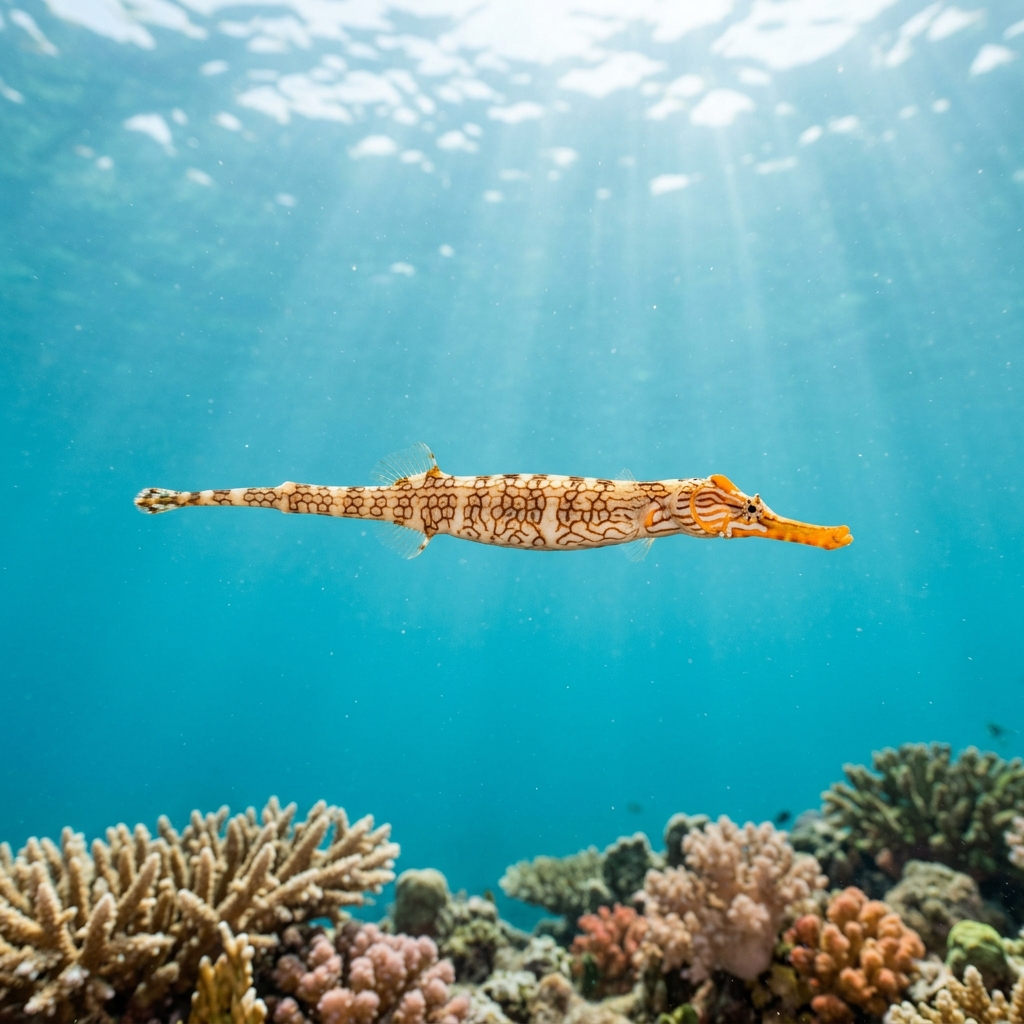
Reef neighbours a diver could mistake it for. Use the identification notes above to tell them apart.
Almost exclusively an Australian endemic, with the overwhelming majority of sightings concentrated in New South Wales, the Sydney region in particular holds strong, well-documented populations at a large number of sites. A smaller number of records come from Queensland and very occasional sightings further afield. If you are searching for this species, New South Wales is firmly the place to start.
Mapping where New Holland Seahorse is logged…
New South Wales, Australia, is by far the best place to look, with strong populations recorded across many sheltered harbour and bay dive sites in the Sydney region. A smaller number of sightings come from Queensland. This is essentially an Australian endemic species.
Sightings cluster in two windows: December through April and June through October, suggesting the species is accessible for most of the year across New South Wales sites. Water temperatures in the observed range of 18-23 °C align with NSW coastal conditions through those months.
Look for a chunky seahorse with a prominent irregular coronet, well-defined body rings, and a large snout, typically clinging to seagrass or sponge in sheltered bays. Colouration varies from pale cream to orange-brown. The pot-bellied seahorse is the most likely confusion species; it is generally larger and heavier-bodied.
No. They pose no threat to divers whatsoever. Standard good practice applies: do not touch them, as handling stresses the animal and can dislodge them from their anchor hold.
Yes, they are listed as Endangered. Their restricted range along the Australian east coast and dependence on seagrass and estuarine habitats makes them vulnerable to urban runoff, boat traffic, and habitat degradation. Reporting sightings through citizen science platforms helps track population health.
Yes. The female transfers her eggs into the male's brood pouch, where he fertilises and incubates them until birth. He delivers fully formed juvenile seahorses, not eggs. A visibly swollen-bellied male at a dive site is a good indicator of an active breeding population.
The New Holland Seahorse is listed as endangered by the IUCN. Observe from a distance, avoid touching or feeding it, and report sightings to local marine research organisations.
Listed as Endangered, this species has a restricted range and is sensitive to habitat loss in the seagrass and estuarine environments it depends on. Divers should avoid touching or displacing individuals, and should resist the urge to reposition them for a better photograph.
Site and sighting data is aggregated from diver logs, iNaturalist and GBIF. For taxonomy and conservation status:
Seahorse
1,346 sites