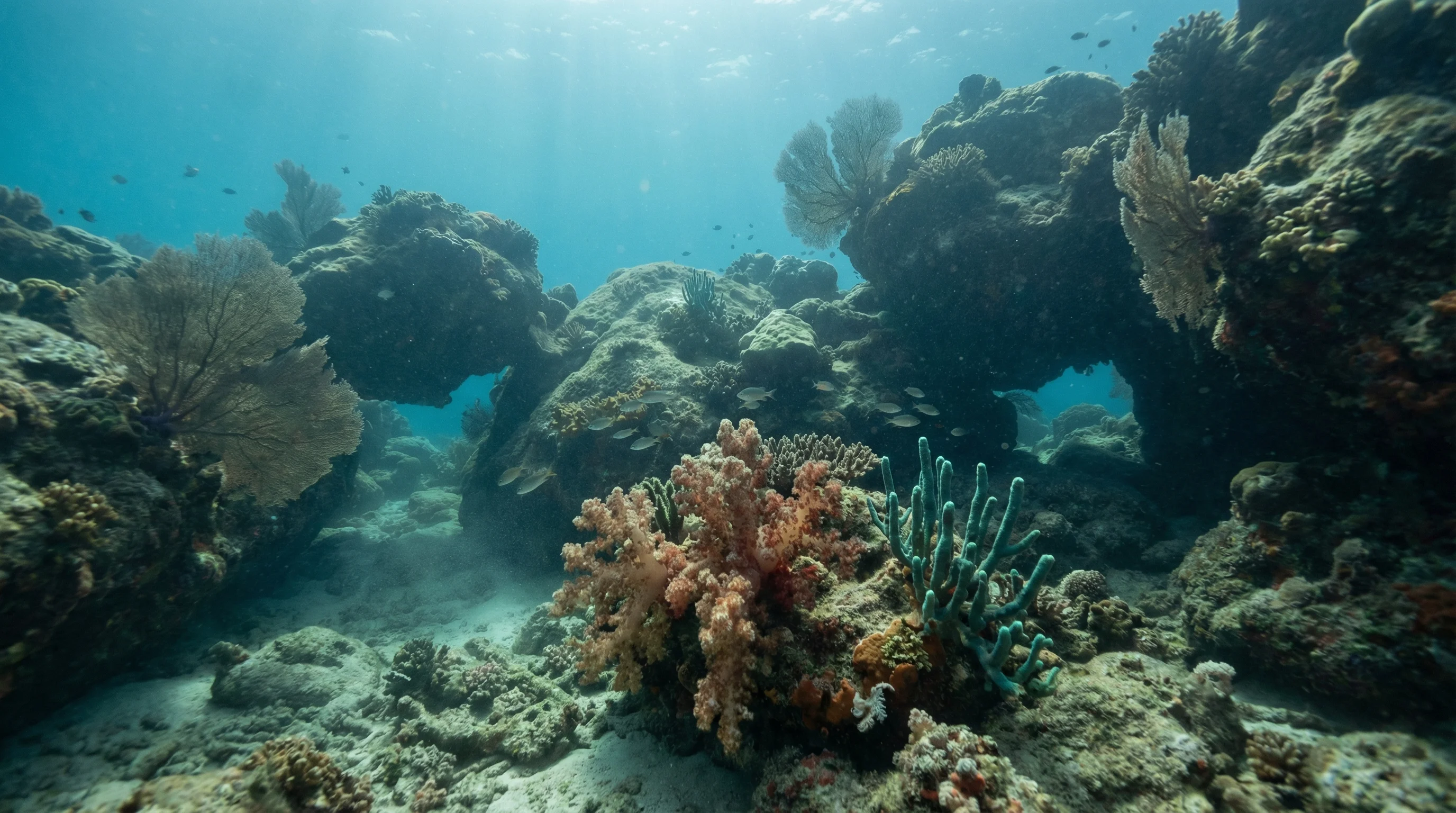
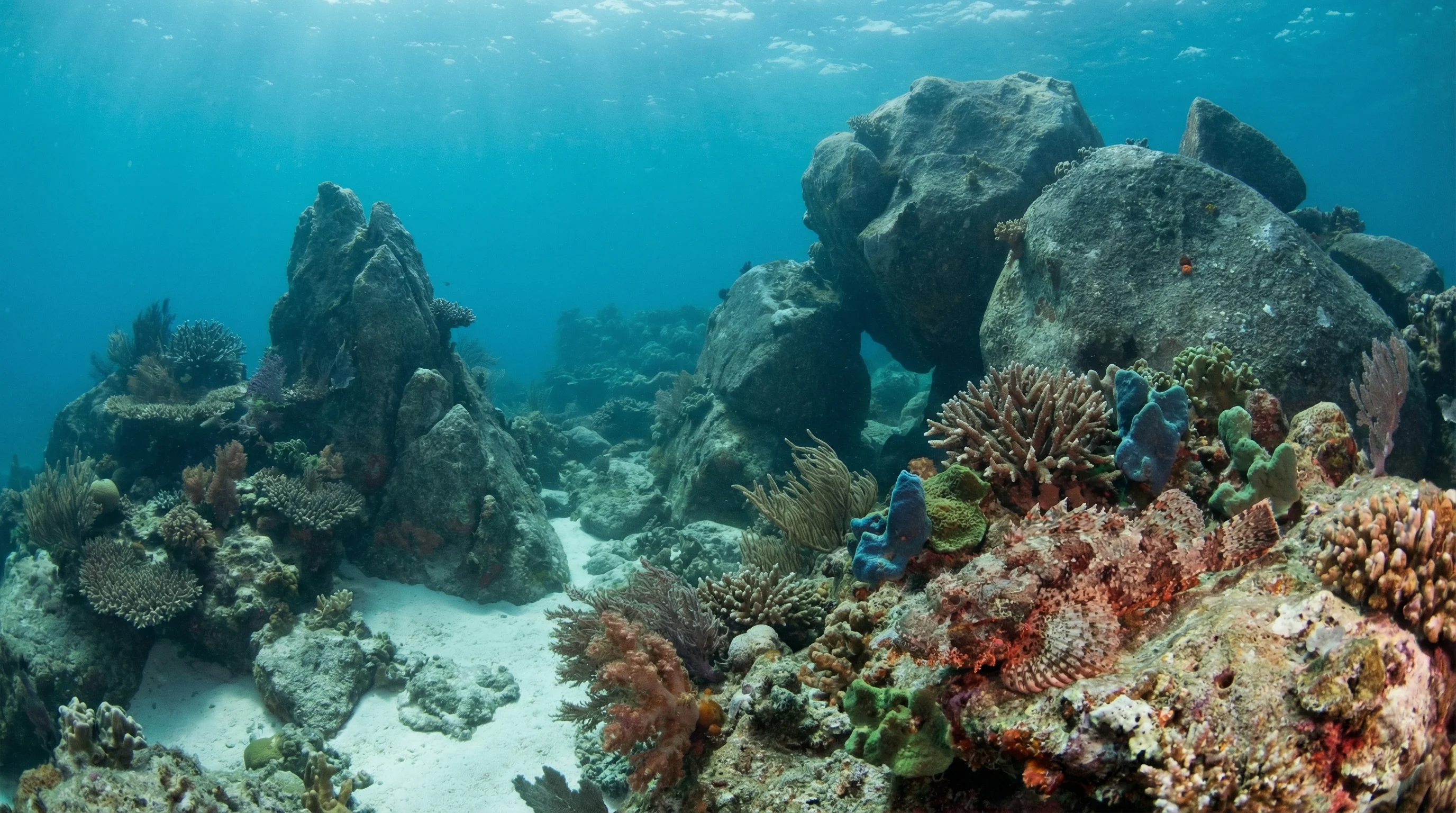
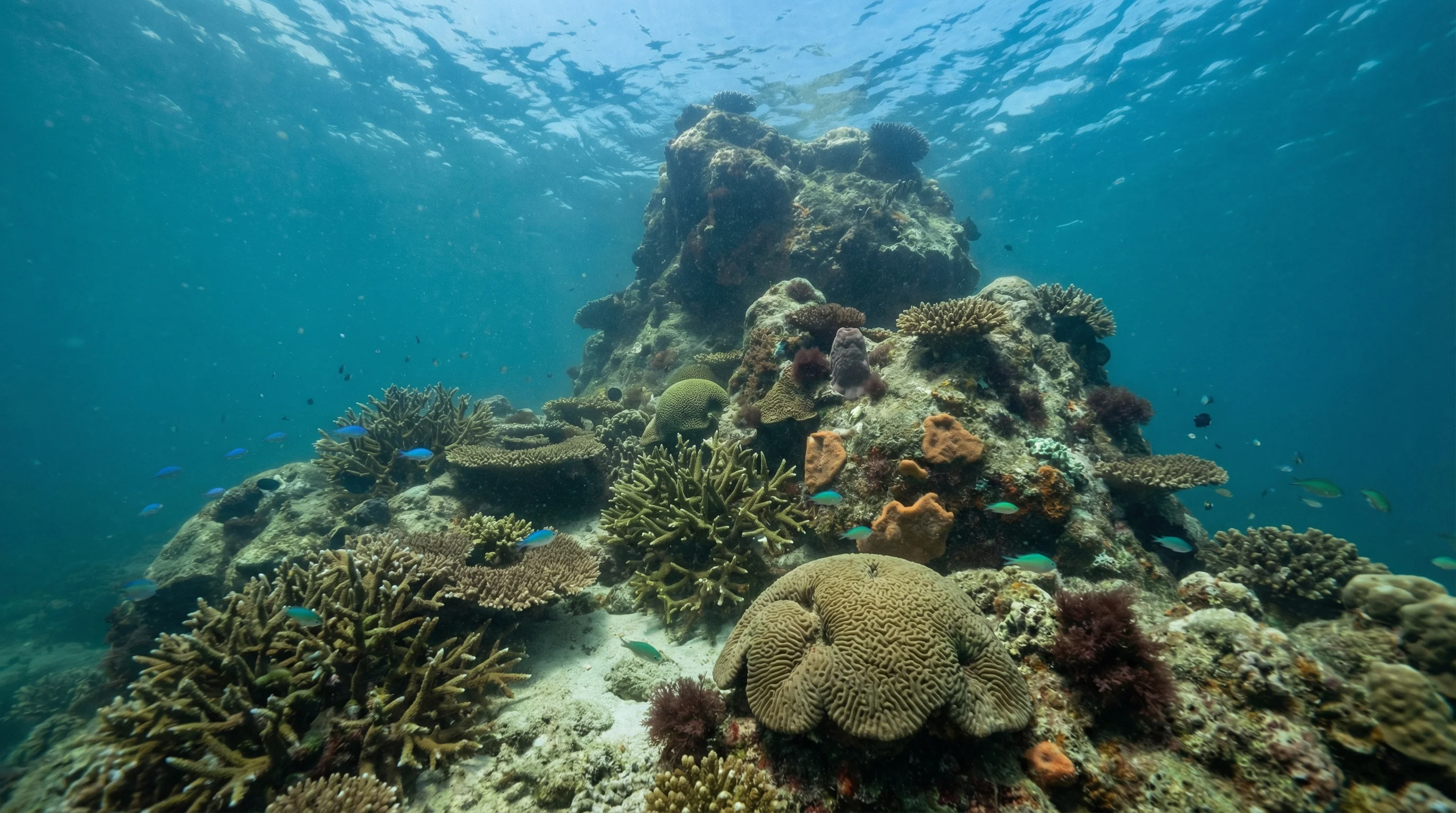
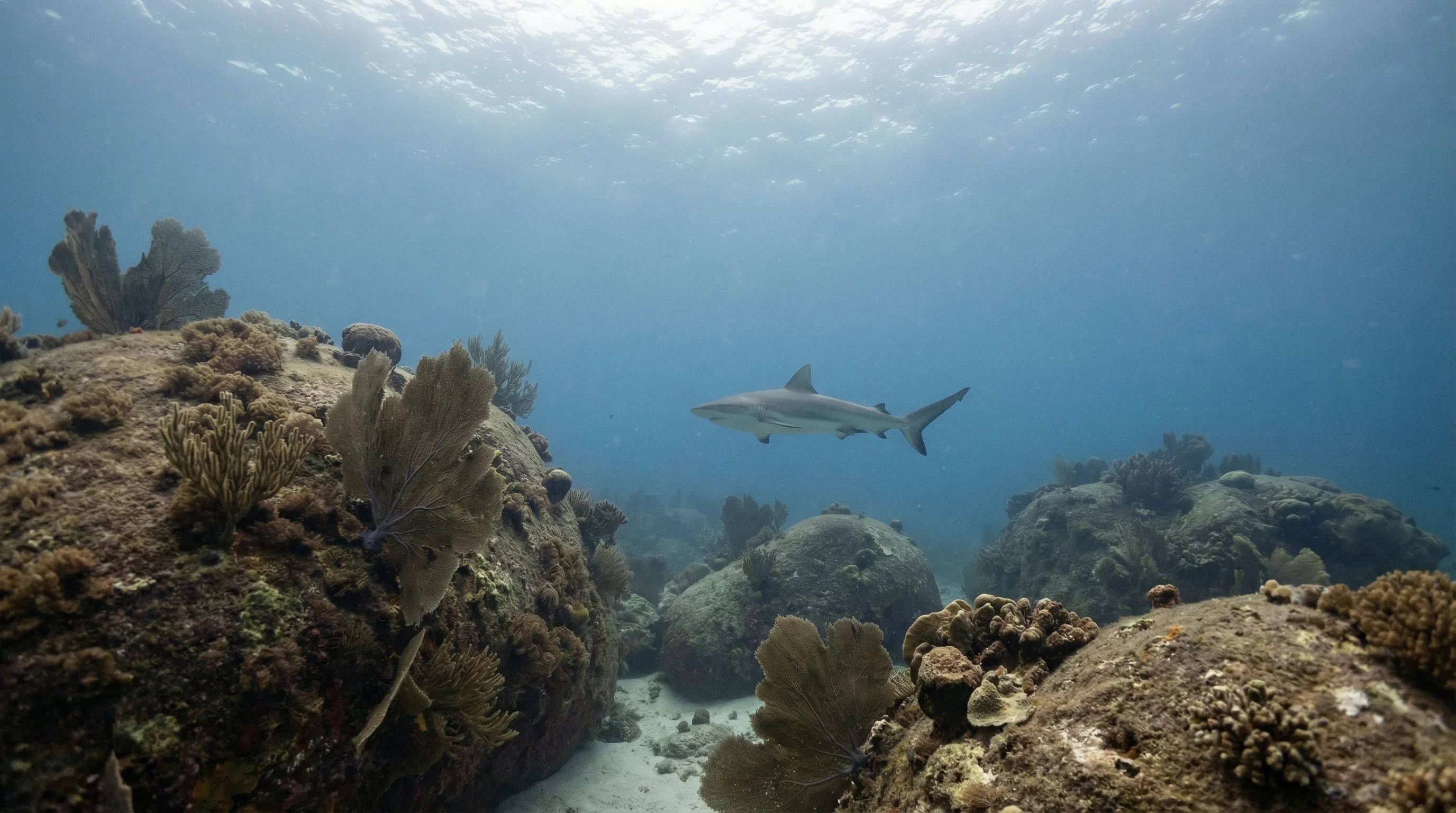
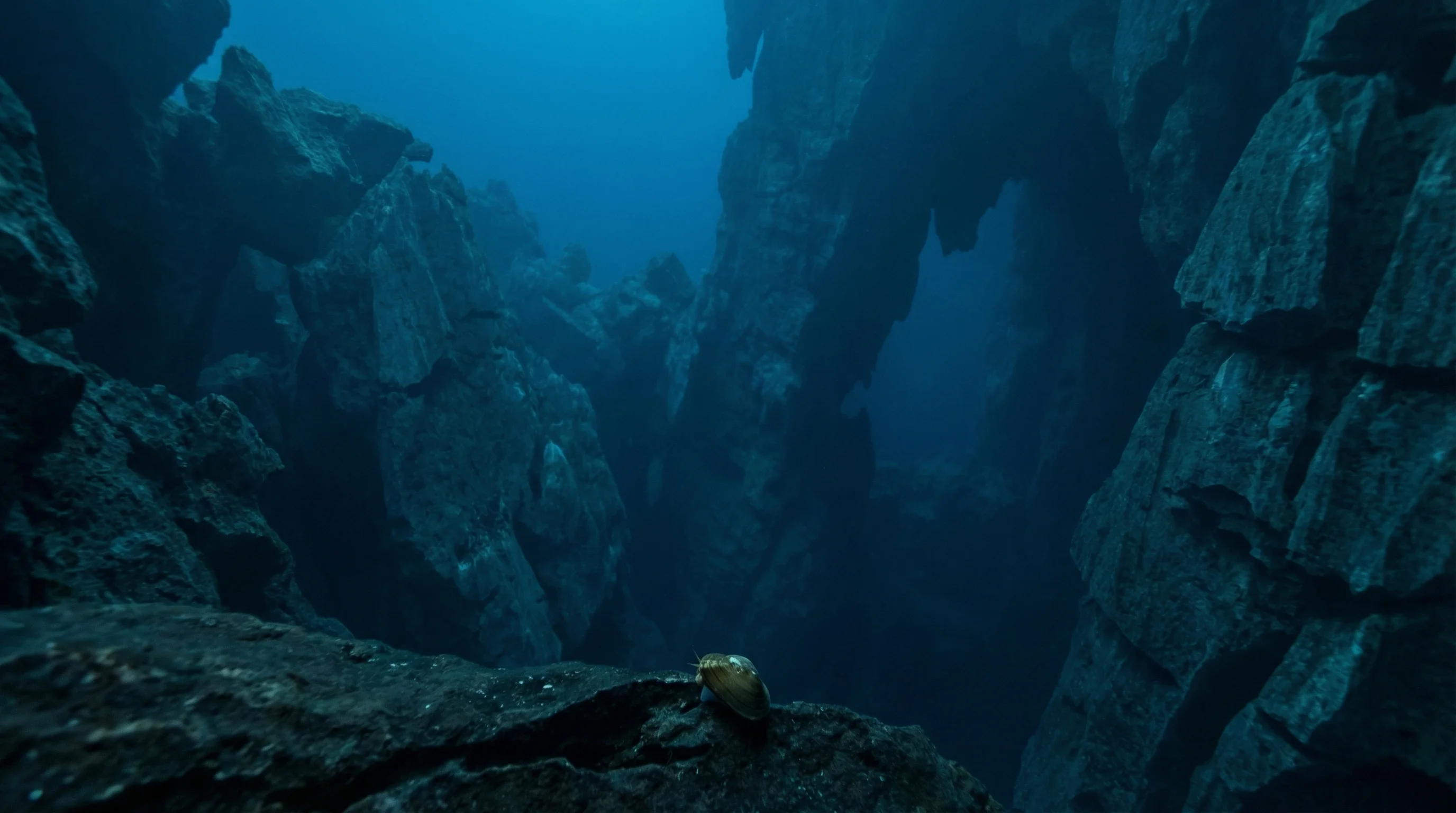
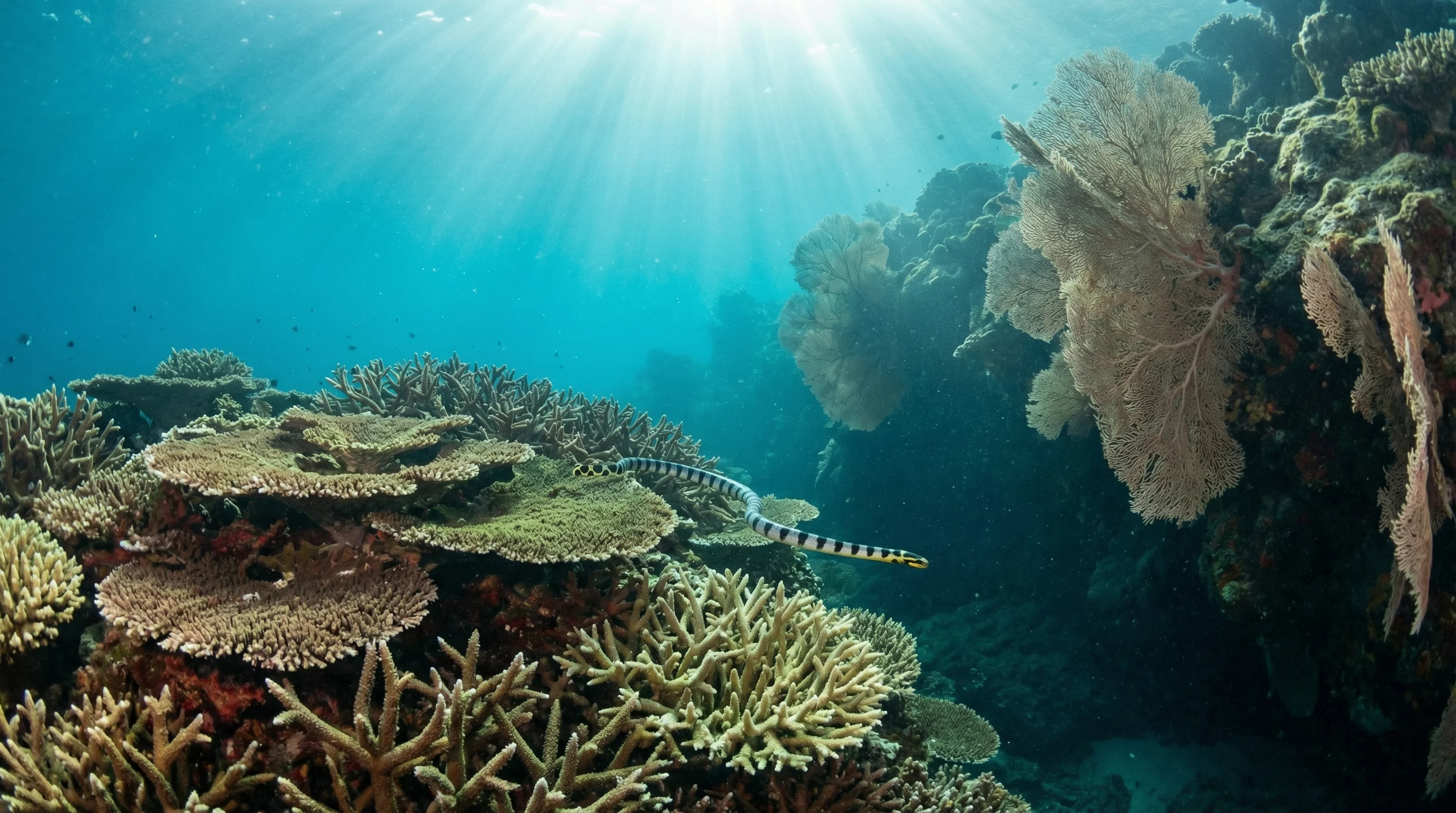
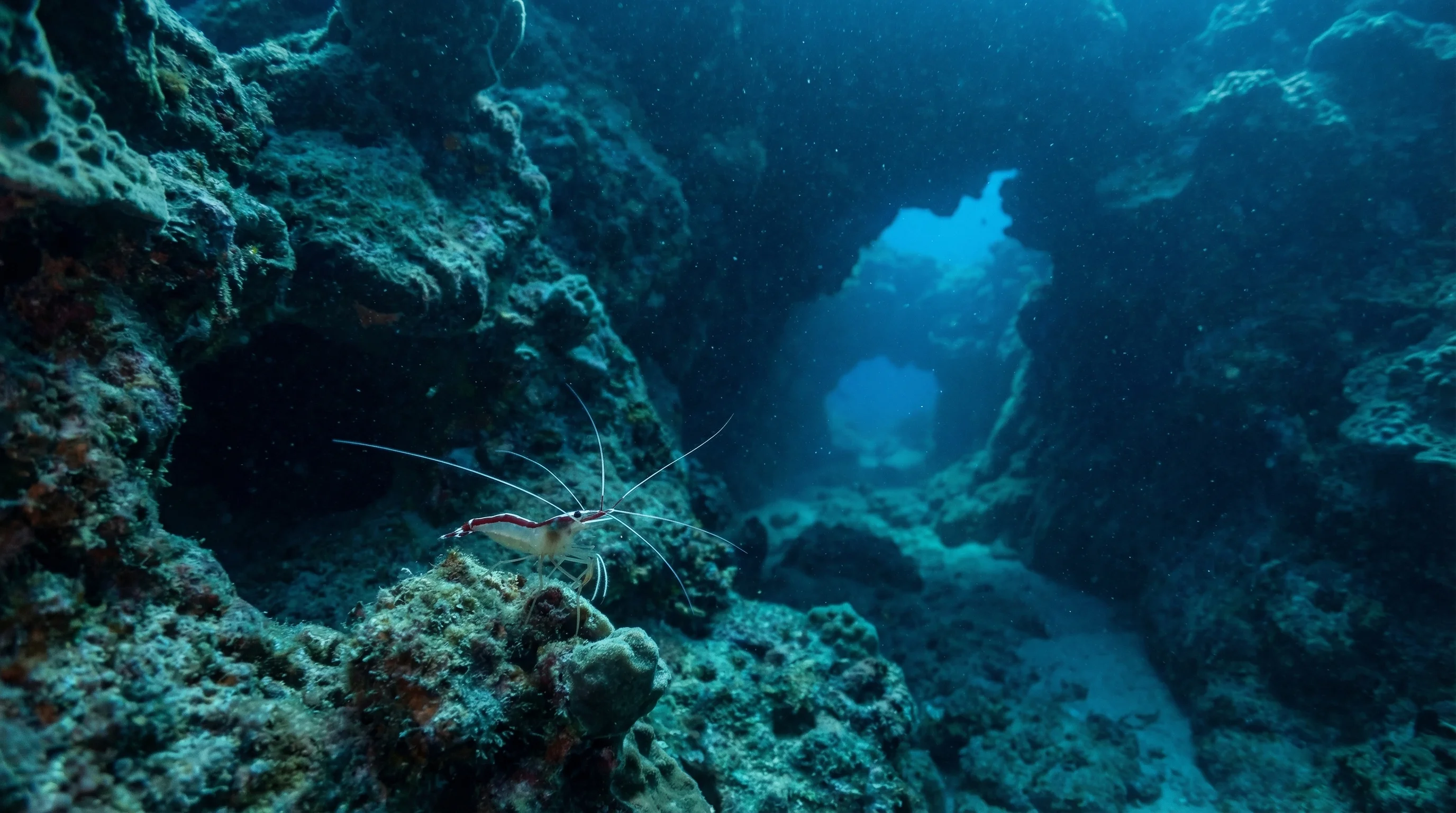
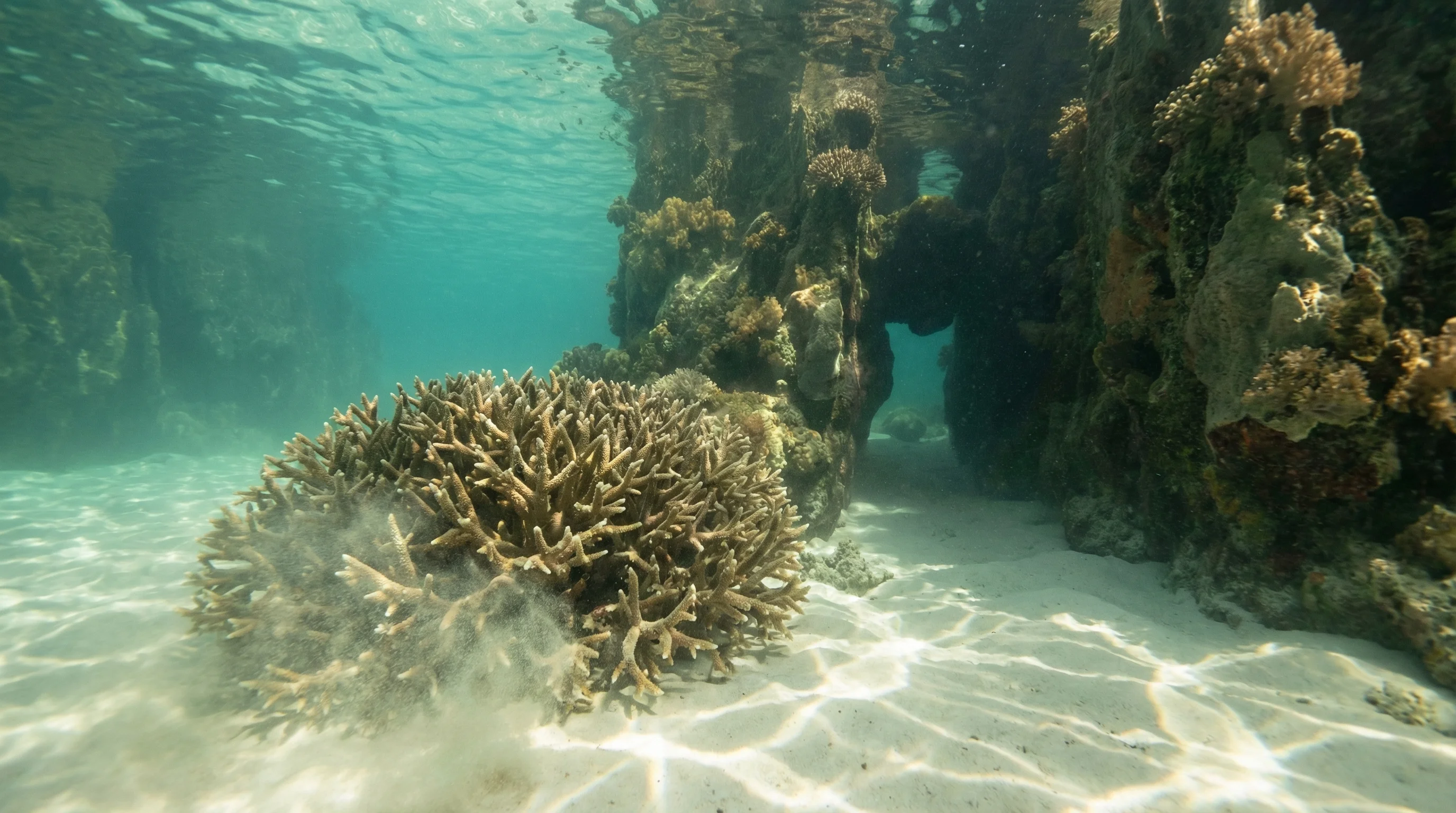
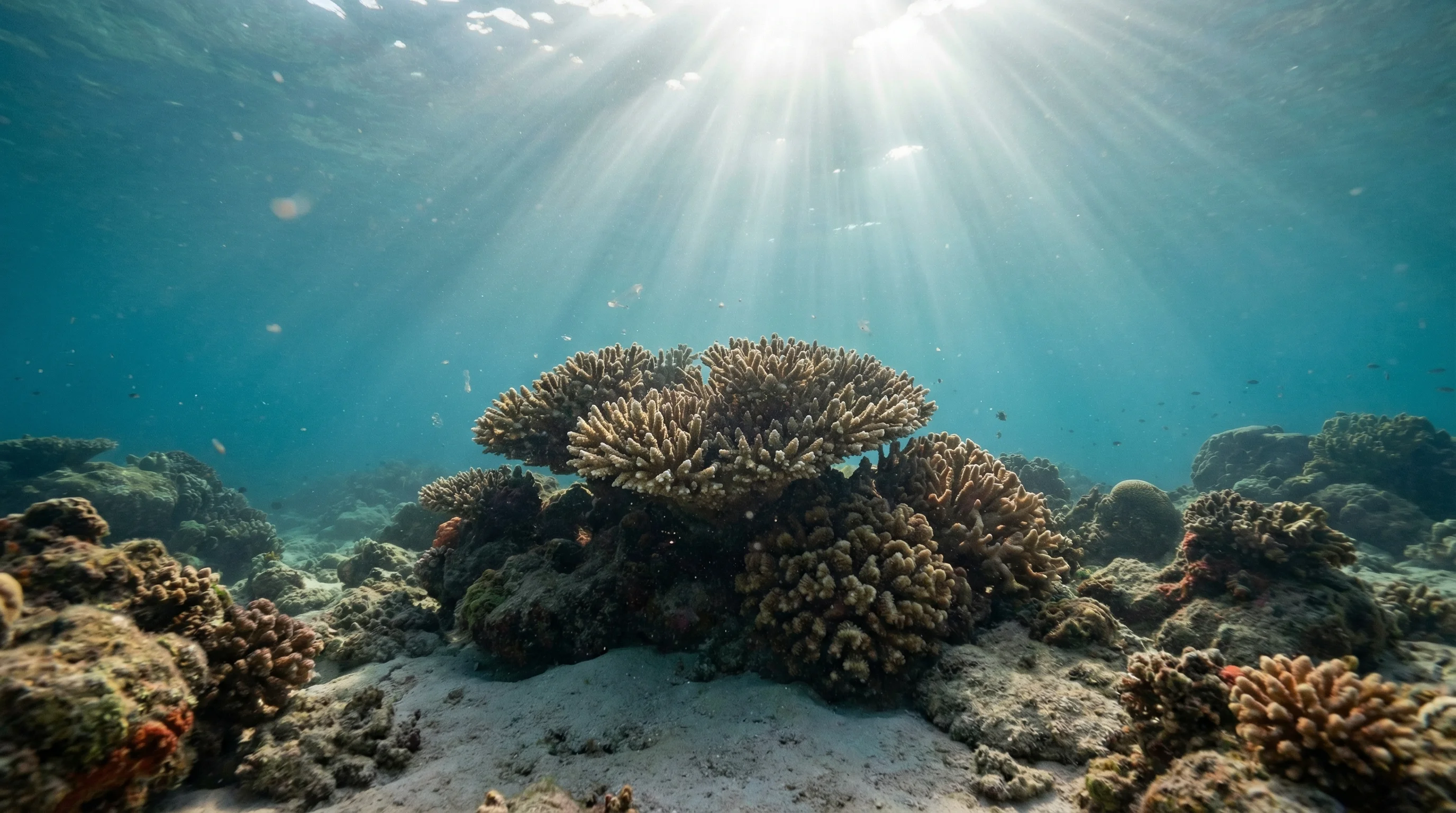
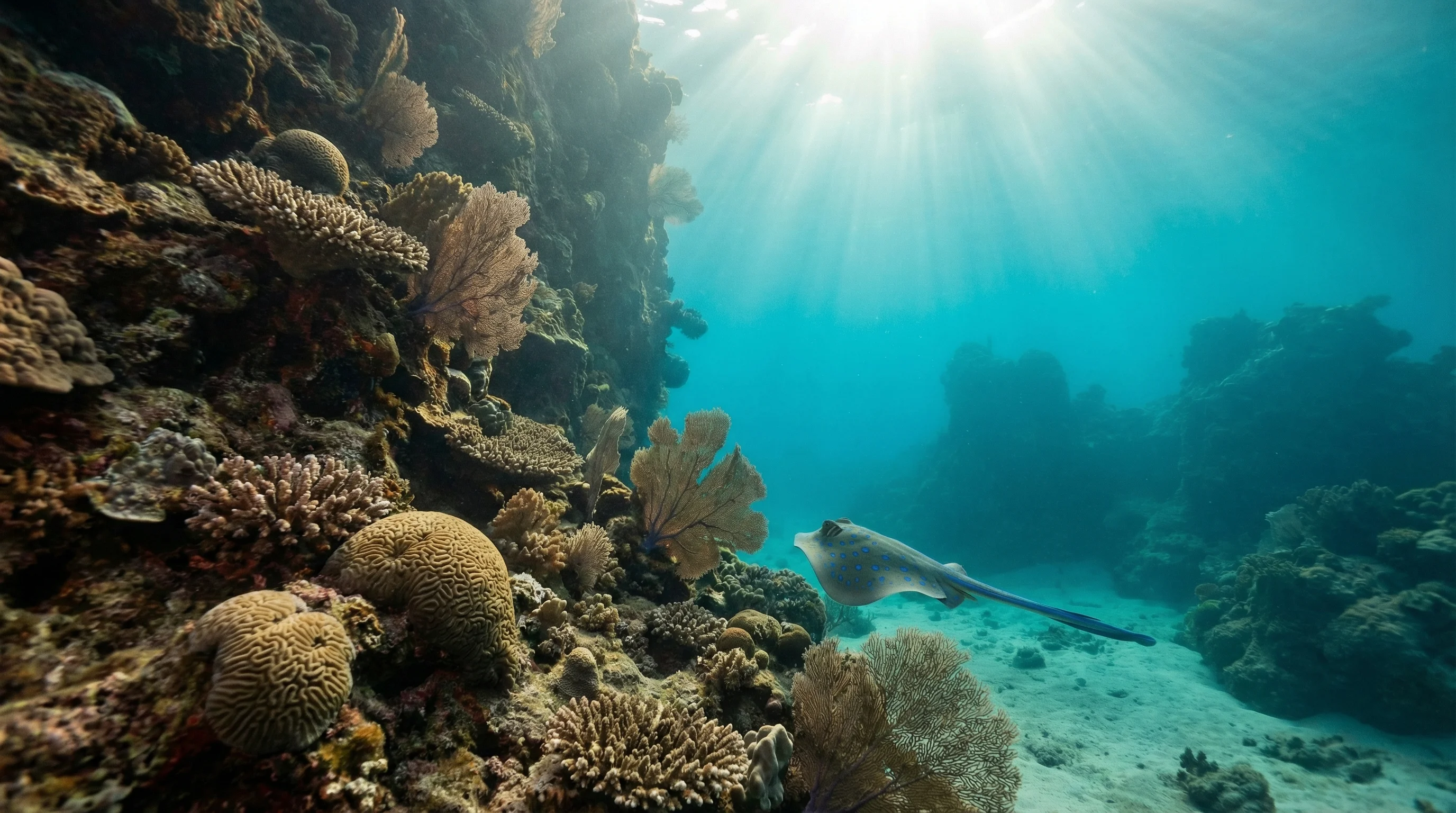
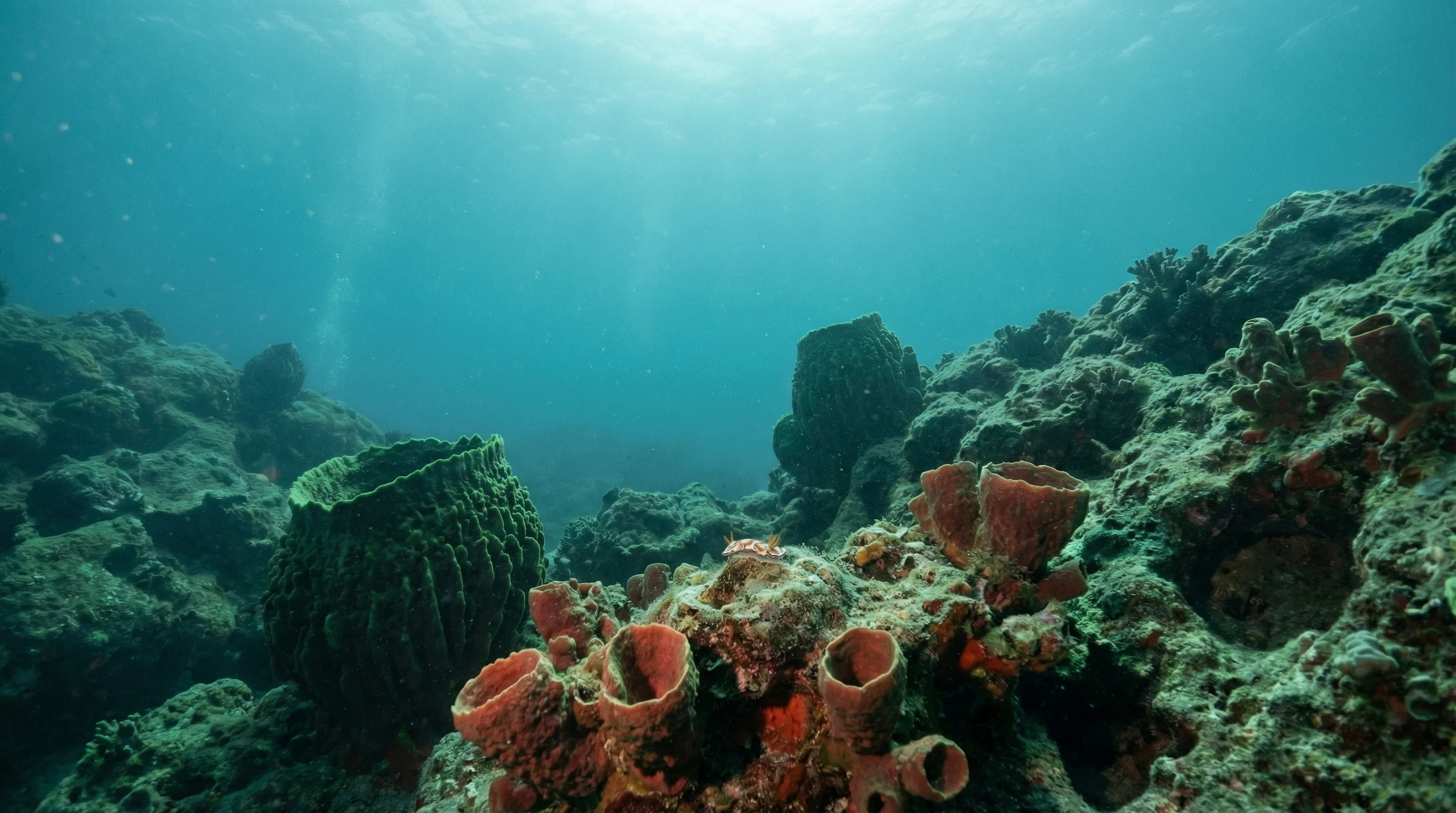
Krabi's diving centres on limestone karst topography, and that geology shapes almost every site. Reefs wrap around island bases, walls drop into deeper water, and cave systems range from gentle swim-throughs to serious technical overhead environments. The majority of sites suit beginners, with shallow reef dives and calm conditions at spots like Koh Yawasam and Koh Daeng. Advanced divers have their own draw: Koh Yawabon's long tunnel and Song Hong's cave system demand proper overhead experience. Common Clownfish and Titan Triggerfish appear across nearly all sites, while Sea Krait and Harlequin Sweetlips add character. Conditions peak from late dry season into April and again around November.
Monthly water temperature across Krabi's sites, from satellite sea-surface data corrected for depth. The band shows the site-to-site spread.
Water stays warm throughout the year, rising to its highest around April and May, which aligns with the peak of the dry season and the months rated most highly by divers. The shoulder months of November and March also score well, offering settled conditions and good visibility. From June onward the monsoon pattern can bring reduced visibility and choppier surface conditions at exposed sites, though diving continues.
9 more sites to explore
Water temperature around Krabi ranges from about 28°C in January to 31°C in April, based on satellite sea-temperature data for its dive sites.
With water around 28–31°C, a rash guard or 3mm shorty works in Krabi year-round.
Fin maps 21 sites in Krabi (21 scuba diving sites and 6 snorkelling spots, with some suited to both).
Across Krabi's dive sites, March, April and November are most often reported as the best months to visit.
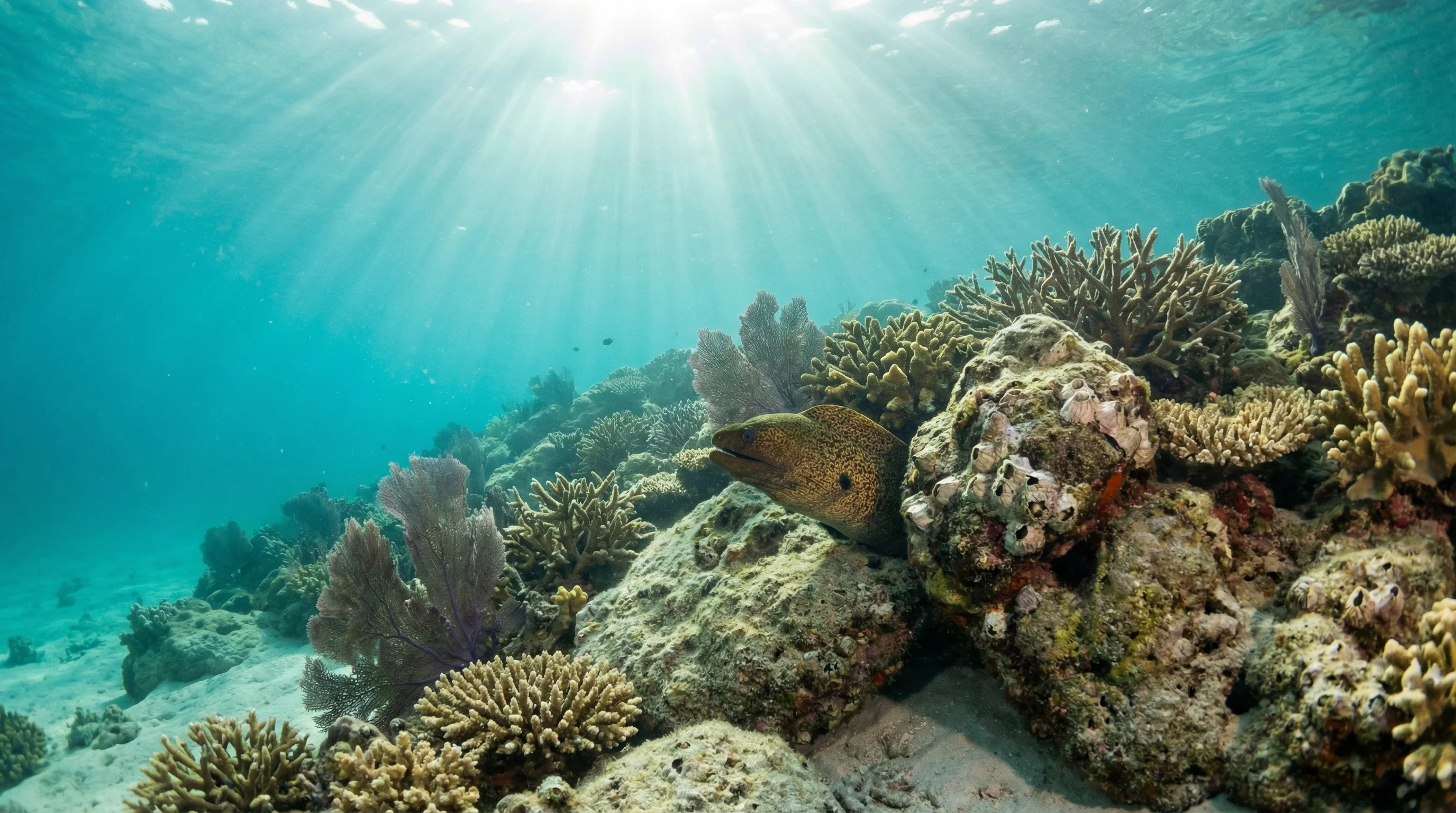
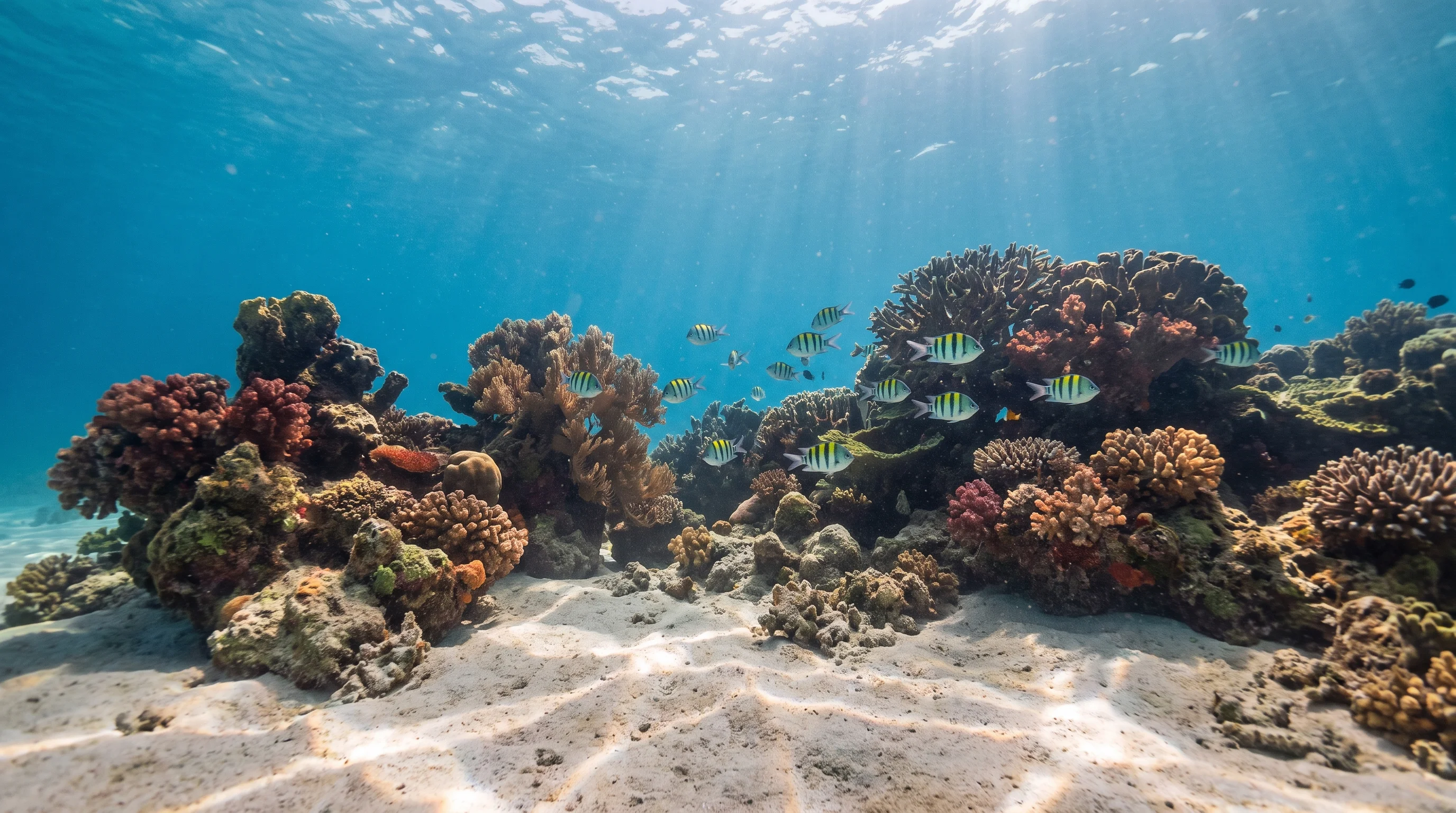
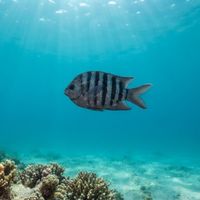
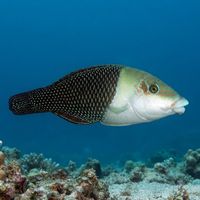
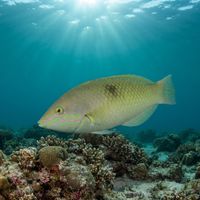
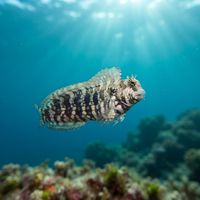
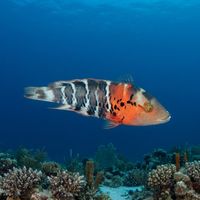
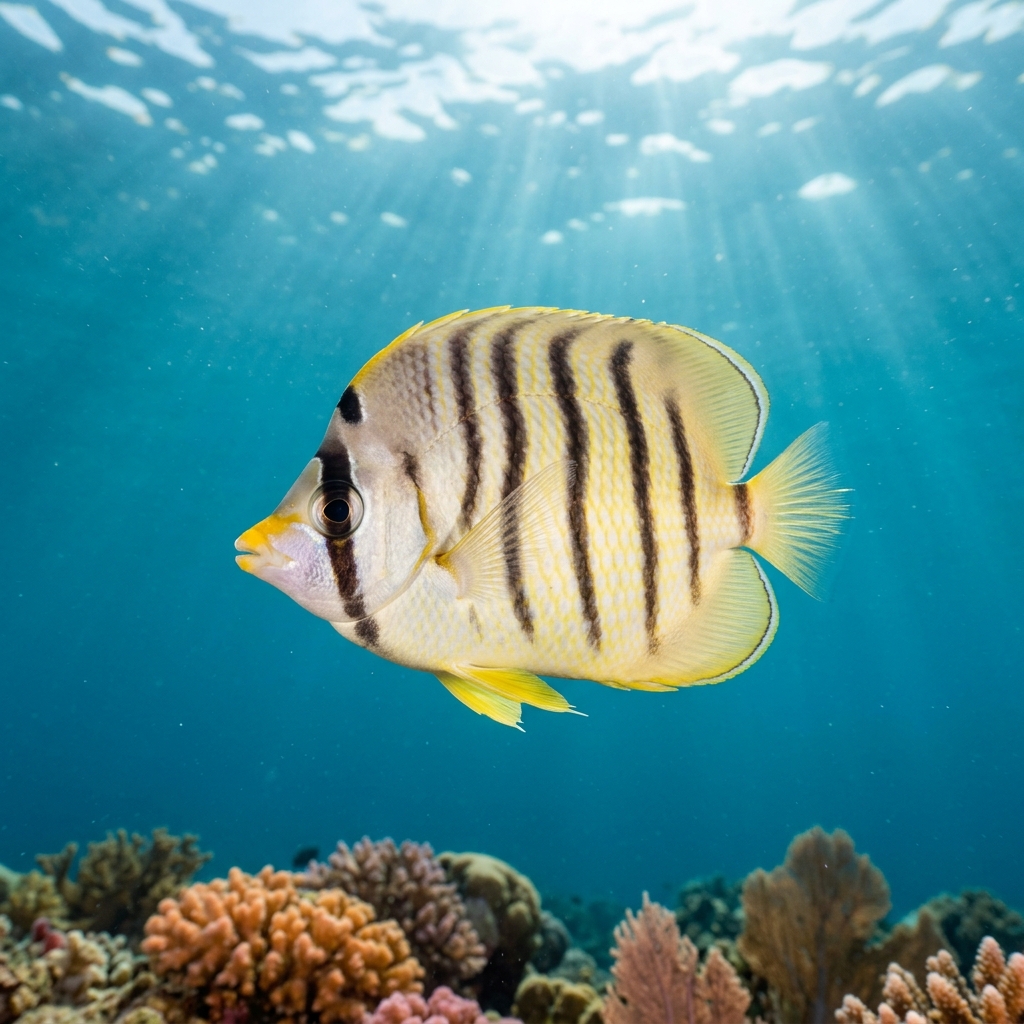
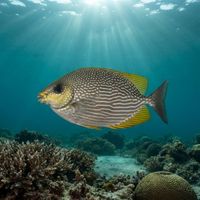
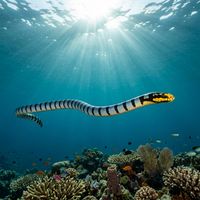
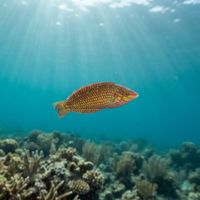
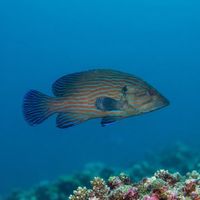
Common Clownfish and Titan Triggerfish are observed across almost all sites in Krabi. Wrasses, Moorish Idol, Blackspotted Pufferfish, and Eightband Butterflyfish are regularly recorded, along with Sea Krait and Harlequin Sweetlips as regional signature species. Whale Shark has been observed at a minority of sites, and Seahorse sightings are also on record.
The majority of Krabi's sites are rated beginner level, including shallow reef dives at Koh Yawasam, Koh Daeng, Chicken Island, and Koh Poda. Most of these are accessed by boat and feature calm, shallow reef or wall topography. Beginners should be comfortable with boat entries and can expect straightforward conditions at most of these spots.
Yes. Song Hong is a technical cave system requiring proper overhead-environment training and experience. Koh Yawabon features a long tunnel that penetrates through the island and is rated strictly advanced. Sa Kaeo Cave is a deep freshwater cave system with a very significant depth range, also classified as technical. These sites are not appropriate for recreational divers without the relevant specialist certification and experience.
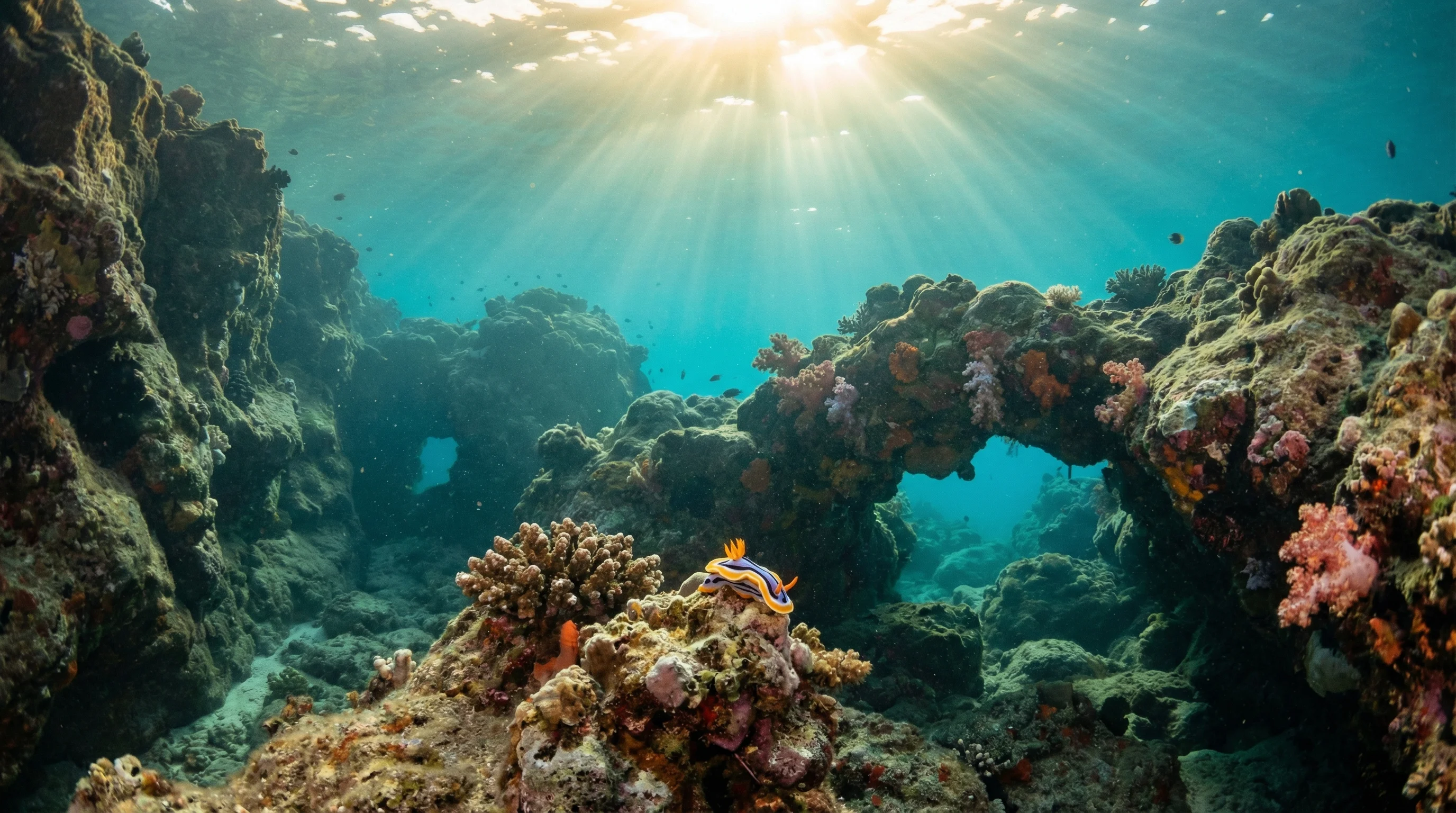
Krabi offers a varied mix: shallow coral reef sites cluster around the beginner-friendly islands and are ideal for introductory dives, while wall and drop-off formations add depth options at sites like Koh Bida Nok and Koh Talu. Cave and cavern systems are a defining feature of the region, ranging from accessible swim-throughs at Koh Kwang and Koh See through to full technical overhead environments at Song Hong and Sa Kaeo Cave. Koh Ha stands out for combining reef, cavern, wall, and pinnacle topography in one site.