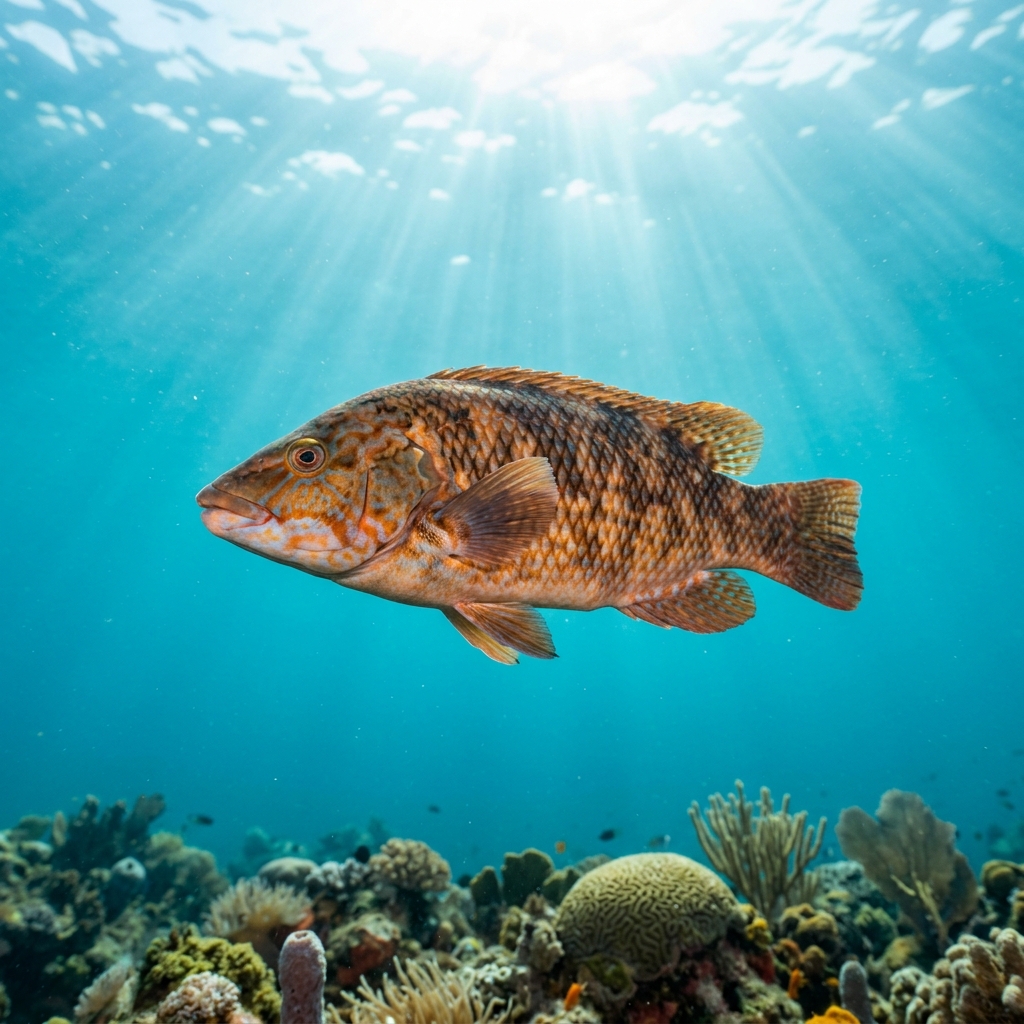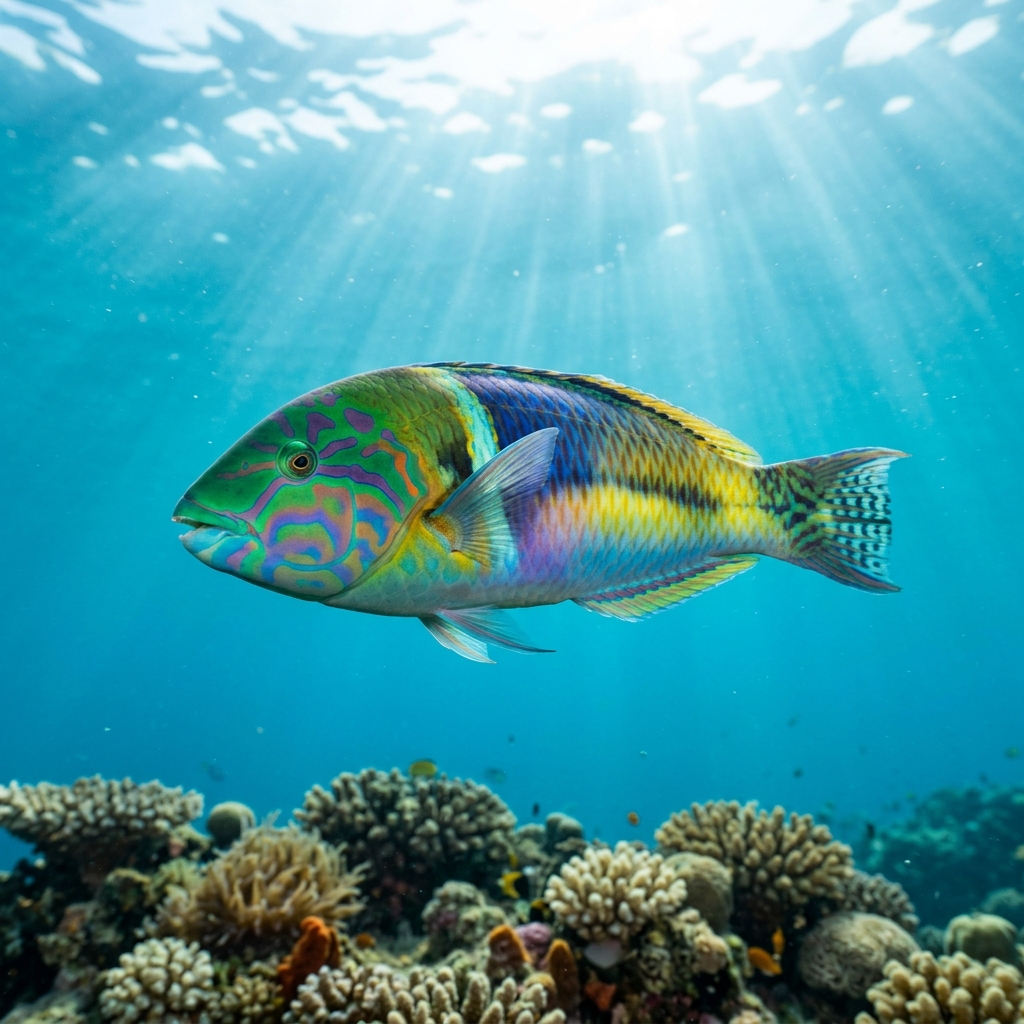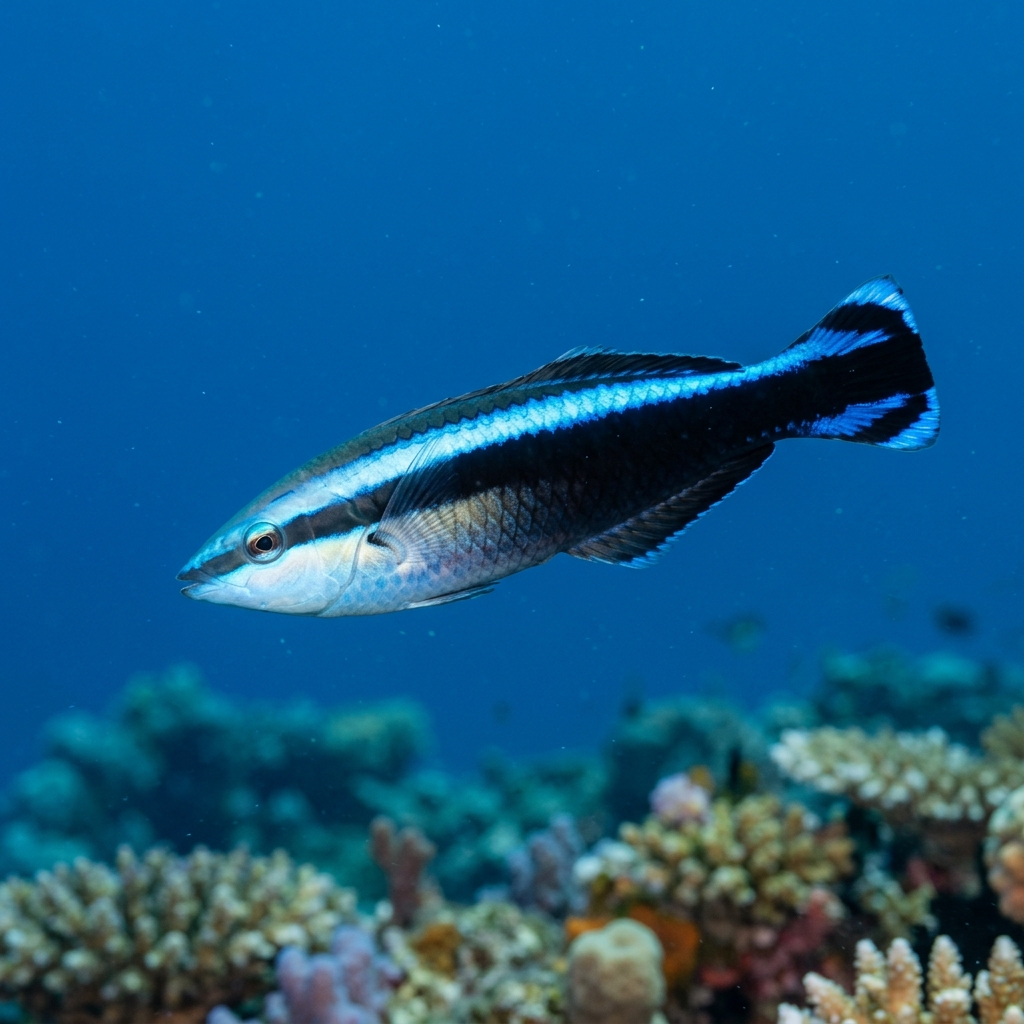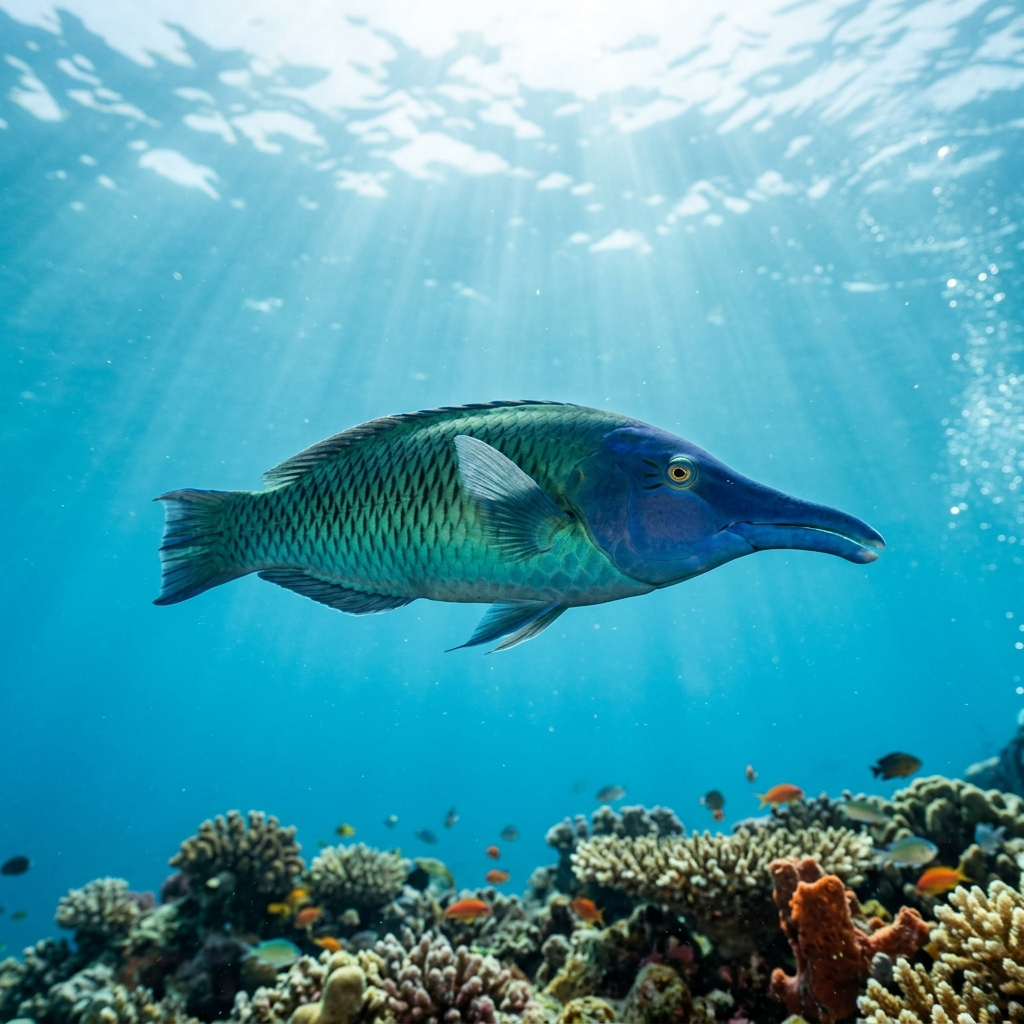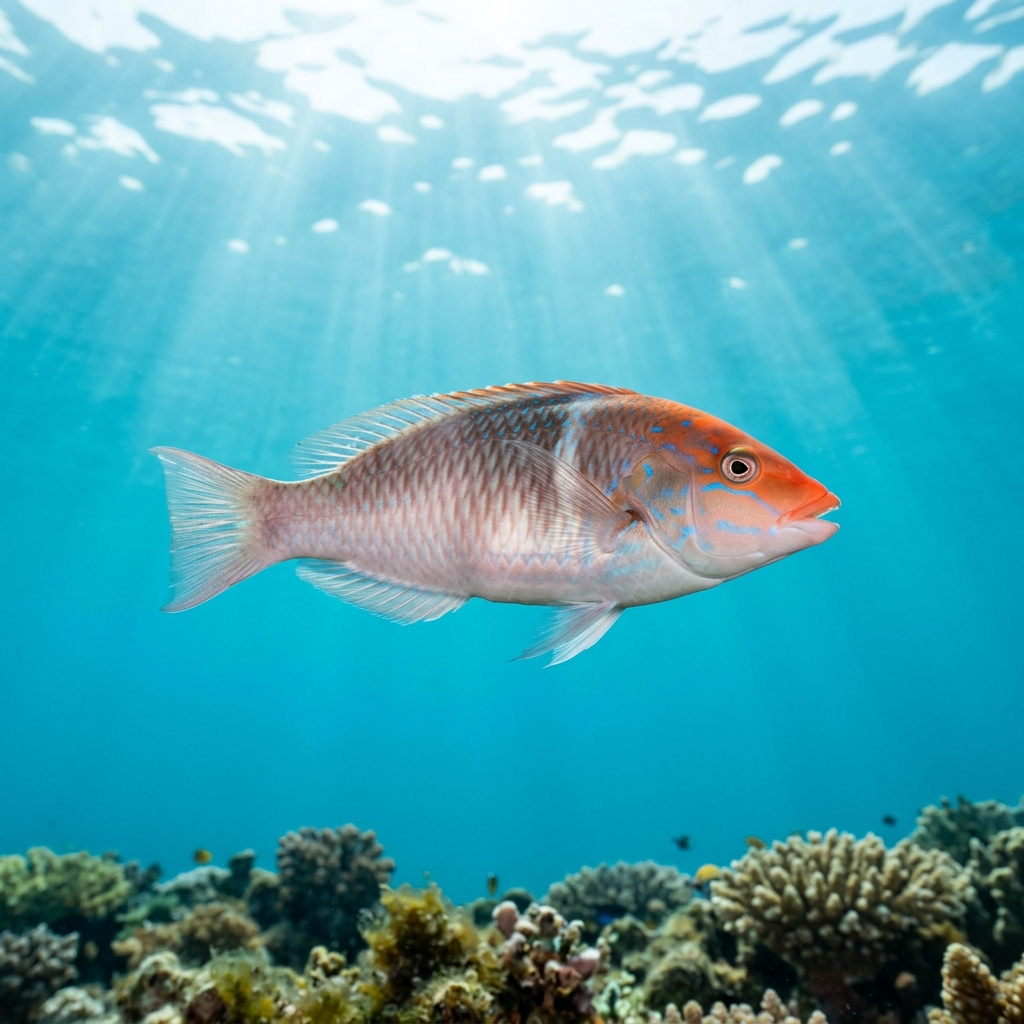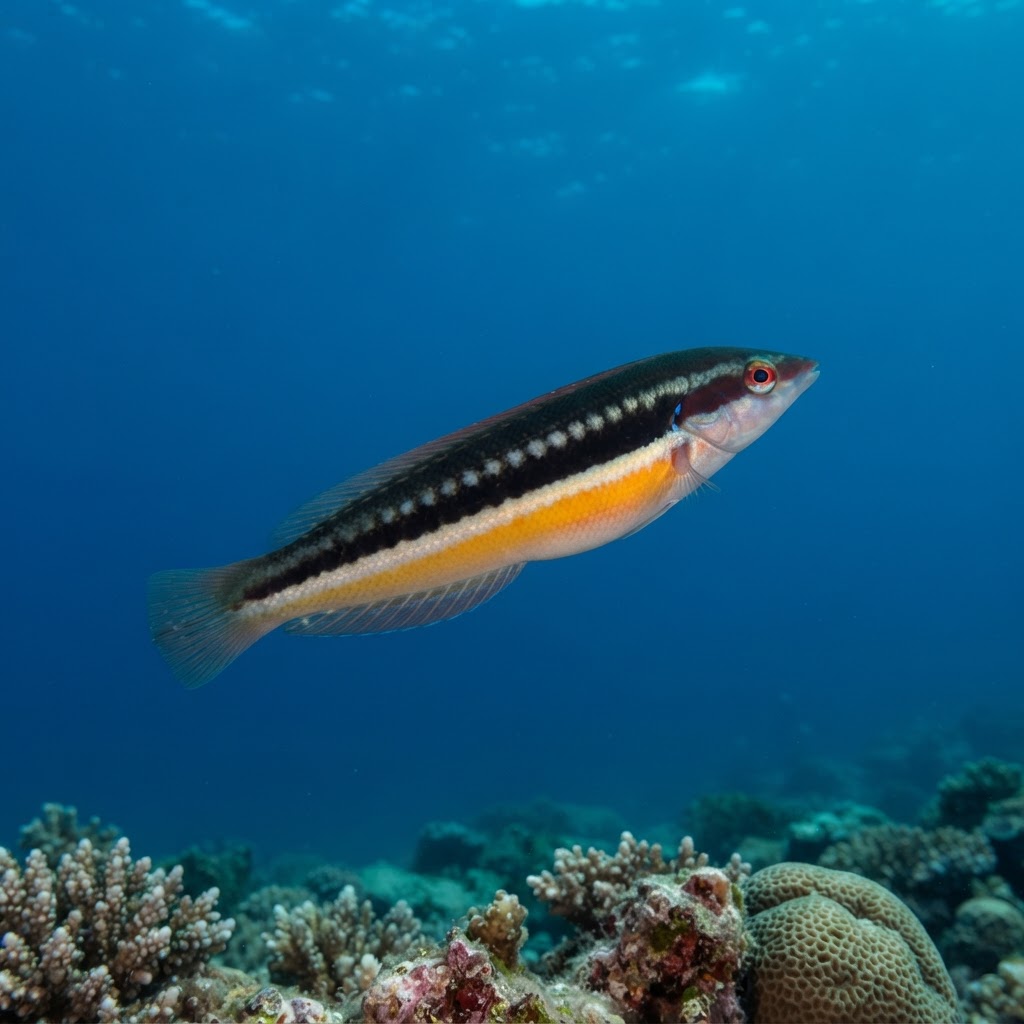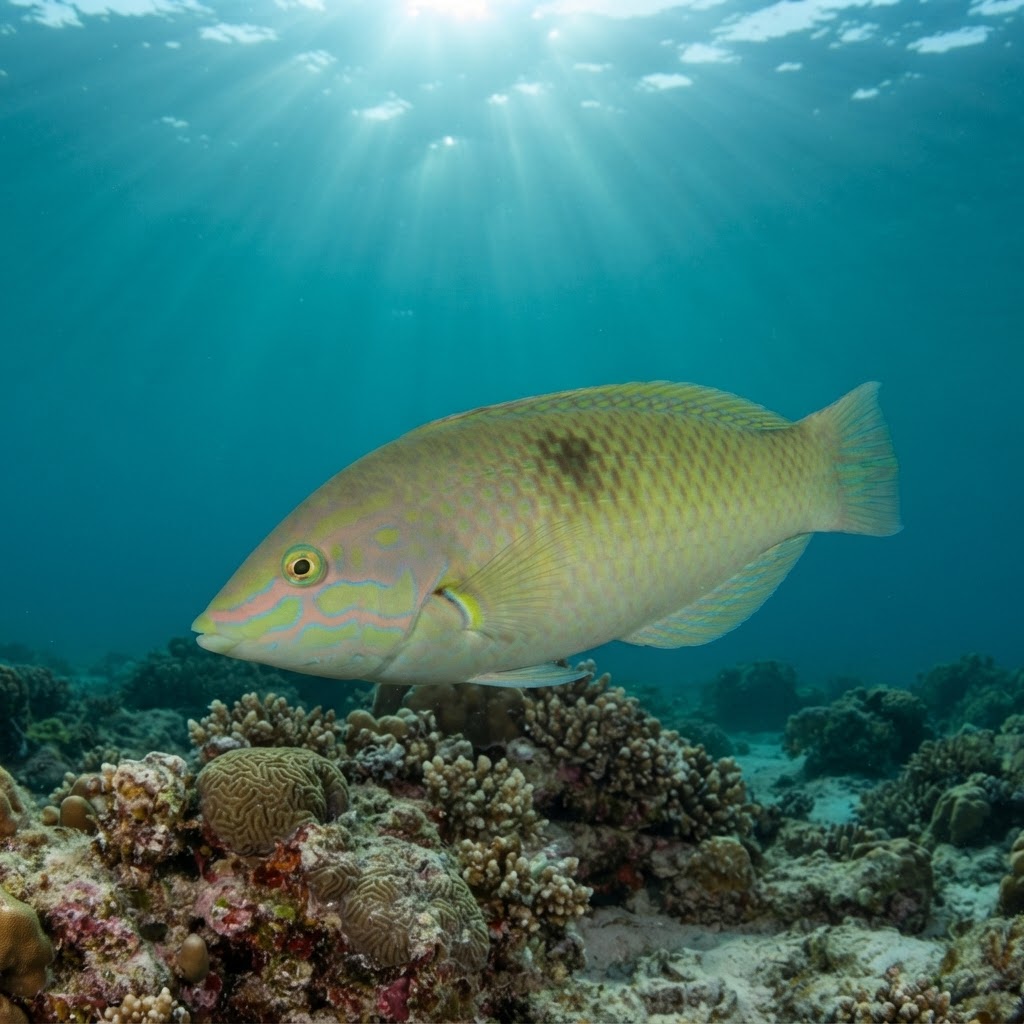
Halichoeres chloropterus
Spot green-spotted wrasse on shallow reefs in Koh Tao, Sabah and Sihanoukville, comfortable year-round in 28-29C water.
A small, slim-bodied wrasse around 13 cm, usually a greenish or olive base colour flecked with darker green spots across the flanks. It swims with the quick, darting pectoral-fin strokes typical of small wrasses, staying low over the reef rather than out in open water. Look for it in shallow water, often mixed in with other small reef fish over rubble or coral patches.
Divers most often log it as an uncommon to common sighting, picking through coral rubble and reef structure in shallow water, usually no deeper than 10 metres. It tends to keep close to cover, weaving between coral heads rather than lingering in the open, and shows the typical unbothered indifference of small reef wrasses to divers who keep their distance.
Like many Halichoeres wrasses, it buries itself in sand at night and when threatened, a defence trick that also means it can vanish from view in an instant if it feels crowded.
No clear seasonal pattern shows in the data, and with a water-temperature niche of 28 to 29.3C it is a year-round resident of these warm tropical reefs. Plan around good diving conditions at your chosen site rather than a specific month for this species.
Reef neighbours a diver could mistake it for. Use the identification notes above to tell them apart.
Most reliably logged across Thailand and Malaysia, with strong numbers in Peninsular Malaysia's East Coast and Sabah, plus Koh Tao in Thailand. It also turns up consistently in Sihanoukville (Cambodia), Koh Lipe (Thailand), Java (Indonesia) and Koror & Malakal in Palau, with a smaller but steady presence in the Philippines' Palawan region and parts of Australia and Papua New Guinea.
Mapping where Green-spotted Wrasse is logged…
Thailand and Malaysia have the strongest logged numbers, especially Koh Tao, Koh Lipe, Sabah and Peninsular Malaysia's East Coast. It is also regularly seen in Cambodia's Sihanoukville, Java in Indonesia, and Palau's Koror & Malakal region.
There is no strong seasonal pattern in sighting data, and it lives in consistently warm water around 28 to 29.3C, so it is present on these reefs throughout the year.
Look for a small, slender wrasse around 13 cm with a greenish body marked by darker green spots, darting close to coral rubble in shallow water. It is usually seen alone or loosely mixed with other small reef fish rather than in tight schools.
They stay small, typically reaching around 13 cm in length, and are found in shallow reef water from the surface down to about 10 metres.
No, they pose no threat to divers. They are small, reef-associated carnivores that keep to themselves and simply dart off if approached too closely.
Like several of its Halichoeres relatives, it can dive straight into sand to hide from predators or settle for the night, disappearing from view almost instantly.
Site and sighting data is aggregated from diver logs, iNaturalist and GBIF. For taxonomy and conservation status:
Bird Wrasses
3,632 sites