Siganus javus
Blotchy, oval-bodied grazer logged at reef sites from Phuket to Peninsular Malaysia, comfortable in 25.5 to 29.1C year-round.
Safety warning
The dorsal, anal and pelvic fin spines carry venom and can deliver a painful sting if the fish is grabbed or accidentally brushed against, particularly if it is cornered or handled. Give it space, avoid touching reef fish generally, and if stung seek first aid for venomous fish stings (hot water immersion and medical attention if pain persists).
If you're stung
Venomous fin spinesGeneral first-aid guidance, not a substitute for professional medical care. In an emergency, call your local emergency number.
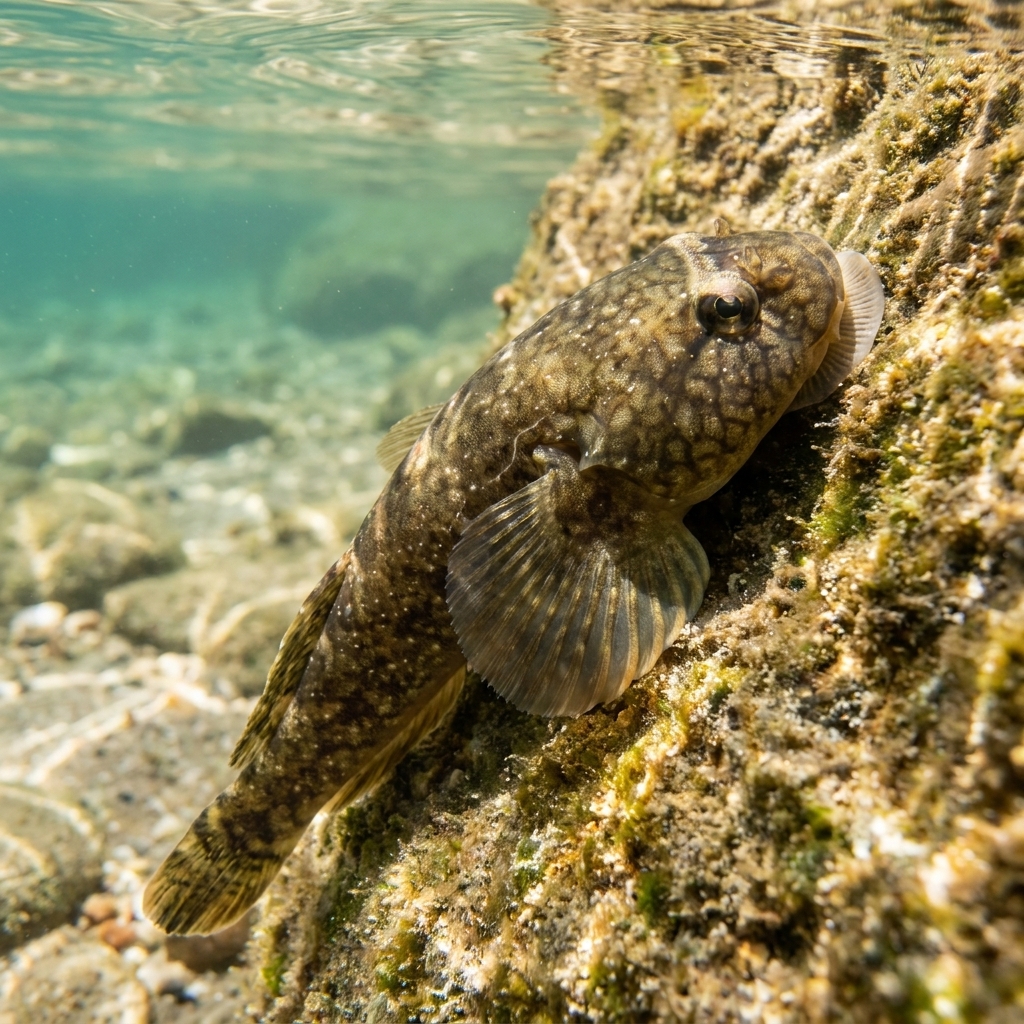
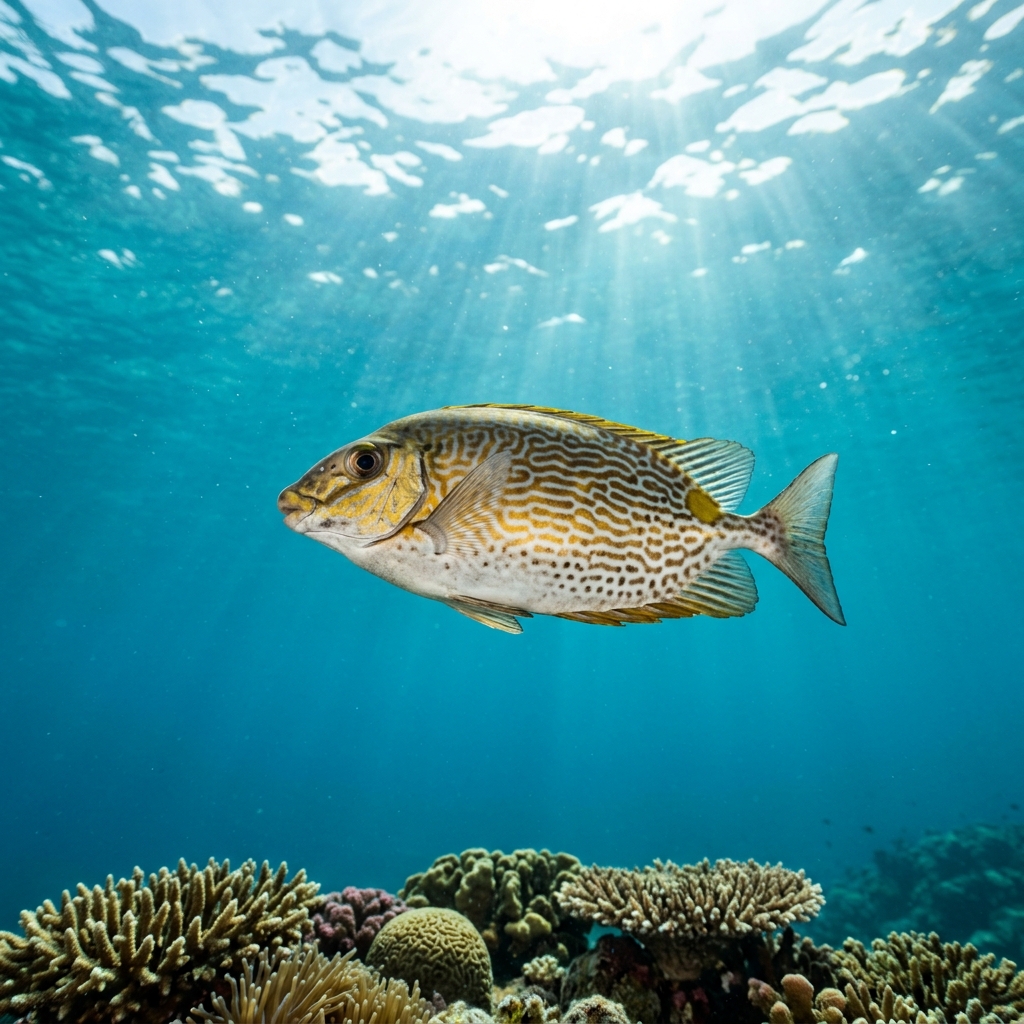
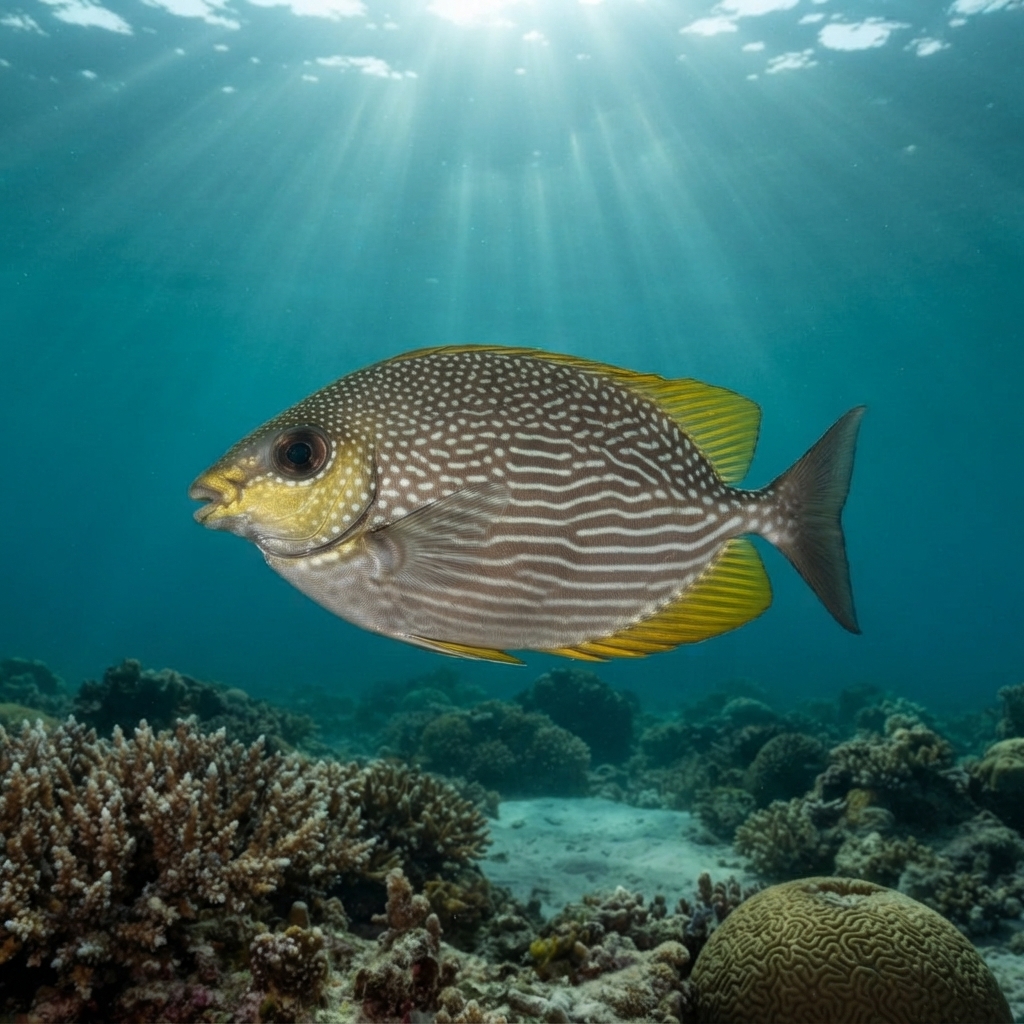
Look for an oval, laterally flattened body covered in irregular dark grey to brown blotches over a pale silvery base, giving it a mottled, almost camouflage-like pattern. It grows to around 37 cm, with a small terminal mouth built for grazing and a pointed snout typical of rabbitfishes. The dorsal and anal fins carry venomous spines that fold flat against the body when not threatened, a useful ID cue if you look closely without touching.
Divers typically find these grazing quietly over reef flats, seagrass edges and rubble patches, nosing along the substrate for algae rather than schooling in open water. They tend to be unhurried and will often let you approach for a photo before drifting off into cover, though they are not fish that seek out divers. Most sightings are single fish or loose pairs picked out against the reef rather than large groups.
Like other rabbitfishes, it can flash a mottled camouflage pattern that shifts intensity depending on mood and surroundings, making it easy to overlook until it moves.
No clear seasonal pattern shows up in the sightings, and with a comfortable range of roughly 25.5 to 29.1C, reefs across its range stay within that window all year, so it is a year-round possibility rather than a seasonal target.
Most reliably logged in Thailand, especially around Phuket, Koh Tao, Khao Lak, Koh Phi Phi and Koh Chang, where sightings are frequent but usually uncommon rather than guaranteed. Peninsular Malaysia's east coast is another strong area, with further records from Cambodia (notably Sihanoukville), Sri Lanka, the Philippines, Indonesia, India and Australia.
Mapping where Java Rabbitfish is logged…
Thailand is the strongest bet, particularly Phuket, Koh Tao, Khao Lak, Koh Phi Phi and Koh Chang, with Peninsular Malaysia's east coast also producing frequent sightings. It also turns up in Cambodia, Sri Lanka, the Philippines, Indonesia, India and Australia.
There is no strong seasonal signal in sightings, and water temperatures across its range stay within its comfortable 25.5 to 29.1C band year-round, so it can turn up on any dive at the right sites.
They carry venomous spines in the dorsal and anal fins that can cause a painful sting if handled or brushed against. They are not aggressive and pose no risk if you simply observe without touching.
Look for a flattened, oval body with irregular dark blotches over silvery skin, a small pointed mouth and fin spines that fold flat along the back and belly. They grow to about 37 cm and are usually seen alone or in pairs grazing low over the reef.
They typically reach around 37 cm in length, making them a mid-sized reef fish rather than a giant, but their blotchy pattern makes them easy to pick out once you know what to look for.
Their mottled camouflage pattern can intensify or fade depending on mood and surroundings, helping them blend into rubble and reef flats while they graze on algae.
Site and sighting data is aggregated from diver logs, iNaturalist and GBIF. For taxonomy and conservation status:
Soldierfish
3,612 sites