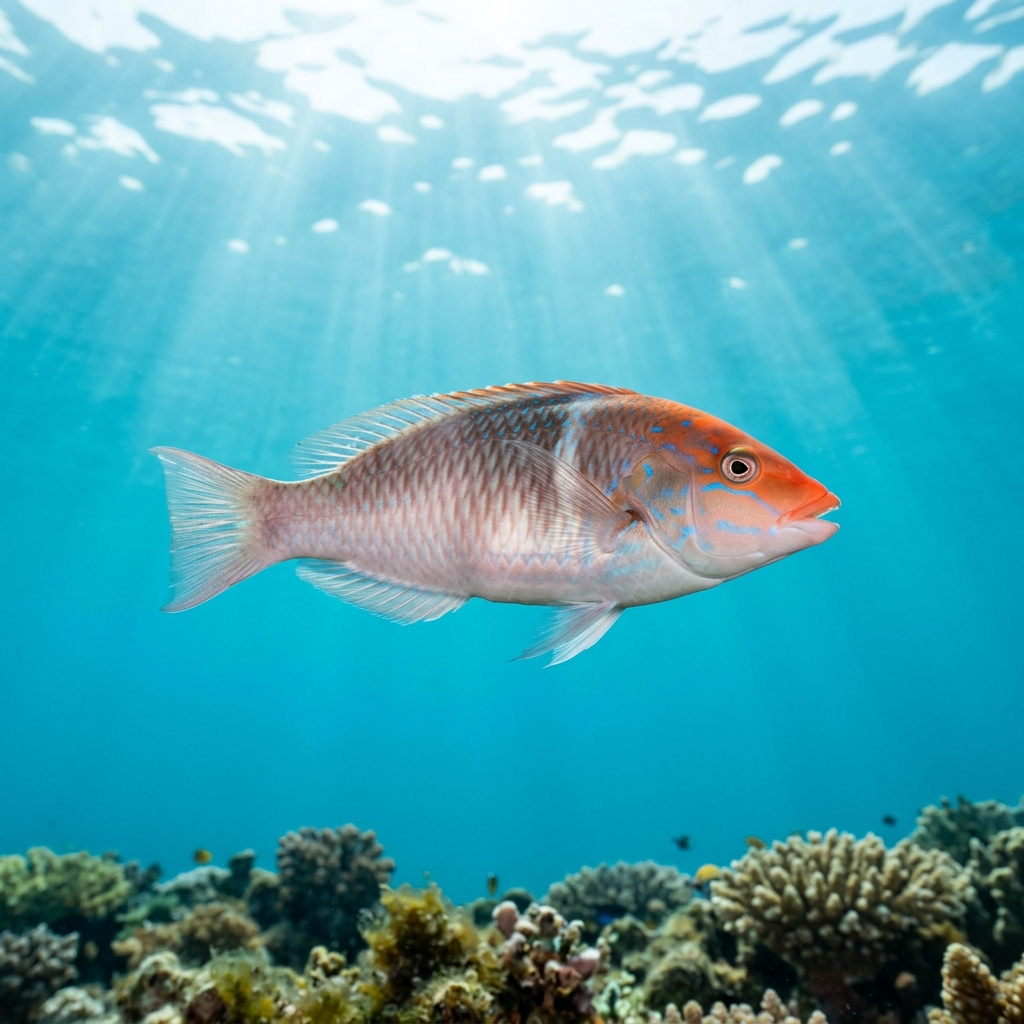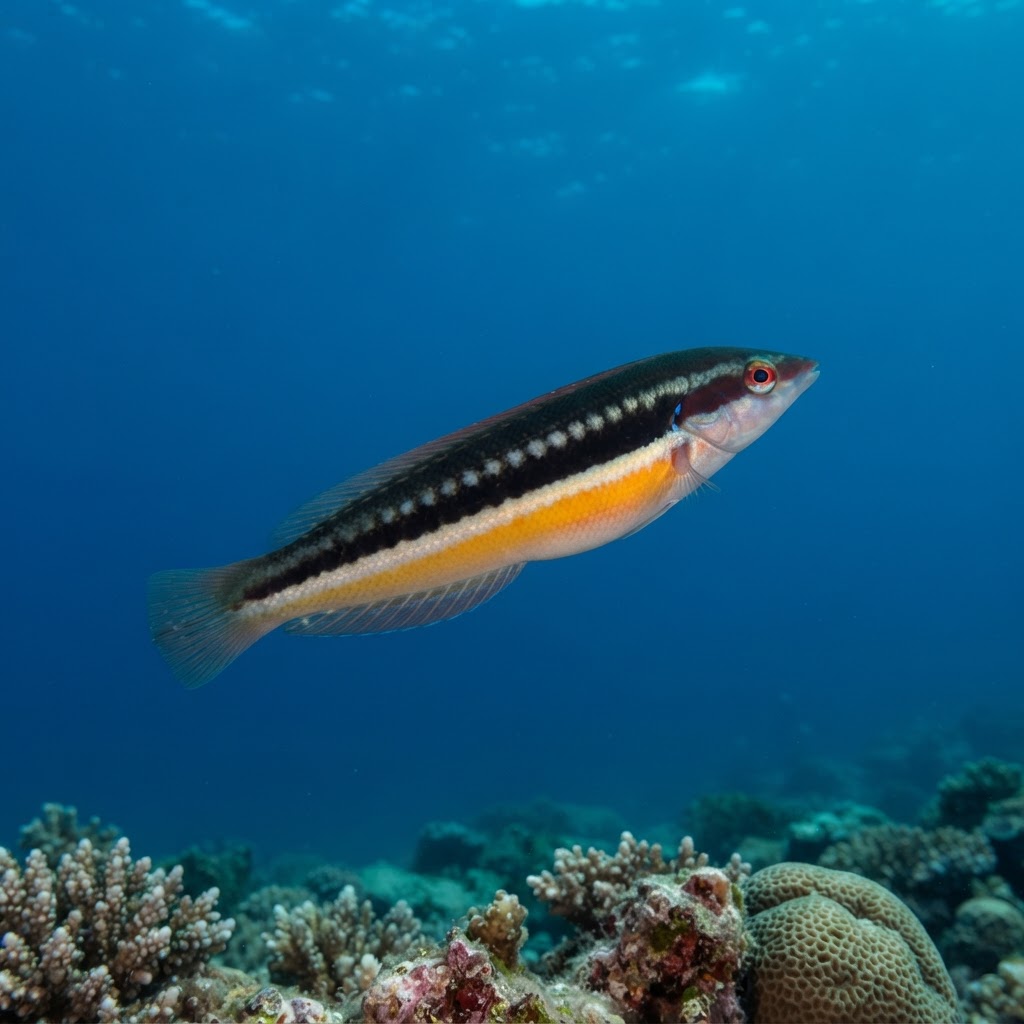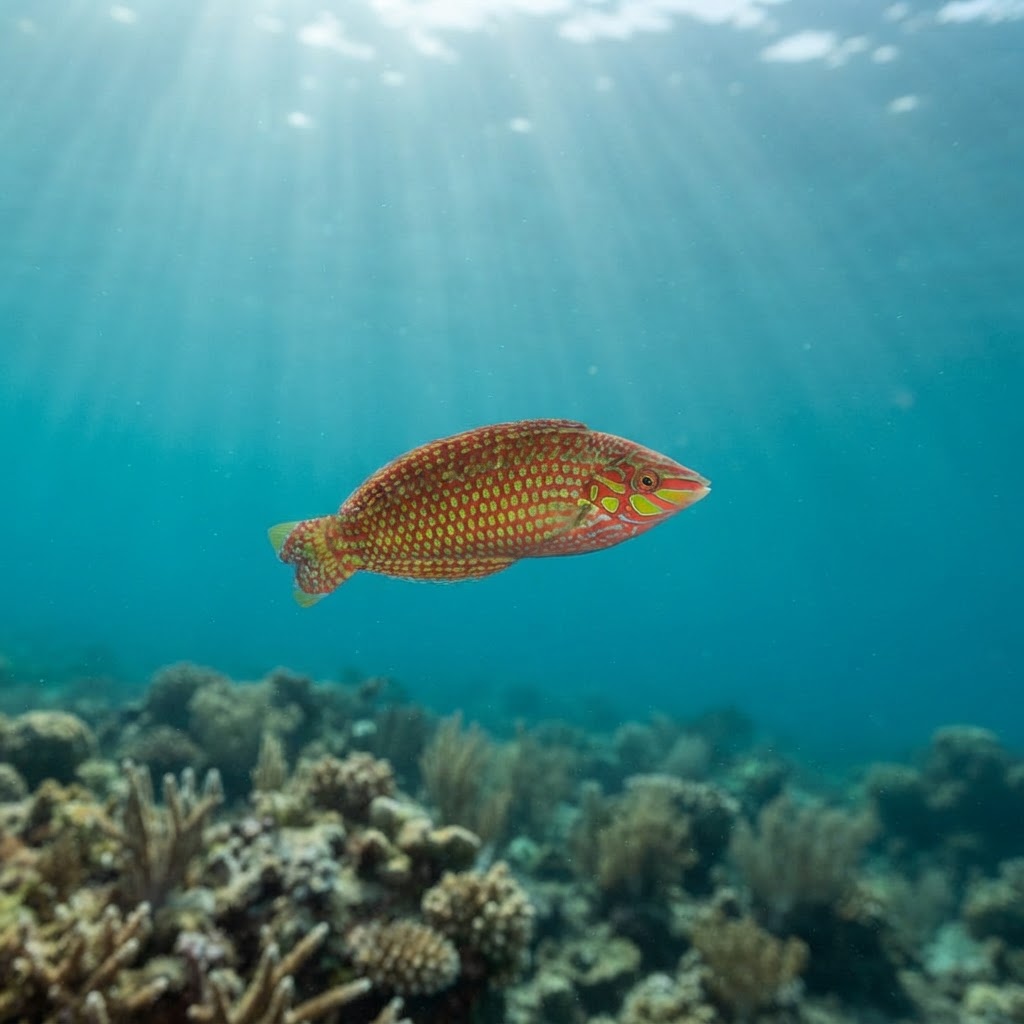
Halichoeres argus
A small speckled wrasse turning up on reefs from Koh Lipe to Sabah, usually one or two per dive year-round in 25 to 29C water.
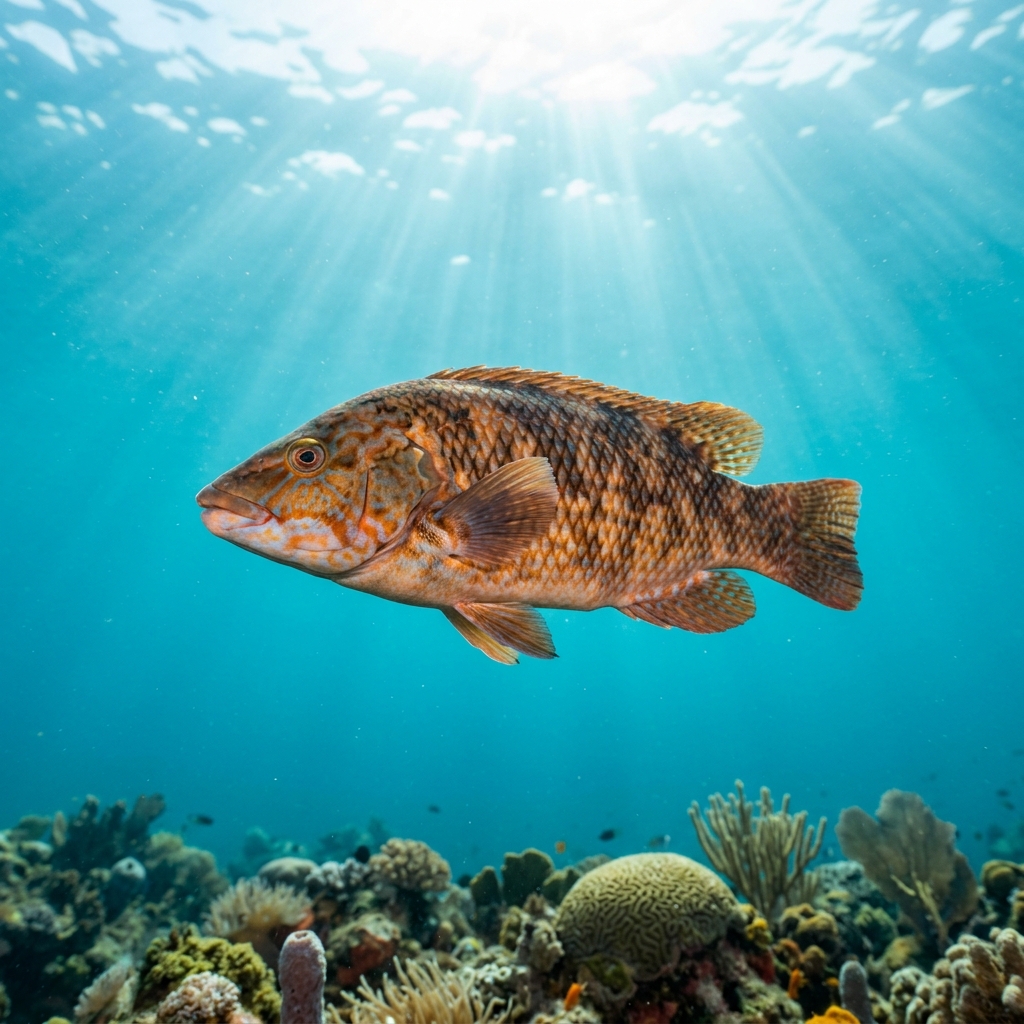
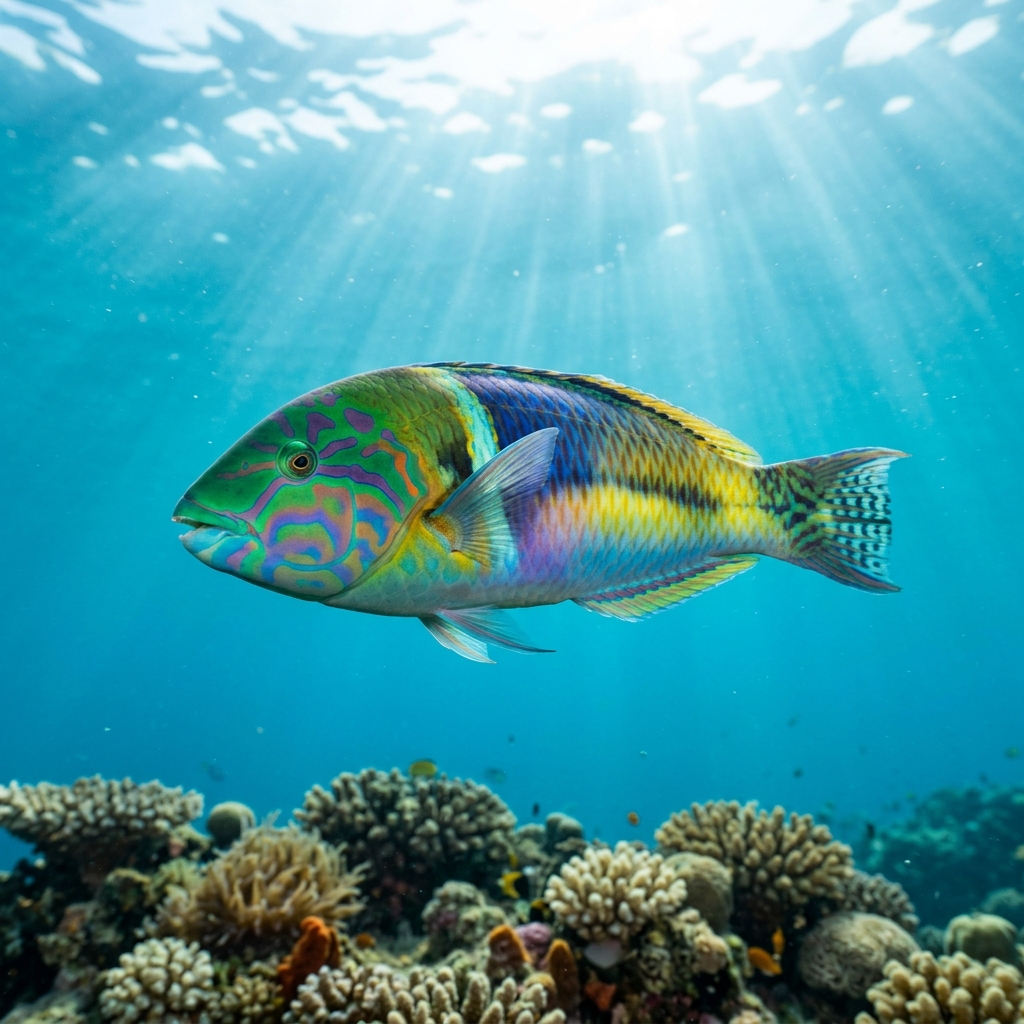
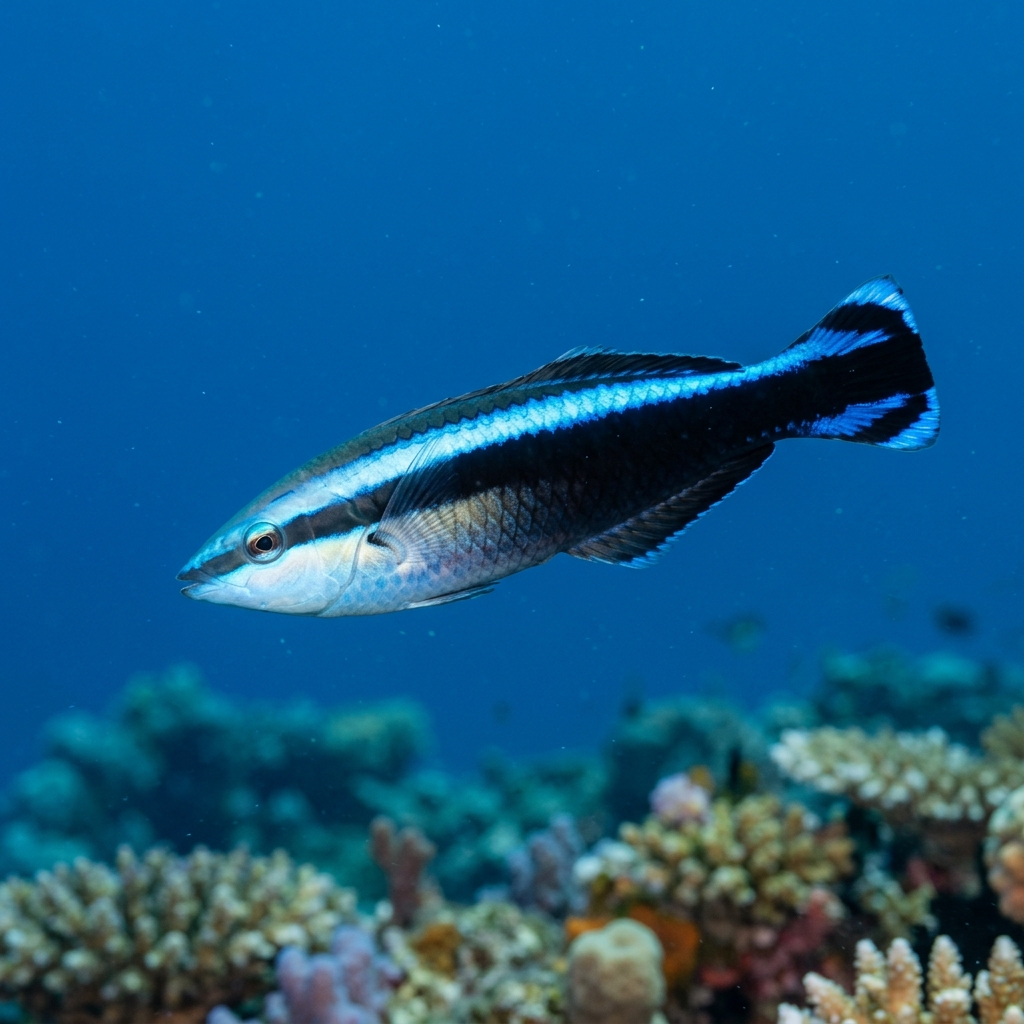
A small, slender wrasse that tops out around 8 cm, so it is easy to miss against the reef unless you slow down and scan the rubble edges. Look for a pale body covered in fine dark speckling and a distinctive dark, eye-like spot (ocellus) toward the rear of the dorsal fin, which is the mark most divers key on. Colouration is subtle rather than bold, closer to sand and coral debris than to the flashy stripes of larger wrasses.
Expect to see it picking through sand, rubble and low reef structure in shallow water, generally within the top 15 metres where light and small invertebrate prey are plentiest. It tends to keep a low profile, darting between bits of coral rather than cruising in the open, and most divers log just one or two individuals per dive rather than groups. Unlike bolder reef wrasses it rarely approaches divers, so a careful, slow pass over rubble patches is the best way to actually notice it.
Like many wrasses in the Halichoeres genus, this species is thought to bury itself in sand at night or when startled, a defensive habit that also helps explain why it is logged as uncommon rather than common at most sites despite being widespread.
Sightings are spread across the year with no clear seasonal spike in the data, which fits its comfort range of roughly 25 to 29 C, a band that holds steady on these tropical reefs year-round. Plan around calm conditions and good visibility for spotting it rather than around a particular month.
Most reliably logged in Malaysia, especially along Peninsular Malaysia's east coast and around Sabah, with strong numbers also coming out of Thailand's Koh Lipe and Krabi. It is a regular find on reefs in Cambodia around Sihanoukville, in Java, Indonesia, and across the Visayas in the Philippines, with smaller but confirmed populations in India's Andaman Islands, Fiji, and Timor-Leste.
Mapping where Argus Wrasse is logged…
It shows up most consistently in Malaysia, particularly Sabah and Peninsular Malaysia's east coast, and in Thailand around Koh Lipe and Krabi. It is also a regular sighting in Cambodia's Sihanoukville, Java in Indonesia, and the Visayas in the Philippines.
There is no strong seasonal pattern in sightings, so it is effectively a year-round find on the reefs where it lives. Its preferred water temperature of roughly 25 to 29 C stays fairly constant across the year in these tropical regions.
Look for a small, slim wrasse around 8 cm long with fine dark speckling over a pale body and a dark eye-like spot near the back of the dorsal fin. It stays low over sand and rubble rather than swimming in open water, which helps separate it from bolder, more colourful reef wrasses.
They are small, typically reaching about 8 cm in length, making them one of the more easily overlooked wrasses on the reef.
No, they pose no threat to divers. They are shy, small-bodied fish that keep their distance rather than approach or defend territory aggressively.
Like several relatives in its genus, it is thought to dive into loose sand to hide when threatened or at night, a trick that makes it harder to spot even where it is present in decent numbers.
Site and sighting data is aggregated from diver logs, iNaturalist and GBIF. For taxonomy and conservation status:
Bird Wrasses
3,632 sites