Hemigymnus melapterus
A grey-and-white reef wrasse with a bold black mark behind the eye, logged year-round from Malaysia's east coast to the Maldives at 24-29C.
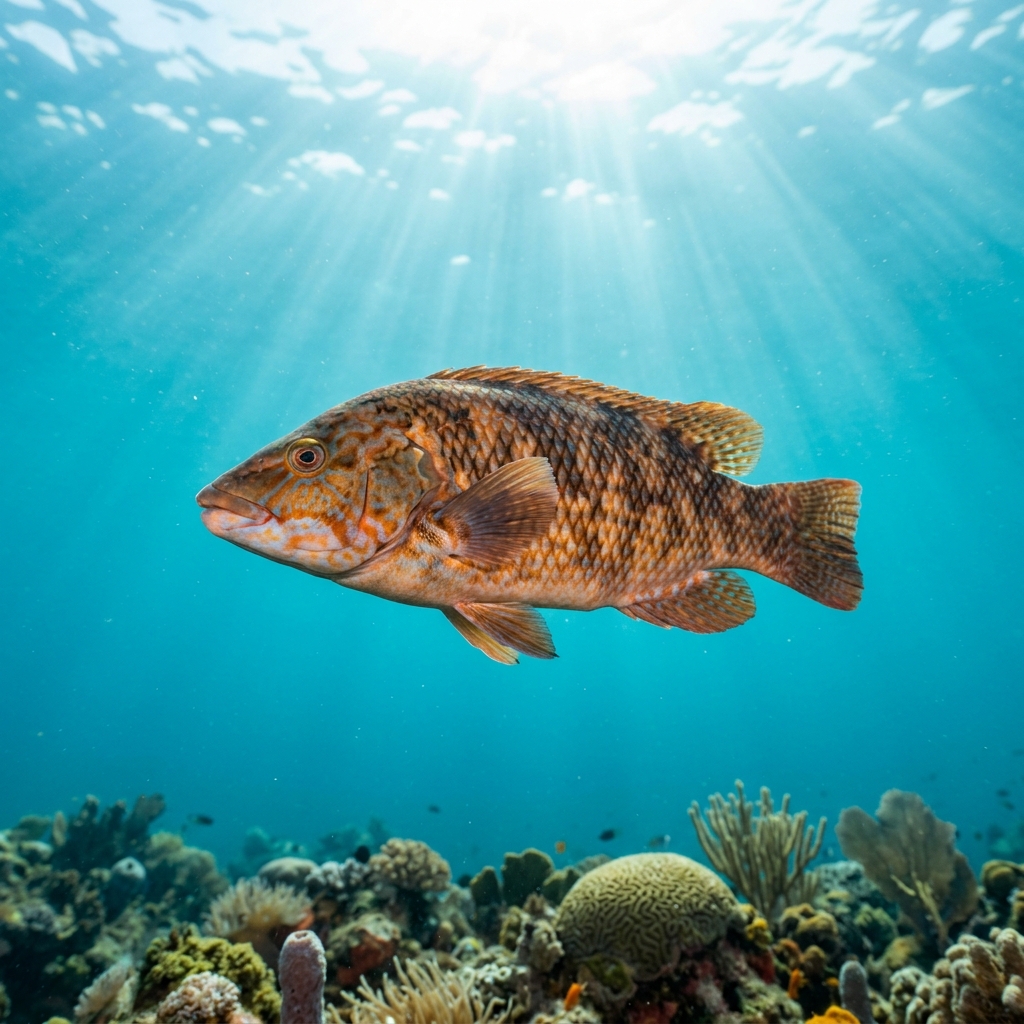
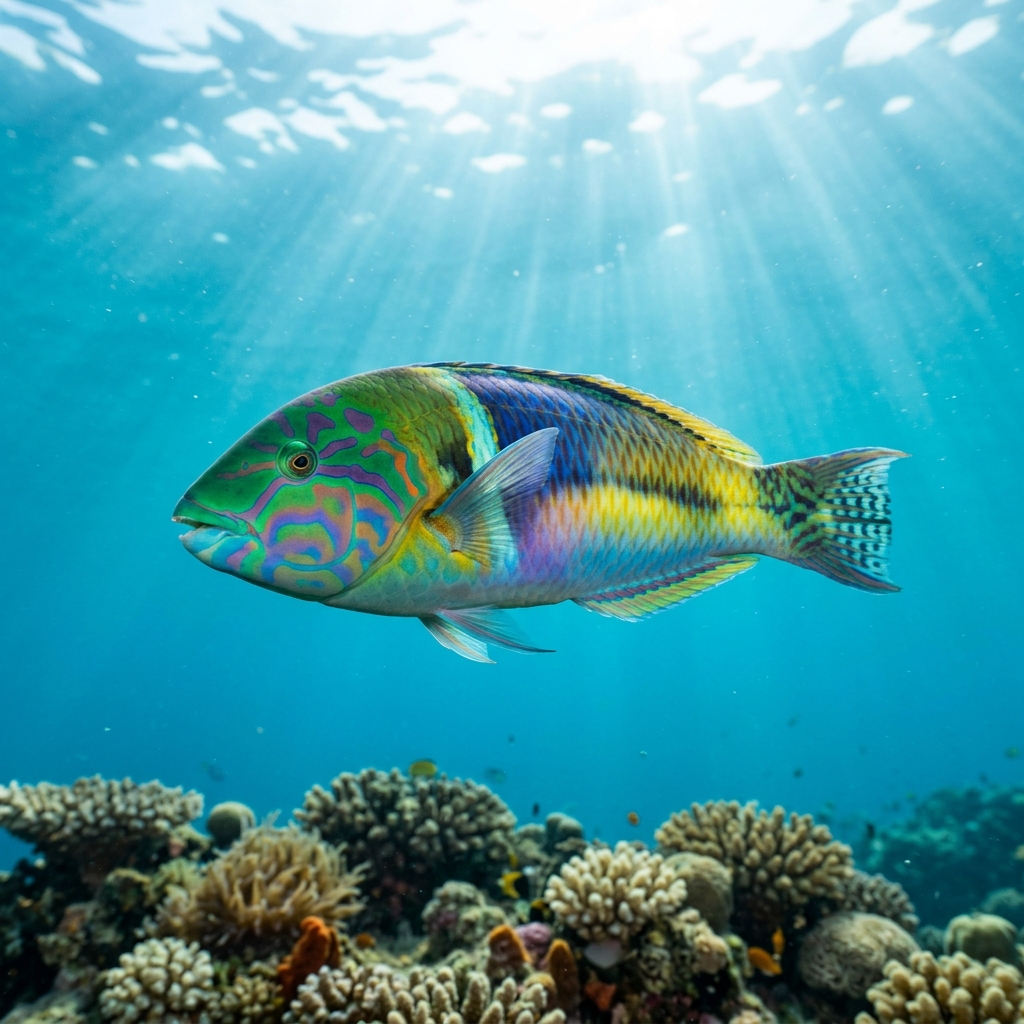
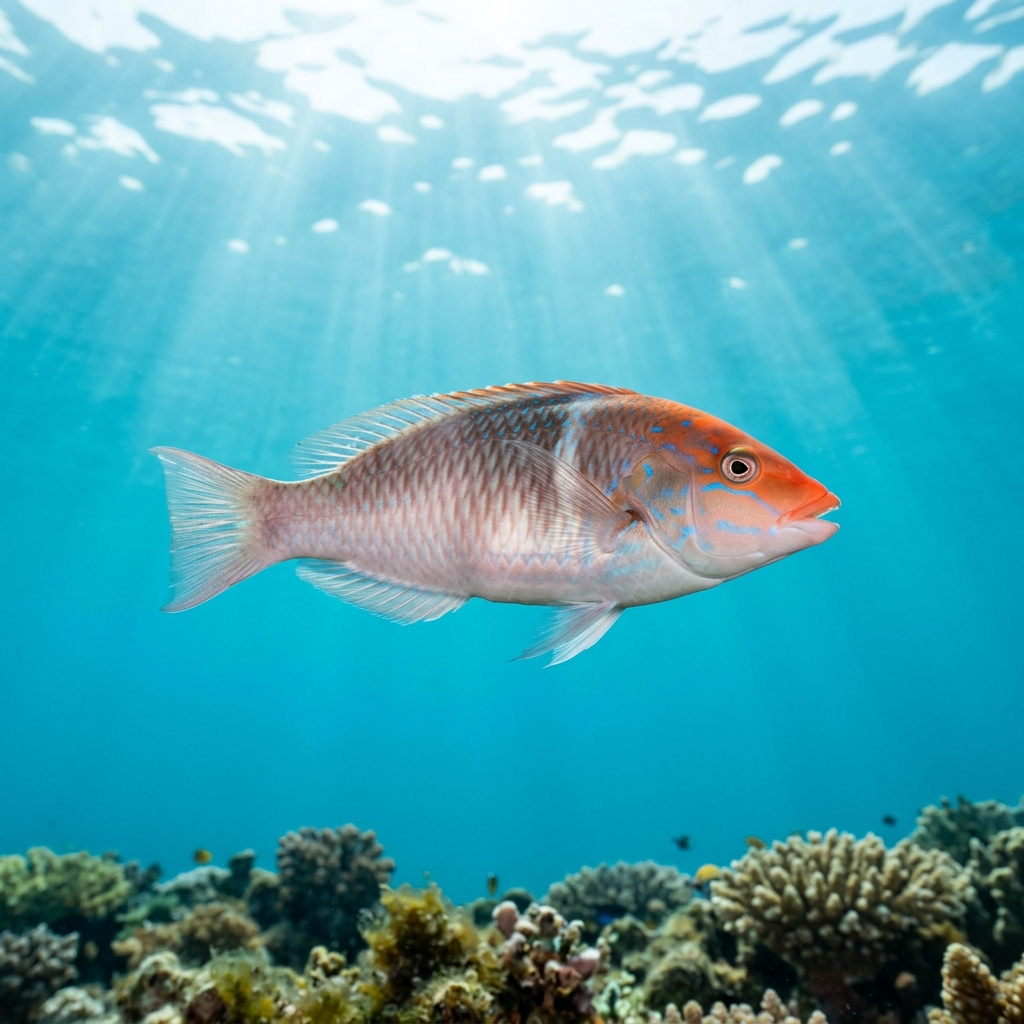
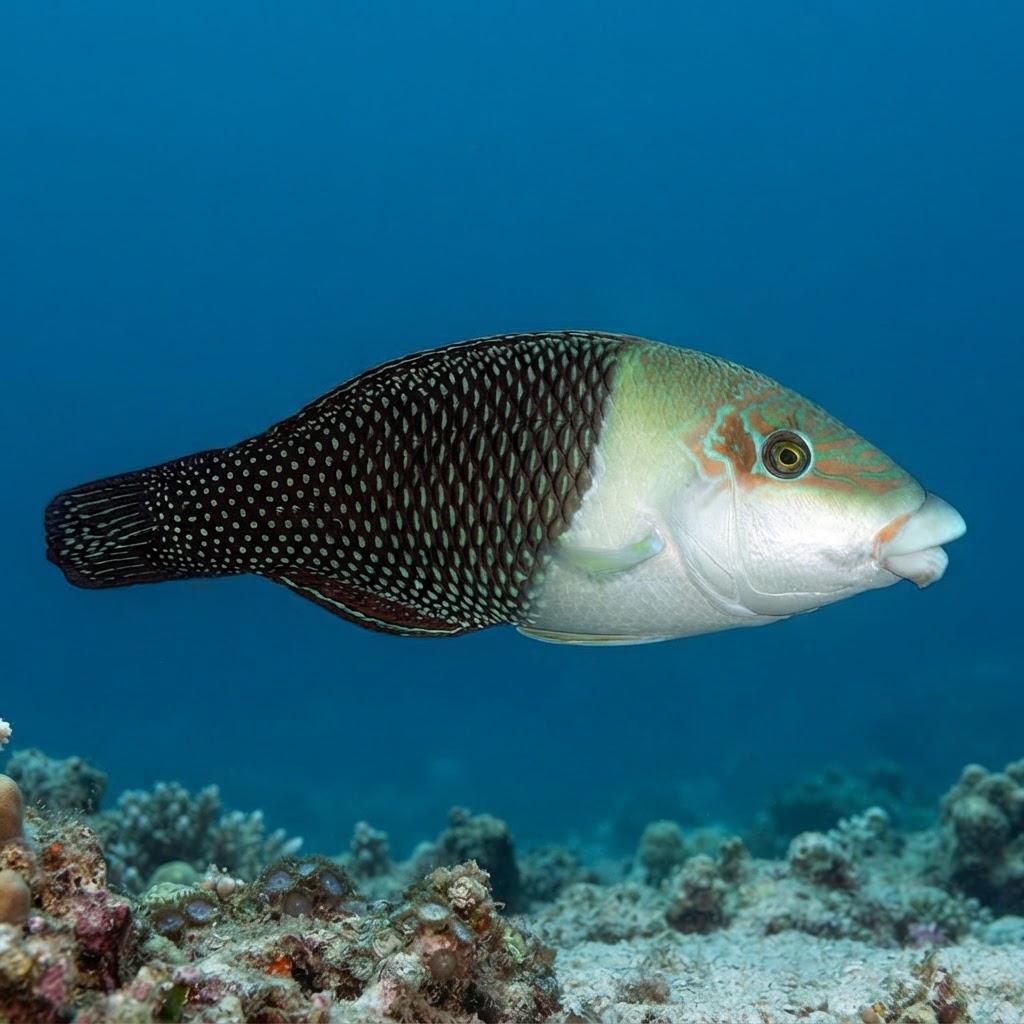
Grows to around 27 cm, with a chunky, elongated body that's pale grey to white toward the tail and darker, almost blackish, toward the head. The giveaway is the bold black patch sitting just behind and below the eye, which is where the name comes from. It has the thick, fleshy lips typical of the genus, and swims with slow, deliberate beats close to the reef rather than darting about.
Look for it working the reef slope or sandy patches nearby, nosing around rubble and coral heads as it hunts for small invertebrates. It's generally unfussed by divers, holding its ground or moving off at an unhurried pace rather than bolting, which makes it an easy fish to get a good look at once you spot that dark eye patch. Most sightings are logged as uncommon rather than a guaranteed find, so it rewards divers who take time to scan the lower reef rather than the open water.
Like many wrasses it can shift sex over its lifetime, with individuals starting out one way and later transitioning as they grow, a trait shared across the Hemigymnus genus.
No clear seasonal pattern shows up in the data, and with a comfortable range of 24.6 to 29 C it's present on tropical reefs year-round, so any month you're diving these regions is a fair bet.
Most consistently logged in Malaysia, particularly along Peninsular Malaysia's east coast and in Sabah, and turns up reliably through Indonesia, Thailand's Koh Tao, and the Philippine Visayas. It also has strong populations in Queensland, Australia, the Maldives' Central Atolls, the Egyptian Red Sea, Japan's Okinawa and Ryukyu Islands, and the Seychelles' Inner Islands.
Mapping where Blackeye Thicklip is logged…
It's a reliable find across Malaysia, especially Peninsular Malaysia's east coast and Sabah, and shows up widely in Indonesia, Thailand, the Philippines, Queensland in Australia, the Maldives, and the Egyptian Red Sea.
There's no strong seasonal signal in the data, and its comfort range of roughly 24.6 to 29 C means it's on the reef year-round, so timing your trip around the fish specifically isn't necessary.
Check for a grey-to-white body that darkens toward the head, thick lips, and a distinct black blotch just behind the eye. It moves slowly and stays close to the reef floor rather than swimming in open water.
They typically reach around 27 cm in length, a mid-sized wrasse that's easy to overlook against reef structure until you notice the eye patch.
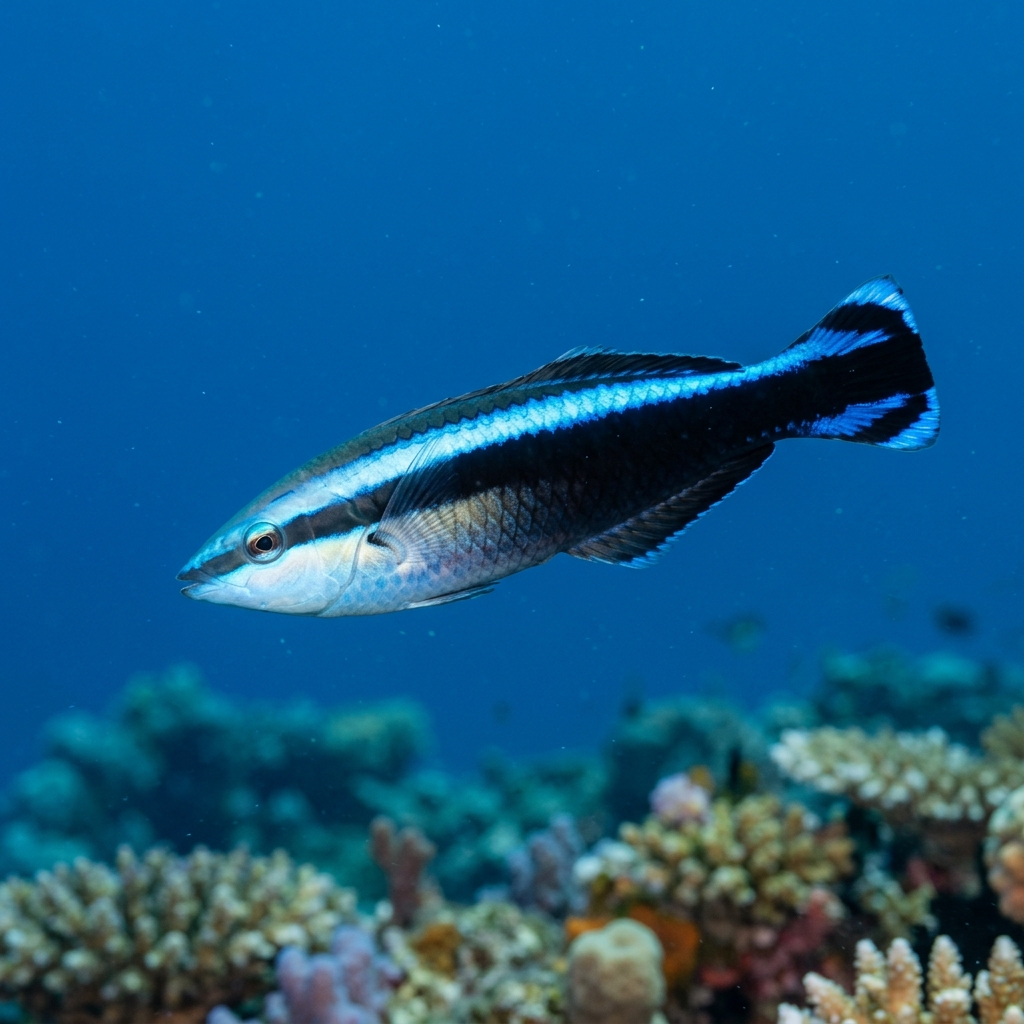
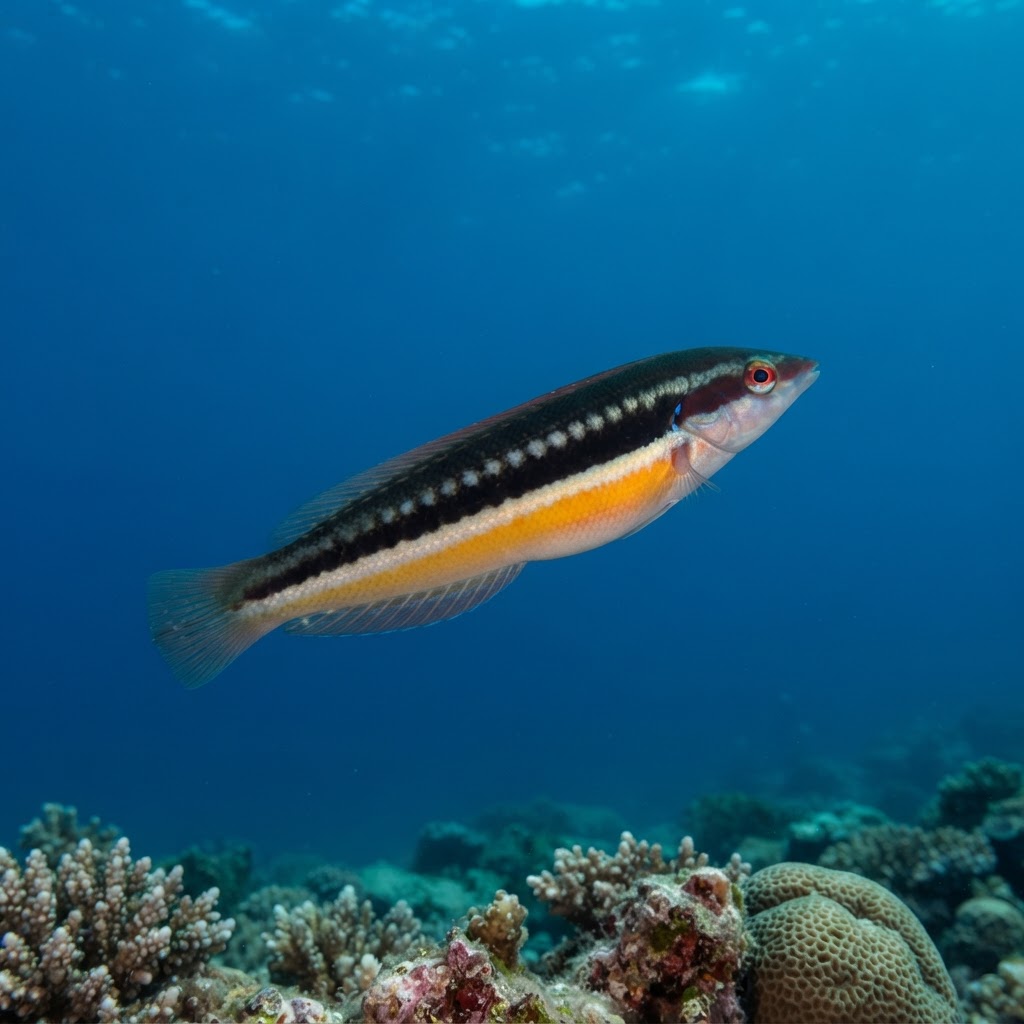
Yes. Juveniles are white with two bold black stripes running the length of the body, quite different from the greyer, blotched look of adults.
No, they pose no threat to divers and are generally calm around people, often letting you get close for a good look.
Site and sighting data is aggregated from diver logs, iNaturalist and GBIF. For taxonomy and conservation status:
Bird Wrasses
3,632 sites