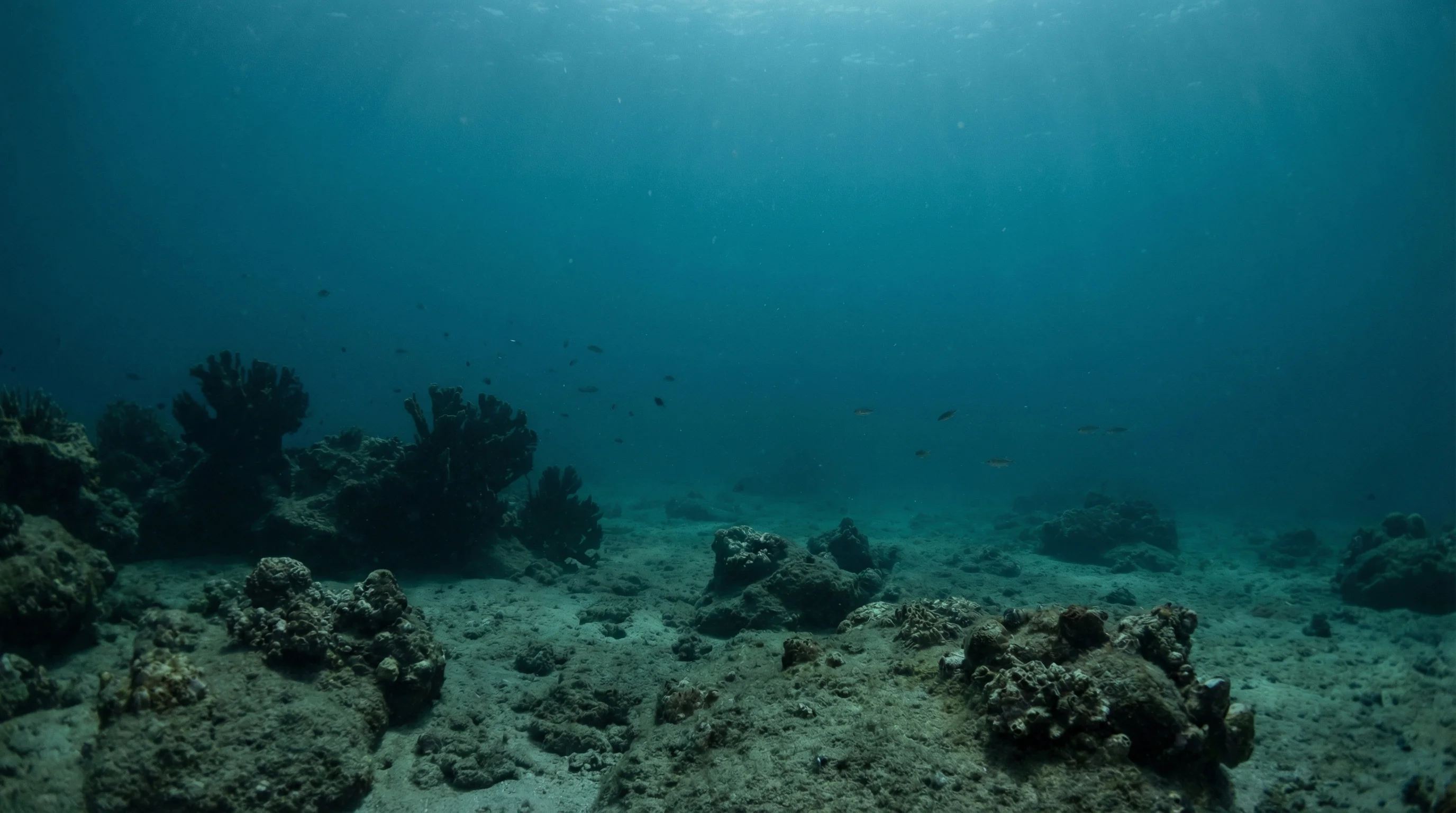
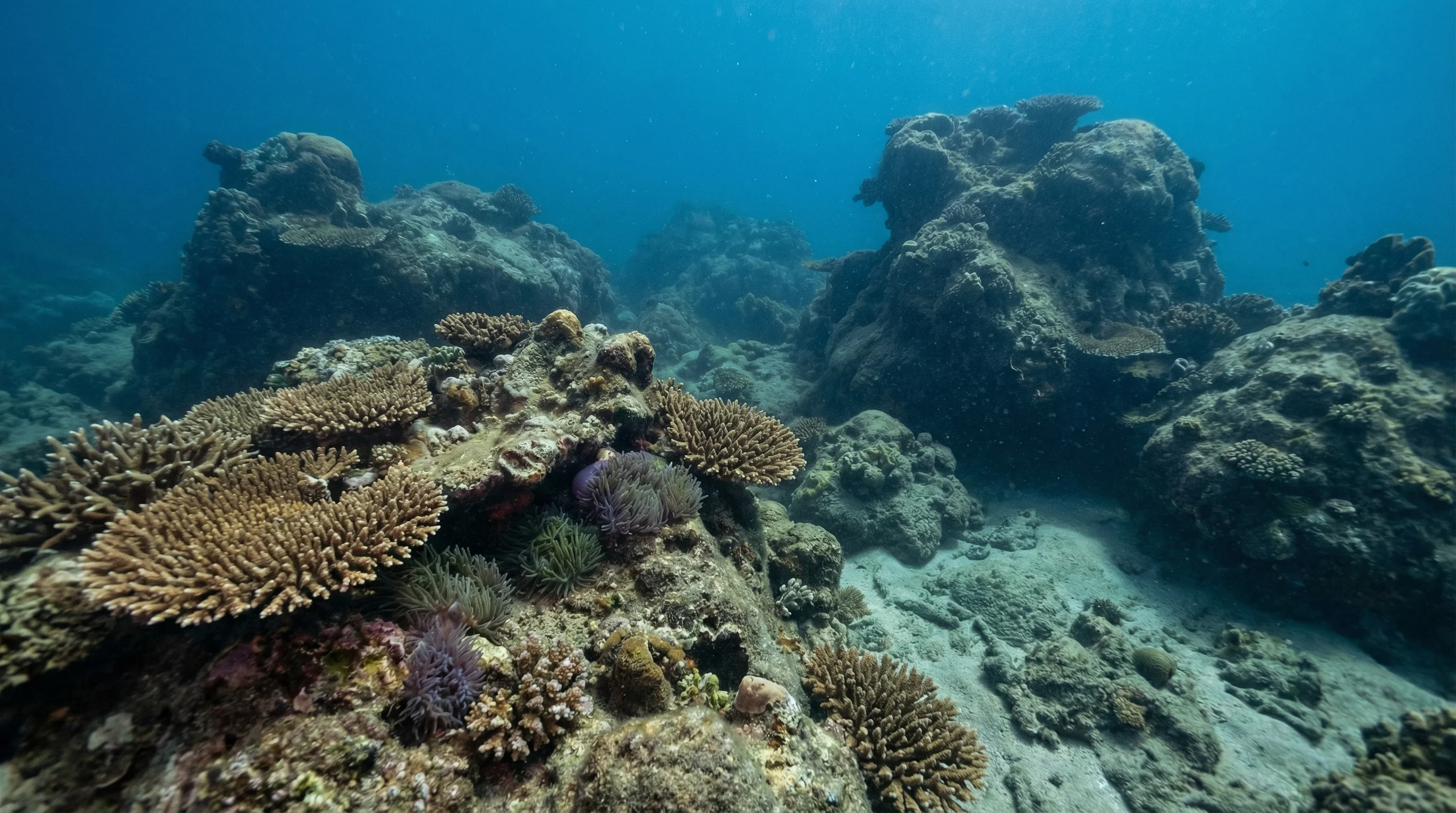
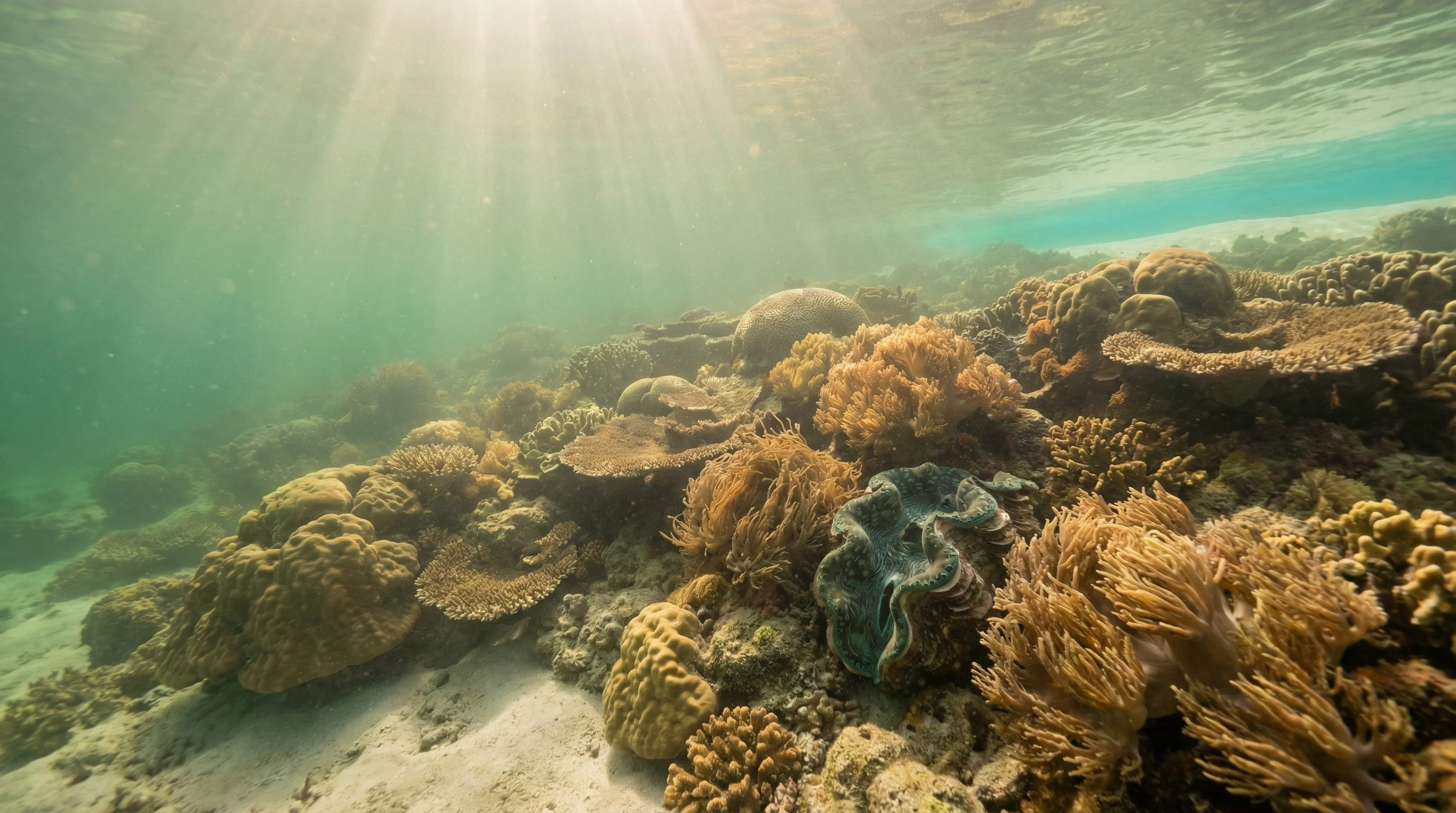
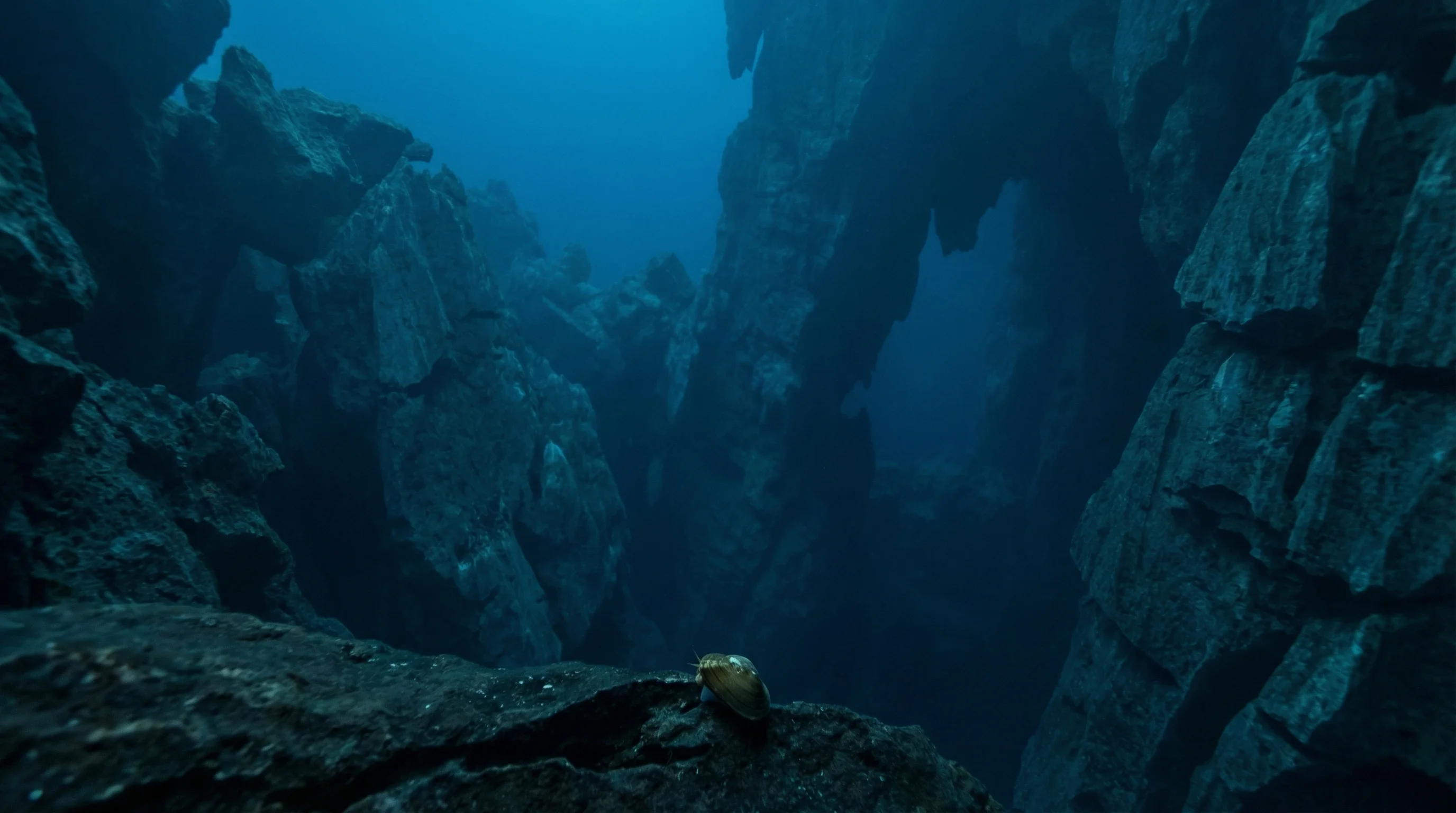
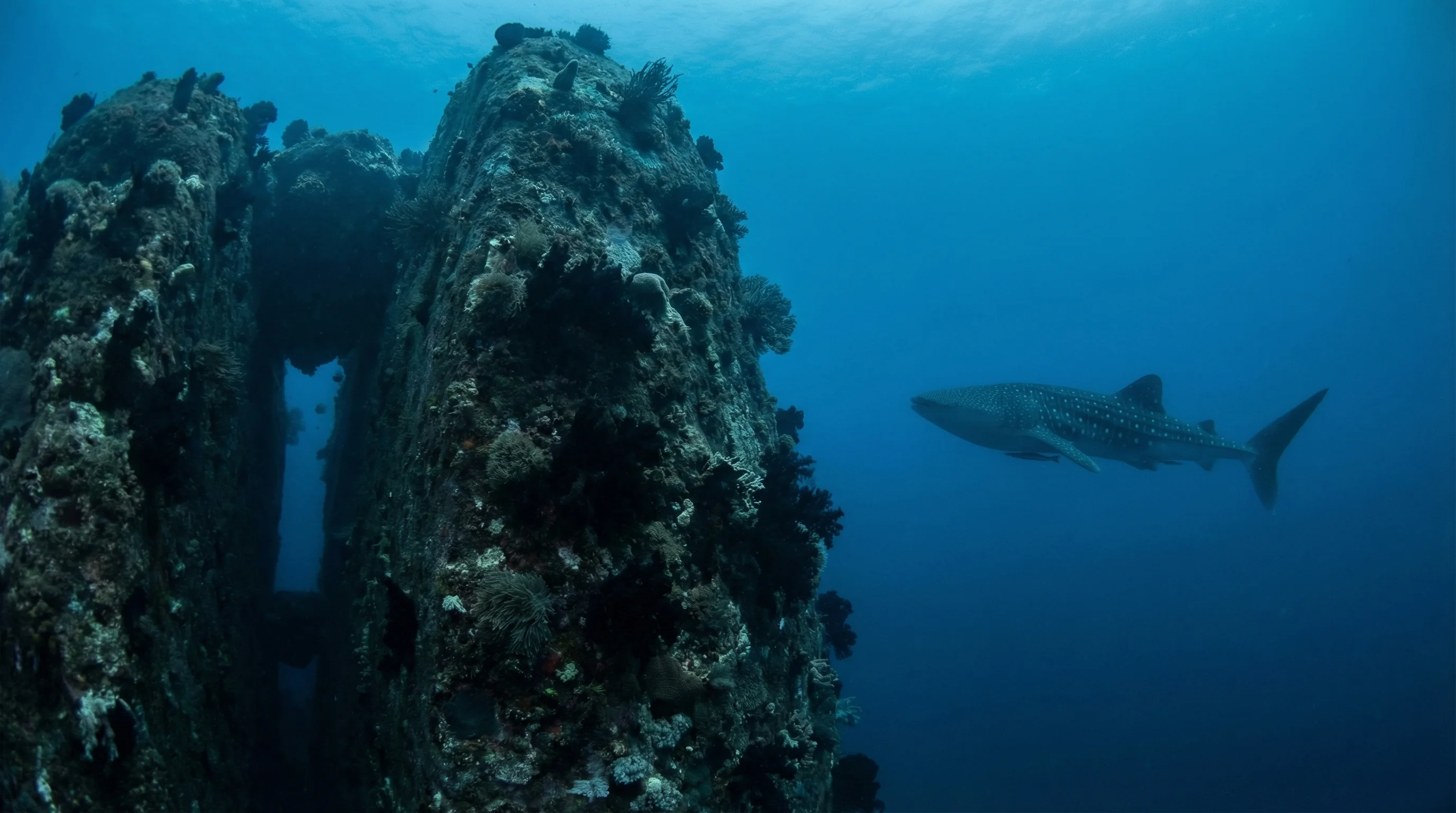
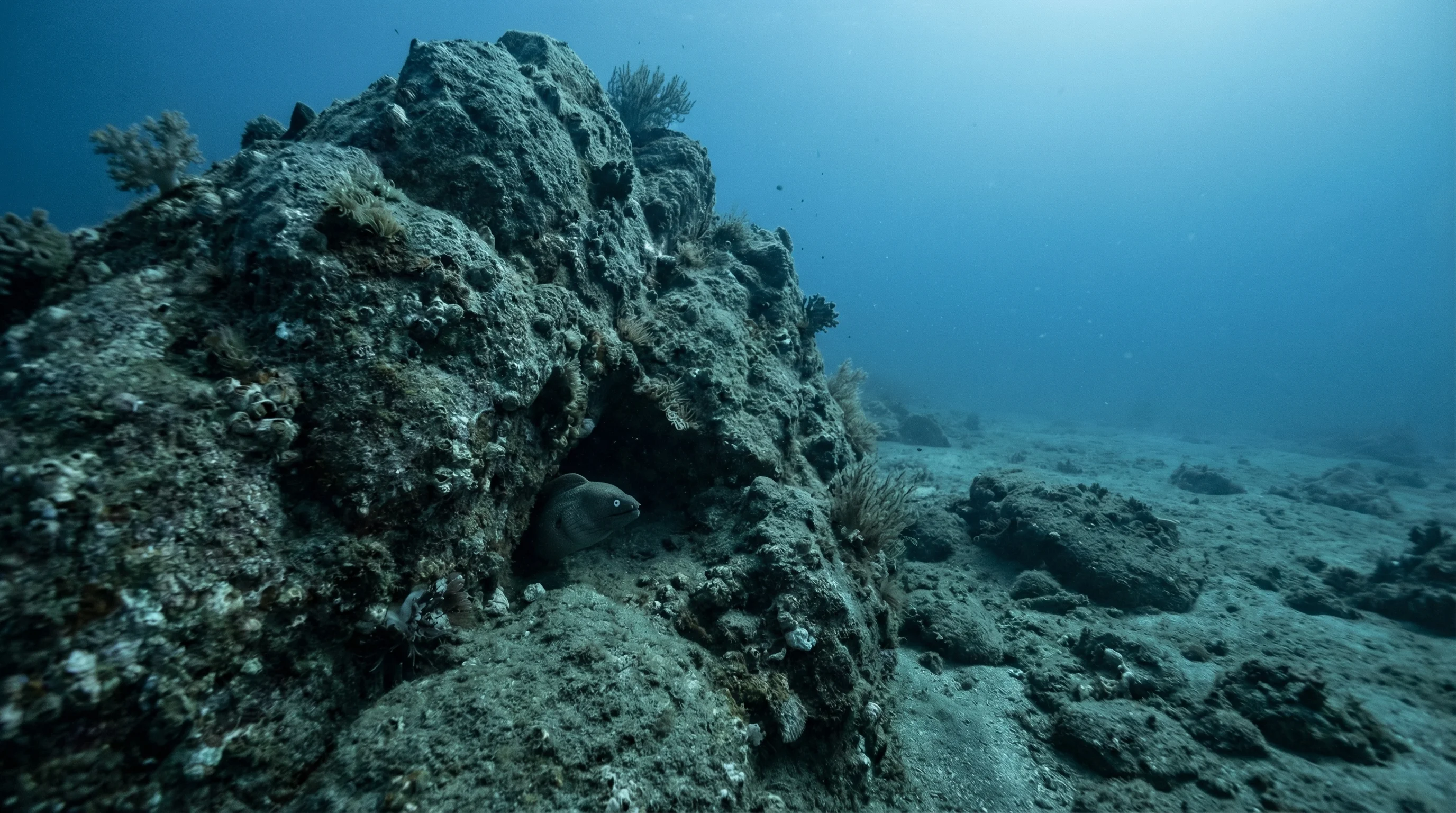
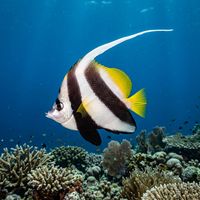
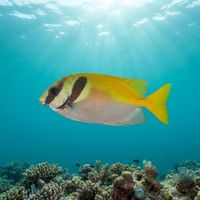
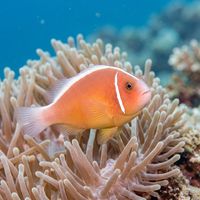
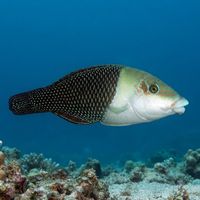
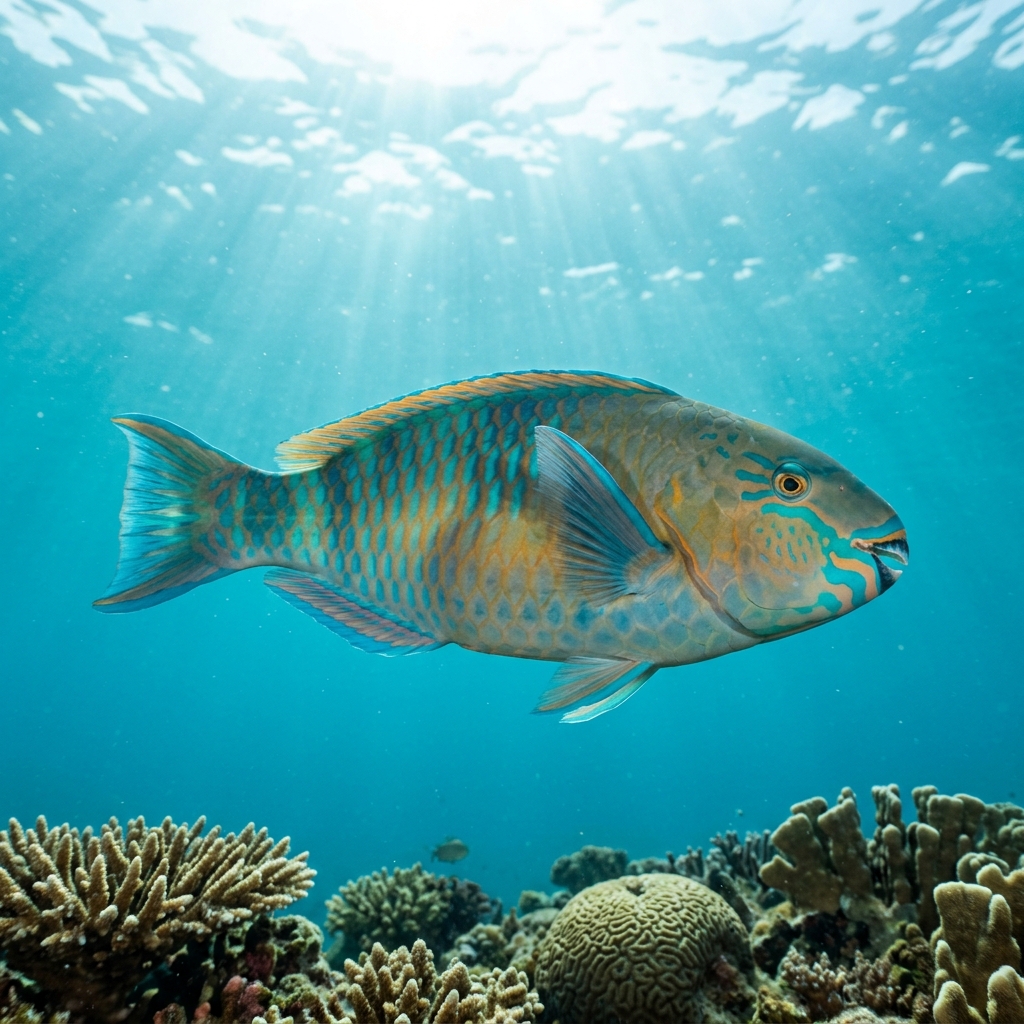
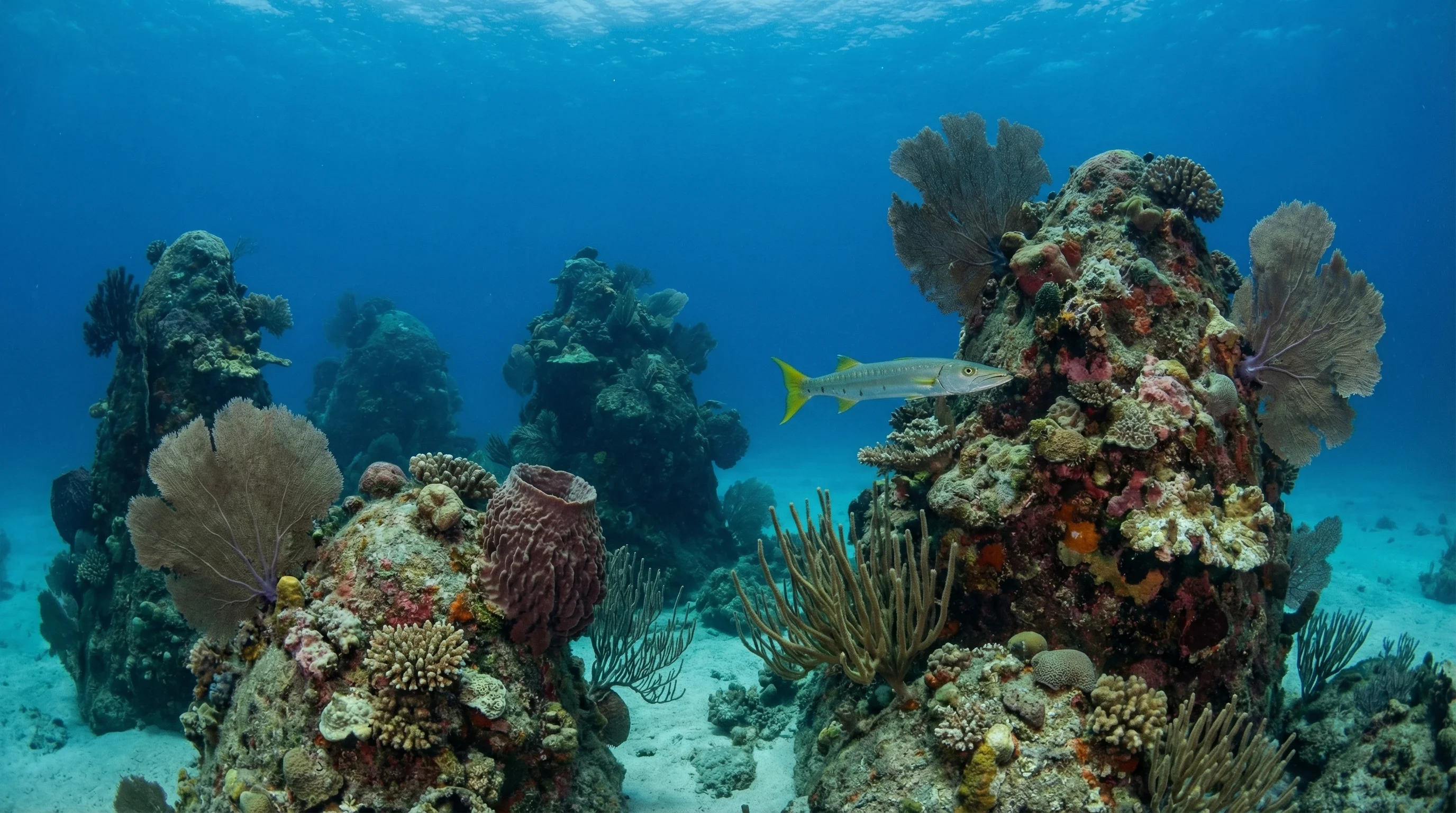
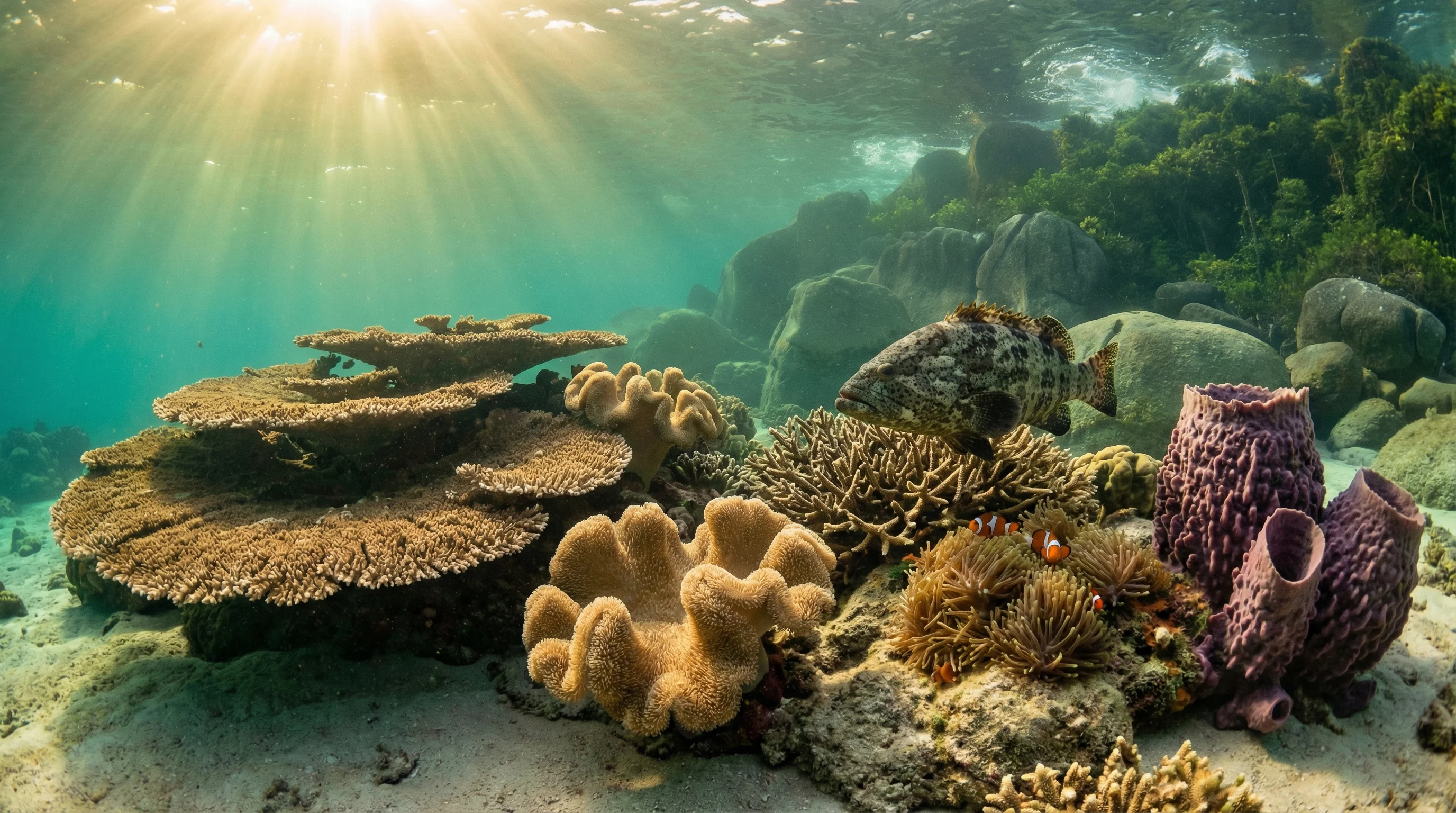
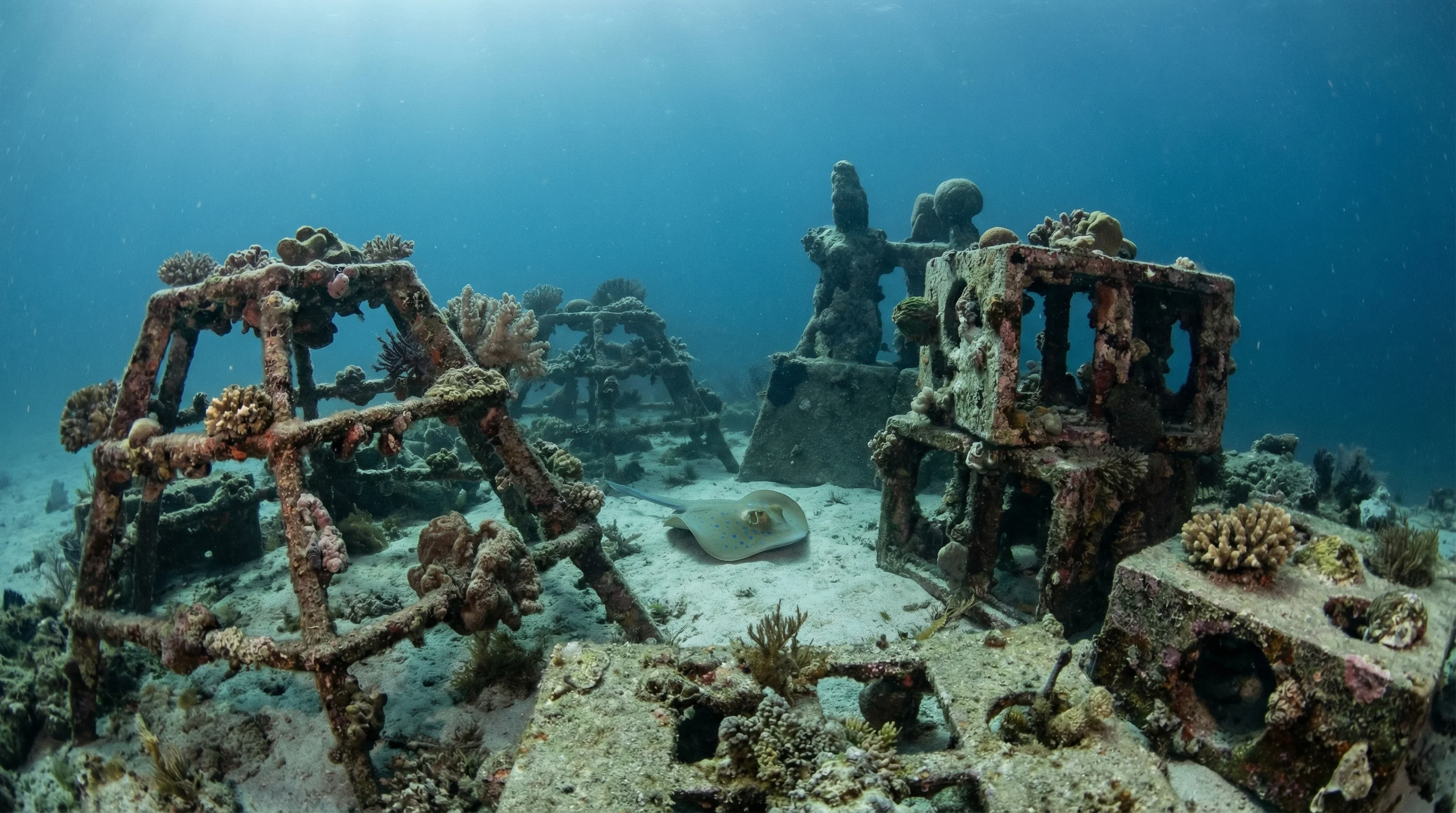
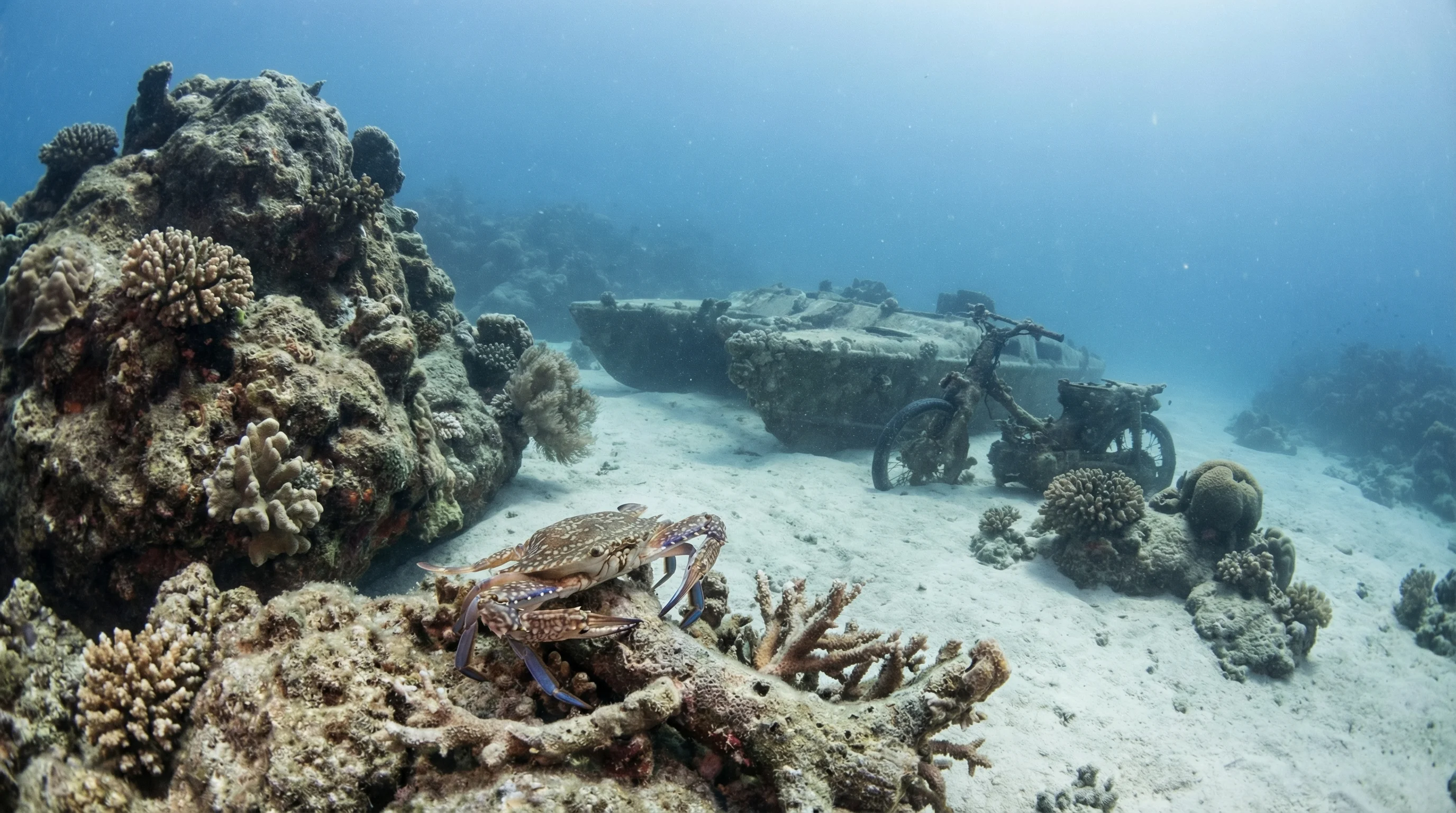
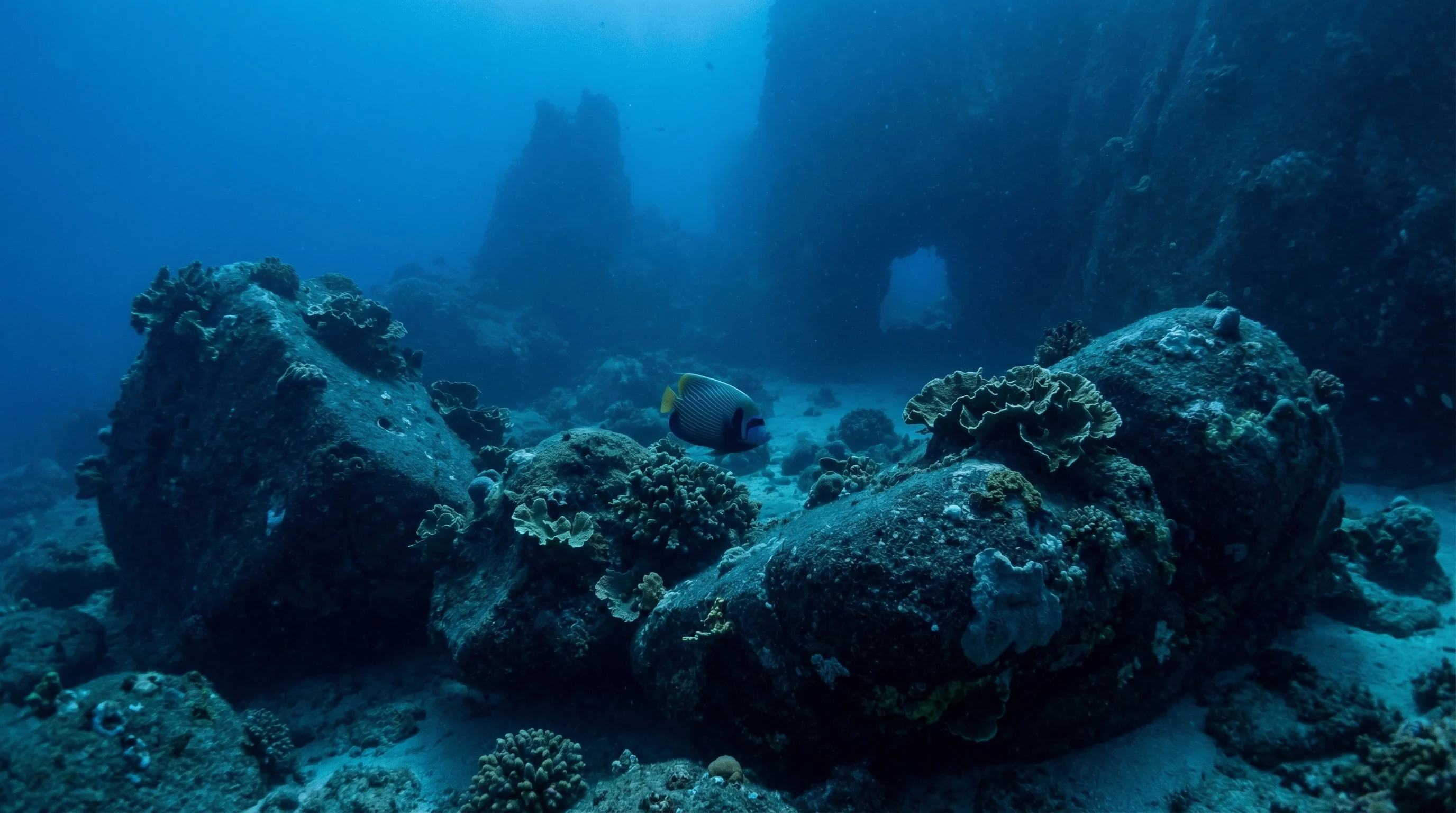
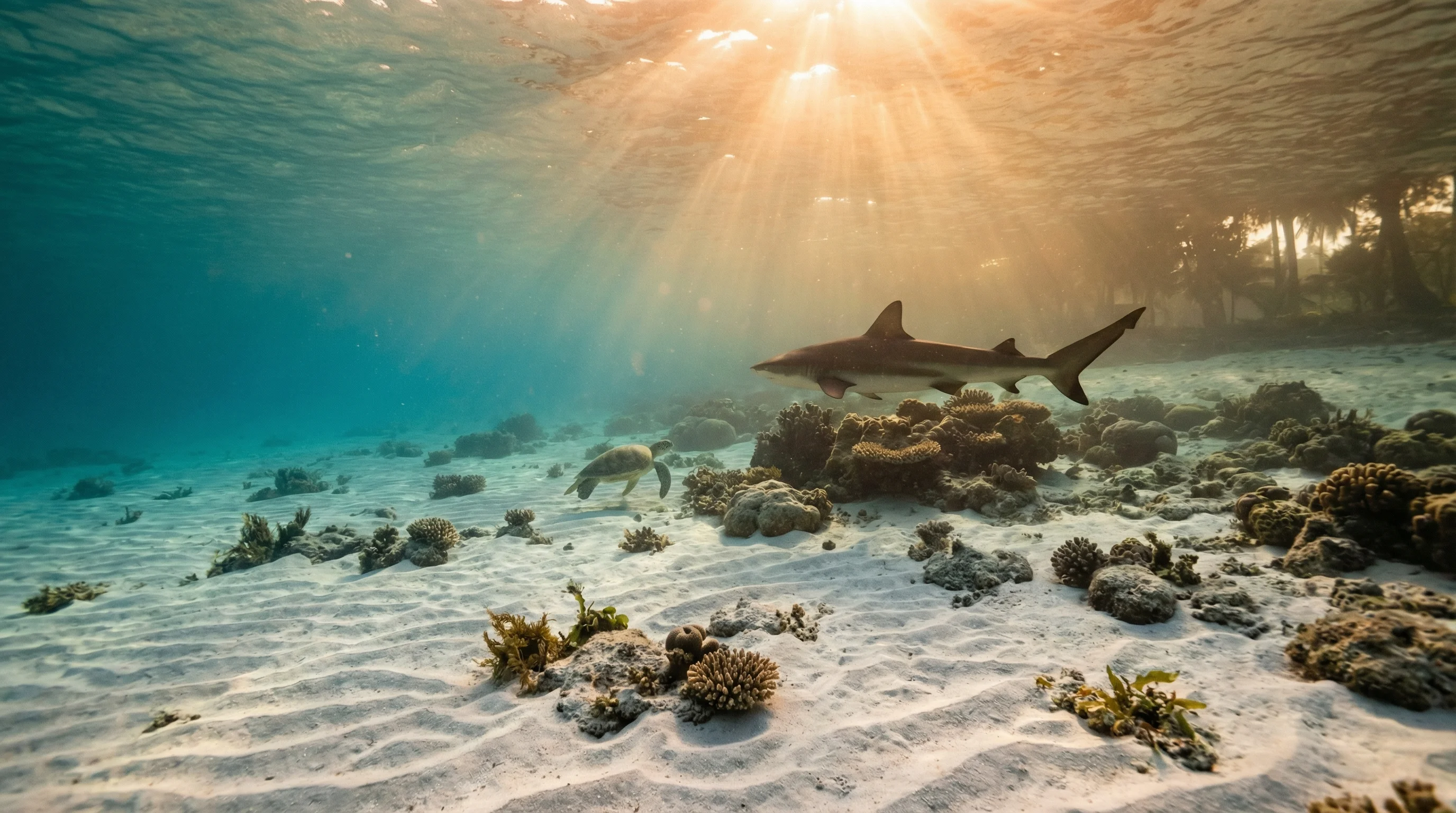
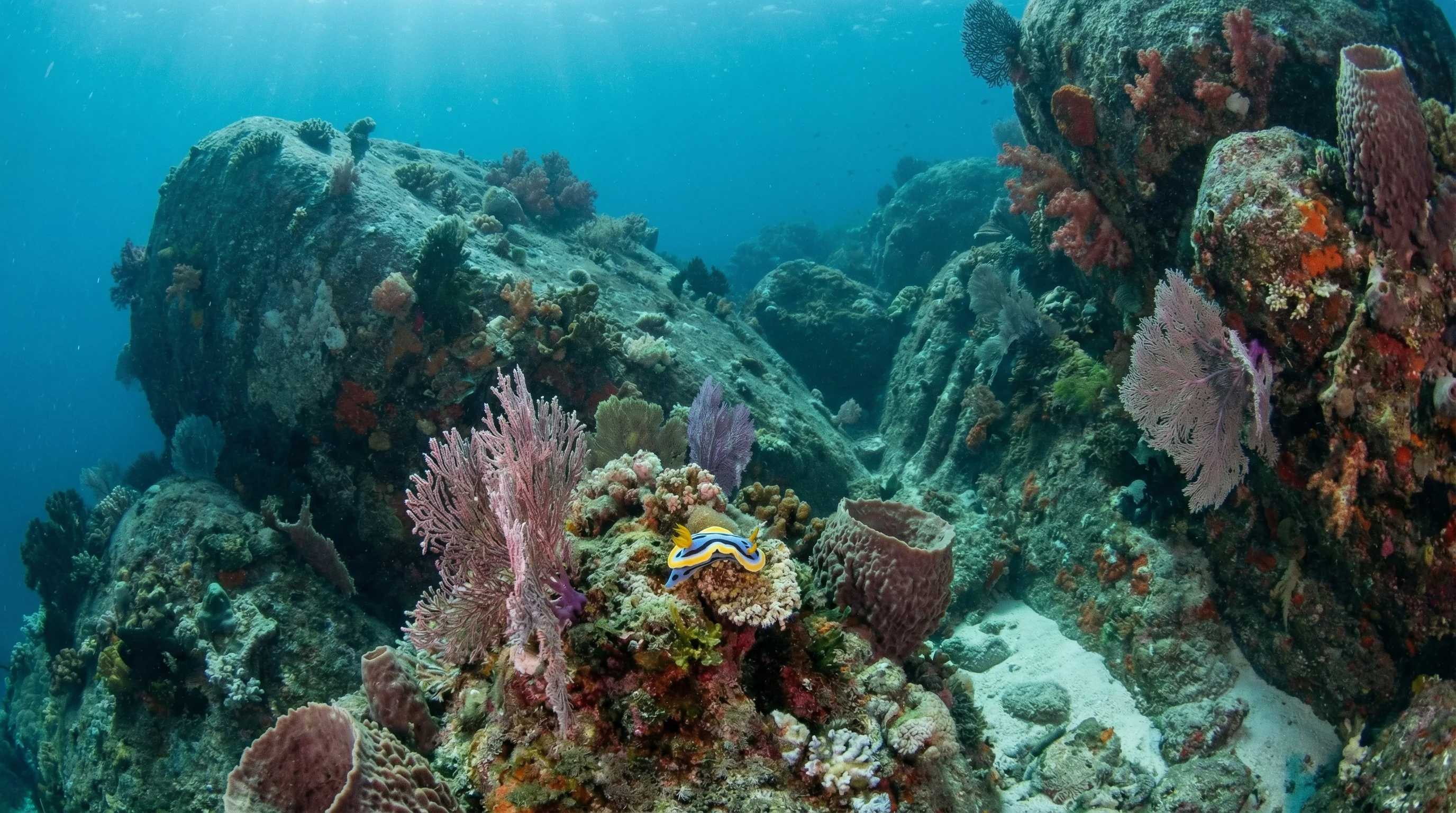
Koh Tao packs a remarkable range of underwater environments into a compact island. Reefs, pinnacles, wrecks, artificial structures, muck patches, seagrass beds, caves and drop-offs all feature across the site list, so no two dives feel alike. The three main sub-areas, Koh Nang Yuan, Sail Rock and Chumphon Pinnacle, each have a distinct character: Koh Nang Yuan offers sheltered bays and structured artificial reefs ideal for learning, while Sail Rock and Chumphon Pinnacle draw those seeking more exposed, open-water diving. Wrasse, Golden Butterflyfish and Rabbitfish are observed across almost every site, with the occasional Whale Shark raising the stakes considerably.
3 areas
Monthly water temperature across Koh Tao's sites, from satellite sea-surface data corrected for depth. The band shows the site-to-site spread.
Water stays warm throughout the year, rising slightly in the warmer months from around May onward before easing back in the cooler part of the year. Visibility varies considerably depending on conditions and site exposure, with calmer periods in March, May and September generally producing the clearest water and the strongest diver interest. More exposed sites such as those around Sail Rock and Chumphon Pinnacle can carry noticeable current, which influences site selection and skill requirements.
100 operators
24 more sites to explore
Water temperature around Koh Tao ranges from about 28°C in January to 31°C in May, based on satellite sea-temperature data for its dive sites.
With water around 28–31°C, a rash guard or 3mm shorty works in Koh Tao year-round.
Fin maps 62 sites in Koh Tao (62 scuba diving sites and 20 snorkelling spots, with some suited to both), organised into 3 areas.
Across Koh Tao's dive sites, March, April, May, September and October are most often reported as the best months to visit.
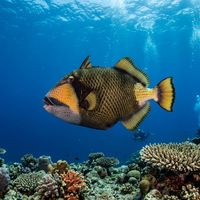
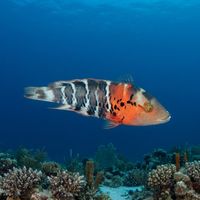
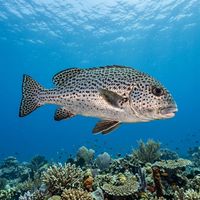
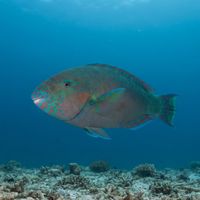
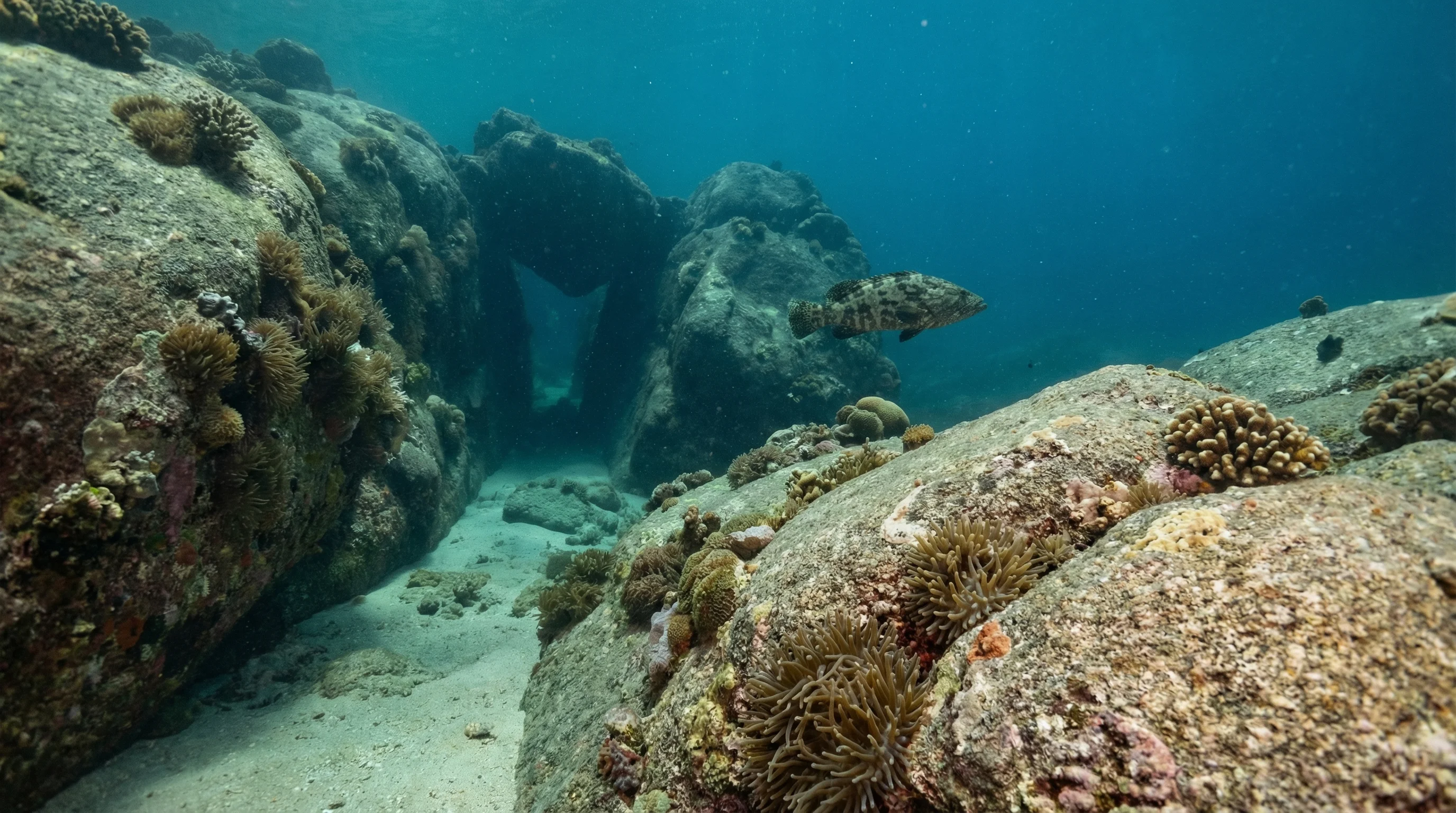
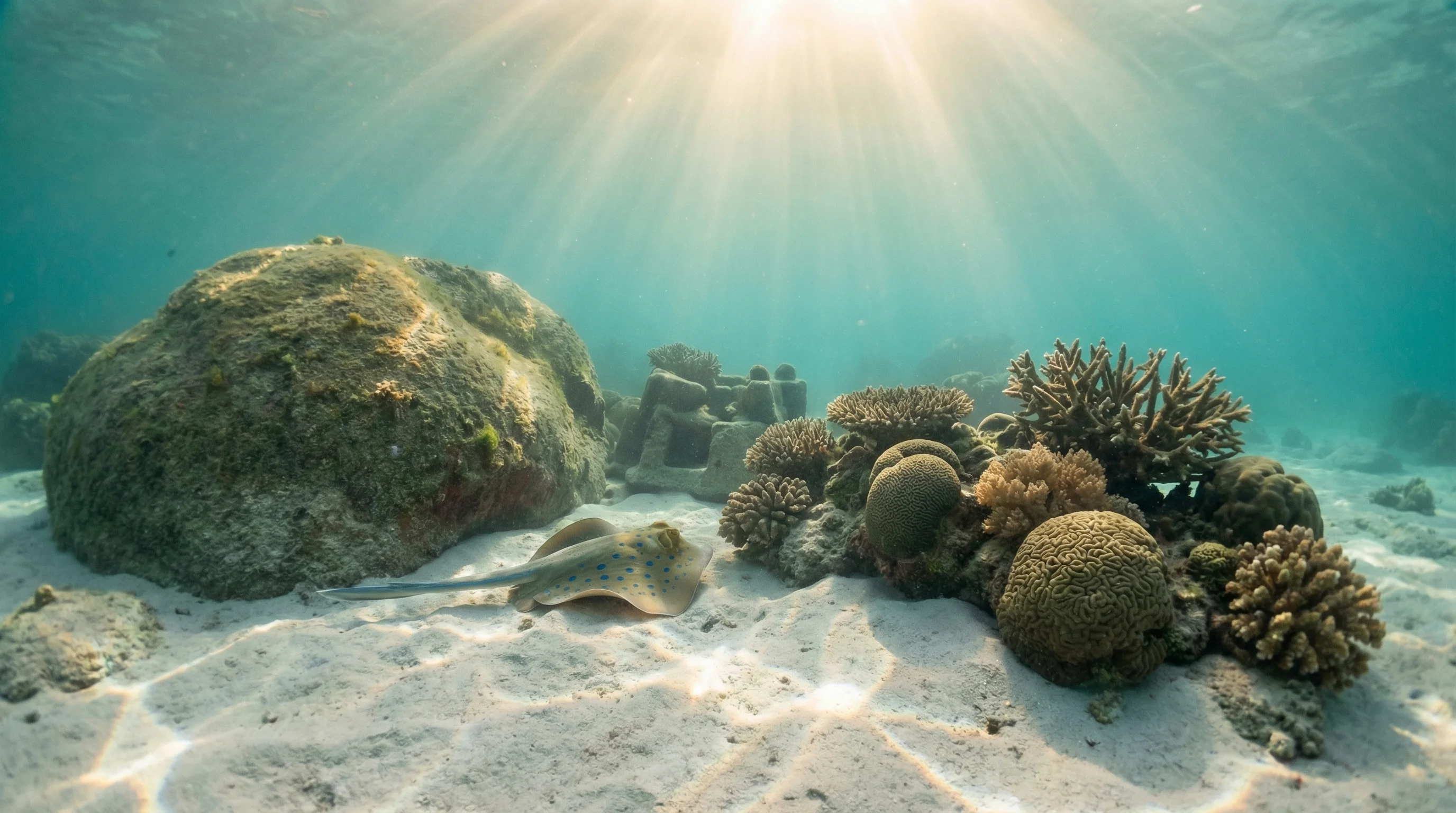
The signature large species in Koh Tao is the Whale Shark, which has been observed across a notable portion of sites, though sightings remain occasional rather than guaranteed. Bluespotted Fantail Ray is a common presence on reefs and sandy patches, and Titan Triggerfish is frequently encountered, particularly around pinnacle sites where it can be territorial. Harlequin Sweetlips and Groupers round out the larger reef species regularly seen.
Koh Tao has a strong mix of beginner-rated sites, including sheltered bays such as Lang Khaai Bay, Chalok Bay and Shark Bay, many of which offer shore entry and shallow depths. The Koh Nang Yuan sub-area in particular concentrates a number of calm, structured sites well suited to those new to diving. More challenging conditions exist at exposed pinnacle and drift sites, so there is clear room to progress without leaving the island.
Koh Nang Yuan, the largest sub-area by site count, centres on sheltered bays, artificial reefs and beginner-friendly reef diving with a wide variety of entry options including shore access. Sail Rock sits further from the main island and suits divers looking for more open-water conditions and greater exposure. Chumphon Pinnacle, with fewer but well-regarded sites, is typically a boat-only destination and attracts divers comfortable with stronger conditions.
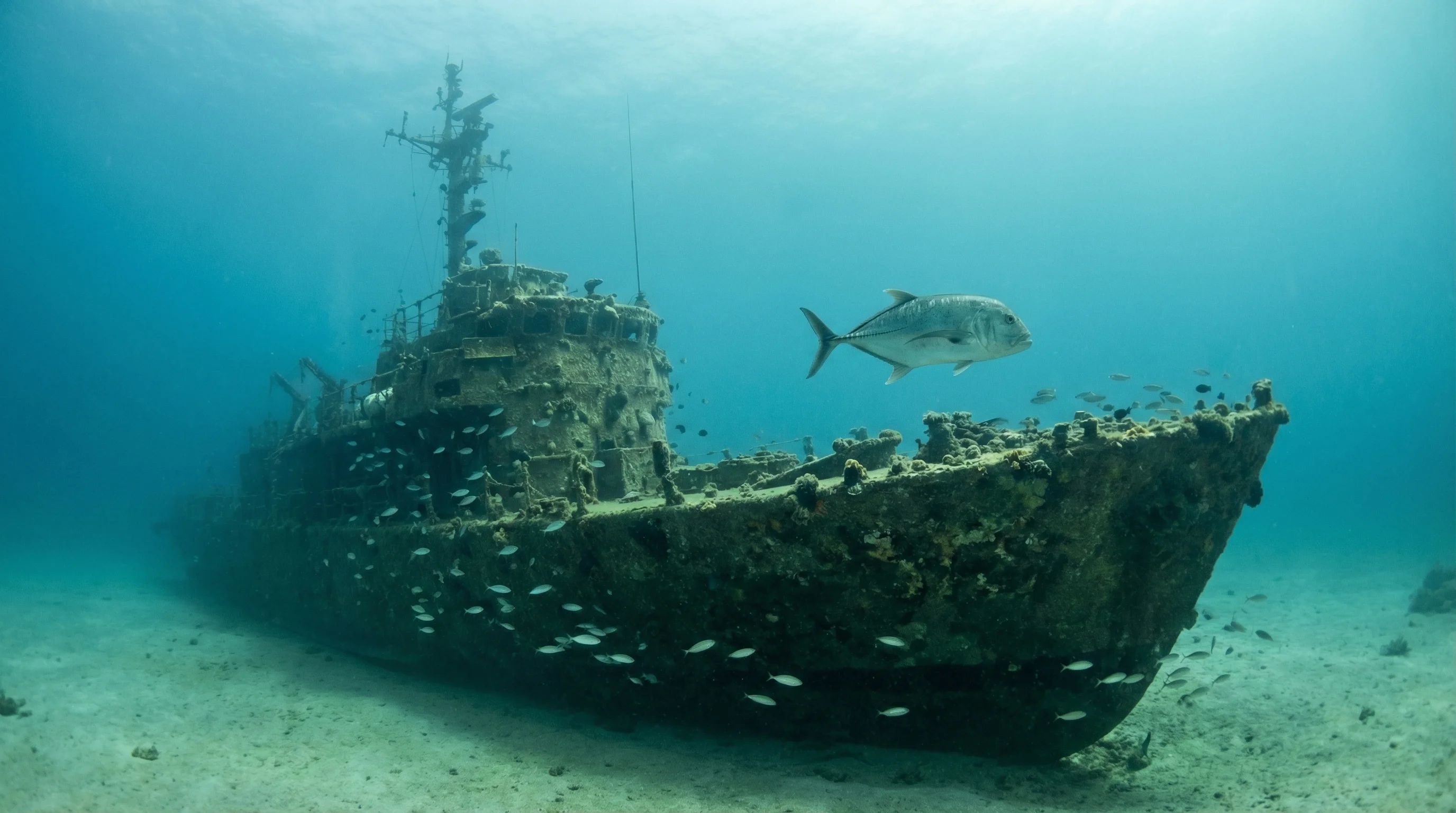
Both options are available depending on the site. Shore-entry sites include Shark Bay, Chalok Bay and Tanote Bay, which are practical for independent snorkellers and divers wanting flexibility. Many of the more exposed or deeper sites, including Southwest pinnacle and HTMS Hanhak Sattru, require boat access. Operators such as Go Diving Koh Tao, Rainbow Fish Divers and Koh Tao Divers are among those running boat trips to the full range of sites.