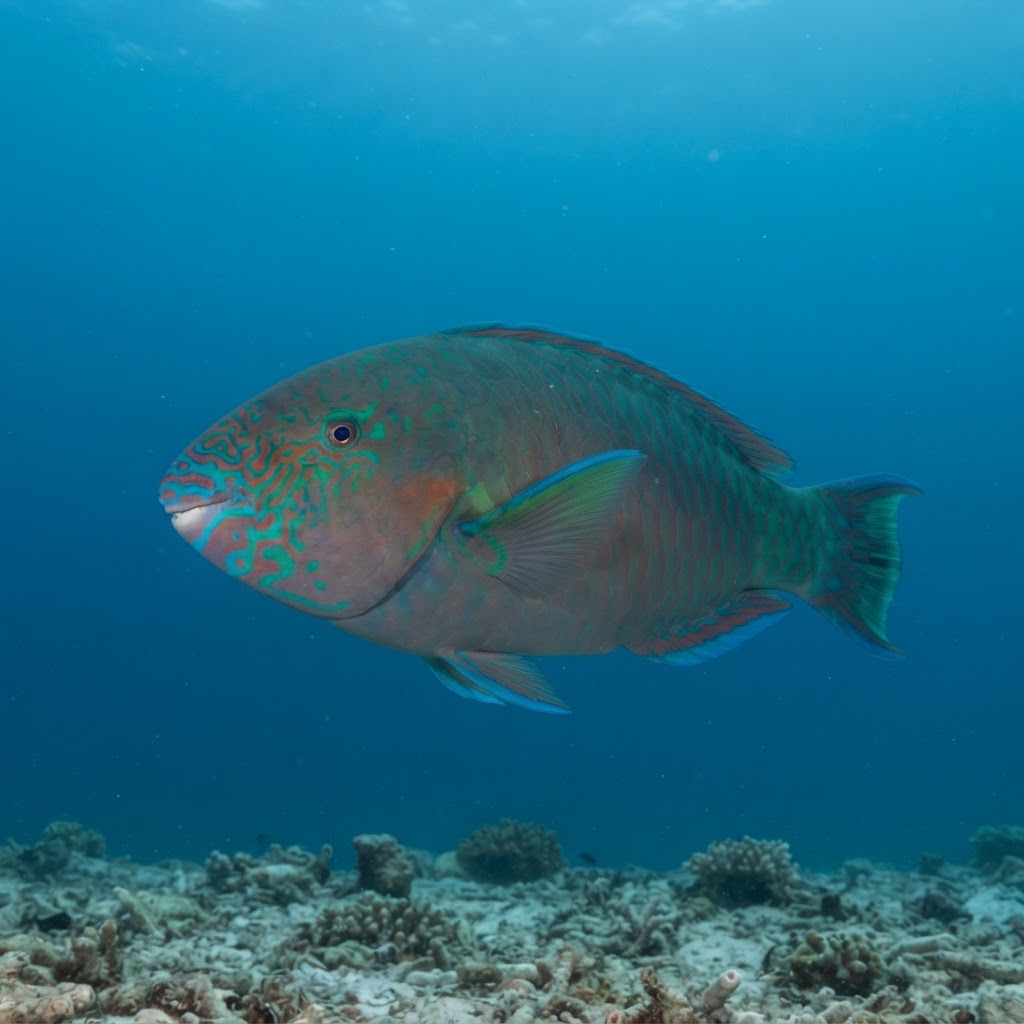
Scarus rivulatus
Bluish-green reef grazer logged from Koh Tao to Okinawa, comfortable in 25-29C water and seen year-round on Indo-Pacific reefs.
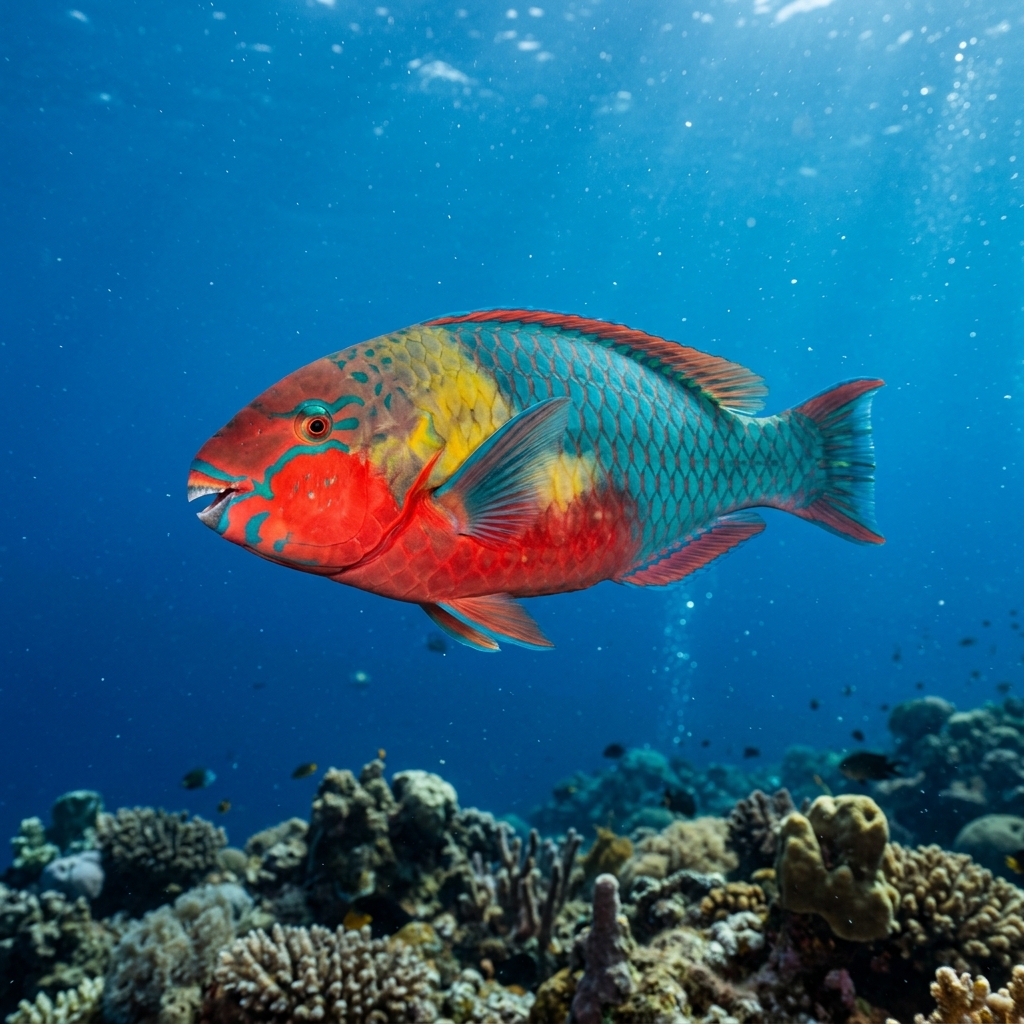
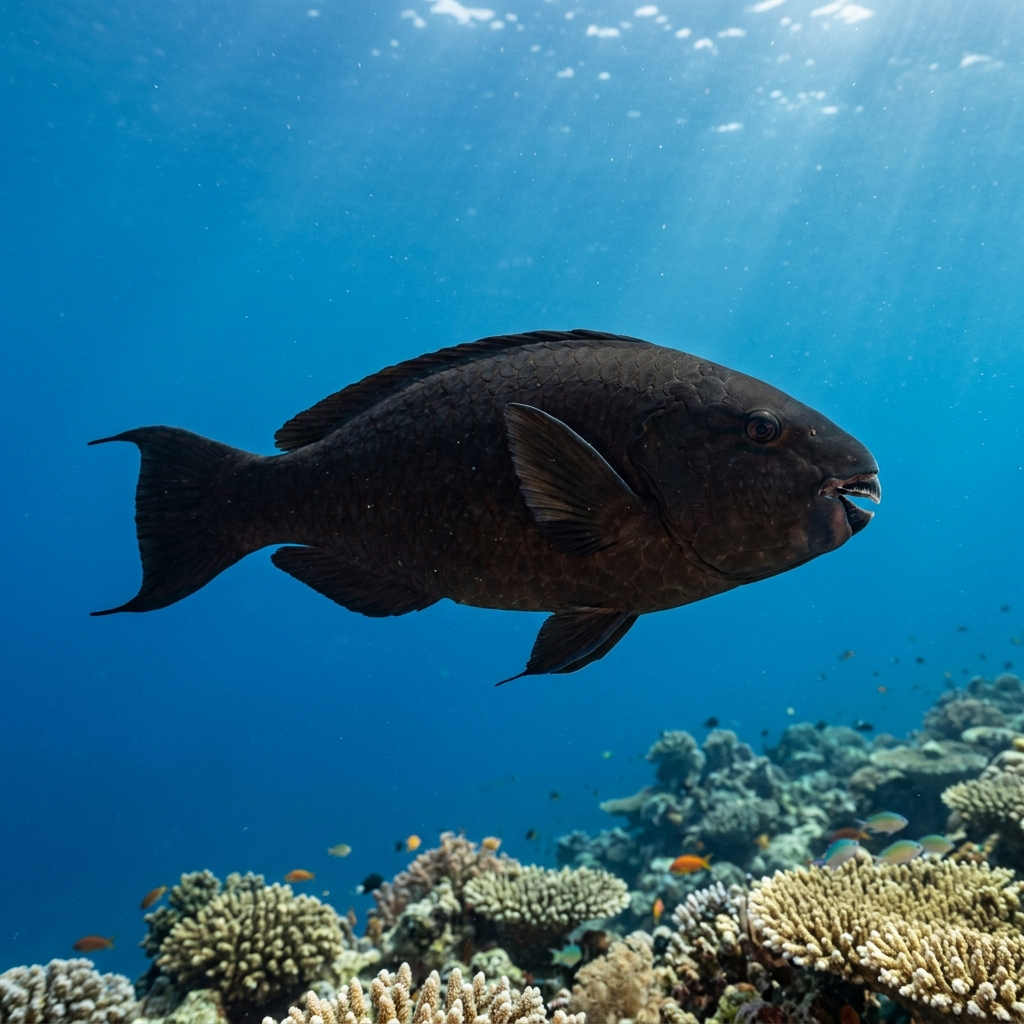
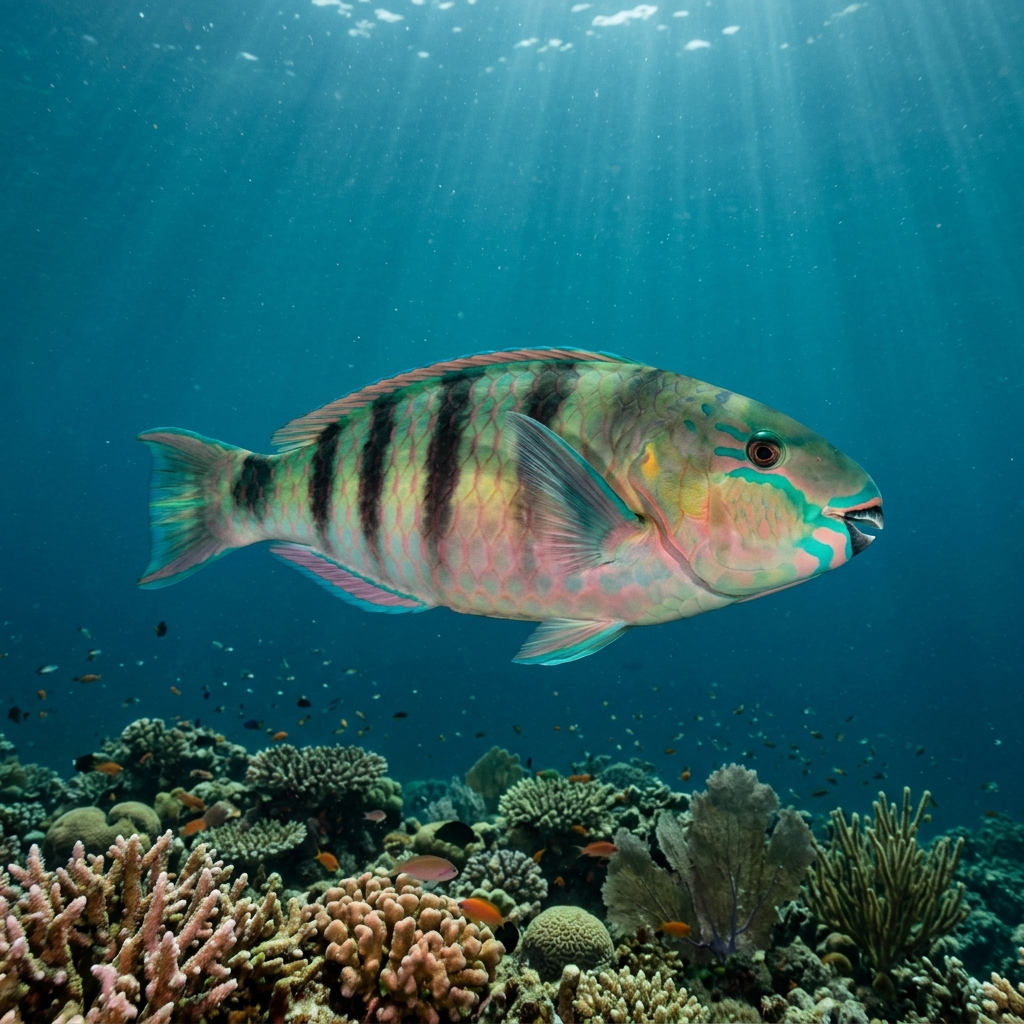
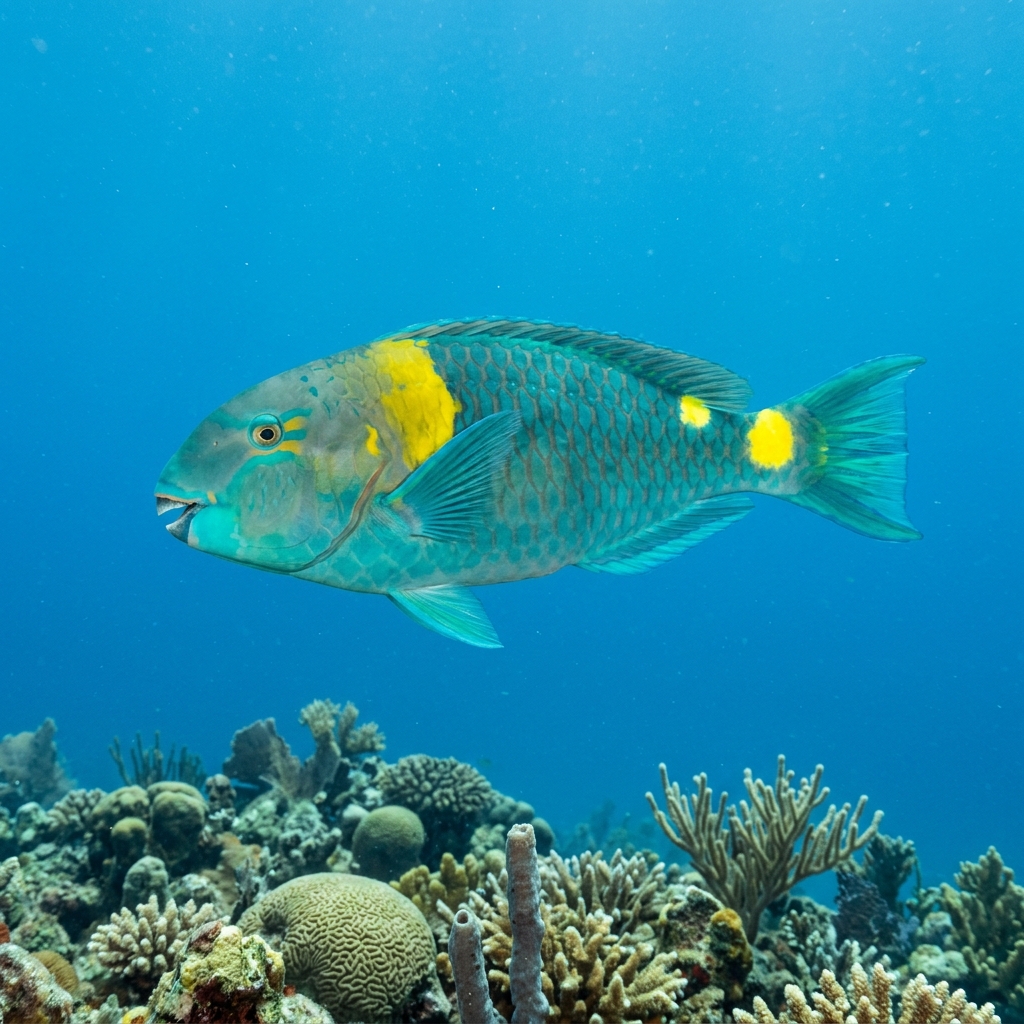
Sits around 28 cm, with a stocky, torpedo-shaped body in dull bluish-green to olive, covered in faint pale streaks that give the face a scribbled look. Look for the fused, beak-like teeth typical of parrotfish as it scrapes algae off rock and dead coral. Colouring is fairly muted compared to showier parrotfish, so it can blend into the reef background until it moves.
Usually spotted grazing steadily over reef flats and rubble patches, working its beak-like mouth across algae-covered rock rather than darting around. Divers most often log it as an uncommon to common sighting, moving alone or in loose groups rather than tight schools, and it tends to keep grazing rather than bolt when divers approach slowly.
Like other parrotfish, its grazing scrapes away algae and some coral skeleton in the process, and the ground-up material it excretes contributes to the fine white sand found on many tropical reef flats.
No clear seasonal pattern in the sightings data, and with a comfortable range of roughly 25 to 29C it holds steady on tropical reefs throughout the year, so any month you're diving these regions is fair game.
Most reliably logged in Malaysia, especially Peninsular Malaysia's East Coast and Sabah, with strong numbers also out of Thailand's Koh Tao and Koh Chang. Australia's Queensland coast, Okinawa and the Ryukyu Islands in Japan, and the Visayas in the Philippines are all solid bets too, with smaller populations noted in New Caledonia, Indonesia and Fiji.
Mapping where Rivulated Parrotfish is logged…
Malaysia is the strongest bet, particularly Peninsular Malaysia's East Coast and Sabah, followed by Thailand's Koh Tao and Koh Chang. Queensland in Australia, Okinawa in Japan, and the Visayas in the Philippines also produce regular sightings.
There's no strong seasonal signal in the sightings, and it tolerates a wide tropical temperature range of about 25 to 29C, so it's a year-round sighting on the reefs where it occurs.
Look for a stocky, torpedo-shaped fish around 28 cm in bluish-green or olive tones with faint pale wavy lines across the face, using a fused beak-like mouth to graze algae off rock and dead coral. It's usually seen alone or in small loose groups, moving steadily rather than schooling tightly.
They typically reach around 28 cm in length, a mid-sized reef fish that's easy to overlook against the reef background until it's actively grazing.
Its constant grazing on algae helps keep reef surfaces clear for coral growth, and the material it processes while feeding contributes to the fine sand found on many tropical reef flats.
Site and sighting data is aggregated from diver logs, iNaturalist and GBIF. For taxonomy and conservation status:
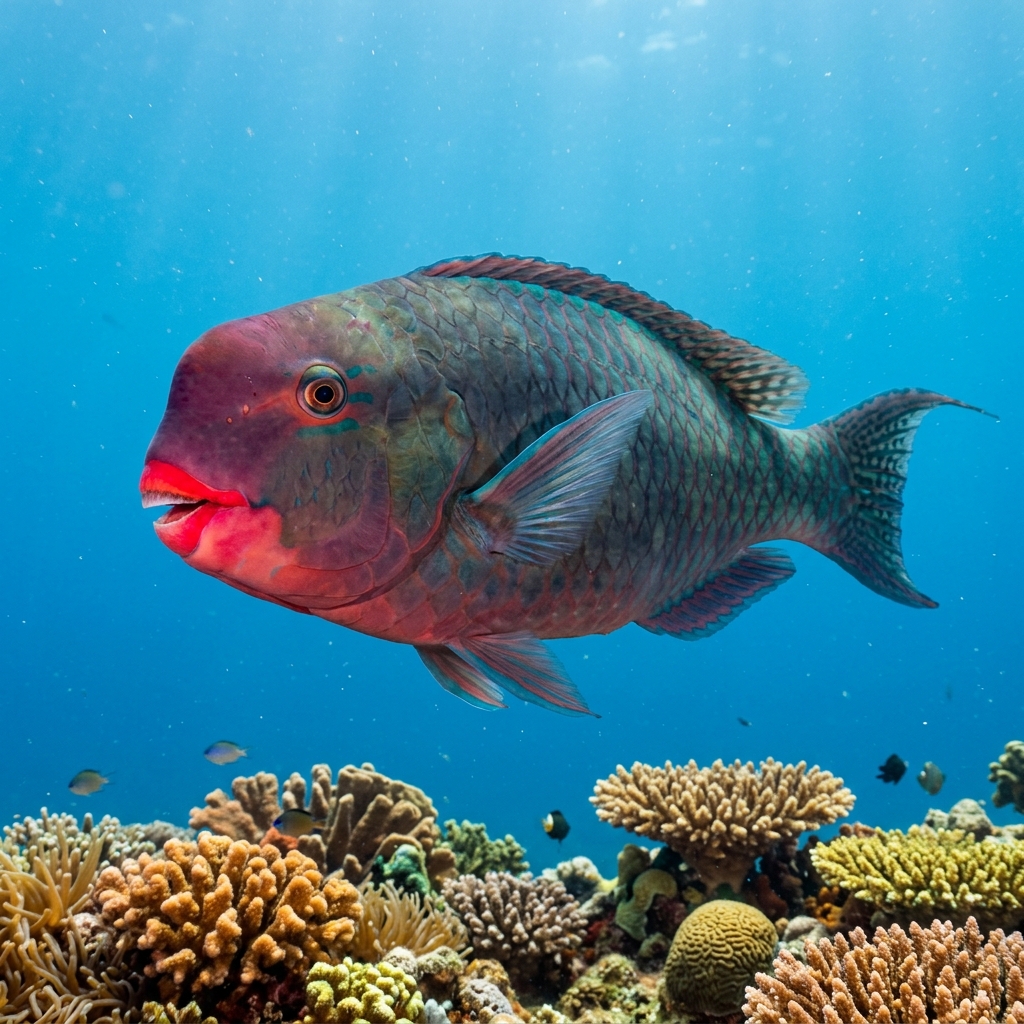
Redlip Parrotfish
2,789 sites