Scarus niger
Spot the Swarthy Parrotfish grazing on Red Sea and Indo-Pacific reefs between 24-29 °C. Best regions, ID tips, and when to go.
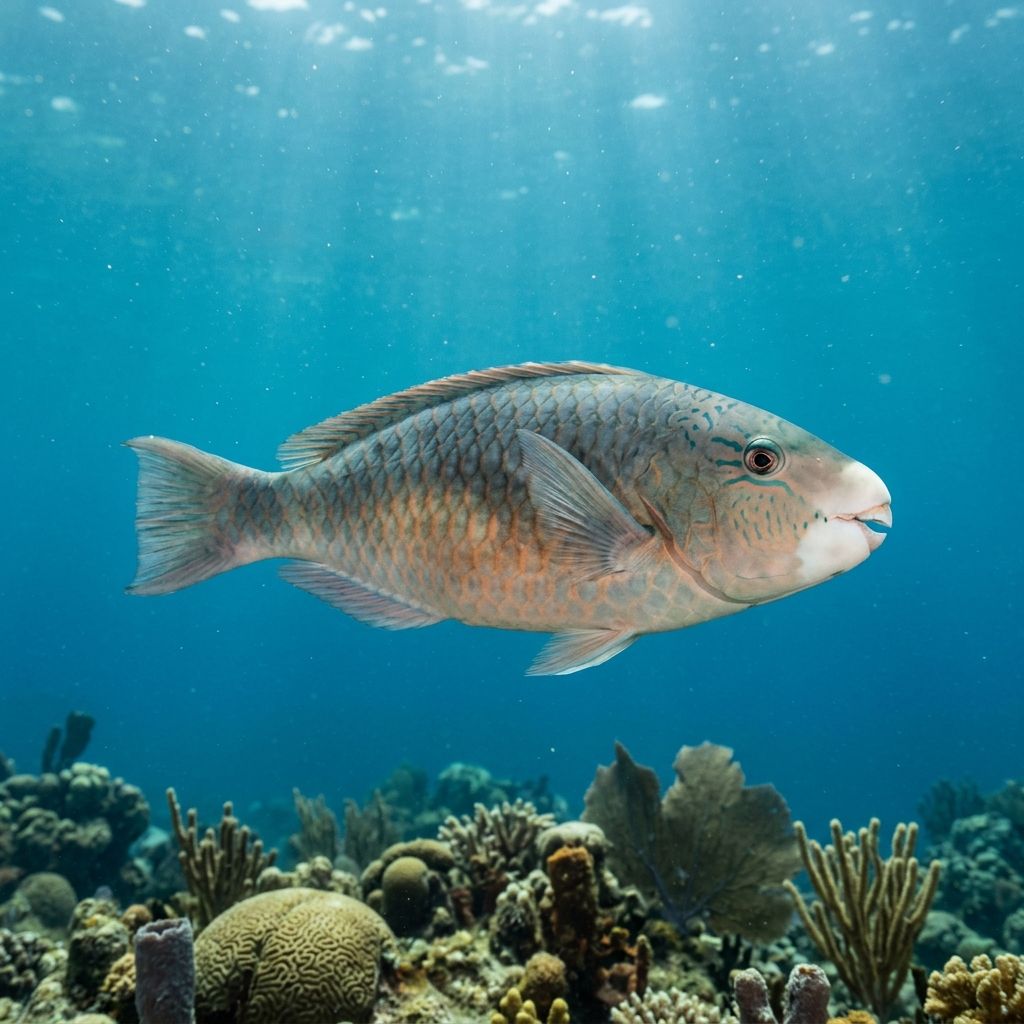
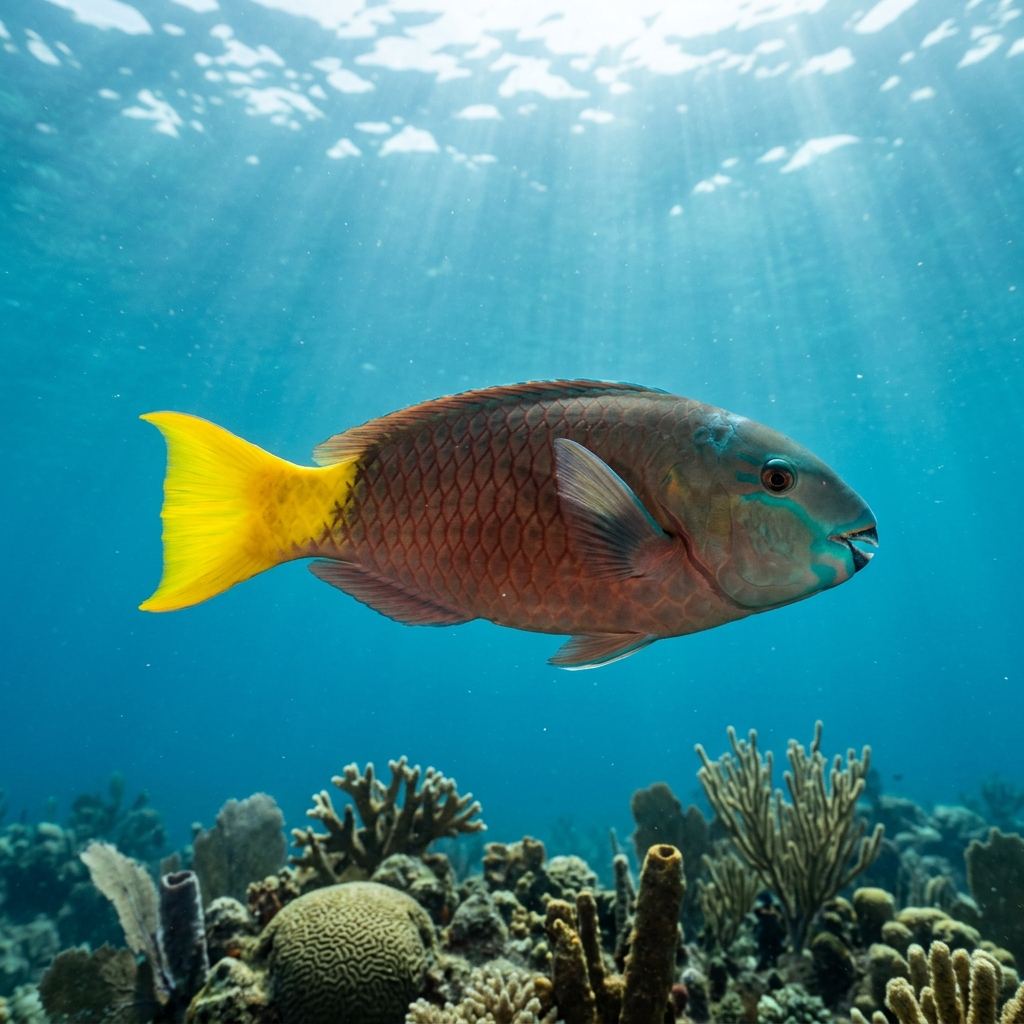
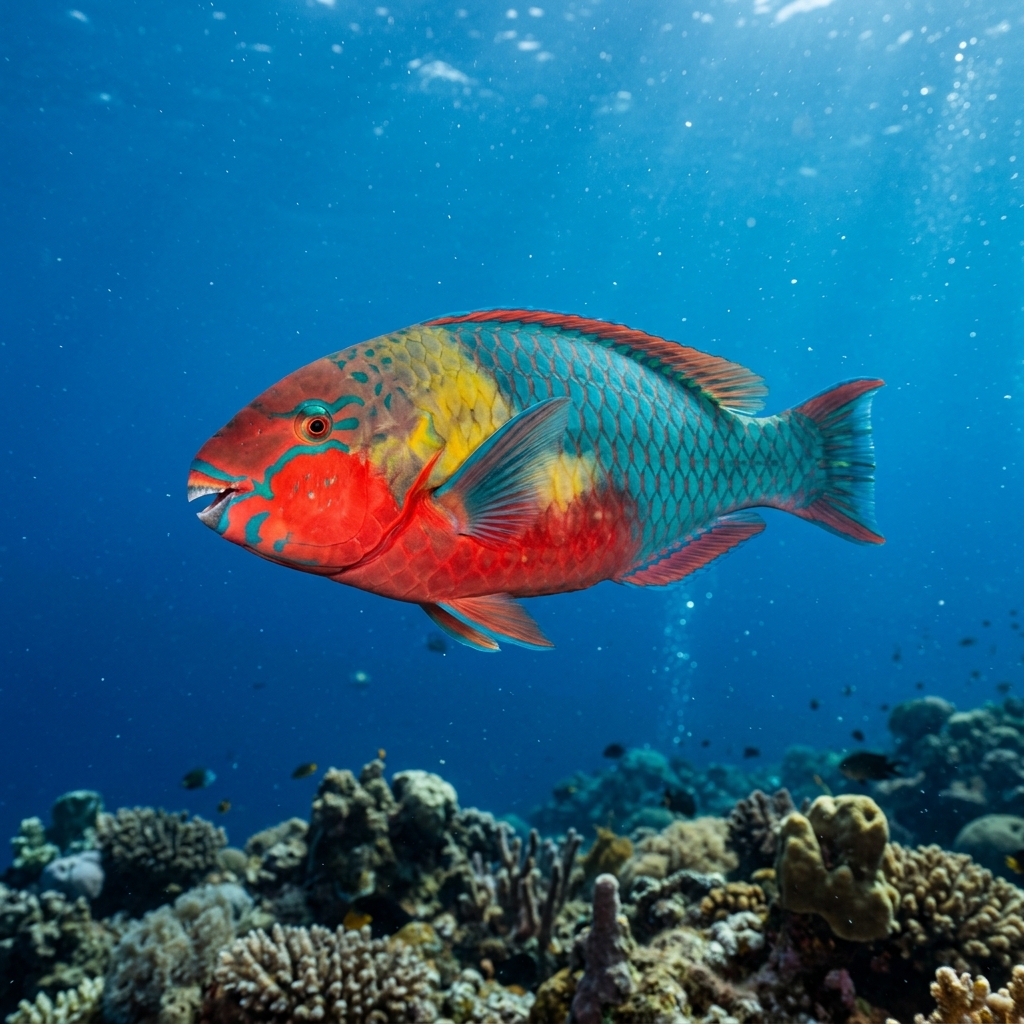
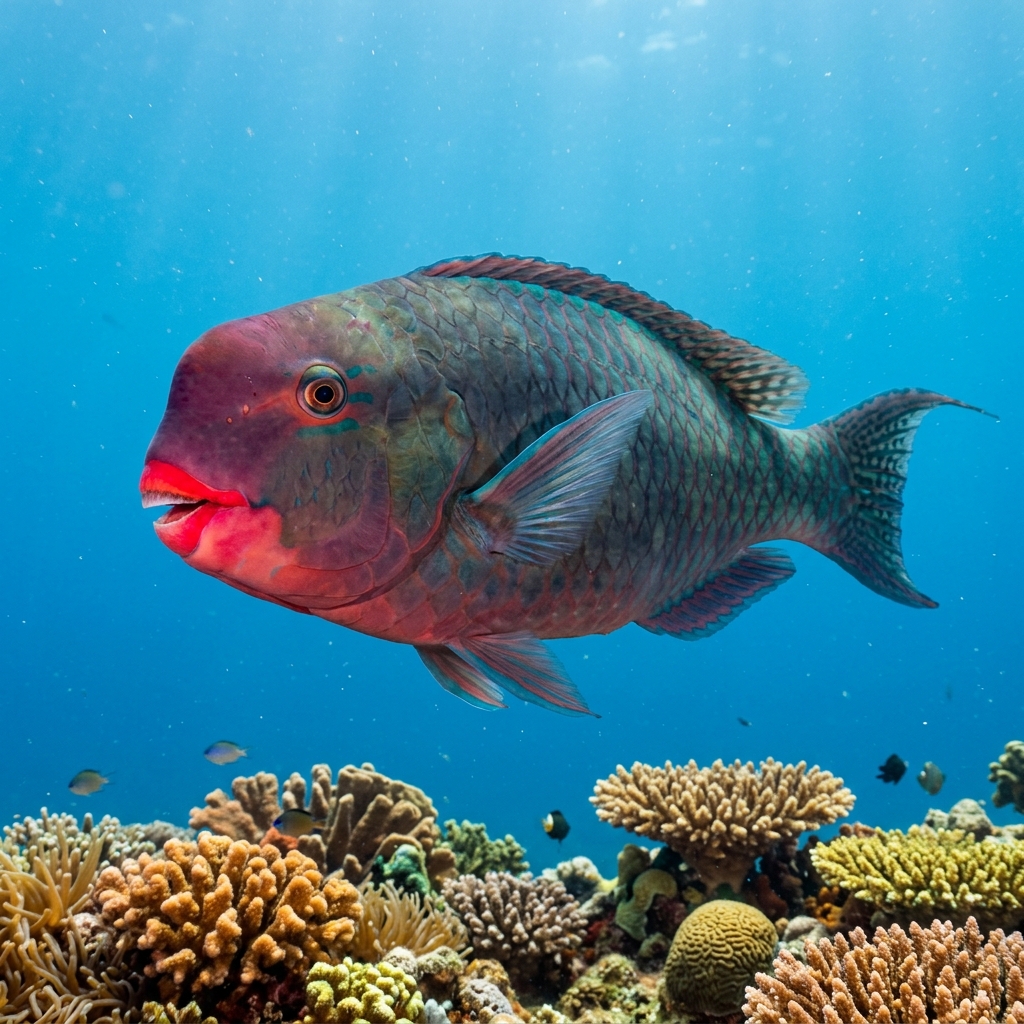
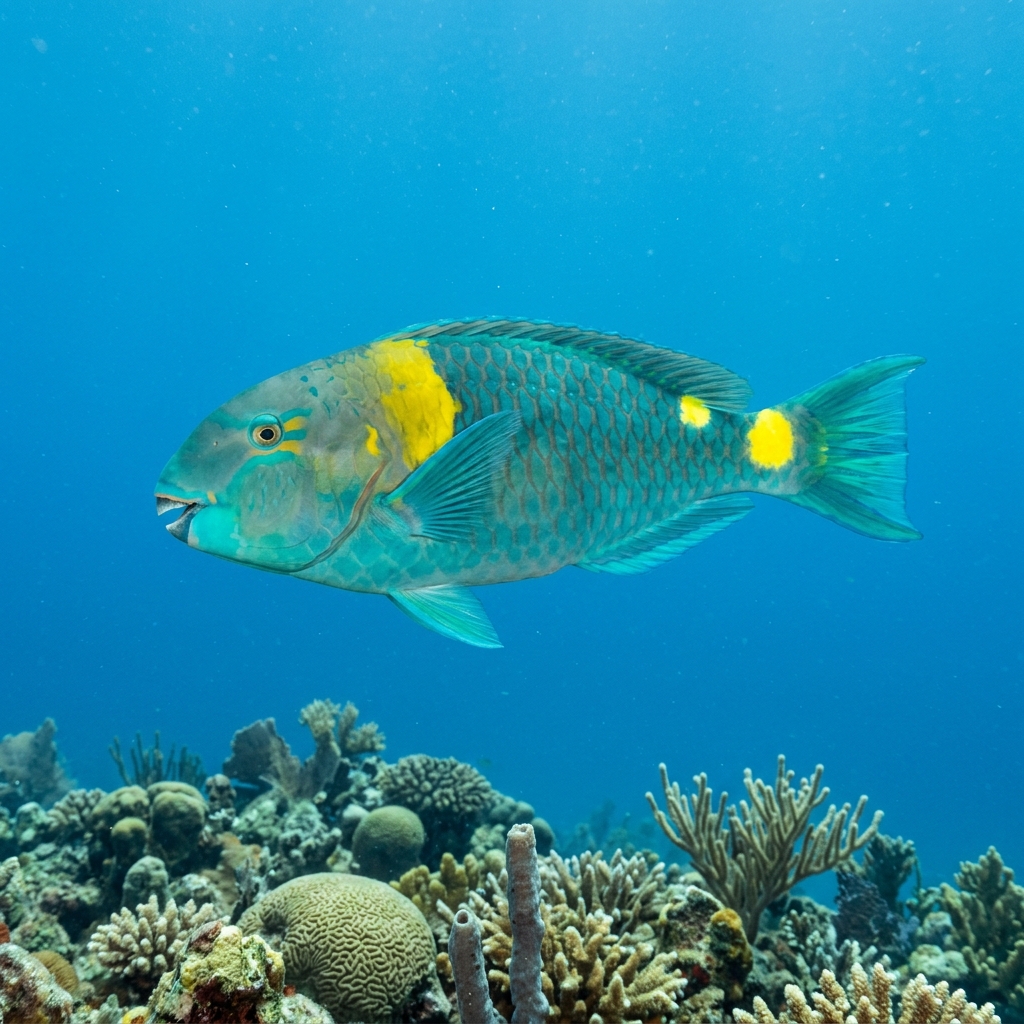
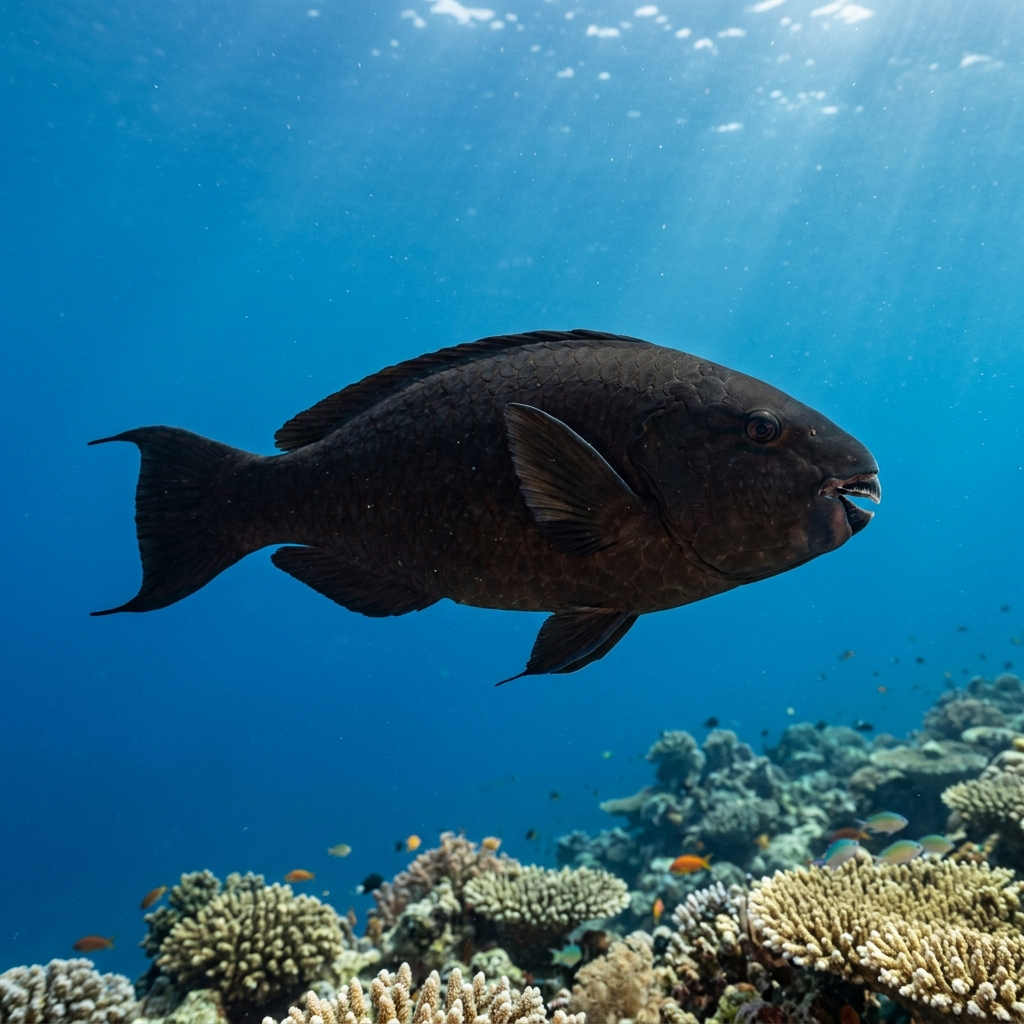
Around 30 cm long, this mid-sized parrotfish is most easily told apart by its phase: terminal-phase males wear blue-green and pinkish hues with a fused beak-like dental plate, while initial-phase fish (females and juveniles) show plain brownish to reddish-grey tones that can look unremarkable at first glance. The fused dental plate (the beak formed by fused teeth) is the parrotfish family's signature and is visible as it scrapes algae from rock and coral. Look for a slightly robust, oval body profile compared with some slimmer reef fish of similar size.
Swarthy parrotfish spend the daylight hours methodically scraping algae from hard substrate, and they tend to carry on feeding without much concern when divers or snorkellers approach. You'll most often spot them individually or in small loose groups working their way across a reef section, moving steadily and pausing to rasp at the rock. They are not territorial towards divers and will not approach closely, but their relaxed attitude makes observation easy.
Like other parrotfish, swarthy parrotfish contribute to reef sediment production: the coral rock and calcium carbonate they ingest while grazing is processed and expelled as fine white sand, meaning those sandy patches on the seafloor partly exist because of them.
In the Northern Hemisphere, sightings concentrate from April through to February, covering the bulk of the year, which fits its preference for warm tropical water between 24 and 29 °C. Southern Hemisphere sightings peak from September through March, aligning with the austral warm season in places like Queensland.
Reef neighbours a diver could mistake it for. Use the identification notes above to tell them apart.
Most consistently logged across Egypt's Red Sea, particularly in Sharm el Sheikh and Marsa Alam, and across Southeast Asia in the Philippines, Maldives, Indonesia, Thailand, and Malaysia. Strong populations also turn up along the Queensland coast of Australia. Perhentian and Redang in Malaysia and the North and Central Atolls of the Maldives are among the most reliable regions for sightings.
Mapping where Swarthy Parrotfish is logged…
They are most commonly logged in Egypt's Red Sea, particularly around Sharm el Sheikh and Marsa Alam, and across Southeast Asia in the Maldives, Philippines, Indonesia, Thailand, and Malaysia. Queensland in Australia is also a well-represented region. Sightings spread across a wide Indo-Pacific range, so encounters are possible at many tropical reef destinations.
In the Northern Hemisphere, sightings are recorded from April through to February, so practically year-round. In the Southern Hemisphere, the peak window runs September to March. Their preferred water temperature of 24 to 29 °C means warm-season diving generally lines up with the best chances.
Terminal-phase males show distinctive blue-green and pinkish colouration with a fused beak-like dental plate, while initial-phase fish are a plain brownish to reddish-grey. At around 30 cm they are a mid-sized parrotfish. The beak and the steady algae-scraping behaviour are the easiest on-reef identification cues.
They typically reach around 30 cm in length. This makes them a medium-sized parrotfish, noticeably smaller than species like the Bumphead Parrotfish but comparable to many of the parrotfish species you'll encounter on Indo-Pacific reefs.
No. Swarthy parrotfish pose no threat to divers or snorkellers. They are not territorial and generally ignore human presence, continuing to graze on the reef as normal. The beak-like dental plate is used for scraping algae from rock, not defence.
They are herbivores that scrape algae directly from hard reef surfaces using their fused beak-like teeth. In the process they also ingest calcium carbonate from coral rock, which is ground up internally and expelled as fine sand. This makes parrotfish significant contributors to sandy sediment on tropical reefs.
Site and sighting data is aggregated from diver logs, iNaturalist and GBIF. For taxonomy and conservation status:
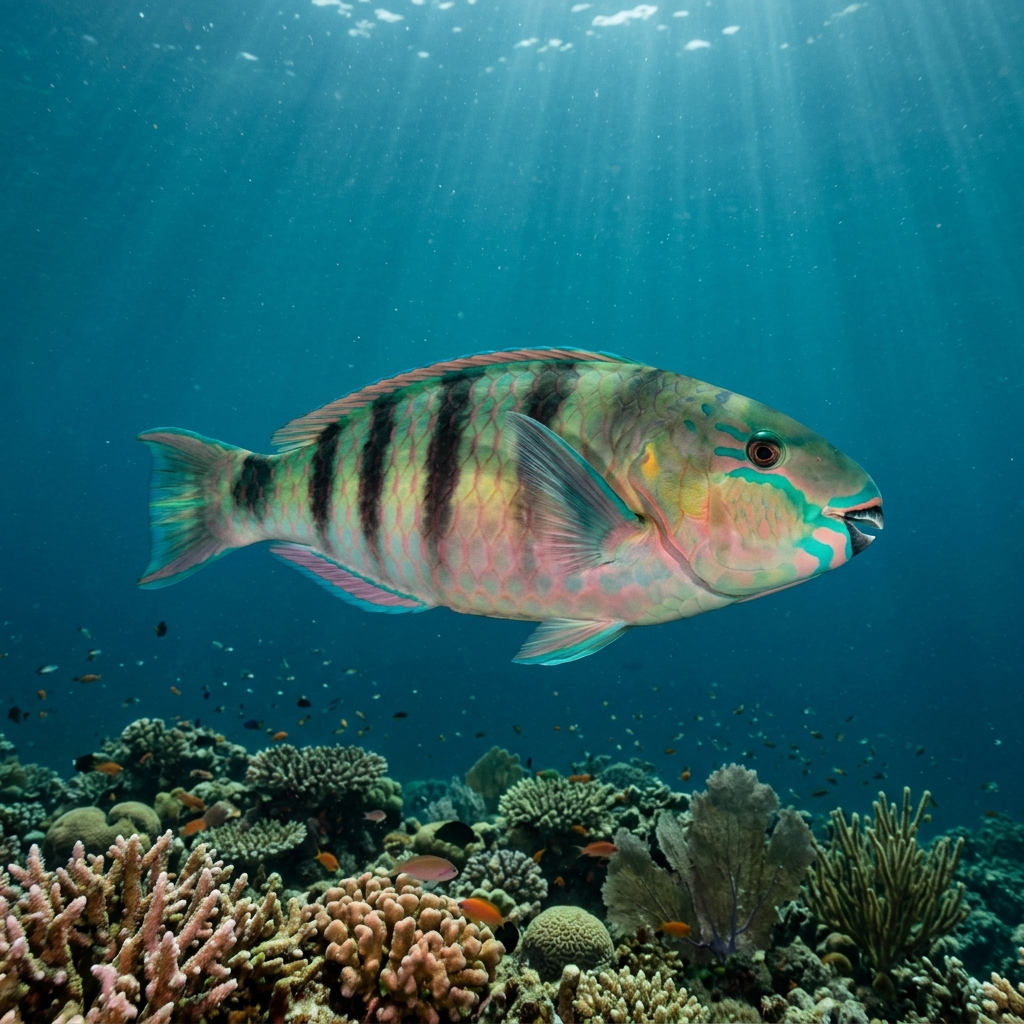
Sixband Parrotfish
2,380 sites