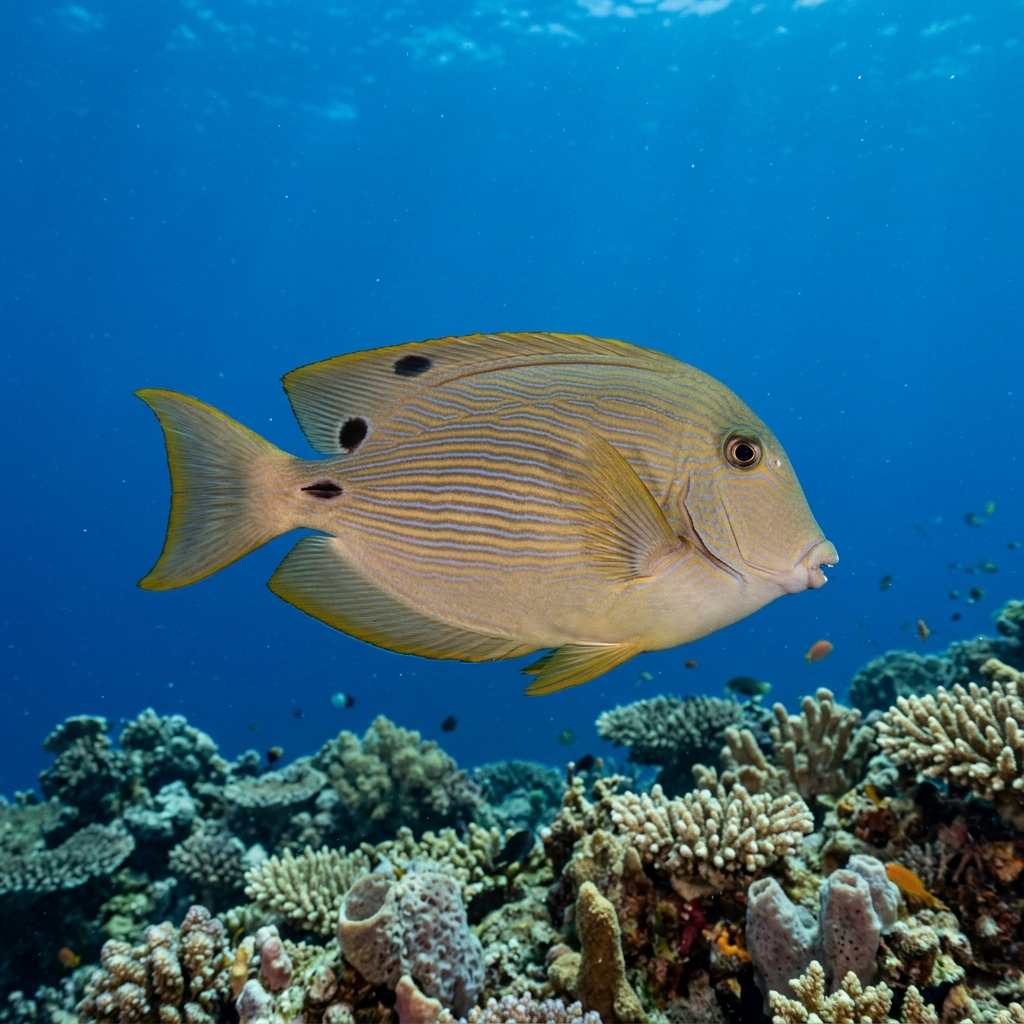
Acanthurus lineatus
Spot the Striped Surgeonfish on shallow reefs in the Maldives, Indonesia and Thailand. Year-round in the north, Jul, Nov peaks in southern waters.
Safety warning
Like all surgeonfish, this species carries a razor-sharp retractable spine on each side of the caudal peduncle (the narrow base of the tail). The spine is a defensive weapon, not an attack tool, but a panicked fish or one cornered near a wall can inflict a clean, deep laceration. Give the tail end space, avoid cornering individuals, and never grab or handle them.
If you're cut
Tail scalpelGeneral first-aid guidance, not a substitute for professional medical care. In an emergency, call your local emergency number.
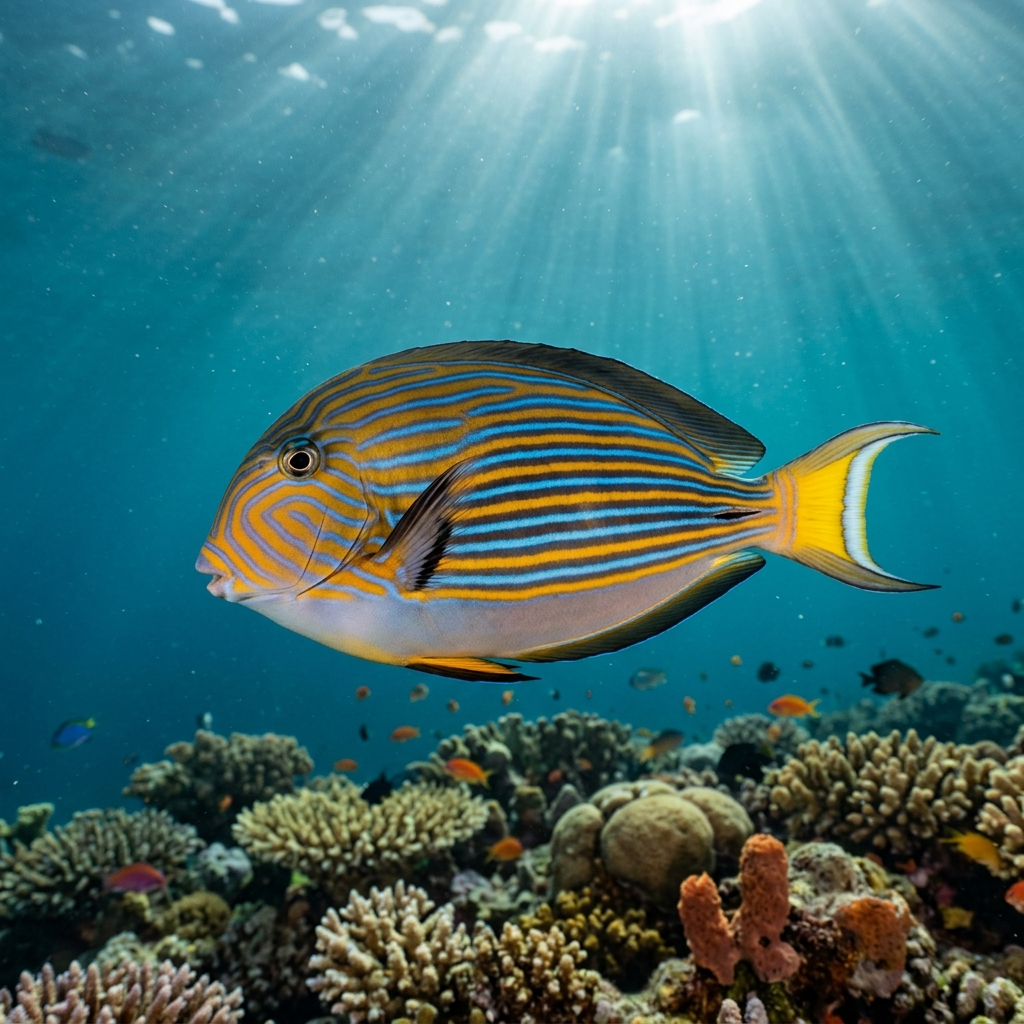
Bold horizontal stripes of electric blue, yellow and black running the full length of the body make this one of the more eye-catching surgeonfish on the reef. At around 26 cm it sits in the mid-size range for the family, with an oval, laterally compressed body and a pointed snout suited to grazing. Look for the sharp scalpel-like spine (the caudal spine all surgeonfish carry) at the base of the tail, which on this species is outlined in vivid orange. Juveniles are paler and less distinctly marked, so confident ID is easier on adults.
You will most often find them in shallow water down to about 15 m, grazing algae off exposed reef surfaces with short, purposeful bursts along the reef top. They are fairly indifferent to divers and snorkellers and will continue feeding even if you approach slowly, making observation straightforward. That calm evaporates around rival surgeonfish, territorial disputes play out as rapid chasing runs and erect fins, and mornings are the most productive time to catch this behaviour when feeding activity is at its peak.
Striped Surgeonfish are strongly territorial algae farmers: a single individual will actively defend a patch of reef turf algae against other grazers, effectively cultivating its own food garden.
In the Northern Hemisphere, covering the Maldives, Thailand, the Philippines and Indonesia, sightings are recorded year-round with no concentrated peak, which matches the species' comfort in water temperatures between about 25 and 29 °C. In the Southern Hemisphere, including Queensland and parts of French Polynesia, sightings concentrate between July and November.
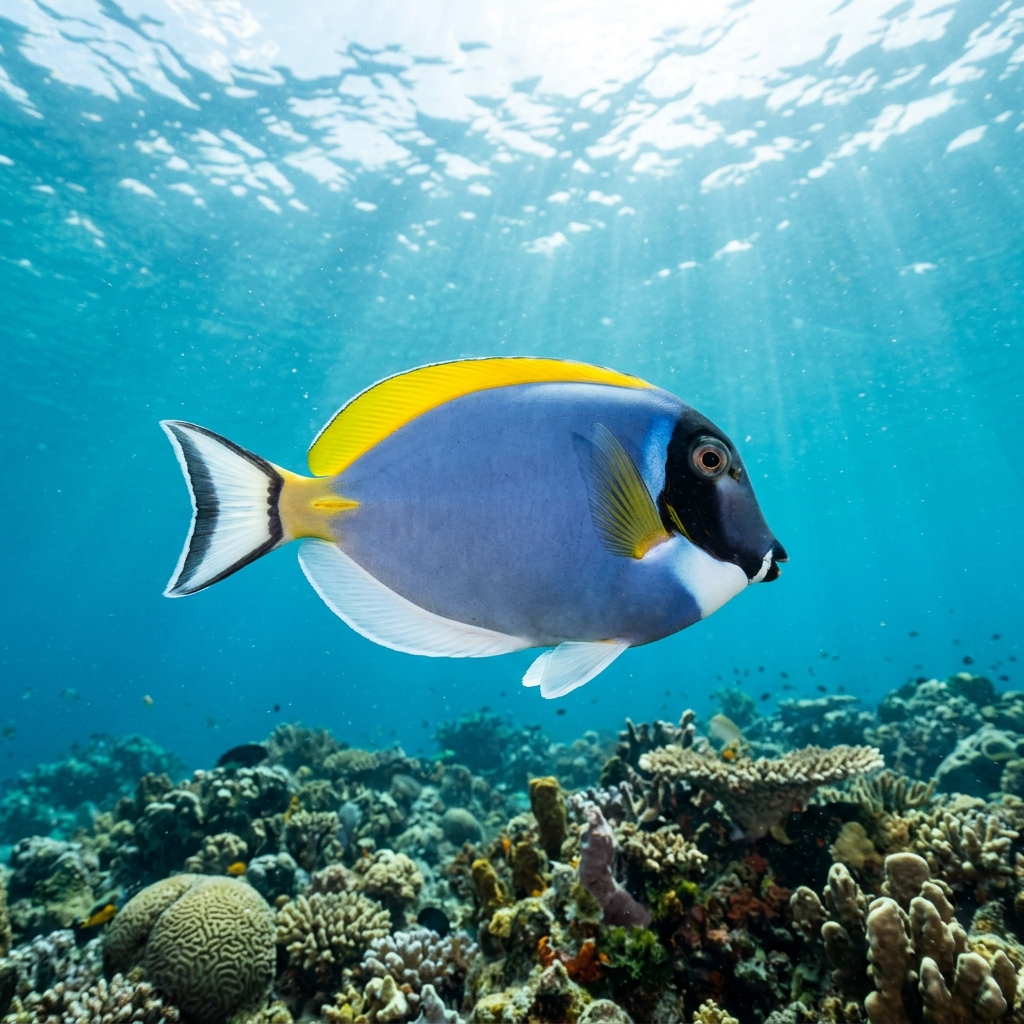
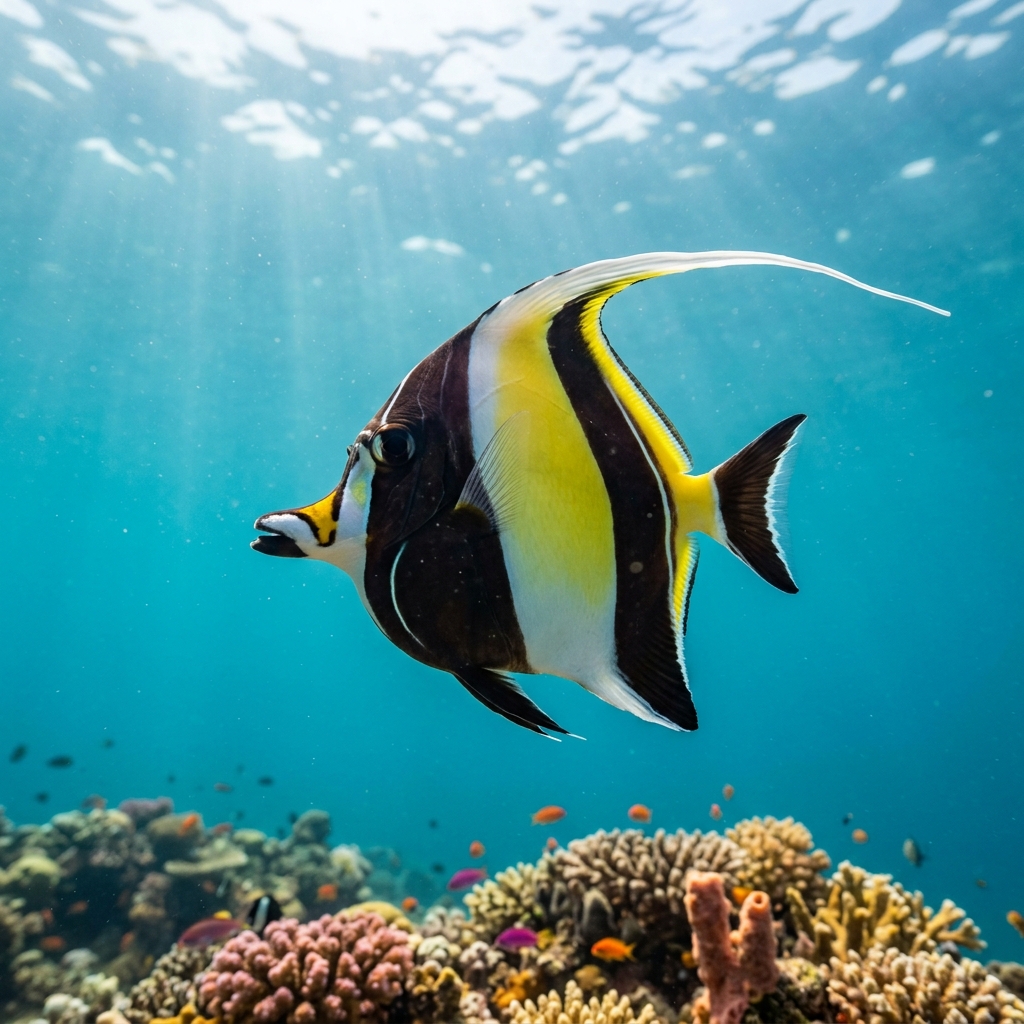
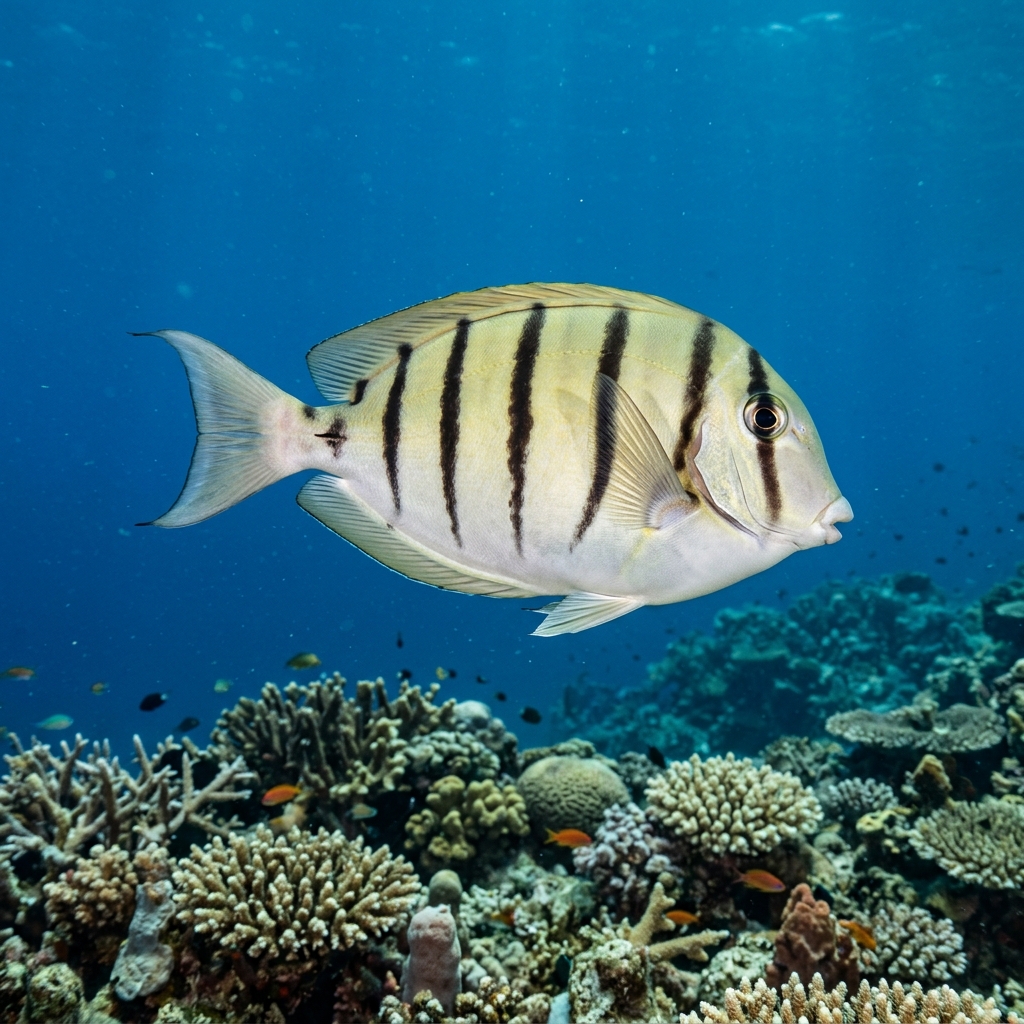
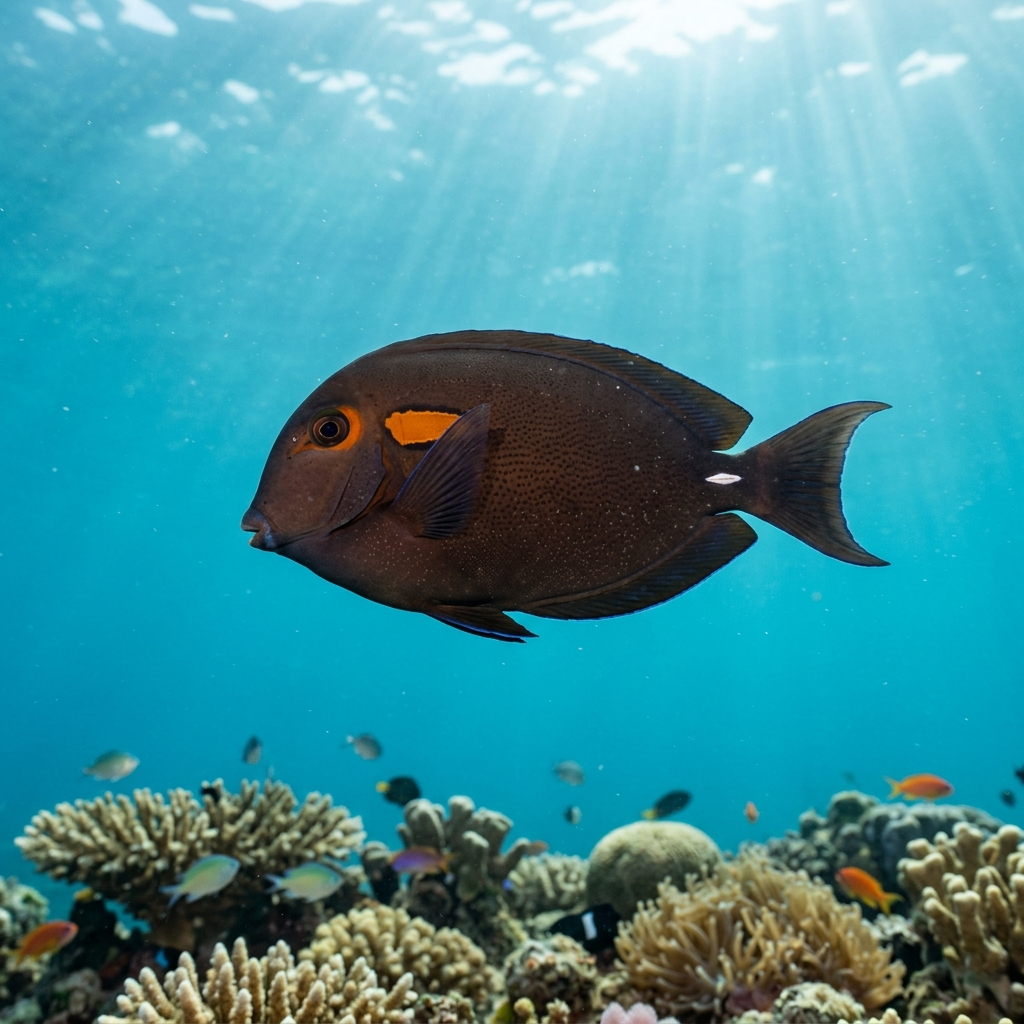
Reef neighbours a diver could mistake it for. Use the identification notes above to tell them apart.
Most commonly logged in the Maldives, particularly around the Male and Ari Atolls and the North and Central Atolls, making the Indian Ocean the strongest bet. Indonesia runs a close second, with Bali, Lombok and Java leading the tally, followed by Thailand's Phuket and Phi Phi area and the Philippines' Visayas Central. Australia's Queensland reefs, the Seychelles around Praslin and La Digue, and French Polynesia round out the reliable sighting destinations.
Mapping where Striped Surgeonfish is logged…
The Maldives, especially the Male and Ari Atolls, is the top destination by a clear margin. Indonesia (Bali, Lombok and Java), Thailand (Phuket and Phi Phi), and the Philippines (Visayas Central) are also strong. Queensland in Australia and the Seychelles around Praslin and La Digue are reliable options further afield.
In the Maldives, Thailand, Indonesia and the Philippines they appear year-round with no single peak month. If you're diving in Australian or other Southern Hemisphere waters, July through November offers the most concentrated sightings.
They can be. The caudal spine at the base of the tail is extremely sharp and can cause a serious cut if the fish is startled or cornered. Keep a respectful distance from the tail end, move calmly, and never attempt to handle one.
Look for vivid horizontal stripes of blue, yellow and black running from head to tail on a roughly 26 cm oval body. The orange-outlined caudal spine is a useful close-range confirmation. The Powder-blue Surgeonfish is the most likely confusion species, but it shows a uniform powder-blue body with a dark face rather than full-length stripes.
Adults typically reach around 26 cm in length. On the reef they look roughly the size of your hand-span, large enough to be conspicuous, but not as bulky as some of the bigger unicornfish in the same family.
They are dedicated herbivores that graze algae from reef surfaces. Many individuals actively defend a territory on the reef, maintaining a private patch of turf algae that they return to repeatedly. This territorial farming behaviour is one of the easier behaviours to observe, particularly in the morning when feeding is most intense.
Site and sighting data is aggregated from diver logs, iNaturalist and GBIF. For taxonomy and conservation status:
Atlantic Blue Tang
3,045 sites