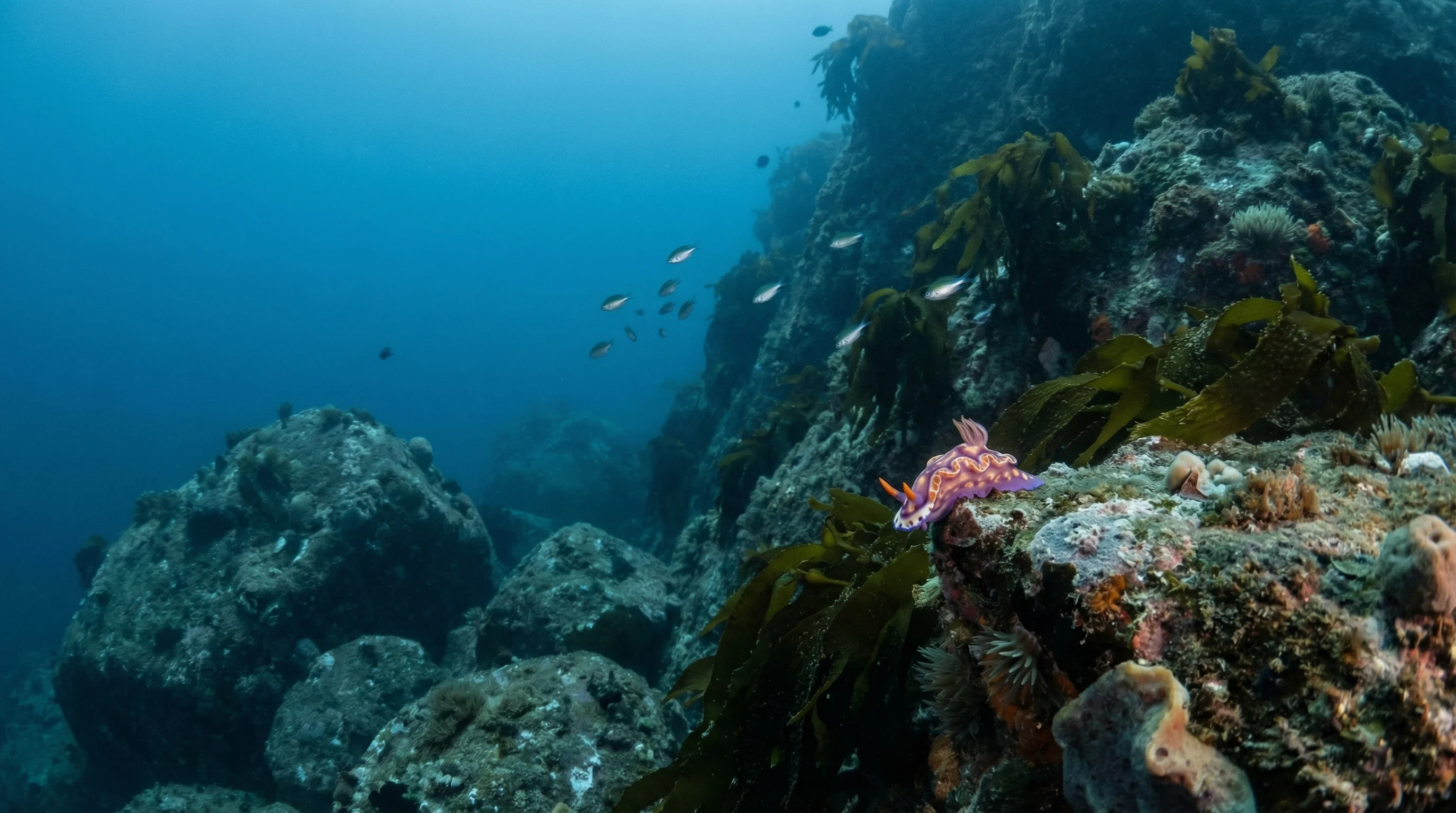
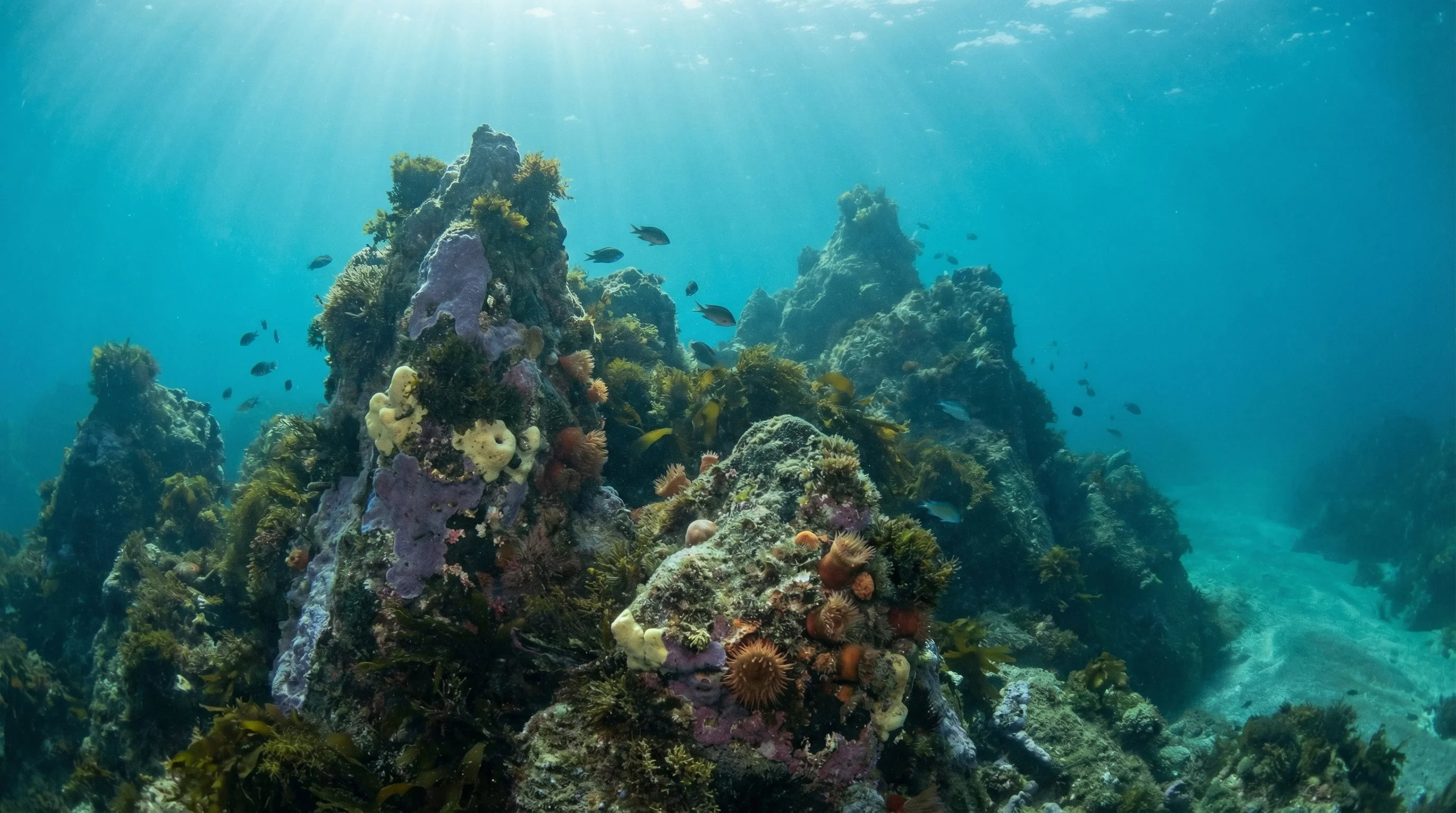
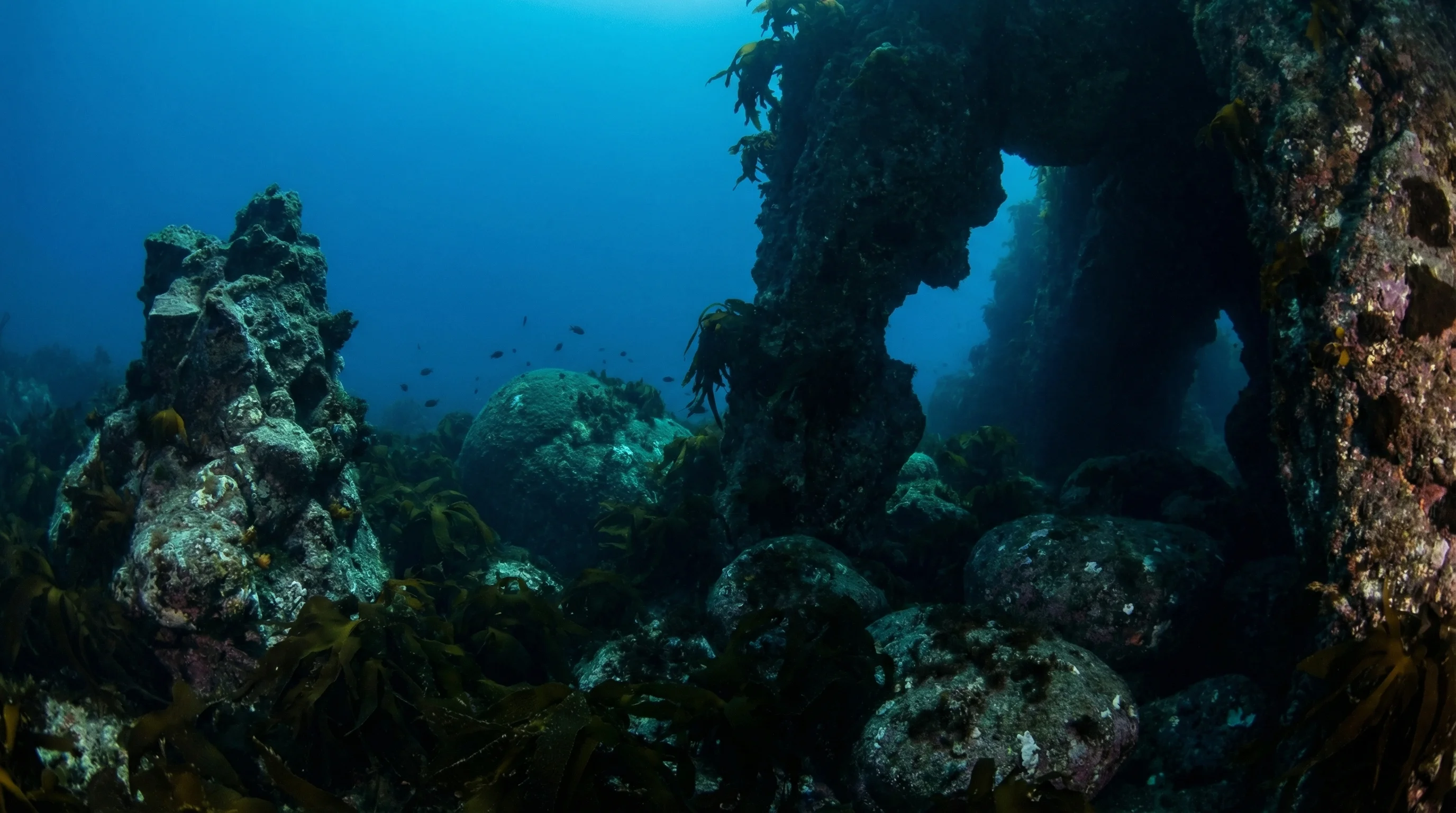
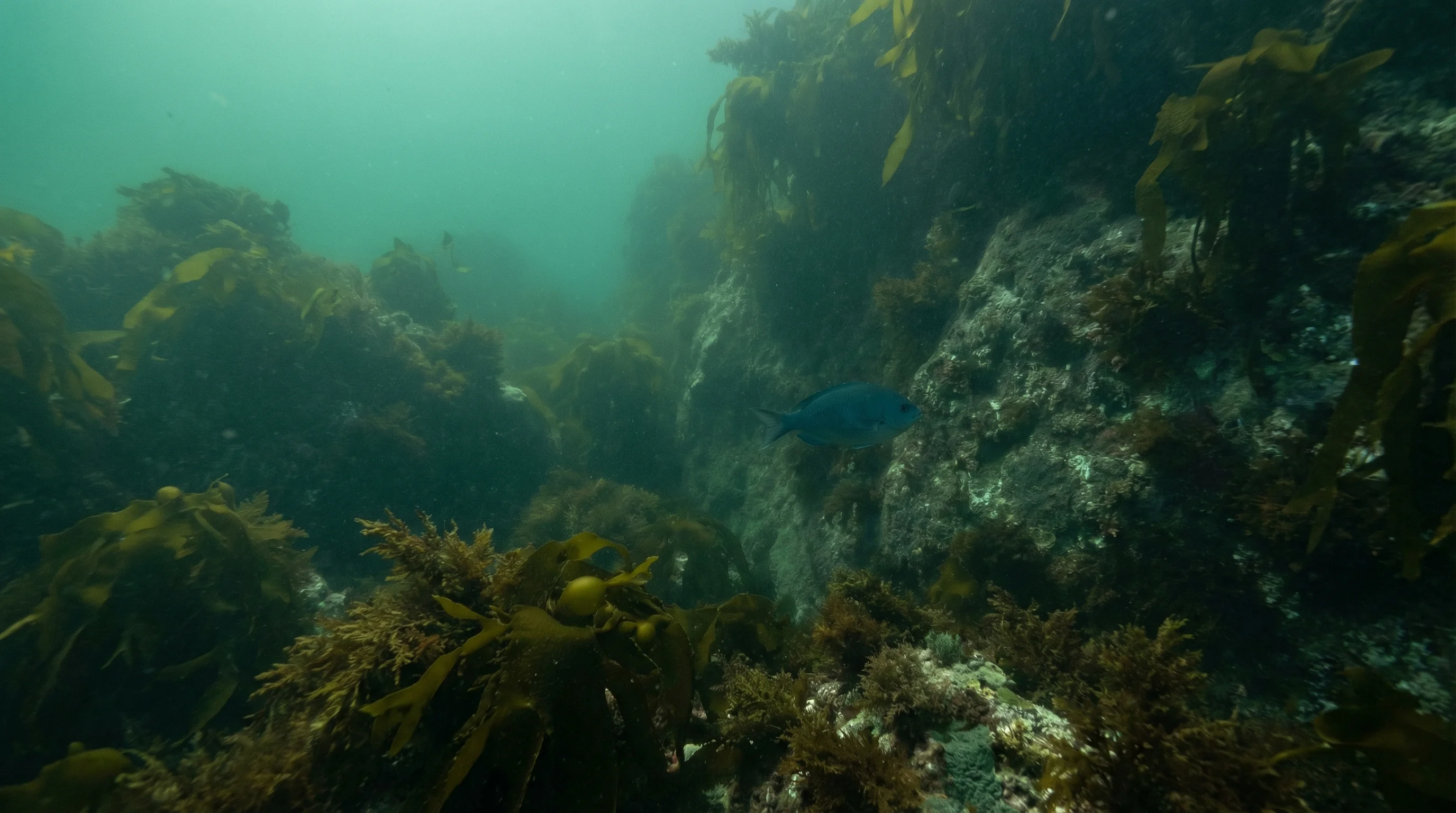
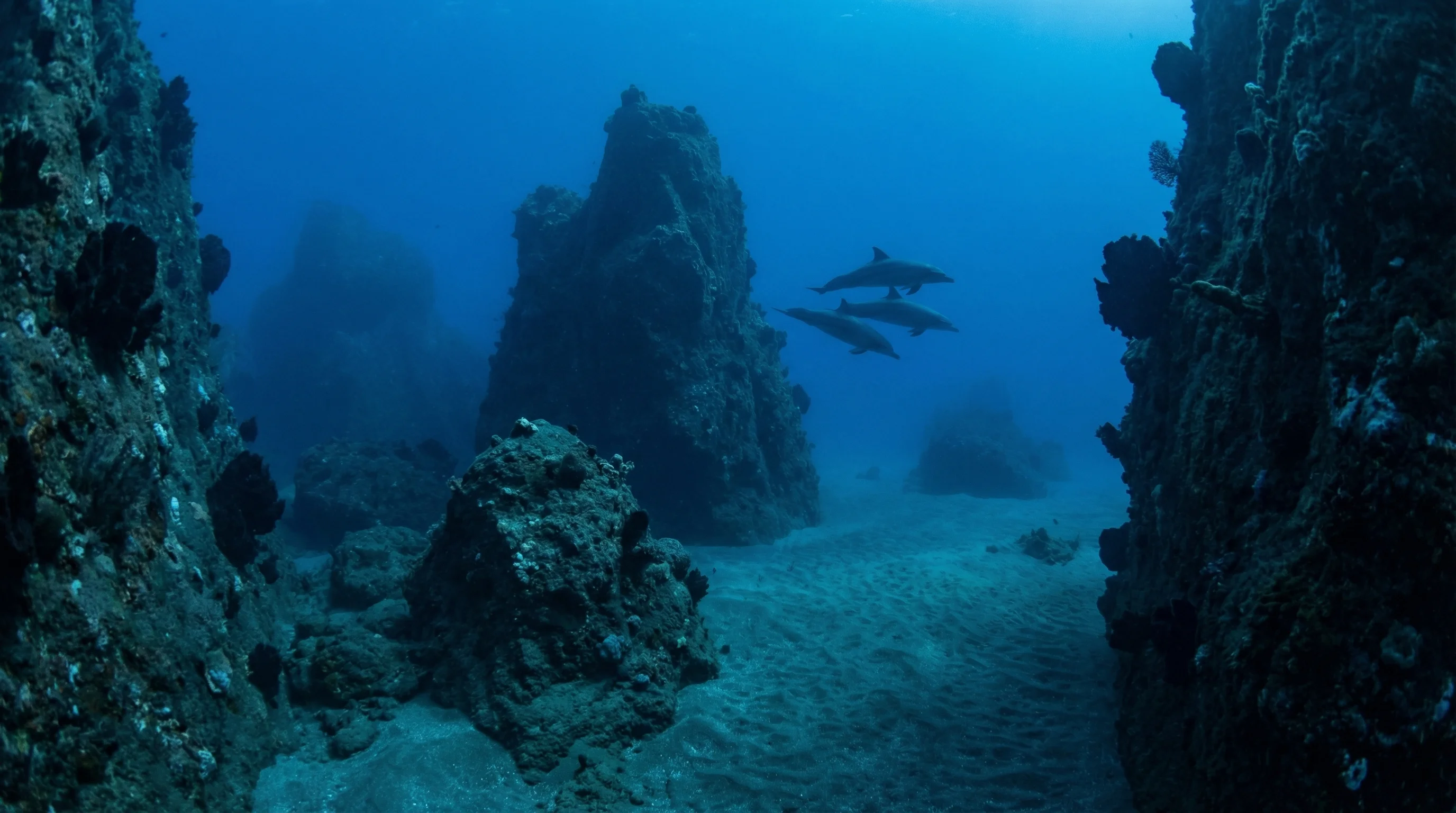
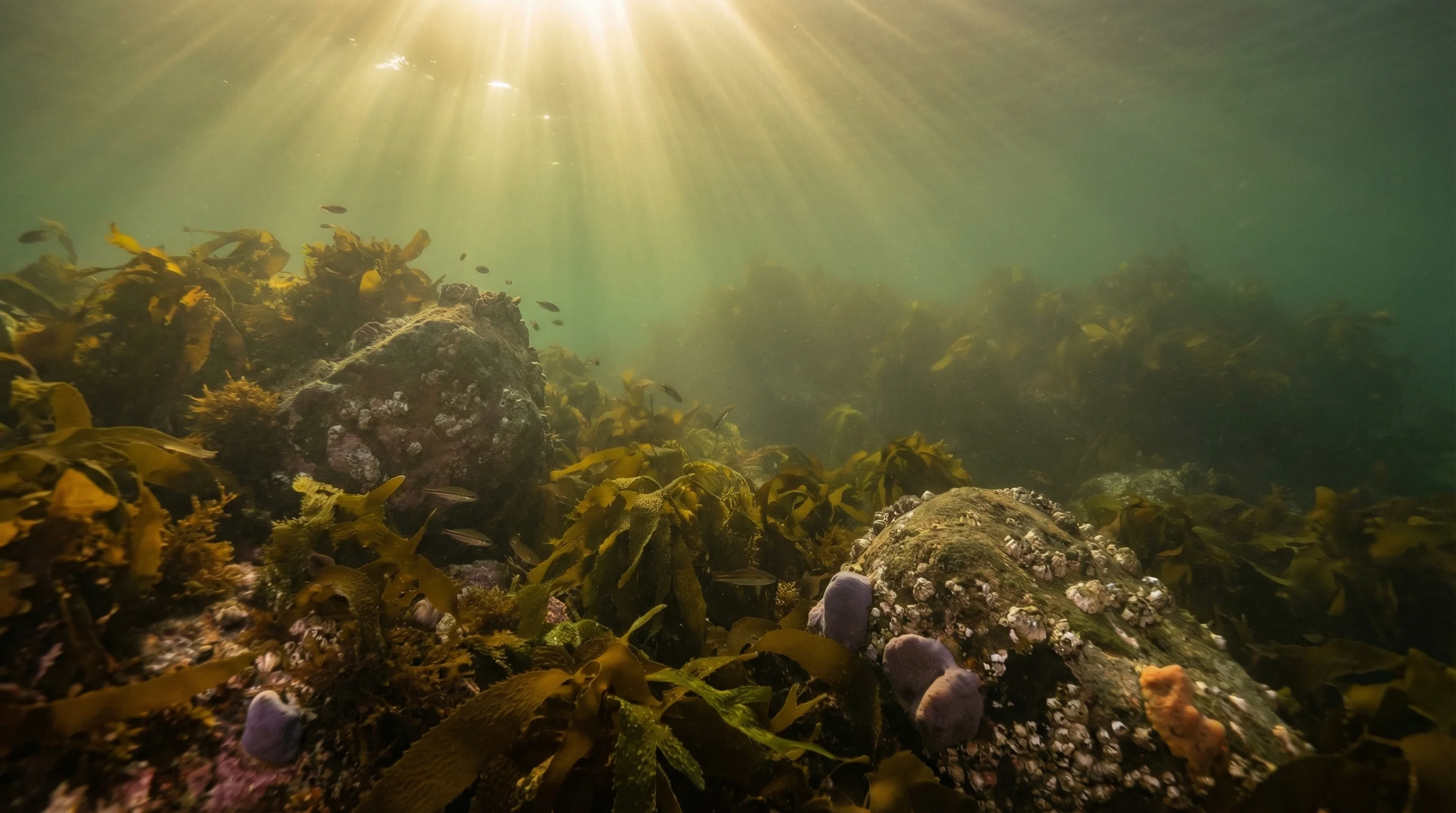
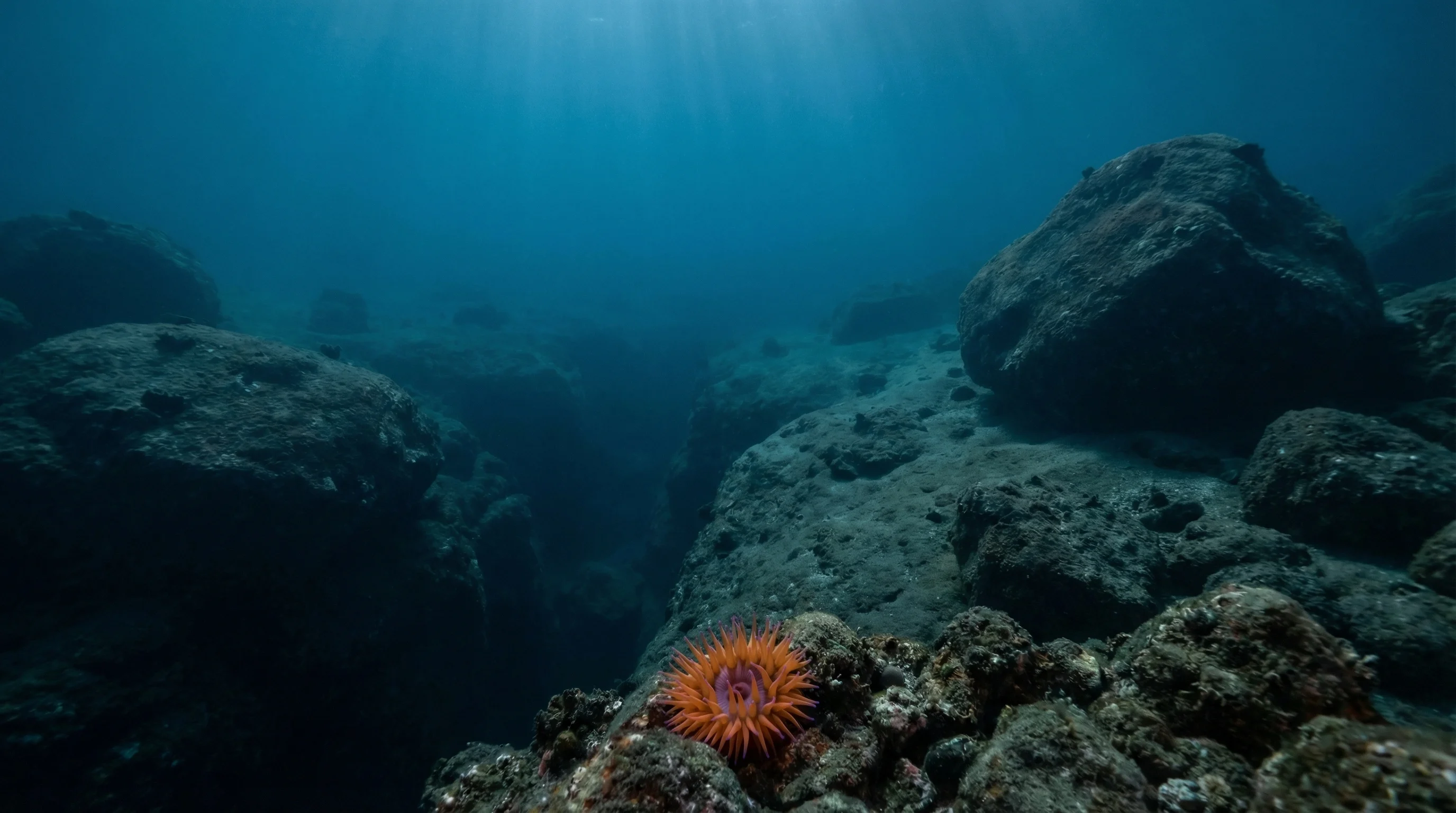
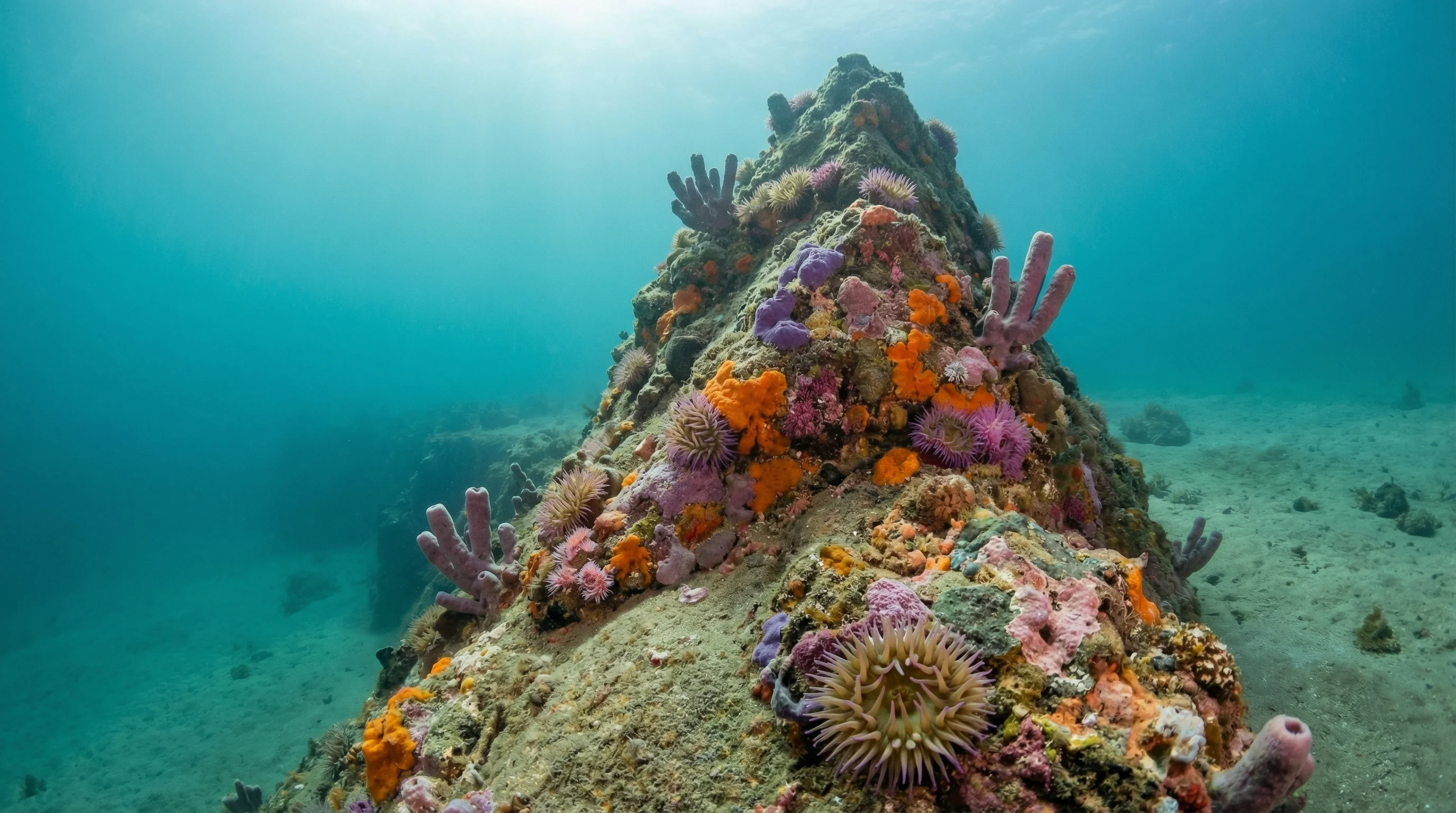
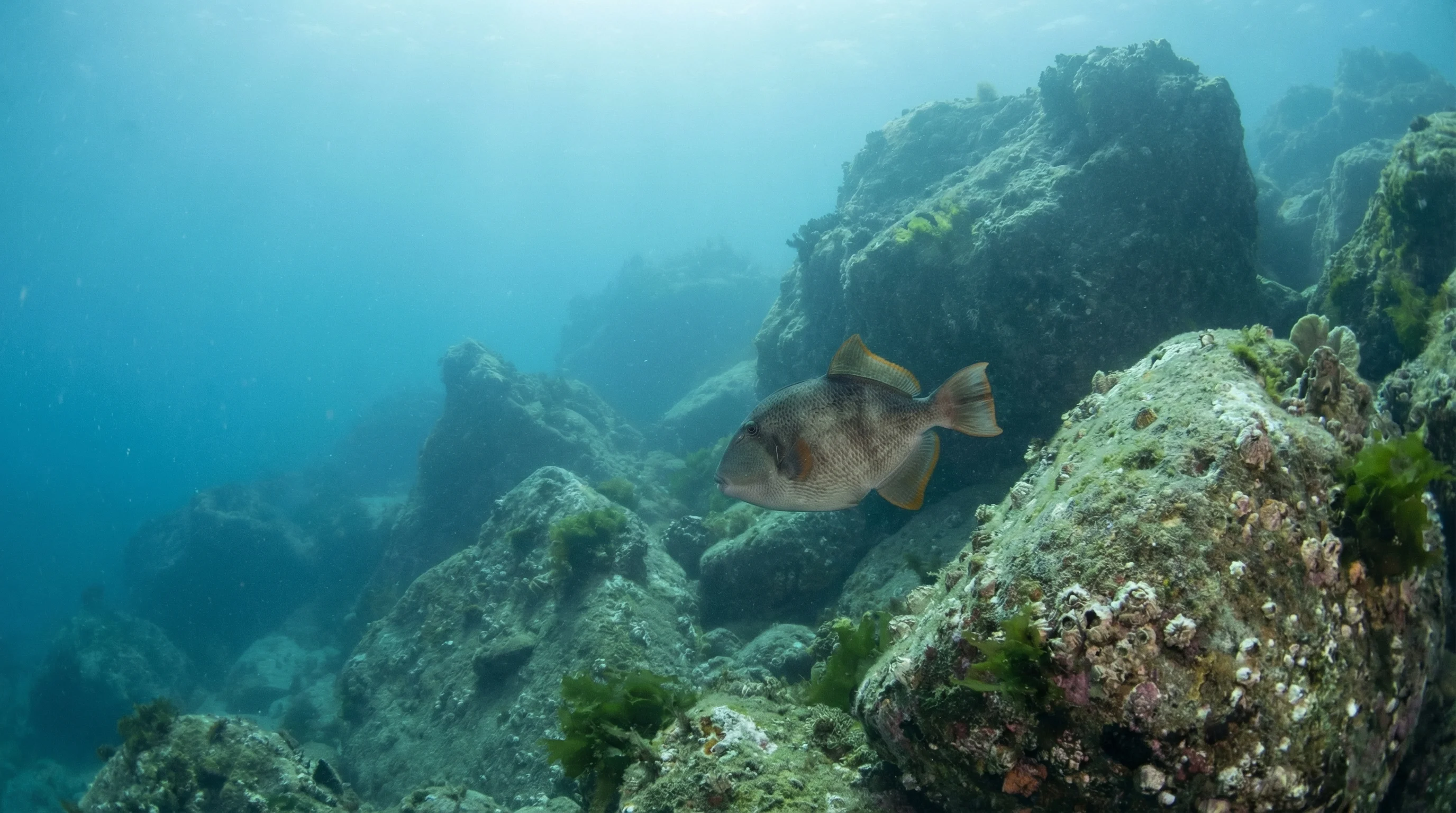
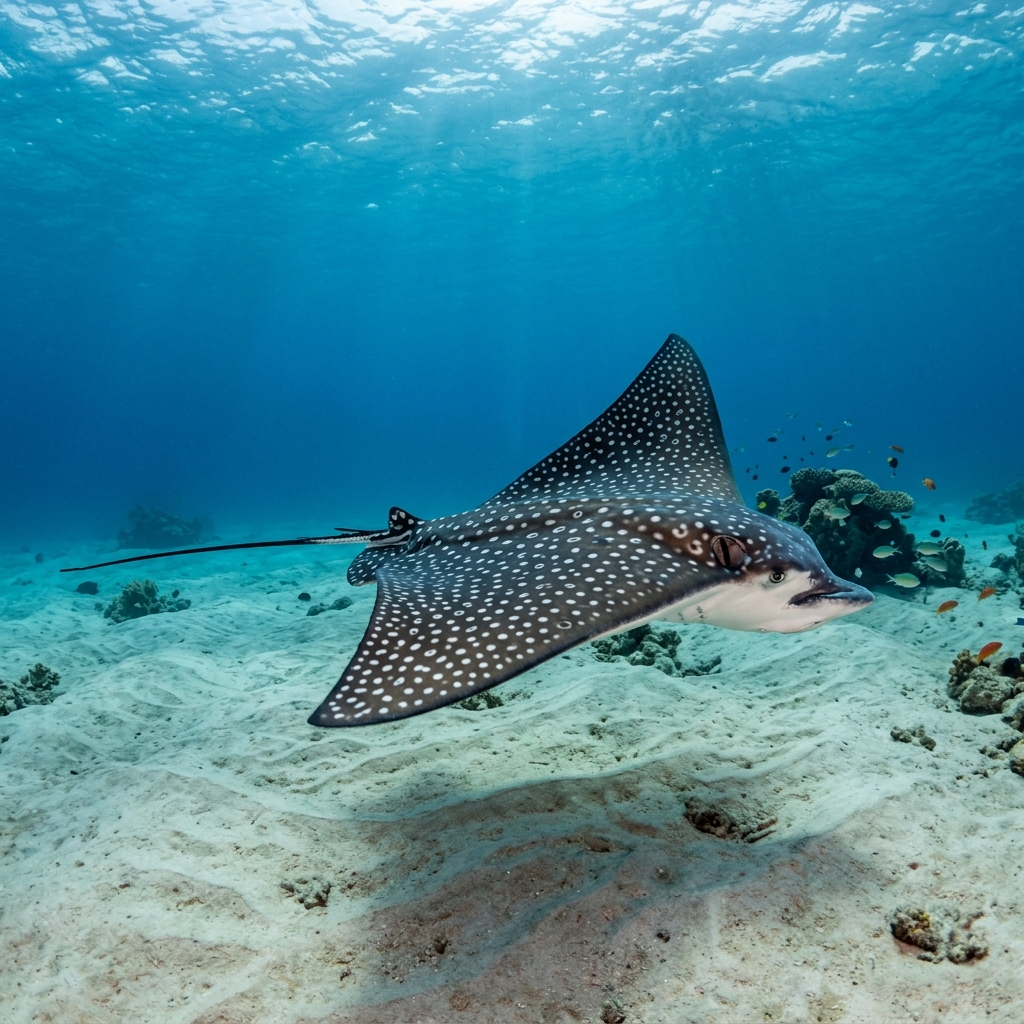
Whitianga's dive sites are defined by varied rocky topography: pinnacles, walls, caves, caverns, and kelp-draped reefs, most reached by boat. The majority of sites suit beginners, with a handful of more complex structures for intermediate divers. Eagle Ray, Green Moray, Ram's Horn Squid, and Long-nosed Fur Seal are among the signature encounters. The Aldermen Islands, farther offshore, offer the widest range of formations, while sites closer to the peninsula such as Mahurangi Island and Cave Bay provide accessible alternatives.
Monthly water temperature across Whitianga's sites, from satellite sea-surface data corrected for depth. The band shows the site-to-site spread.
Water is warmest through summer, peaking around late January and February, then cooling steadily into the middle of the year when temperatures reach their lowest. December through March draws the strongest diver interest, though the shoulder months of November and February also rate well. Visibility is variable and can be excellent when conditions cooperate.
4 operators
Whitianga, New Zealand
New Zealand
New Zealand
4 more sites to explore
Water temperature around Whitianga ranges from about 15°C in August to 22°C in February, based on satellite sea-temperature data for its dive sites.
In the warm season (about 22°C) a 3mm full suit is comfortable in Whitianga; in the coldest months (about 15°C) step up to a 7mm or semi-dry suit.
Fin maps 15 sites in Whitianga (12 scuba diving sites and 4 snorkelling spots, with some suited to both).
Across Whitianga's dive sites, February, March and December are most often reported as the best months to visit.
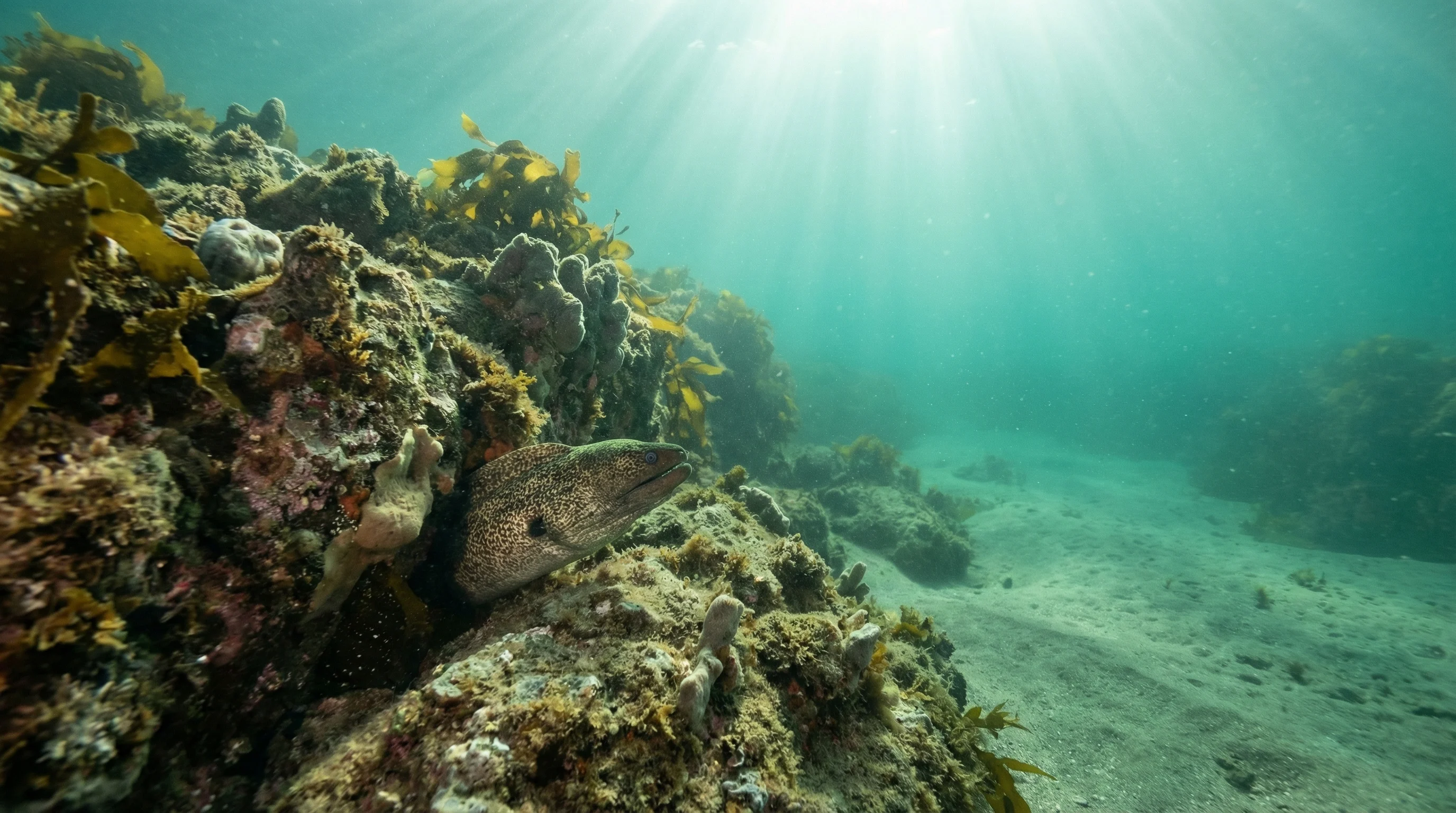
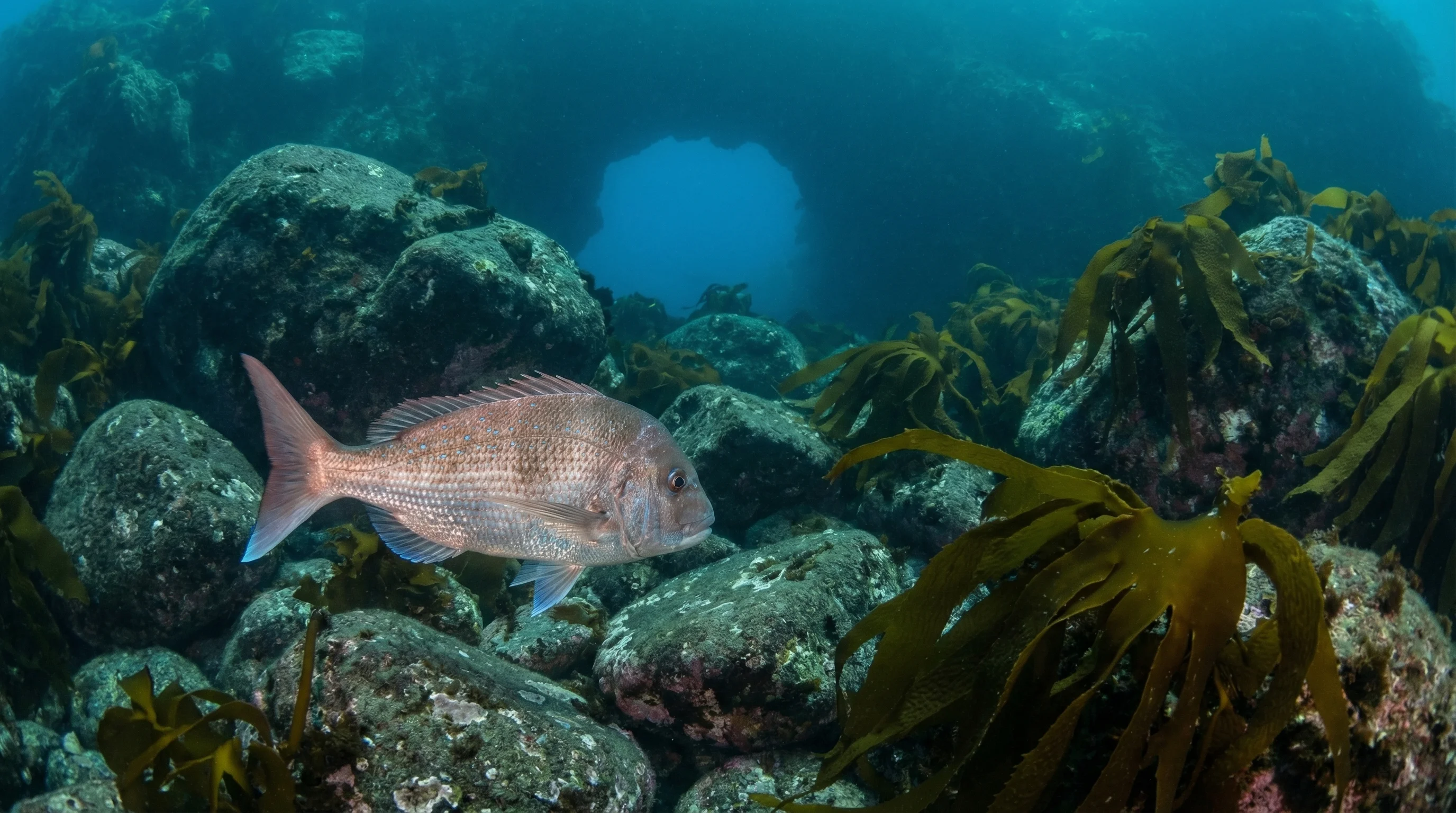
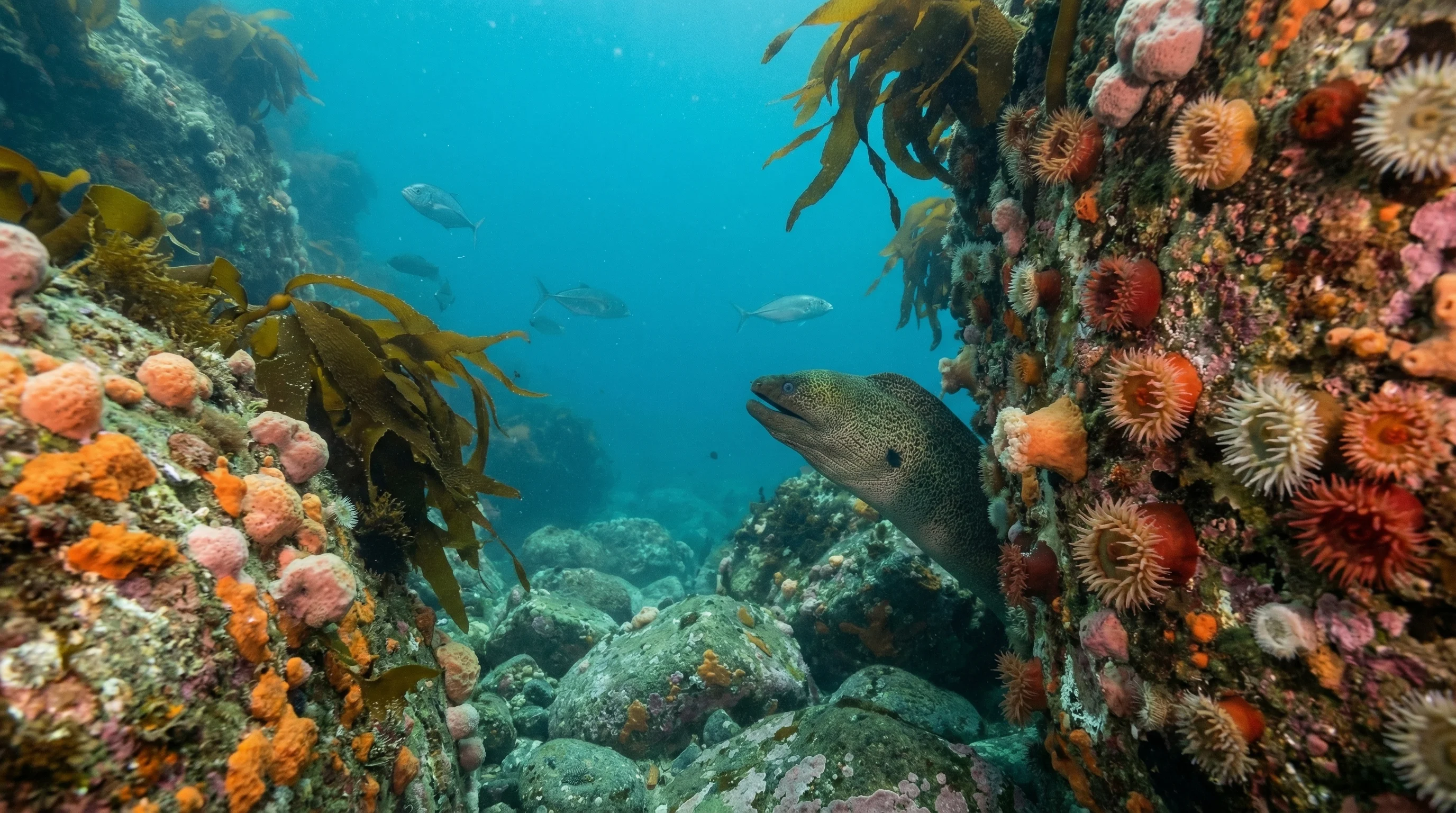
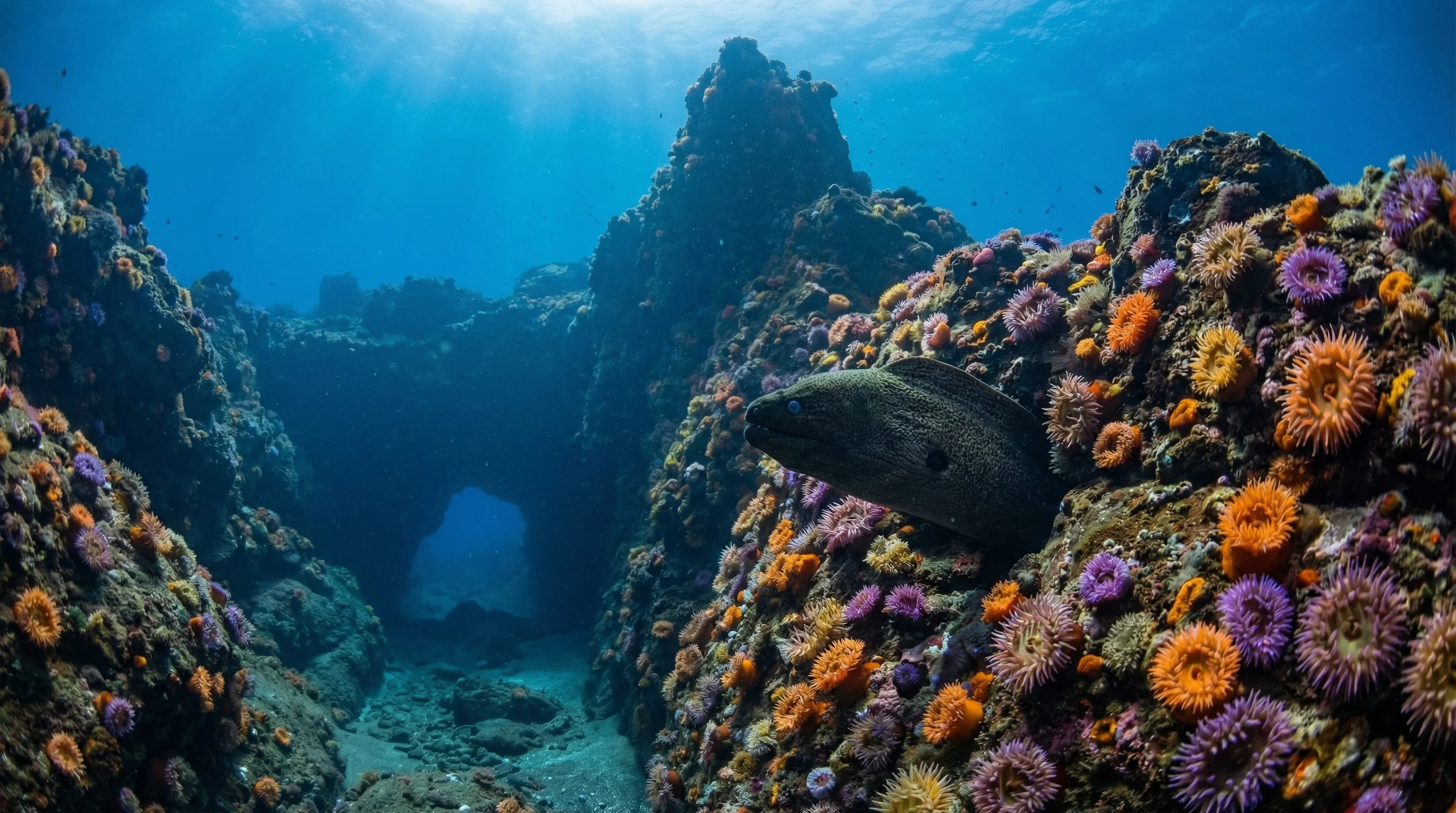
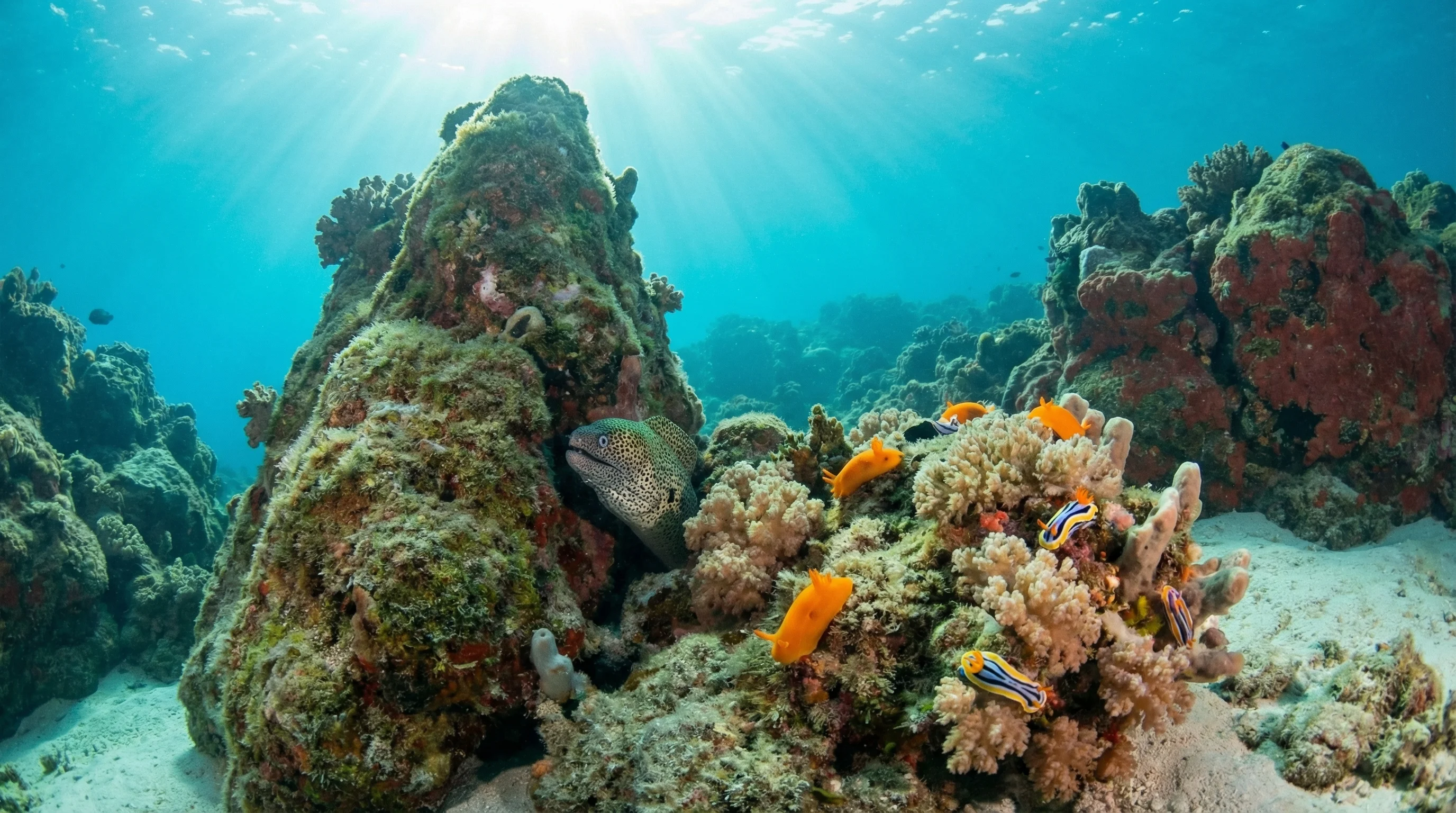
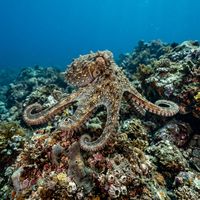
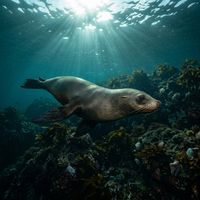
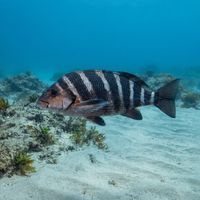
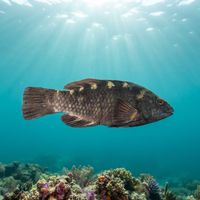
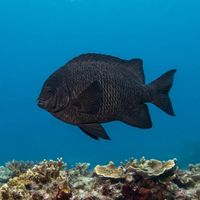
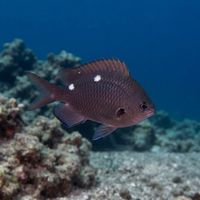
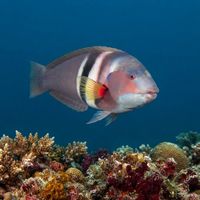
Eagle Ray and Green Moray are observed very commonly across the region's sites. Ram's Horn Squid, Common Sydney Octopus, and Long-nosed Fur Seal are also frequently encountered. Reef fish such as Banded Wrasse, Sandager's Wrasse, Black Scalyfin, and Banded Morwong are present across a wide range of sites, and Southern Rock Lobster can be found tucked into crevices.
Most sites in Whitianga are rated for beginners, including Mahurangi Island, Cave Bay, Mooring Bay, Okorotere Island, and Shipwreck Bay. A smaller number of sites, such as The Long Drop, South Sunk, and Russ' Ravine, are pitched at intermediate level and feature more complex topography including deep walls and cavern systems. There is enough variety to challenge divers as they progress.
Almost all dive sites in Whitianga are reached by boat, including the more remote Aldermen Islands. Mahurangi Island near Hahei Beach is the notable exception, accessible from shore. Several local operators, including Dive Zone Whitianga, Cathedral Cove Dive and Snorkel, Salt Aotearoa, and Cathedral Cove Dive Ltd, run guided boat trips to the region's sites.
The Aldermen Islands offer the most varied topography in the region, combining reefs, pinnacles, walls, and caves within a single location. Being farther offshore means the trip requires a boat and conditions need to be suitable, but the site is rated accessible to beginners despite its range of features. Closer sites like Cave Bay and Okorotere Island provide similar structural variety on a smaller scale without the offshore journey.