Coris sandeyeri
Bright orange-and-blue wrasse logged at reef sites across North Island NZ and New South Wales, year-round in 17-24C water.
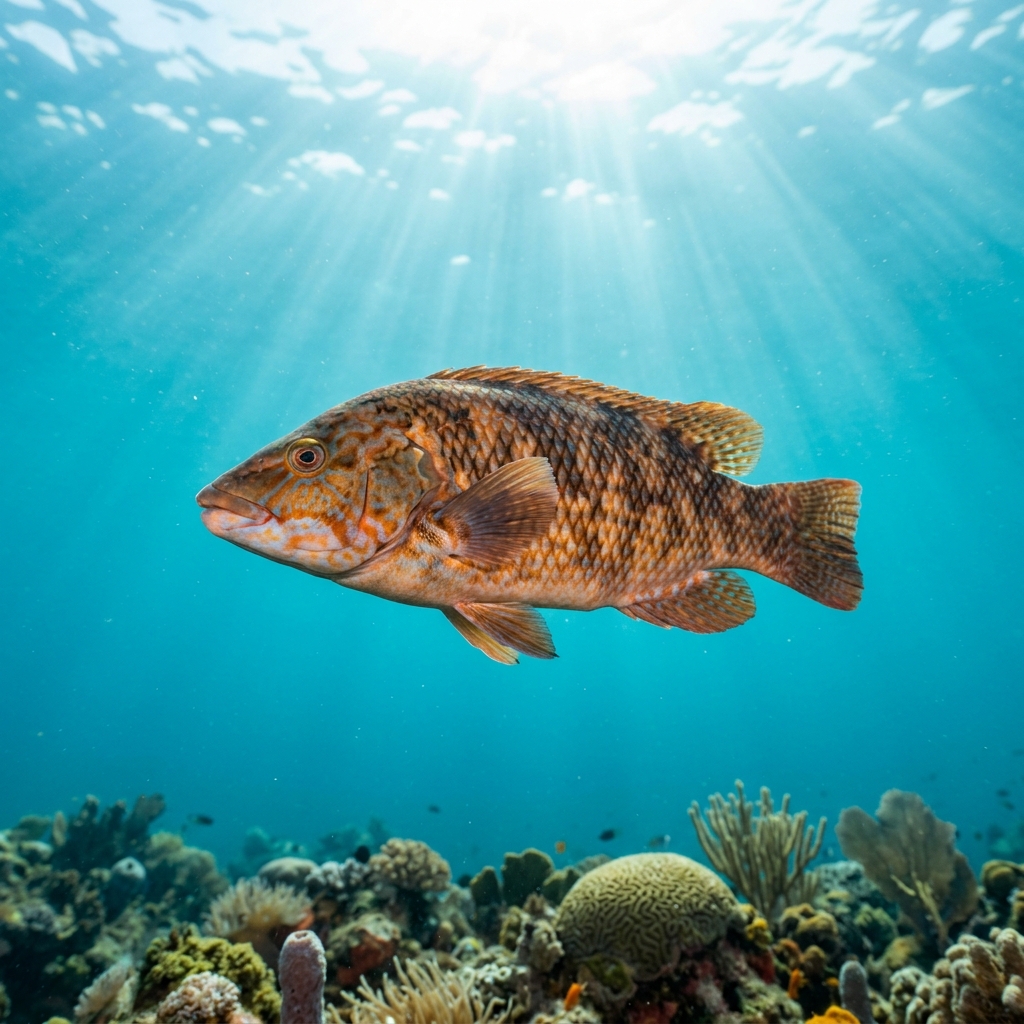
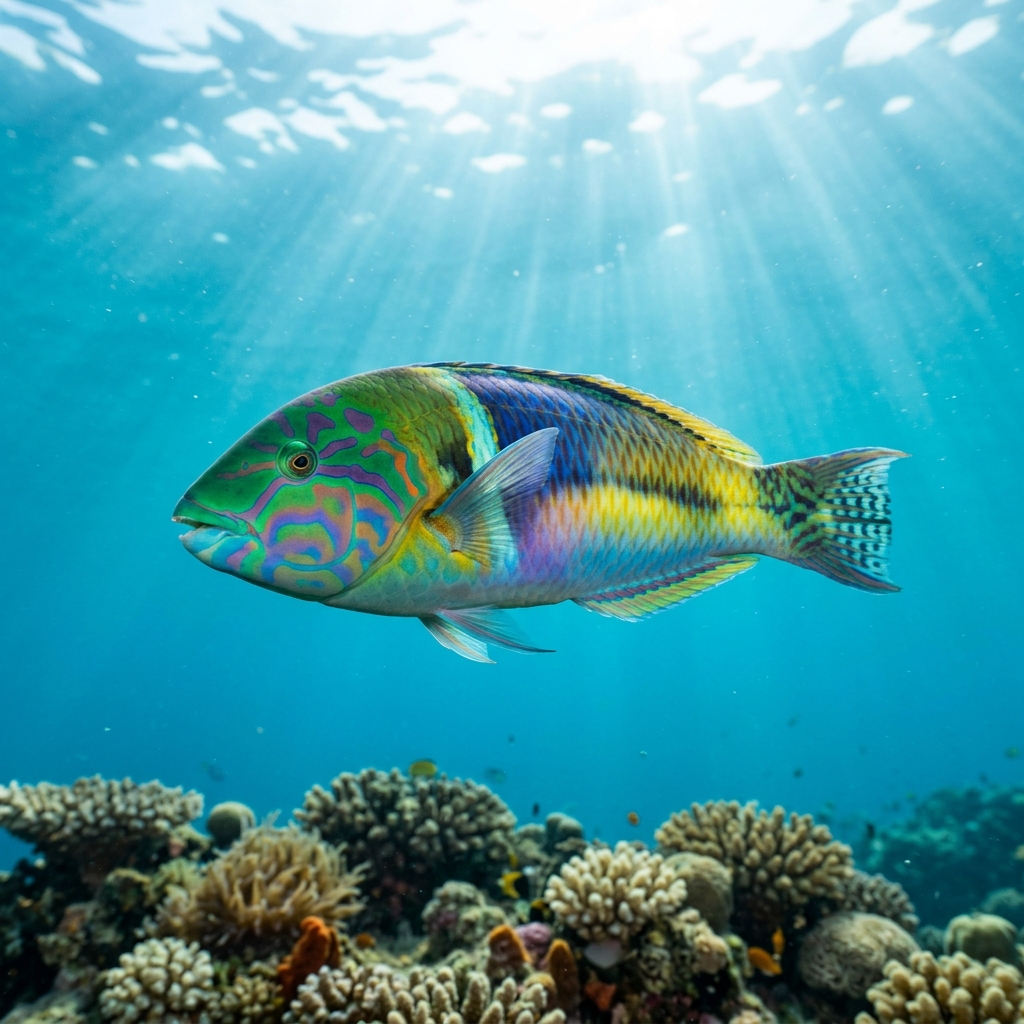
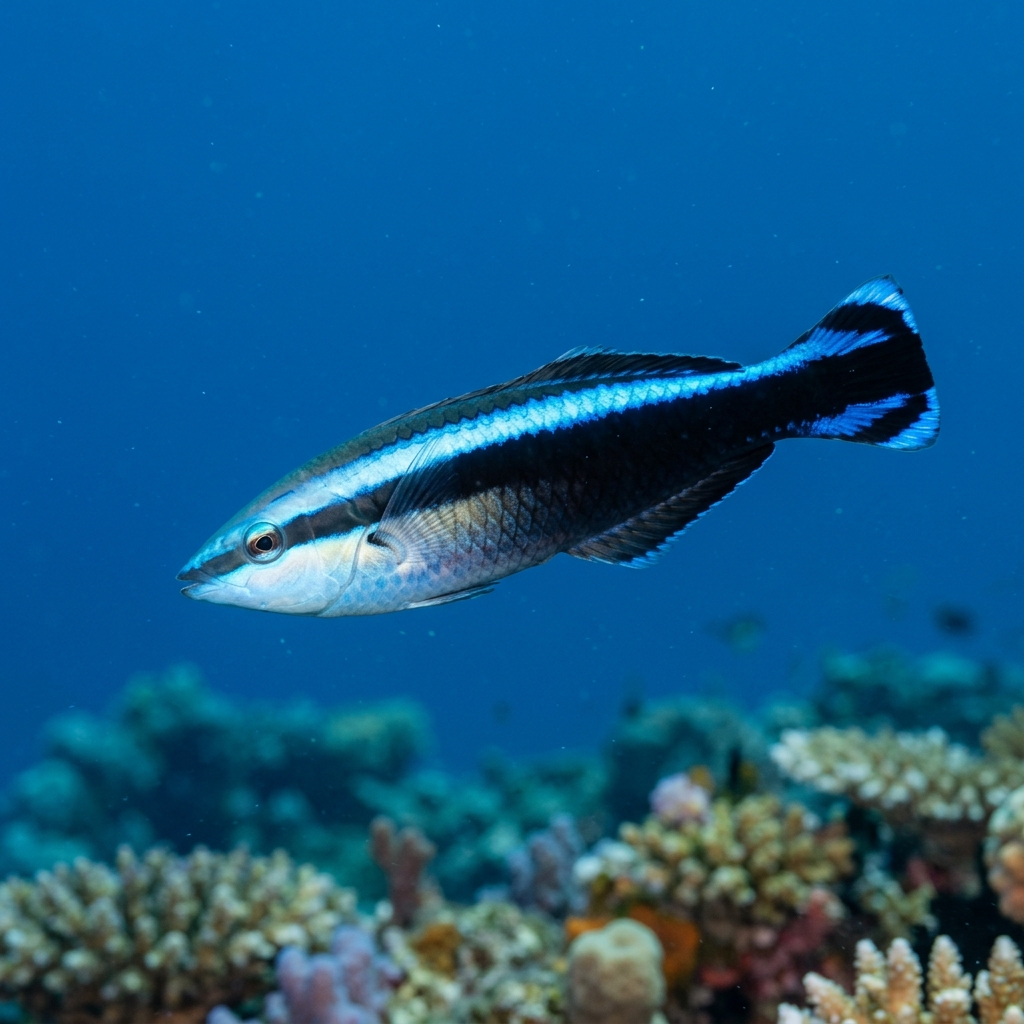
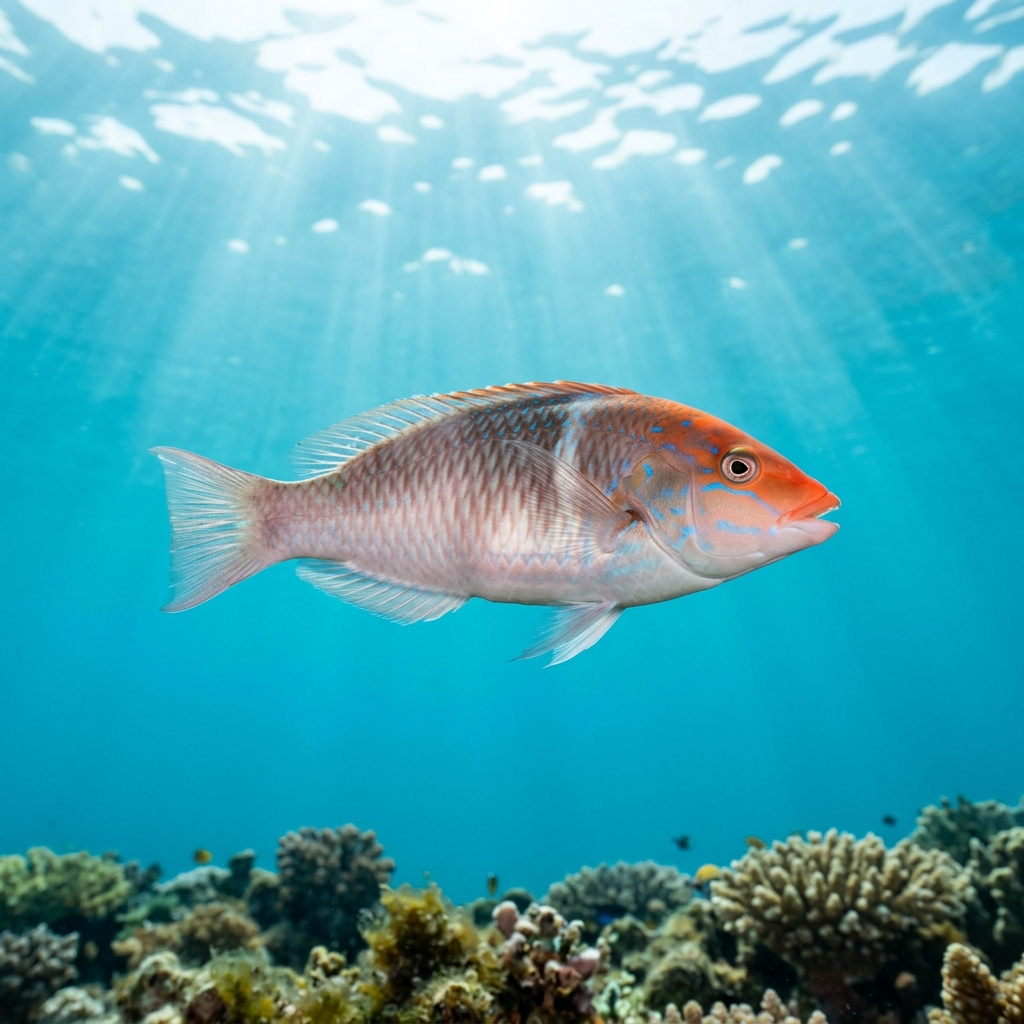
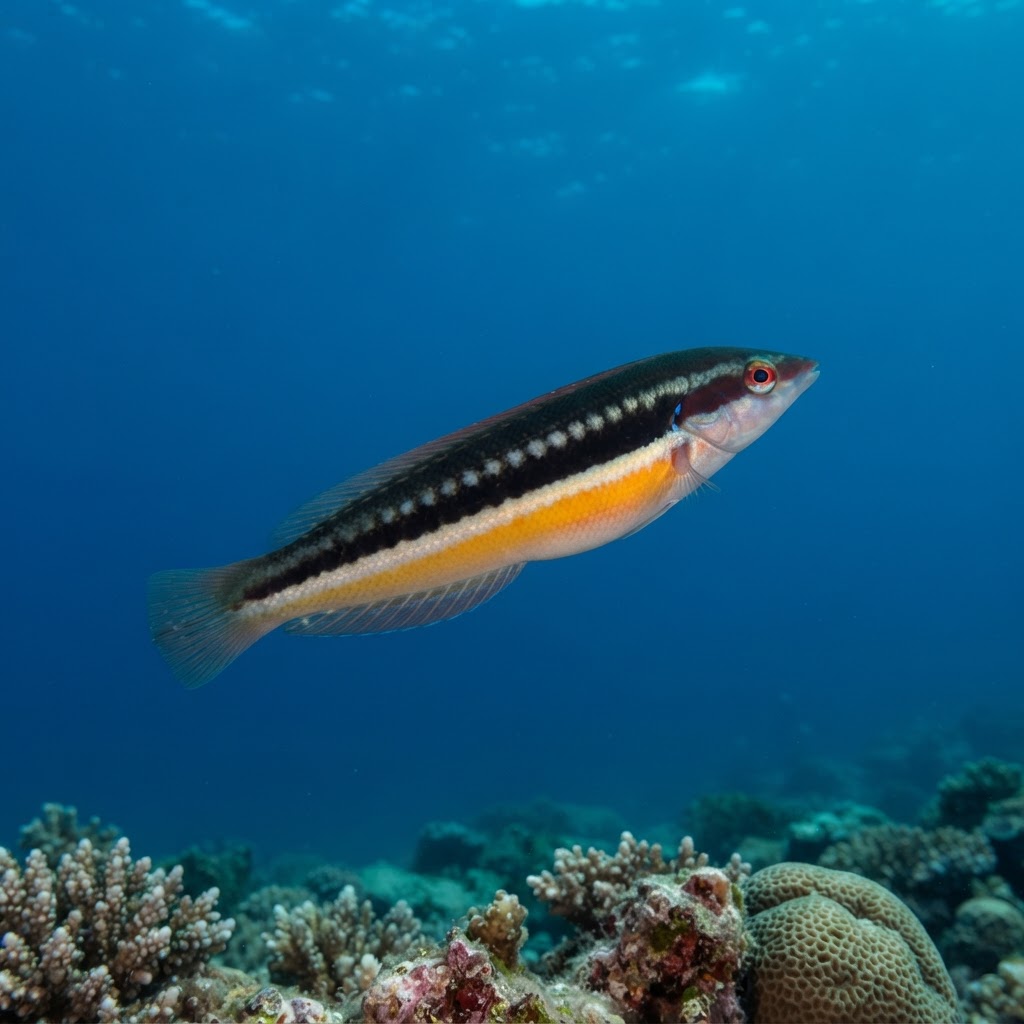
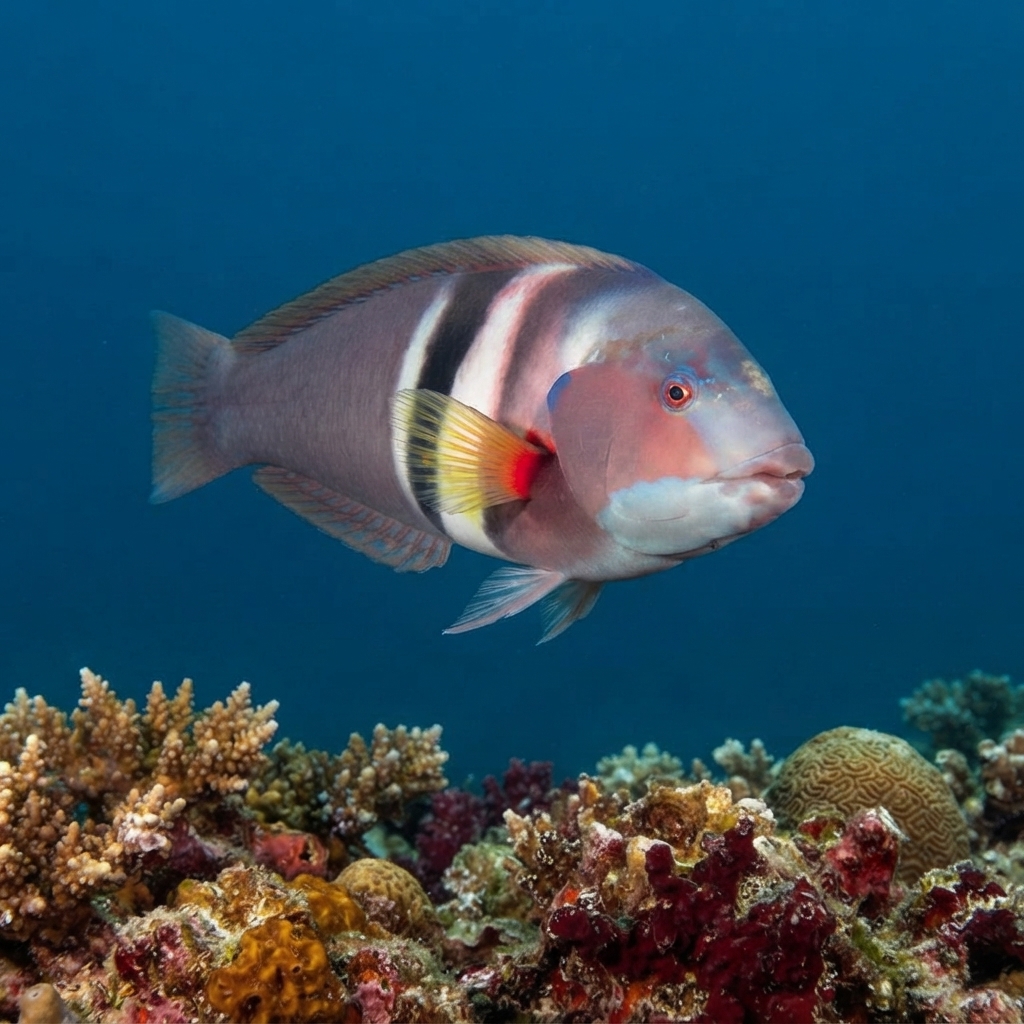
Slim, torpedo-shaped fish around 17 cm, with a burnt-orange to reddish body crossed by pale blue streaks and spots concentrated around the head and gill area. Look for the electric-blue markings along the face and the leading edge of the dorsal fin, which stand out even in low light on temperate reef. Males tend to show bolder blue patterning than females, a common pattern in Coris wrasses.
Usually seen cruising low over rocky reef and mixed reef/sand edges, picking at the substrate for small invertebrates rather than schooling in open water. It is generally unbothered by divers, holding its ground or continuing to forage rather than bolting, though at most sites it turns up as a single fish rather than in numbers. Most logs describe it as an uncommon but steady find rather than something you see on every dive.
Like many Coris wrasses, it is a protogynous hermaphrodite, meaning individuals can start life as females and later change into males, which is likely behind the difference in blue markings between the sexes.
No clear seasonal pattern shows up in the sighting data, and the observed temperature range of 16.8 to 23.5C spans both cooler and warmer months, so it is a fair bet on North Island and NSW reef dives at any time of year.
Most reliably logged around North Island, New Zealand, where it turns up across a large number of reef sites, with a solid secondary population in New South Wales, Australia. These temperate reef and rocky headland sites are the reference locations for finding this fish.
Mapping where Sandager's Wrasse is logged…
Best chances are on reef sites around North Island, New Zealand, where it is logged most often, with New South Wales, Australia as a reliable secondary spot. It favours rocky reef and reef-edge habitat over open sand or deep drop-offs.
There is no strong seasonal signal in the sighting data, and it has been recorded across a wide temperature range from 16.8 to 23.5C, so divers log it at North Island and NSW sites throughout the year.
Look for a slender orange-bodied fish about 17 cm long with bright blue streaks and spots concentrated around the head and dorsal fin. It moves low over rock and reef, picking at the bottom rather than schooling in the water column.
They average around 17 cm, making them a small to mid-sized reef fish rather than a standout-sized wrasse.
No, it poses no threat to divers and typically just continues foraging or holds its position when approached.
Yes, like several other Coris wrasses it is a protogynous hermaphrodite, so some individuals begin life as females and later transition to males, which may explain the bolder blue markings seen on some fish.
Site and sighting data is aggregated from diver logs, iNaturalist and GBIF. For taxonomy and conservation status:
Bird Wrasse
3,632 sites