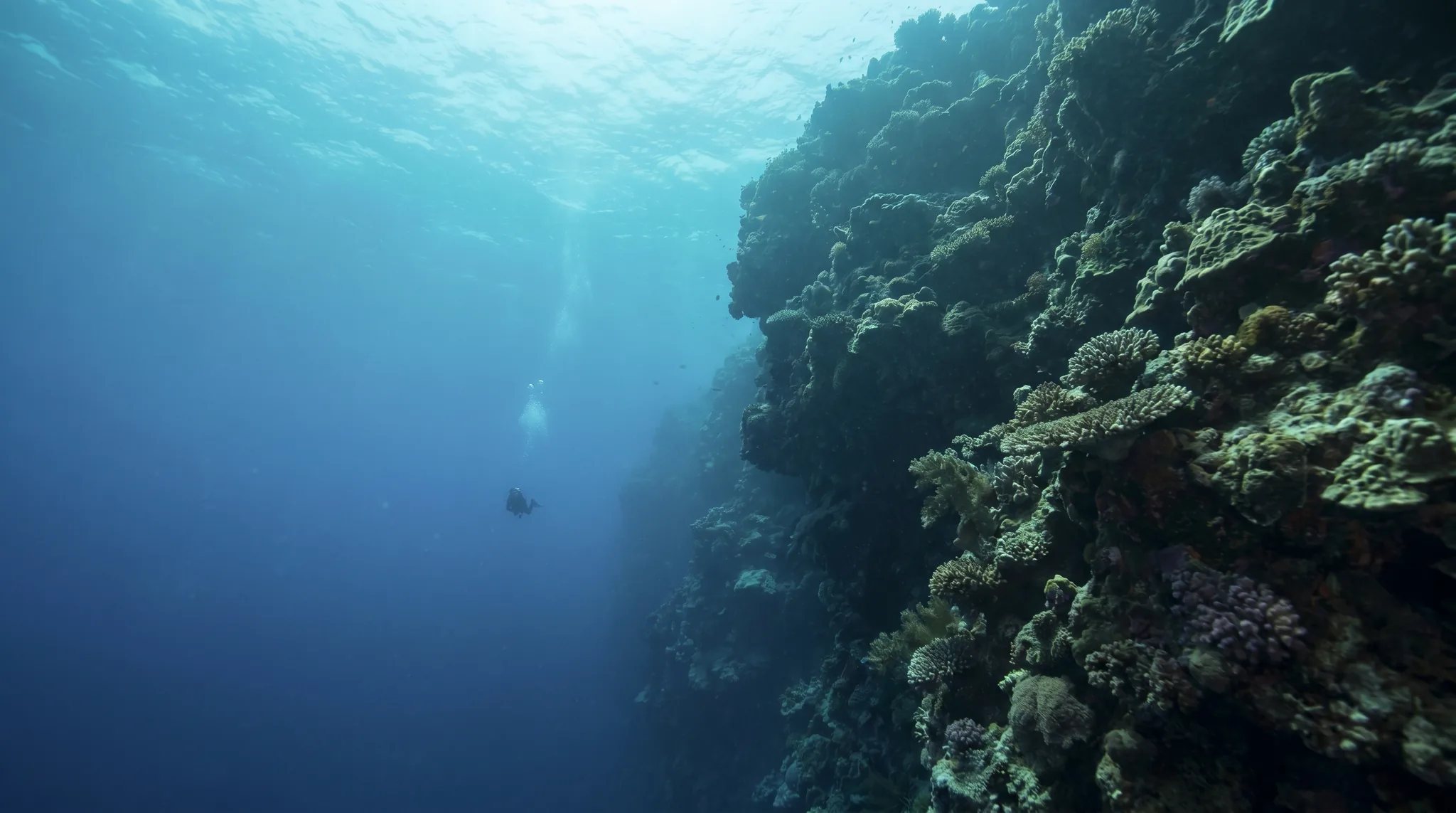
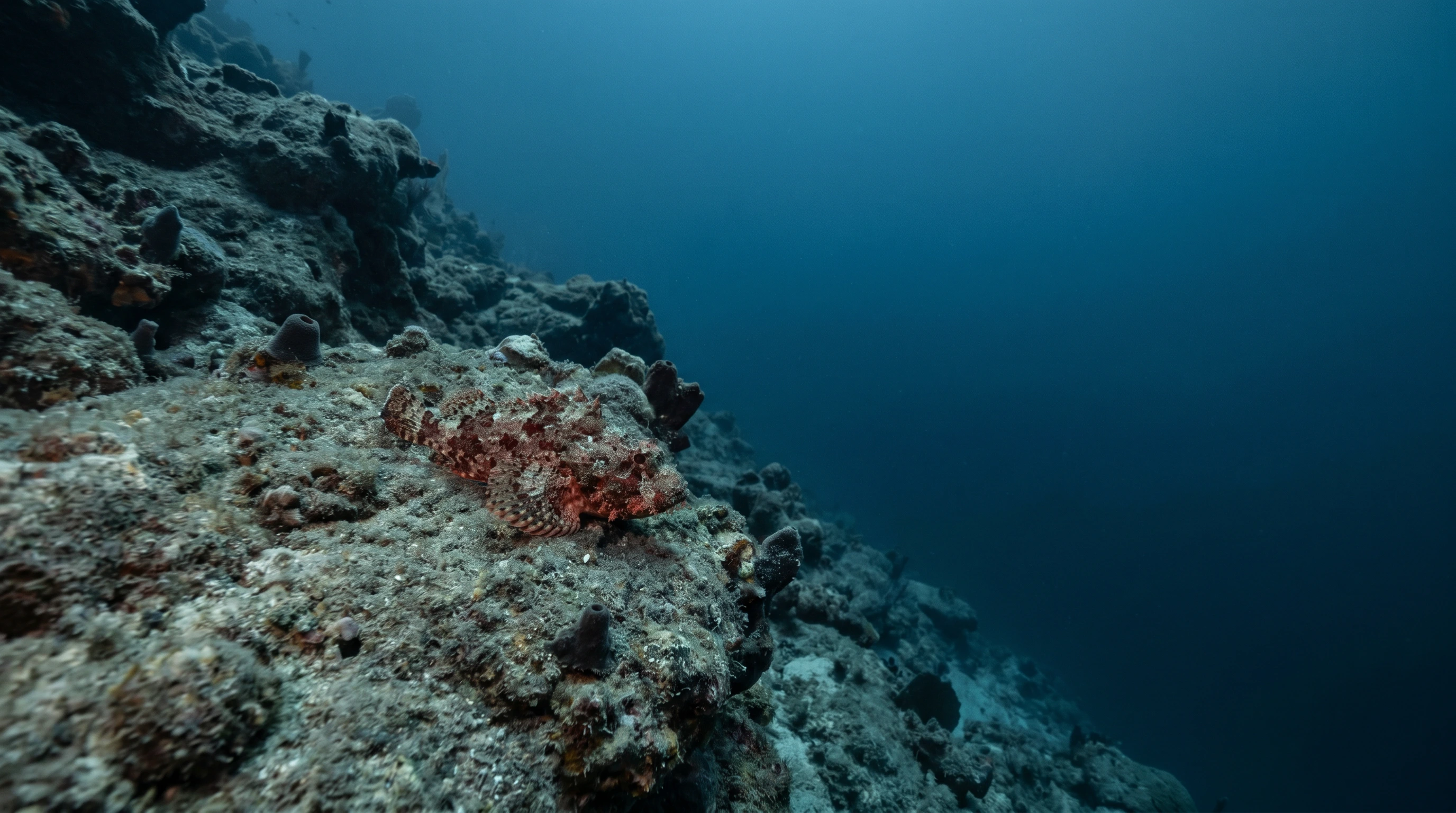
Guanaja sits in the Caribbean Sea as the most remote of Honduras's Bay Islands, within the Mesoamerican Barrier Reef System and the Bay Islands National Marine Park. Its fringing reef is a protected marine reserve, and the underwater terrain is unusually varied: pinnacles, vertical walls, caves, and drift channels span depths from very shallow to well beyond sport-diving range. The site mix suits all levels, from the shallow nursery at Dunbar Rock to the deep channel wall at The Pinnacle, where black coral and crinoids cover the structure. Nurse sharks, Caribbean reef sharks, hawksbill turtles, spotted morays, and coconut octopus are regularly recorded across the sites. Visibility is generally good, reaching up to thirty metres, though it can reduce during the rainier months from October through January.
Monthly water temperature across Guanaja's sites, from satellite sea-surface data corrected for depth. The band shows the site-to-site spread.
Water temperature stays warm year-round, rising to its peak in the later summer and early autumn months and cooling slightly in the first quarter of the year, when a light wetsuit is comfortable. Conditions are generally calmest and visibility most reliable from March through to October, making that the preferred window for planning a trip.
Water temperature around Guanaja ranges from about 27°C in January to 30°C in September, based on satellite sea-temperature data for its dive sites.
With water around 27–30°C, a rash guard or 3mm shorty works in Guanaja year-round.
Fin maps 8 sites in Guanaja (7 scuba diving sites and 4 snorkelling spots, with some suited to both).
Across Guanaja's dive sites, February, March, April, May, June and July are most often reported as the best months to visit.
7 more sites to explore