Stegastes partitus
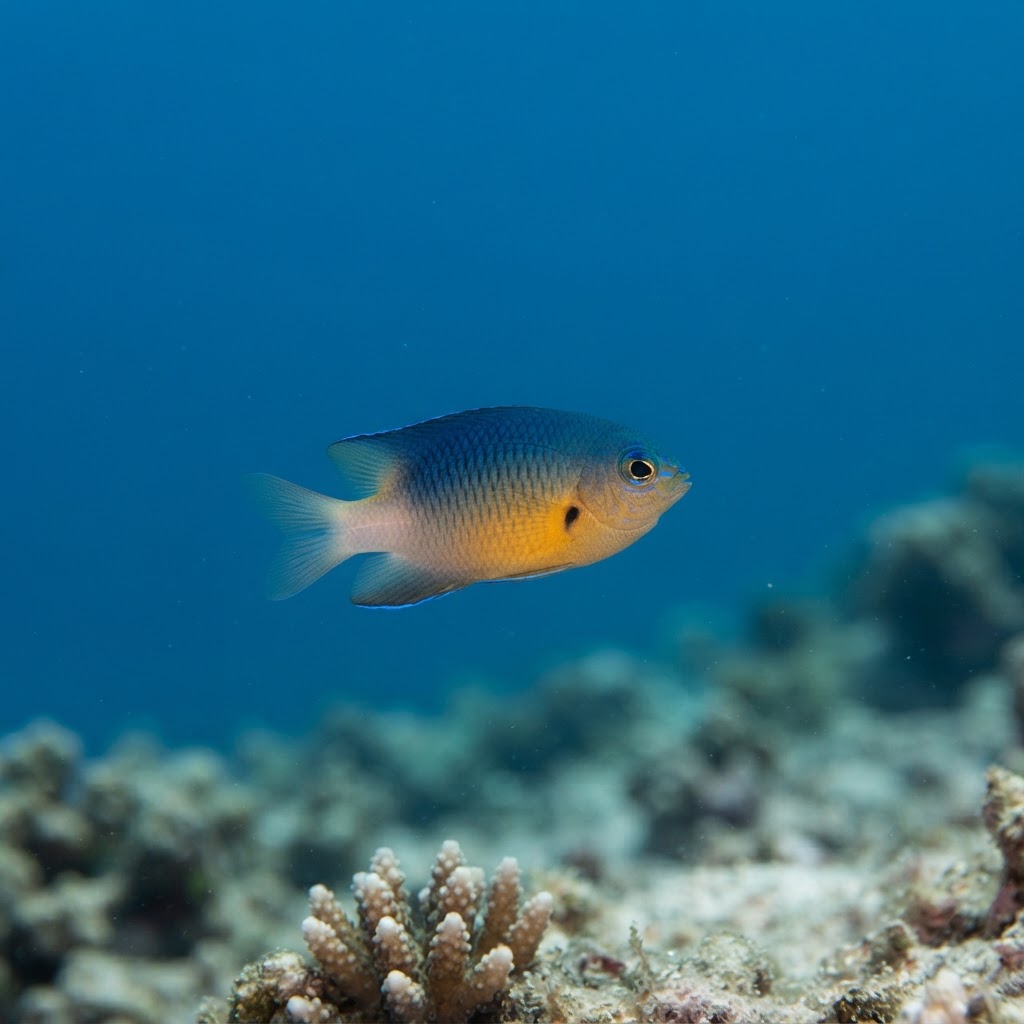
A small reef regular seen year-round in Bonaire, the Yucatán and Cayman, split clean in half between dark front and yellow tail.
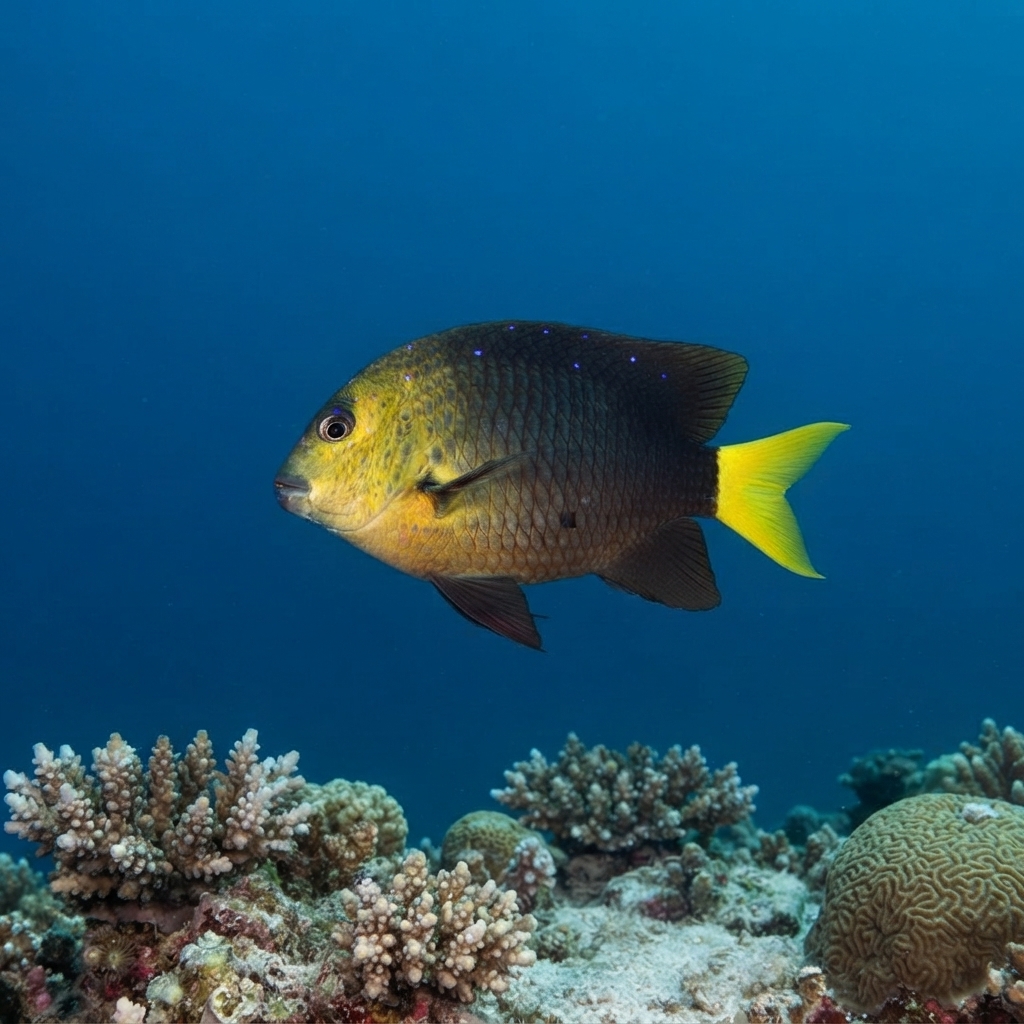
Small and easy to overlook at 7 cm, this fish is split almost exactly down the middle: dark blue-black on the front two-thirds of the body, sharp yellow on the rear third and tail. Juveniles show the same split pattern but with an added electric-blue spot near the top of the tail fin that fades as they mature. It sits close to a coral head or rubble patch rather than roaming open water, which is often the first clue to its identity.
Look for it hovering a few centimetres off a coral head or patch of rubble, darting back to the same spot each time. It is territorial for its size and will chase off other small fish that stray too close to its patch, sometimes even nipping at a diver's hand or camera if you linger right over its home coral. Most sightings are in shallow to mid reef depth on the fringes of coral heads rather than in open sand or blue water.
Males guard clutches of eggs laid on bare rock or dead coral and will fan and defend them for several days until the larvae hatch and drift off into open water.
No clear seasonal pattern shows up in the sightings, and given its comfort range of roughly 24 to 28 C it stays put on Caribbean reefs all year rather than migrating with water temperature. Plan around good reef conditions generally rather than a particular month.
Reef neighbours a diver could mistake it for. Use the identification notes above to tell them apart.
This is one of the most reliably logged small reef fish across the Caribbean, with the heaviest sightings in the Yucatán Peninsula in Mexico, Florida, the Bay Islands of Honduras, Grand Cayman and the leeward coast of Bonaire. It also turns up consistently in Curaçao, Grenada and the US Virgin Islands, making it a near-certain find on almost any healthy Caribbean reef dive or snorkel.
Mapping where Bicolor Damselfish is logged…
It is a common find across the Caribbean, especially the Yucatán Peninsula in Mexico, Florida, Bonaire's leeward coast, the Bay Islands of Honduras and Grand Cayman. Expect it on almost any shallow to mid-depth reef in the region.
There is no strong season for this one. It stays on the same patch of reef year-round since Caribbean water temperatures rarely drop outside its comfort range of 24 to 28 C.
Look for a small fish, about 7 cm, split cleanly into a dark blue-black front half and a bright yellow rear half and tail. It hovers close to a specific coral head or rubble patch rather than swimming freely across the reef.
They max out around 7 cm, making them one of the smaller damselfish regularly seen on Caribbean reefs.
No. They are harmless to divers, though a territorial individual may dart at your hand or camera if you hover too close to its guarded patch of coral.
Site and sighting data is aggregated from diver logs, iNaturalist and GBIF. For taxonomy and conservation status:
Dascyllus
3,697 sites