Hypoplectrus puella
Small reef fish with dark bars, easy to spot in the Bay Islands, Grenada and Bonaire in warm 25-28C water year-round.
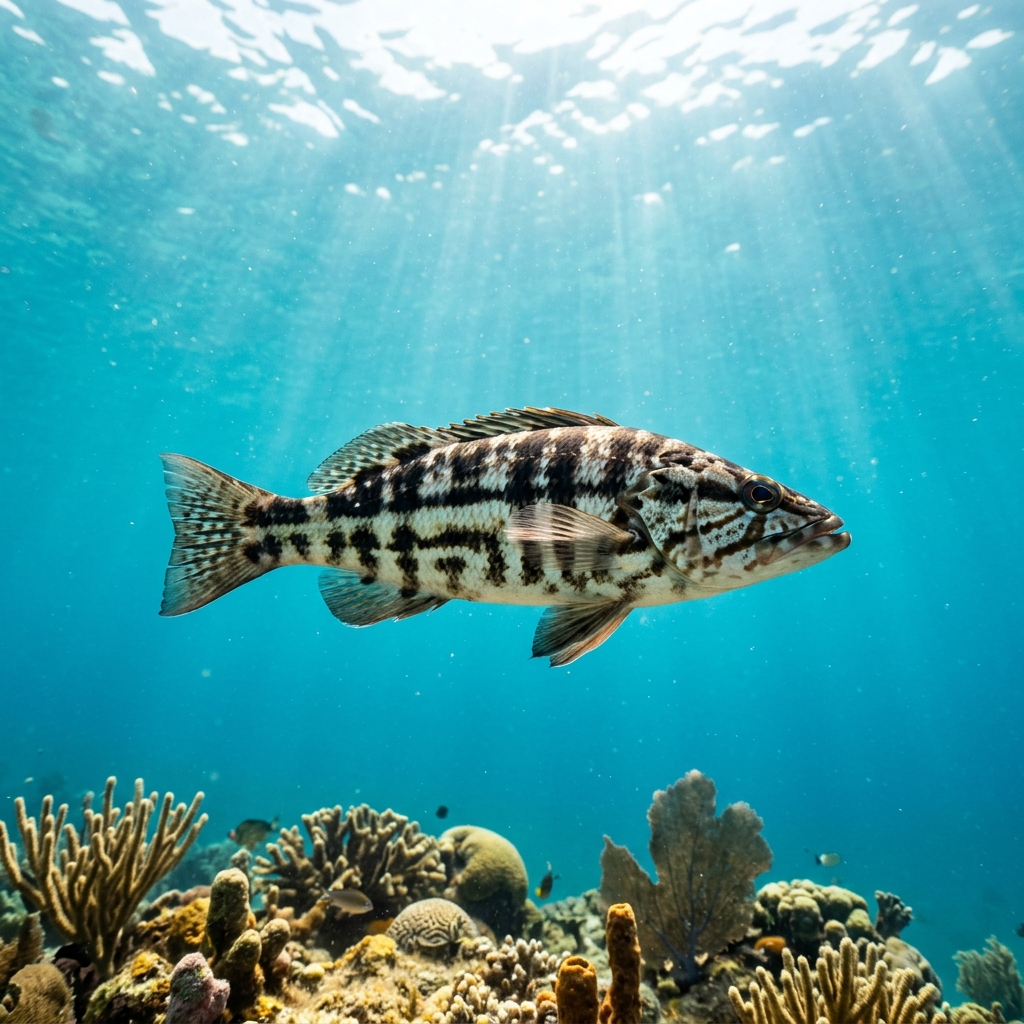
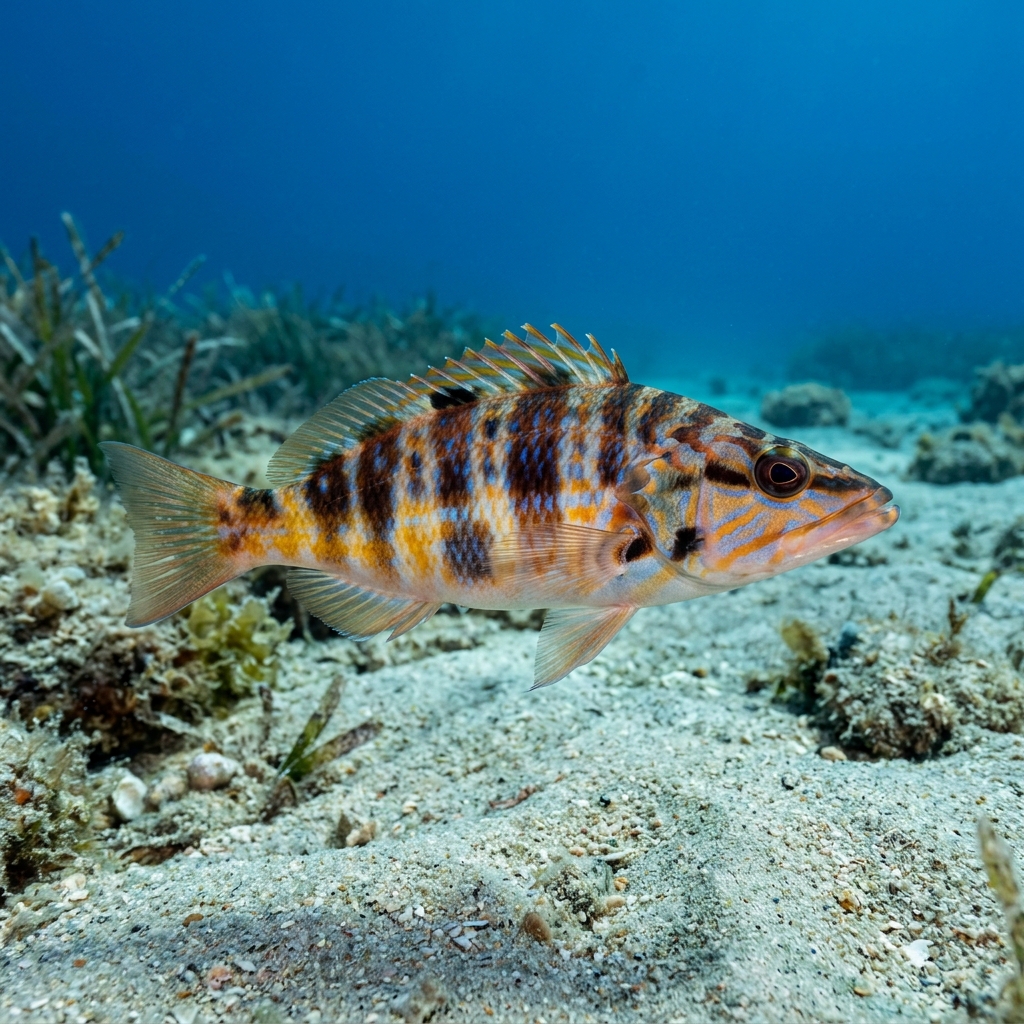
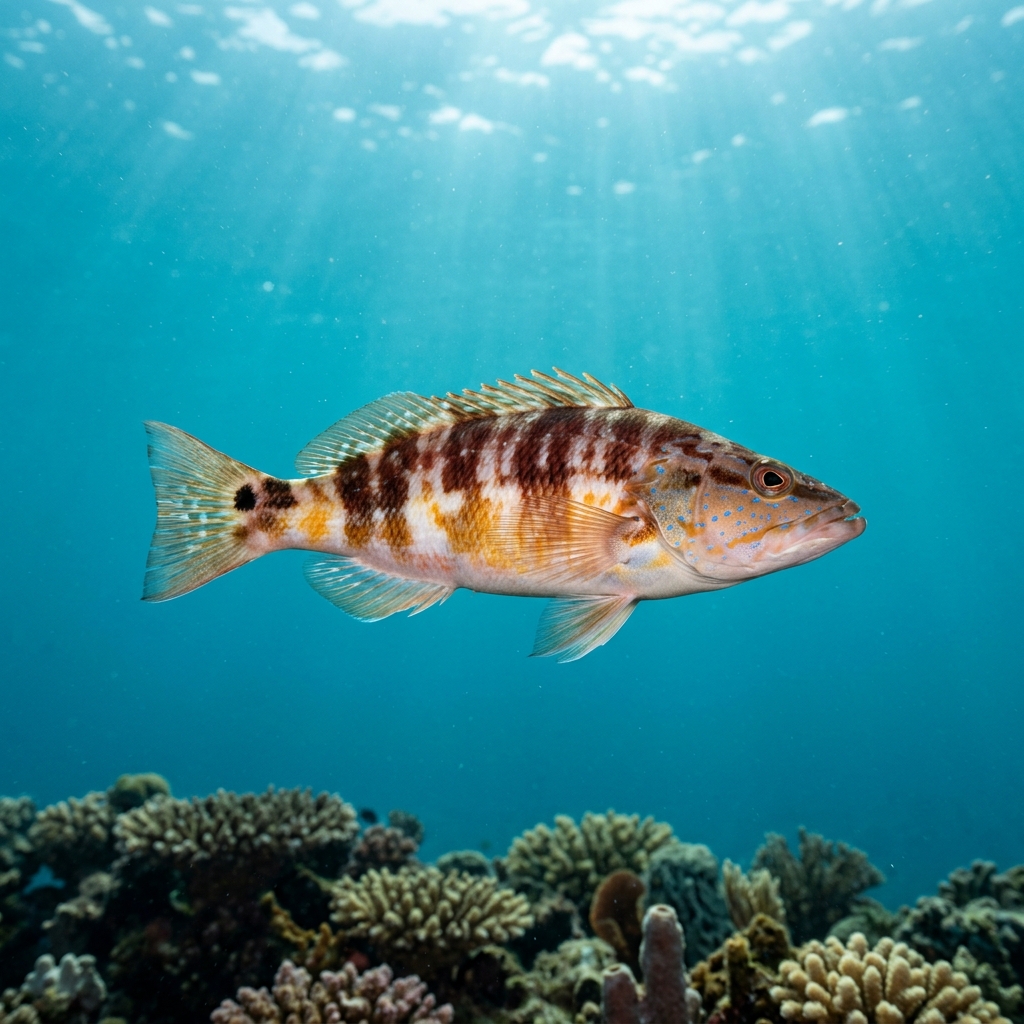
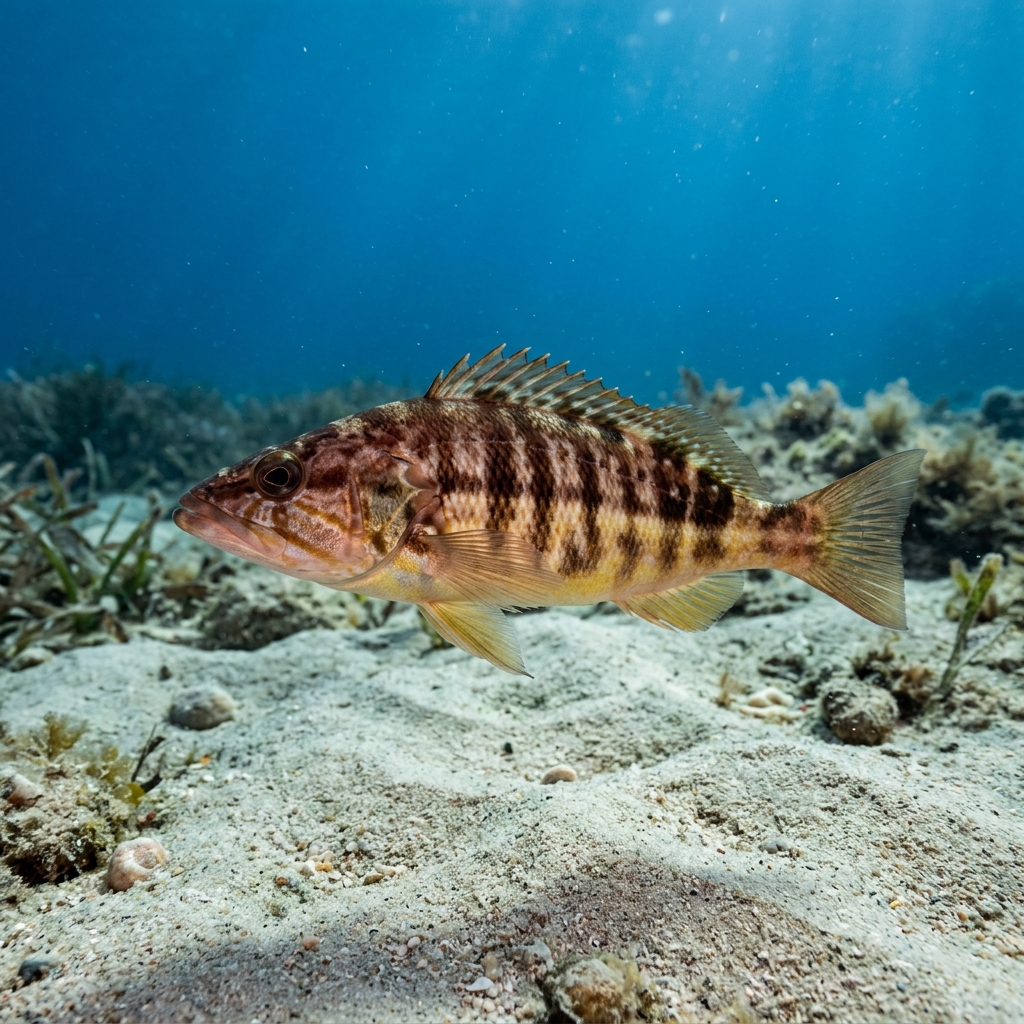
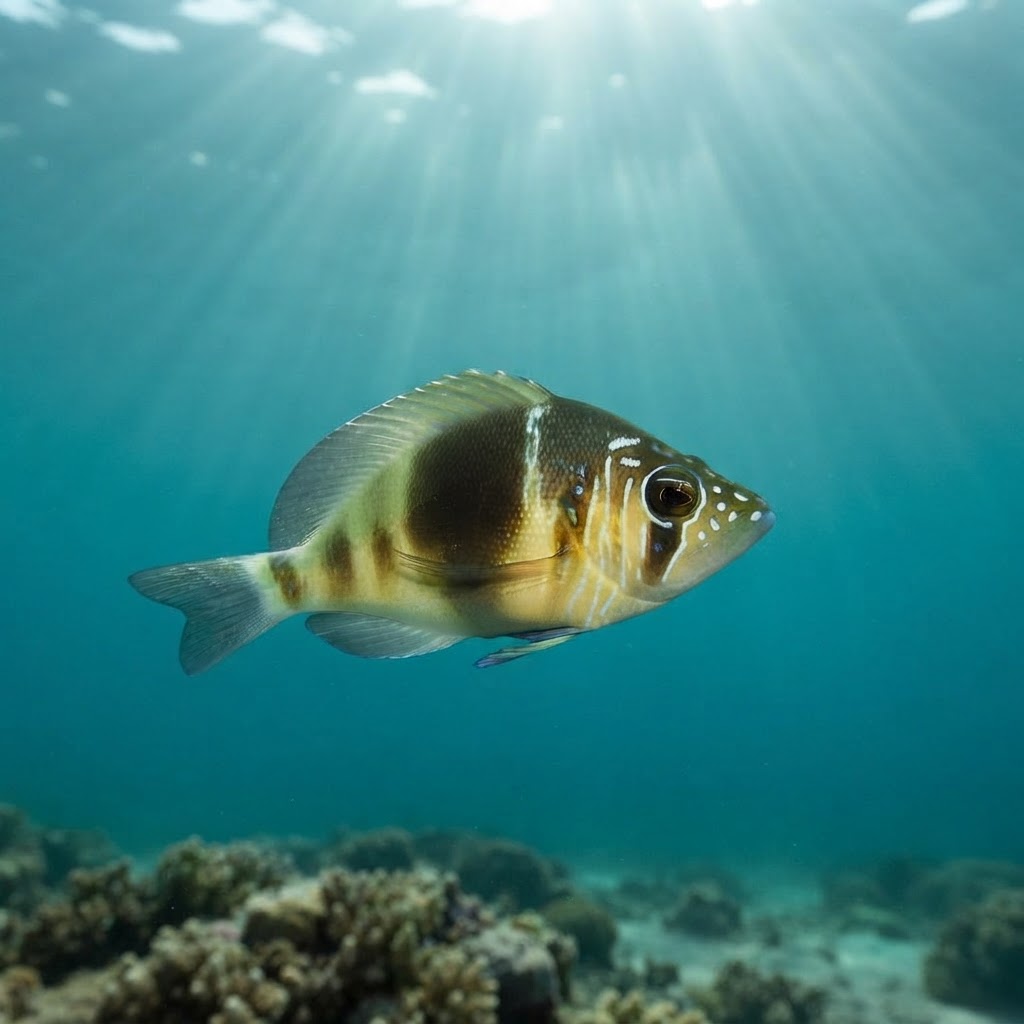
A small, chunky reef fish, only about 10cm long, with a pale grey to tan body crossed by 4-5 dark brown or black vertical bars. The head and back often carry a darker saddle-like patch, and the fins are translucent with faint dusky markings. It hovers close to the reef rather than schooling, and its stubby, grouper-like body shape (it's a member of the grouper family) is a useful cue once you know to look for it.
Usually seen sitting still or hovering just above the reef, often near rubble, coral heads or seagrass edges, picking off small invertebrates and fish rather than actively cruising. It's not shy but it's not bold either: divers who move slowly and scan low on the reef tend to spot more of them than divers cruising past at mid-water. Most sightings are logged as single fish rather than pairs or groups.
Barred Hamlets are simultaneous hermaphrodites, meaning each fish carries both male and female reproductive organs and pairs take turns releasing eggs and sperm during spawning, a trait shared across the whole hamlet group.
No clear seasonal pattern shows up in the data, and with a comfortable temperature niche of 25.3 to 28.2C, it's present on Caribbean reefs year-round. Dive it whenever you're in the region rather than planning around a season.
Most reliably logged in the Bay Islands of Honduras, and a strong sighting across Grenada Island and Carriacou. Also well recorded on Grand Cayman, Bonaire's Leeward Coast, and around Saint John in the US Virgin Islands, with further sightings in the British Virgin Islands, the Bahamas and Sint Eustatius.
Mapping where Barred Hamlet is logged…
The Bay Islands of Honduras and Grenada (including Carriacou) are the strongest spots, with good numbers also on Grand Cayman, Bonaire's Leeward Coast and around Saint John in the US Virgin Islands.
There's no strong season in the sighting data, so any time of year works. Water in its range typically sits between 25 and 28C, which suits it year-round.
Look for a small, stocky fish around 10cm long with a pale body and several dark vertical bars, usually holding still near the reef rather than swimming in open water.
They're small, typically around 10cm, so they're easy to miss if you're scanning at mid-water instead of looking close to the reef structure.
Every individual is both male and female at once. When they spawn, a pair takes turns acting as the egg-releasing and sperm-releasing partner rather than having fixed sexes.
Site and sighting data is aggregated from diver logs, iNaturalist and GBIF. For taxonomy and conservation status:
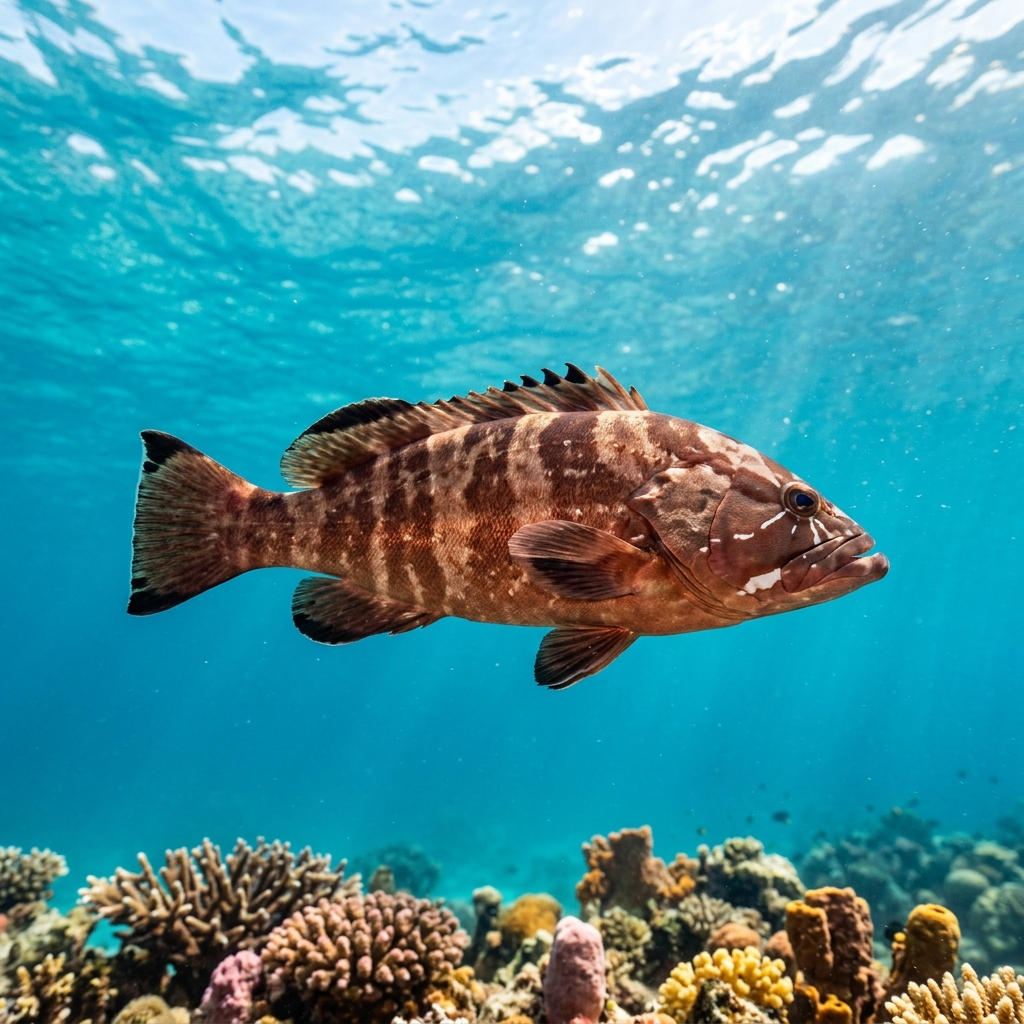
Blacktip Grouper
2,726 sites