Azurina cyanea
Electric-blue reef fish common on Yucatán and Bay Islands dives, comfortable year-round in warm Caribbean water.
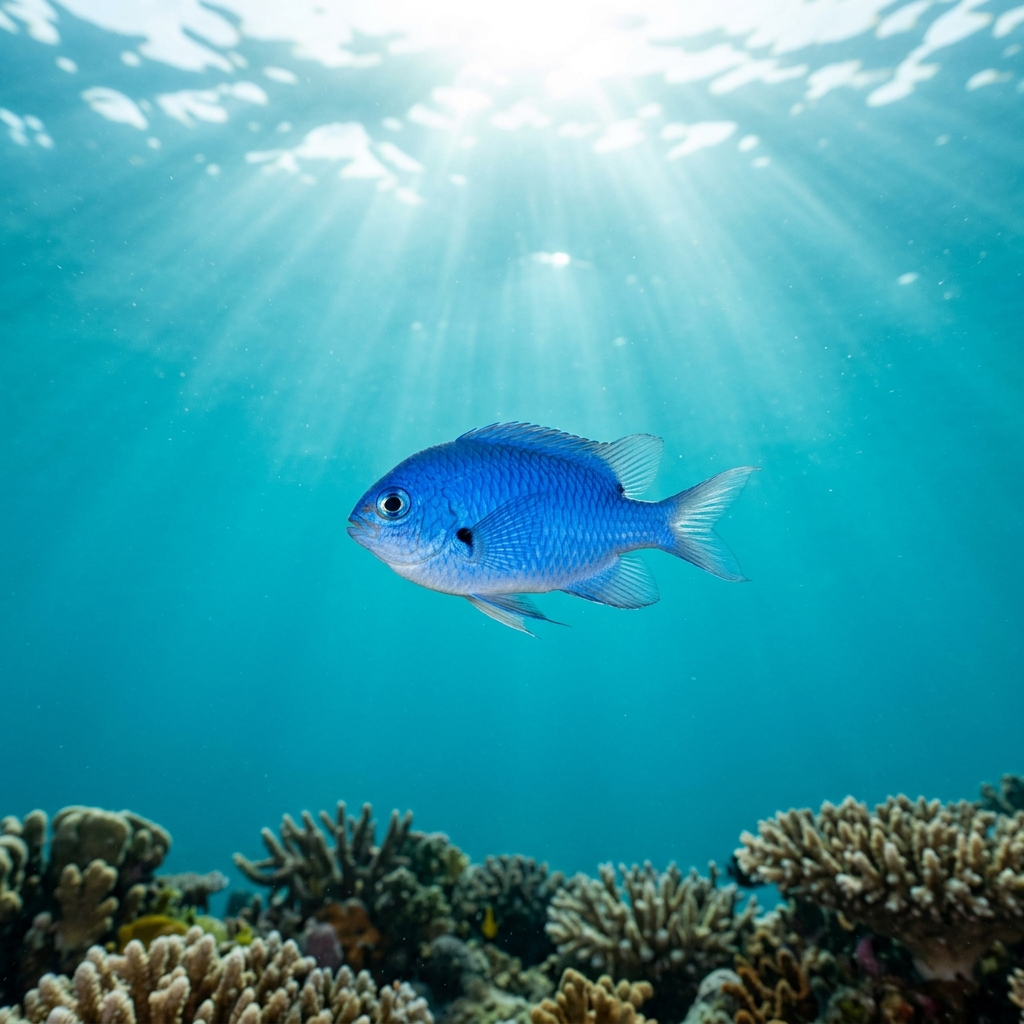
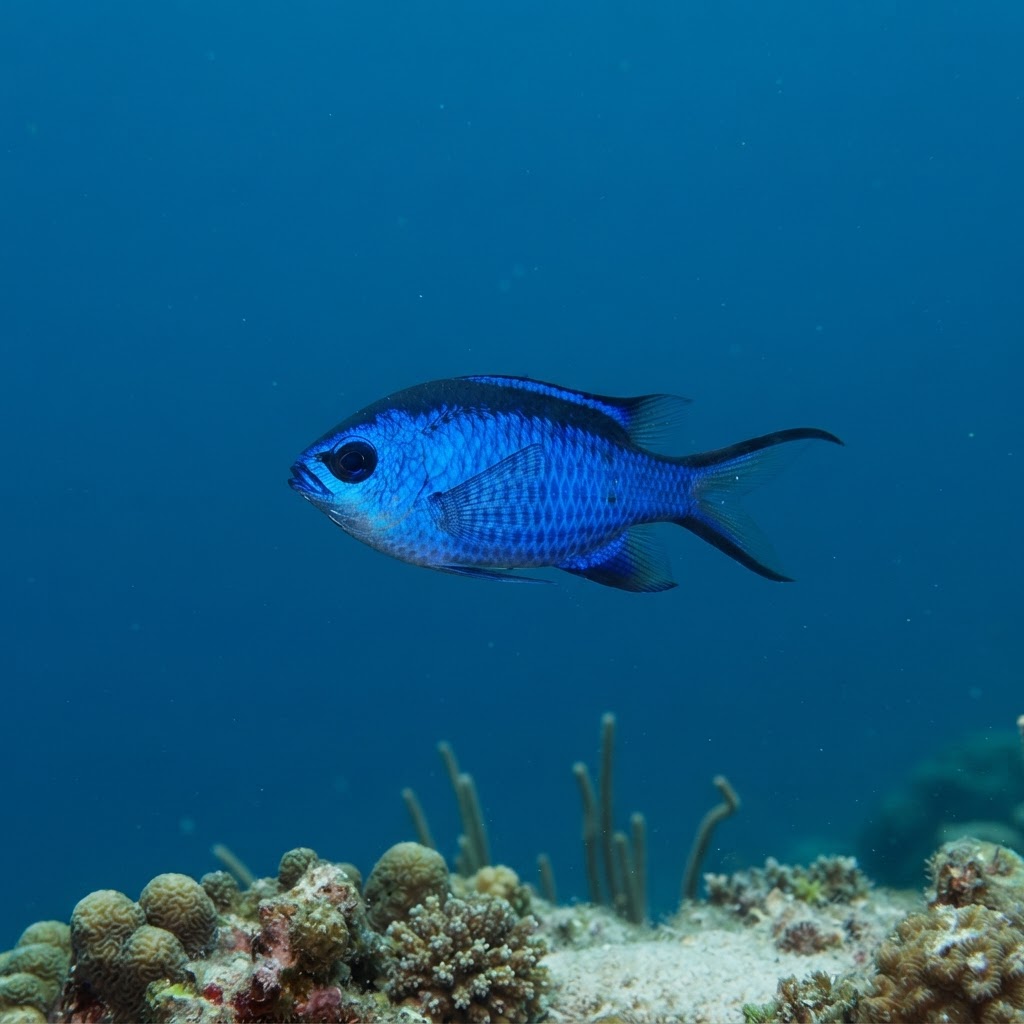
A small, deep-blue fish, about the length of your palm, with a slightly forked tail and a slender, oval body that catches light in an almost neon shade underwater. It usually shows up in loose schools hovering just off the reef rather than sitting on it, feeding on drifting plankton in the water column above coral heads. There's no dramatic pattern to look for, the whole body reads as one solid, vivid blue with no bars or spots, which is itself the giveaway.
Look for it hovering in loose, drifting schools a metre or two above the reef, picking plankton out of the water column rather than grazing coral or rubble. It pays divers little attention and rarely bolts for cover, so a slow approach usually gets you within a couple of metres before the school shifts position. Most sightings happen over shallow to mid-depth reef structure where there's open water above for the school to work.
Those loose hovering schools are a form of safety in numbers, a single fish out in open water over the reef is an easy target for jacks and other predators, but a scattered cloud of them is much harder to pick off.
No clear seasonal pattern shows up in the data, and with a comfortable range of roughly 25.6 to 28.1 C, Caribbean reefs sit in that window most of the year, so plan for a sighting on any visit rather than a specific month.
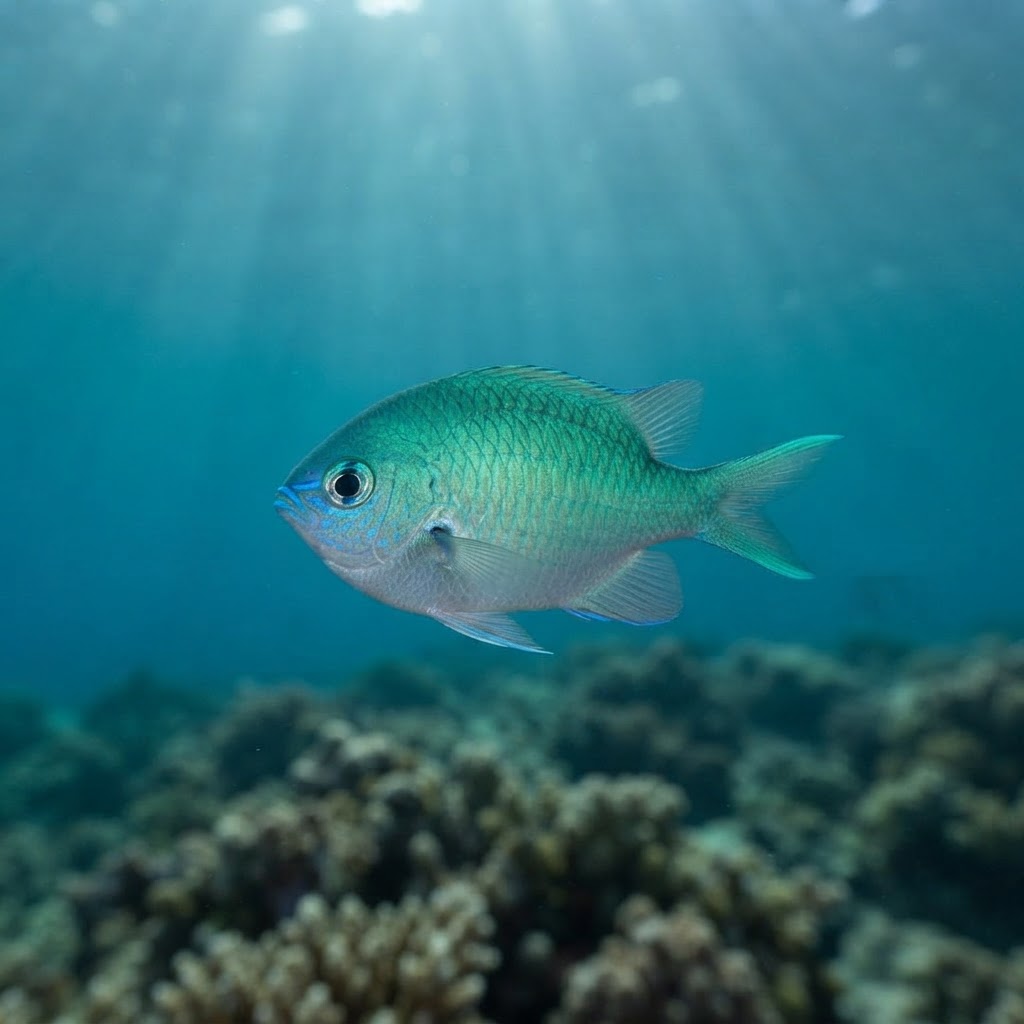
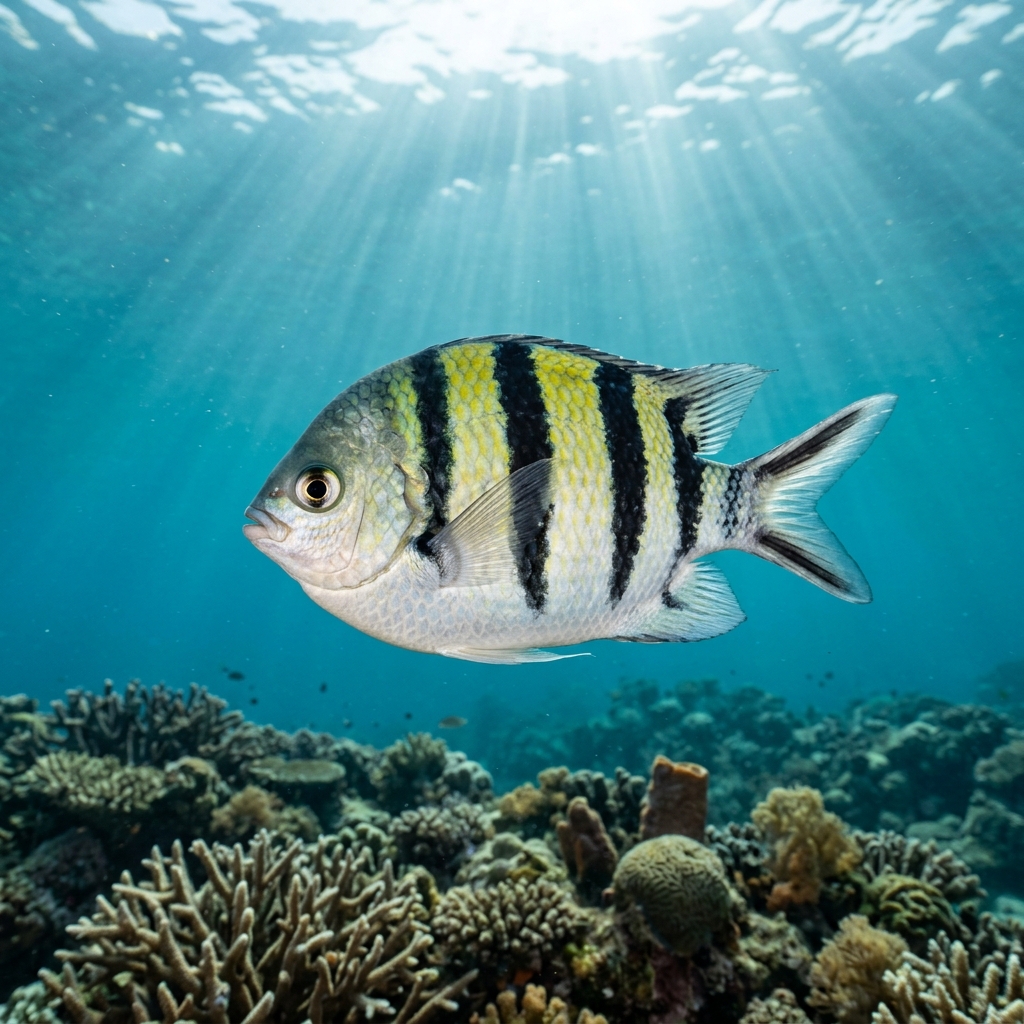
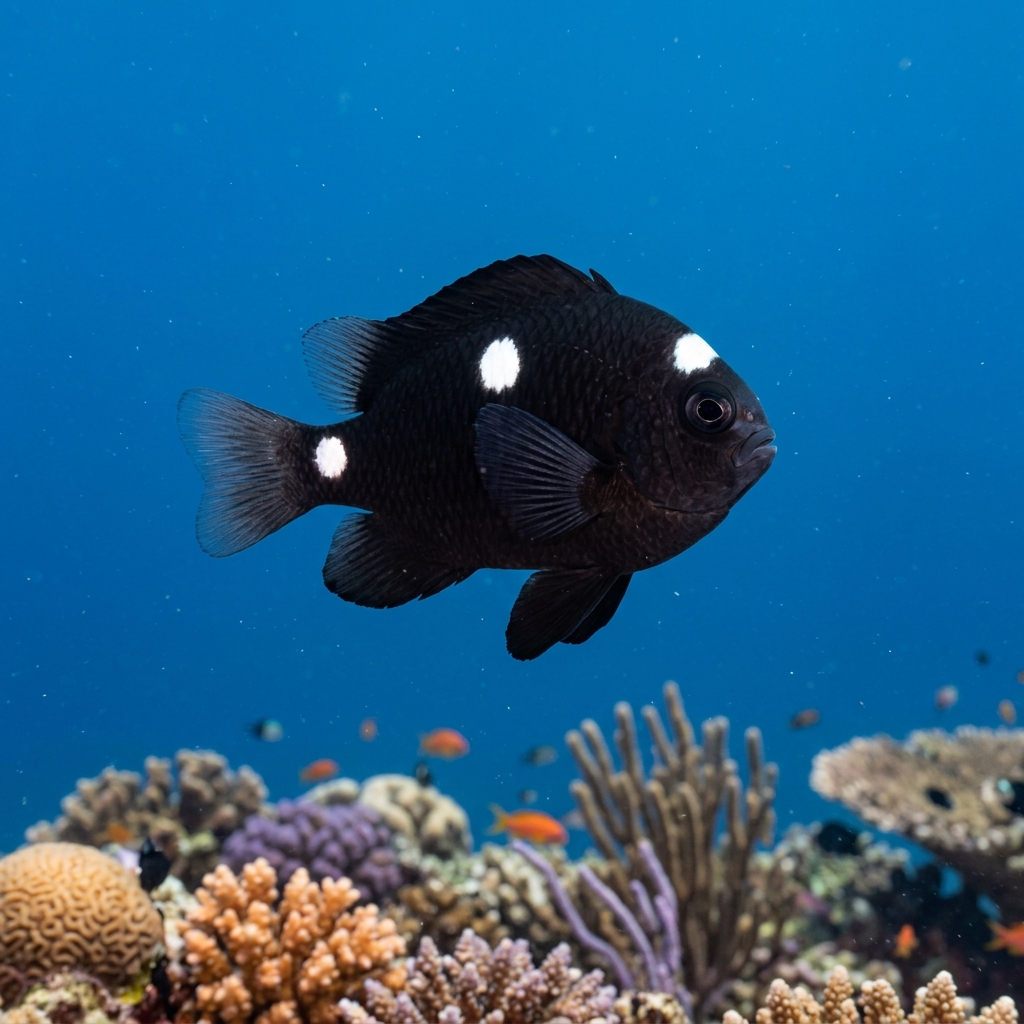
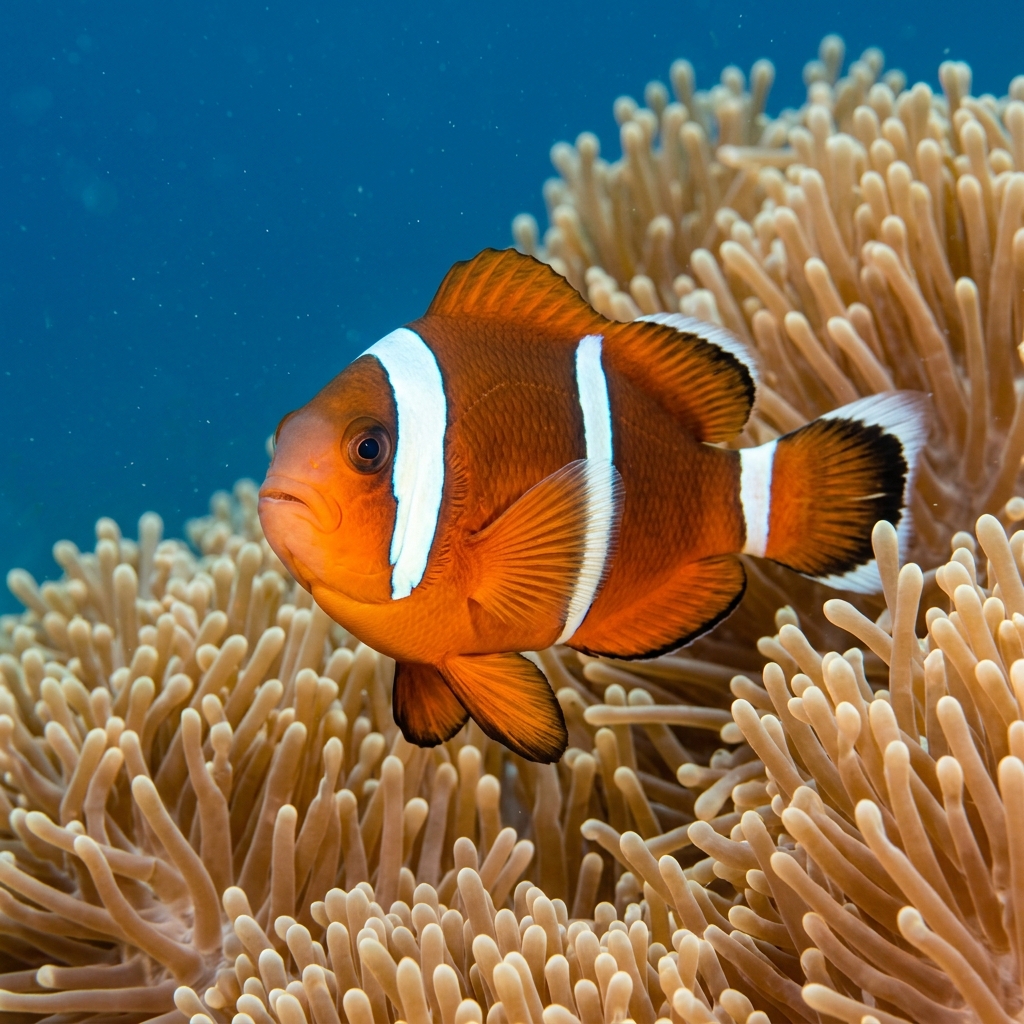
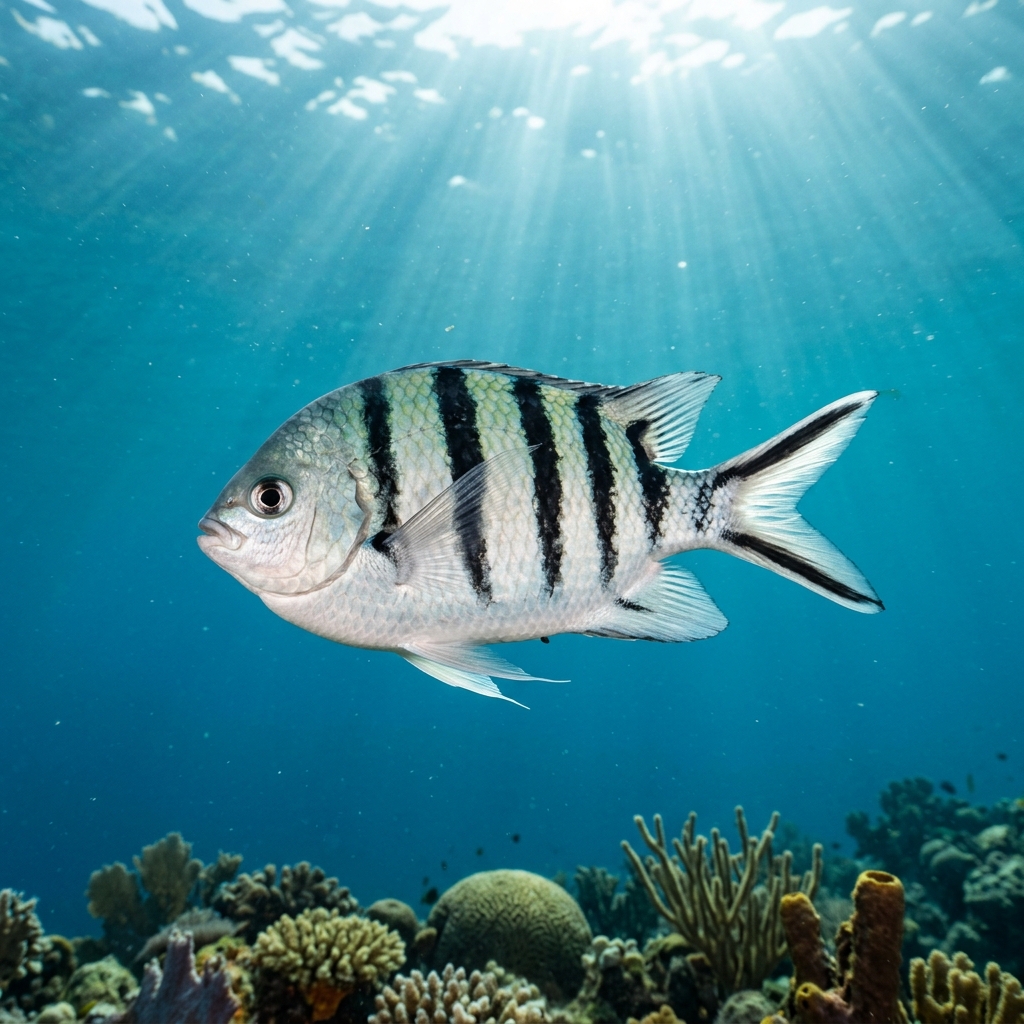
Reef neighbours a diver could mistake it for. Use the identification notes above to tell them apart.
This one is a reliable sighting across the wider Caribbean, most heavily logged around the Yucatán Peninsula in Mexico and the Bay Islands of Honduras, with strong numbers also in Florida, Grand Cayman, and Bonaire's Leeward Coast. It also turns up consistently in the British Virgin Islands, the Bahamas, and Grenada, making it one of the more dependable little reef fish across Caribbean diving as a whole.
Mapping where Blue Chromis is logged…
They're a common sight across the Caribbean, especially around the Yucatán Peninsula in Mexico, the Bay Islands of Honduras, Grand Cayman, and Bonaire's Leeward Coast. Florida, the British Virgin Islands, and the Bahamas also produce frequent sightings.
There's no strong seasonal pattern, they stick to reefs where the water sits in a comfortable 25.6 to 28.1 C range year-round, so any month of diving in their Caribbean range should turn up a sighting.
Look for a small, solid electric-blue fish, roughly 10 cm long, hovering in loose schools just above the reef rather than resting on it. It has a slightly forked tail and no bars, spots, or bicolour pattern, the uniform blue is the main clue.
They stay small, topping out around 10 cm, about the size of your palm, which is typical for damselfish that feed on plankton rather than larger prey.
No, they pose no risk to divers. They're a harmless, small plankton-feeder that tends to ignore divers entirely and keeps its distance out in open water above the reef.
Site and sighting data is aggregated from diver logs, iNaturalist and GBIF. For taxonomy and conservation status:
Dascyllus
3,697 sites