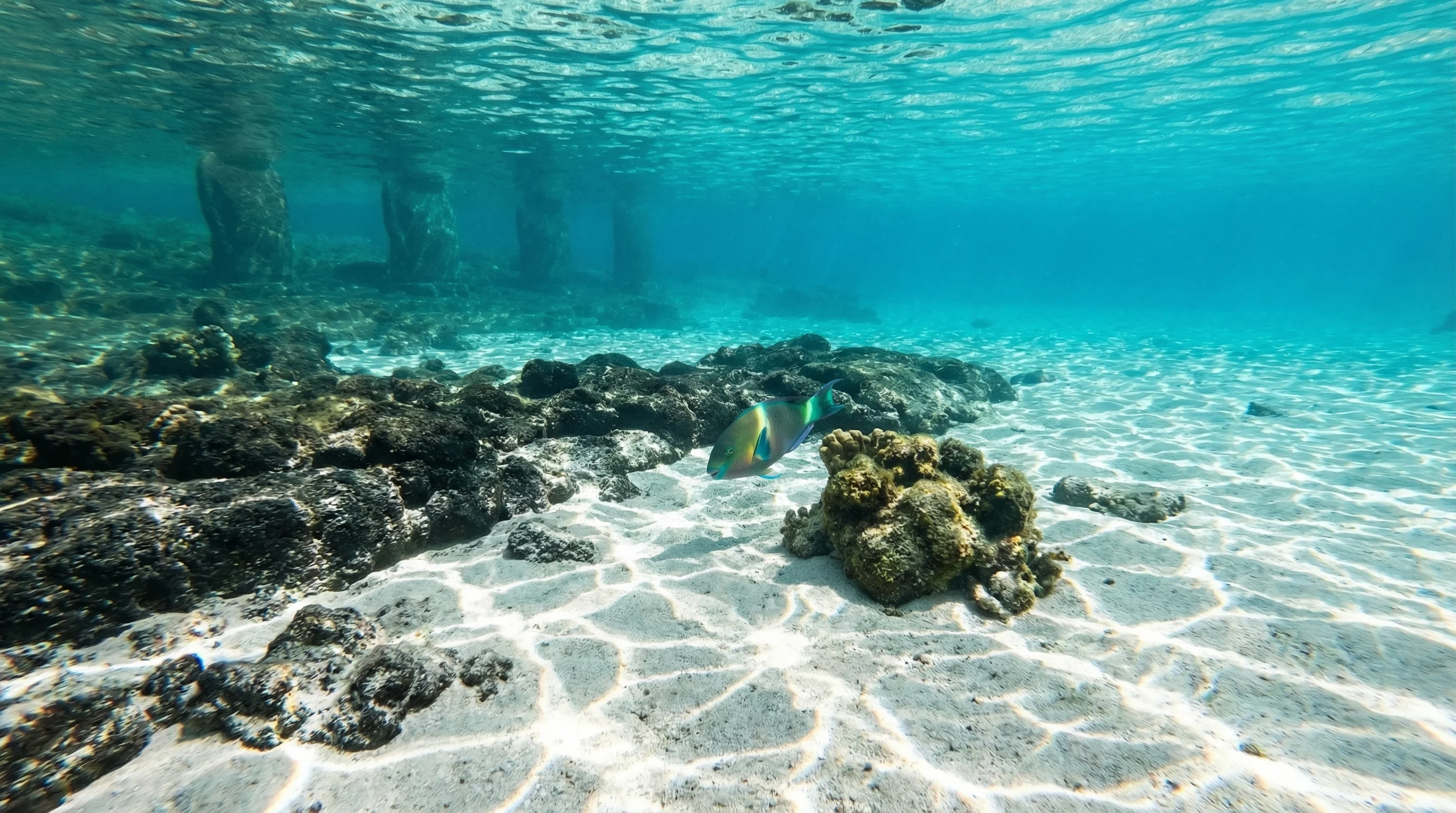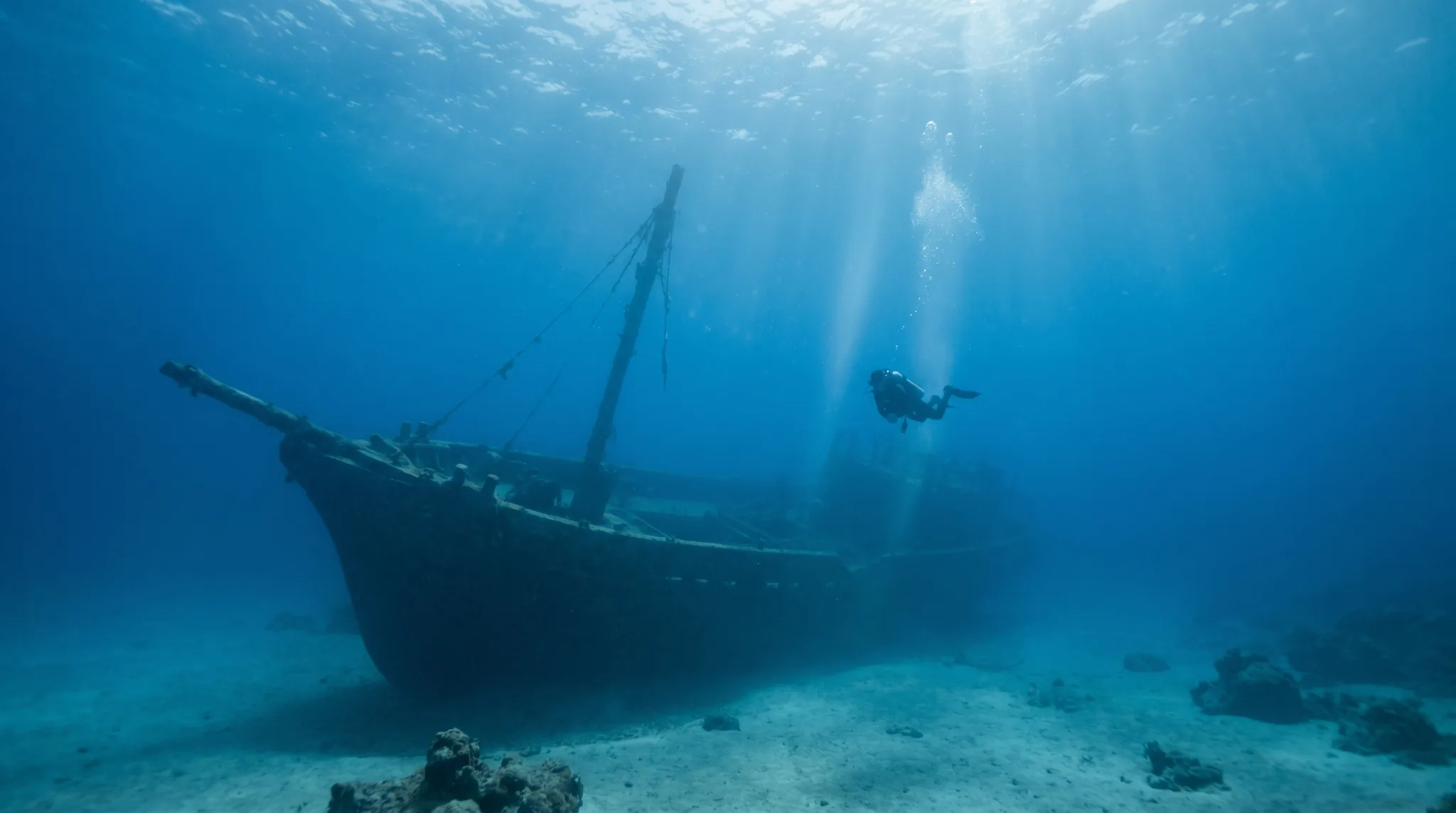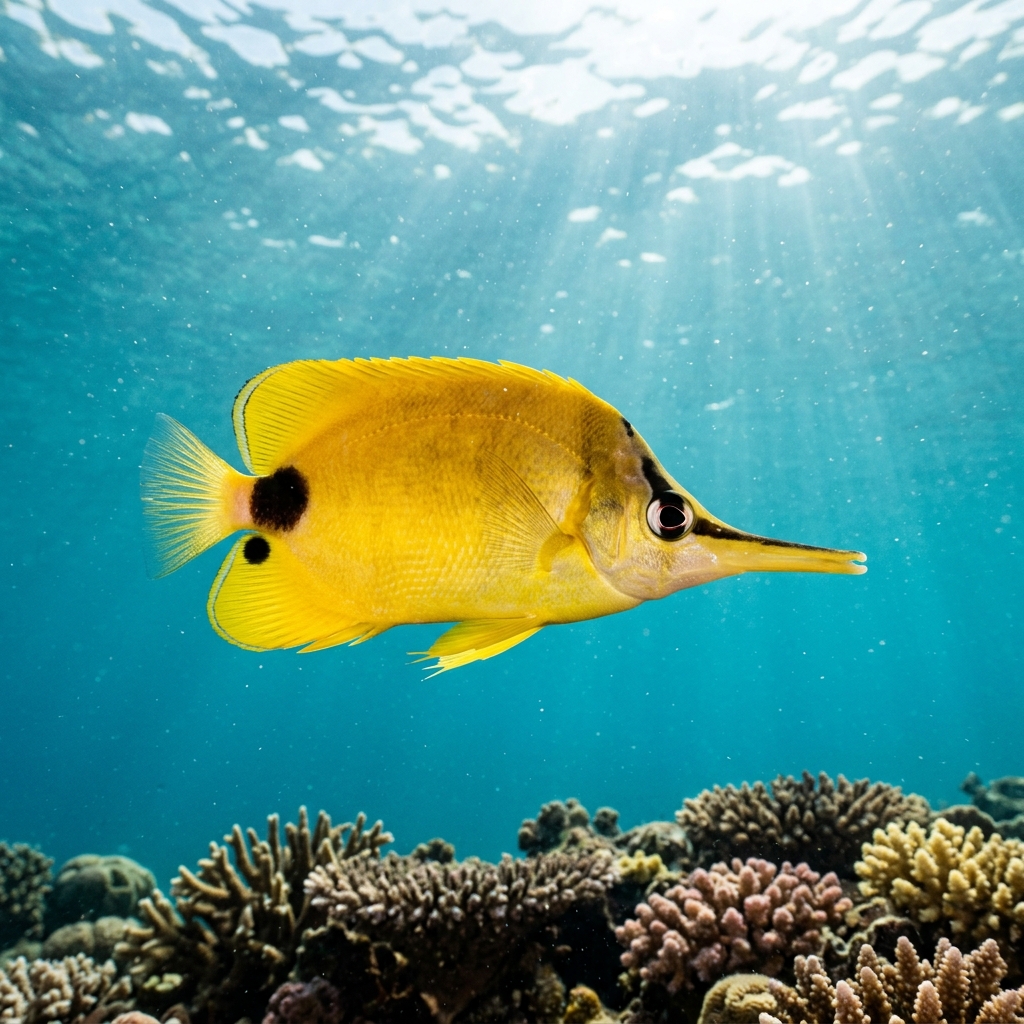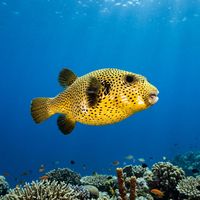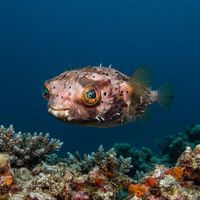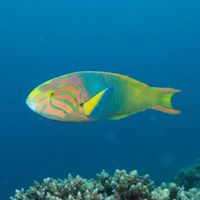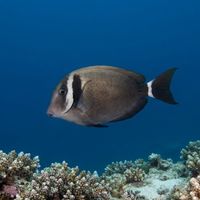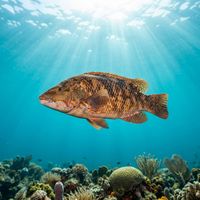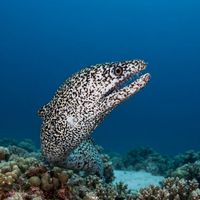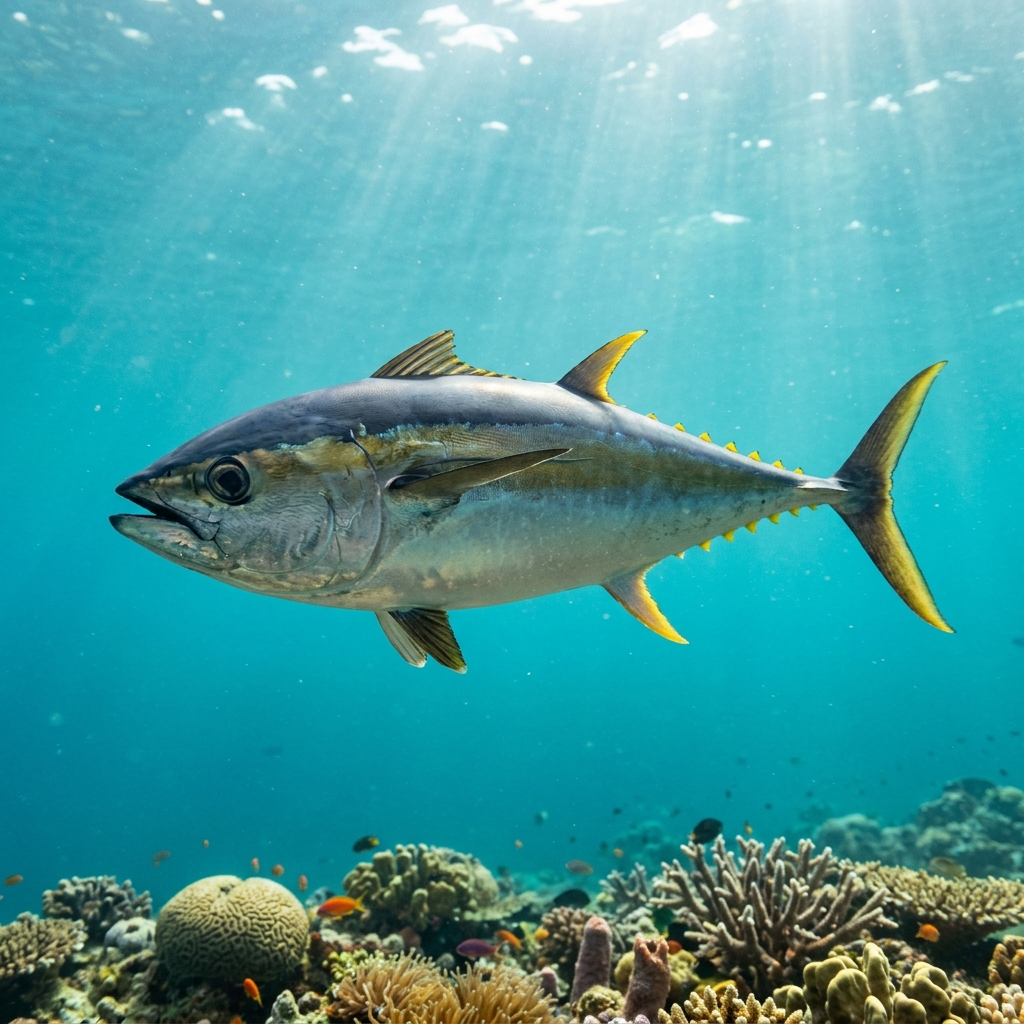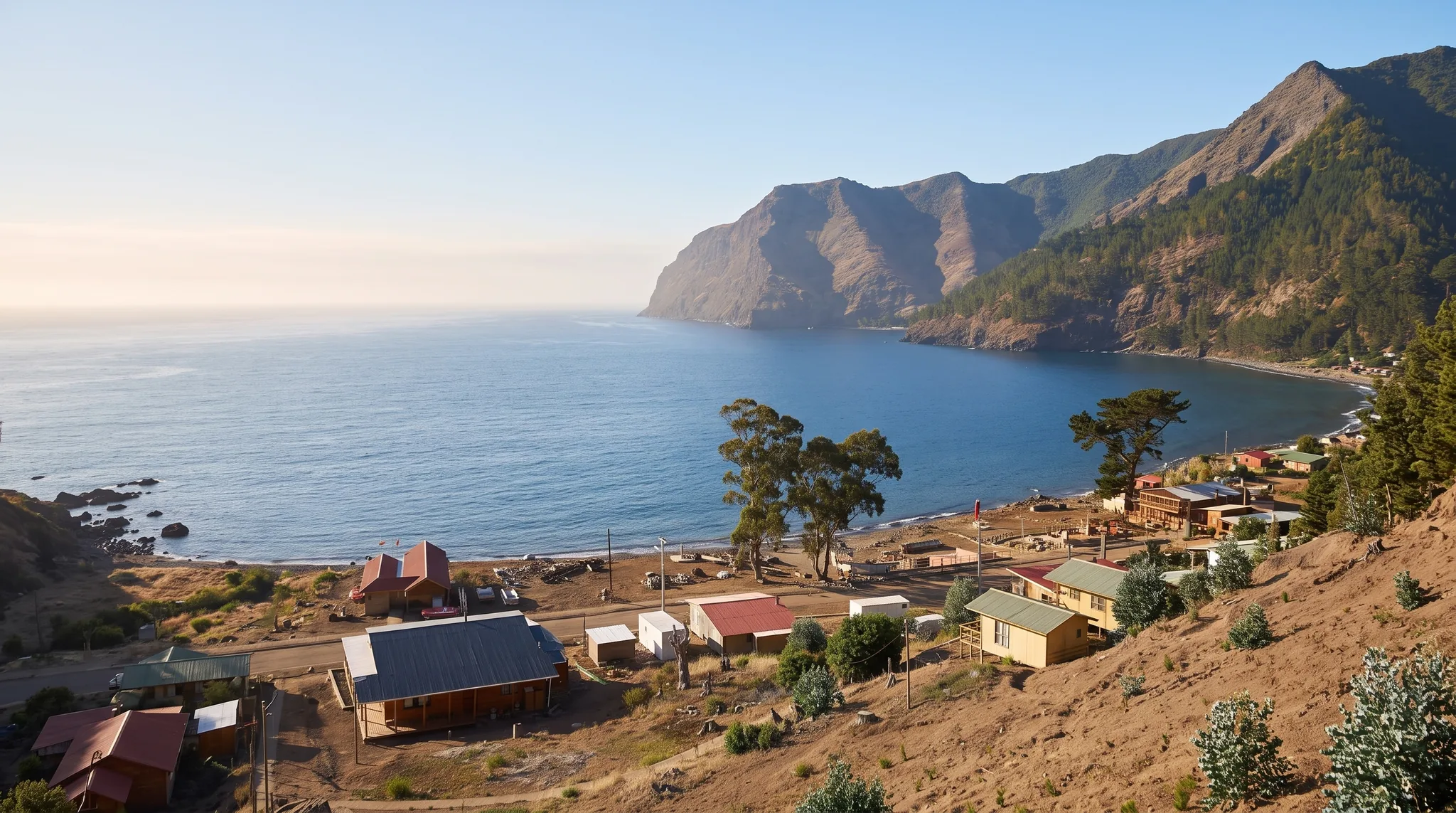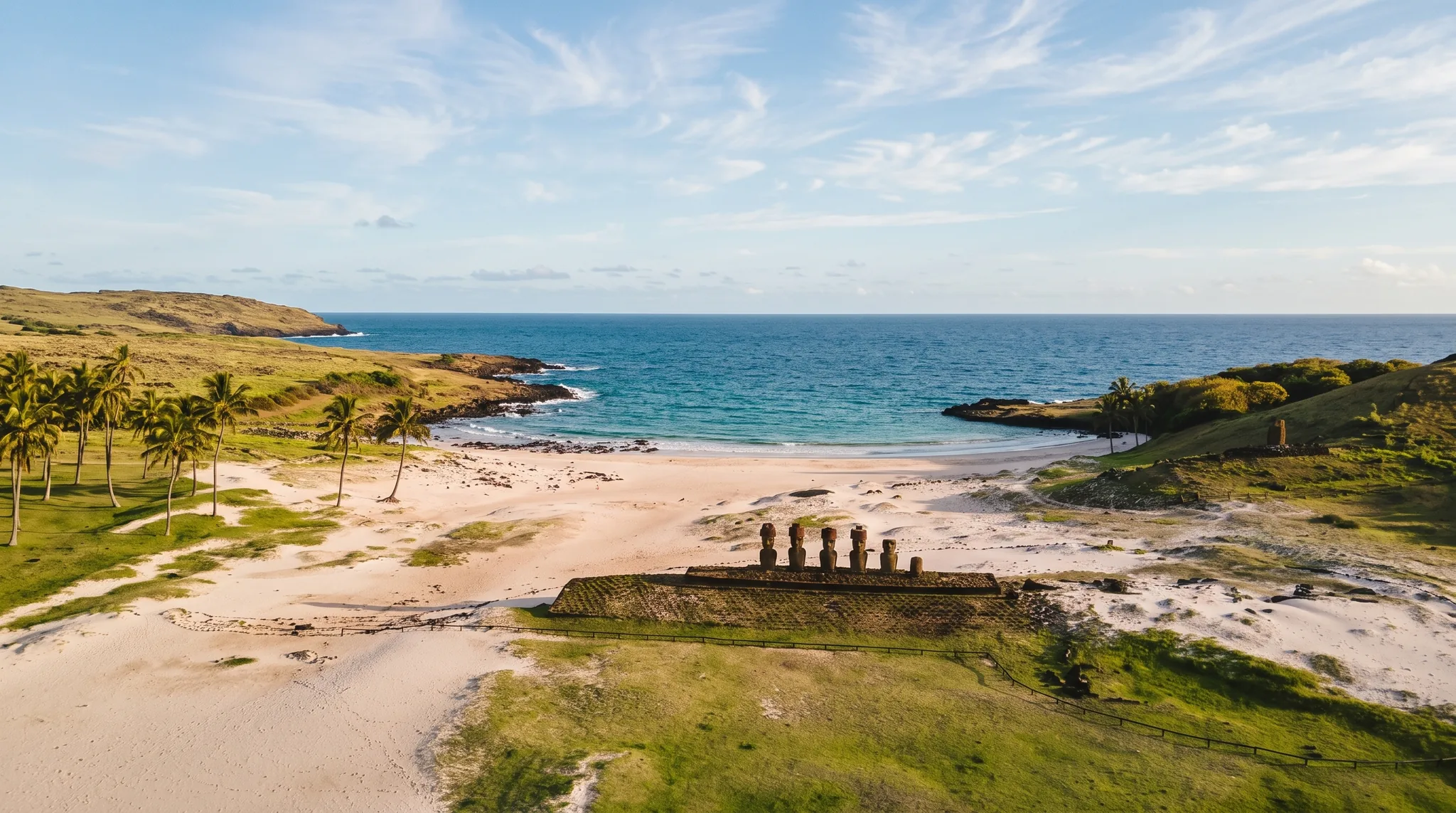
Easter Island, or Rapa Nui, sits in the remote southeastern Pacific Ocean and offers a diving environment quite unlike mainland Chile. Water temperatures are mild, ranging from around twenty degrees Celsius in late winter to the mid-twenties in late summer, and visibility is exceptional, regularly reaching fifty to sixty metres at sites like Hanga Roa. The underwater terrain is volcanic, with caves, walls, drop-offs, and arches, and the site database includes a submerged moai statue that functions as an artificial reef. Green sea turtles, moray eels, and a range of reef fish including surge wrasse and redtail triggerfish are recorded across the island's sites.
Monthly water temperature across Easter Island's sites, from satellite sea-surface data corrected for depth. The band shows the site-to-site spread.
Water stays above twenty degrees Celsius for most of the year, peaking in the mid-twenties between February and April, making a light wetsuit sufficient for most divers. Late winter, around August and September, sees the coolest temperatures but conditions remain comfortable compared to mainland Chile. The island is accessible only by air from the mainland, and with fifteen operators based in Hanga Roa, dive logistics are well established.
14 operators
Water temperature around Easter Island ranges from about 20°C in August to 24°C in February, based on satellite sea-temperature data for its dive sites.
In the warm season (about 24°C) a 3mm full suit is comfortable in Easter Island; in the coldest months (about 20°C) step up to a 5mm suit.
Fin maps 7 sites in Easter Island (7 scuba diving sites and 2 snorkelling spots, with some suited to both).
4 more sites to explore