Seriola rivoliana
Deep-bodied jacks logged around São Vicente, Cape Verde and El Hierro in the Canaries, in water from 22 to 29C year-round.
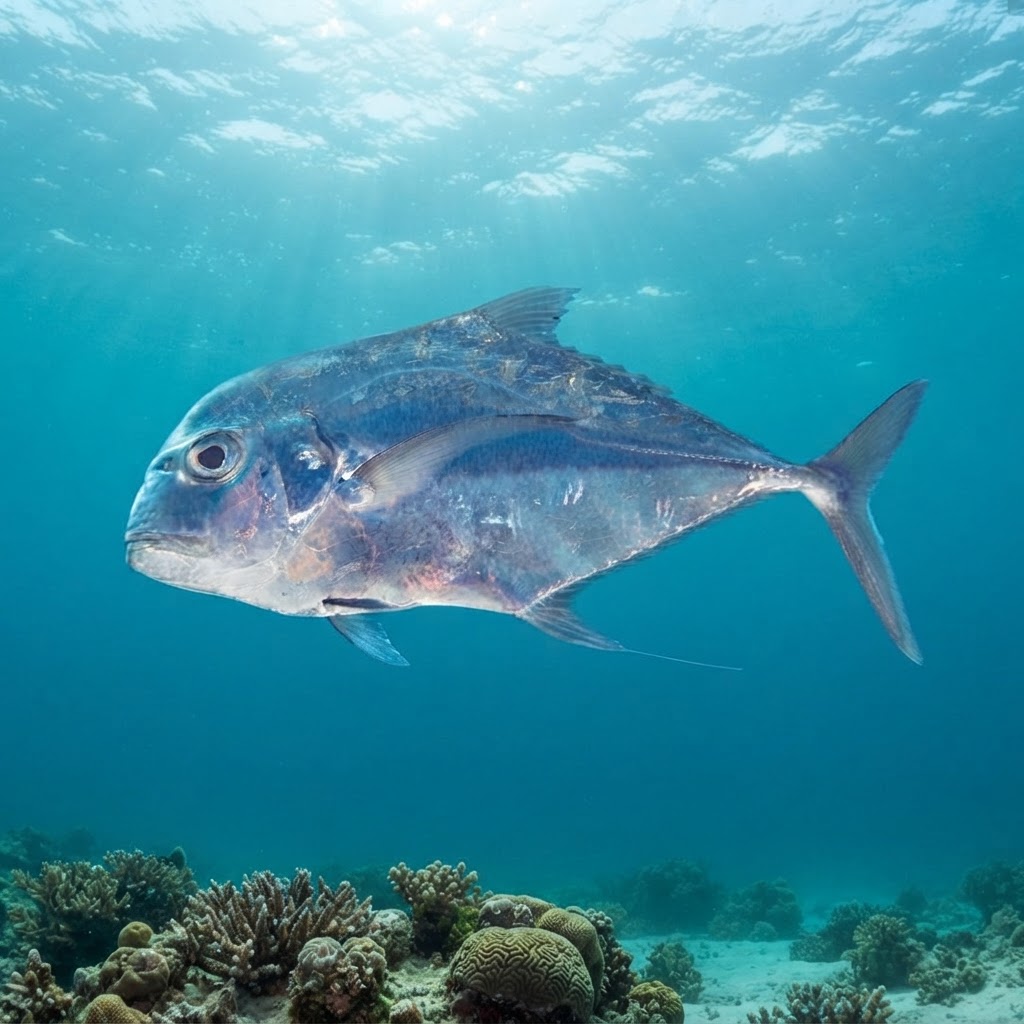
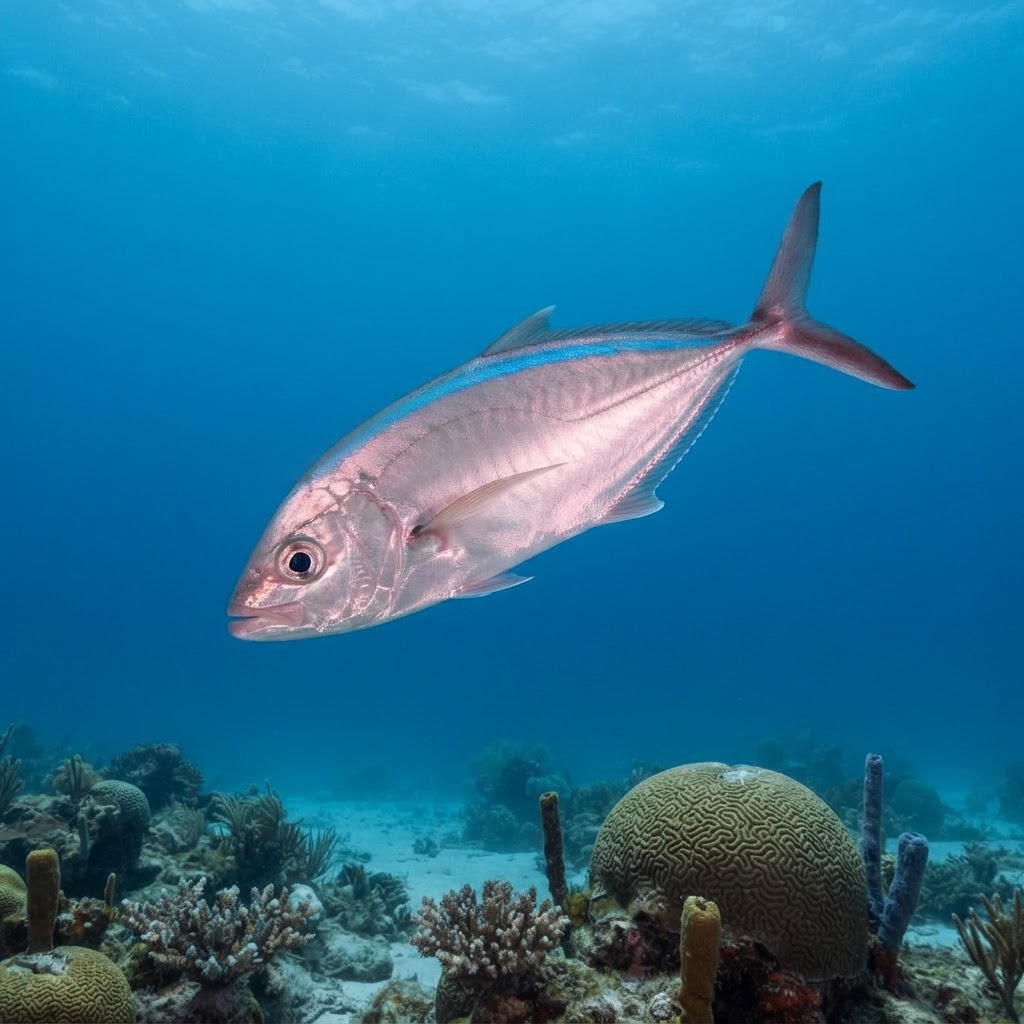
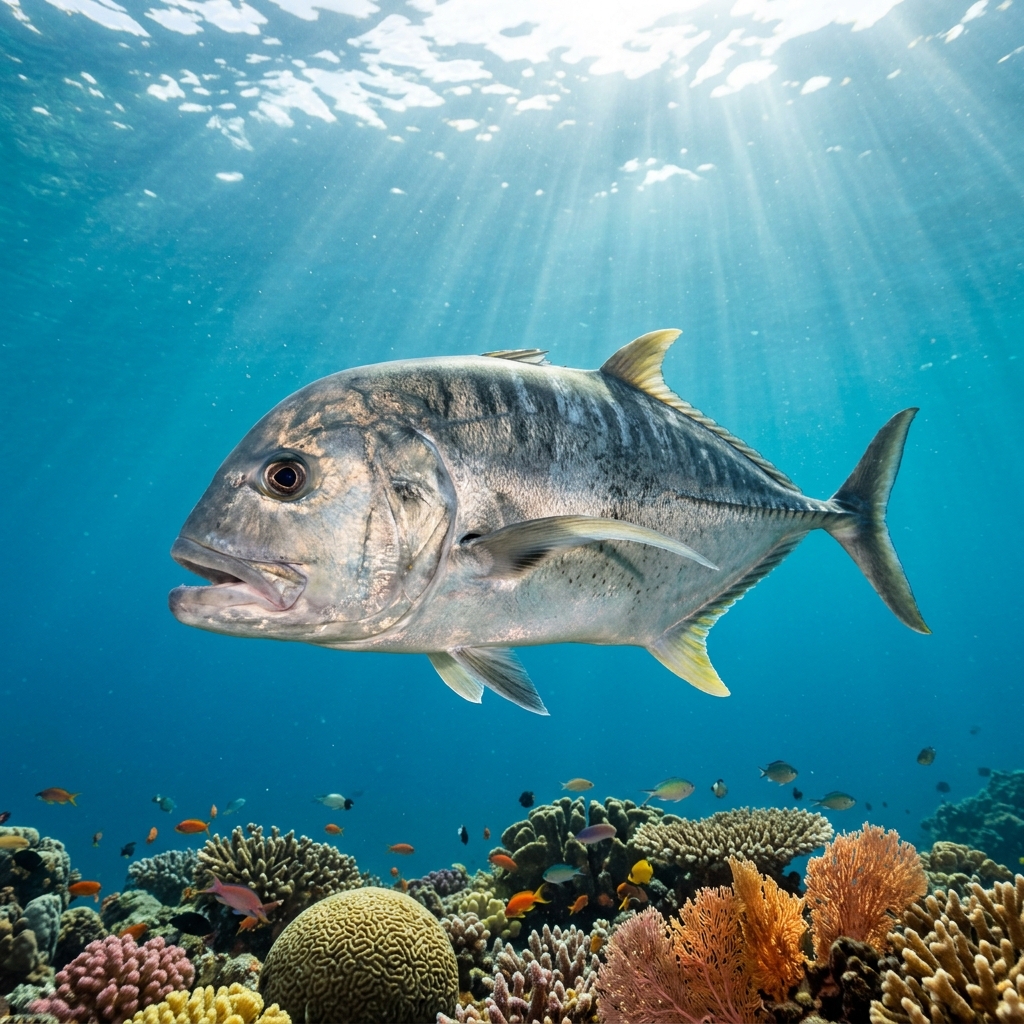
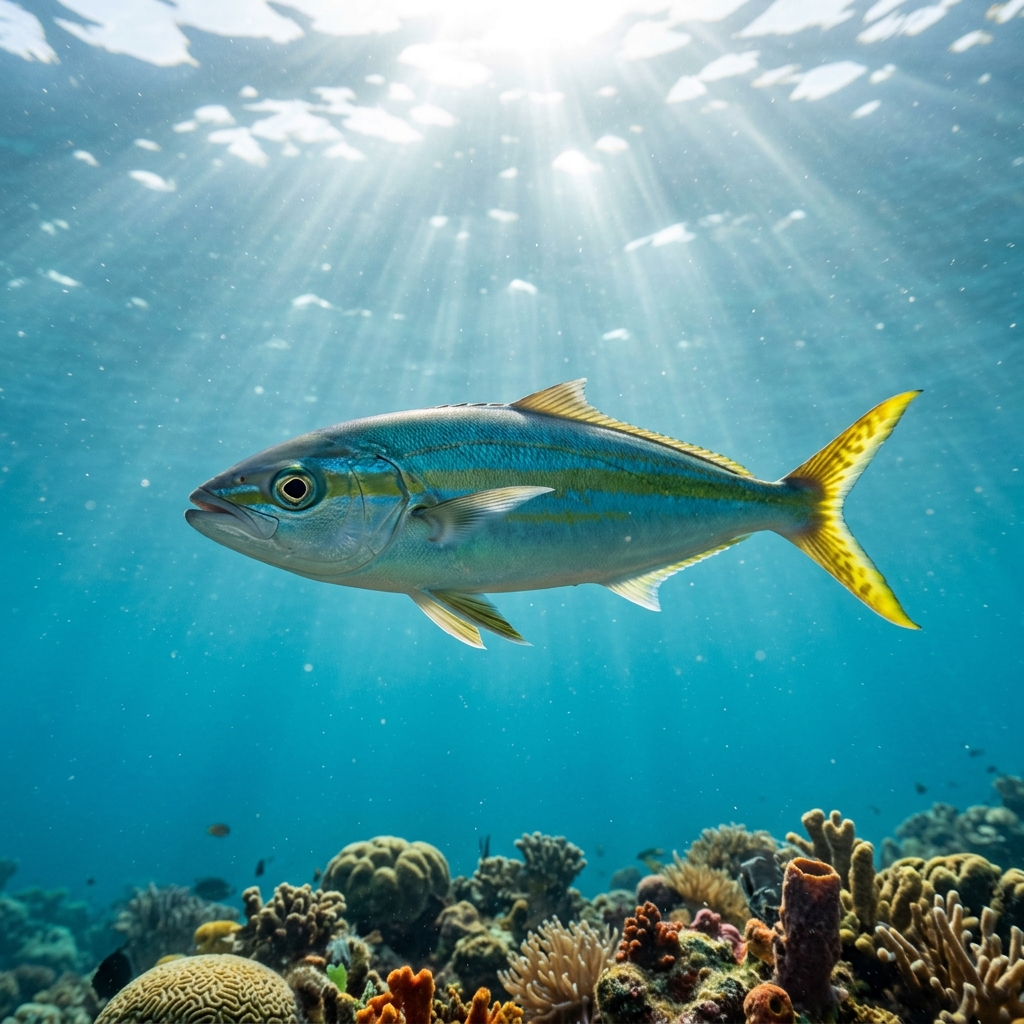
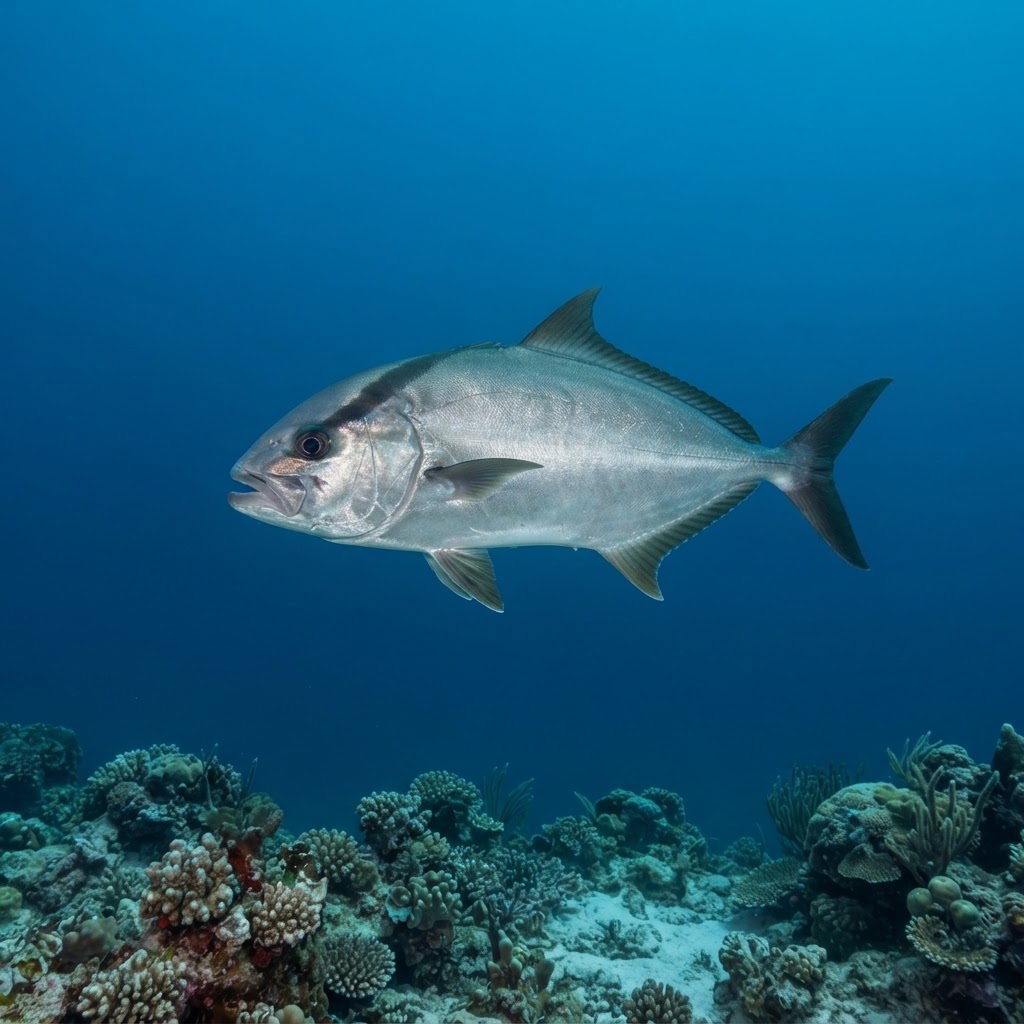
A deep-bodied, almost pompano-shaped jack that can push past a metre, with a steel-blue to olive back fading to silver on the flanks. Look for the long, sickle-shaped dorsal and anal fins trailing behind the body and a steep forehead profile that separates it from slimmer jacks. It usually shows alone or in loose, small groups rather than tight schools.
Divers most often log this jack cruising mid-water over reef and rocky drop-offs, sometimes hanging just off the structure rather than tucked against it. It tends to be curious rather than shy, often circling back for a look at divers before peeling off, and shows up as often as a lone fish as in small loose groups.
It ranges unusually deep for a reef-associated jack, with logged depths down to 245 metres, so the fish seen shallow on a recreational dive is only a slice of where the species actually lives.
No clear seasonal pattern shows up in the sightings, and the 22 to 29C temperature range it tolerates spans most of the year across these regions, so it is best treated as a year-round encounter.
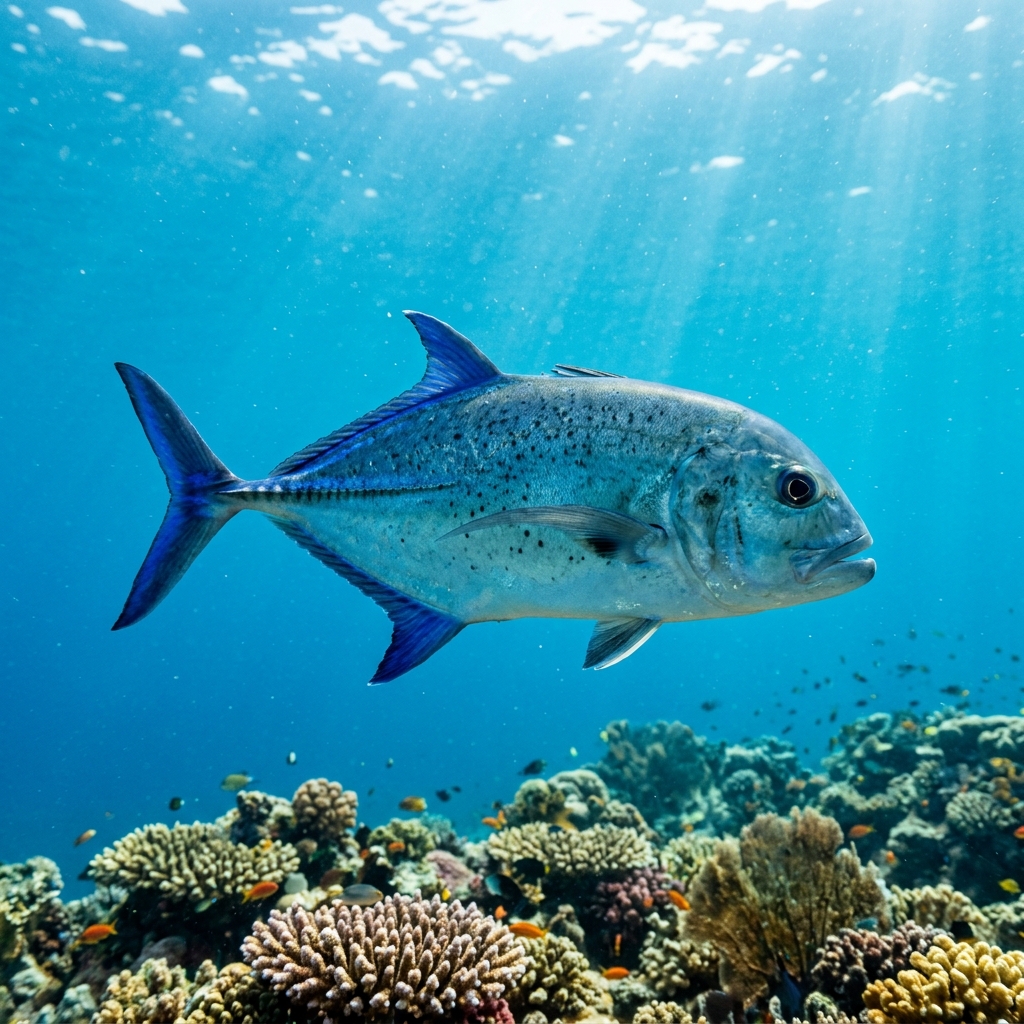
Reef neighbours a diver could mistake it for. Use the identification notes above to tell them apart.
Most reliably logged around the Canary Islands, especially El Hierro and Fuerteventura, and in Cape Verde around São Vicente and Sal. Strong numbers also come from the Azores (São Miguel, Santa Maria and Porto Santo in Madeira), plus a solid Caribbean presence in the Grenadines and around Tortola in the British Virgin Islands.
Mapping where Almaco Jack is logged…
The Canary Islands (especially El Hierro and Fuerteventura) and Cape Verde (São Vicente, Sal) are the strongest spots, with good numbers also in the Azores and around the Grenadines and Tortola in the Caribbean.
There is no strong season in the sightings data, and the water temperatures it prefers, roughly 22 to 29C, hold across most of the year in its main regions, so it is a year-round sighting rather than a seasonal one.
Look for a deep-bodied jack with a steel-blue back, silvery sides and long trailing dorsal and anal fins that give it a sickle-like outline. The steep forehead and single or small-group behaviour help separate it from schooling jacks.
They can reach around 112cm, making them one of the larger jacks a diver is likely to see cruising a reef edge or drop-off.
No, they are not considered dangerous to divers. They are inquisitive predators that will often approach for a closer look but pose no threat.
Site and sighting data is aggregated from diver logs, iNaturalist and GBIF. For taxonomy and conservation status:
Bigeye Trevally
2,591 sites