Diodon holocanthus
Big eyes, loose spiny skin, and a slow hover over reef and sand from Baja California to Cape Verde, year-round in warm water.
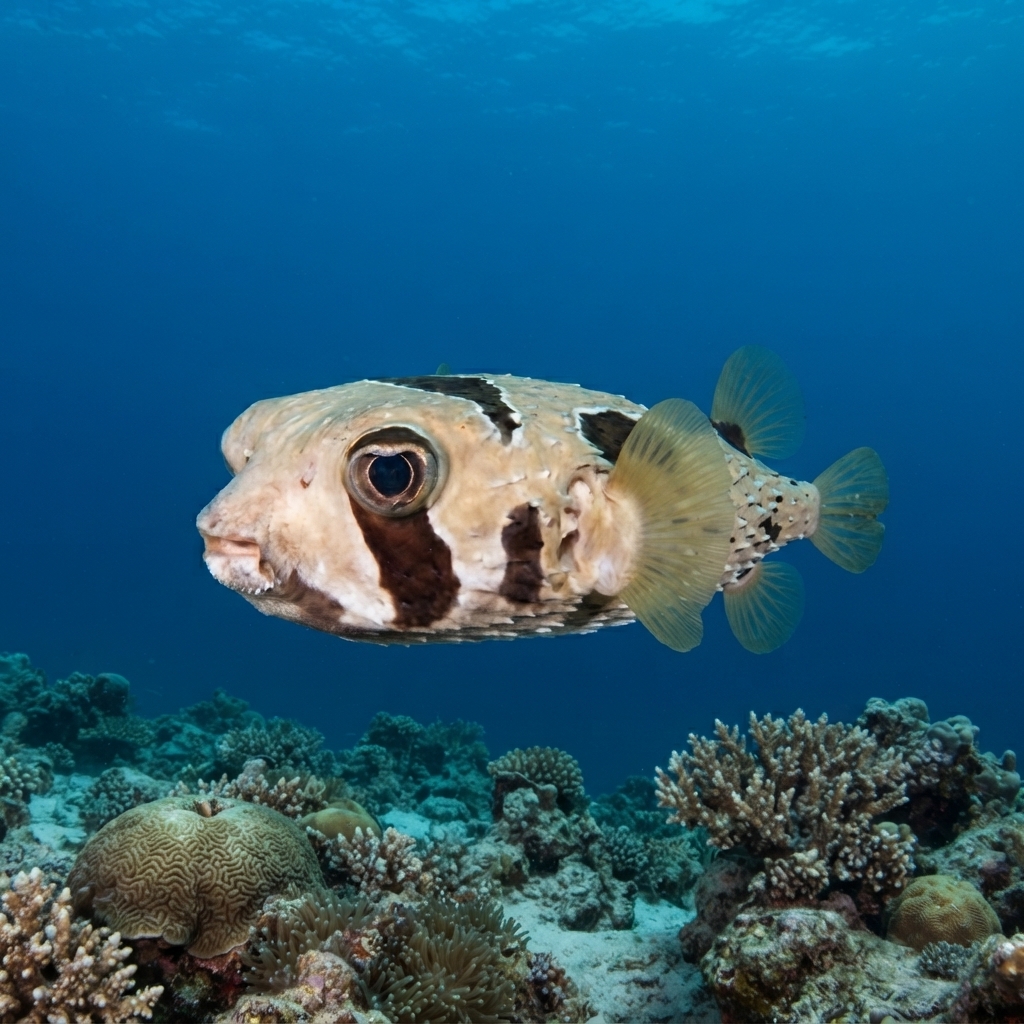
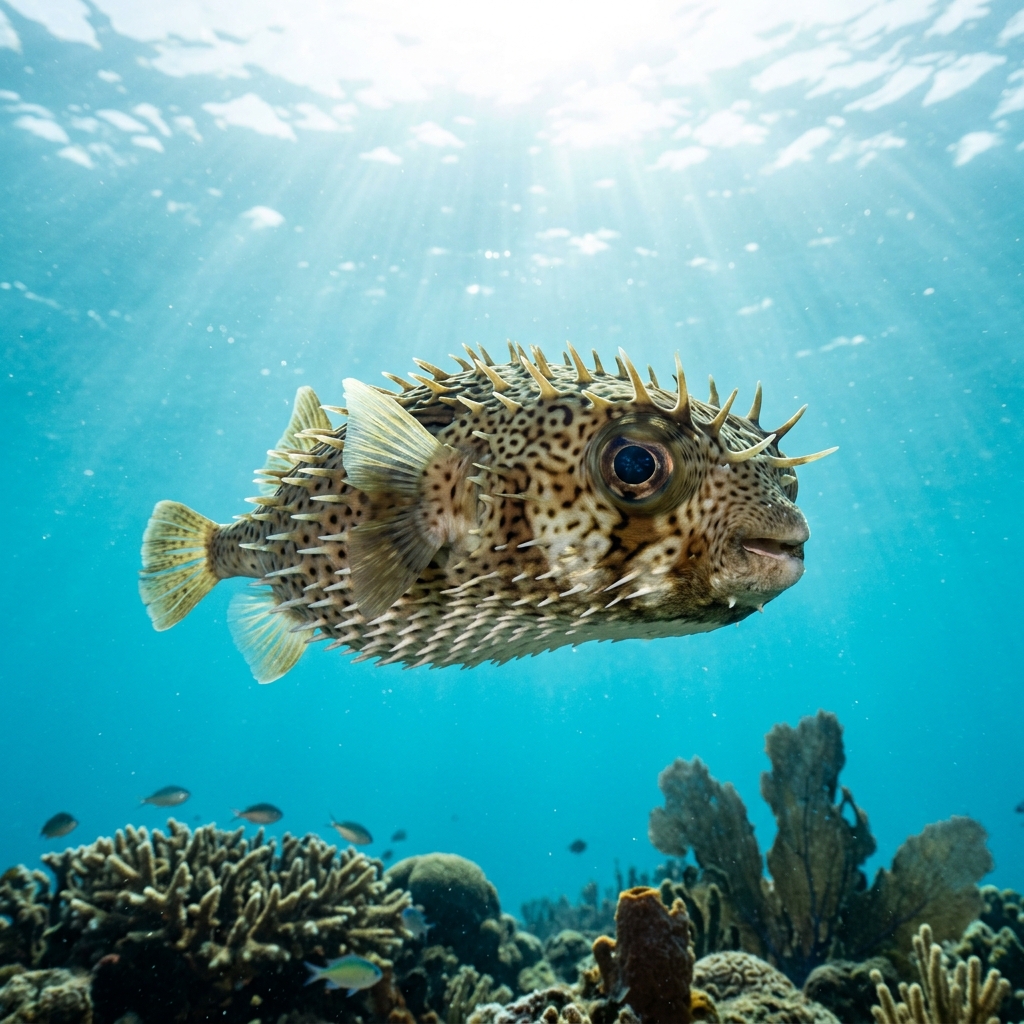
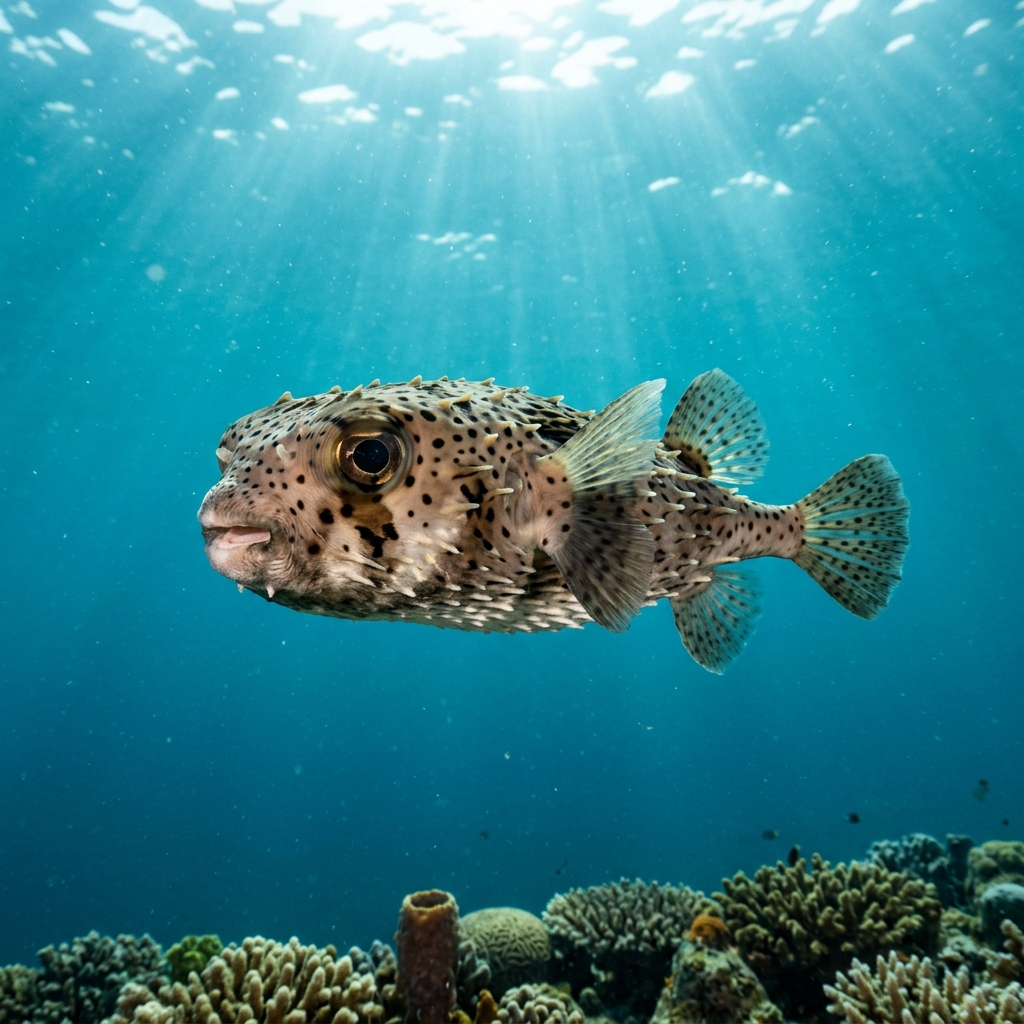
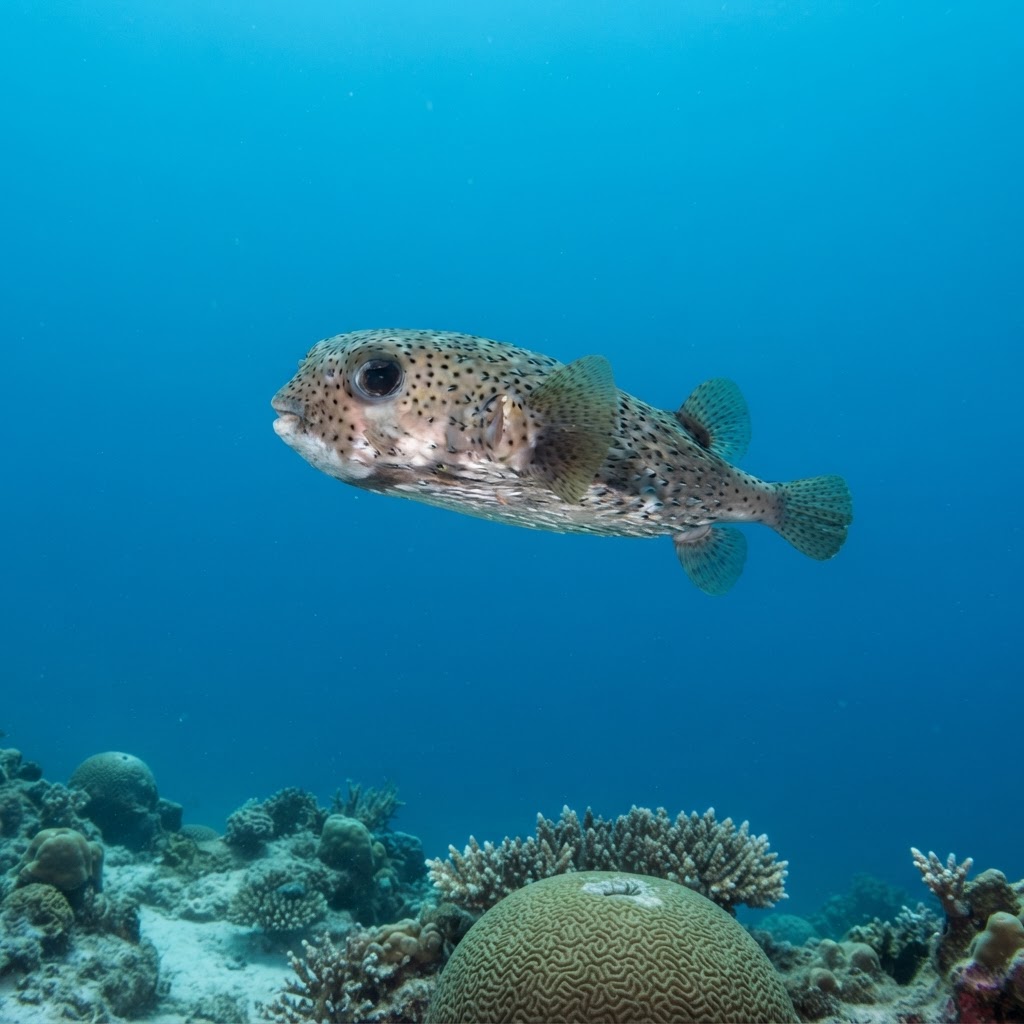
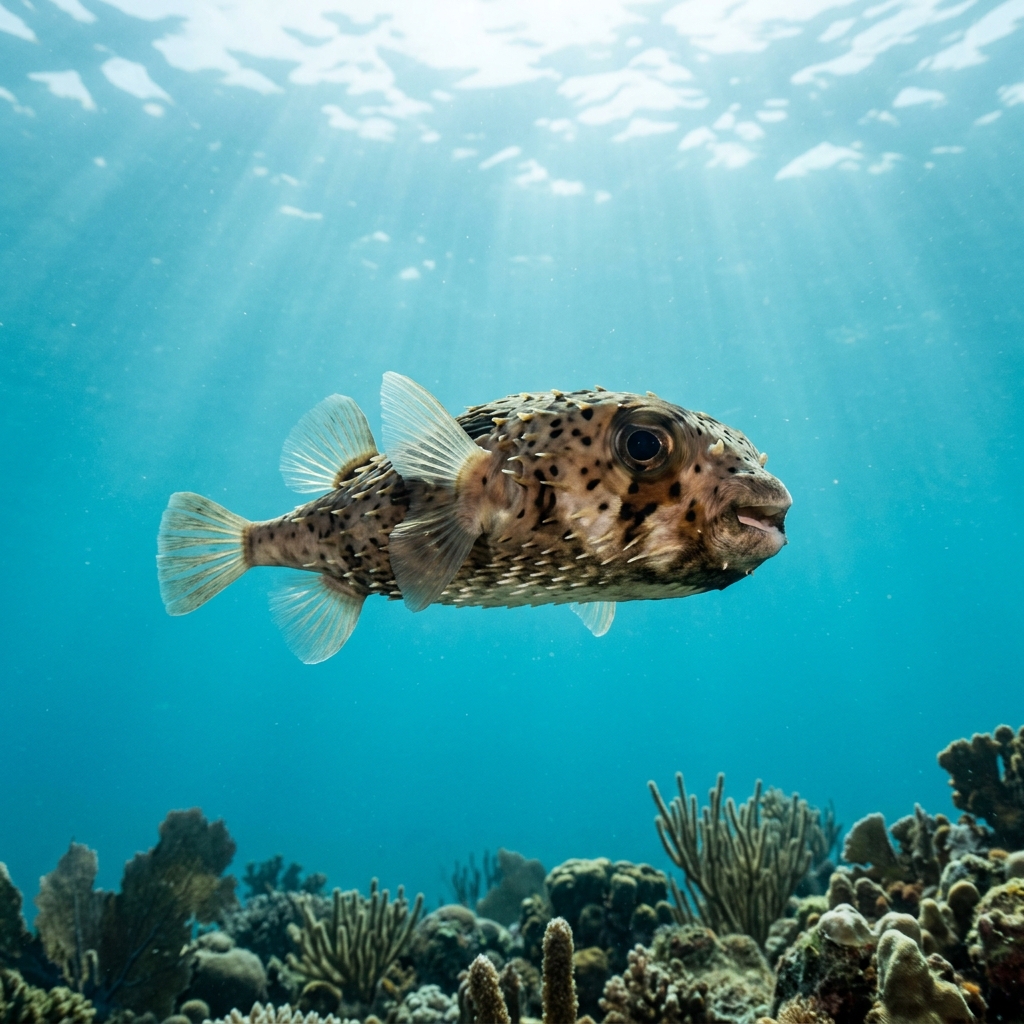
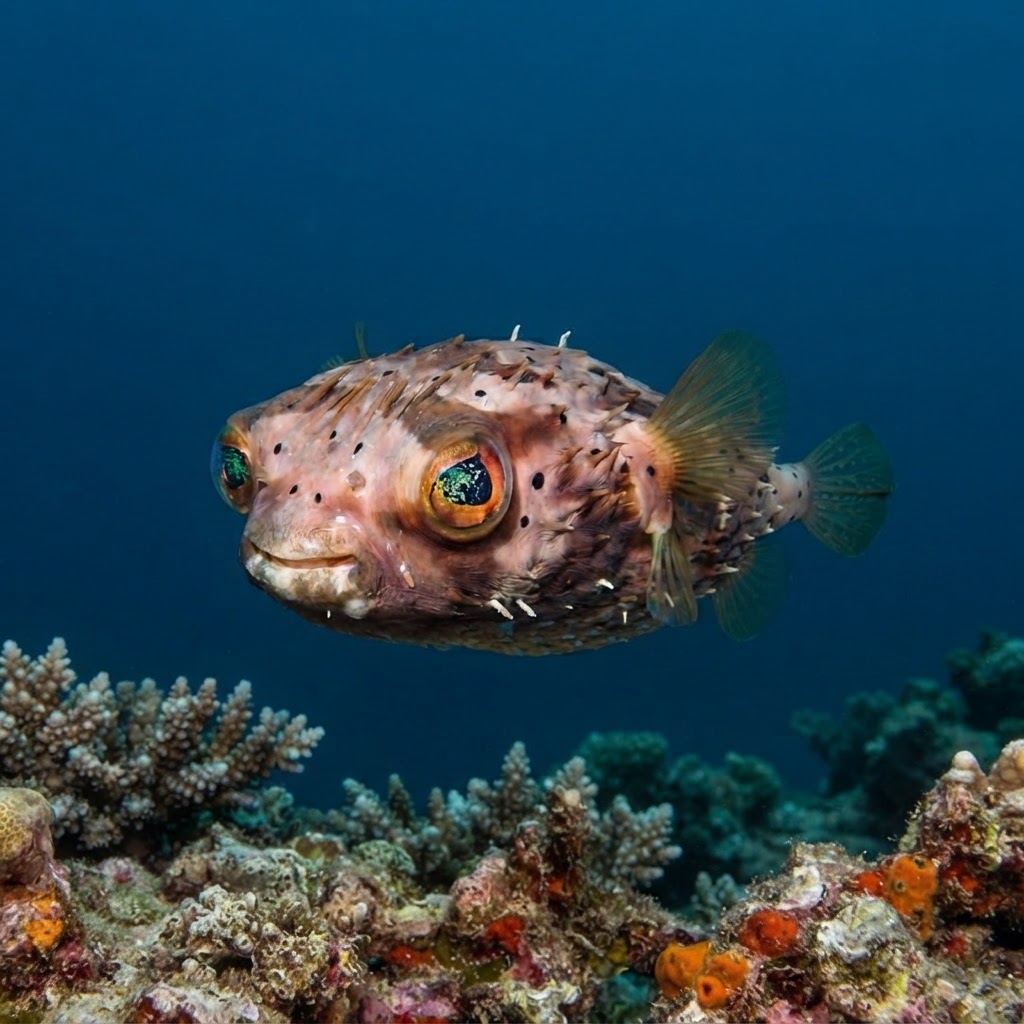
Round, balloon-like body up to 35cm covered in long, loose spines that lie flat until the fish is threatened. Look for the oversized eyes, pale tan to yellowish skin with scattered dark blotches, and a slow, almost hovering swimming style with small fins beating fast to move a heavy body. It can inflate itself into a spiny ball when stressed, but you will almost always see it in its normal, deflated shape, tucked near a reef ledge or drifting over sand.
Divers typically find it moving slowly and deliberately near reef structure, ledges, or over open sand, often solo and unhurried even with people nearby. It is most active around dusk and at night, when it forages, but daytime sightings of one resting in a crevice or drifting in the open are common at most of these sites. It rarely bolts from divers, relying instead on its spines and the option to inflate if something actually grabs it.
When threatened it gulps water (or air, if pulled to the surface) to inflate into a spiky ball, a defence that makes it nearly impossible for most predators to swallow.
No clear season shows up in the sighting data, and it is comfortable across a broad 21.5 to 29C range, so it is a year-round find on tropical and subtropical reefs rather than a seasonal target.
Reef neighbours a diver could mistake it for. Use the identification notes above to tell them apart.
Most commonly logged along Mexico's Pacific coast and Baja California, plus the Yucatán Peninsula, with strong numbers also reported in Florida, Grenada, Cape Verde, and Costa Rica's Guanacaste coast. It also turns up reliably in Colombia's Caribbean, Indonesia, and Oman, so it is a realistic find on reef dives across a wide range of warm-water regions.
Mapping where Long-spine Porcupinefish is logged…
Best odds are along Mexico's Pacific coast, Baja California, and the Yucatán Peninsula, with other reliable spots in Florida, Grenada, Cape Verde, Costa Rica's Guanacaste region, and Colombia's Caribbean coast.
There is no strong seasonal pattern in the sightings, and it tolerates a wide temperature range from about 21.5 to 29C, so it shows up on reefs throughout the year.
Look for a round, tan to yellowish body with dark blotches, big eyes, and long spines lying flat against the skin. It swims slowly with a hovering motion and can puff into a spiny ball if disturbed.
They typically reach around 35cm in length, roughly the size of a large dinner plate, though their spiny, inflatable body makes them look bulkier underwater.
It can gulp water or air to inflate its body into a ball, forcing its spines outward so predators cannot easily bite or swallow it.
Site and sighting data is aggregated from diver logs, iNaturalist and GBIF. For taxonomy and conservation status:
Striped Burrfish
921 sites