Lactoria diaphana
Boxy, balloon-shaped and pale yellow, the Roundbelly Cowfish turns up uncommonly around Easter Island and Tasmania in 22-29C water, year-round.
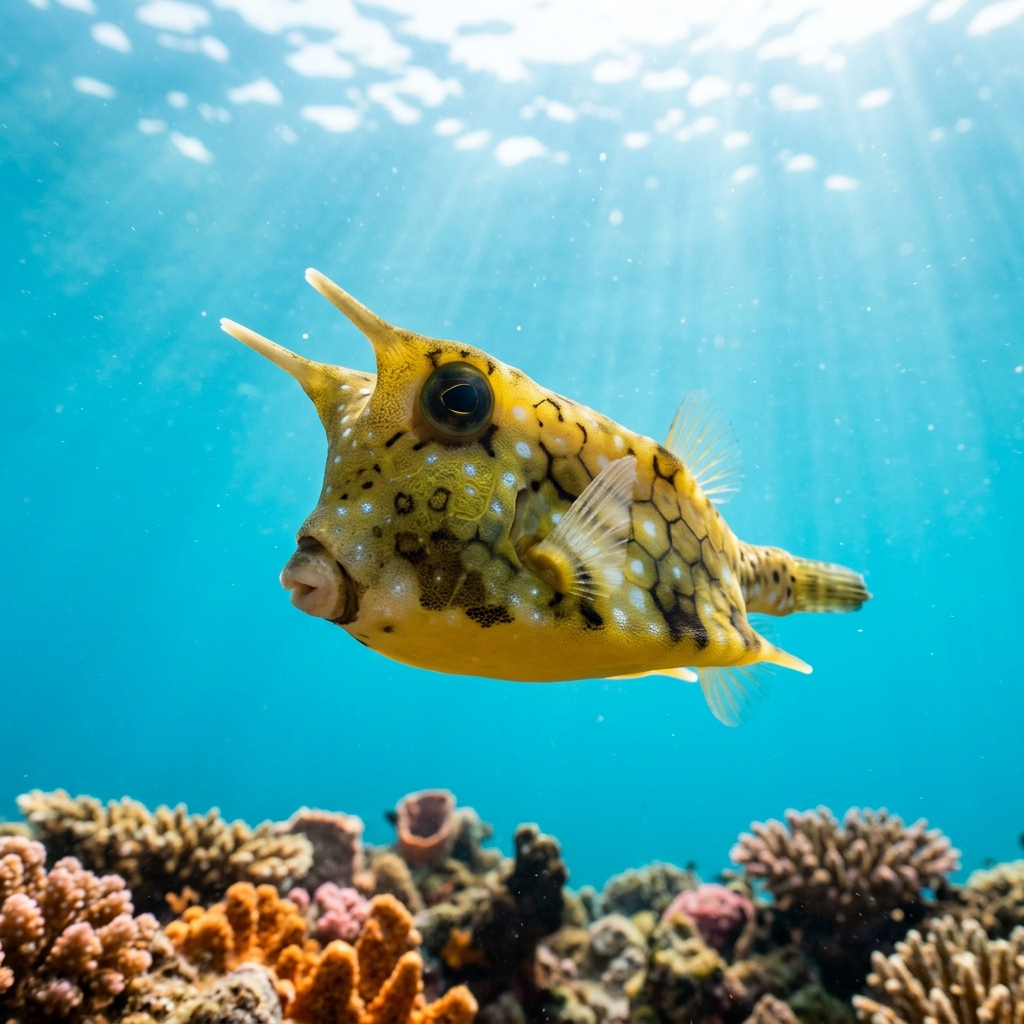
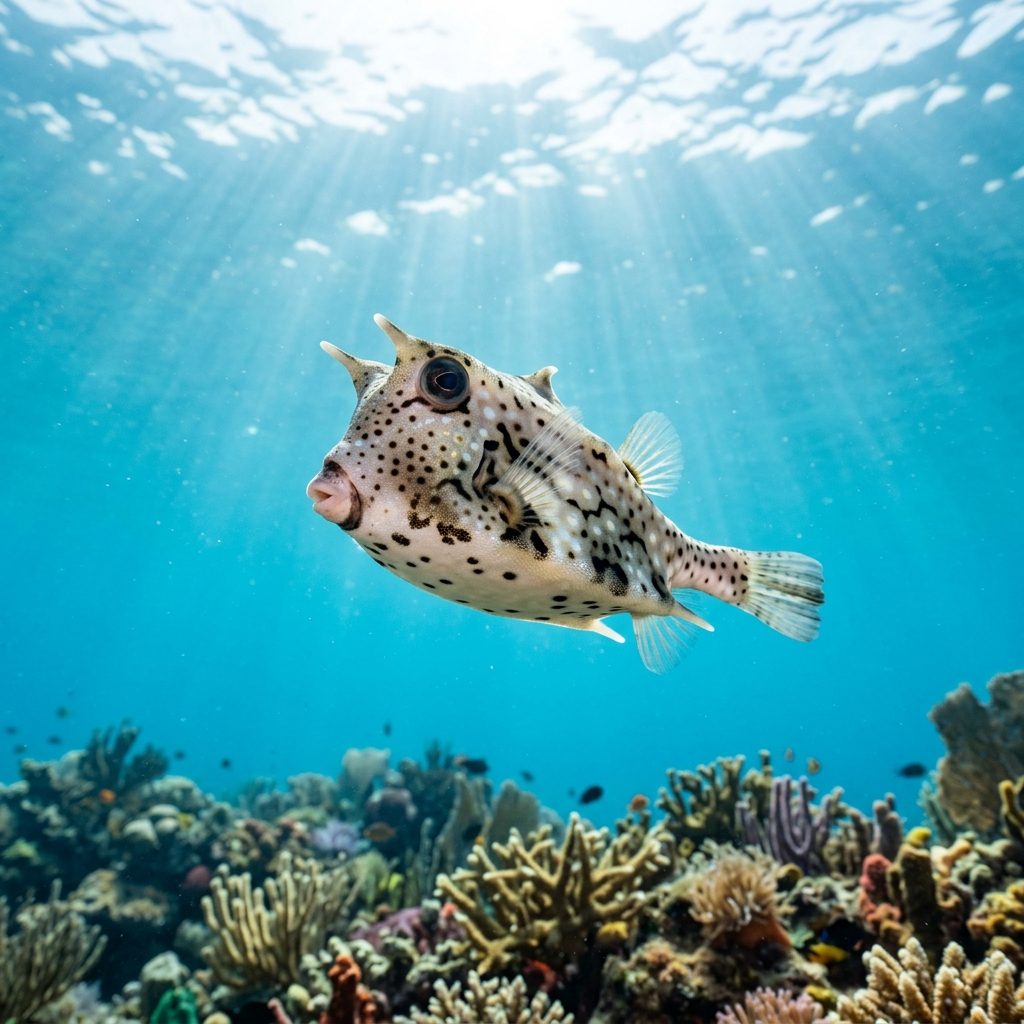
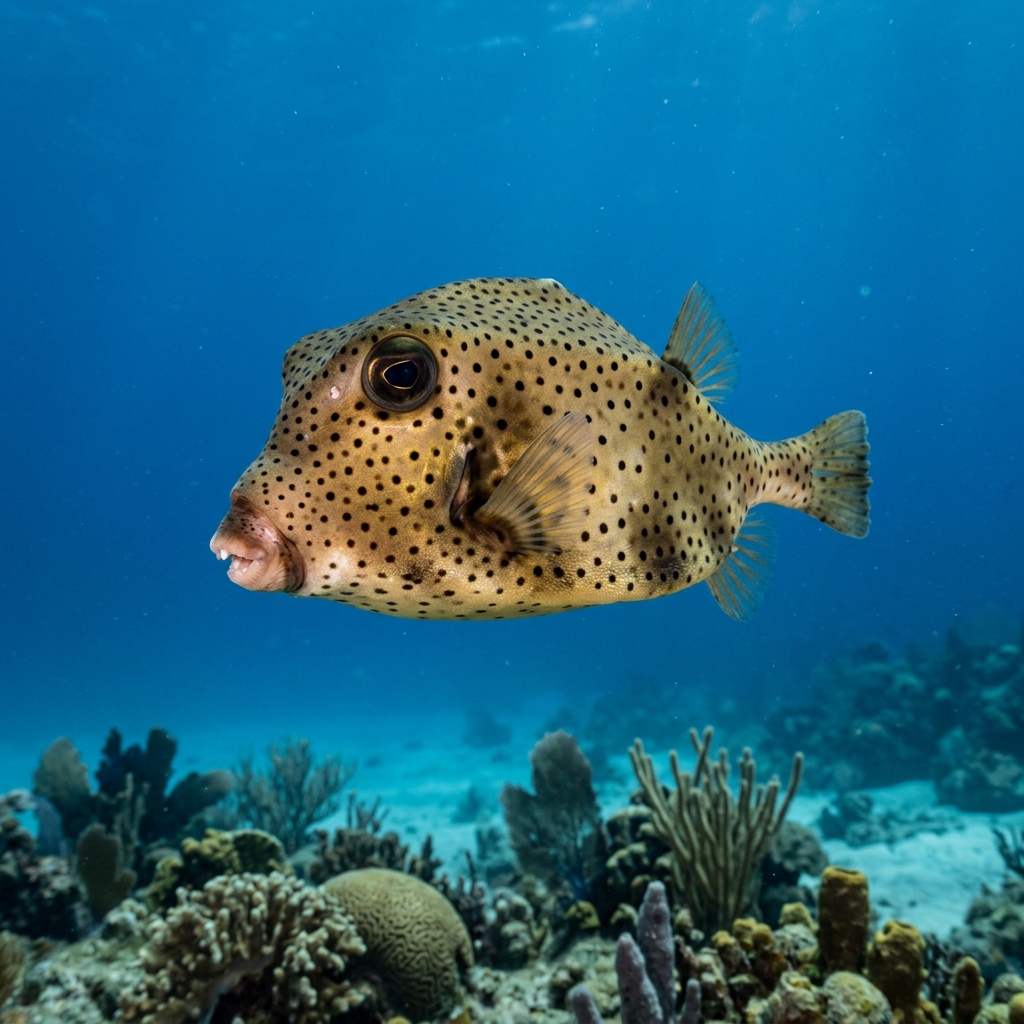
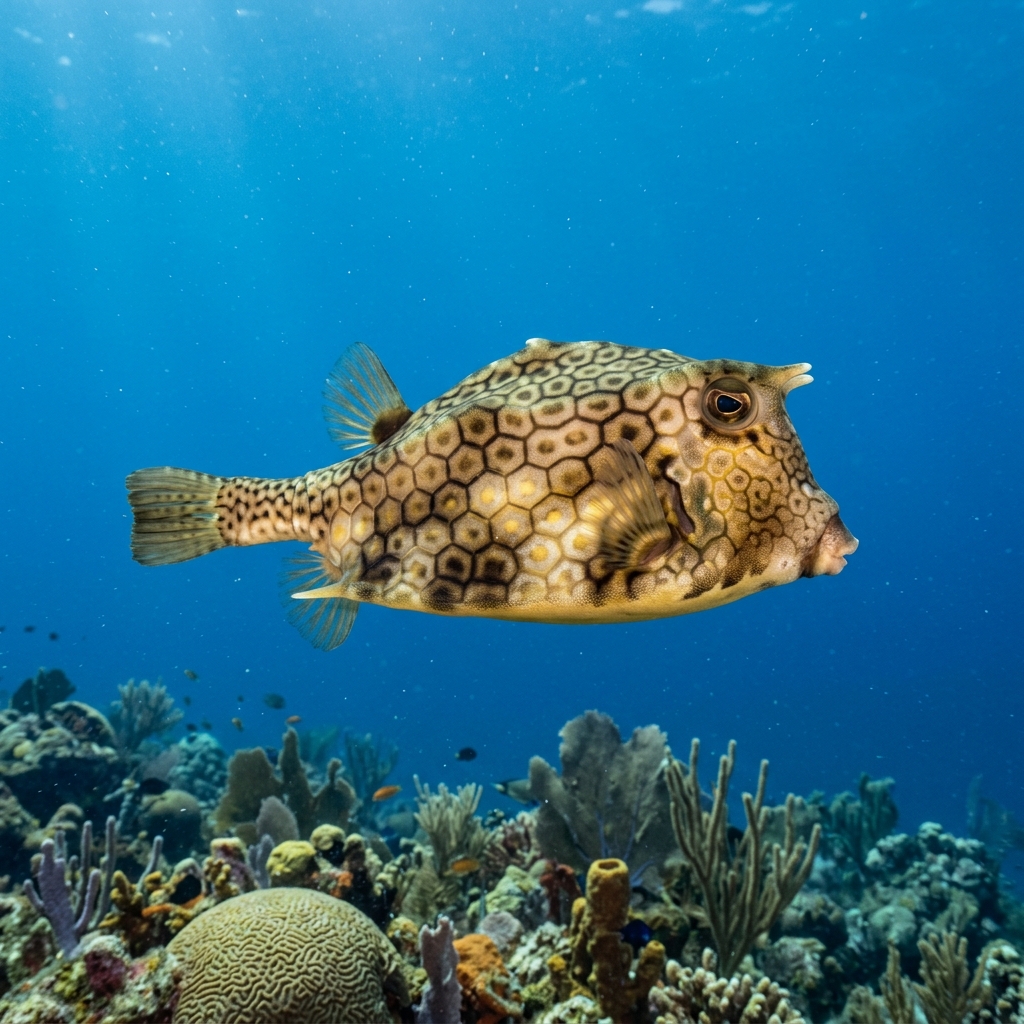
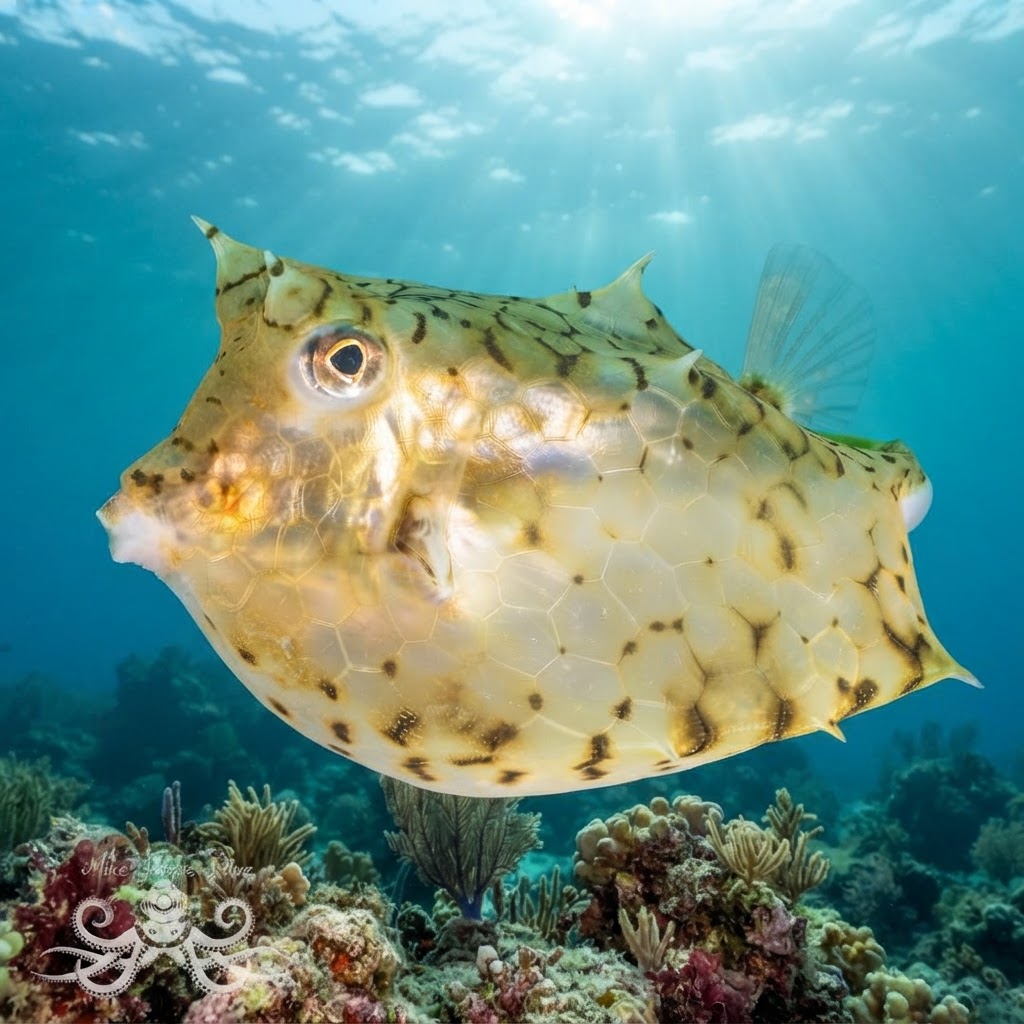
Boxy, almost balloon-like body with a rounded belly that swells noticeably as it matures, coloured pale yellow to olive with faint blue speckling. A short spine juts back from above each eye, giving the face a subtly horned look, though the horns are far less pronounced than on its longhorn relative. It swims with a stiff, hovering motion, using only its small fins while the rigid box-shaped shell stays still.
Divers usually find it hovering slowly near the bottom, often close to rock or reef structure rather than out in the open water, using slow fin beats while its stiff body stays rigid. It is unhurried around divers and rarely bolts, making it easy to approach quietly for a closer look. Most logs describe single individuals rather than groups, consistent with its generally solitary, low-key habits.
Like other boxfish, its body is encased in a rigid, bony shell (a fused armour of plates) that leaves only the eyes, mouth and fins free to move, which is why it swims with that stiff, hovering style instead of a normal fish's flex.
Sightings show no clear seasonal pattern, and with a comfortable range of 22.3 to 29C it can turn up on dives at Easter Island or Tasmania at any time of year. Treat it as a year-round possibility rather than a seasonal target.
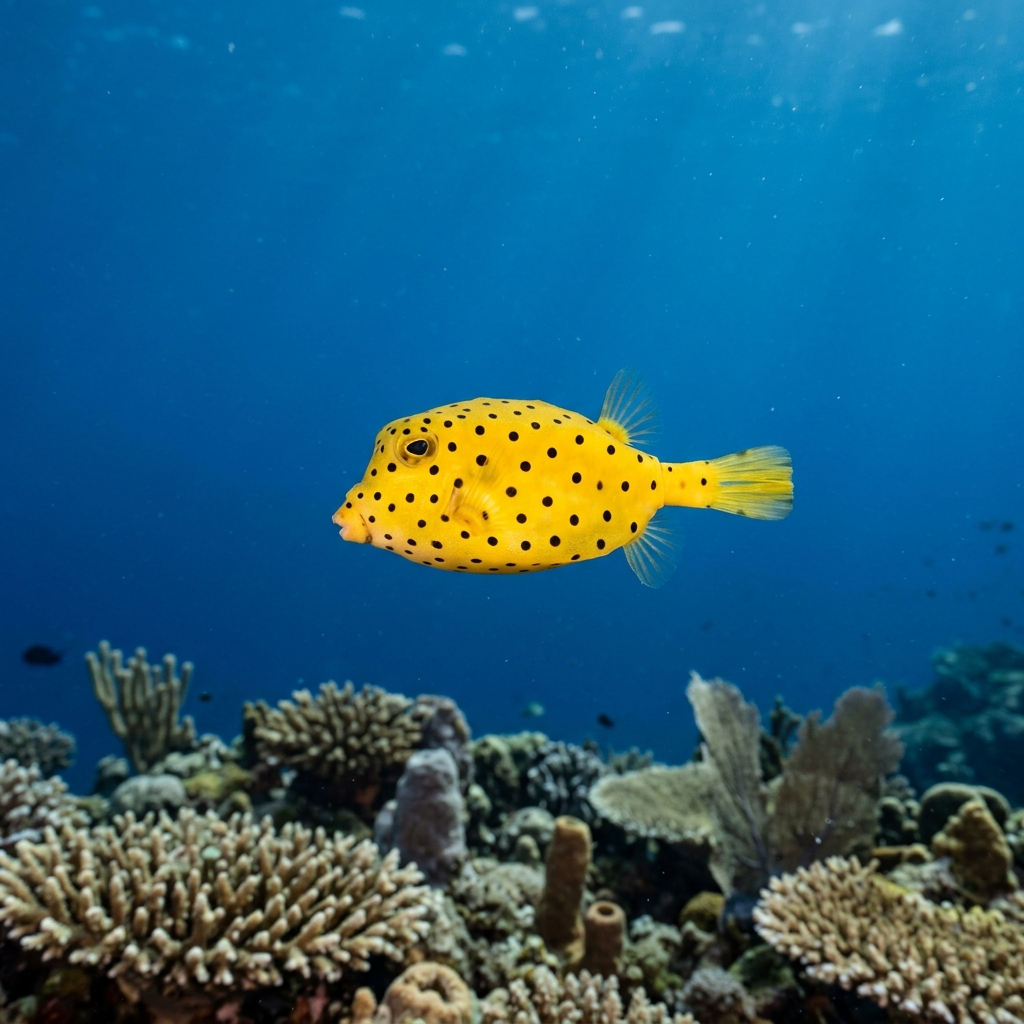
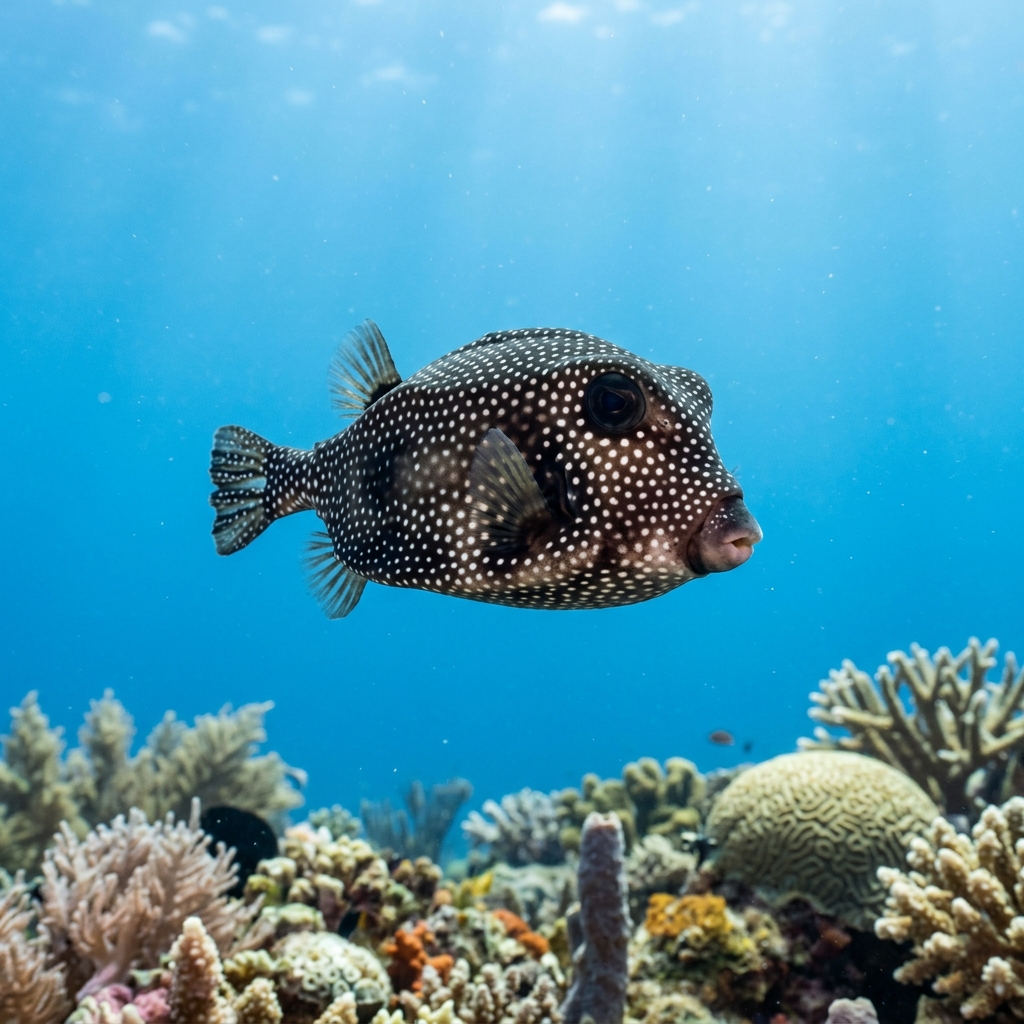
Reef neighbours a diver could mistake it for. Use the identification notes above to tell them apart.
Most reliably logged around Easter Island in Chile, which accounts for the bulk of recorded sightings, with a smaller but consistent presence around Tasmania in Australia. Outside these two areas it is rarely reported, so divers chasing this species should focus their planning on those regions.
Mapping where Roundbelly Cowfish is logged…
The strongest sightings come from around Easter Island in Chile, with additional records from Tasmania in Australia. It is logged as uncommon to rare at most sites, so it is a nice bonus find rather than a guaranteed sighting.
There is no strong seasonal pattern in the sightings, and it tolerates a wide temperature range of 22.3 to 29C, so it can appear on dives in Easter Island or Tasmania at any time of year.
Look for a boxy, rounded body in pale yellow or olive with faint blue speckling, small horn-like spines above the eyes, and a stiff hovering swim style. The swollen, rounded belly is the main giveaway that separates it from similar boxfish.
They typically reach around 24cm in length, a modest size that still makes their boxy, inflated shape easy to pick out against reef or rock backgrounds.
Its body is enclosed in a rigid bony shell made of fused plates, leaving only the eyes, mouth and fins mobile. This armour forces it to swim with a stiff, hovering style rather than the flexible swimming of most reef fish.
Site and sighting data is aggregated from diver logs, iNaturalist and GBIF. For taxonomy and conservation status:
Honeycomb Cowfish
1,691 sites