Thalassoma lutescens
A common find on Okinawa and Great Barrier Reef dives, this lime-and-pink wrasse is active year-round in 24-29C water.
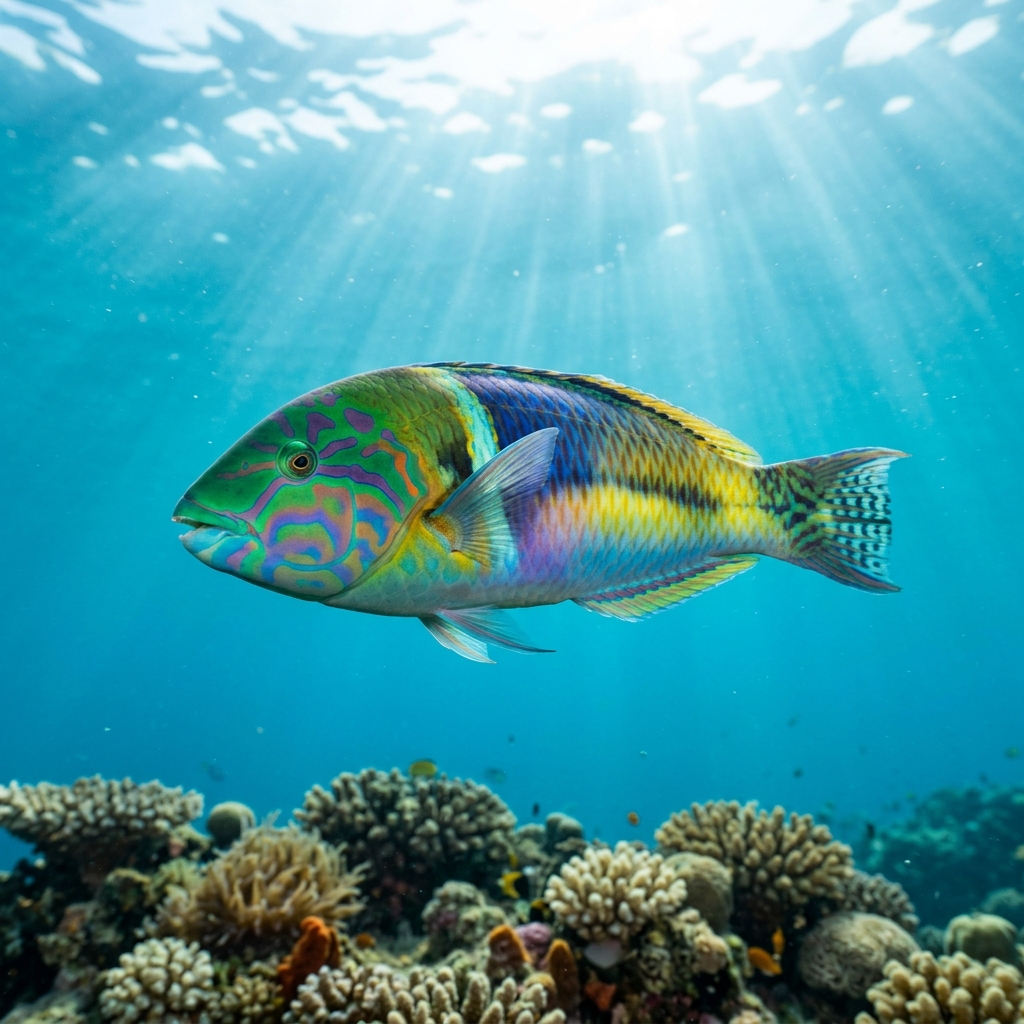
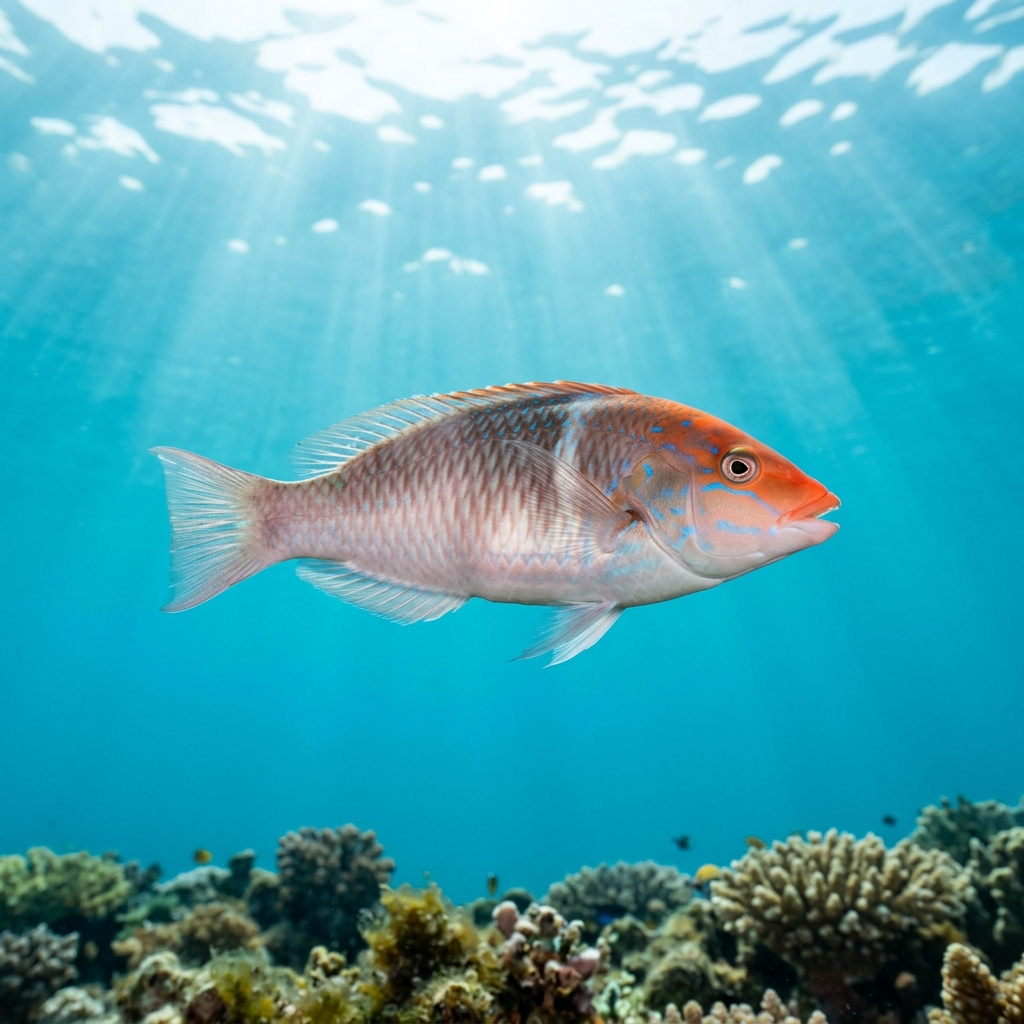
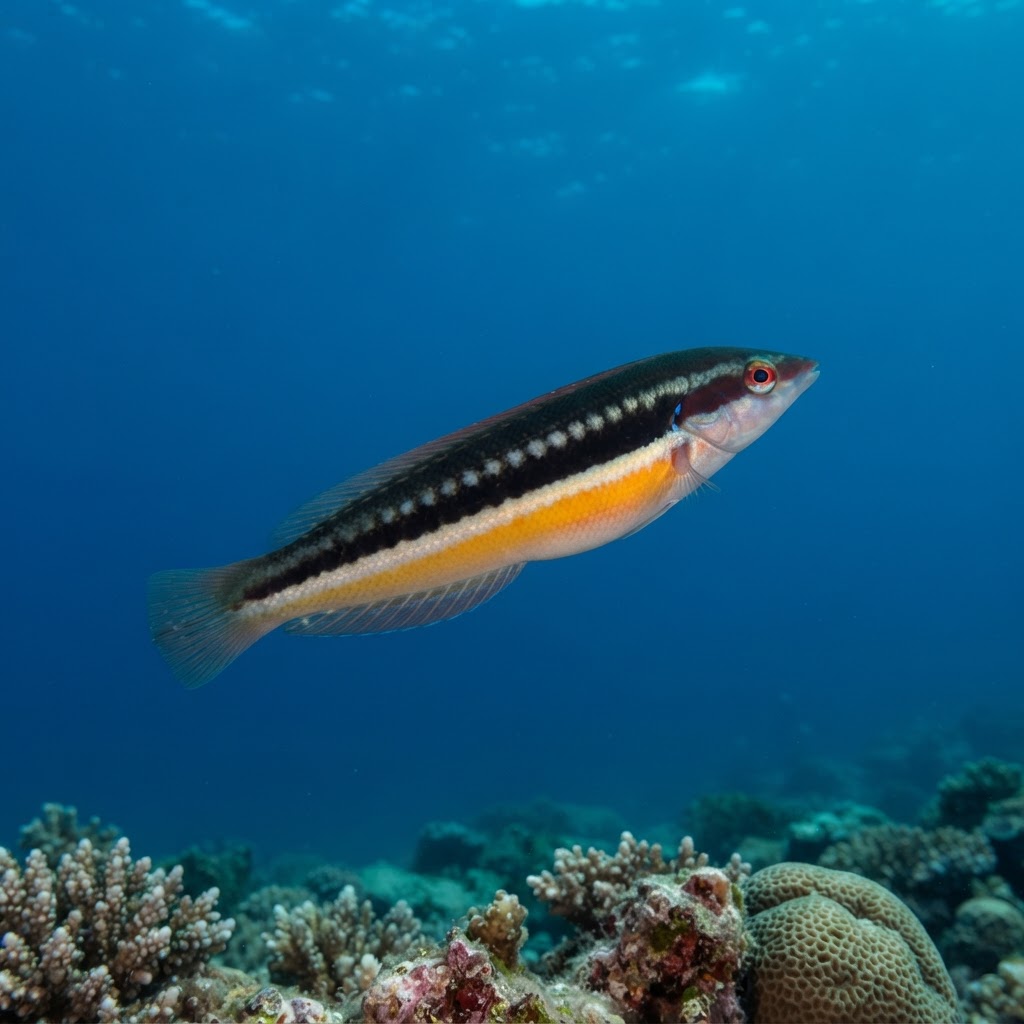
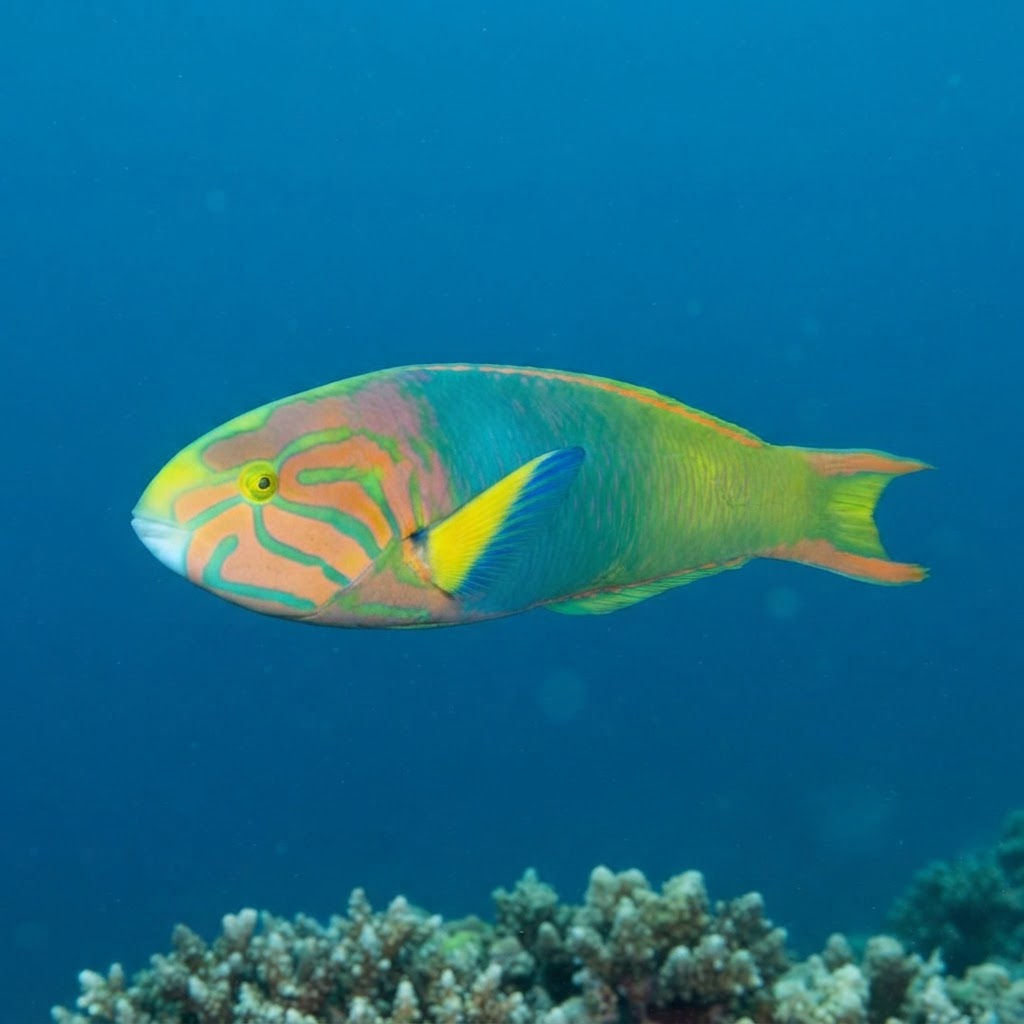
Look for a slender, torpedo-shaped wrasse around 21 cm with a pale green to yellow-green body and a network of pink or salmon lines radiating across the head. The tail fin is edged in yellow and often flicks as it darts between coral heads. Terminal-phase males show the boldest colour and a squared-off tail; younger fish are duller and more olive overall.
Expect to see it picking over rubble patches and reef edges by day, snapping up small invertebrates rather than schooling in open water. It is a fast, busy swimmer that keeps moving as you approach rather than holding position, and divers most often log it as an uncommon but steady presence rather than something guaranteed on every dive. It tends to stay close to the reef structure, weaving through gaps rather than crossing open sand.
Like other Thalassoma wrasses, sunset wrasse change sex and colour as they mature, so the brightest, most patterned individuals you see are typically males that have transitioned from an earlier female phase.
Sightings show no clear seasonal pattern, and with a comfortable range of roughly 24 to 29 C it stays active on Indo-Pacific reefs year-round. Plan around good visibility and calm conditions at your chosen site rather than a particular month.
Most reliably logged around Okinawa and the Ryukyu Islands in Japan, and across Australia in Queensland, New South Wales and Western Australia. It also turns up consistently in Taiwan (notably Orchid Island and Green Island), the Cook Islands' Rarotonga, French Polynesia's Society Islands and New Caledonia.
Mapping where Green Moon Wrasse is logged…
Okinawa and the Ryukyu Islands in Japan are the strongest area, alongside Queensland, New South Wales and Western Australia in Australia. Taiwan's Orchid Island and Green Island, Rarotonga in the Cook Islands, and French Polynesia's Society Islands are other reliable spots.
There is no strong seasonal pattern in sightings, and its comfortable water temperature range of about 24 to 29 C means it is present on reefs throughout the year. Any season with good diving conditions at your chosen site works.
Look for a slim, fast-moving wrasse about 21 cm long with a pale green body and pink lines fanning across the face, plus a yellow-tinged tail. Terminal males are the most colourful and often hold the boldest markings.
They typically reach around 21 cm in length, making them a mid-sized reef wrasse rather than one of the larger labrids.
Yes. Like many Thalassoma wrasses, individuals start out as females and some later transition into brightly coloured terminal-phase males as they mature, a common life-history strategy in this family.
No, they pose no danger to divers. They are small, fast-swimming reef fish that keep their distance and show no aggressive behaviour towards people.
Site and sighting data is aggregated from diver logs, iNaturalist and GBIF. For taxonomy and conservation status:
Bird Wrasses
3,632 sites