Forcipiger flavissimus
Spot the Forcepsfish by its vivid yellow body and impossibly long snout across the Maldives, Hawaii, and Indonesia, present year-round on warm tropical reefs.
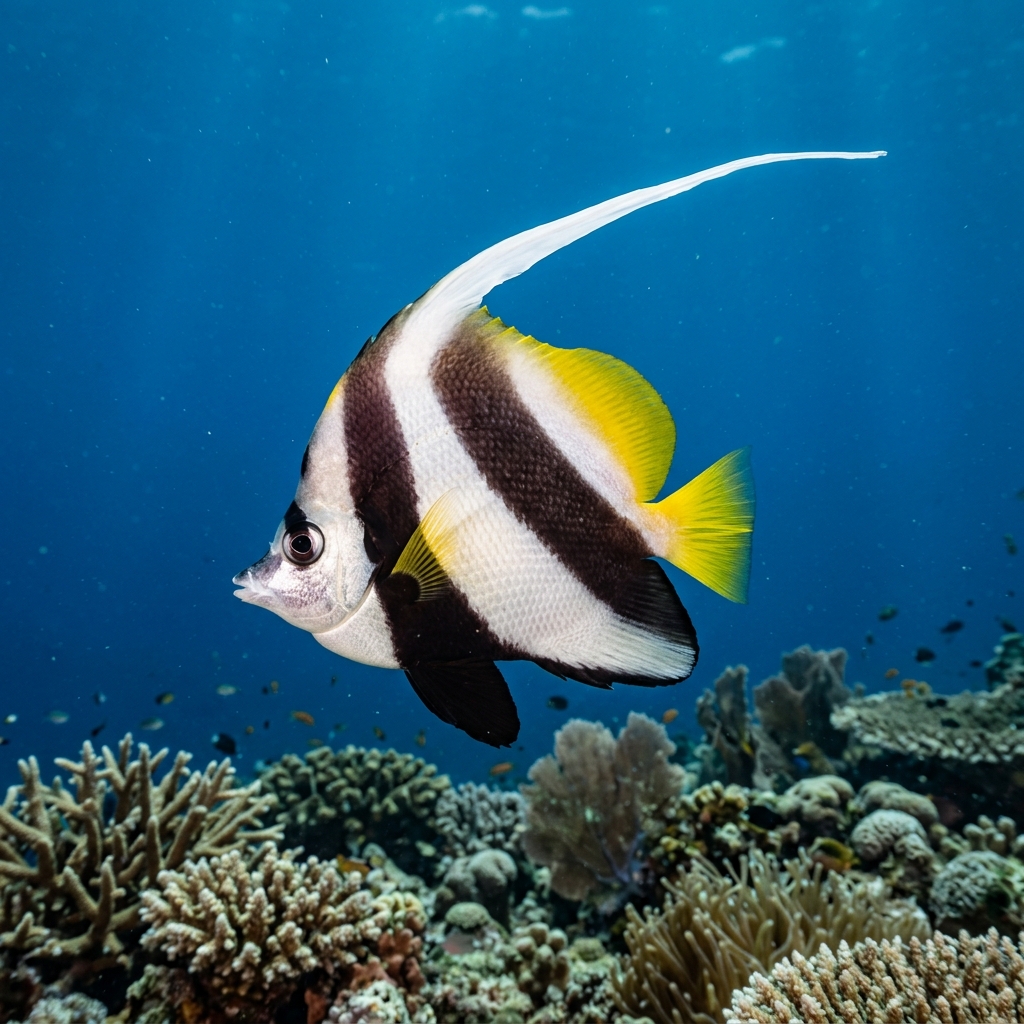
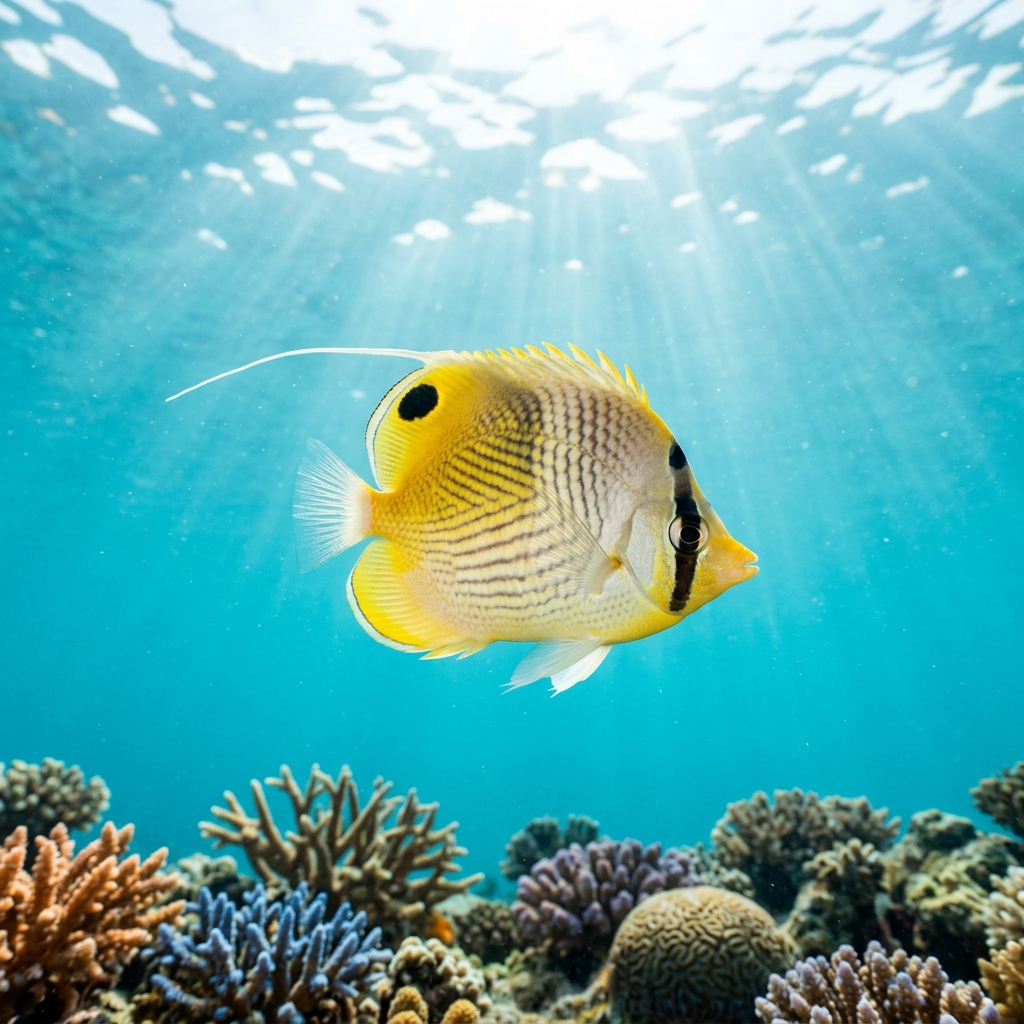
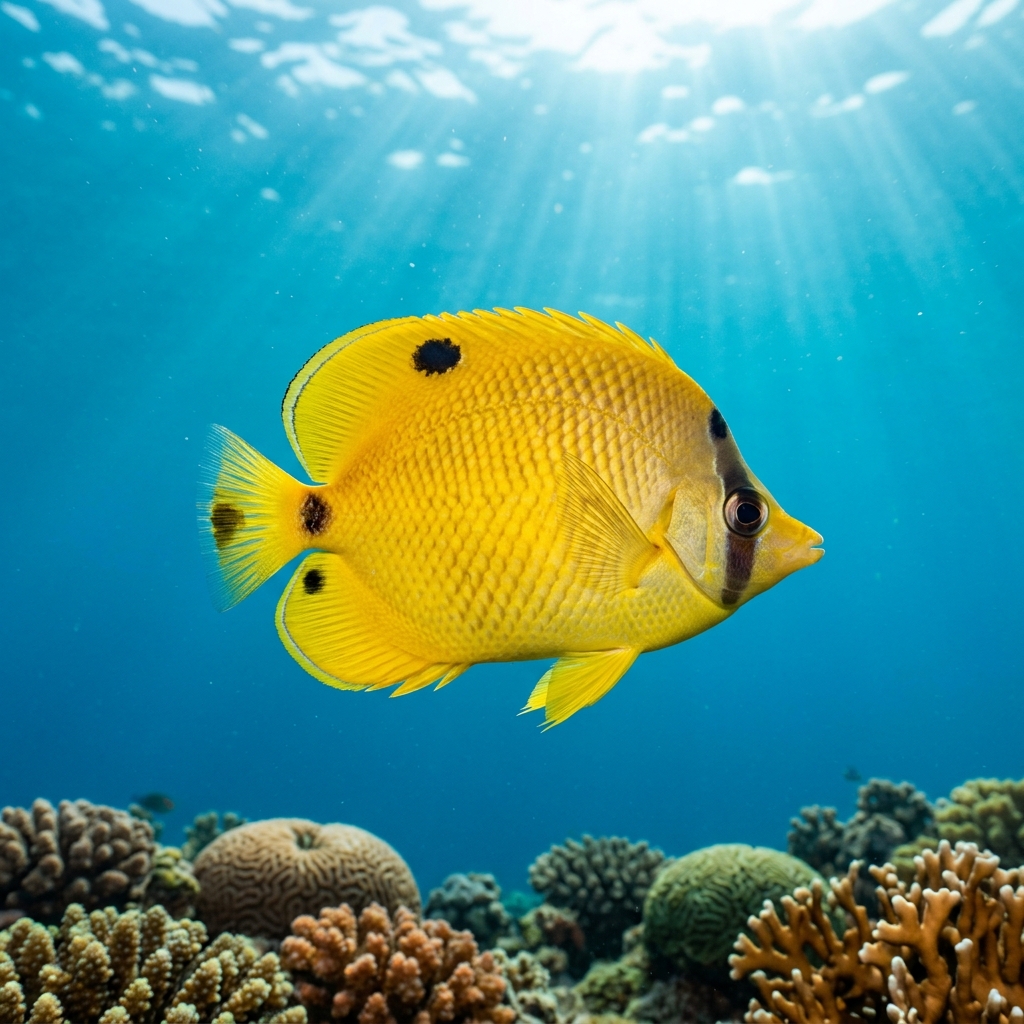
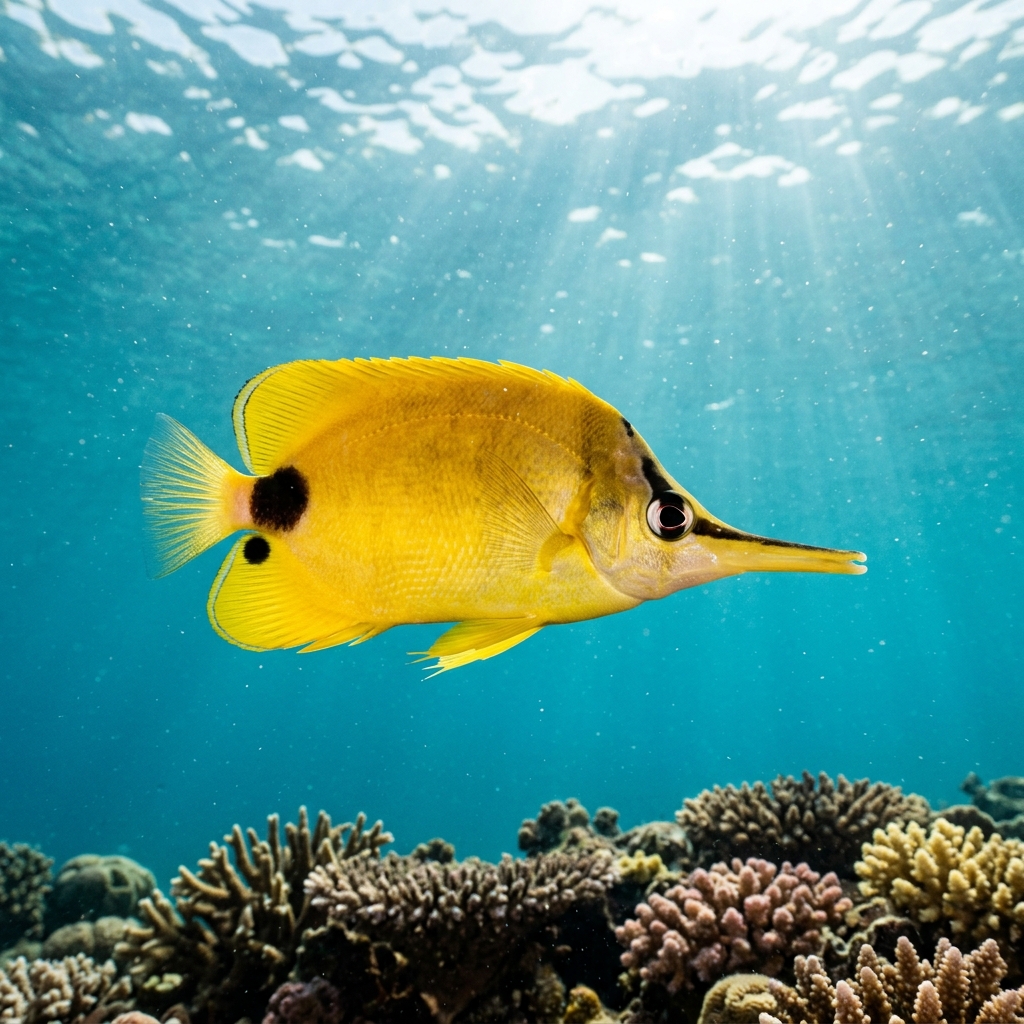
Almost entirely chrome-yellow, it stands out immediately on the reef, the giveaway is the dramatically elongated snout (like a pair of forceps, hence the name) that it uses to probe coral crevices for tiny invertebrates. Look for the bold black-and-white pattern on the face: a dark eye stripe and a pale 'mask' region that abruptly meets the yellow body. A small black spot sits near the rear of the dorsal fin, which can help separate it from look-alikes. Body shape is disc-like and laterally compressed, typical of butterflyfish, but that snout length is unique enough to clinch the ID.
You will usually encounter it alone or in a loose pair, working methodically over coral heads and along reef walls, probing its long snout deep into crevices and between coral branches to extract small worms, crustaceans, and fish eggs. It is not particularly shy, it will often carry on feeding while divers watch, but it rarely holds still for long, drifting from one feeding spot to the next with steady, unhurried fin beats. Most sightings are in relatively shallow reef zones where live coral cover is good.
That extraordinary snout is longer relative to body size than in almost any other butterflyfish, allowing it to outcompete species with shorter snouts for food tucked deep in coral architecture, it is a real evolutionary edge in crowded reef environments.
In the Northern Hemisphere, Hawaii, Japan, and the Maldives, it is present year-round with no concentrated season, which makes sense given its preference for water between 24 and 29 °C found consistently on these tropical reefs. Southern Hemisphere sightings (Australia, French Polynesia, Mauritius) tend to concentrate between June and February, broadly aligning with those regions' warmer months.
Most consistently logged across the Maldives (especially Male and Ari Atolls), Hawaii, and Indonesian waters including Sulawesi, Bali, and the Nusa Tenggara and Banda Sea region. Strong records also exist in the Philippines (particularly the Central Visayas), French Polynesia, and Japan's Okinawa Islands, making it one of the more widely distributed butterflyfish in the Indo-Pacific.
Mapping where Forcepsfish is logged…
The Forcepsfish turns up across a wide sweep of the Indo-Pacific. The Maldives (particularly Male and Ari Atolls) and Hawaii are the most reliable regions, followed by Indonesia's Sulawesi, Bali, and the Banda Sea, the Central Visayas in the Philippines, and French Polynesia. Japan's Okinawa Islands and Mauritius also have solid records.
In the Maldives, Hawaii, and Japan, they are present year-round, the consistently warm water suits them all year. In the Southern Hemisphere (Australia, French Polynesia, Mauritius), sightings are most frequent from June through February, which covers the warmer part of those regions' annual cycle.
The snout is the clincher, it is proportionally the longest of any common butterflyfish, giving the fish a 'pair of forceps' profile you can recognise from a metre away. Pair that with an almost entirely bright yellow body, a black-and-white facial mask, and a small dark spot near the rear dorsal fin and there really is nothing else like it on the reef.
Adults typically reach around 20 to 22 cm in total length, making them a medium-sized butterflyfish. Underwater they appear slightly smaller because the elongated snout makes up a disproportionate share of that measurement.
The extended snout is a feeding adaptation that lets it reach into deep coral crevices and between tightly packed coral branches to pick out small invertebrates, fish eggs, and polychaete worms that shorter-snouted competitors simply cannot access. It is one of the more specialised feeding tools in the butterflyfish family.
Site and sighting data is aggregated from diver logs, iNaturalist and GBIF. For taxonomy and conservation status: