Aulostomus chinensis
Spot Pacific Trumpetfish year-round from the Philippines to the Yucatán. Learn how to ID this elongated ambush hunter on tropical reefs.
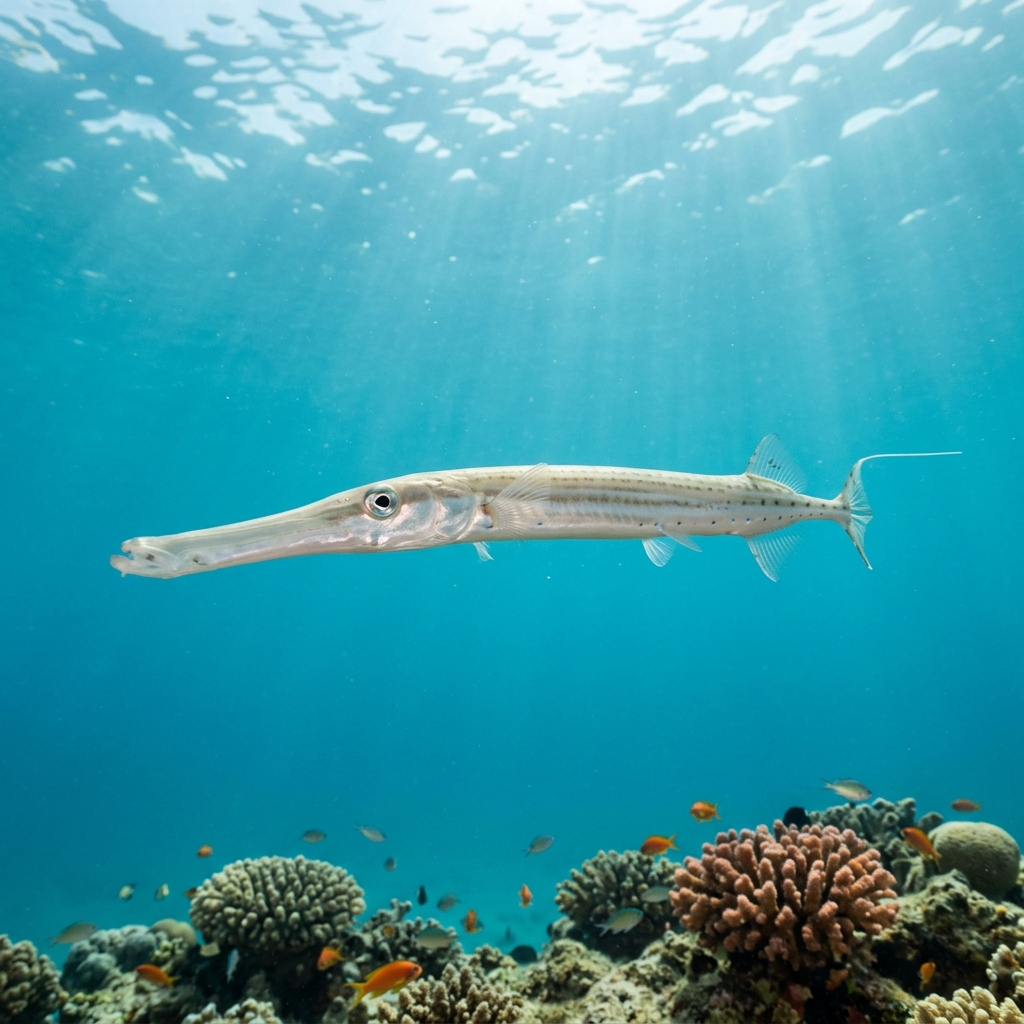
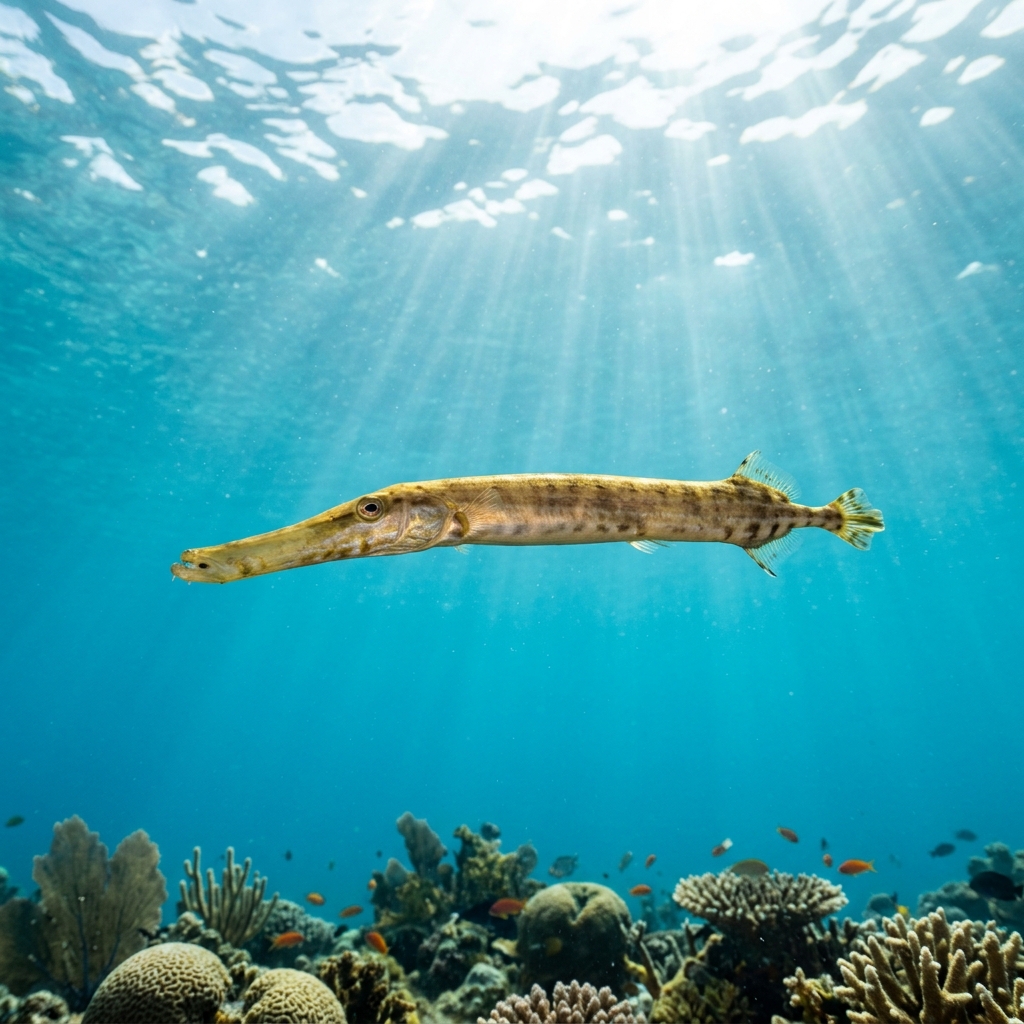
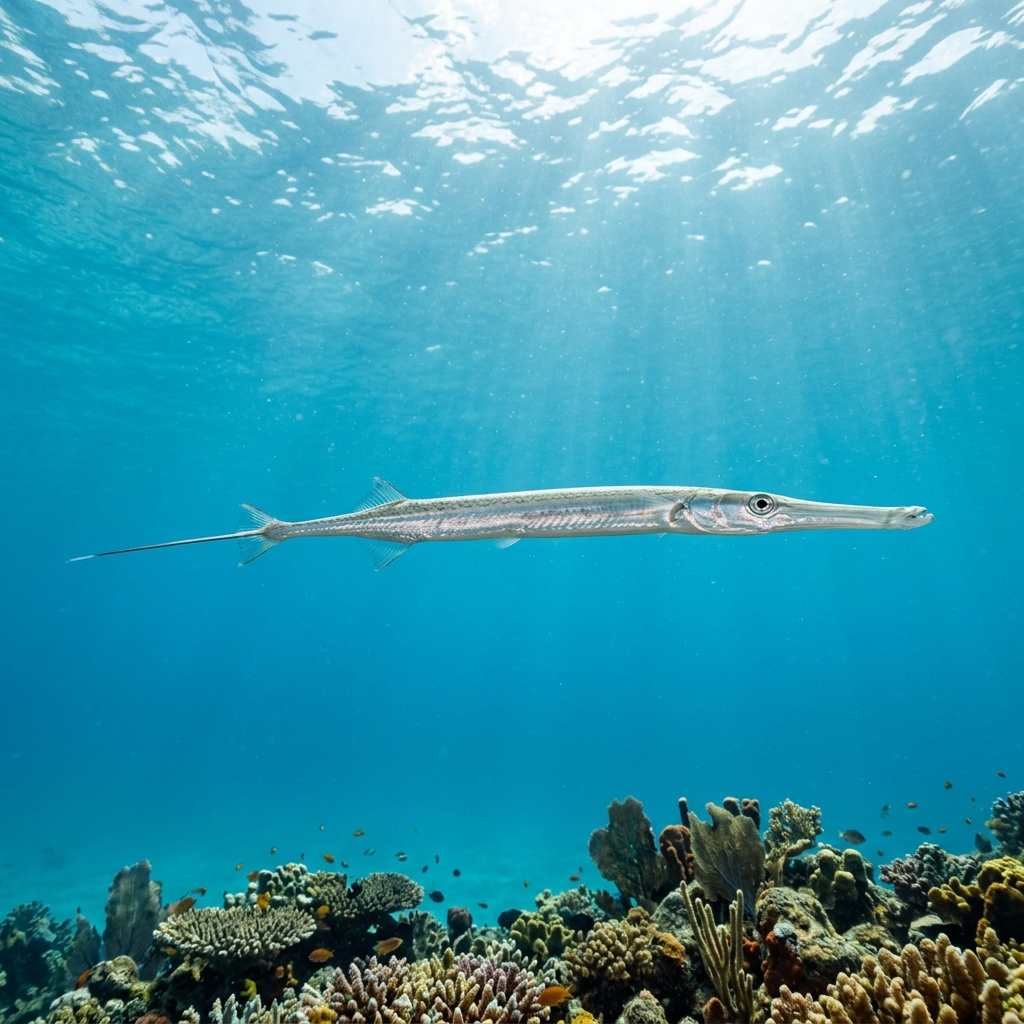
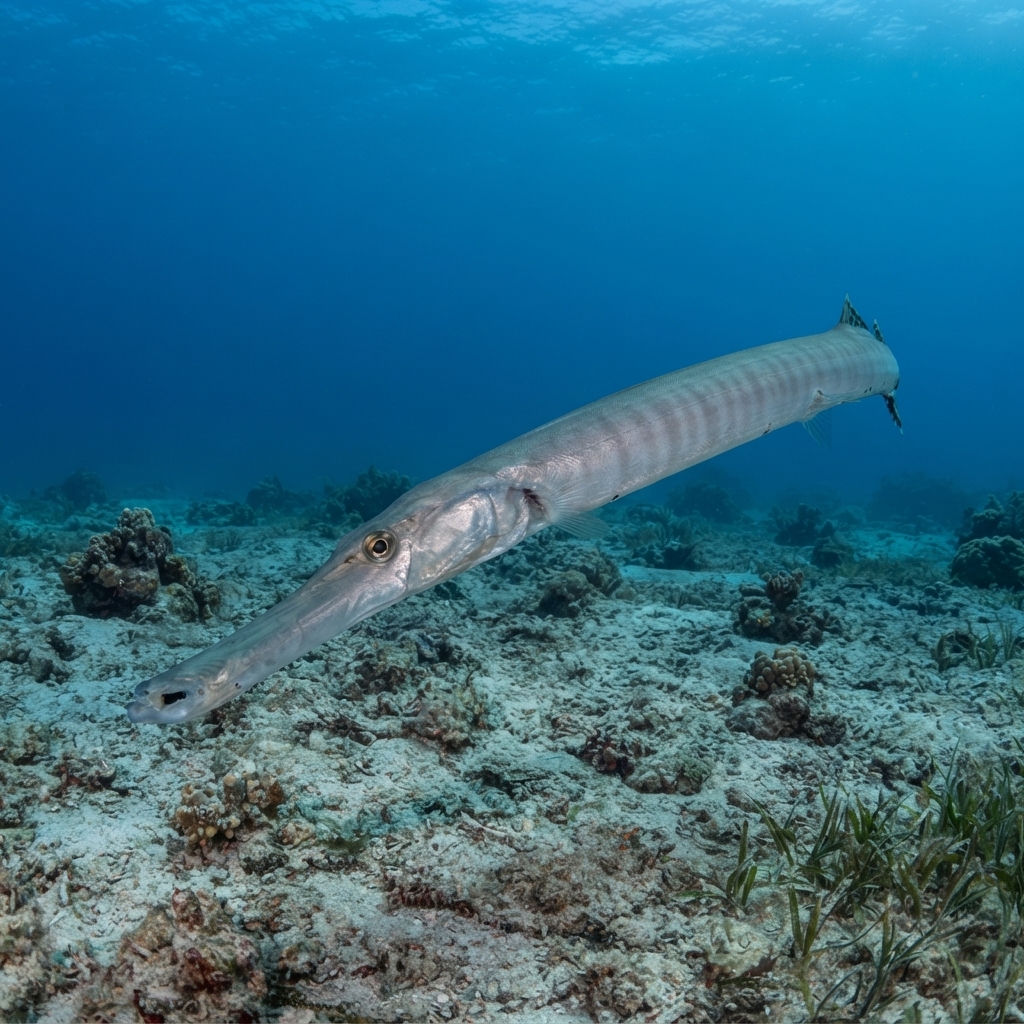
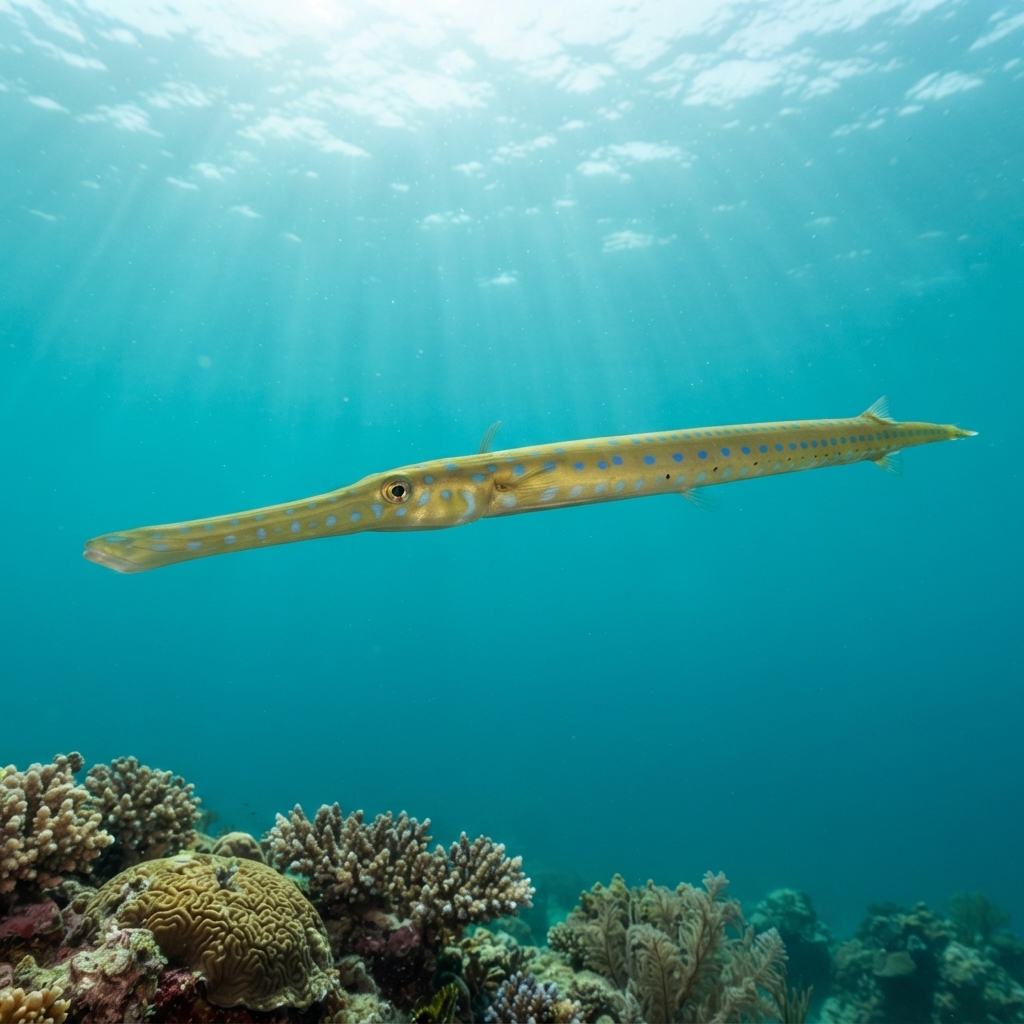
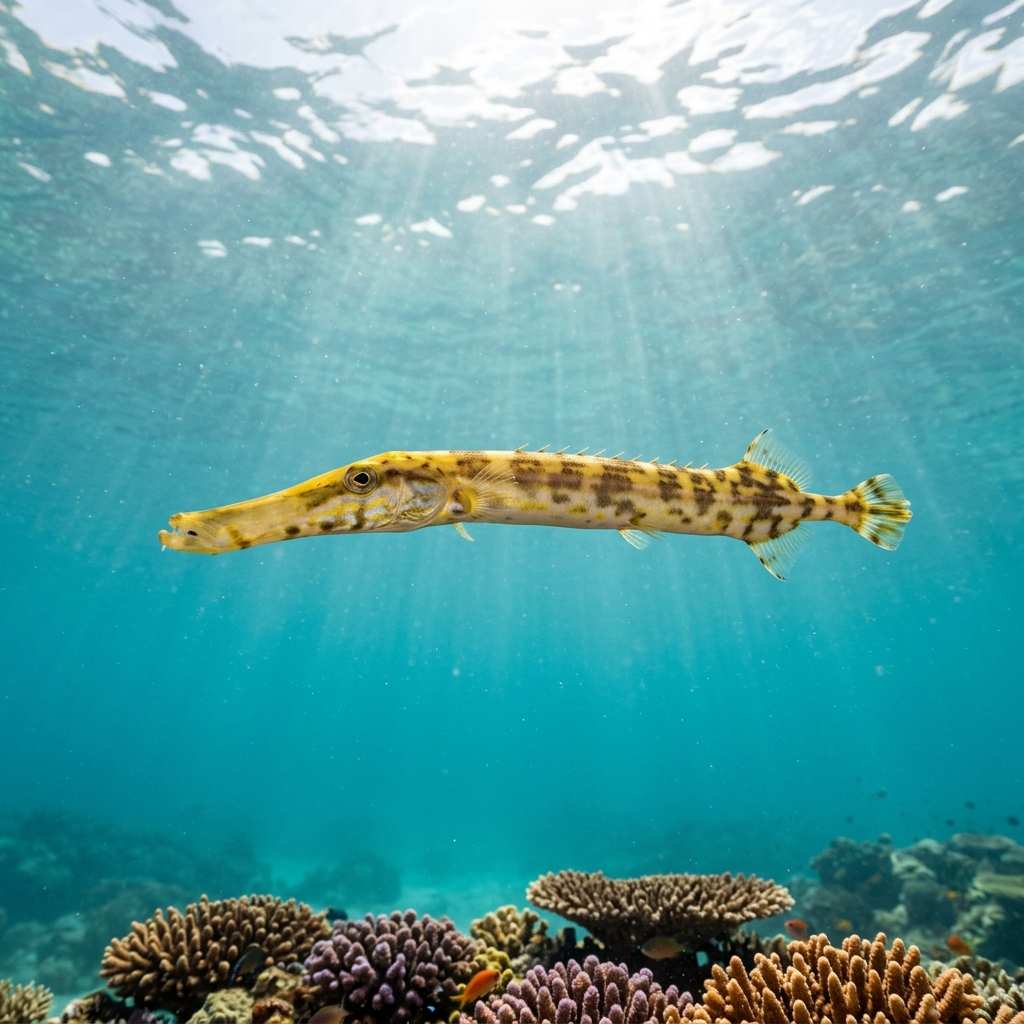
Unmistakably long and thin, this fish looks like a floating stick with a trumpet-shaped snout at one end and a small tail at the other. Colouration ranges from pale yellow to brown or blue-grey, and individuals can shift shade to match their surroundings. Look for a fleshy chin barbel (a small fleshy whisker-like tag beneath the lower jaw) and a row of small dorsal spines along the back, well separated from the soft dorsal fin. Juveniles tend to be darker and more uniformly brown, while the blue-grey colour phase is especially striking and worth noting for ID.
Pacific trumpetfish are ambush predators and spend much of their time motionless, hanging at an angle or drifting vertically among sea fans, soft corals, or tube sponges to look like part of the scenery. One of their most-watched tricks is shadow hunting: tucking in behind a larger fish such as a parrotfish and using it as a mobile blind to sneak within striking distance of small prey. They are generally indifferent to divers and will hold their position or drift slowly away rather than bolt, making them relatively easy to photograph.
Shadow hunting is not accidental behaviour. Pacific trumpetfish actively choose their escort species, manoeuvring to stay on the side of the larger fish that faces the prey, and they will switch sides as the target moves. It is one of the more deliberate tool-use-adjacent strategies seen on coral reefs.
Present on tropical reefs all year in both hemispheres with no concentrated season recorded. It sits comfortably in water between about 24 and 29 °C, which covers most Indo-Pacific and Caribbean reef systems year-round, so timing your trip around this species specifically is not necessary.
Reef neighbours a diver could mistake it for. Use the identification notes above to tell them apart.
Most commonly logged across the Philippines and Indonesia, with particularly strong records in the Visayas Central and around Bali, Lombok, and Java. The Maldives, the Yucatán Peninsula, Queensland, and Hawaii all offer reliable sightings, and it turns up regularly throughout much of the Indo-Pacific and into the tropical Atlantic. The United States entries are largely driven by Florida and Hawaii, making it one of the few reef fish a diver can encounter on both sides of the Pacific.
Mapping where Pacific Trumpetfish is logged…
They are most reliably encountered in the Philippines, Indonesia, the Maldives, and along Mexico's Yucatán Peninsula. Hawaii and Queensland, Australia, are also strong destinations. The species has a wide Indo-Pacific and eastern Pacific range, so it shows up across a broad spread of tropical reef diving regions.
Any time of year. Sighting data from both hemispheres shows no concentrated season, and the species is comfortable in the 24 to 29 °C water temperatures that characterise tropical reefs year-round. Plan your dive trip around the destination rather than around this fish.
Look for an extremely elongated body with a long tubular snout, a chin barbel, and a small distinct tail. Colour varies from yellow-brown to blue-grey but the body shape is unmistakable. They often hang motionless at a diagonal angle, mimicking a piece of coral or debris.
Adults typically reach around 60 to 80 cm in length, though larger individuals approaching a metre are documented. In the water they appear surprisingly slender for their length, which can make estimating size tricky until one drifts past a familiar reference like a coral head.
This is called shadow hunting or fish stalking. The trumpetfish positions itself alongside or behind a larger, non-threatening fish to conceal its approach from small prey such as juvenile wrasses or dartfishes. It actively adjusts its position to keep the larger fish between itself and the target, and strikes with a rapid expansion of its tubular jaw.
Site and sighting data is aggregated from diver logs, iNaturalist and GBIF. For taxonomy and conservation status:
Atlantic Cornetfish
464 sites