Serranidae spp.
Sea basses are logged year-round from Florida to the Philippines. Find where to spot them, how to tell species apart, and what to expect underwater.
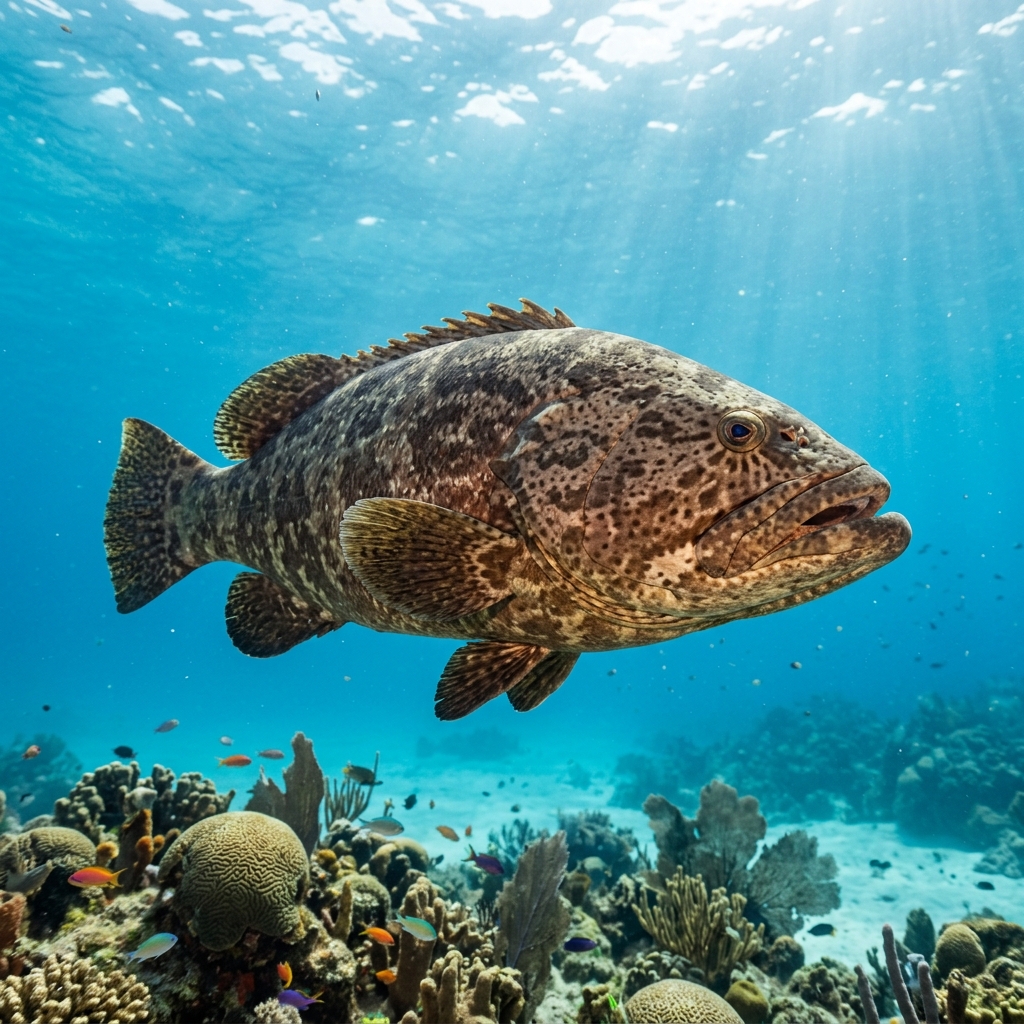
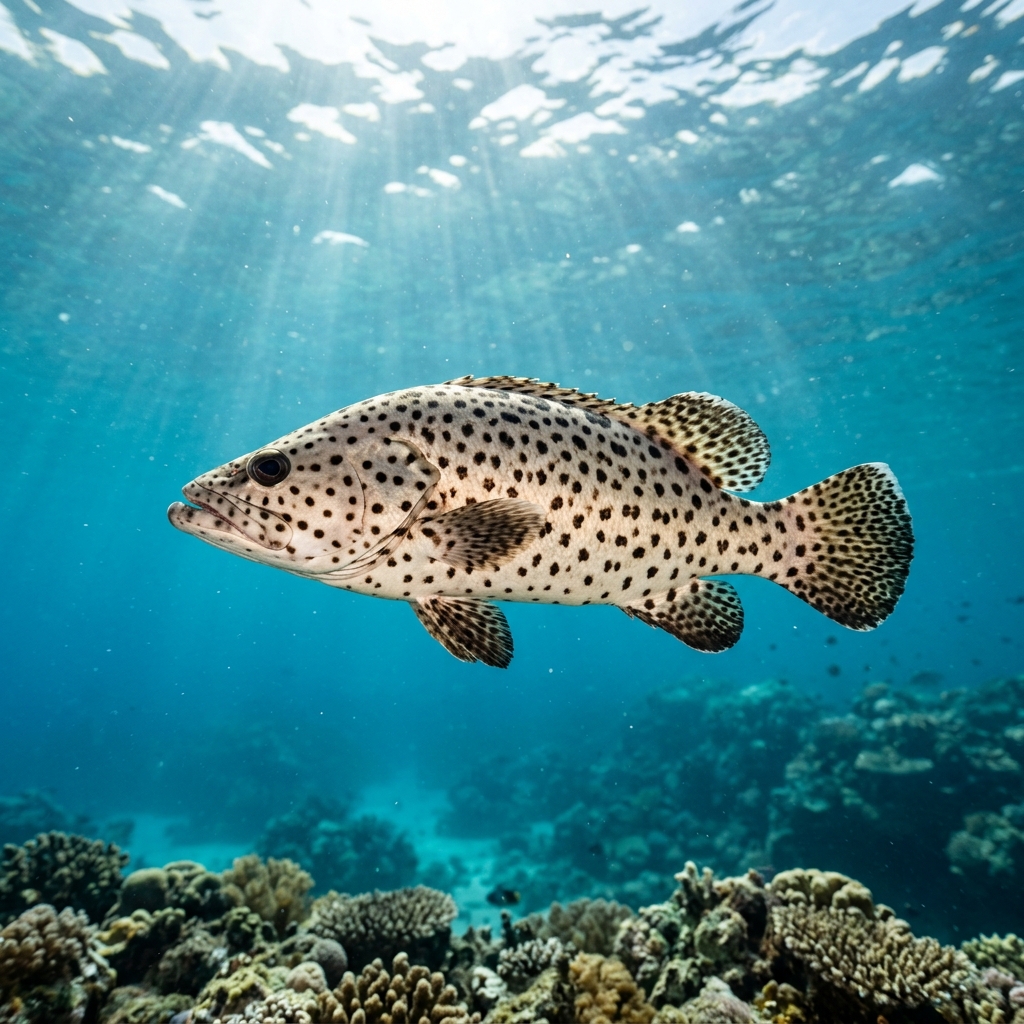
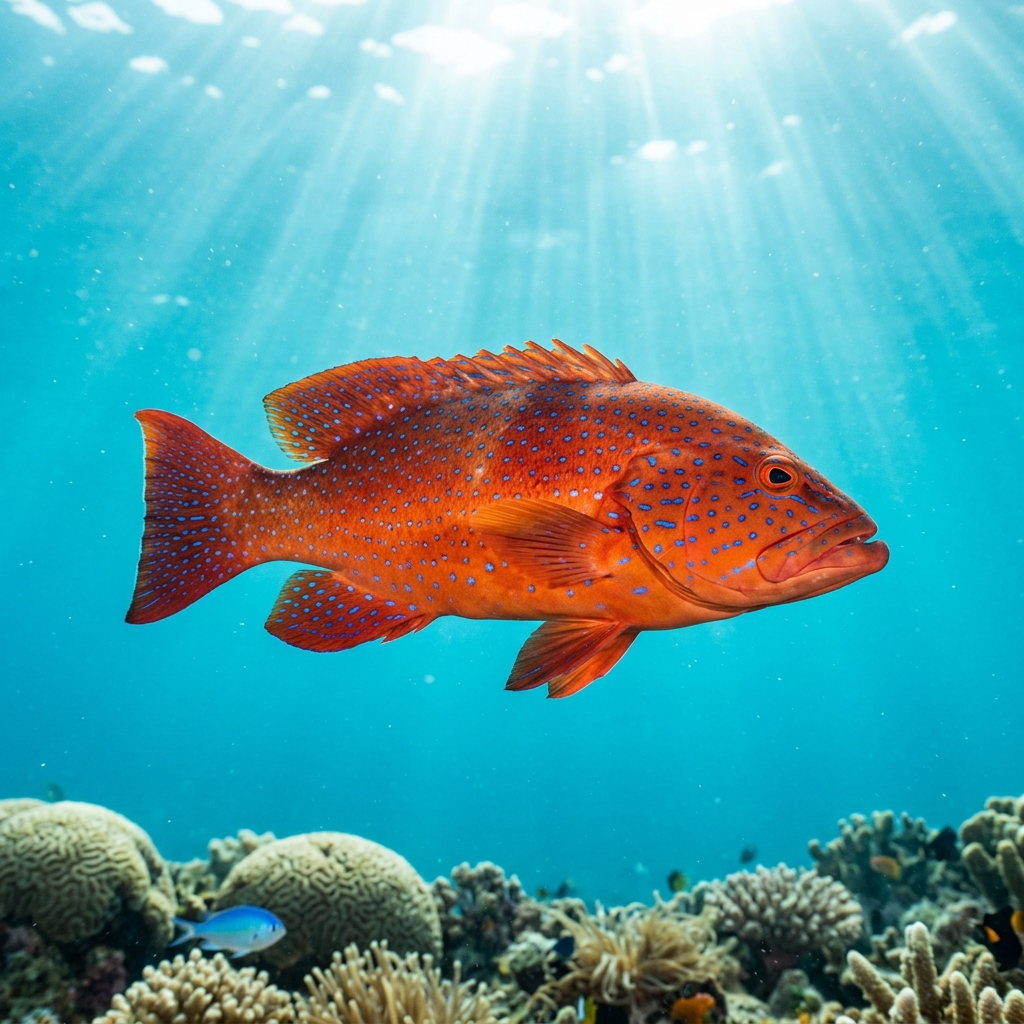
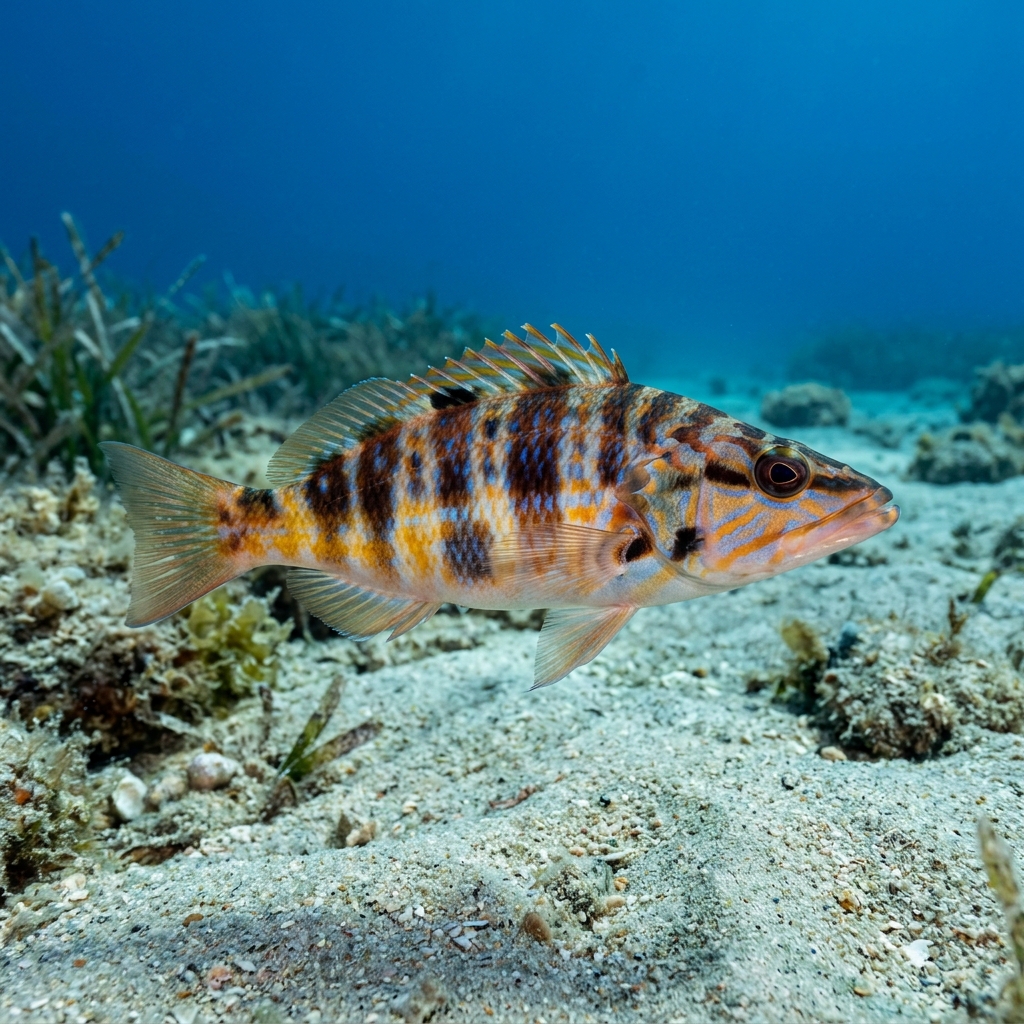
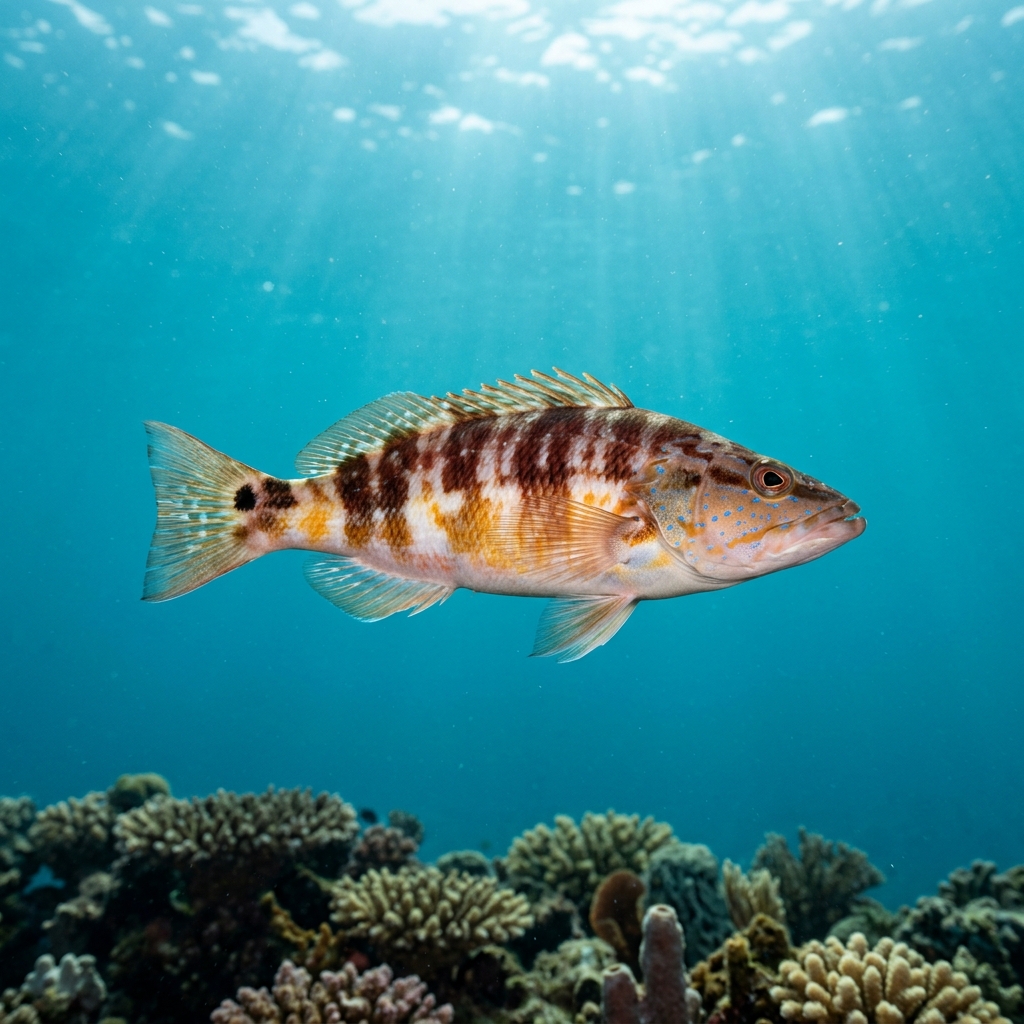
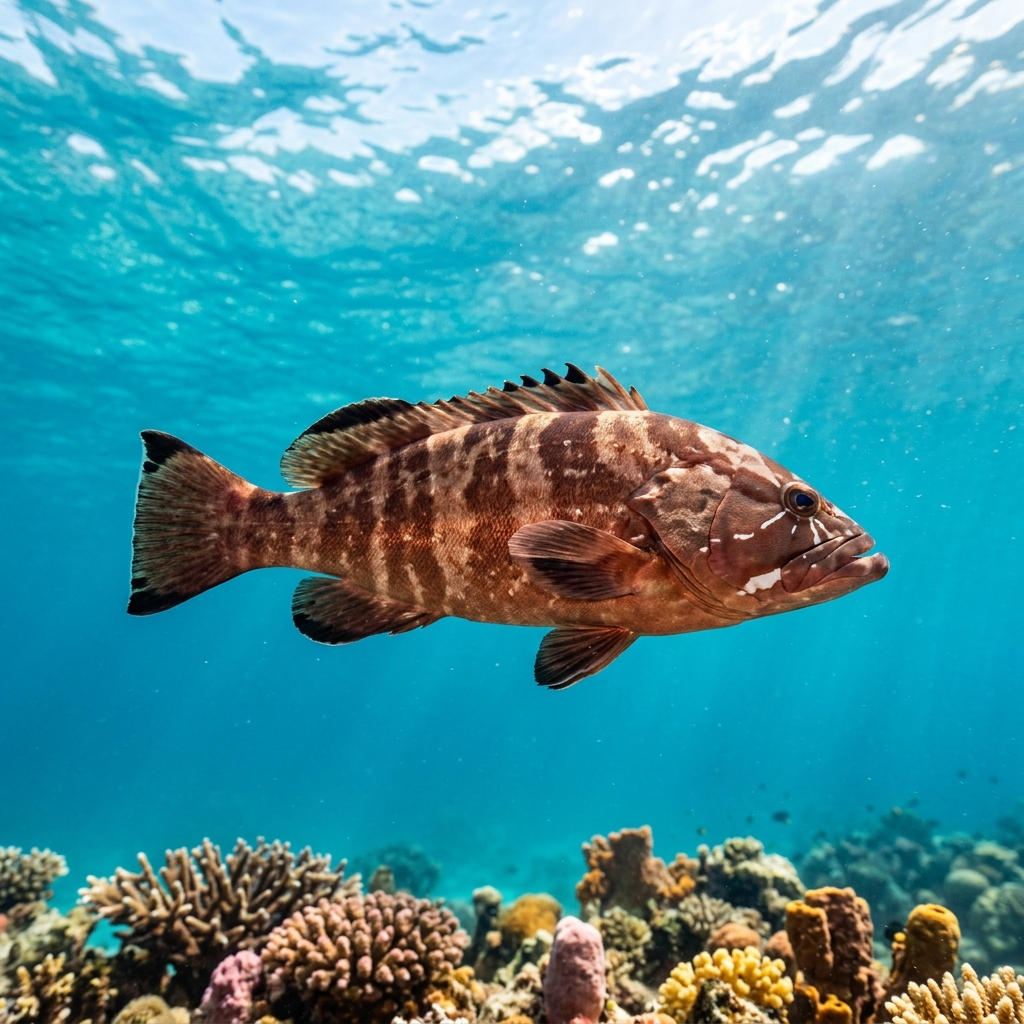
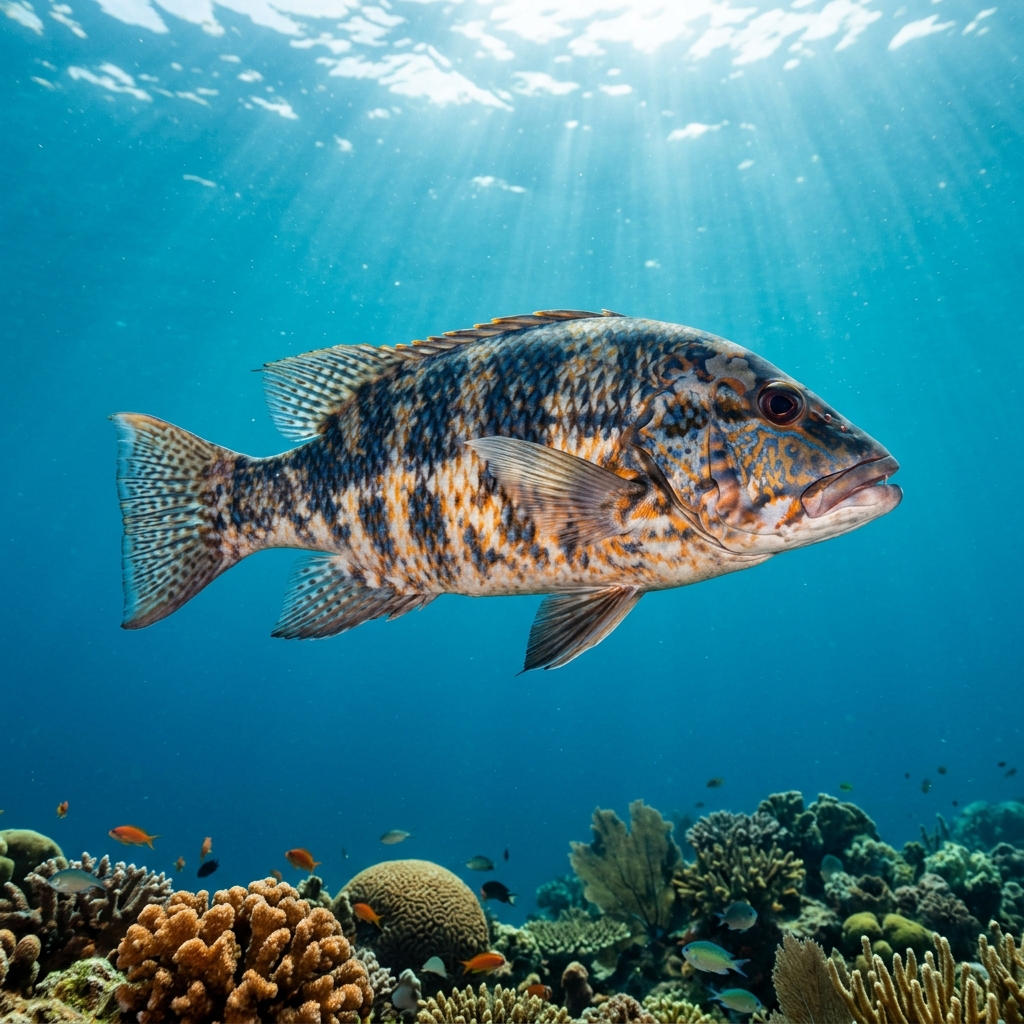
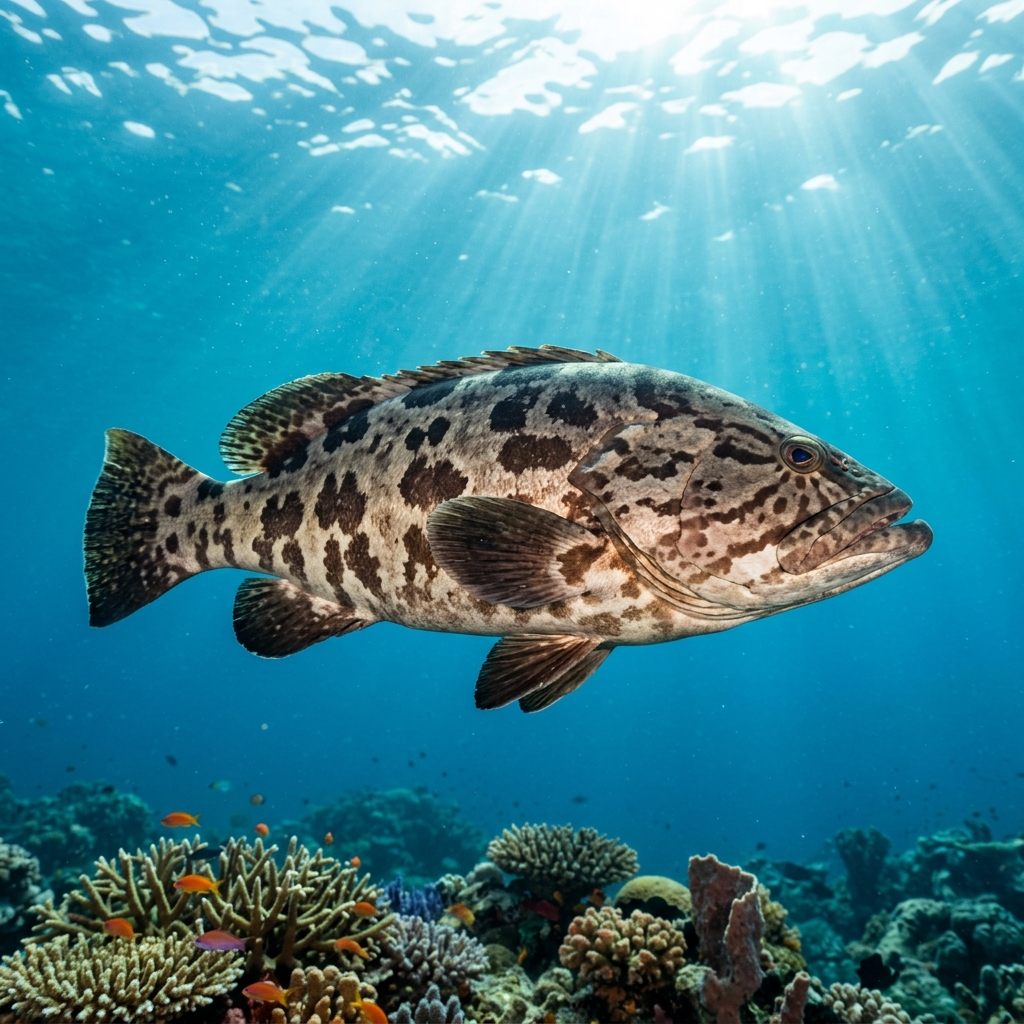
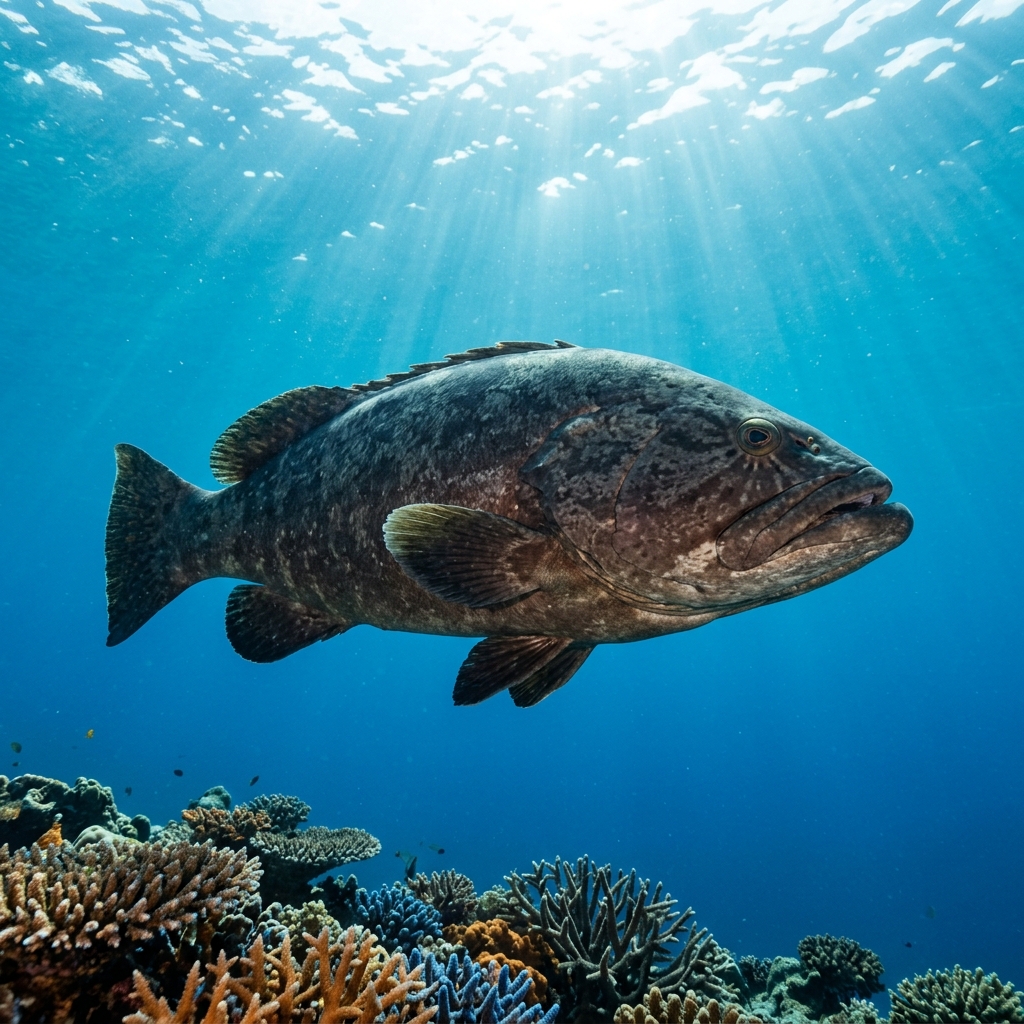
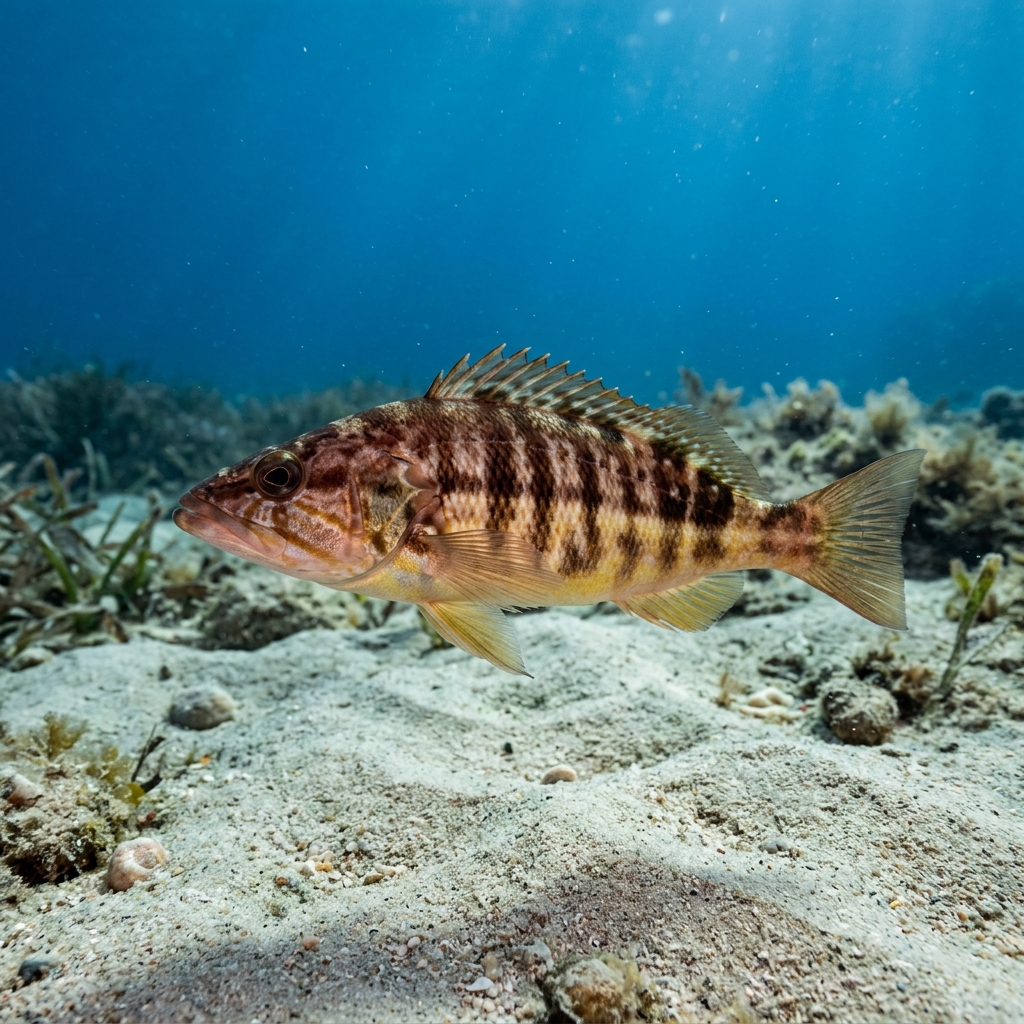
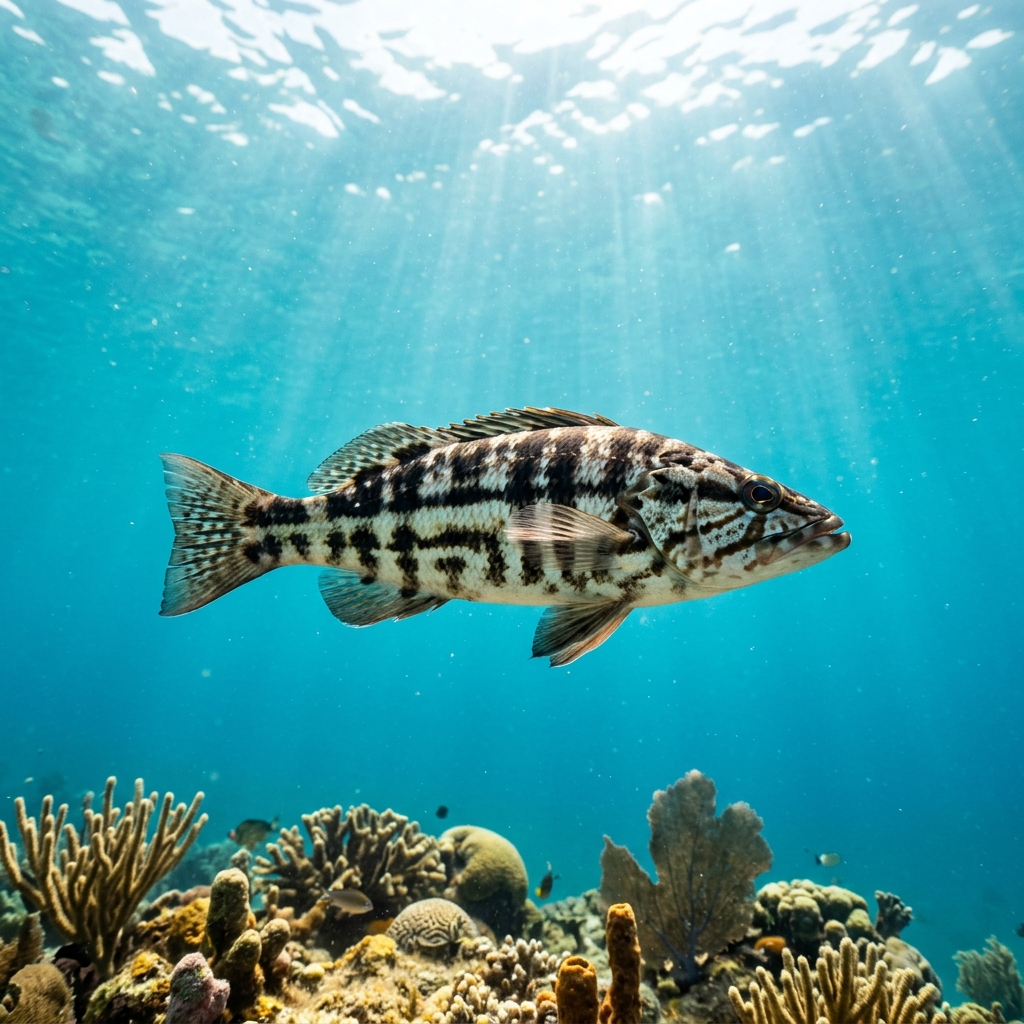
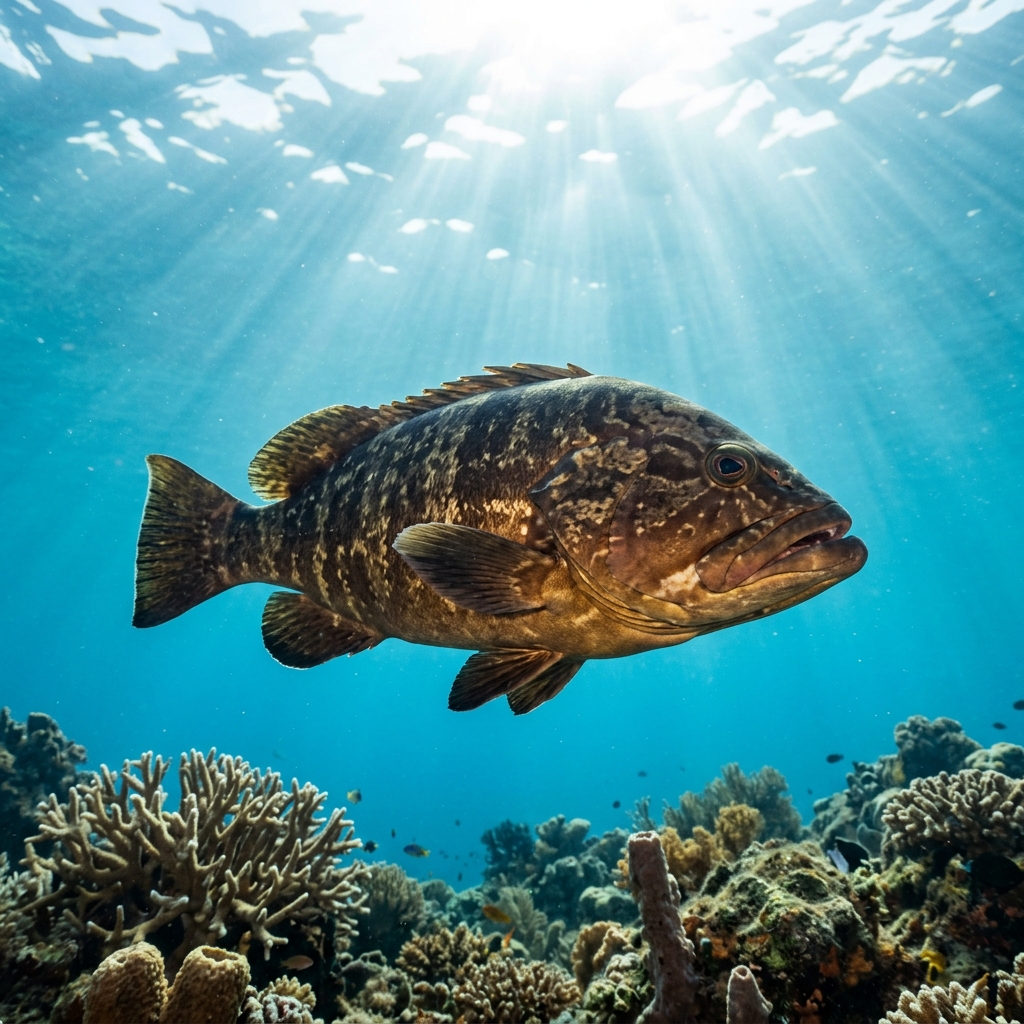
Serranidae share a few reliable underwater cues: a robust, slightly compressed body, a large mouth with thick lips, and a continuous or notched dorsal fin combining spiny and soft-rayed sections. Colouration across the family spans pale cream, orange-red, brown, and mottled grey, often with spots, blotches, or stripes that provide camouflage against reef structure. Most species sit motionless or move slowly close to the substrate, which helps distinguish them from more free-swimming reef fish. Juveniles in many species are noticeably more vivid, sometimes showing bold horizontal stripes or bright yellow and orange markings that fade with age.
Most sea basses are ambush predators, and you will typically find them hovering close to structure, a coral head, a rocky ledge, or a sand patch at the reef edge, waiting for prey to come within range. They tend to hold their ground when approached slowly, making for relaxed observation, but will retreat into cover if a diver moves too quickly or directly towards them. Larger species in particular are often seen early in the morning or towards dusk when they become more actively mobile.
Many sea basses are protogynous hermaphrodites, meaning individuals begin life as females and can later transition into males. This has real consequences for fish populations when large individuals are removed, since those fish are often the only mature males in a local group.
Sightings are spread throughout the year with no concentrated season, reflecting the family's wide temperature tolerance from around 14 °C in cooler temperate waters up to nearly 29 °C on tropical reefs. Wherever you are diving, sea basses are a year-round prospect.
Reef neighbours a diver could mistake it for. Use the identification notes above to tell them apart.
Sea basses are most commonly logged in the United States, particularly across Florida and the Southeast, which accounts for a large share of all recorded sightings. Strong populations are also regularly encountered in Australia (especially Queensland and Western Australia), the Mediterranean coasts of Italy, Greece, and Spain, and throughout the Philippines and Japan. The Caribbean is well represented too, with Roatán in Honduras and Grenada among the most reliable regions.
Mapping where Sea Bass is logged…
Sea basses are logged across a huge range of dive destinations. Florida and the US Southeast lead for sheer volume of sightings, followed by Australia (Queensland and Western Australia), the Mediterranean (Italy, Greece, Spain), and Southeast Asia (Philippines, Japan). The Caribbean is also reliable, particularly around Roatán in Honduras and Grenada.
Sea basses are a year-round family, with no strongly concentrated season observed in either hemisphere. Their wide temperature tolerance, from around 14 °C in temperate seas to nearly 29 °C on tropical reefs, means you can expect to encounter them on almost any dive trip, wherever they occur.
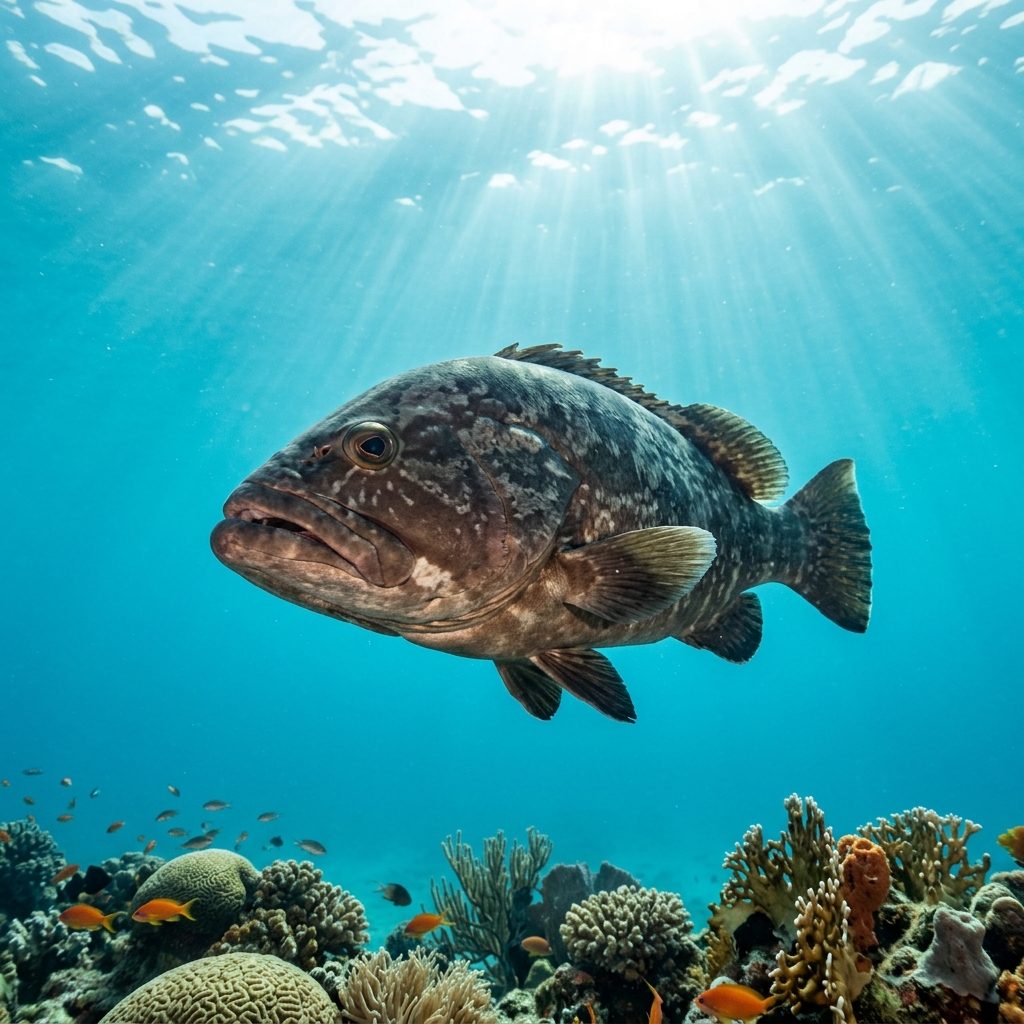
Look for a stocky, large-mouthed fish resting close to the reef or substrate with a continuous dorsal fin that blends spiny and soft-rayed sections. Colouration varies widely by species but tends towards mottled or spotted earth tones. Their habit of staying still near structure is one of the most consistent cues across the family.
Size varies enormously across the family. Small species like fairy basslets are just a few centimetres long, while giants such as the Atlantic Goliath Grouper and Queensland Grouper can exceed two metres and weigh several hundred kilograms. Most divers encounter mid-sized groupers and sea basses in the 30 to 80 cm range.
Sea basses are not considered dangerous to divers. Very large groupers are powerful animals and can act defensively if cornered in a tight space, but under normal conditions they are curious and calm. Give large individuals space and avoid reaching into crevices where one might be sheltering.
Many species in this family are protogynous hermaphrodites: they start life as females and can change sex to become males as they grow larger and older. This means the biggest fish in a local group are typically the dominant males, which has important consequences for how populations recover from disturbance.
Site and sighting data is aggregated from diver logs, iNaturalist and GBIF. For taxonomy and conservation status:
Epinephelus marginatus
Groupers
2,234 sites