Othos dentex
Spot the Harlequin Fish on southern Australian reefs from Western Australia to Tasmania, in cool 15-20°C waters. ID tips and top dive regions inside.
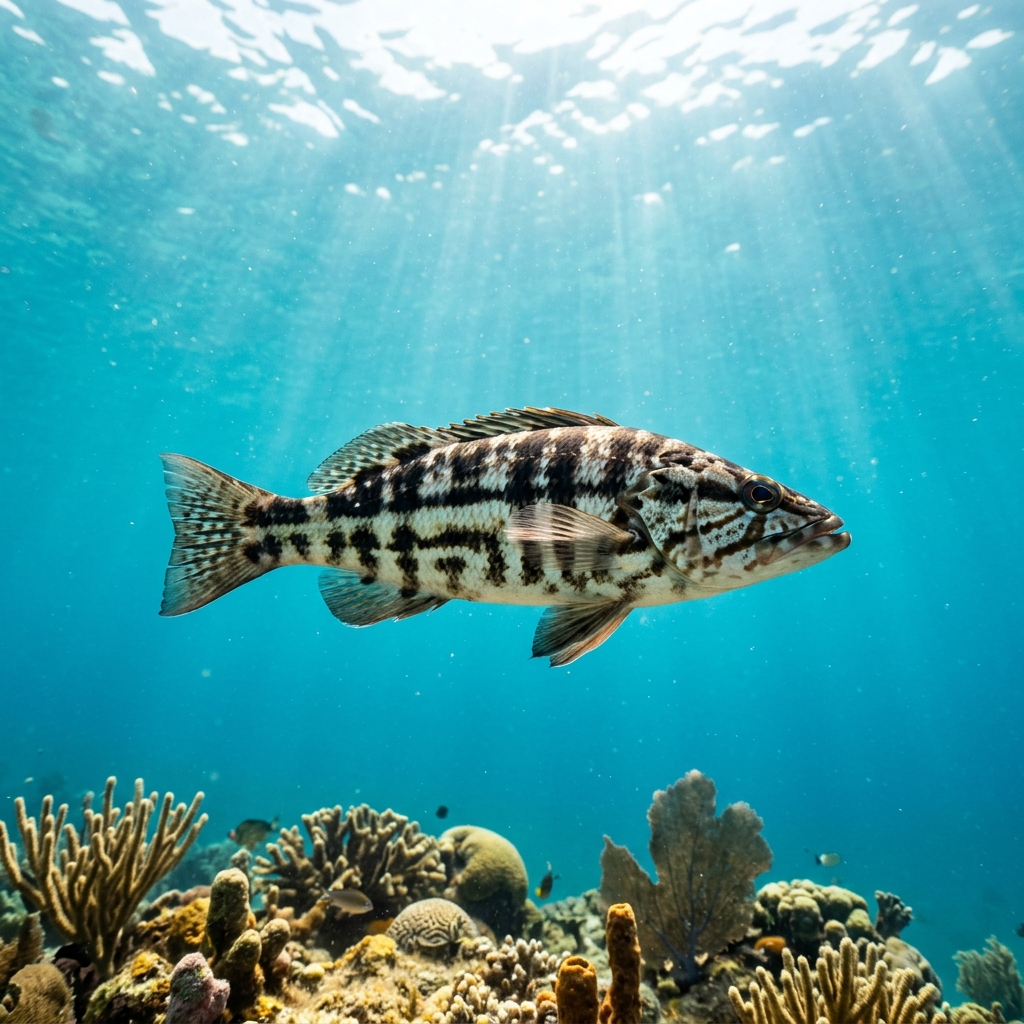
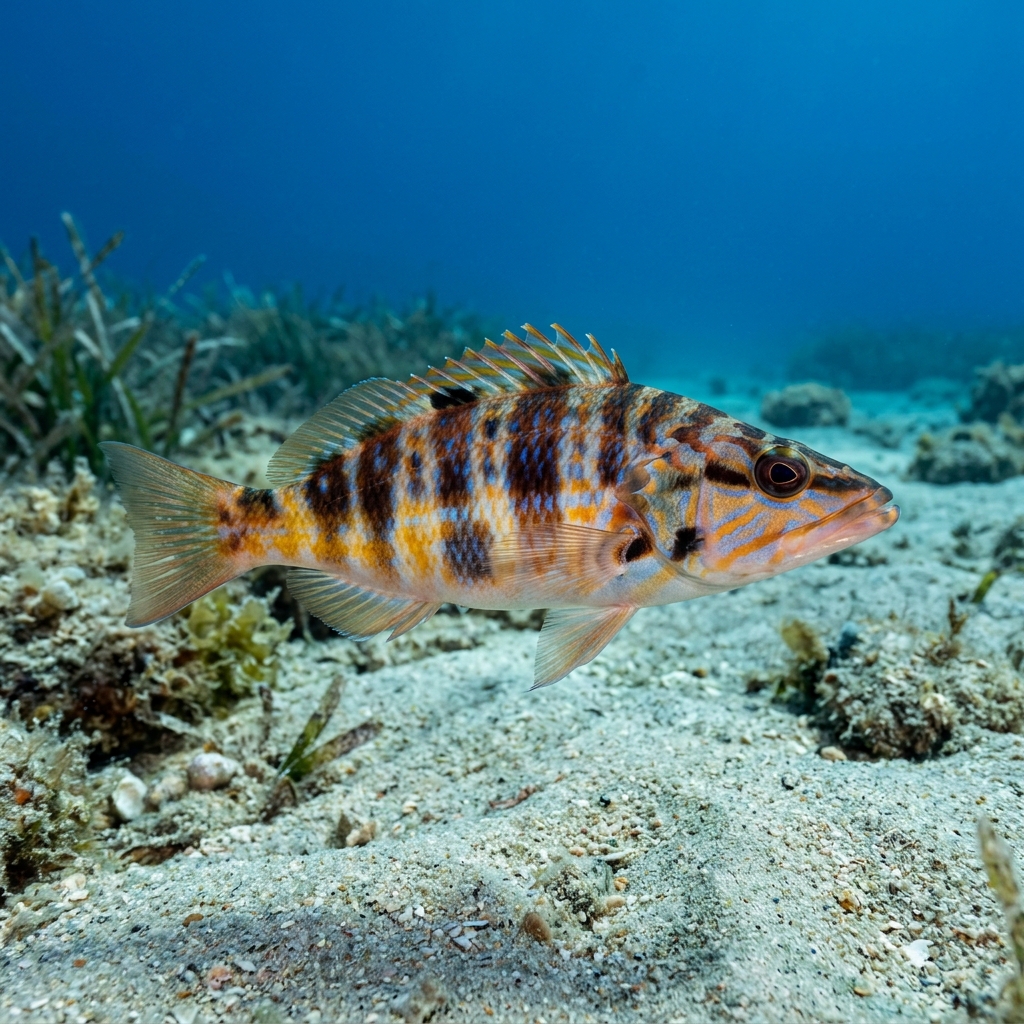
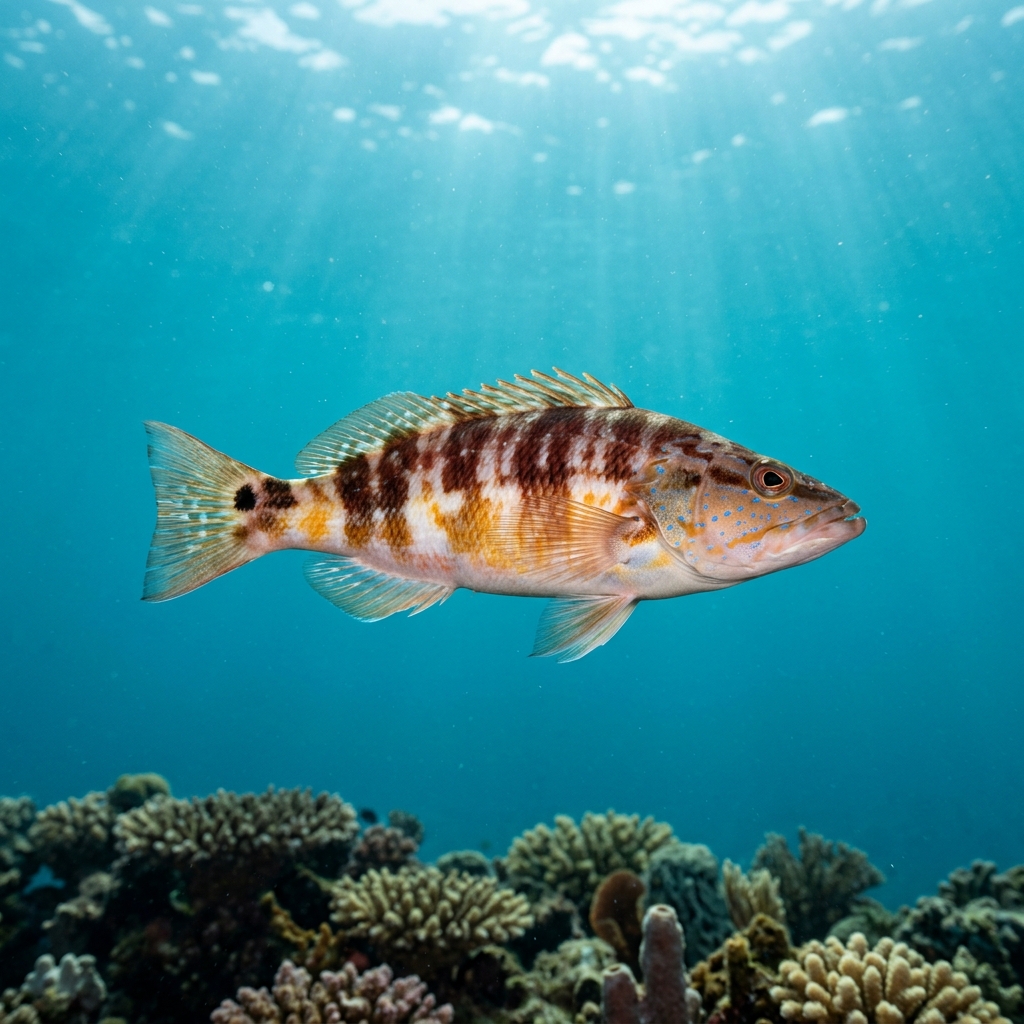
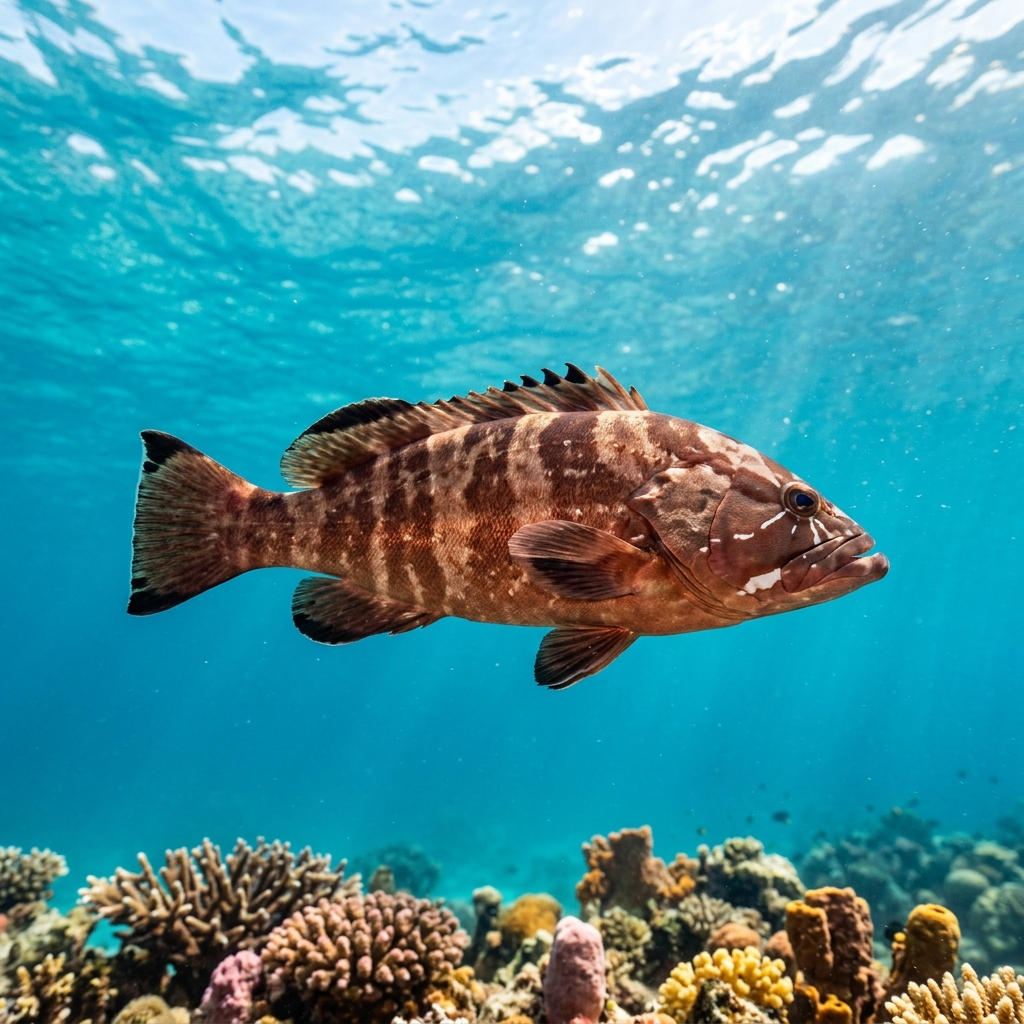
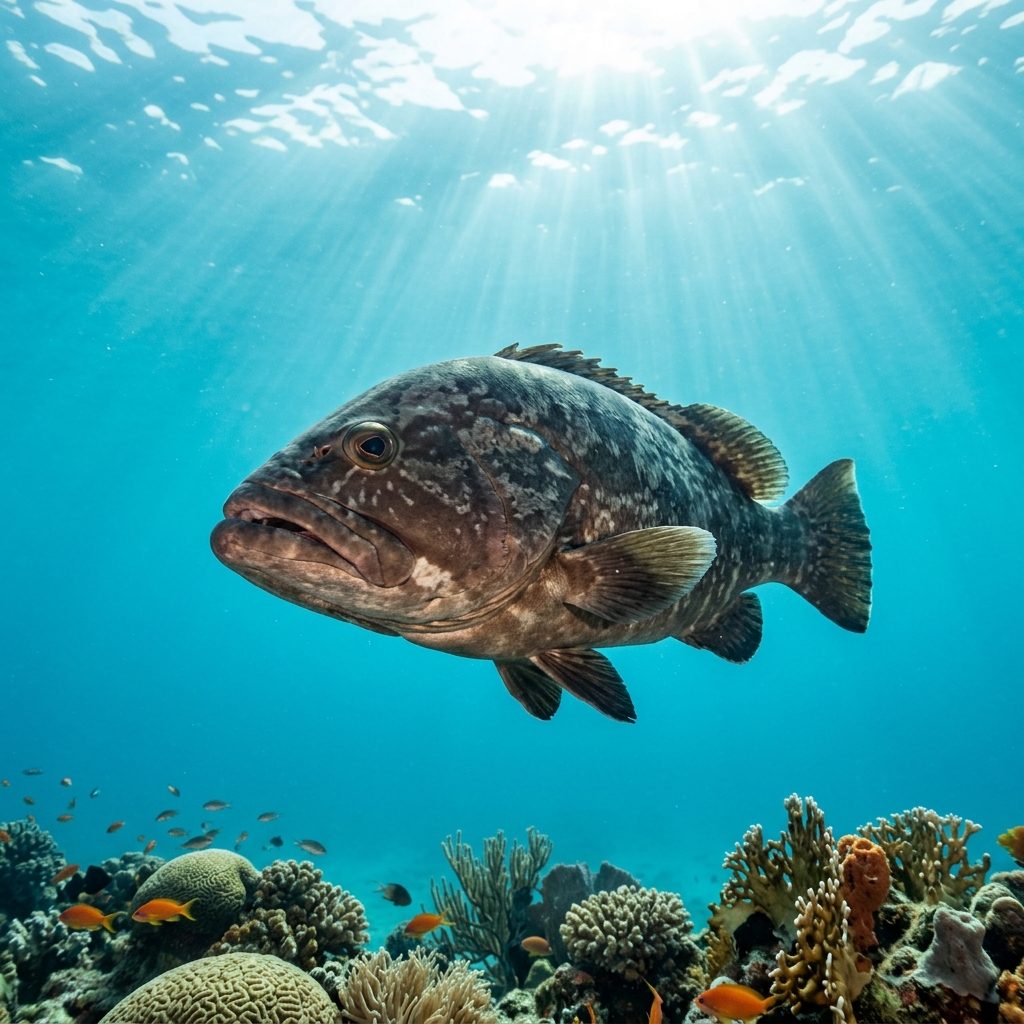
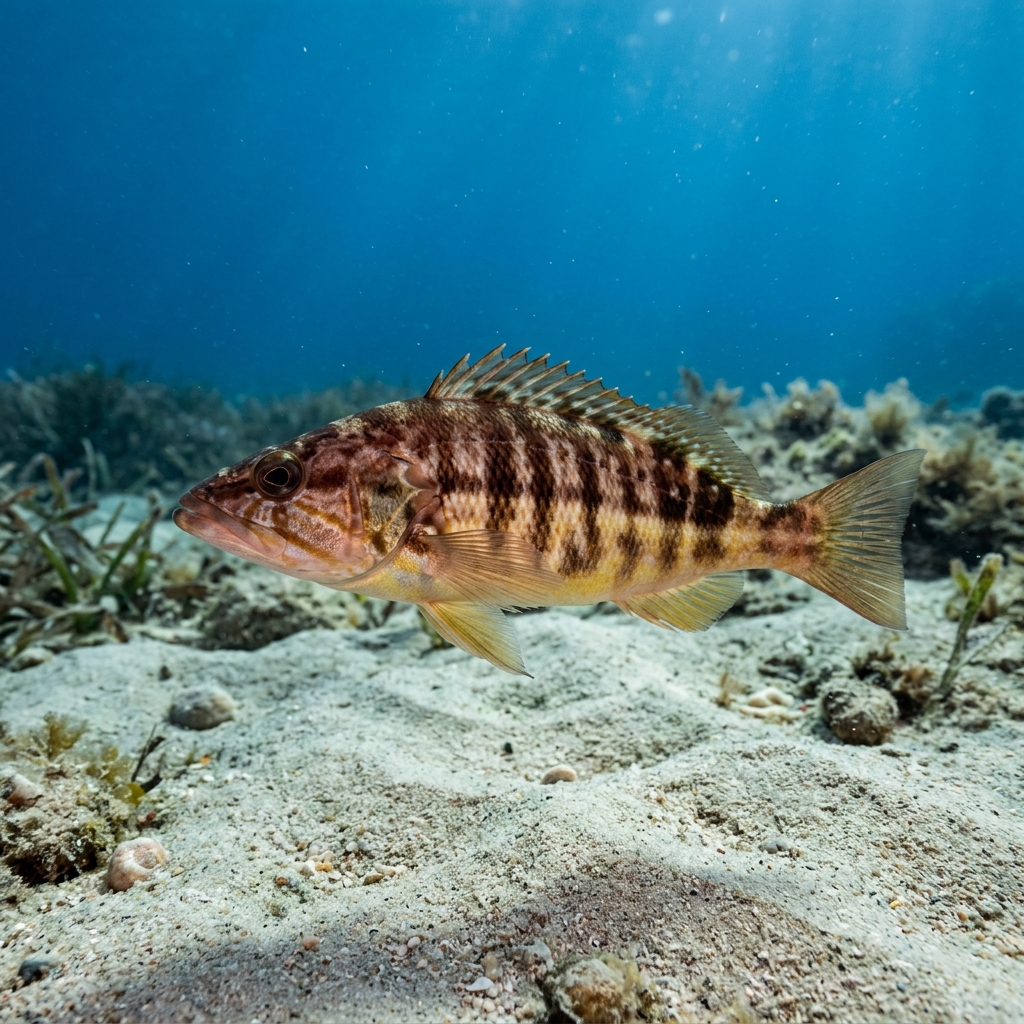
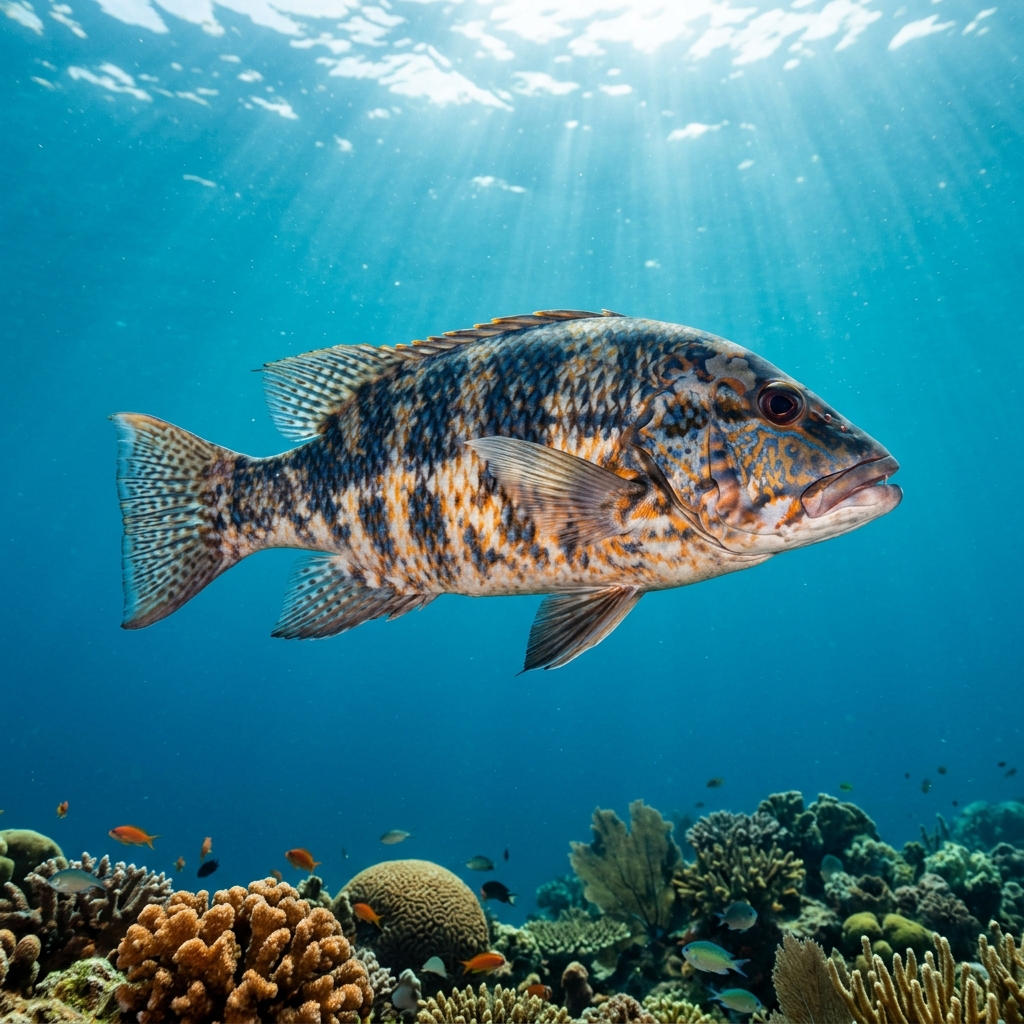
A medium-sized grouper, reaching around 50 cm, with a vivid orange-red body overlaid with irregular darker red or brownish blotches and spots that give it its harlequin patterning. The head is large and blunt, typical of the serranid family, with a prominent mouth. That bold, broken colour pattern is the key underwater cue; no other common reef fish in southern Australia combines this warm colouration with the chunky, bass-like body shape.
Like most groupers, harlequin fish tend to be solitary and reef-associated, often found resting close to rocky outcrops, ledges, or reef structure where they can ambush prey. Divers typically encounter one sitting still or moving slowly along the bottom, and they can be approachable, though they will retreat into crevices if pressed. As a carnivore, it hunts smaller fish and invertebrates in the reef habitat.
Most members of the Serranidae family are protogynous hermaphrodites, meaning individuals begin life as females and can transition to males as they grow larger. If the same pattern holds for this species, the biggest animals you encounter on a dive are likely males.
There is not enough monthly sighting data to define a peak season, so treat it as a year-round possibility. Its observed temperature niche of roughly 15 to 20°C matches the cool, temperate conditions found on southern Australian reefs throughout the year.
Harlequin Fish are an almost exclusively Australian animal, logged across reefs in Western Australia, South Australia, Tasmania, and Victoria, with Western Australia and South Australia holding the strongest site coverage. Sightings also extend into Queensland and New South Wales, though encounters there are less frequent. If you are after this species, temperate southern Australian reefs are your target.
Mapping where Harlequin Fish is logged…
Harlequin Fish are found almost entirely in Australia, with the strongest sighting records coming from Western Australia and South Australia. They also appear in Tasmanian and Victorian waters, and occasionally as far north as Queensland and New South Wales. Temperate, rocky reefs along the southern coast are the most reliable hunting ground.
There is no clearly defined peak season in the sighting data, so they can be encountered year-round. Their comfort zone of roughly 15 to 20°C aligns with the cool conditions on southern Australian reefs across all seasons.
Look for a chunky, bass-shaped fish around 50 cm long with a vivid orange-red base colour broken up by irregular darker blotches and spots. That striking mottled pattern, combined with the large blunt head and solitary behaviour near rocky reef structure, makes it stand out from other southern Australian fish.
They typically reach around 52 cm in length. On a dive, they appear as a solidly built, medium-to-large reef fish, noticeably chunkier than most wrasse or leatherjackets sharing the same habitat.
Yes, they are considered rare at the vast majority of sites where they have been recorded. Even across their range in southern Australia, sightings are infrequent, so a clear encounter is a real highlight of any temperate Australian reef dive.
Site and sighting data is aggregated from diver logs, iNaturalist and GBIF. For taxonomy and conservation status:
Blacktip Grouper
2,726 sites