Epinephelus itajara
One of the largest bony fish on Atlantic reefs. Find Atlantic Goliath Grouper in Florida, Brazil, Cuba, and the Bahamas in 22-28 °C water year-round.
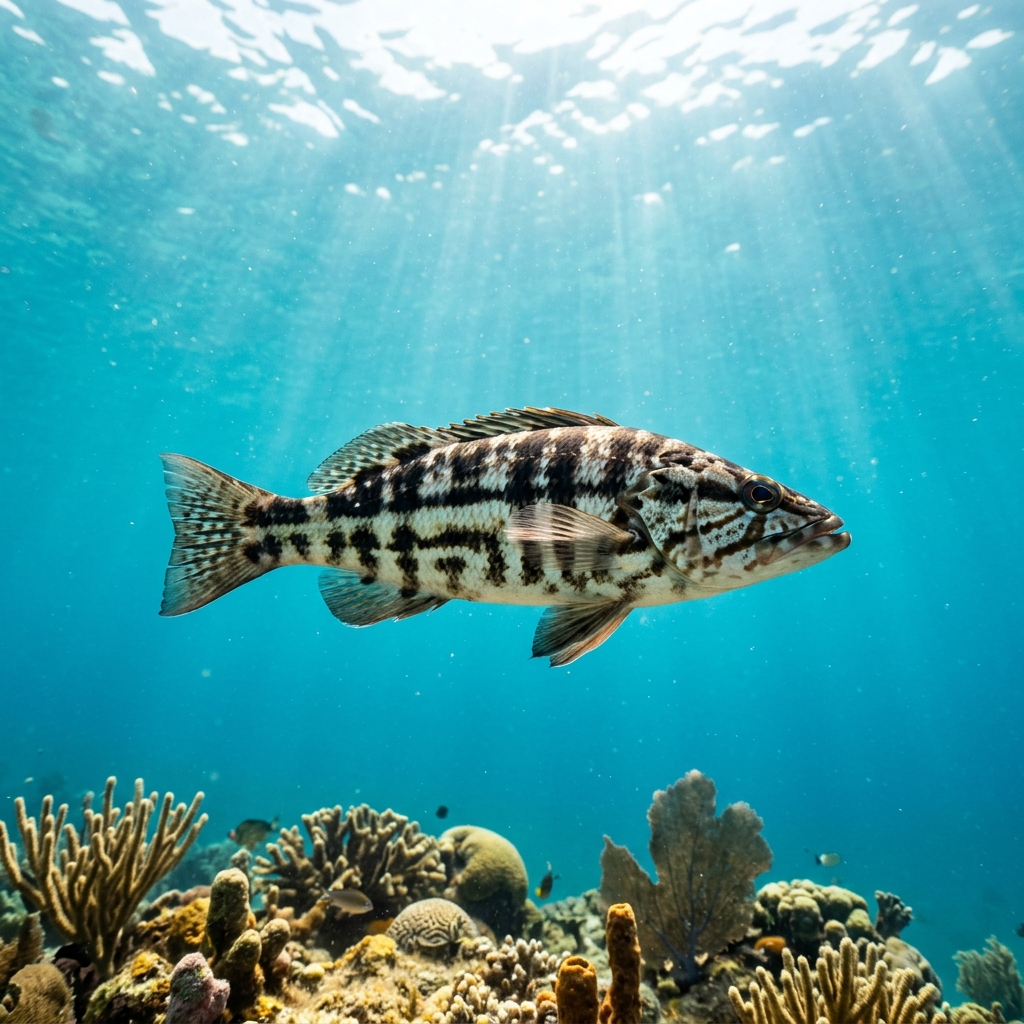
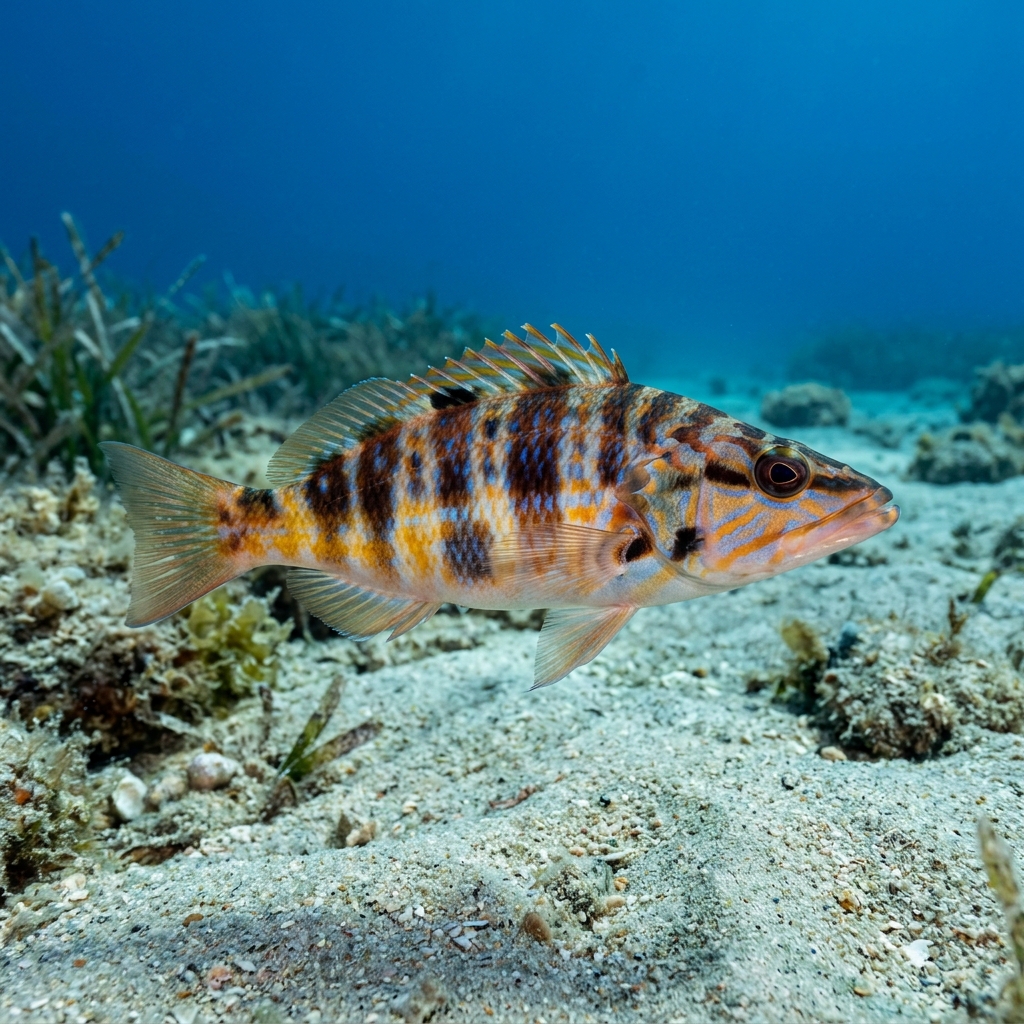
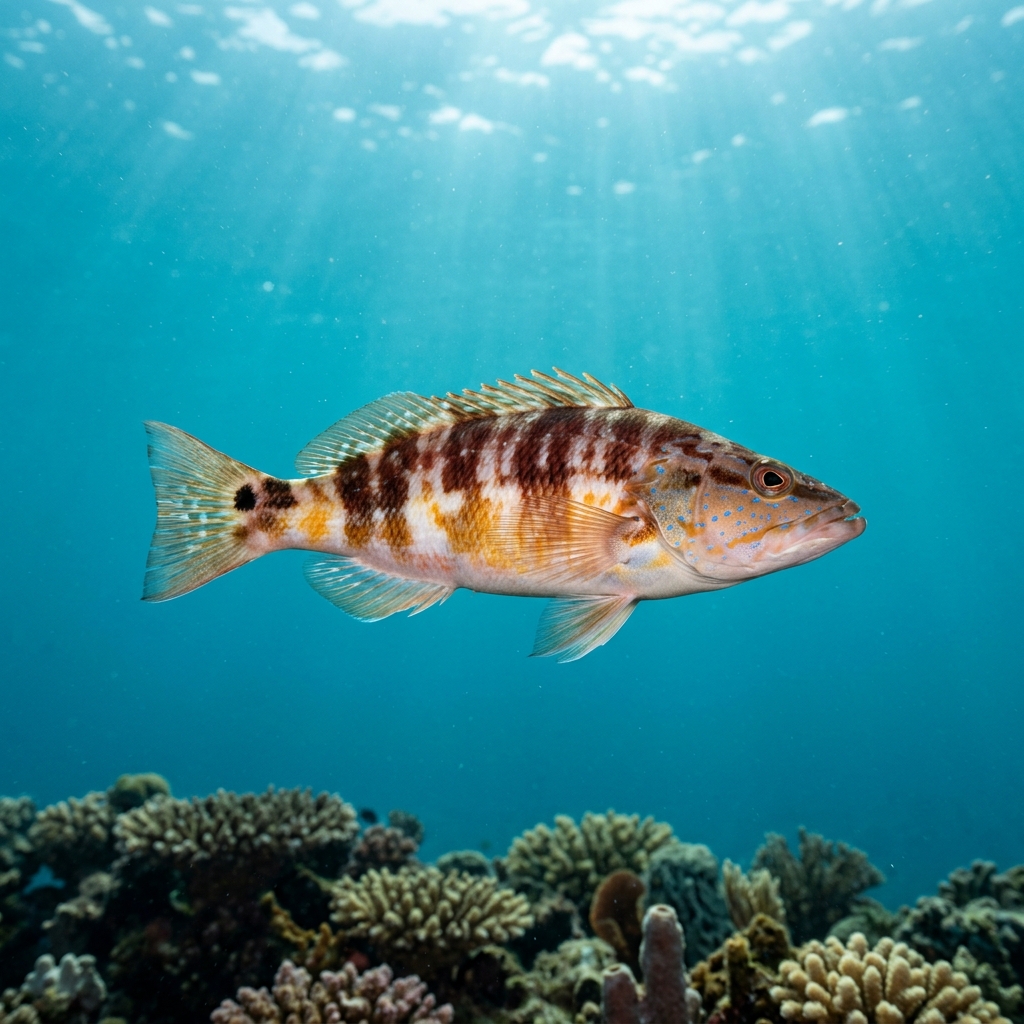
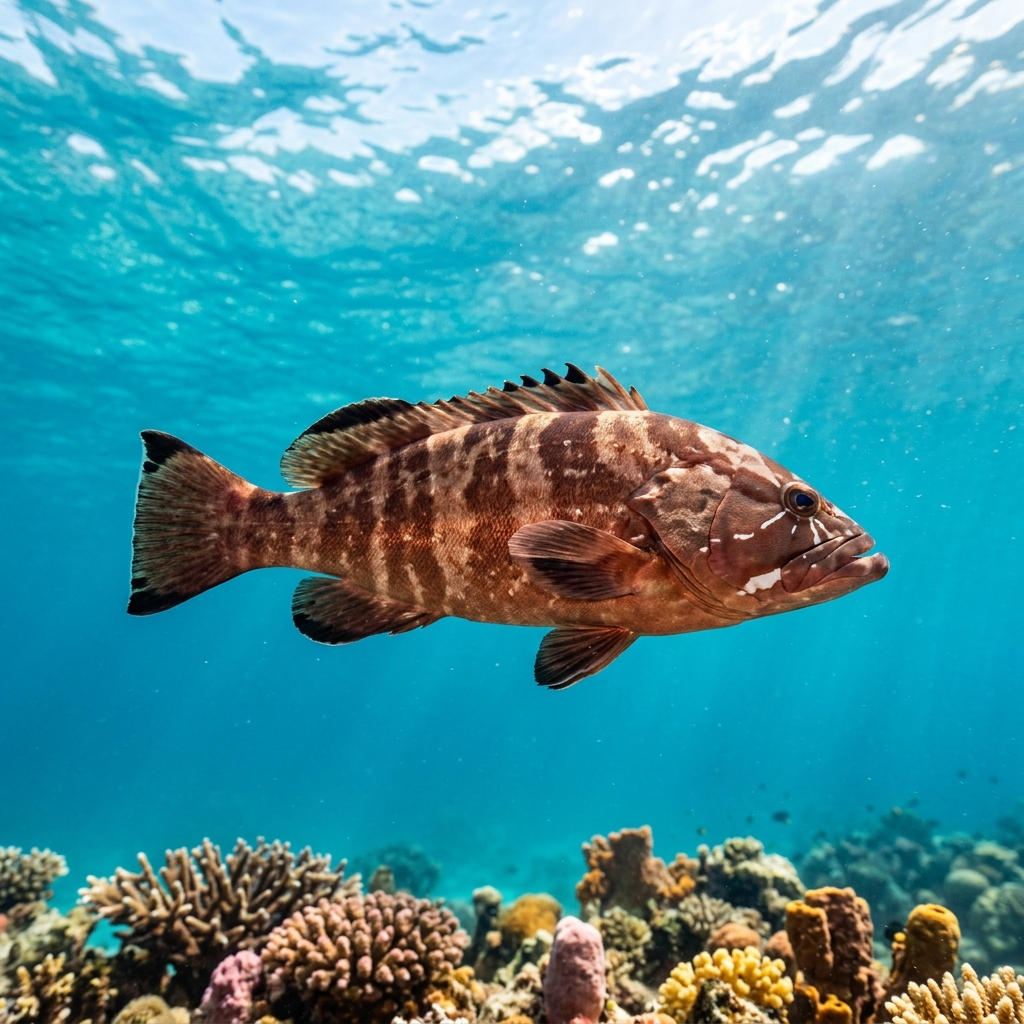
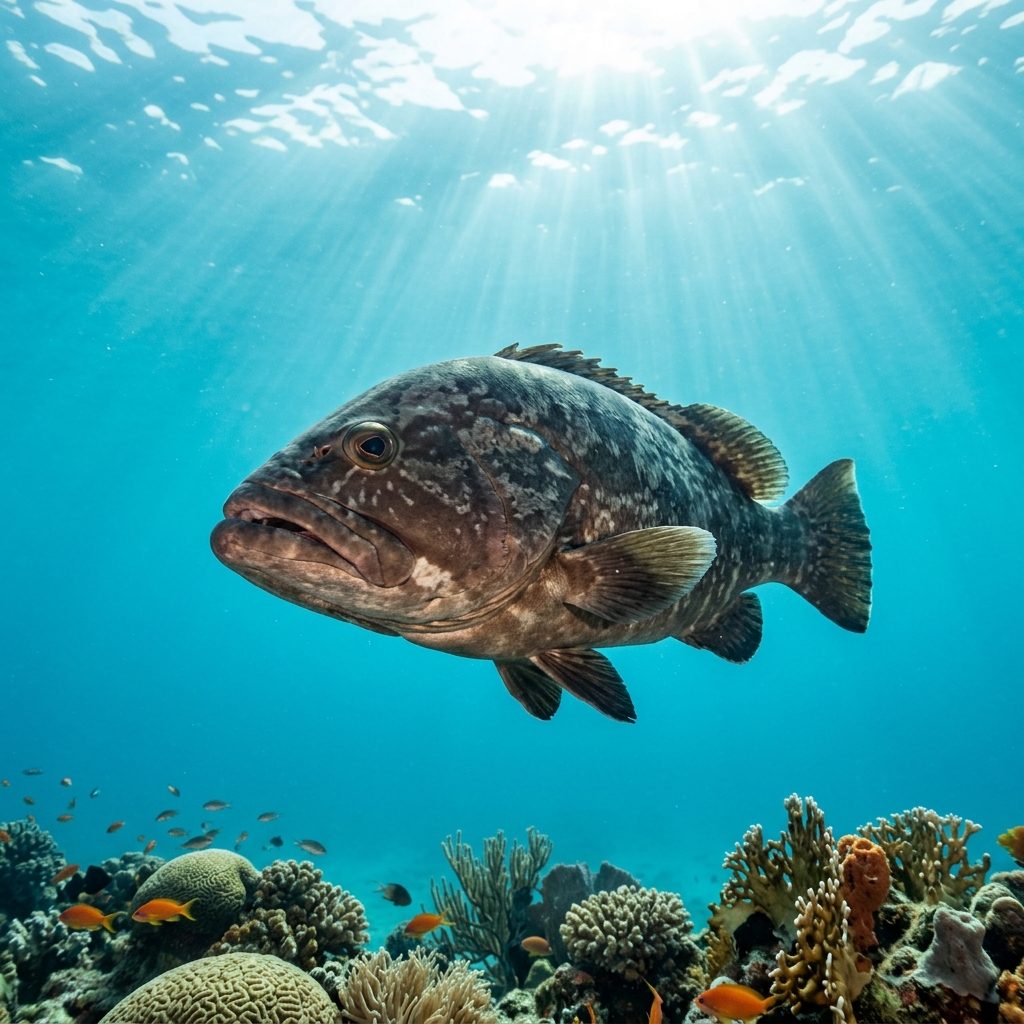
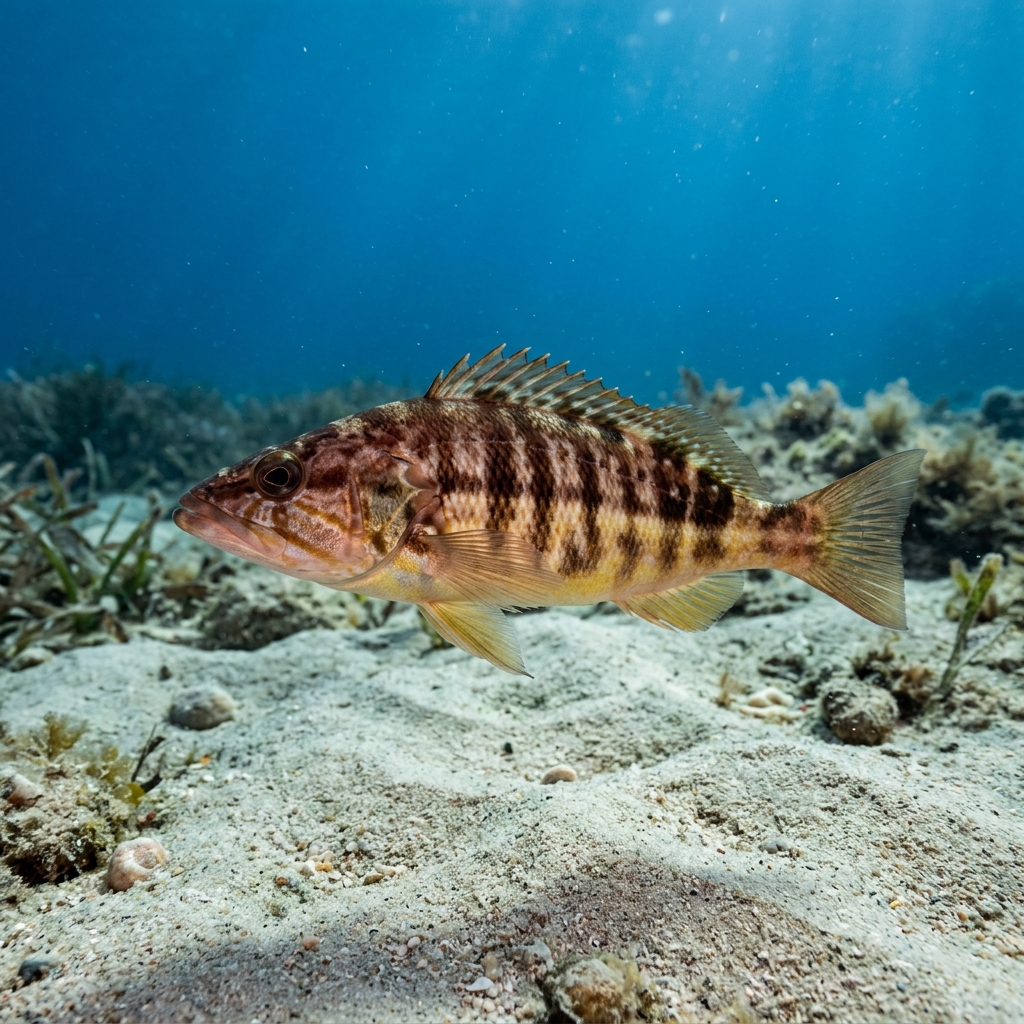
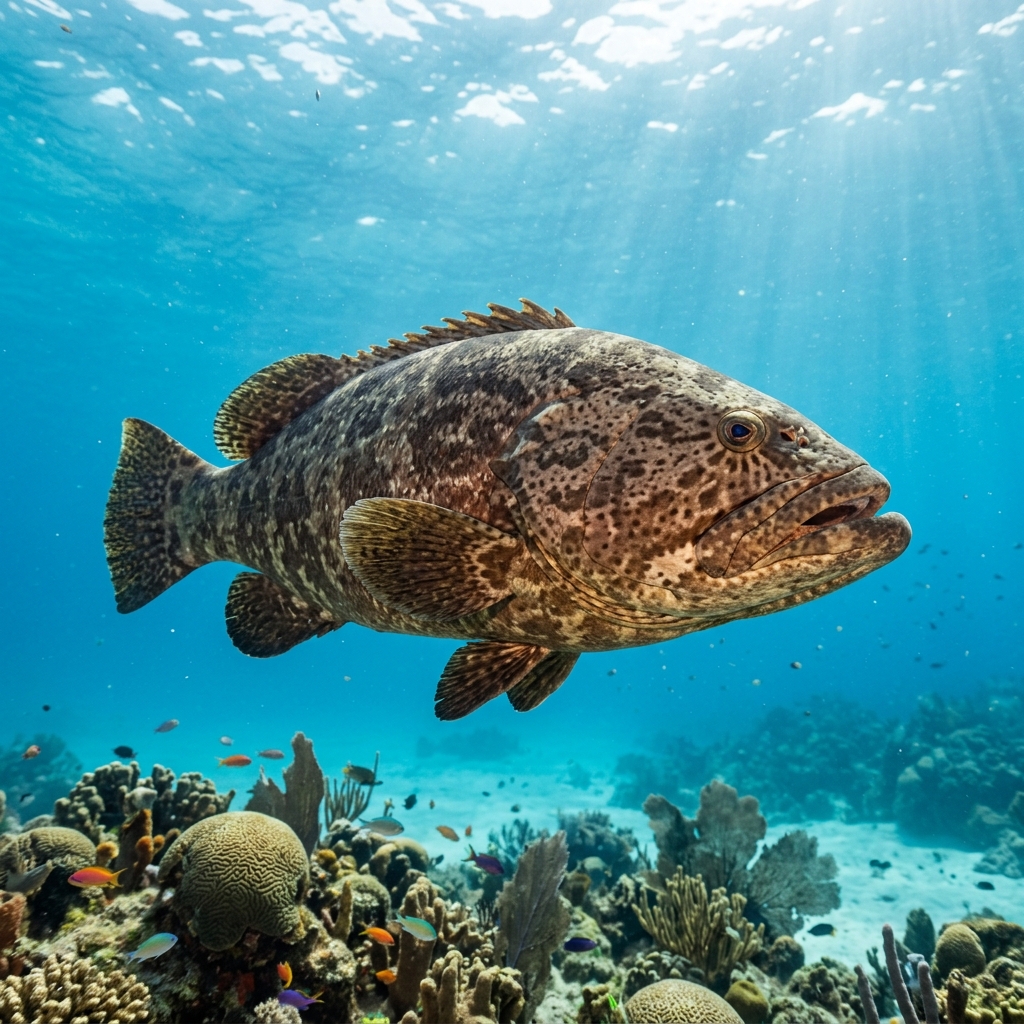
Size alone does most of the work, adults are enormously bulky fish, broad-headed with a wide mouth, dwarfing almost everything else on the reef. Colouration is yellowish-brown to olive-grey with irregular dark spots and blotches scattered across the body, sides, and fins. The body is deep and compressed with a rounded tail, and the dorsal fin runs nearly the full length of the back. Juveniles are more boldly marked, with irregular dark patches on a pale yellow background that can look almost striped.
Goliath groupers tend to be found close to structure, wrecks, ledges, coral heads, and bridge pilings, where they hold position with slow, deliberate movements. They are famously bold around divers, often showing little inclination to flee, which makes close observation straightforward. During late summer spawning aggregations in Florida, large numbers gather at traditional sites, making those moments particularly striking.
During spawning season, goliath groupers produce a deep, resonant booming sound by contracting muscles against the swim bladder, a call divers can sometimes feel as well as hear if they are close enough.
No strong seasonal peak emerges from the data, so encounters are possible year-round across the range. The species is comfortable in the 22-28 °C water temperatures typical of tropical and subtropical Atlantic reefs throughout all seasons.
Most sightings are logged across the western Atlantic, with the strongest presence in Florida and the US Southeast, where encounters at wrecks and rocky ledges are well established. Brazil, particularly the Rio de Janeiro and São Paulo Coast and the Northeast Coast, along with Cuba's Jardines del Rey and the Bahamas are also reliable areas. Mexico's Yucatán Peninsula and Venezuela's Central Coast round out the core range.
Mapping where Atlantic Goliath Grouper is logged…
The strongest populations are found in Florida and the US Southeast, Brazil (especially the Rio de Janeiro, São Paulo, and Northeast Coast regions), Cuba's Jardines del Rey, and the Bahamas. Mexico's Yucatán Peninsula and Venezuela also have regular sightings. Wrecks and rocky ledges are consistently productive spots.
They are present year-round across the tropical and subtropical Atlantic in water temperatures of roughly 22-28 °C. In Florida, late summer (July to September) is particularly rewarding because goliath groupers gather in large spawning aggregations at well-known sites.
Their sheer bulk makes them almost unmistakable, they are among the largest bony fish a diver is likely to encounter on an Atlantic reef. Look for a very broad, flat-topped head, wide mouth, yellowish-brown to olive-grey skin with dark spots, and a long continuous dorsal fin. Almost nothing else in the Atlantic comes close in size.
Adults commonly reach 1.5-2 metres in length and can weigh well over 300 kg, making them one of the largest bony fish in the Atlantic Ocean. In the water their depth and bulk make them appear even bigger than their length suggests.
They are listed as Vulnerable by the IUCN, reflecting decades of population decline from overfishing before fishing bans were introduced in parts of their range. Numbers have been recovering in Florida since protections came into force, but the species remains at risk across much of its range.
Yes, they are one of the few fish known to produce a loud booming or thumping sound by rapidly contracting muscles against their swim bladder. Divers at close range during spawning aggregations sometimes report feeling the sound as a physical vibration in the water, not just hearing it.
The Atlantic Goliath Grouper is listed as vulnerable by the IUCN. Observe from a distance, avoid touching or feeding it, and report sightings to local marine research organisations.
Listed as Vulnerable on the IUCN Red List, goliath groupers were severely depleted by overfishing before protections were introduced. Divers should avoid chasing or touching them, especially at known spawning aggregations where disturbance can disrupt critical reproductive behaviour.
Site and sighting data is aggregated from diver logs, iNaturalist and GBIF. For taxonomy and conservation status:
Blacktip Grouper
2,726 sites