Serranus cabrilla
Spot the comber across the French Riviera, Costa Brava and Croatia from Feb to Nov. Here's how to ID it and where it's most reliably logged.
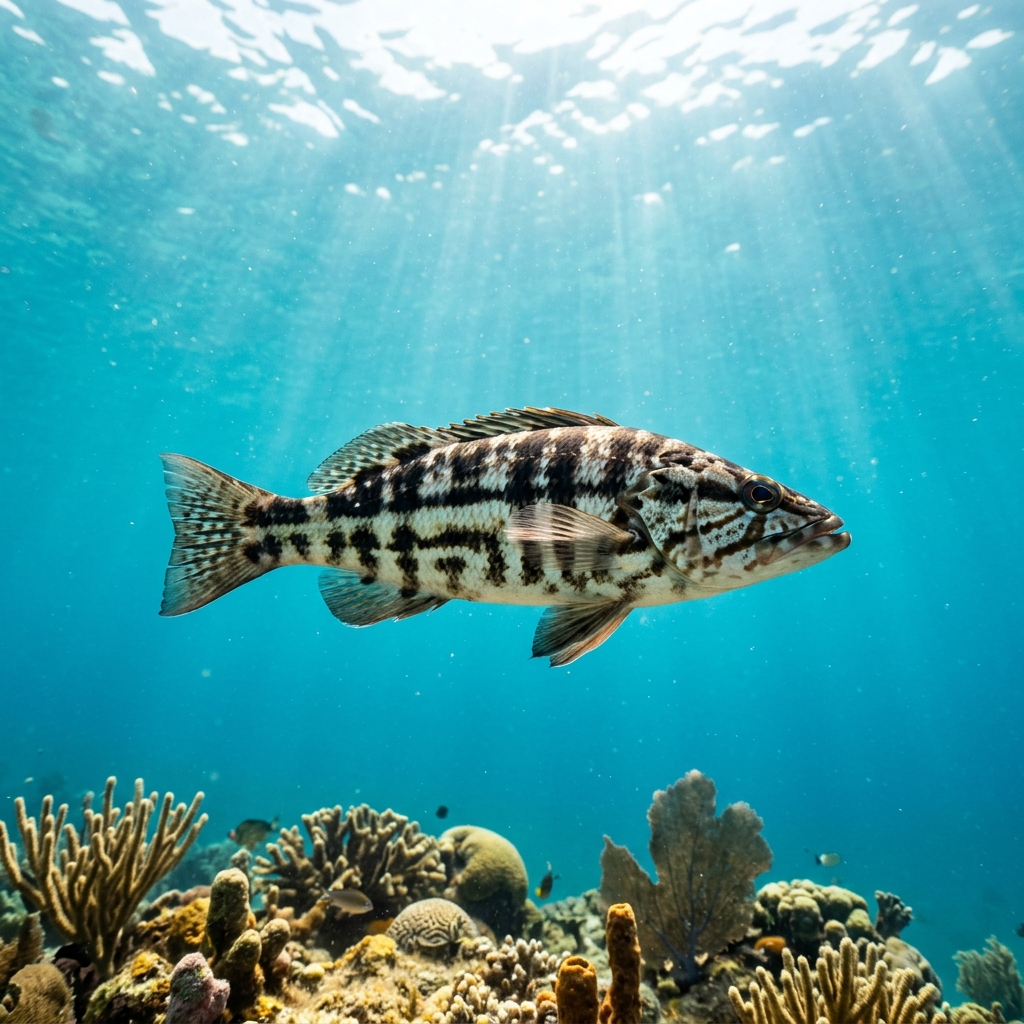
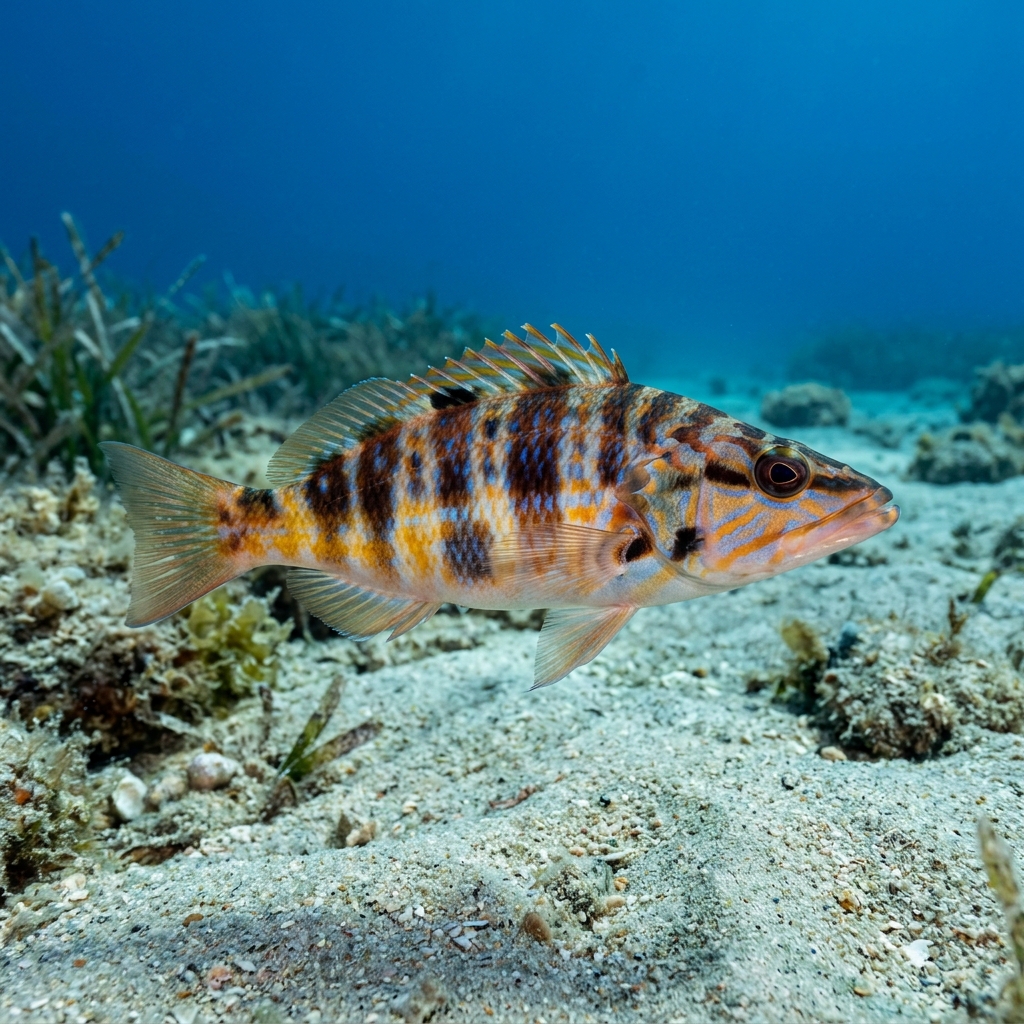
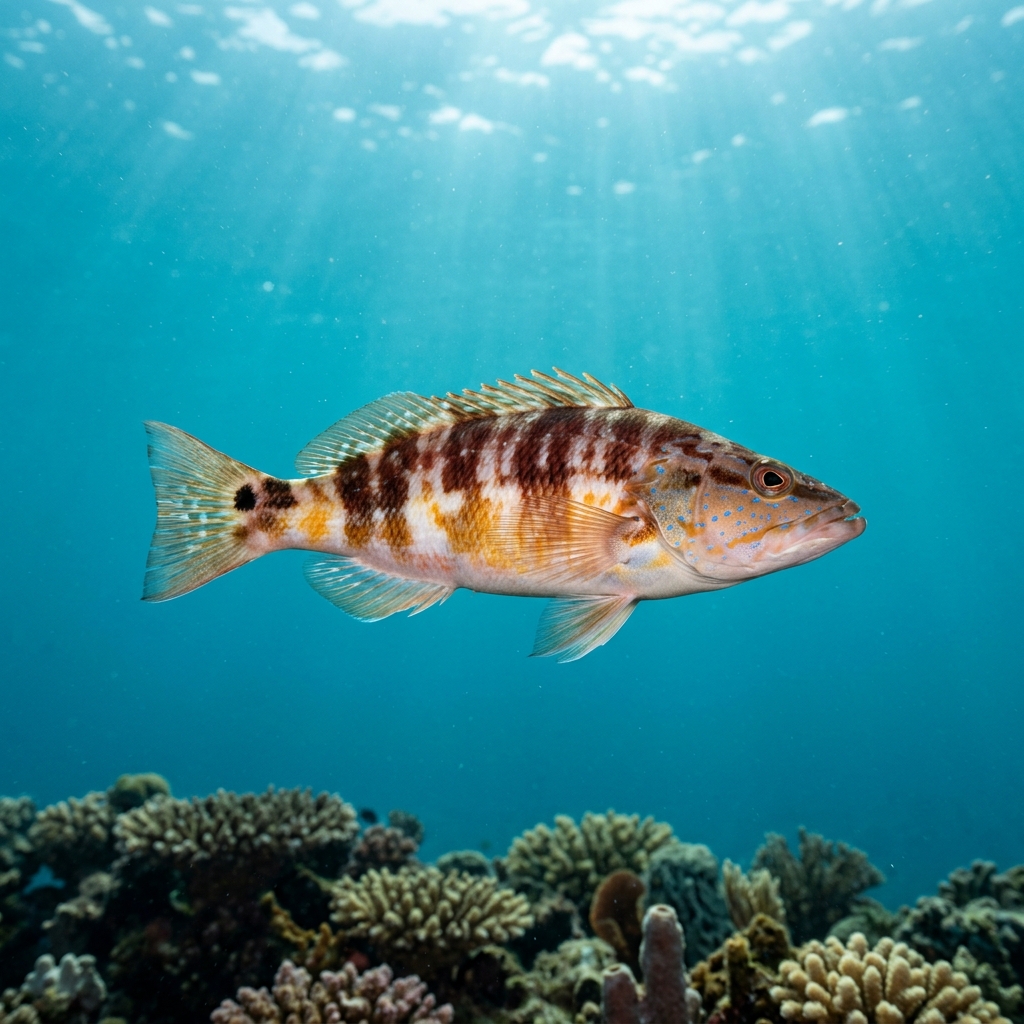
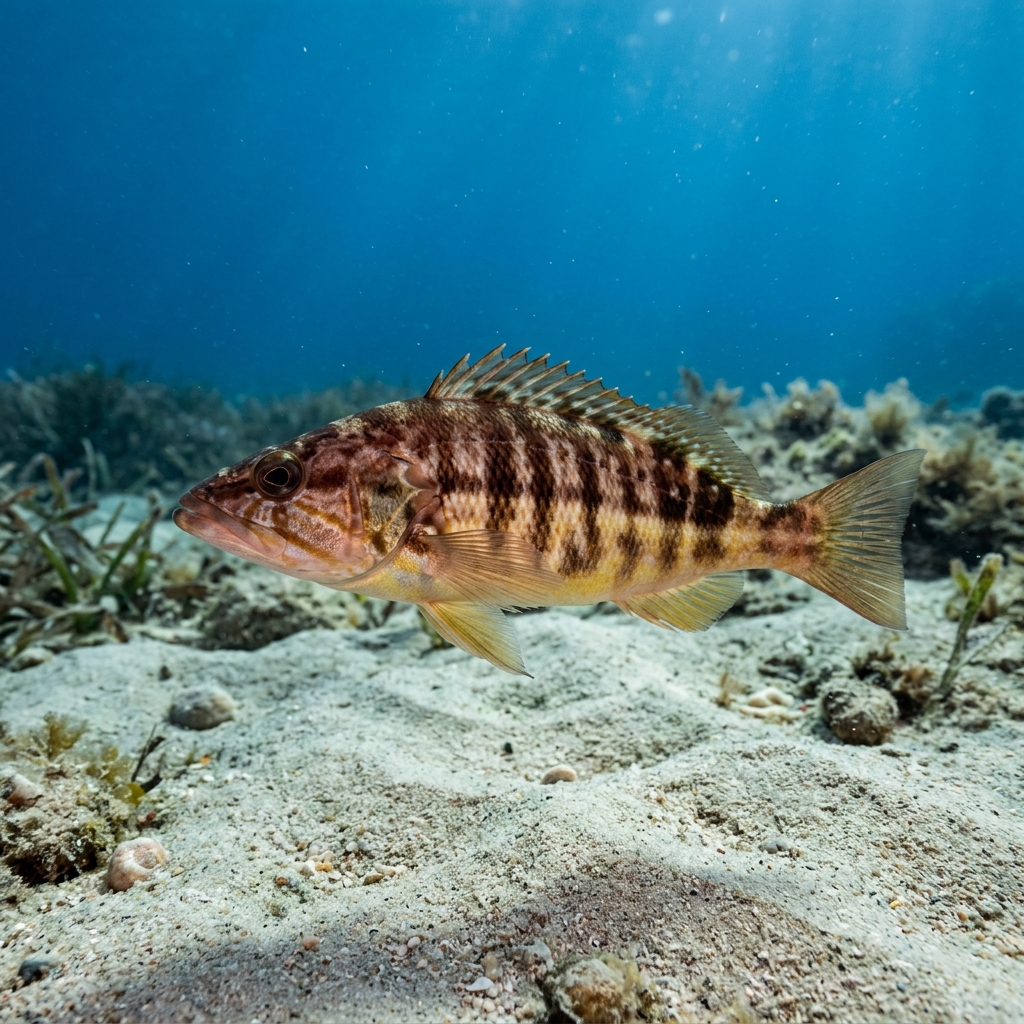
A slender, elongated body around 25-30 cm long sets the comber apart from chunkier grouper relatives. Look for a warm brownish-orange to reddish base colour broken by pale horizontal stripes running along the flanks, plus a series of darker vertical blotches that cross them, that grid-like pattern is the key field mark. The large mouth and relatively pointed snout give it a slightly aggressive expression. In cooler, darker water it can look quite drab, so focus on the stripe-and-blotch combination rather than colour alone.
Combers hang close to the seabed, usually around rocky reefs or mixed sand-and-weed habitat, and you'll often catch them mid-hunt, hovering almost still before darting at a small fish or invertebrate. They're notably curious: a comber will frequently hold its position and watch you with that big eye rather than bolting, sometimes drifting a little closer before getting back to business. Activity peaks around dawn and dusk, but they're visible throughout the day.
Combers are simultaneous hermaphrodites, meaning each individual carries both functional male and female reproductive organs at the same time and can self-fertilise, a rare trait among marine fish.
In the Northern Hemisphere, sightings concentrate from February through November, so late spring to early autumn gives the widest window. The comber's observed temperature range of roughly 11-18 °C means it suits temperate and cool Mediterranean conditions rather than midsummer tropical heat.
The comber is most consistently logged across the western Mediterranean and Atlantic coasts of Europe, with the French Riviera and Provence, and the Costa Brava in Spain, standing out as the strongest regions by far. Italy, Croatia's Dalmatian coast and Portugal's Lisbon Coast also show reliable records. Beyond the Med, the UK and Ireland both hold meaningful populations, reflecting the species' tolerance for cooler Atlantic water.
Mapping where Comber is logged…
The French Riviera and Costa Brava are the most productive regions, with strong records also from Brittany, Andalusia, northwest Italy, central Dalmatia and the Lisbon Coast. The species extends into Atlantic waters too, with meaningful sightings logged in the UK and Ireland.
Northern Hemisphere sightings peak between February and November. Spring and summer offer the most consistent encounters across Mediterranean sites, while Atlantic populations in the UK and Ireland are accessible across a similar window when conditions allow.
Focus on the overlapping pattern of pale horizontal stripes and darker vertical blotches that together form a rough grid across the flanks. The body is slender rather than stocky, the mouth is large, and the overall colour runs from reddish-brown to orange-buff. No other common Mediterranean reef fish shares that exact stripe-over-blotch combination.
Most individuals you encounter underwater are around 20-30 cm, with a typical adult around 28 cm. They rarely exceed 40 cm, so they're noticeably smaller and more slender than the groupers they're related to.
No. Combers pose no threat to divers. They may watch you curiously from a short distance but will not act aggressively. Treat them calmly and they'll often stay in view for a good look.
Each comber is simultaneously male and female, with both sets of reproductive organs active at the same time. This makes them one of the few marine fish capable of self-fertilisation, though they also mate with other individuals. It's a relatively rare reproductive strategy in vertebrates.
Site and sighting data is aggregated from diver logs, iNaturalist and GBIF. For taxonomy and conservation status:
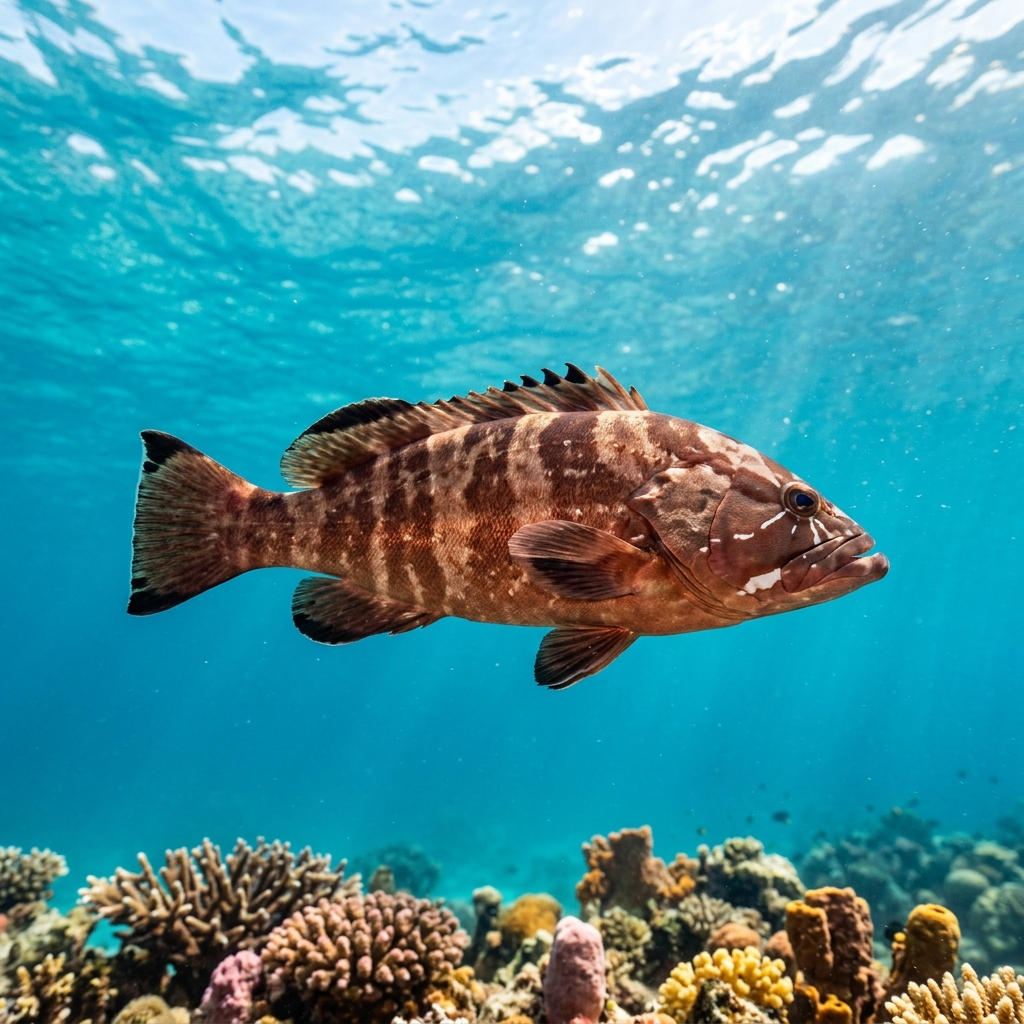
Blacktip Grouper
2,726 sites