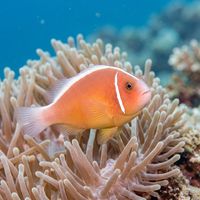
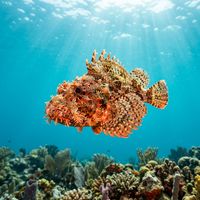
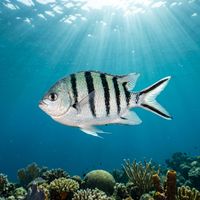
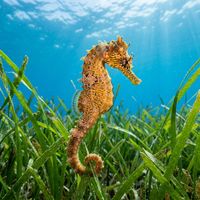
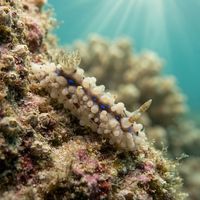
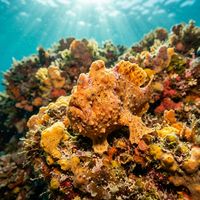
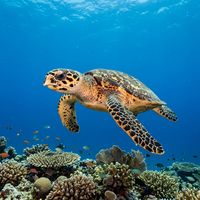
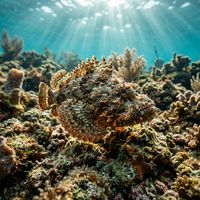
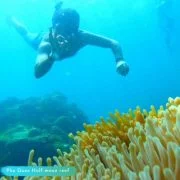
Phu Quoc's diving is built around shallow coral reefs spread across two distinct island clusters: An Thoi to the south and Ganh Dau to the north. An Thoi holds the majority of sites, including the mixed natural and artificial reef at Buom Island and the deeper drift diving at South Pineapple Point. The roster leans heavily beginner-friendly, with most sites sitting at accessible depths and requiring boat access. Expect Pink Skunk Clownfish and Scissortail Sergeant on almost every dive, alongside Scorpionfish and the occasional Hawksbill Sea Turtle. Muck and reef combine at Turtle Island, rewarding patient divers with Seahorse, Frogfish and Pipefish.
2 areas

Monthly water temperature across Phu Quoc's sites, from satellite sea-surface data corrected for depth. The band shows the site-to-site spread.
Water stays warm throughout the year, peaking in the warmer months around April through June and easing only slightly toward year-end. The best-rated diving clusters in the dry months from November through April, when calmer seas and better visibility reward reef exploration. The southwest monsoon from around May through September brings rougher conditions and reduced visibility, making some exposed sites less accessible.
26 operators
Water temperature around Phu Quoc ranges from about 28°C in January to 31°C in May, based on satellite sea-temperature data for its dive sites.
With water around 28–31°C, a rash guard or 3mm shorty works in Phu Quoc year-round.
Fin maps 15 sites in Phu Quoc (15 scuba diving sites and 2 snorkelling spots, with some suited to both), organised into 2 areas.
Across Phu Quoc's dive sites, January, February, March, April, November and December are most often reported as the best months to visit.
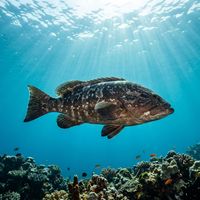
Pink Skunk Clownfish, Scorpionfish and Scissortail Sergeant are observed across virtually all sites. Patient divers searching reef rubble and sandy patches stand a reasonable chance of finding Seahorse, Frogfish and Pipefish. Hawksbill Sea Turtle and Grouper have also been recorded, and the muck site at Turtle Island is a good hunting ground for smaller critters.
The majority of sites in Phu Quoc are rated beginner level and feature shallow reefs accessible by boat. Sites such as Hon Bang, North Pineapple Point, Fingernail Island and Kim Quy Island all offer relaxed conditions in modest depths. The one notable exception is South Pineapple Point, which involves strong currents and greater depth and is reserved for advanced divers.
An Thoi, in the south, holds the larger concentration of dive sites and includes the widest variety of site types, from natural reef to the artificial reef at Buom Island and drift diving at South Pineapple Point. Ganh Dau, to the north, has fewer sites but still contributes meaningfully to the overall dive roster. Both areas require boat access to reach their reefs.
All listed dive sites in Phu Quoc require boat access. There are no shore-entry dive sites in the data. A wide range of operators is available locally, including Amadive Phu Quoc Dive Center, Sasa Eco Diving, VietDivers and Searama Diving, among others, making it straightforward to join a guided boat trip from the island.