Antennariidae spp.
Spot frogfish in Grenada, Bonaire, Cape Verde and beyond. Most sightings fall Apr, Oct in waters from 20-28°C. Here's how to find these masters of disguise.
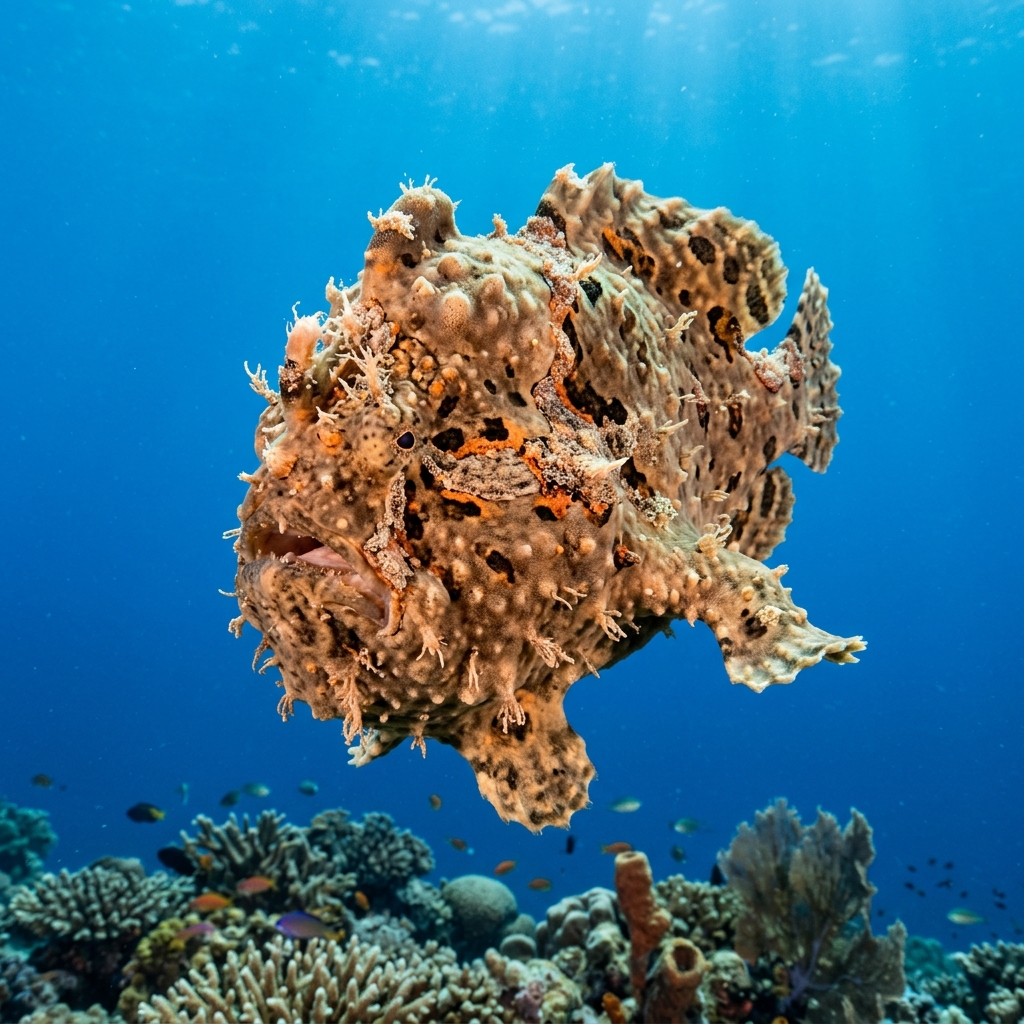
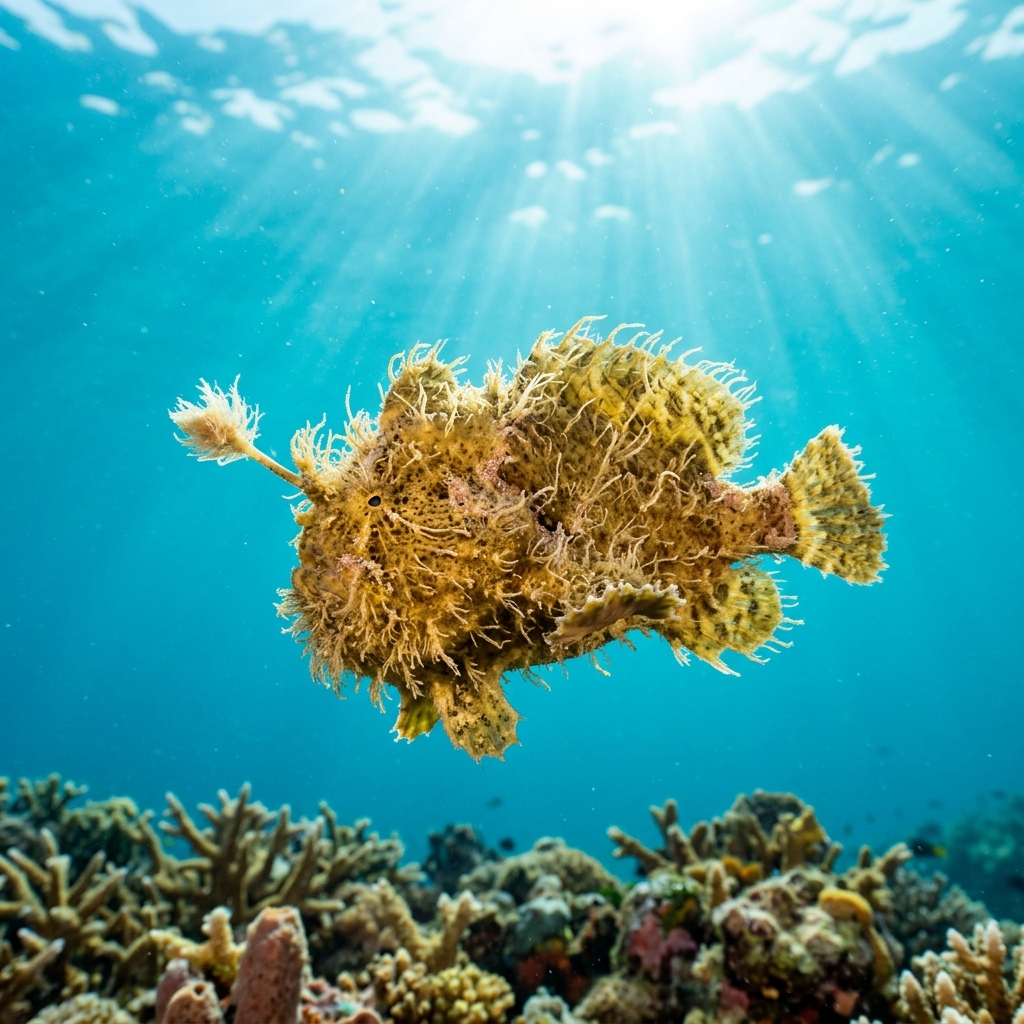
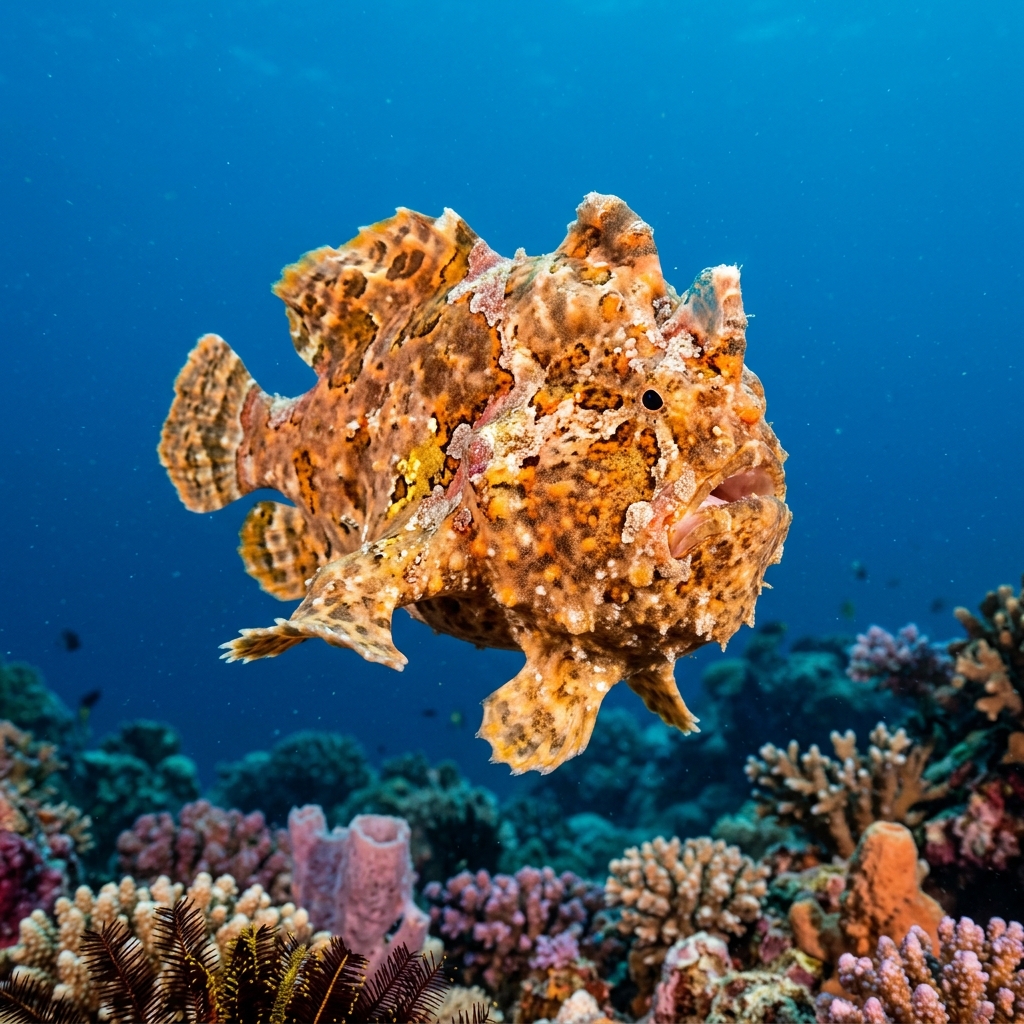
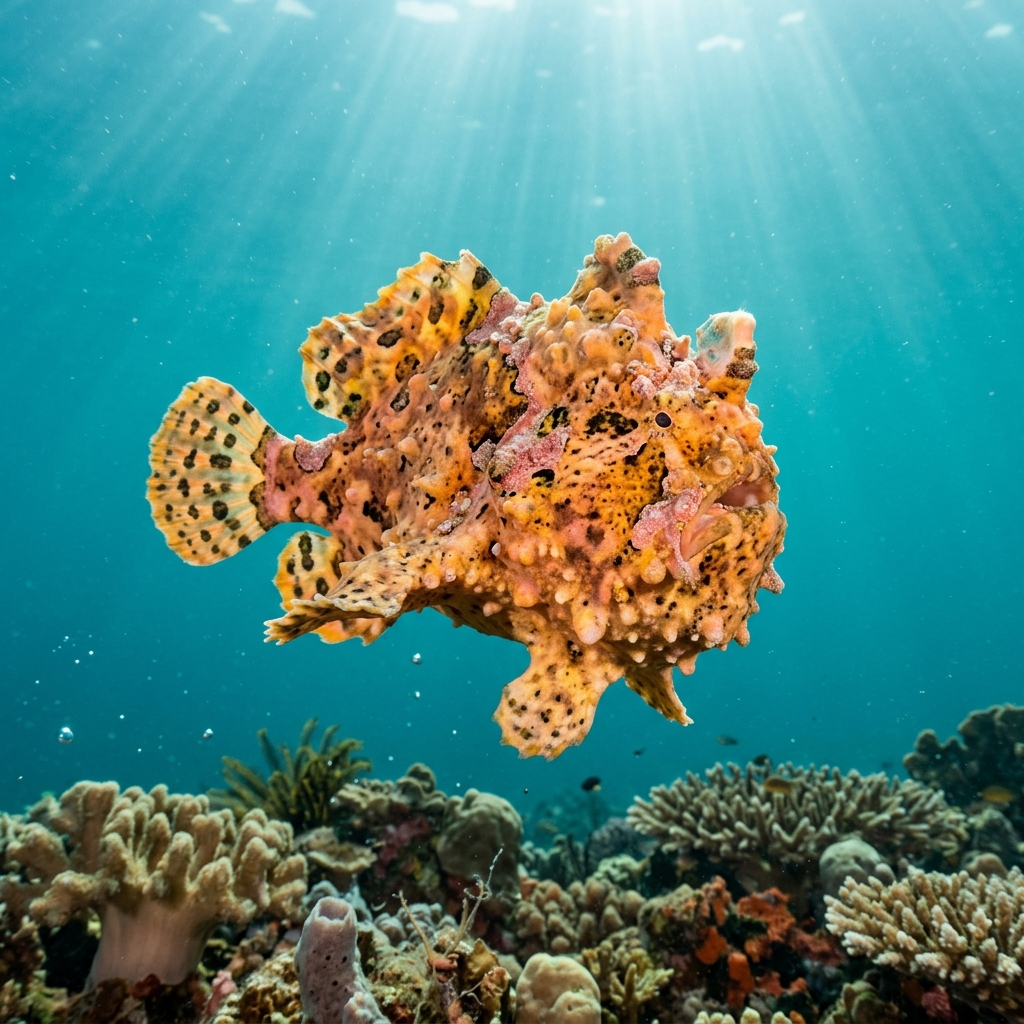
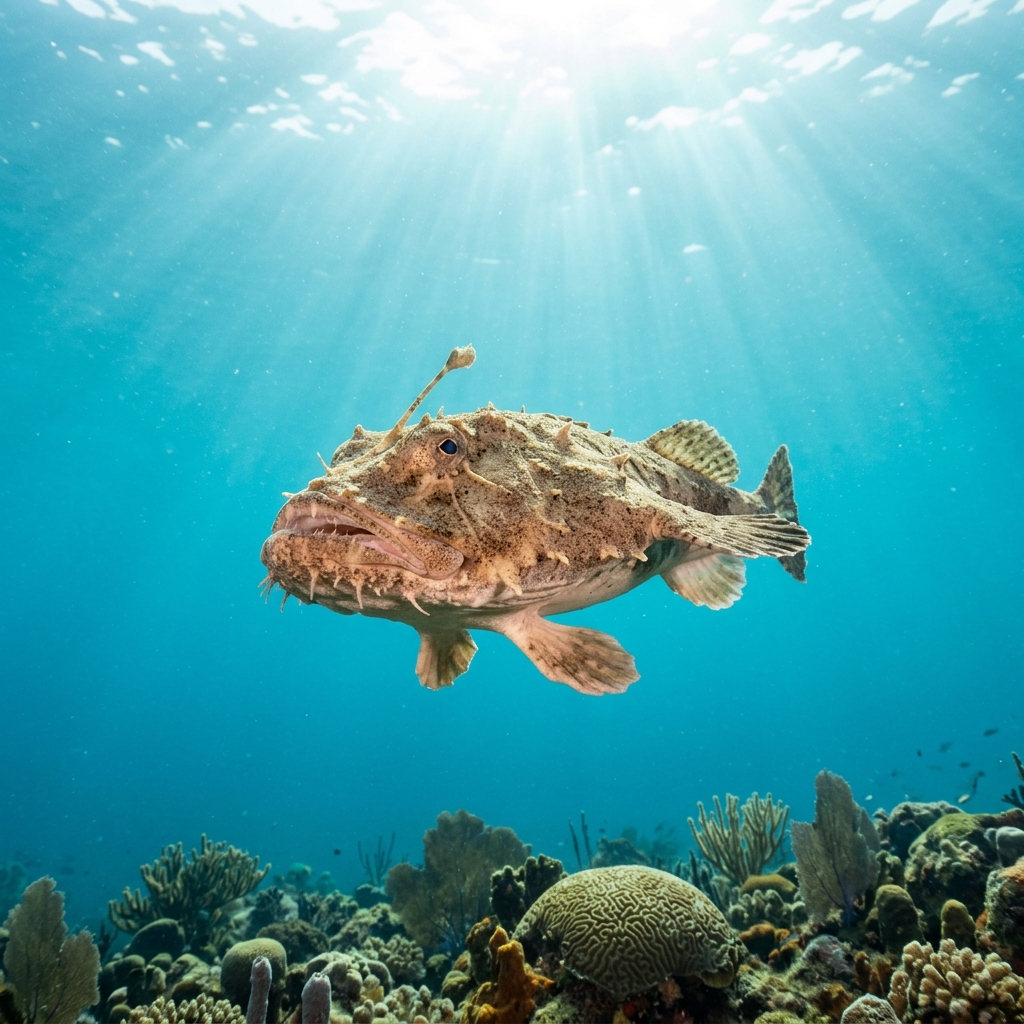
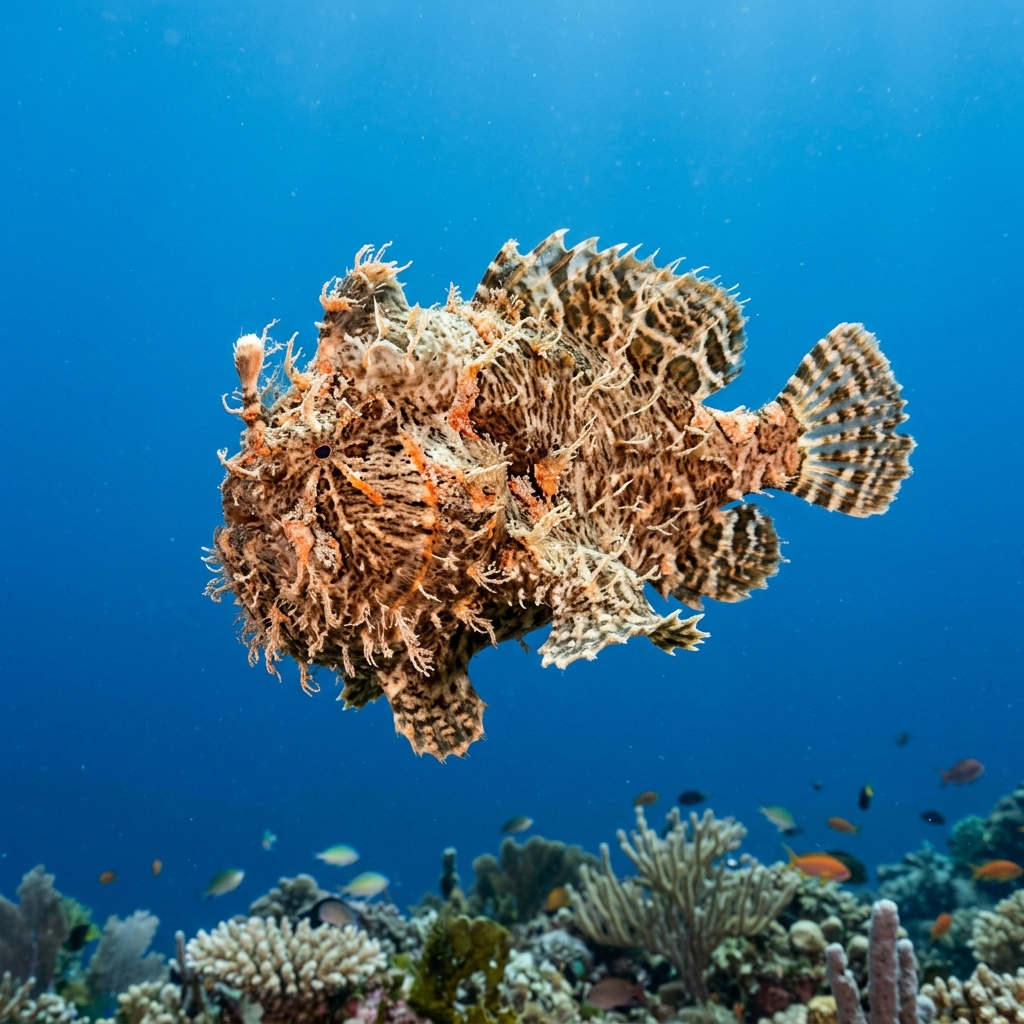
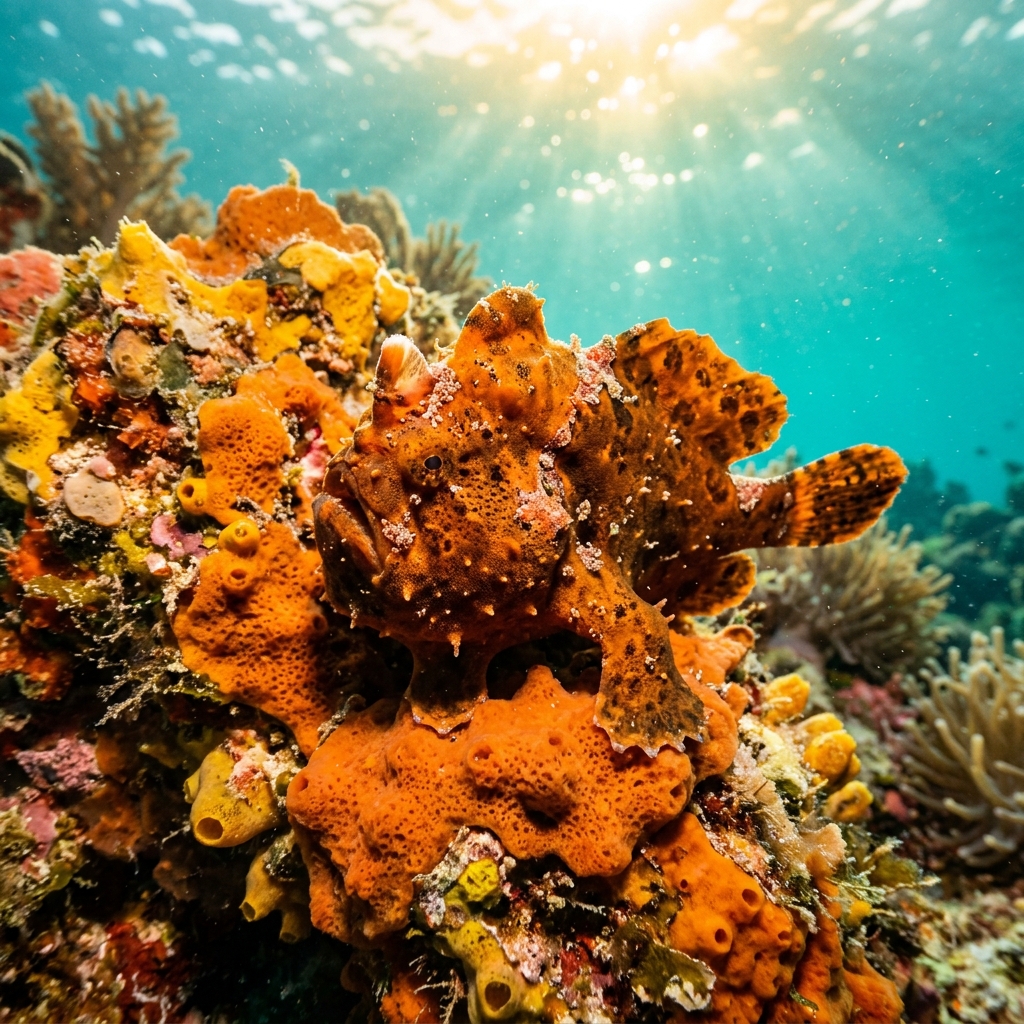
Frogfish are small, rotund fish that look almost nothing like a fish at first glance, their bodies are covered in lumpy skin that mimics sponges, coral, or algae so closely that most divers swim right past them. Look for a stocky, legless-looking shape propped up on thick, arm-like pectoral fins, and a tiny upturned mouth that appears almost comically oversized when open. The giveaway, when you know what to look for, is the illicium (the modified first dorsal spine that acts as a fishing rod lure), which projects from just above the mouth. Colours vary enormously across the family, from vivid yellow, red, or orange to grey, brown, and near-black.
When you find a frogfish, it is almost certainly sitting completely still, wedged against a sponge or coral head it has colour-matched to near perfection. They are ambush predators and rely on camouflage rather than flight, so they tend to sit tight even as divers approach, making them excellent photographic subjects once located. If disturbed, they may slowly galumph away on their pectoral fins or use jet propulsion by expelling water through their gill openings, but a relaxed diver who moves slowly will usually get a long, close look.
Frogfish can swallow prey as large as themselves in under six milliseconds, one of the fastest strikes in the animal kingdom. Their expandable mouths create a vacuum that pulls the prey in before it has any chance to react.
In the Northern Hemisphere, sightings concentrate between April and October, which aligns with warmer water temperatures in temperate and subtropical zones where frogfish sit at the cooler edge of their range. In fully tropical regions, water temperatures stay within the 20-28°C comfort zone year-round, so encounters are possible in any month.
Reef neighbours a diver could mistake it for. Use the identification notes above to tell them apart.
Frogfish are most reliably logged in Grenada, which dominates the records with sightings spread across the island, making it the standout destination. Strong sightings are also well documented across the Caribbean more broadly, particularly in Bonaire, Saba, Guadeloupe, and the US Virgin Islands, as well as in Florida waters. Cape Verde in the eastern Atlantic and the Philippines in the Indo-Pacific round out the top locations where divers consistently find them.
Mapping where Frogfish is logged…
Grenada is the top destination by a wide margin, with sightings logged across the island. The wider Caribbean is a stronghold, with reliable records from Bonaire, Saba, Guadeloupe, and the US Virgin Islands. Cape Verde in the Atlantic and the Philippines in the Indo-Pacific are also well-documented locations for encountering them.
In the Northern Hemisphere, April through October is when sightings peak. In tropical destinations where water stays above 20°C year-round, frogfish can be found in any season. Cape Verde and Caribbean sites follow this warm-season pattern most clearly.
Look for a lumpy, round-bodied fish propped on thick arm-like pectoral fins, sitting motionless against a sponge or coral. The small fishing-rod lure above its mouth is the best single field mark. Colours vary widely, so shape and posture matter more than colour when scanning a reef.
Size varies considerably across the family. Small species reach only a couple of centimetres, while the giant frogfish can exceed 30 centimetres. Most of the species divers encounter in Caribbean and Indo-Pacific waters fall somewhere in the 5-20 centimetre range.
Frogfish are sit-and-wait ambush predators. They wiggle a built-in lure above their mouths to attract small fish and crustaceans, then strike with one of the fastest gulps in the animal kingdom, engulfing prey in under six milliseconds. Their mouths can expand to swallow animals as large as themselves.
No. Frogfish pose no threat to divers. They are entirely focused on hunting small prey and will ignore humans. Their only defence is camouflage, and they are far more likely to sit still and hope you miss them than to do anything aggressive.
Site and sighting data is aggregated from diver logs, iNaturalist and GBIF. For taxonomy and conservation status:
Antennarius maculatus
Giant Frogfish
1,292 sites