Abudefduf sexfasciatus
Spot Scissortail Sergeants year-round across the Indo-Pacific, from Queensland reefs to Sharm el Sheikh. Here's how to ID them and where they're most reliably logged.
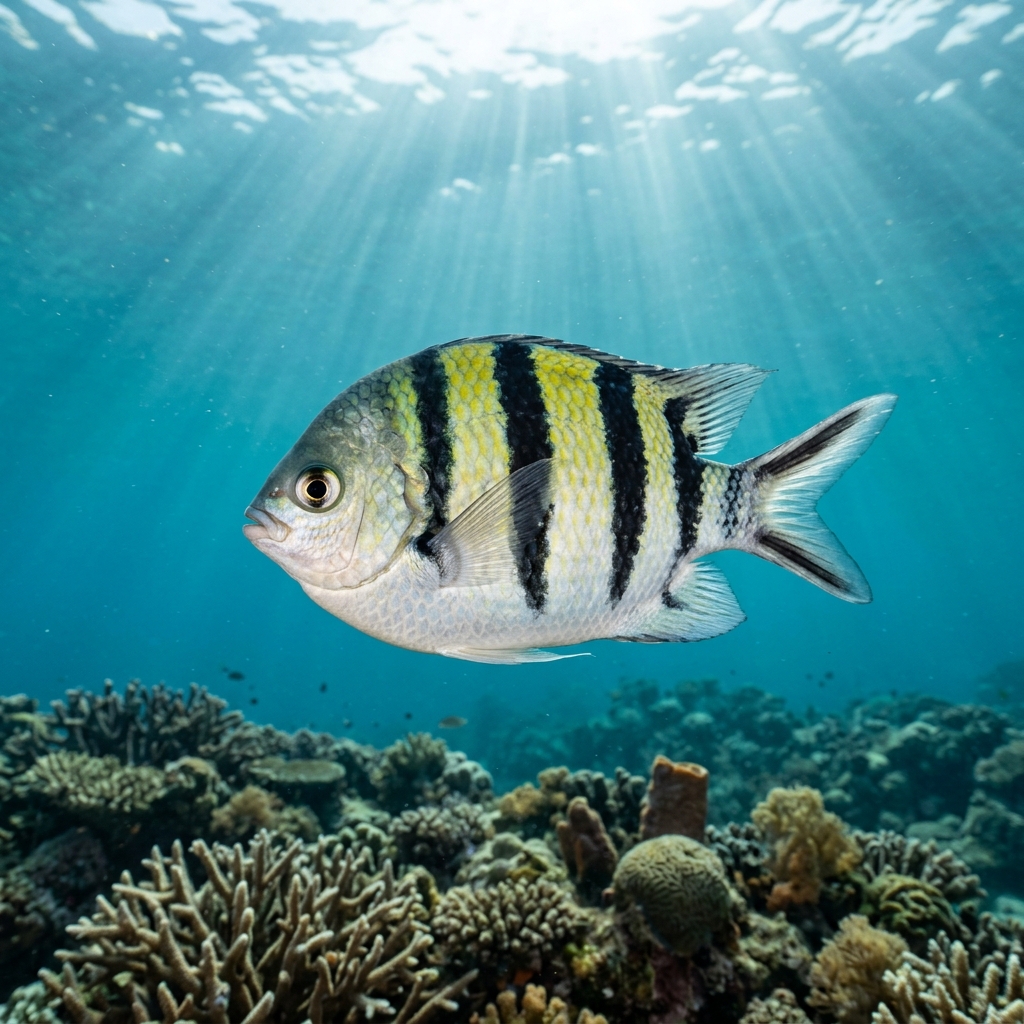
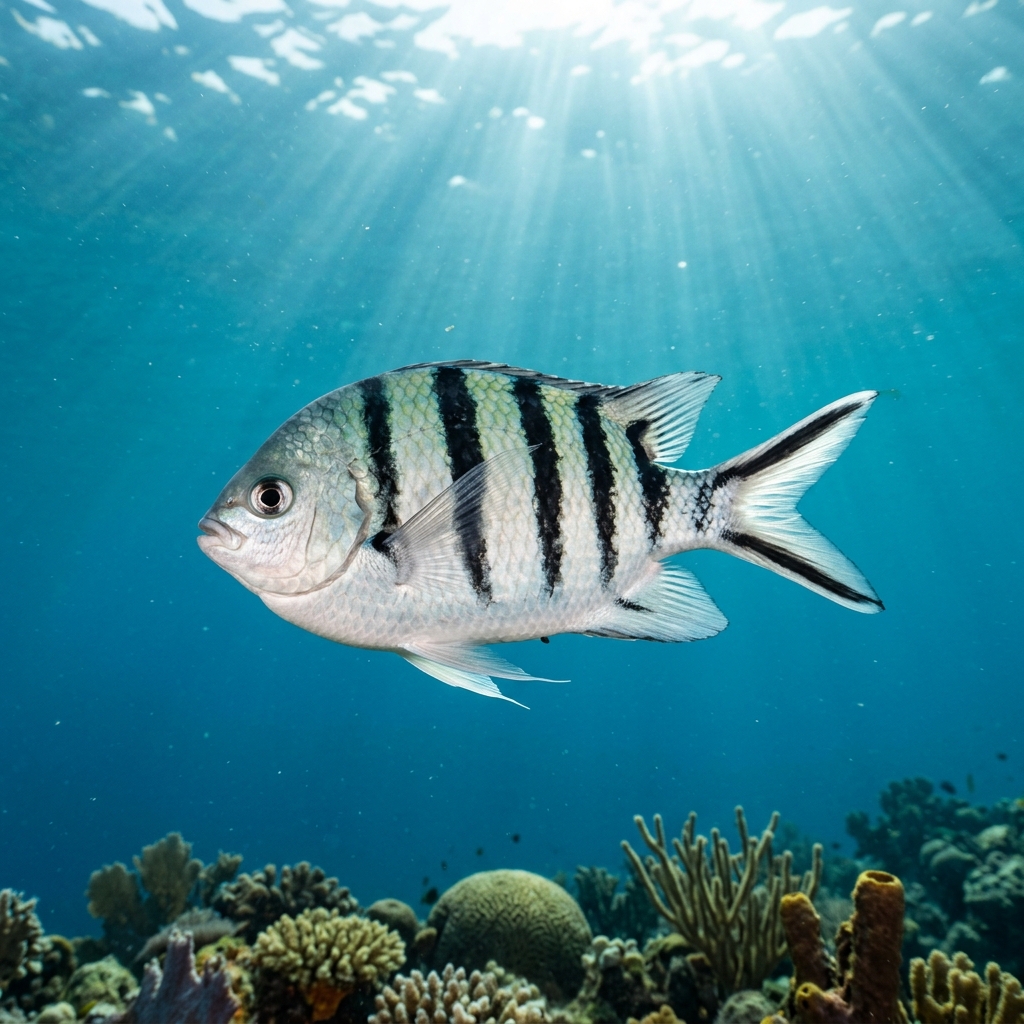
About 13 cm long, this damselfish has a pale silvery-white body crossed by five bold black vertical bars, a pattern that immediately marks it as a sergeant. The real giveaway is the tail: the deeply forked caudal fin (tail fin) has a distinct black stripe along each lobe, giving the fish its name and separating it from related sergeants at a glance. Look for it in shallow water from the surface down to around 20 metres, often in loose aggregations drifting above the reef.
During the day you will typically find them in loose, active schools just above the reef, picking at algae on rock surfaces or rising into the water column to snatch plankton. They are relaxed around divers and will often approach curiously, particularly if sand or rubble is disturbed nearby. During breeding season, guarding males become noticeably bolder and may make short, directed dashes towards anything that ventures too close to their egg patch.
Breeding males take on egg-guarding duty and will aggressively fan and defend a single patch of eggs, sometimes nipping at fish many times their own size, including other species of fish far larger than themselves.
Present year-round in both hemispheres with no concentrated season, which lines up with its preference for warm tropical water in the 24 to 29 °C range, conditions that persist on Indo-Pacific reefs regardless of month.
Most commonly logged across the Indo-Pacific, with strong populations in the Philippines, Indonesia, Malaysia, and Australia, particularly off Queensland. The Egyptian Red Sea, especially the Sharm el Sheikh area, is a reliable sighting, and the Maldives, Thailand, and French Polynesia also feature it across a large number of sites.
Mapping where Scissortail Sergeant is logged…
They are logged across a wide stretch of the Indo-Pacific and Red Sea. The Philippines, Indonesia, Malaysia, and Australia's Queensland coast are the top locations, with Sharm el Sheikh in Egypt and the Maldives also offering frequent sightings. French Polynesia and Thailand round out the most reliable areas.
Any time of year. Sighting data from both hemispheres shows no concentrated season, and the species is comfortable in the 24 to 29 °C water that tropical Indo-Pacific and Red Sea reefs maintain throughout the year.
Look for a palm-sized, pale fish with five crisp black vertical bars and a forked tail with a black stripe along each fork. That striped, scissor-like tail is the key detail that sets it apart from other sergeant species, which have plain or less distinctly marked tails.
Typically around 13 cm, roughly the length of a hand. They are small enough to appear unassuming on the reef, which makes their bold behaviour during egg-guarding all the more noticeable.
No. They pose no real risk. Males guarding eggs may make short, feisty dashes towards a diver's hand or camera if you get very close to their egg patch, but there is no meaningful threat. Give guarding males a small amount of space and they settle quickly.
At most sites where they are recorded, sightings are classed as uncommon rather than a sure thing. You are most likely to encounter them reliably in key hotspots such as Queensland, the Maldives, and Sharm el Sheikh, where diver records are strongest.
Site and sighting data is aggregated from diver logs, iNaturalist and GBIF. For taxonomy and conservation status:
Dascyllus
3,697 sites