Best for intermediate divers, 5-4m, shore entry, mild current.
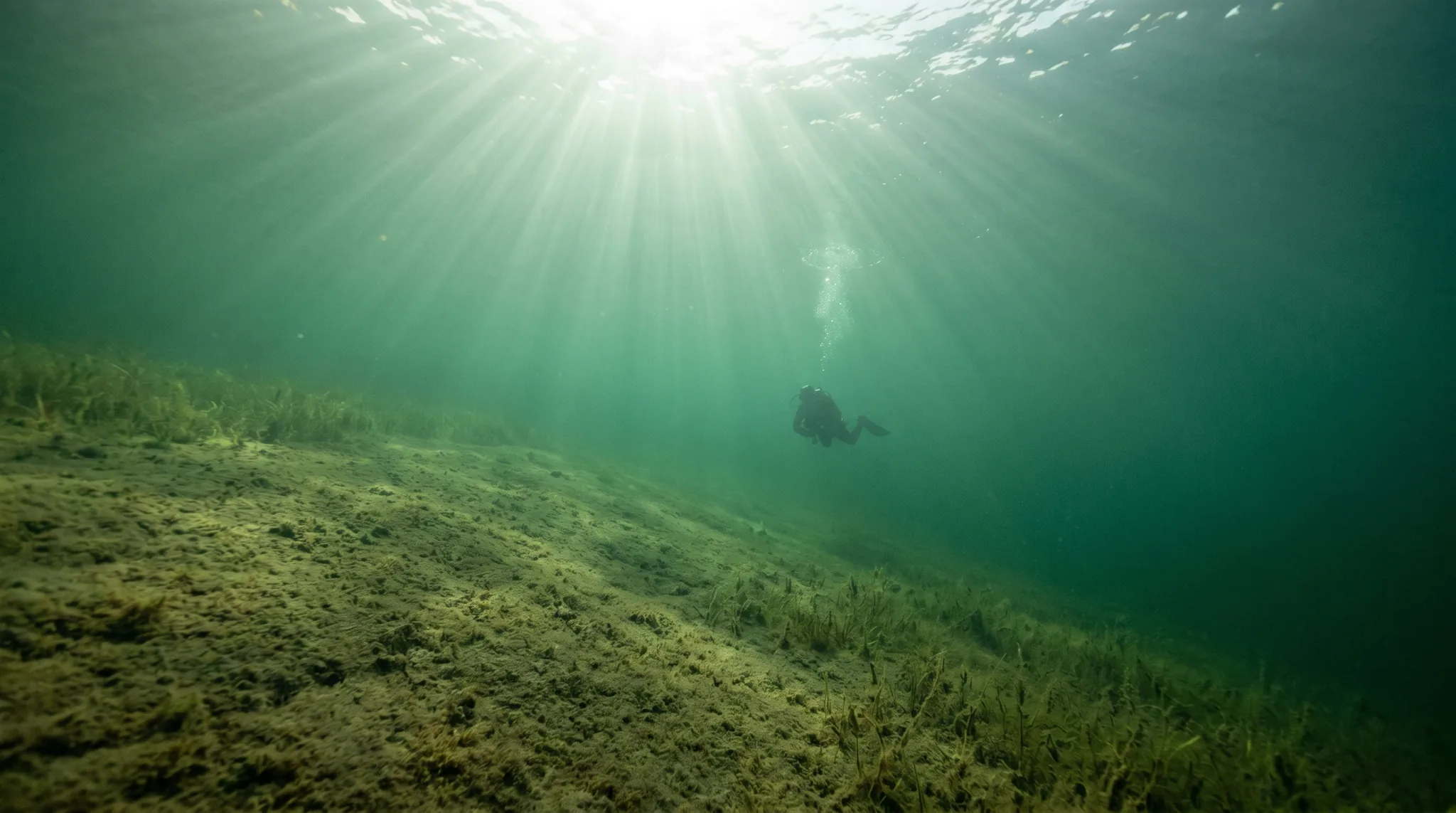
The Aare River at Lake Neuchâtel offers an intermediate freshwater dive experience with depths ranging from 5 to 40 metres. Divers access the site via a shore entry, encountering mild currents that can shift to stronger flows. Visibility is variable, typically between 5 and 20 metres. Due to the cold water temperatures, which drop to 3-5°C in winter and remain cool in summer, appropriate thermal protection is essential. The site features changing rooms and showers to assist with post-dive recovery. Divers should remain vigilant regarding down currents and potential entanglement risks while navigating this deep shore dive. Night diving is permitted for those prepared for the challenging conditions.
47.04530, 7.37241
Cold water is a consistent factor here regardless of season, so a drysuit or a well-sealed thick wetsuit is worth prioritising over packing light. Showers and changing rooms are available on site, which matters more than usual when you surface cold after a deep dive.
It is forbidden to dive in the waterways, harbours and anchor points according to Binnenschifffahrtsverordnung (BSV), Artikel 77.
Recorded at this site
Depth
5-4m
Visibility
5-20m
Skill Level
Intermediate
Entry
Shore
Current
Mild
Typical Dive
40 min
No, this site is intended for intermediate divers who are comfortable with deep shore dives and managing variable conditions.
The depth ranges from 5 to 40 metres, with an average depth of 20 metres.
This is a shore entry site.
Divers must be prepared for cold water, down currents, entanglement risks, and strong currents.
The site is primarily designated for diving, and the depth and current conditions make it unsuitable for casual snorkelling.
Diving at Aare River in Brugg requires the following certifications: Open Water. Always dive within your training limits.
Aare River in Brugg typically has mild currents that most divers can handle comfortably.
Visibility at Aare River in Brugg typically ranges from 5 metres to 20 metres. Conditions vary with weather, tides, and seasons.