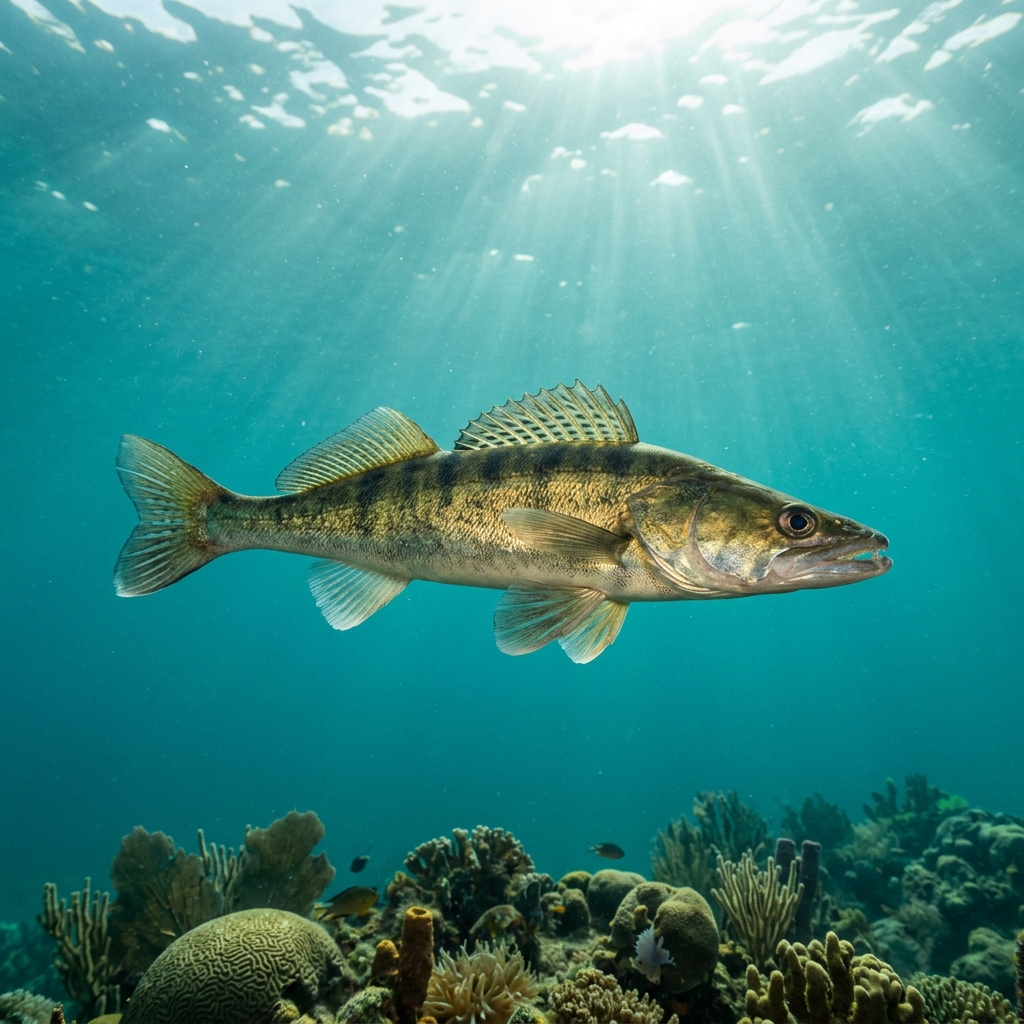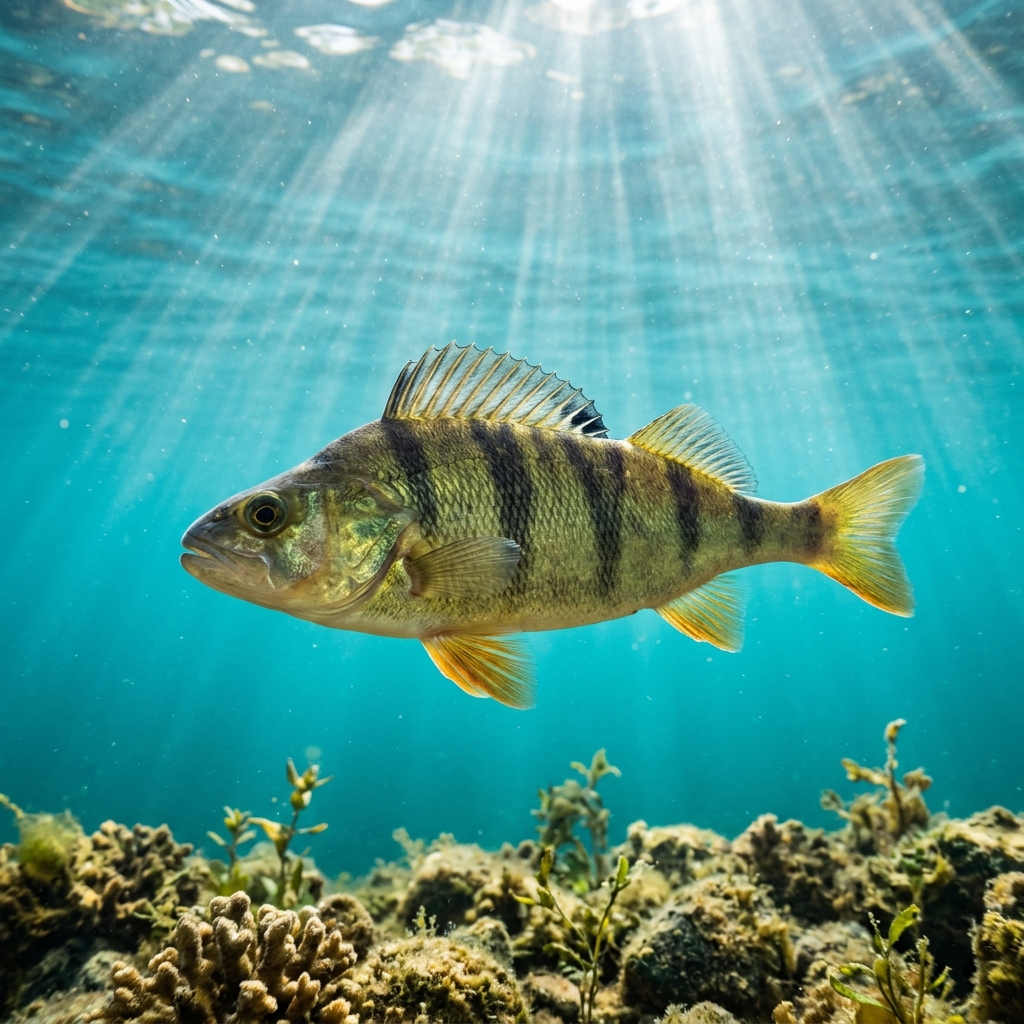
Perca fluviatilis
Spot common perch in Central Switzerland's cold lakes and German waterways, Jun, Sep. Recognise those bold dark stripes and orange-red fins underwater.
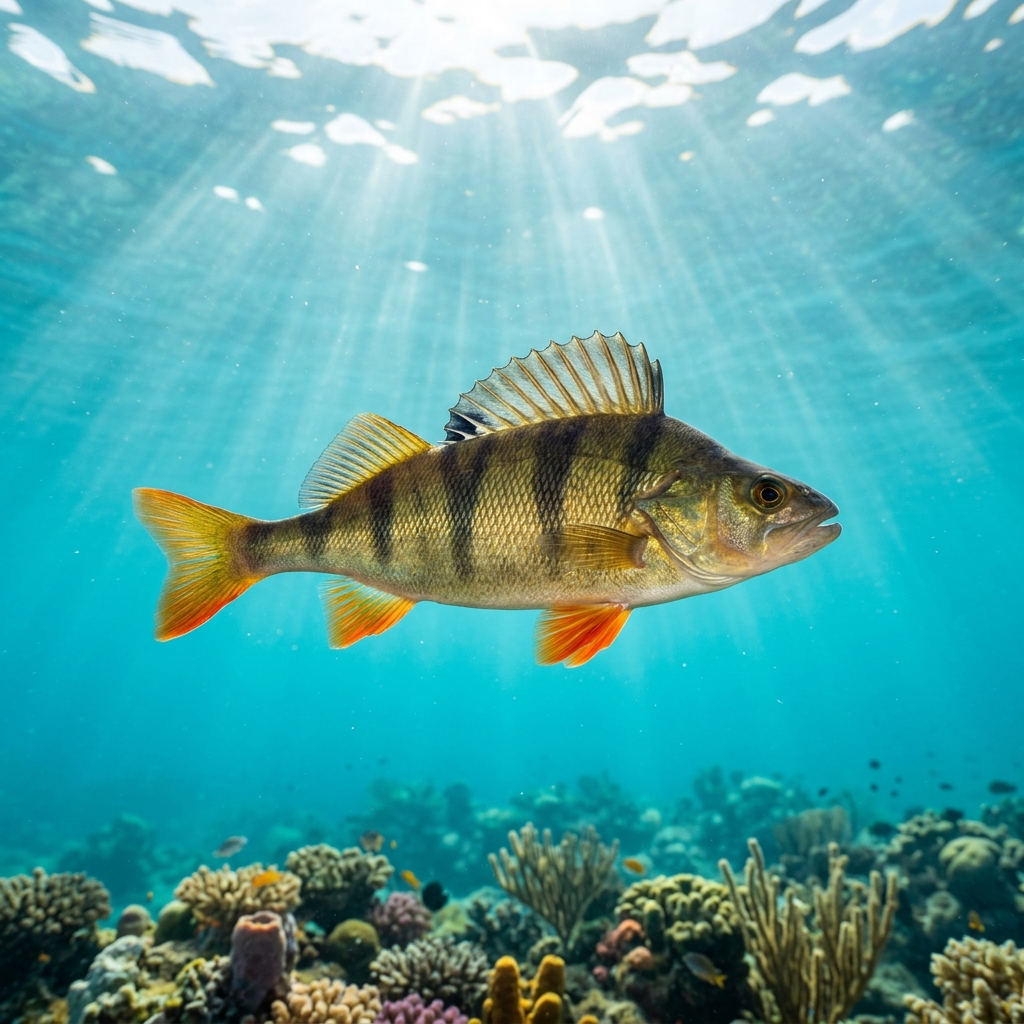
Bold dark vertical bars, usually six to nine of them, crossing a greenish-yellow flanks are the quickest ID cue underwater. The two dorsal fins are the other giveaway: the first is spiny and dark-tipped, the second softer and set close behind it. Orange-red pelvic and anal fins glow against the cooler colours of the body, making this fish pop even in low-visibility freshwater. Adults typically reach around 25-35 cm in typical encounters, though fish up to 42 cm are on record.
Perch are most often seen patrolling mid-water or hanging just above a sandy or weedy lakebed, usually in loose shoals of similarly sized fish. They are not particularly shy of divers, hold still and they will often circle back to investigate. Juveniles and smaller fish tend to stay close to reed margins and submerged structure; larger adults roam more open water.
Perch are pursuit predators that hunt in coordinated groups, herding smaller fish toward the surface, a behaviour snorkellers sometimes witness as frantic baitfish breaking the surface with perch slashing underneath.
In the Northern Hemisphere, sightings concentrate between June and September, when warmer surface temperatures bring perch into shallower, more visible depths.
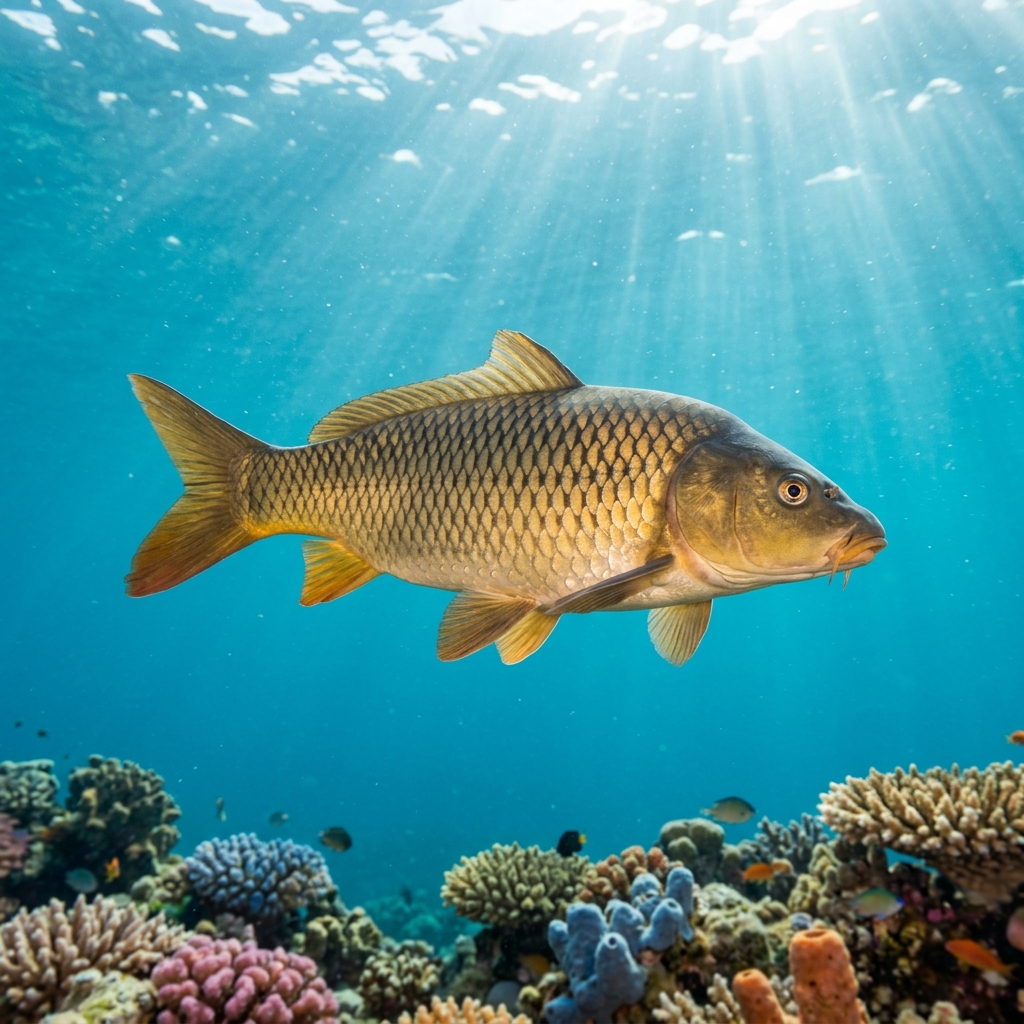
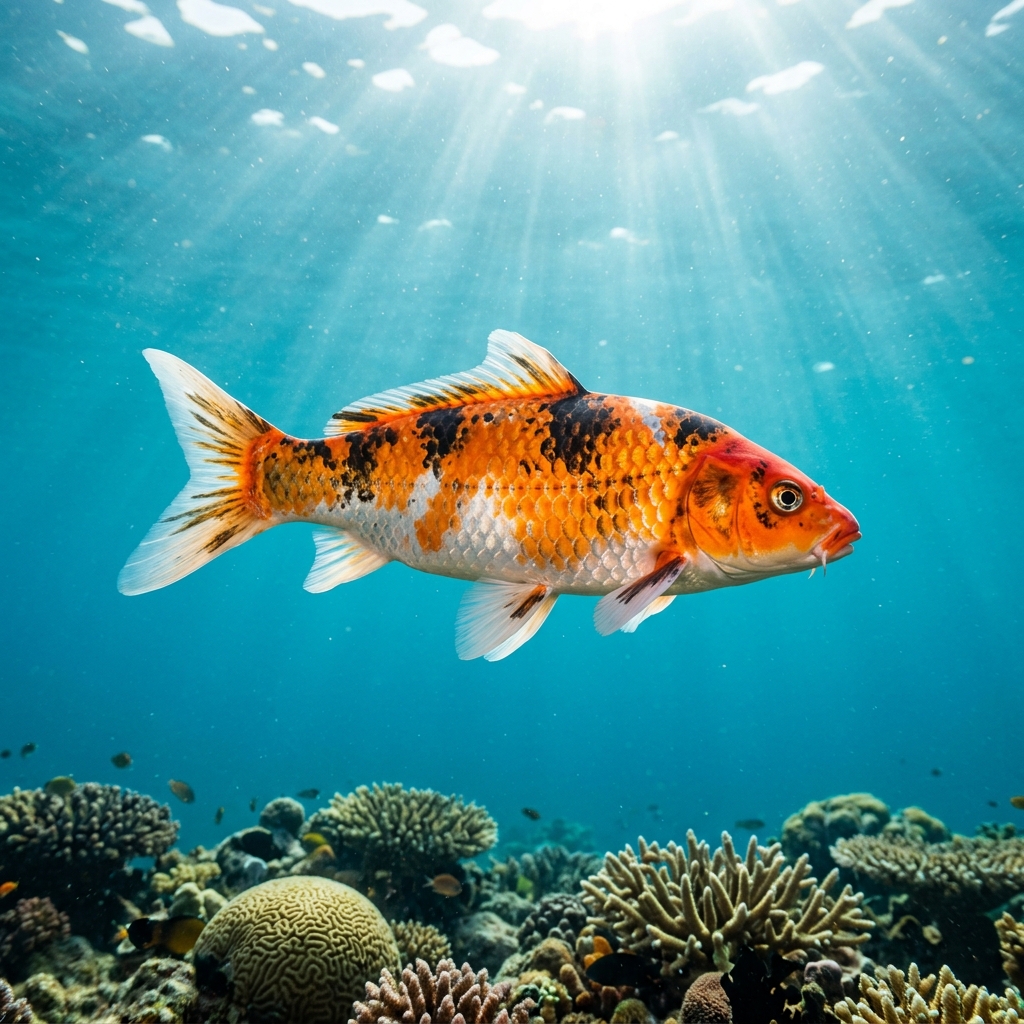
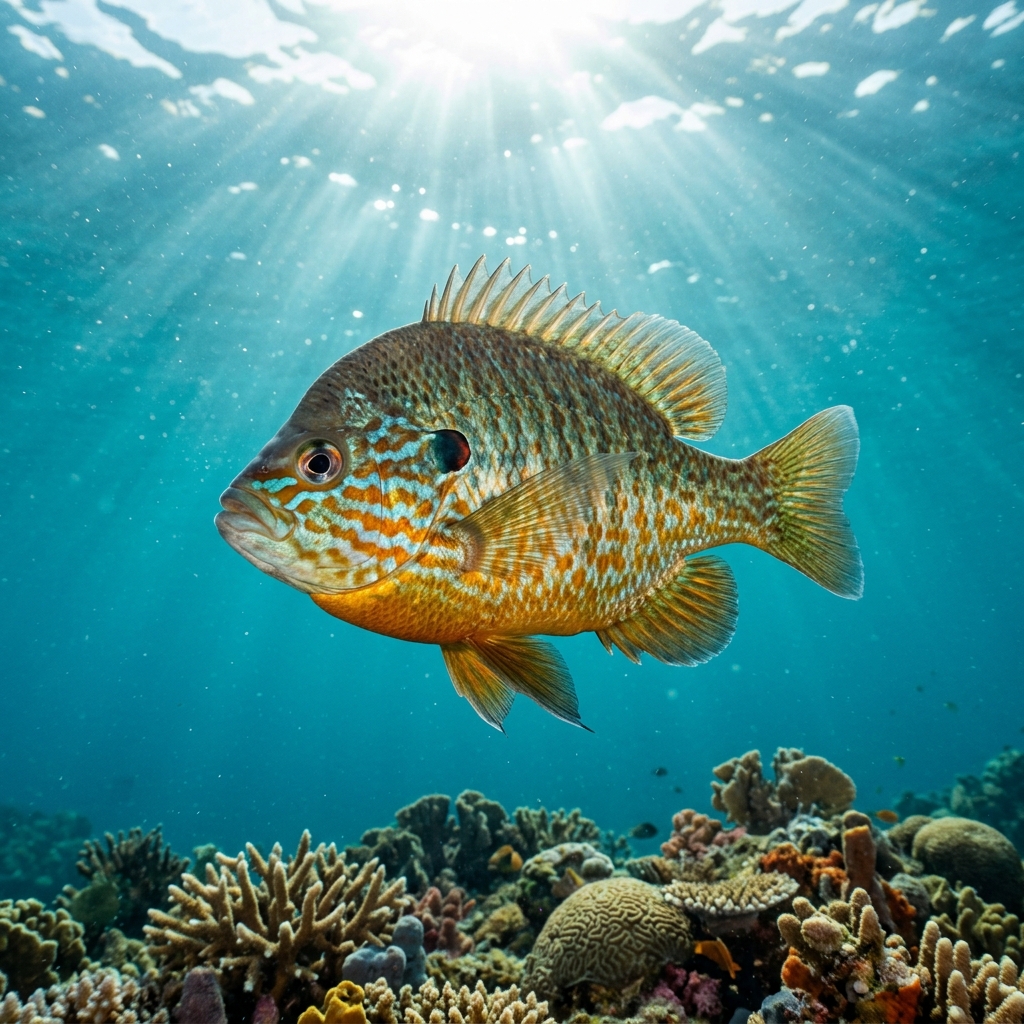
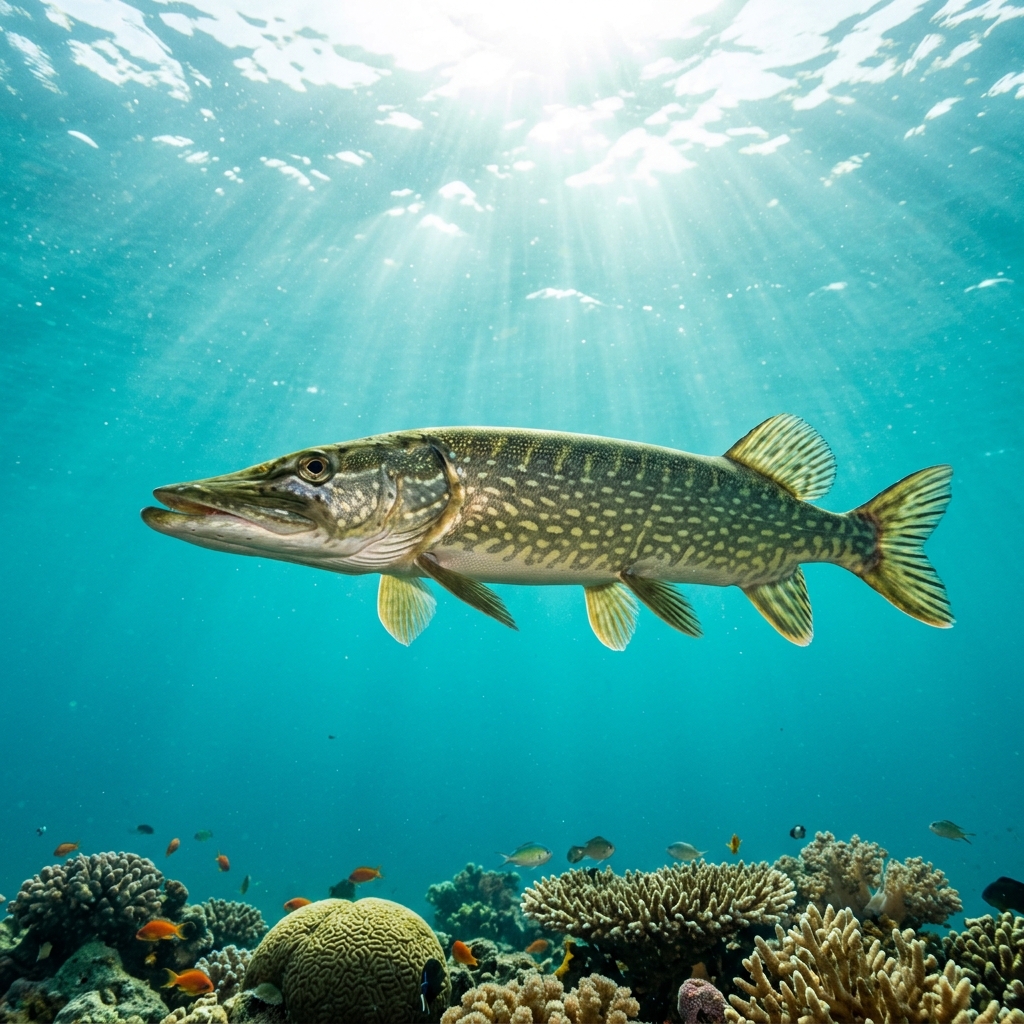
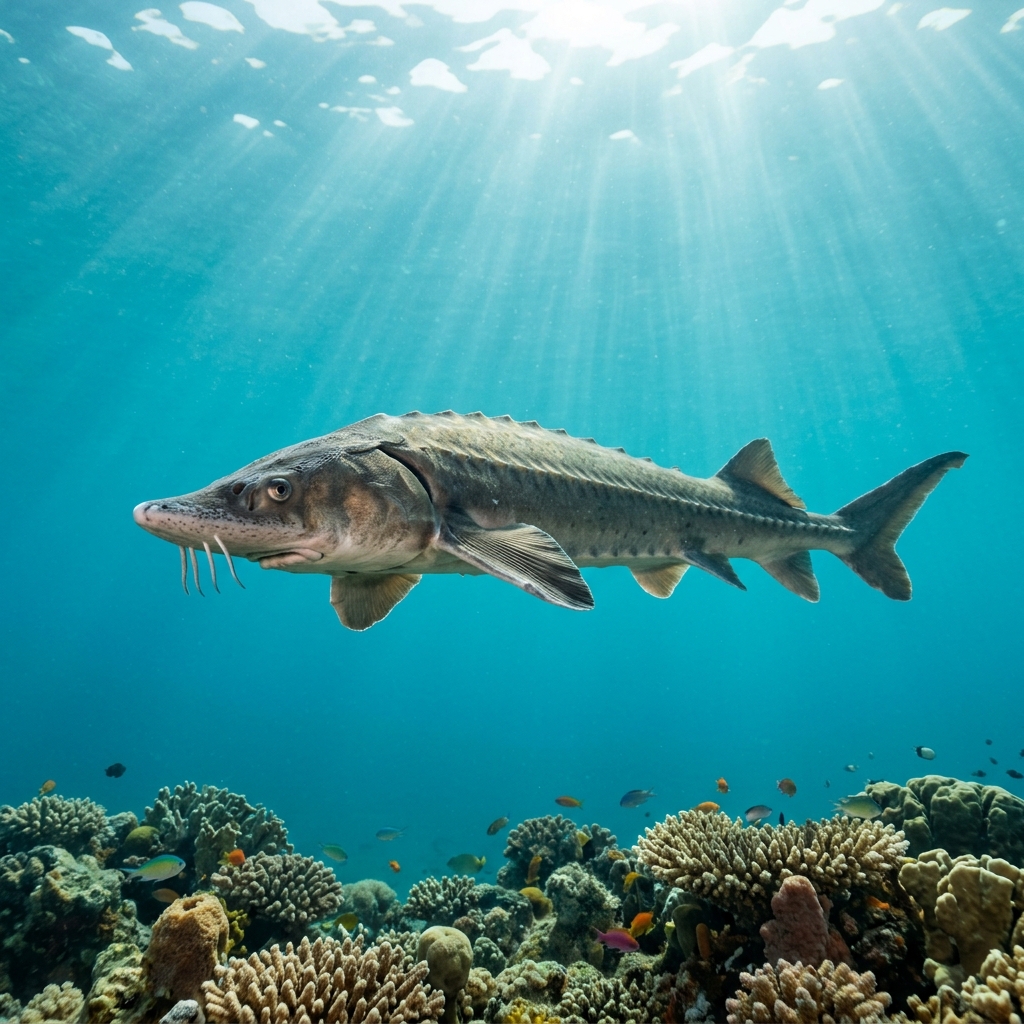
Reef neighbours a diver could mistake it for. Use the identification notes above to tell them apart.
Most diver sightings come from Central Europe, with Switzerland, particularly the Central Switzerland lake district and the southern Ticino lakes, and Germany leading the way. The Bavarian Alps and Salzkammergut region of Austria are also strong, and the Netherlands' Limburg Lakes add a reliable flatland option. France, Belgium, Poland, and Italy round out the European spread, but the Swiss and German sites account for the bulk of logged encounters.
Mapping where Common Perch is logged…
Central Switzerland's lakes and German waterways are where divers log them most often, with the Bavarian Alps, Salzkammergut in Austria, and the Netherlands' Limburg Lakes also reliable. The species turns up across much of temperate Europe from Belgium to Poland.
June through September is the peak window based on diver sightings in the Northern Hemisphere. During summer, perch move into shallower water and are easier to spot in the 1-10 m zone.
Look for the strong dark vertical bars on a greenish-yellow body combined with orange-red pelvic fins, that colour contrast is hard to miss. The two-part dorsal fin, with a spiny front section that has a dark tip, confirms the ID. In freshwater lakes with multiple species around, those stripes and orange fins make the perch stand out.
Most perch divers encounter are in the 20-35 cm range. The species can reach around 42 cm, though fish that size are far less common than the mid-sized shoaling individuals you'll typically see.
Diver observations span roughly 0.6 to 16 °C, confirming this is a cold-water species suited to temperate and alpine lakes. They are active through winter under ice but are most accessible to divers in the warmer summer months when they move shallower.
Site and sighting data is aggregated from diver logs, iNaturalist and GBIF. For taxonomy and conservation status:
Sun Perch
2,182 sites