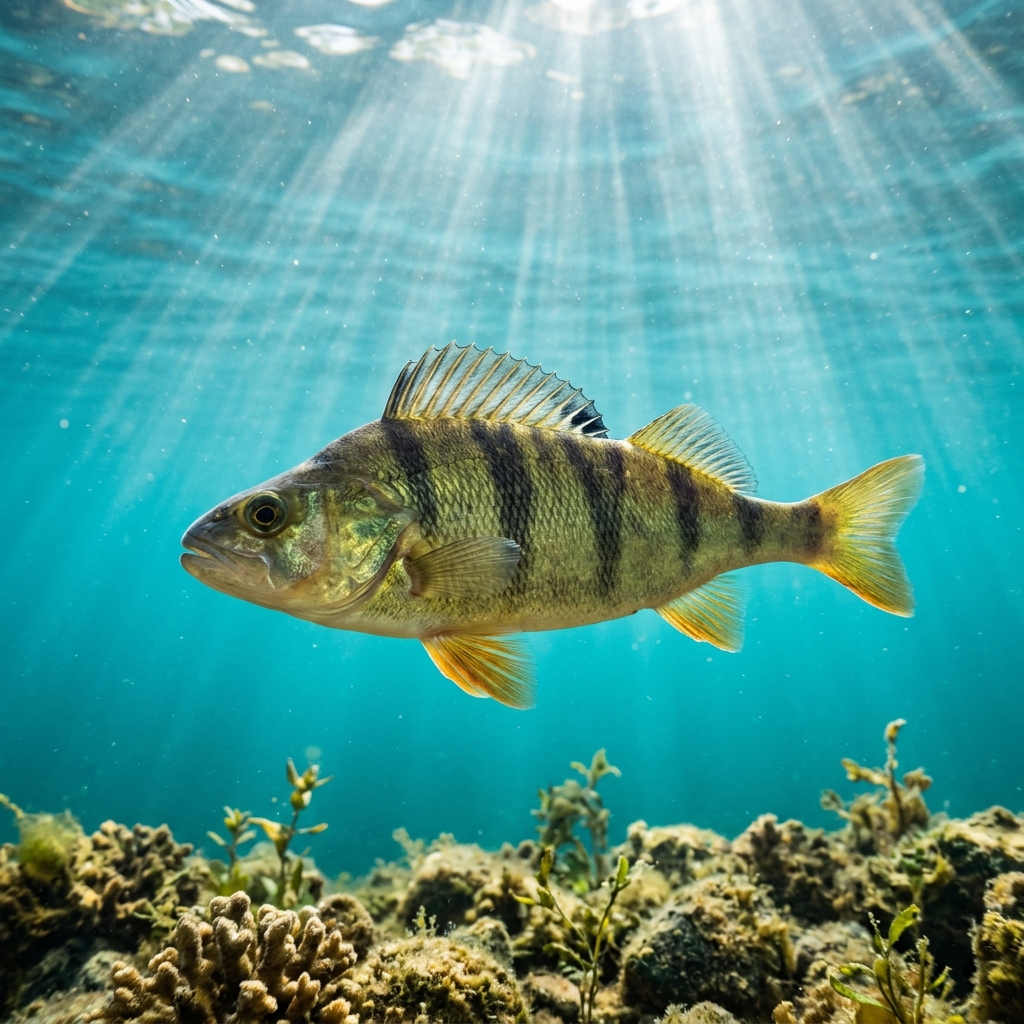
Percidae spp.
Spot perch in cold freshwater across Central Switzerland, Bavaria, and the Great Lakes. Active year-round in water as cold as 1°C.
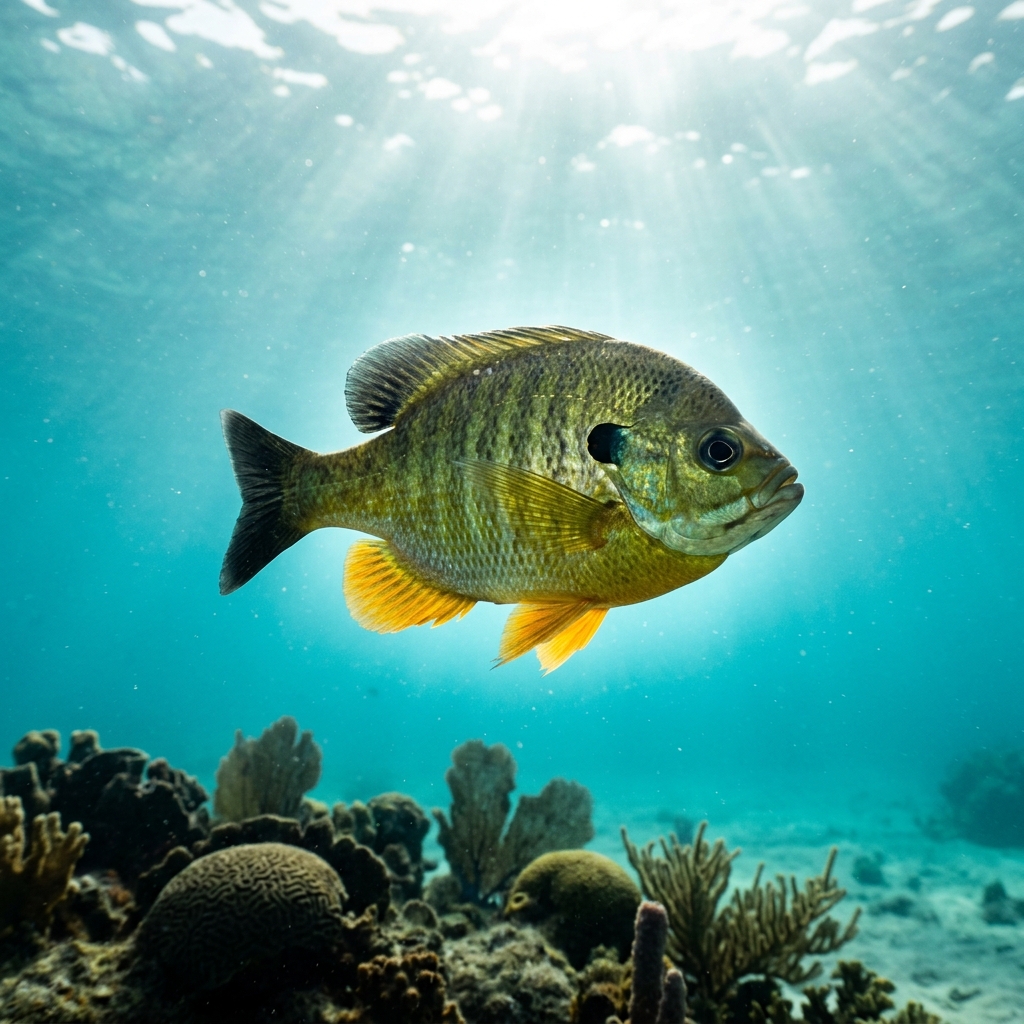
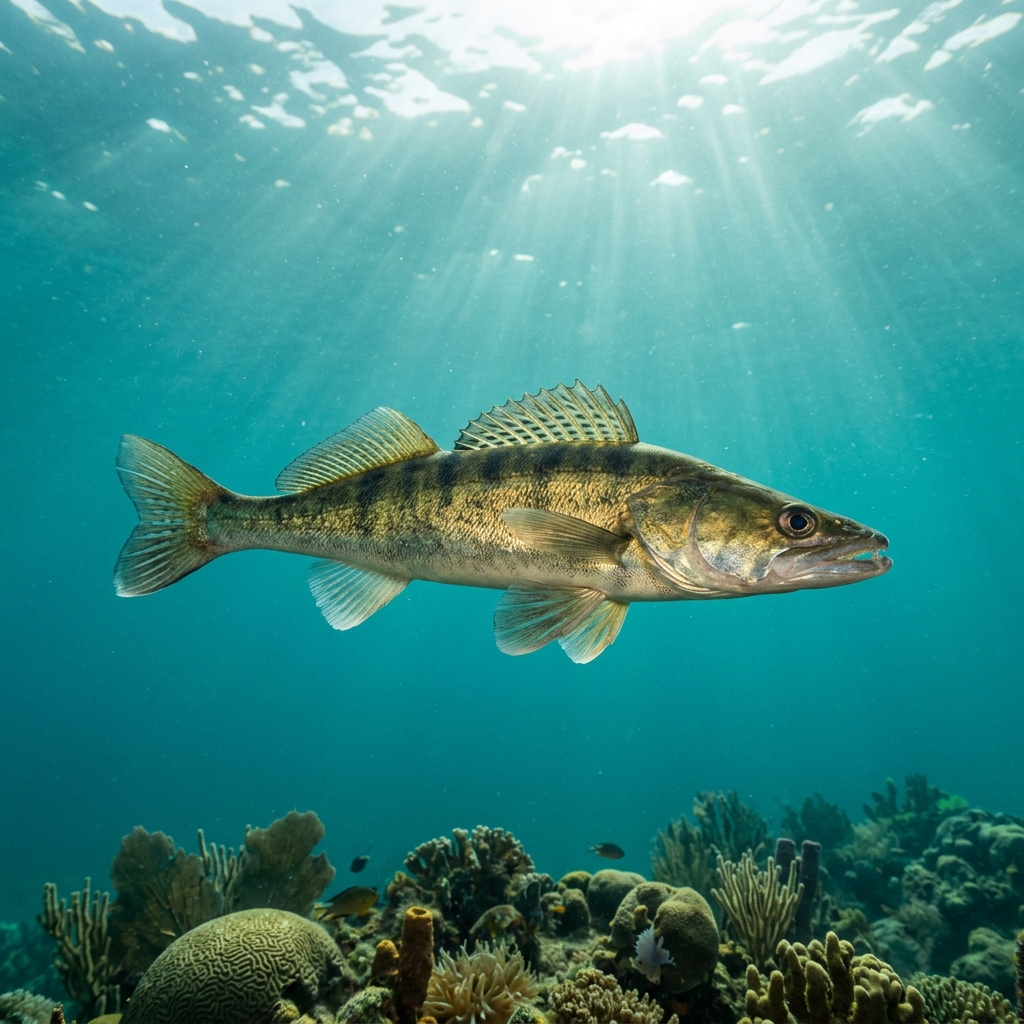
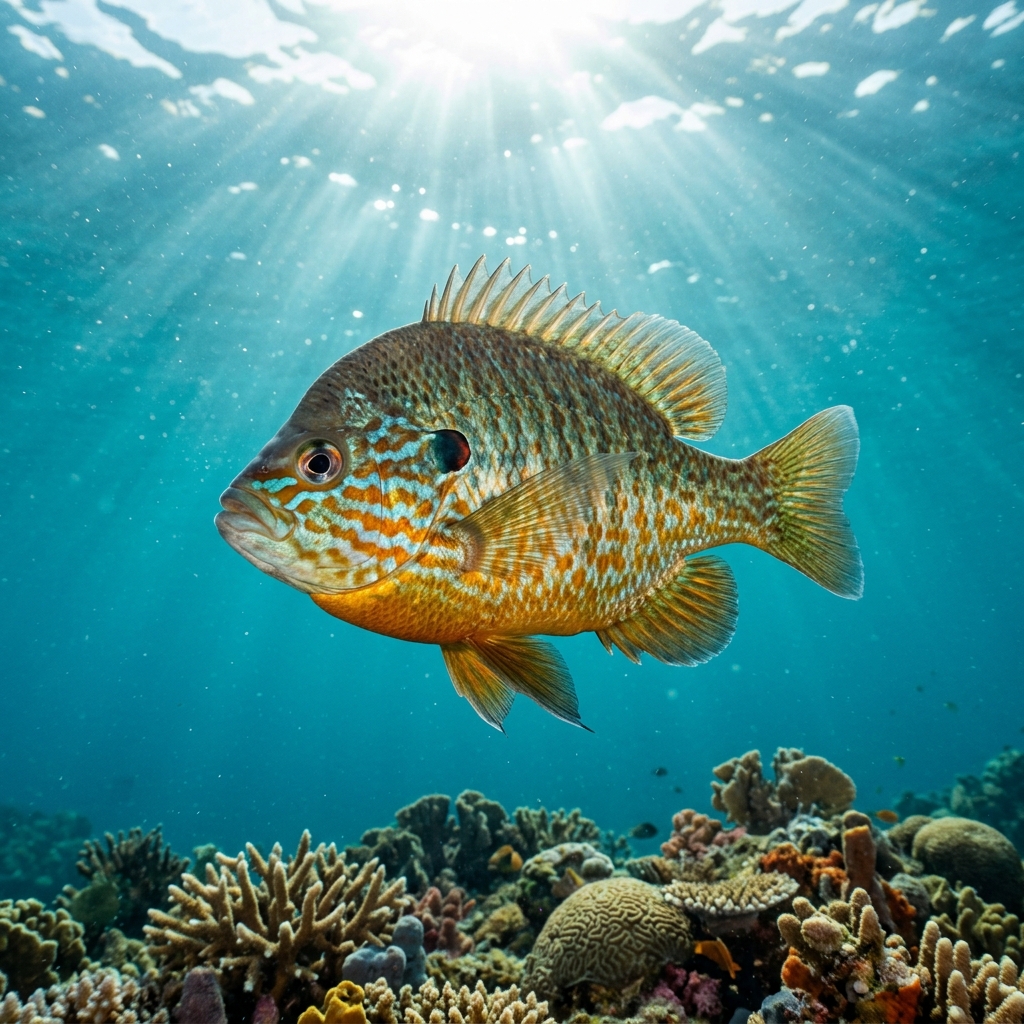
Members of the Percidae family typically show a laterally compressed body with a distinct two-part dorsal fin (the front section spiny, the rear soft-rayed), making them look almost hump-backed at the shoulder. Colouration runs from olive-green to golden-yellow on the flanks, broken by bold dark vertical bars that are the surest field mark underwater. The lower fins, including the pelvic and anal fins, often flush a vivid orange or red that catches the eye in murky freshwater. Most species encountered by divers are palm-to-forearm sized, though pikeperch can grow considerably larger.
Perch tend to hang in loose shoals around submerged structure: jetty pilings, weed beds, sunken timber, and rocky drop-offs are all productive spots to scan. They are moderately curious and will often hold their position or circle slowly as a diver approaches rather than bolting immediately, giving a decent window for observation. In low-visibility lake conditions they may appear suddenly from the murk, drawn in by diver movement or the light from a torch.
Many Percidae species are highly tolerant of low oxygen and near-freezing temperatures, which is why freshwater divers in mid-winter Central Europe still encounter them when almost nothing else is active.
Sighting data shows no clear seasonal peak, so perch can be encountered year-round. The family is well adapted to cold water, with observations recorded down to around 1°C, meaning even winter freshwater dives in Central Europe and Canada can produce sightings.
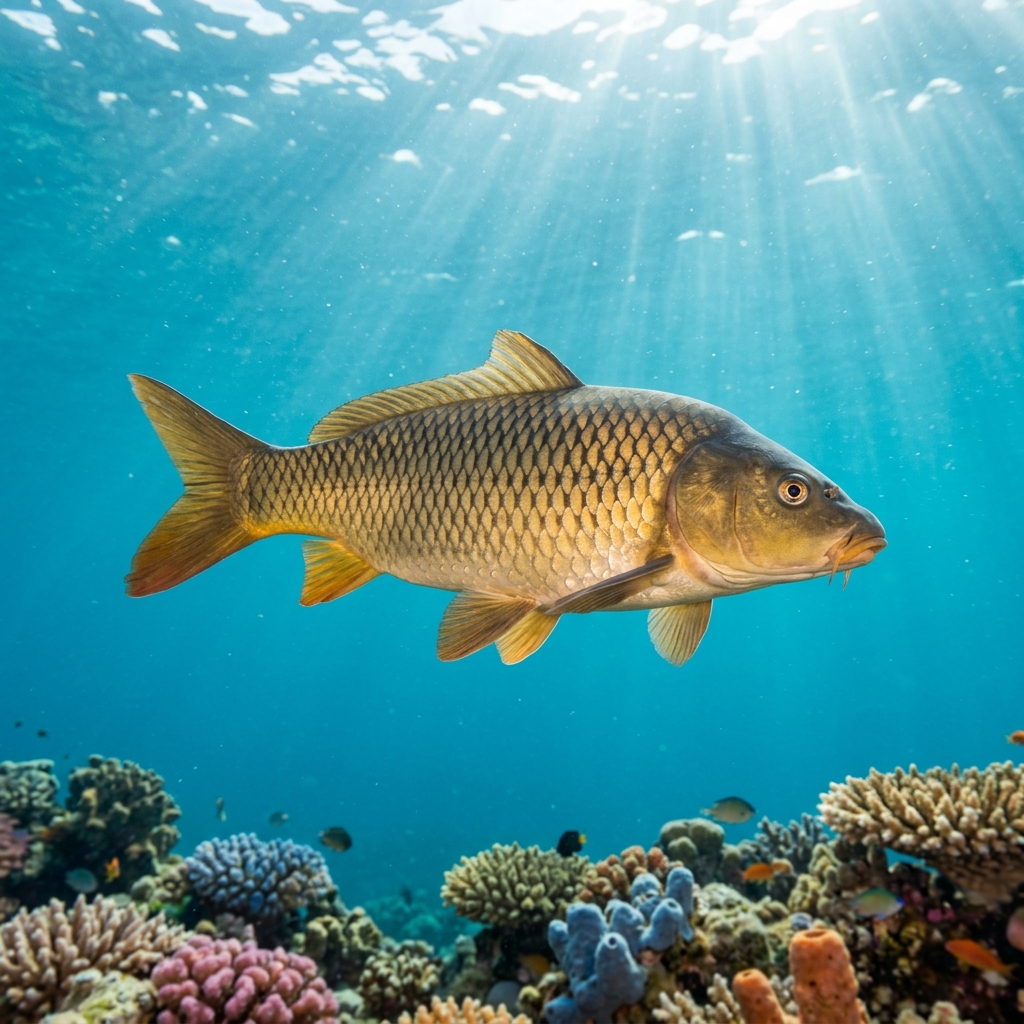
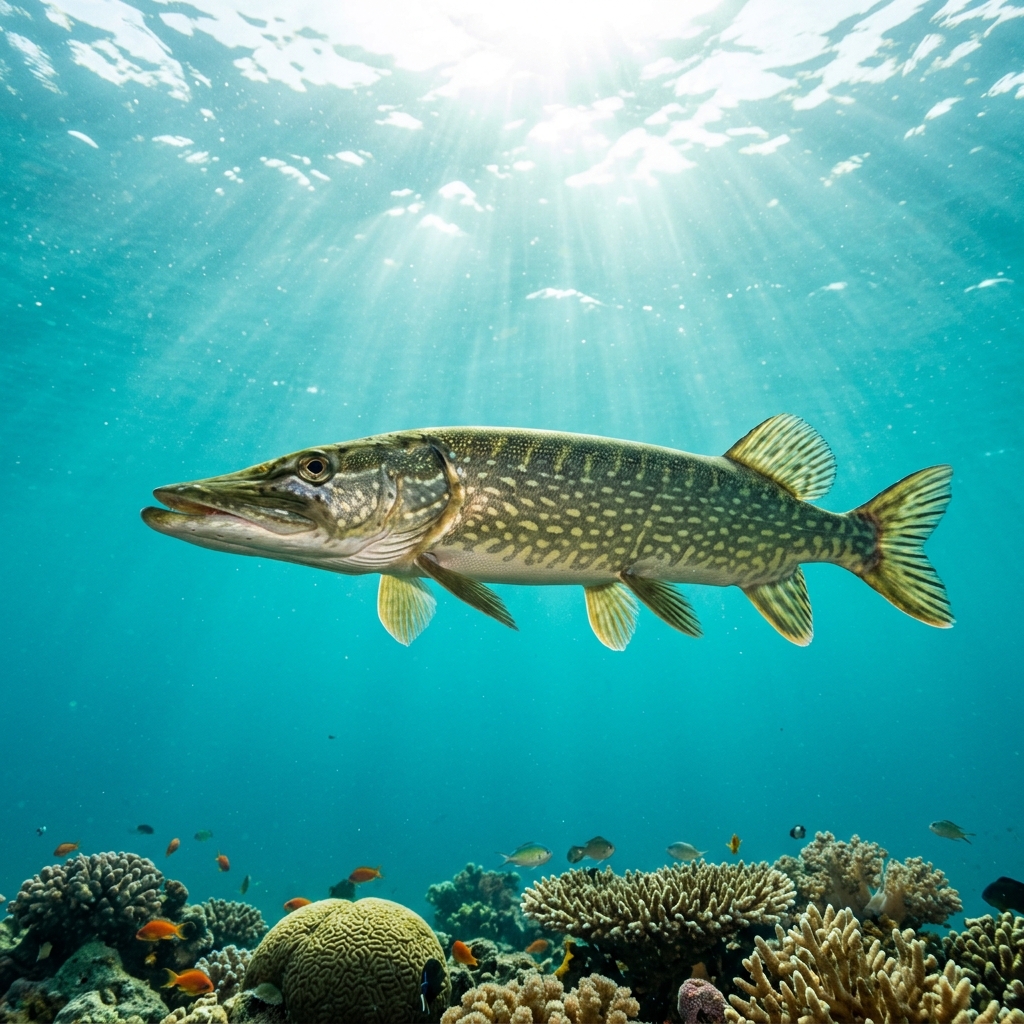
Reef neighbours a diver could mistake it for. Use the identification notes above to tell them apart.
Perch are most commonly logged in Germany, Switzerland, the United States, Canada, the Netherlands, and Austria, reflecting the family's stronghold across temperate European and North American freshwater systems. The richest concentrations of recorded sites sit in Central Switzerland, Bavaria and Central Germany, and the Great Lakes region spanning the United States and Canada. France, Poland, and Austria also offer solid freshwater dive sites where the group is present.
Mapping where Perch is logged…
Perch are a freshwater family with strong representation across Central Europe and North America. The most productive areas for divers are Central Switzerland, the Bavarian Alps, Central Germany, and the Great Lakes region of the United States and Canada. The Netherlands and Austria also have numerous logged freshwater dive sites where the group is present.
Perch can be encountered throughout the year. The family tolerates very cold water, with sightings recorded in temperatures close to 1°C, so even winter dives in temperate lakes can yield encounters. There is no concentrated seasonal peak in the current sighting data.
Look for the two-part dorsal fin with a spiny front section, bold dark vertical bars on an olive or golden-green body, and distinctly reddish-orange lower fins. The combination of barred flanks and coloured lower fins is usually enough to separate them from other freshwater fish at a glance.
No. Perch pose no threat to divers. The spines on their dorsal fin can prick a hand if you grab one, but in the water they present no risk and will generally move away if closely approached.
Size varies across the Percidae family. Common perch typically reach 25 to 40 cm in well-fed lake populations, while pikeperch, the largest members a diver is likely to meet, can exceed a metre in length. Most individuals you encounter on a dive will be palm-to-forearm sized.
Site and sighting data is aggregated from diver logs, iNaturalist and GBIF. For taxonomy and conservation status:
Pike
2,172 sites